At a Glance
- Undertone: match paver color to the undertones in your roof, siding, and trim.
- Contrast: match the siding tone, or go one or two steps lighter or darker.
- Materials: granite, quartzite, travertine, and porcelain are commonly specified for outdoor surfaces.
- Finish: textured surfaces suit wet areas, since polished stone is slipperier when wet.
- Verification: confirm travertine’s UV rating, and view stone on site in daylight.
In This Guide
- Why thoughtful color coordination pays off
- How to match paver color with house exterior styles
- Comparing outdoor stone materials and sealing
- Accounting for sun, shade, and surroundings
- Five steps to coordinate pavers with your exterior
- How Nova Tile and Stone supports your selection
Choosing Pavers That Complement Your Home
The best paver color usually echoes an undertone already present in your roof, siding, or trim, then adds a step of lighter or darker contrast. Warm homes pair well with warm stone, and cool homes with cool stone. Pavers cover a large visible area, so their tone shapes the first impression of the whole property. A mismatch can make a well-designed exterior feel disconnected, even when each material looks good alone.
Stone also brings natural variation in veining and mineral content, so tone can shift from piece to piece, which is part of natural stone's appeal. Granite, quartzite, travertine, and porcelain are the materials commonly specified for outdoor surfaces.This guide explains how to read undertones, compare stone families, and weigh sun, shade, and finish before you commit. Browse natural stone slabs for broader material context.
Practical needs matter too. Slip resistance, sun exposure, and sealing requirements vary by stone, so tone should always be balanced with performance and everyday use.
Why Does Paver Color Coordination Matter?
 Conceptual rendering
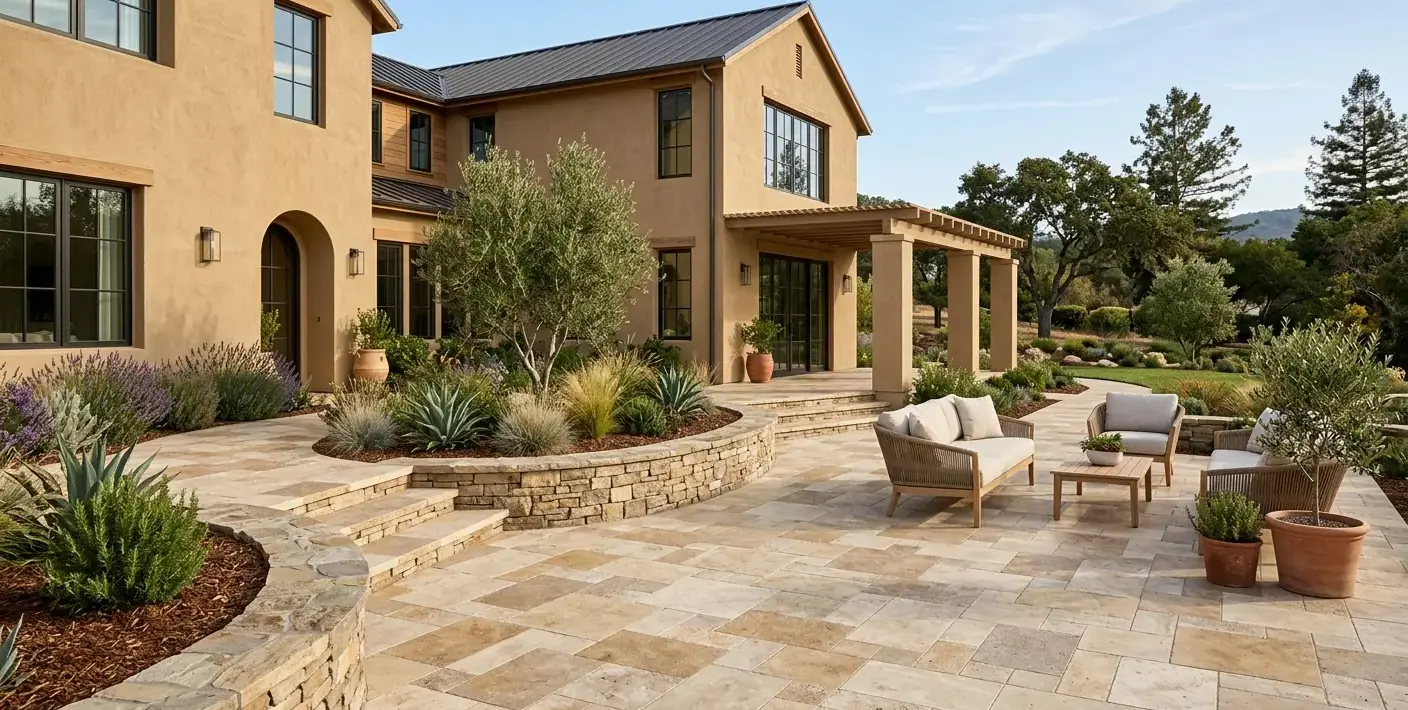
Coordinated pavers help a driveway, walkway, and patio read as one design instead of separate pieces. The effect is strongest when tone, finish, and scale stay consistent across every area.
Color also influences how large or compact a space feels. Lighter shades tend to open up tight areas, while deeper tones can ground wide patios, though results depend on light and surroundings.
Long-term appearance matters as well. Natural stone needs routine care, and stone care guidance from the Natural Stone Institute outlines gentle cleaning habits that help preserve its look.
Key advantages of a coordinated palette include:
- Cohesive curb appeal: Matching undertones helps pavers feel intentional, although lighting and landscaping still affect the final impression.
- Cooler surfaces in sun: Lighter stone often feels cooler underfoot, but surface temperature varies by material and exposure.
- Less visible dust and marks: Mid-tone, lightly variegated stone tends to hide everyday dirt better than solid white or black, with regular cleaning still needed.
- Flexible styling: A wide range of paver color options can support modern, traditional, and Mediterranean exteriors alike.
- Lasting appeal: Neutral, earthy tones tend to age gracefully alongside changing design trends, though personal taste always leads.
How to Match Paver Color With House Exterior Styles
Matching works best as a layered process. Start with fixed elements, then consider architectural style, light, and finish before narrowing your choices.
Start With Roof, Siding, and Trim Undertones
Roof and siding rarely change, so they set the baseline. Hold paving options beside them and note whether the undertone leans warm (tan, gold, red), cool (blue, gray), or neutral.
Trim and window frames matter as well. Pavers that echo trim color in a softer tone can tie the entry, walkway, and patio together.
Fixed elements beyond the roof count as well. Stone veneer, brick chimneys, fences, and existing driveways all carry undertones that new pavers should respect rather than fight.
Pair Pavers With Common Exterior Styles
These pairings are common starting points, not fixed rules, since each stone varies by product and lot.
- Stucco or adobe: Warm travertine or sandy quartzite tones often complement earthy walls.
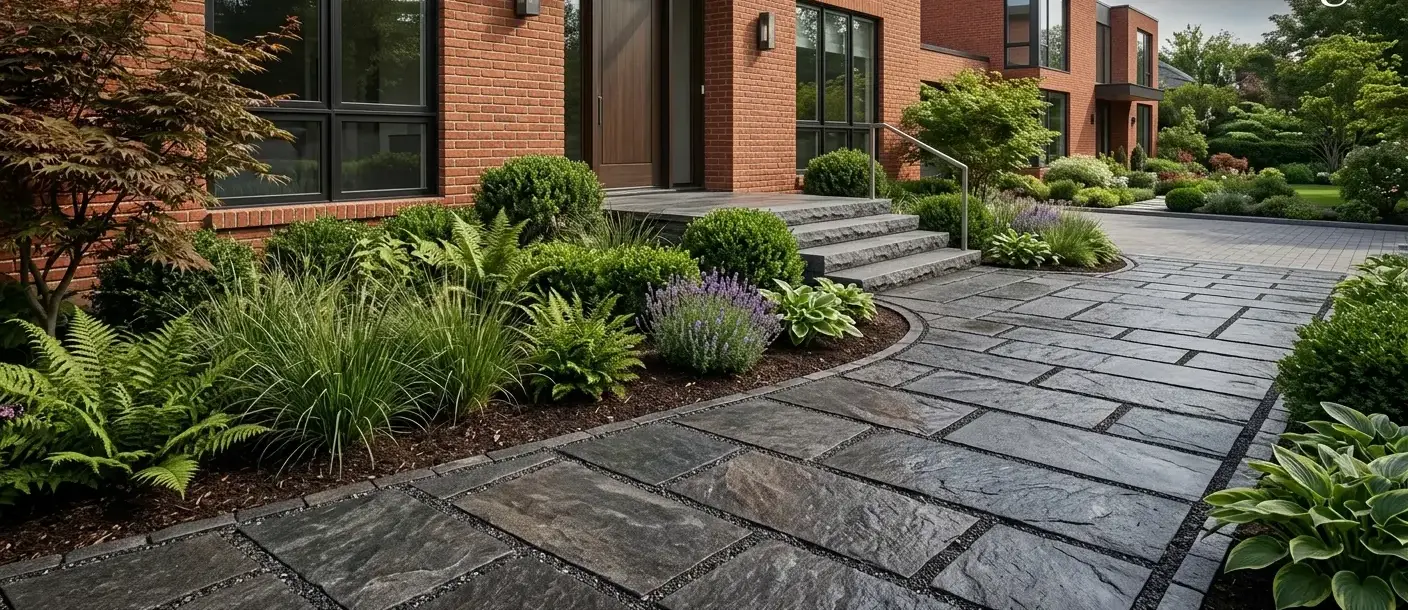
- Red or brown brick: Charcoal or warm gray granite usually gives balanced contrast.
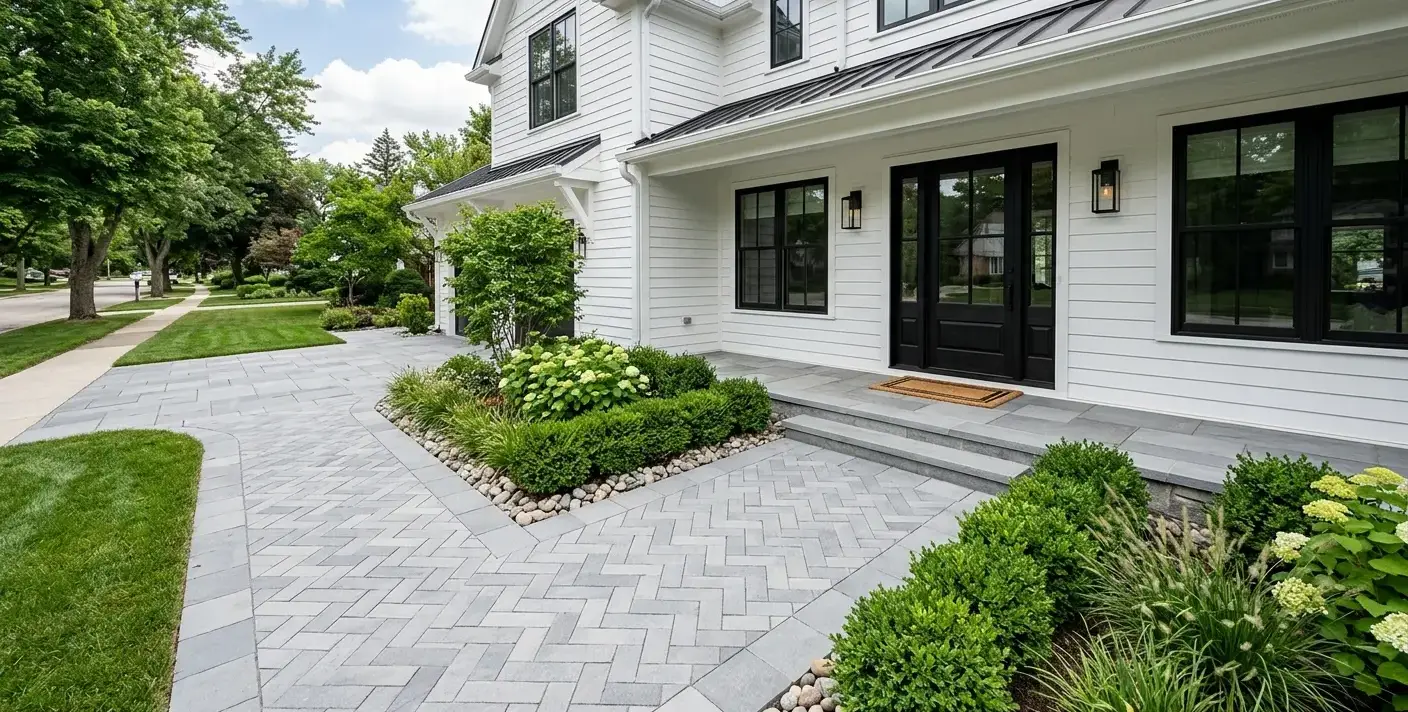
- Painted white or gray siding: Soft gray, taupe, or cream stone tends to look clean and cohesive.
- Dark modern exteriors: Lighter gray or porcelain surfaces can add contrast and brightness.
- Natural wood siding: Earthy tan and brown-gray stone generally feel at home beside timber.
 Conceptual rendering
Landscaping adds another layer. Green foliage, mulch, and gravel beds can soften strong contrast, so consider planting palettes alongside stone tone when finalizing a direction.
Compare Outdoor Stone Materials
The table below compares typical tone ranges and outdoor traits. Marble and dolomite are better reserved for indoor spaces, so they are not listed. Natural variation means pieces within one product can differ in shade, so review the full range of a product before deciding.
Material | Typical Tone Range | Outdoor Notes | Sealing |
Granite | Grays, blacks, warm browns, speckled blends | Outdoor-suitable; UV-resistant category | Sealing recommended |
Quartzite | Whites, creams, soft grays, light veining | Outdoor-suitable; UV-resistant category | Sealing recommended |
Travertine | Ivory, beige, tan, walnut | Generally outdoor-approved; verify UV rating | Sealing recommended |
Porcelain | Wide range, including stone-look tones | Outdoor-suitable; UV-resistant category | Generally not required; confirm product guidance |
Travertine is generally outdoor-approved, but it is not in Nova's general UV-resistant category, which covers granite, quartzite, and porcelain. Verify the exact product's UV rating or confirm manufacturer sun exposure approval before choosing it for full sun.
Account for Sun, Shade, and Surroundings
Morning sun, afternoon glare, and shade all change how stone reads. A tone that looks warm indoors may appear lighter or cooler outside, so judge it in daylight at the actual site. Surrounding features influence perception too. Pool water, glass railings, and light-colored walls reflect light onto pavers and can make them look brighter than they appear in shade.
Finish changes the look too. Polished surfaces are slipperier when wet, so matte or textured finishes suit pool surrounds, entry steps, and other wet areas. ANSI A326.3 testing can compare wet slip resistance across surfaces.
Weather also affects upkeep. ASTM C97 absorption testing compares how much water different dimension stones take in, one factor in sealing decisions. Routine washing with a neutral cleaner and warm water is the usual approach, and abrasive cleaners should be avoided.
 Conceptual rendering
Advantages
- Defines walkway edges clearly against siding.
- Adds depth, especially on single-color exteriors.
- Can highlight an entry or focal feature.
Drawbacks
- Poorly chosen undertones can look mismatched.
- Strong contrast may show dust, leaves, and marks more readily.
- Can compete with landscaping or architectural details.
Advantages and Drawbacks of Contrasting Pavers
Contrast is a design choice rather than a mistake. Weigh the trade-offs before deciding, especially if the home already uses several strong materials.
Five Steps to Coordinate Pavers With Your Exterior
- Identify the dominant undertone of your roof and siding in natural daylight.
- Choose an outdoor-suitable stone family, such as granite, quartzite, travertine, or porcelain.
- Decide between harmony (close to the siding tone) and contrast (one or two steps lighter or darker).
- Select a finish, using matte or textured surfaces for wet zones.
- View the stone at the site in morning and afternoon light before finalizing.
Note: Some images on this page may be conceptual renderings created to illustrate design possibilities and may not depict actual installations.
How Nova Tile and Stone Supports Your Selection
Nova Tile and Stone is a direct-import natural stone and tile supplier with four showrooms. Commission-free design consultants can help compare undertones, finishes, and outdoor suitability for your exterior. Nova serves homeowners in Reno, NV, Fernley, NV, Minden, NV, and Sacramento, CA. Arranged delivery assistance is available to help coordinate material timing once your selection is final.
FERNLEY SHOWROOM
1855 US Highway 95A North, Fernley, NV 89408
 Google Maps
Store hours this week:
- Mon. - Fri.: 7:30 am - 4:00 pm
- Sat. - Sun.: Closed
RENO SHOWROOM
12835 Old Virginia Rd Suite 24, Reno, NV 89521
Store hours this week:
- Mon. - Fri.: 7:30 am - 6:00 pm
- Sat.: 9:00 am - 3:00 pm
- Sun.: Closed
MINDEN SHOWROOM
2548 Business Pkwy, Minden, NV 89423
Store hours this week:
- Mon. - Fri.: 7:30 am - 6:00 pm
- Sat.: 9:00 am - 3:00 pm
- Sun.: Closed
SACRAMENTO SHOWROOM
6100 Warehouse Way, Sacramento, CA 95826
Store hours this week:
- Mon. - Fri.: 7:30 am - 5:00 pm
- Sat. - Sun.: Closed
Photos of your exterior area, siding, and trim help consultants narrow suitable tones faster. Measurements of the planned area and a sense of sun exposure also make recommendations more specific.
Seeing stone in person makes undertone decisions easier. Choose the showroom nearest you:
- Visit the Reno showroom to compare tones in person.
- Explore the Fernley showroom for a closer look at outdoor-suitable stone.
- Visit the Minden showroom to discuss exterior pairings with a consultant.
- Explore the Sacramento showroom to review finishes and tones in person.
If you prefer a scheduled conversation, you can book a consultation and talk through your exterior plans in detail.
Conclusion
Paver color succeeds when it echoes your roof and siding undertones, suits the stone's outdoor performance, and looks right in real daylight. Natural variation is part of stone's character. Careful coordination creates a surface that feels intentional, and routine care helps it stay that way. Browse natural stone and tile to keep comparing options.
Bring photos of your roof, siding, and trim to a commission-free design consultant, and compare tones with expert guidance across Reno, Fernley, Minden, and Sacramento. Book your free consultation today!
Frequently Asked Questions
Red brick has warm undertones, so charcoal or warm gray stone often creates balanced contrast, while soft tan can look harmonious. Compare each stone beside the brick in daylight, since mineral variation shifts appearance from piece to piece. Photos taken in morning and afternoon light can also help you judge the match.
Siding usually covers more visible area, so many designs coordinate with it first and treat the roof as a secondary reference. Either way, keep undertones consistent and adjust lightness to create the level of contrast you prefer. A prominent front door or large trim feature can also guide the choice.
Granite, quartzite, and porcelain fall in Nova's UV-resistant category, while travertine is generally outdoor-approved. Verify the exact product's UV rating or confirm manufacturer sun exposure approval before choosing any stone for constant direct sun. A design consultant can help confirm these details for each product.
Granite, quartzite, and travertine typically need sealing, while porcelain generally does not, though confirming product guidance is wise. Some sealers deepen tone slightly, so check a small hidden area first to preview the result. Resealing timing depends on the stone, the sealer, and weather exposure.
Polished surfaces become slipperier when wet. Matte or textured finishes are the better choice for pool surrounds, steps, and wet entries, and slip resistance should be confirmed for the specific product before you decide. Textured, flamed, or bush-hammered finishes generally offer the most grip.
Sources
- ASTM International. (2026). Standard test methods for absorption and bulk specific gravity of dimension stone (ASTM C97/C97M-26). https://store.astm.org/c0097_c0097m-26.html
- Natural Stone Institute. (n.d.). Care & cleaning of natural stone. https://www.naturalstoneinstitute.org/consumers/care/
- Tile Council of North America. (2022). American national standard test method for measuring dynamic coefficient of friction of hard surface flooring materials (ANSI A326.3-2021). https://tcnatile.com/resource-center/dynamic-coefficient-of-friction/