An Outdoor Living Design Primer
Hardscape refers to the non-plant, structural elements of an outdoor space, including patios, pathways, retaining walls, and other stone features that define how a yard functions. For homeowners across Northern Nevada and Northern California, choosing durable stone shapes both the look and long-term performance of outdoor living design. This guide breaks down popular stone materials, where each performs best, and what to weigh before starting a project.
Granite, quartzite, travertine, and porcelain slabs each bring different strengths to patios, pathways, and walls. Some resist ultraviolet exposure better than others, while some need periodic sealing to maintain appearance. Climate, foot traffic, and design goals all play a role in matching stone to application. Outdoor hardscape solutions for humid climates call for materials that manage moisture without warping, staining, or losing their finish over time.
Understanding these differences early helps homeowners avoid costly missteps and select stone suited to seasonal freeze-thaw cycles, monsoon humidity, or high desert sun. Northern Nevada's dry summers and Northern California's more variable coastal humidity create two very different sets of conditions, which is why material selection benefits from a closer look at each stone type before a design is finalized.
Key Advantages of Stone Elements for Outdoor Living Design
Stone elements offer durability and visual character that few other materials match. Granite and quartzite bring dense, weather-resistant surfaces suited to heavy foot traffic, while travertine and porcelain contribute texture and tone variety for patios and walkways.
Well-chosen stone also supports long-term value. Durable, but proper care and periodic sealing preserve appearance over many seasons. For design inspiration that gives new stone features a settled, established look, this vintage garden techniques collection offers useful starting points.
Benefits worth weighing before choosing a material:
- Natural stone options like granite and quartzite provide dense, scratch-resistant surfaces for patios and pathways
- Travertine adds warm, textured tone variation suited to Mediterranean and rustic design themes
- Porcelain slabs resist moisture absorption and typically do not require sealing, though verifying manufacturer specs is recommended
- Textured or leathered finishes reduce slipperiness in wet zones compared to polished surfaces
- Outdoor stone features tend to hold their appearance longer than short-lived alternatives, provided care guidelines are followed
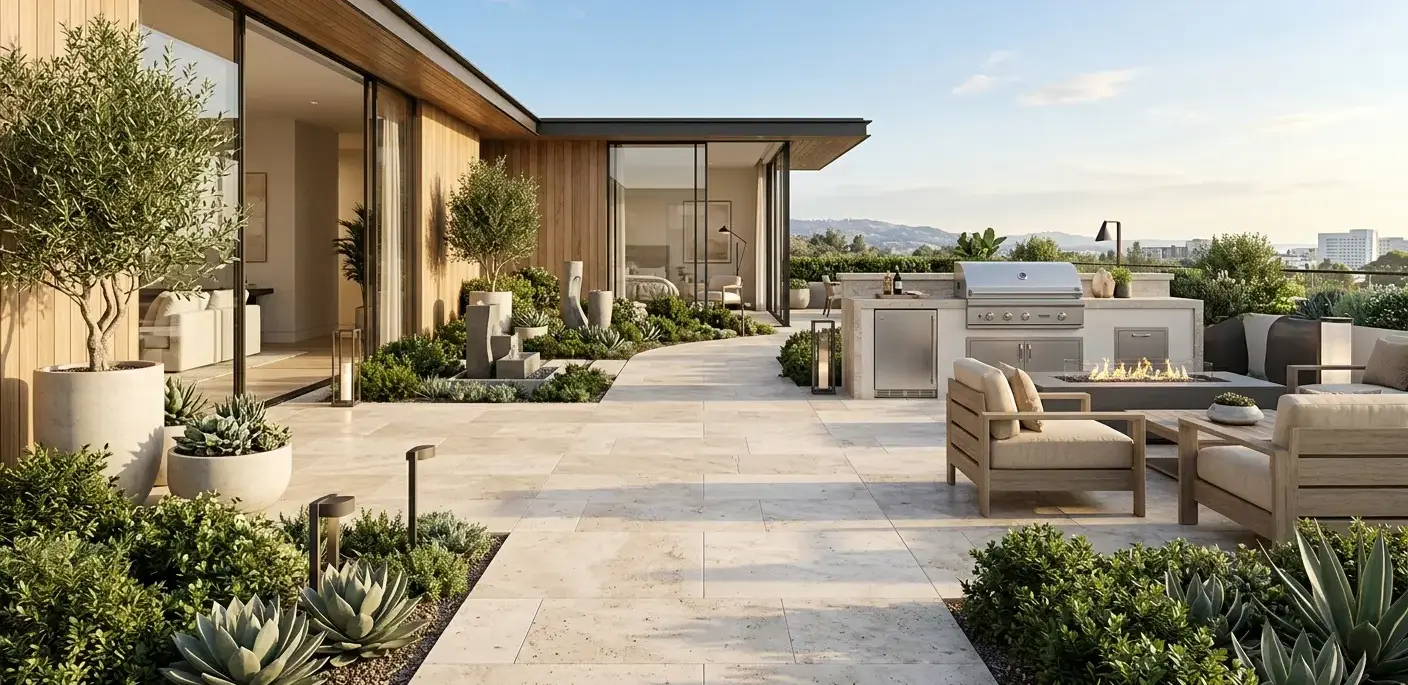 Conceptual rendering
Beyond durability, stone brings design flexibility that suits a range of styles, from clean contemporary patios to informal cottage-style pathways. Mixing finishes, such as pairing a leathered wall with a honed patio surface, adds visual depth without introducing multiple product types to maintain.
Where Hardscape Elements Shine: Patios, Pathways, and Walls
Every outdoor space places different demands on stone. The sections below cover common applications, along with material notes for humid or moisture-heavy climates.
Patios
Patios benefit from dense, low-absorption stone that withstands sun, foot traffic, and temperature swings. Granite and porcelain slabs are common choices for open patio surfaces, offering strong performance in full sun exposure. Quartzite also performs well outdoors and adds natural color variation.
Browse the slab collection to compare finishes and tones suited to patio applications. For broader background on stone and tile standards that many manufacturers reference, an industry standards overview offers useful context.
Larger patio footprints often mix a honed field surface with a leathered or specialty border, creating visual definition without changing the underlying material. This approach works well for granite and quartzite alike, since both hold consistent tone across large formats.
Pathways
Pathways see consistent foot traffic and benefit from textured or leathered finishes that reduce slipperiness when wet. Natural stone pavers in travertine or quartzite create informal, textured walkways, while porcelain offers a more uniform, contemporary look.
Ongoing innovation in surface technology continues to expand finish and format options for outdoor pathways, as this surface innovation feature describes.
Curved or stepped pathways benefit from smaller-format cuts that follow tighter radii, while straight walkways can use larger slab formats for a more streamlined appearance. Either approach should account for the finish underfoot, particularly near entryways exposed to sprinklers or seasonal rain.
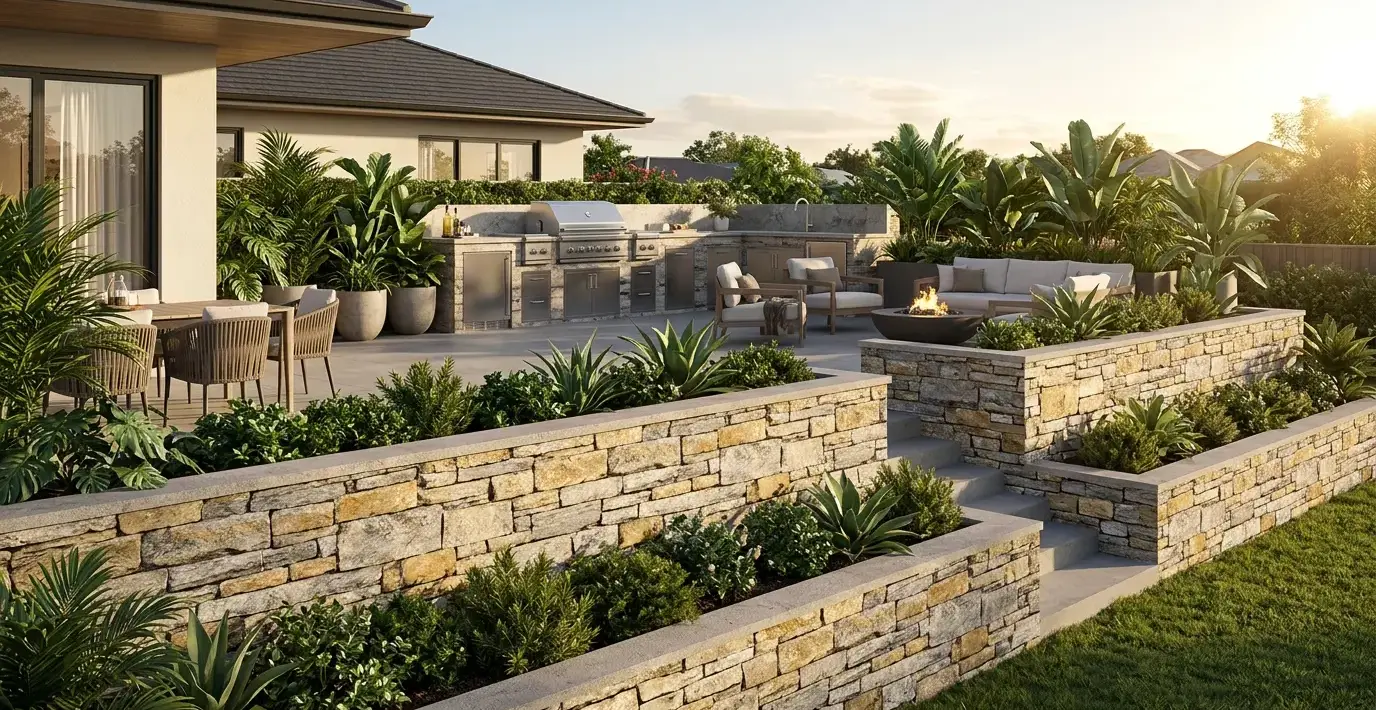 Conceptual rendering
Retaining and Garden Walls
Retaining and garden walls carry structural loads and benefit from dense stone with strong compressive strength. Granite is a common choice for load-bearing wall applications due to its density, while quartzite offers similar durability with more natural veining. Leathered or specialty finishes add texture that suits rustic or contemporary wall designs alike.
Shorter garden walls and seat walls have more design flexibility, since load requirements are less demanding than full retaining structures. Travertine and porcelain both work well for these accent applications, particularly when paired with matching patio or pathway stone for a cohesive look.
Considerations for Humid or High-Moisture Climates
Humid regions test stone differently than arid climates, since sustained moisture can accelerate staining or efflorescence on porous surfaces. Sealed granite, quartzite, and properly rated porcelain resist moisture absorption better than untreated, high-porosity alternatives. For consistently humid conditions, low-absorption materials paired with routine sealing schedules typically hold up best over time.
Coastal Northern California properties, in particular, benefit from finishes that shed standing water quickly. Sloped patio grading combined with a lower-absorption stone reduces the chance of surface staining during extended wet seasons.
Comparing Outdoor Stone Materials at a Glance
Material | Type | Sealing Required | UV Resistance | Best For |
Granite | Natural Stone | Yes | Yes | Patios, walls, heavy traffic areas |
Quartzite | Natural Stone | Yes | Yes | Patios, pathways, walls |
Travertine | Natural Stone | Yes | Verify product rating | Patios, pathways, warm-tone designs |
Porcelain | Engineered | Typically not required | Yes | Patios, pathways, contemporary designs |
Strengths and Considerations by Material
Each stone type carries its own balance of durability and upkeep. Reviewing strengths alongside practical considerations helps narrow down a shortlist before visiting a showroom.
Granite
- Strength: High density with strong resistance to scratching and UV exposure
- Consideration: Periodic sealing helps maintain long-term appearance
Porcelain
- Strength: Low moisture absorption with consistent color across large-format slabs
- Consideration: Verify slip ratings for wet or pool-adjacent areas
Quartzite
- Strength: Natural durability with UV resistance suited to full-sun patios
- Consideration: Sealing helps reduce staining from spills over time
Travertine
- Strength: Warm, textured tone that suits rustic and Mediterranean design themes
- Consideration: Confirm the manufacturer UV and sun-exposure rating before finalizing a selection
5 Steps to Choosing the Right Outdoor Stone
- Assess climate conditions. Consider sun exposure, average humidity, and freeze-thaw cycles typical to the project location throughout the year.
- Match material to application. Confirm whether the space is a patio, pathway, or wall, since suitability and load requirements vary by material.
- Review finish options. Textured or leathered finishes reduce slipperiness in wet-prone areas compared to polished surfaces near pools or entryways.
- Compare tone and format. Look at slab size, color consistency, and veining pattern side by side to judge how each option fits the design.
- Consult a specialist. Speaking with a Nova specialist helps confirm sealing needs, UV ratings, and design compatibility before finalizing a selection.
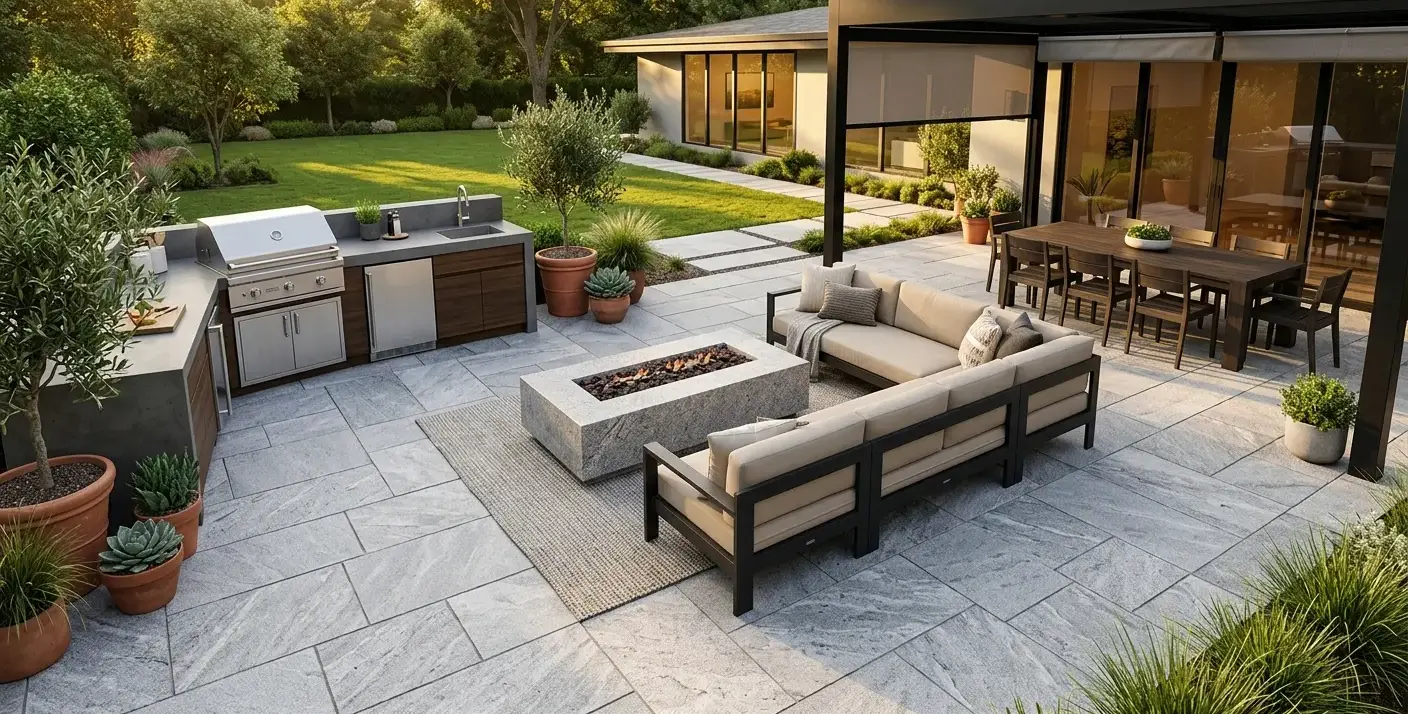 Conceptual rendering
Nova Tile and Stone Expertise for Your Outdoor Project
Nova Tile and Stone provides expert guidance on matching granite, quartzite, travertine, and porcelain to specific outdoor applications, climate conditions, and design goals. Shipping arrangement is available on qualifying slab orders throughout the service area, helping projects move forward efficiently.
Homeowners can visit the Fernley showroom to see stone selections firsthand. Explore options at the Reno location for additional inventory nearby. The Minden showroom is also available to visit for nearby communities seeking the same curated stone selection. Sacramento-area homeowners can Explore the Sacramento showroom to consult with a specialist in person.
Scheduling a consultation with a Nova specialist helps ensure the right stone is selected before any outdoor project begins. A specialist can also walk through finish and tone options for walls and patios side by side, which makes comparing texture easier than viewing photos alone.
Note: Some images on this page may be conceptual renderings created to illustrate design possibilities and may not depict actual installations.
Conclusion
Hardscape features such as patios, pathways, and walls define how an outdoor space functions and feels. Granite, quartzite, travertine, and porcelain each offer distinct strengths, from UV resistance to natural texture, and matching material to climate, traffic, and design goals leads to lasting results. Speaking with a specialist first helps confirm the right stone for a specific project. Schedule a consultation to explore options suited to Northern Nevada and Northern California outdoor spaces.
Frequently Asked Questions
Patios, pathways, retaining walls, and other structural outdoor features commonly use granite, quartzite, travertine, or porcelain for durability and consistent design across a property.
Granite, quartzite, travertine, and porcelain are commonly used for outdoor patios because they generally tolerate sun exposure and seasonal weather better than indoor-only stone types like marble.
Travertine typically needs periodic sealing to help manage moisture absorption and maintain its appearance in outdoor settings, though exact requirements vary by product and finish.
Porcelain generally resists moisture absorption well and often does not require sealing, making it a frequently chosen option for consistently humid or wet climate conditions.
Marble and dolomite are generally better reserved for indoor spaces, so granite, quartzite, travertine, or porcelain are typically recommended for exterior patios, pathways, and walls instead.
Visit our Showrooms Now!
SACRAMENTO
6100 Warehouse Way, Sacramento, CA 95826
 Google Maps
Store hours this week:
- Mon. - Fri.: 7:30 am - 5:00 pm
- Sat. - Sun.: Closed
MINDEN
2548 Business Pkwy, Minden, NV 89423
Store hours this week:
- Mon. - Fri.: 7:30 am - 6:00 pm
- Sat.: 9:00 am - 3:00 pm
- Sun.: Closed
RENO
12835 Old Virginia Rd Suite 24, Reno, NV 89521
Store hours this week:
- Mon. - Fri.: 7:30 am - 6:00 pm
- Sat.: 9:00 am - 3:00 pm
- Sun.: Closed
FERNLEY
1855 US Highway 95A North, Fernley, NV 89408
Store hours this week:
- Mon. - Fri.: 7:30 am - 4:00 pm
- Sat. - Sun.: Closed