At a Glance
- Test the seal each season, not on a set date.
- Water beads up? Sealed. Soaks in? Reseal.
- Clean with a soft brush and hose. Skip the pressure washer.
- White haze? Dry brush it off. Skip the water.
- Check mortar joints every fall.
- Granite and quartzite suit full sun best.
In This Post
- Why Outdoor Exposure Changes the Maintenance Math
- Sealing Is the Single Biggest Factor in How the Panels Age
- Efflorescence: What the White Haze Actually Is
- Routine Cleaning That Will Not Strip the Finish
- Granite, Quartzite, and Travertine Age Differently Outdoors
- Freeze-Thaw Cycles and the Joints Around the Panels
- Checking Panels After Severe Weather
- Conclusion
- Frequently Asked Questions
Outdoor ledger stone panels need a maintenance routine built around three things: regular sealing, seasonal joint checks, and cleaning that won't strip the sealer, since direct sun, rain, and freeze-thaw cycles wear the stone faster than indoor stacked stone ever does. Testing the seal each season with a few drops of water left on the surface for 15 to 30 minutes, rather than resealing on a fixed calendar date, is the single habit that prevents most staining and wear. Granite and quartzite panels are UV resistant and age more predictably in full sun, while travertine's more porous texture means it needs closer attention during sealing.
Most outdoor ledger stone problems trace back to two overlooked habits: sealer that wore off faster than expected, and mortar joints nobody checked after the first winter. Building a routine around the specific stone and climate, not a generic stone-care checklist, is what actually prevents both.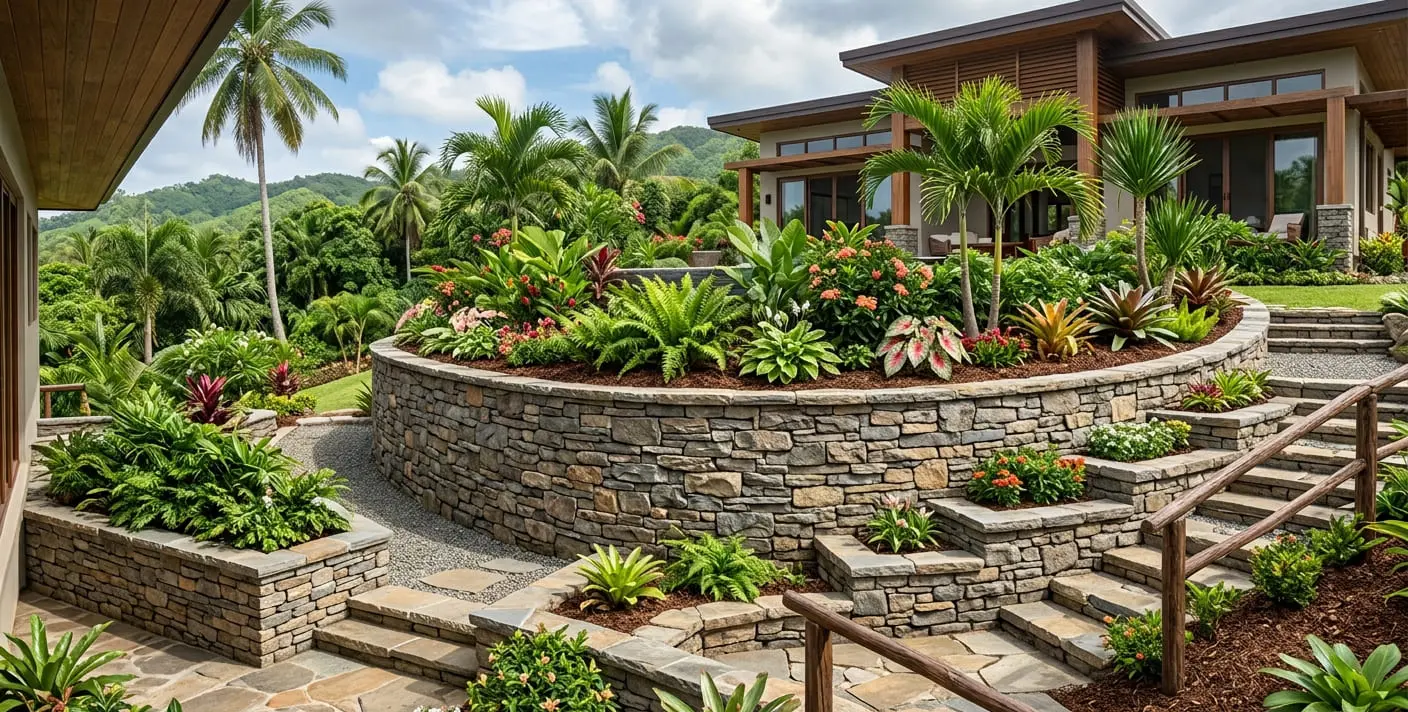
Why Outdoor Exposure Changes the Maintenance Math
An indoor accent wall never deals with standing water, UV exposure, or ice expanding inside a joint. An outdoor fireplace surround or exterior feature wall built from ledger stone panels deals with all three, often within the same calendar year.
That is the real reason outdoor stacked stone needs a different rhythm than indoor stone. Sealer breaks down faster outside, dirt and pollen accumulate differently, and any water that gets behind the panels has nowhere to go until it freezes.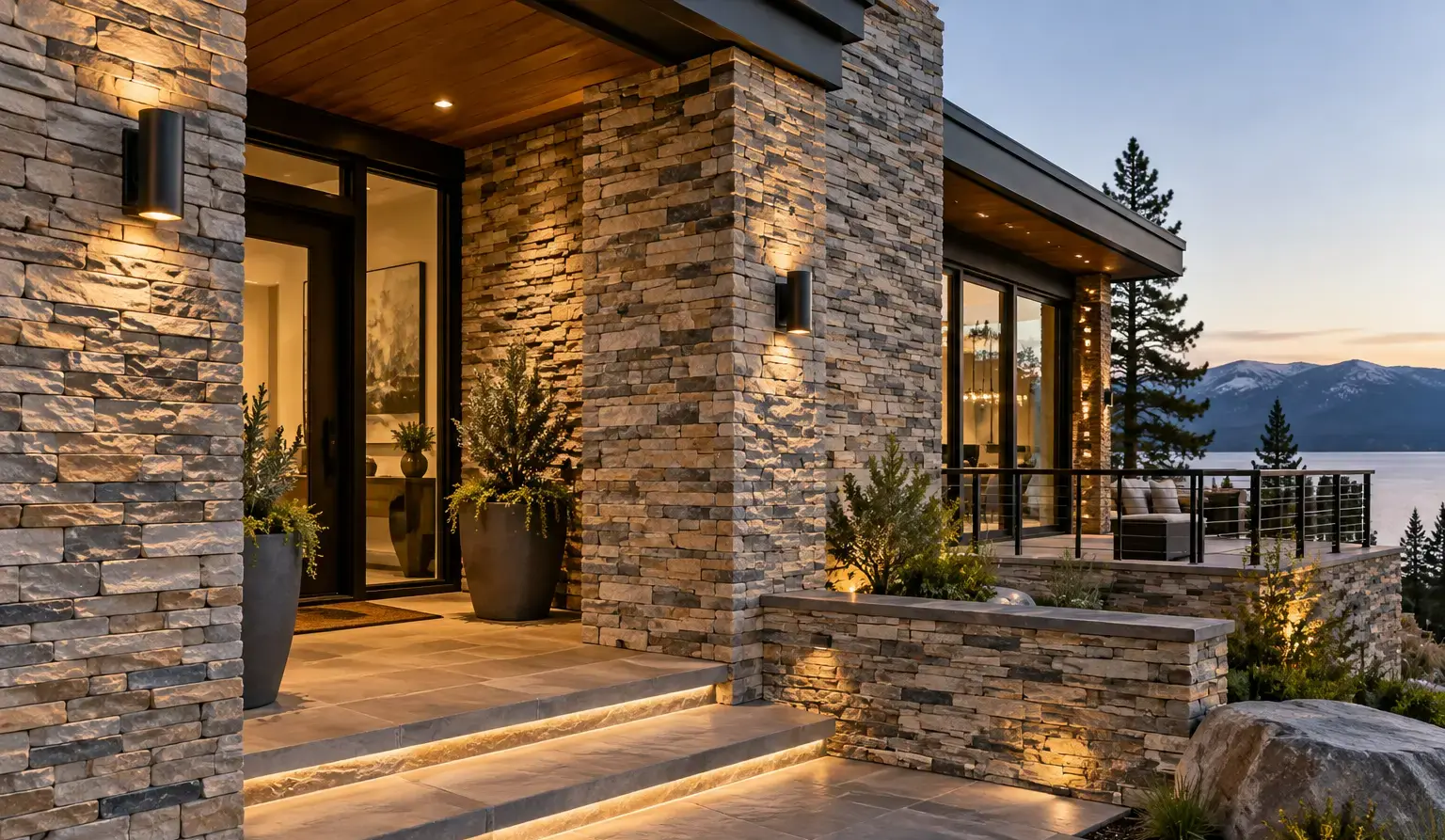
Sealing Is the Single Biggest Factor in How the Panels Age
A penetrating sealer keeps water, oil, and airborne minerals from working into the stone's surface. Outdoor exposure burns through that protection faster than an interior application, since UV light and repeated wet-dry cycles both wear sealer down over time.
Sun-facing walls lose sealer faster than shaded ones, even on UV-resistant stone like granite and quartzite. Reapplying sealer as soon as the water test shows it is needed, rather than waiting for visible staining to show up, is what actually protects the stone long term. Comparing tone options in person, such as at one of our local showrooms, makes it easier to judge how a lighter or darker finish will hold up in direct sun.
There is no single number that fits every installation. Sun exposure, local climate, and how the panels were installed all shift the timeline, which is why testing water absorption on the stone face each season is more useful than following a fixed calendar date.
A few drops of water left on the surface for 15 to 30 minutes that stay beaded up mean the seal is still doing its job. Water that darkens the stone or soaks in within that window is a sign it is time to reseal.
That surface sealer is different from the mortar in the joints between panels, which gets its own attention in the freeze-thaw section below. Confusing the two is common, and it is part of why some outdoor installations end up with one addressed and not the other.
Efflorescence: What the White Haze Actually Is
That chalky white film that sometimes shows up on outdoor stacked stone is efflorescence, mineral salts pulled to the surface as moisture moves through the stone and mortar and evaporates. It is a moisture issue, not a defect in the panel itself.
A stiff dry brush or a shop vacuum usually clears efflorescence without touching the finish underneath. On a newer installation, expect to repeat this a few times as the stone and mortar dry out. Skip the hose: water dissolves the salts and carries them back into the stone, so the haze returns once it dries. Acidic cleaners can also etch some stone surfaces, so dry brushing is the safer first step. If efflorescence keeps returning in the same spot, that is usually a sign water is finding a path behind the panel. Worth having a professional look at the area rather than scrubbing the same section every few weeks.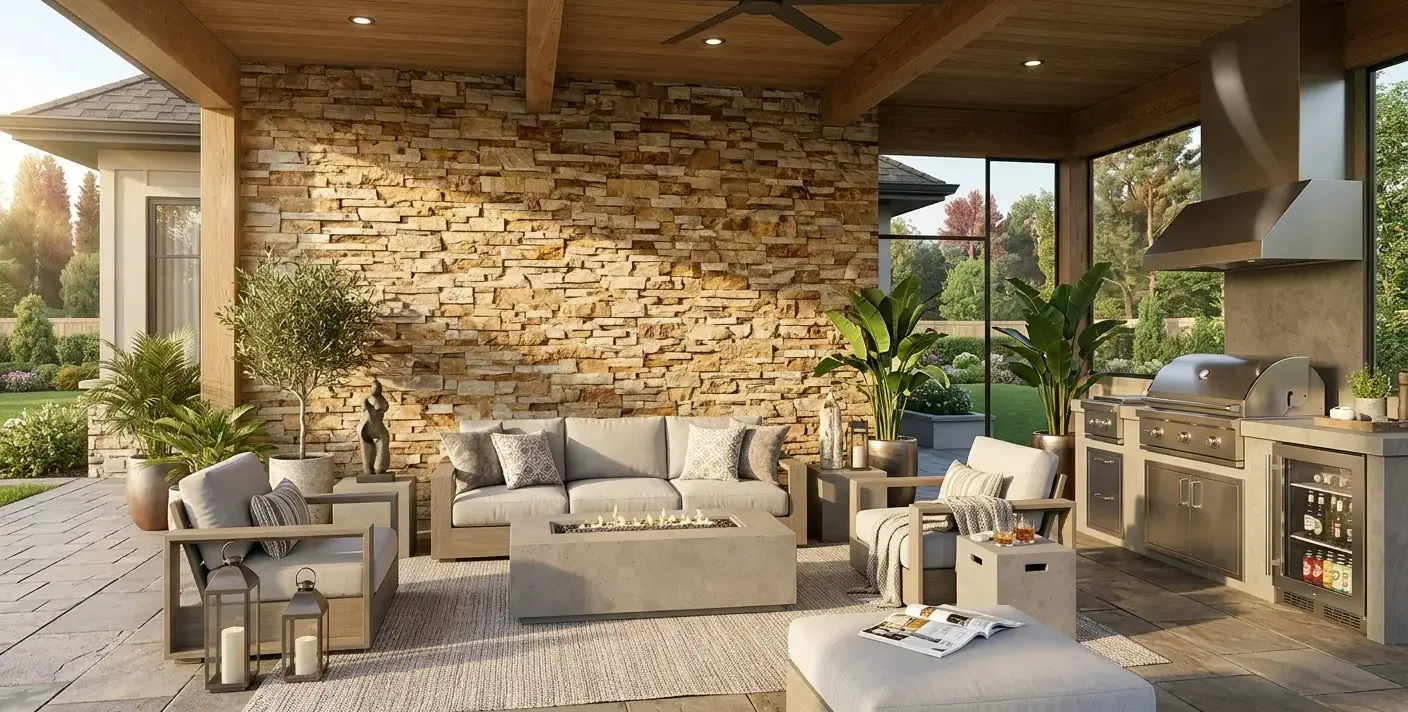
Routine Cleaning That Will Not Strip the Finish
Day-to-day cleaning for outdoor ledger stone is simpler than the sealing conversation makes it sound. A soft-bristle brush, plain water, and a pH-neutral stone cleaner handle pollen, dust, and light grime without touching the sealer underneath. The Natural Stone Institute recommends this same gentle approach for most stone types, since consistent light cleaning does more for long-term appearance than an occasional deep clean.
Pressure washers are where most damage happens. High pressure held too close to the surface can strip sealer and even erode softer natural stone finishes, so a garden hose and brush get the job done with far less risk to theheld panels.
Bleach and ammonia-based cleaners are best kept out of routine cleaning. Used repeatedly, both can wear down sealer and dull the finish, granite and quartzite included. The one common exception outdoors is algae or moss, where a diluted bleach solution works as a spot treatment. Never mix bleach and ammonia, since together they release a toxic gas.
Granite, Quartzite, and Travertine Age Differently Outdoors
Not every natural stone used in ledger panels responds to outdoor exposure the same way, which matters when deciding how much upkeep a given material actually needs. The natural stone options in our ledger stone selection at Nova Tile and Stone include granite, quartzite, and travertine, and each carries a different outdoor profile worth knowing before settling on one. For homeowners weighing sourcing and environmental factors alongside performance, Use Natural Stone explains how product labeling works across the natural stone industry.
Granite and quartzite are both UV resistant, though performance can vary by color and finish, which makes them a common pick for panels that sit in direct sun most of the day. Travertine is suitable for outdoor use, but installation must match the application, and it does not carry the same UV rating.
Travertine's natural texture also tends to run more porous than granite or quartzite. Panels made from it often get closer attention during sealing season, not because the stone is lower quality, but because its structure simply absorbs differently.
None of this makes one material better than another across the board. It changes how often the stone gets checked on, which is worth factoring in before choosing a material rather than after the panels are already up.
For a wall that sits in full sun most of the day, granite or quartzite's UV resistance makes upkeep more predictable over time. For a shaded courtyard wall or a covered outdoor kitchen area, travertine's outdoor suitability still holds up well, since the main stressor it needs protection from in that setting is moisture rather than direct sun. Homeowners pairing the wall with an outdoor kitchen counter often browse matching natural stone slabs in the same material for a consistent look.
Freeze-Thaw Cycles and the Joints Around the Panels
Water that gets into a hairline gap in the mortar joint and then freezes expands with enough force to crack the joint or loosen a panel edge. This is the maintenance item most outdoor ledger stone owners overlook, since it has nothing to do with the stone face itself. A free design consultation before installation can help match jointing and material choices to a specific climate's freeze-thaw risk.
A quick visual check of the joints each fall, before temperatures drop, catches small cracks while they are still a quick mortar patch rather than a full section repair. This applies most directly to installations in regions with real winter freeze-thaw cycles, less so in climates that stay consistently warm. Exposure matters as much as the stone itself. A south-facing wall and a shaded north-facing wall on the same house can age at noticeably different rates, even with identical stone.
That regional variation shows up across our own service area too. Homeowners near the Reno, Minden, and Fernley showrooms deal with a drier, high-desert freeze-thaw cycle, while the Sacramento showroom sits in a milder climate with far less freeze-thaw risk, where UV exposure matters more than ice.
Checking Panels After Severe Weather
Heavy wind-driven rain can push water into places routine care never reaches, especially around window returns, corners, and any spot where the ledger stone meets a different material like siding or trim. A quick check after a major storm catches problems before the next one makes them worse.
Look for panels that sound hollow when tapped lightly, a sign the mortar bed behind them has started to separate from the substrate. A panel that feels loose at the edge, even slightly, is worth addressing before more water gets behind it and the freeze-thaw cycle takes over from there.
This kind of check takes a few minutes and catches the type of damage that is cheap to fix early and more involved to ignore. Waiting until spring to notice a loose panel usually means dealing with more than one by then.
Conclusion
The panels that hold up best outdoors are not necessarily a different material. They are the ones on a care schedule that matches their actual exposure. A wall in full southern sun needs a different sealing interval than a shaded fireplace surround, even when both are cut from the same stone.
A simple version of this routine runs on three checkpoints across the year: a spring inspection after the last hard freeze, a mid-summer water absorption test when UV exposure peaks, and a fall joint check before temperatures drop again. None of these take more than a few minutes per wall section. Homeowners planning a new installation alongside an outdoor kitchen counter can also request a slab quote for a matching material.
Walk the installation on that rhythm, check the joints, test water absorption on the stone face, and reseal when the bead test says it is time rather than on a fixed date. That single habit prevents more outdoor ledger stone problems than any specific cleaning product ever will. Homeowners still comparing exterior stone options can browse our full range of tile and stone before settling on a material.
Frequently Asked Questions
There is no fixed interval that applies to every installation. Sun exposure, climate, and stone type all affect how quickly sealer wears down, so testing water absorption each season is more reliable than following a set schedule.
Travertine is suitable for outdoor applications, but it is not rated UV resistant the way granite and quartzite are. Its more porous texture also means it often needs closer attention during sealing.
That white film is efflorescence, mineral salts carried to the surface by moisture moving through the stone and mortar. It is typically resolved by dry brushing or vacuuming, repeated as the wall dries, rather than with water or a chemical cleaner.
High-pressure water held close to the surface can strip sealer and wear down softer stone finishes. A garden hose, soft brush, and pH-neutral cleaner clean outdoor panels with far less risk to the finish.
Water that gets into a joint and freezes can crack the joint or loosen a panel edge. A seasonal visual check, especially before winter, catches small cracks while they are still an easy fix.