Natural stone and manufactured pavers are the two main materials used for outdoor patios, walkways, and driveways, and they differ most in cost, appearance, and maintenance. Natural stone, such as flagstone, travertine, or granite, is quarried and cut into pavers, giving each piece unique coloring and texture. Manufactured pavers, most commonly made from concrete, are cast in molds to a consistent size, shape, and finish. Natural stone generally costs more due to quarrying and labor-intensive fitting, while manufactured pavers cost less and install more predictably. Both materials can perform well outdoors for years when properly selected and installed, but the right choice depends on budget, desired look, and how much upkeep you're willing to take on.
What Natural Stone Brings to an Outdoor Space
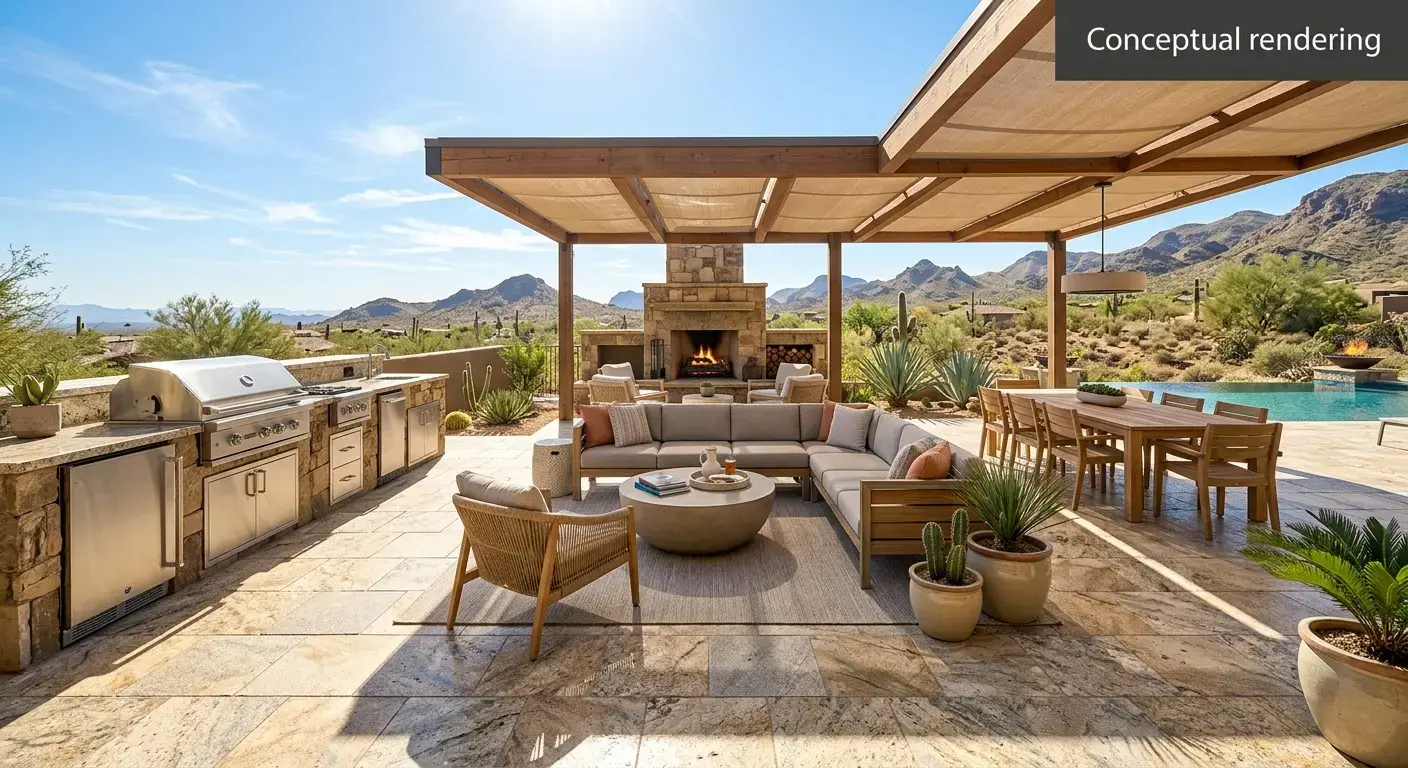
Natural stone pavers come from the ground, not a mold, which means every piece carries its own coloring, veining, and surface texture. Materials like flagstone, bluestone, travertine, and granite are common choices for patios and walkways because they read as part of the landscape rather than sitting on top of it. If you'd like to see the range of natural stone options in person, our live slab inventory shows what's currently on our showroom floors. The color variation between individual pieces is part of the appeal for homeowners who want an outdoor surface that looks organic rather than uniform.
Because natural stone is a mined material, thickness and shape can vary from piece to piece, especially with flagstone, which is often sold in irregular shapes that get pieced together like a puzzle. This gives more creative range for curved walkways or organic patio shapes, but it also means the piece-by-piece fitting process typically takes more time and skill than laying a uniform paver.
Natural stone also tends to perform well in a range of climates, though performance depends heavily on the specific stone, its density, and how it's installed. Granite is naturally dense and holds up well to freeze-thaw cycles and heavy foot traffic with little intervention, which is one reason it shows up often in driveway and patio projects. Travertine can also perform well outdoors, including in colder climates, but this depends on choosing a dense, high-quality grade and having it sand-set rather than mortared, along with regular sealing. Lower-grade or improperly installed travertine is more prone to cracking as it absorbs water that then freezes and expands. Softer or more porous stones generally benefit from sealing to resist staining and moisture absorption, regardless of climate.
What Manufactured Pavers Bring to an Outdoor Space
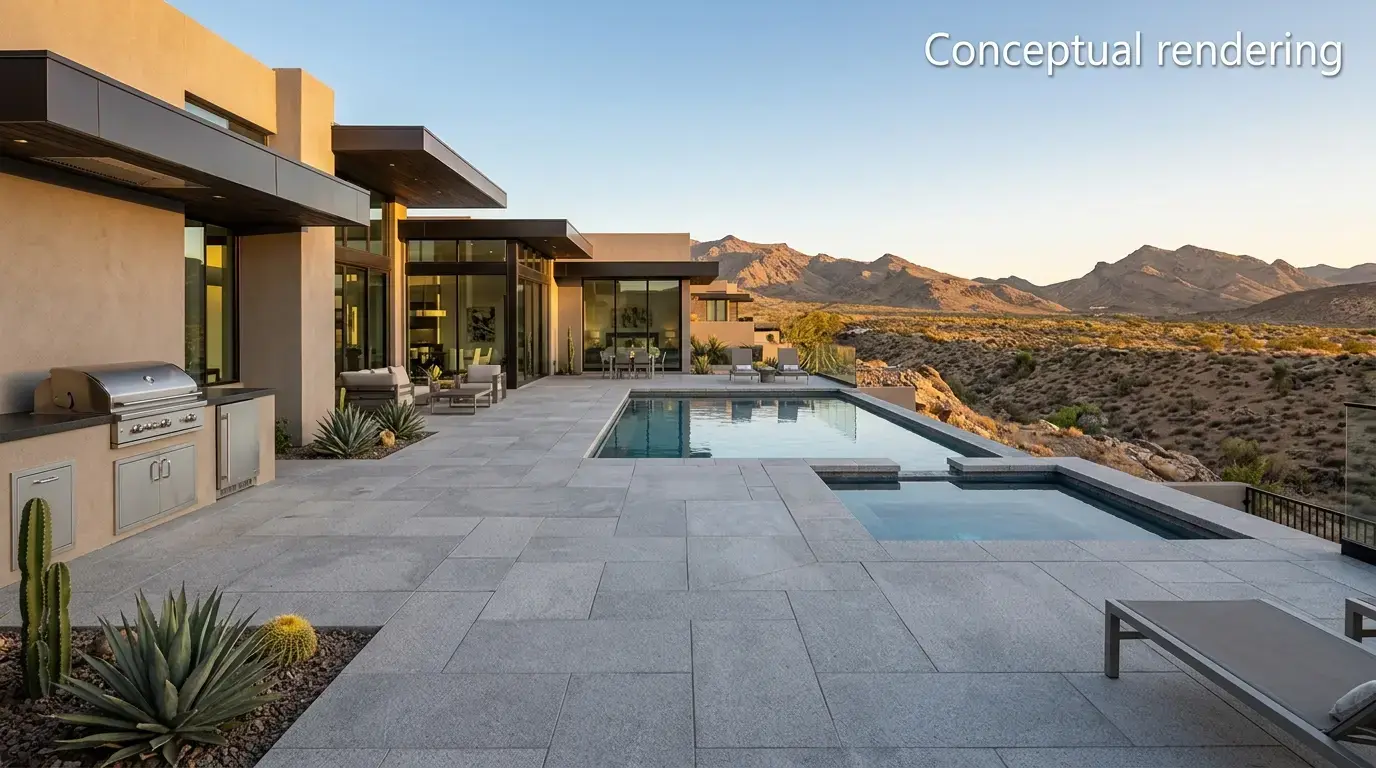
Manufactured pavers, most often made from concrete, are produced in molds under controlled conditions, which gives them consistent dimensions, a repeatable finish, and predictable performance from piece to piece. This consistency often makes the fitting process more straightforward, since pavers are sized to fit together in set patterns like a running bond, herringbone, or basketweave without the piece-by-piece adjustments that irregular natural stone requires.
Concrete pavers are engineered for compressive strength and are commonly rated for specific loads, which makes them a practical option for driveways and areas that see vehicle traffic. Manufacturers also produce pavers in a wide range of colors, textures, and surface finishes, including options designed to resemble natural stone, cobblestone, or brick. This gives homeowners design flexibility without the natural variation that comes with quarried material.
Because pavers are uniform, a damaged or stained piece can often be pulled and replaced without disturbing the surrounding surface, since replacement pavers of the same style and batch will match closely. This is a meaningful advantage for high-traffic areas like driveways and front walkways, where a single cracked or stained paver is easier to address individually than a section of variably shaped natural stone. Whichever direction feels right for your outdoor space, we carry options across our full product range to help you compare them side by side.
Comparing Cost
Cost is usually the first factor homeowners ask about, and it varies by material choice within each category as much as it does between natural stone and pavers as a whole. Manufactured concrete pavers are generally the more budget-friendly starting point, with material costs often running lower than natural stone per square foot, though the exact figure depends on the paver style, thickness, and finish selected.
Natural stone tends to cost more for material because it requires quarrying, cutting, and often more labor-intensive fitting, particularly with irregular shapes like flagstone. Granite and other harder stones sit at the higher end of the price range, while some sedimentary stones fall closer to mid-range pricing. The fitting process factors in differently between the two as well: pattern-based paver layouts are often quicker to complete due to the uniform shapes, while natural stone, especially flagstone, typically takes more time to fit and level each piece. If you already know which slab material you're interested in, you can request a quote directly to get pricing specific to that stone.
For homeowners working with a defined budget, it can help to think about cost per square foot for both material and labor together, rather than comparing material price alone, since labor differences between the two options can shift the total project cost more than people expect.
Comparing Appearance and Design Flexibility
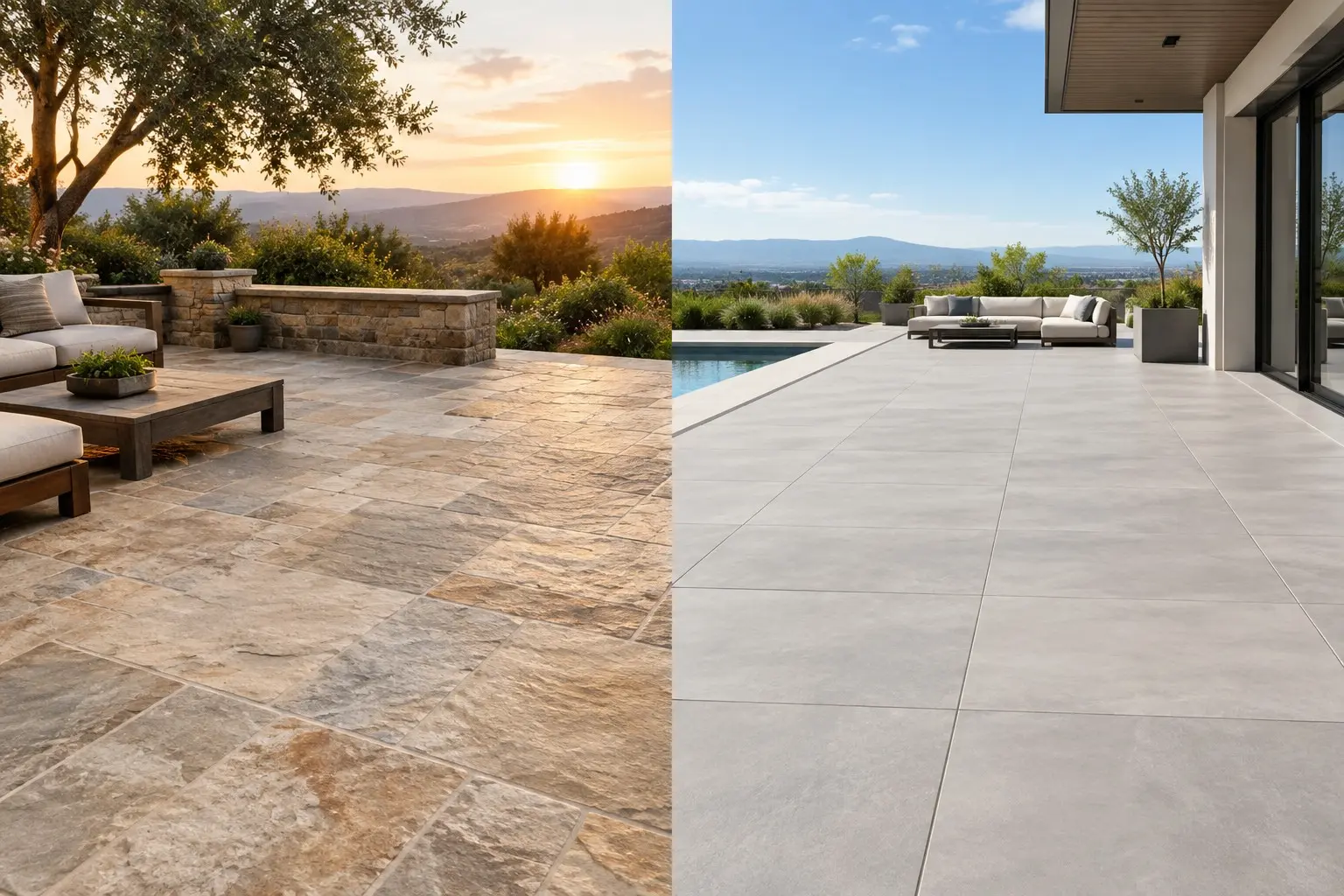
The appearance difference between natural stone and pavers comes down to variation versus consistency. Natural stone gives a patio or walkway a one-of-a-kind look, since no two quarries produce identical color patterns and every piece carries its own character. This appeals to homeowners aiming for a landscape-integrated look, particularly in established neighborhoods with mature trees and gardens, where a more organic material often complements the setting.
Manufactured pavers offer a different kind of flexibility. Because they come in a wide range of colors, shapes, and surface textures from smooth to textured, homeowners can choose a specific look and know it will repeat consistently across the entire project. Pavers also make intricate patterns like herringbone or basketweave easier to achieve, since the pieces are already sized to fit together in those layouts.
Neither option is inherently better looking than the other. The right choice comes down to whether you want a surface with natural variation or one with a controlled, repeatable pattern, and seeing both side by side often makes the decision easier than picturing it from a photo.
Comparing Maintenance Over Time
Both natural stone and manufactured pavers need some routine care, though the specifics differ. Natural stone, particularly porous types like travertine or limestone, benefits from periodic sealing to resist staining and moisture absorption. Sealing frequency depends on the specific stone type and how much foot traffic and sun exposure the area gets, so it is worth checking with a stone professional about the right schedule for the material you choose.
Manufactured pavers generally need less specialized maintenance, since the manufacturing process controls porosity more consistently than natural stone. Routine cleaning, occasional joint sand replenishment, and reapplying a paver sealer every few years are typically enough to keep a paver surface looking its best. Weeds growing between paver joints can be a maintenance point as well, though polymeric sand used in the joints helps reduce this over time.
For homeowners who prefer a lower-maintenance outdoor surface, manufactured pavers may be the more convenient option. For those willing to keep up with sealing in exchange for the character of real stone, natural stone remains a strong choice.
How Climate Factors Into the Decision
Climate is worth factoring into the decision regardless of where you live, since both natural stone and manufactured pavers respond differently to sun, moisture, and temperature swings. Light-colored natural stone and pavers reflect more heat, which can make a real difference in comfort on a patio during warmer months, while darker materials absorb more heat and can get hot underfoot in direct sun.
Drainage also matters in any climate with a defined rainy season. Both natural stone and paver installations rely on a properly prepared base with adequate drainage to prevent settling or water pooling, regardless of which material sits on top. This is a detail worth discussing with whoever handles your installation, since a well-prepared base often has more impact on long-term performance than the surface material itself. In regions with harsher freeze-thaw cycles, choosing a denser, less porous stone or a paver rated for freeze-thaw resistance becomes even more important.
Which Option Fits Your Project
For a patio meant to blend into an established garden or landscape, natural stone often provides the organic, varied look many homeowners are drawn to. For a driveway or a high-traffic front walkway where consistent replacement and predictable performance matter more, manufactured pavers can be the more practical choice. Some homeowners also mix the two, using natural stone as a stepping-stone path through a lawn and pavers for a more heavily used patio or driveway area nearby.
Budget, desired appearance, maintenance tolerance, and the specific application all play a role, and there is no single right answer that applies to every project. If you'd like to see and feel both materials before deciding, you can find the showroom closest to you and stop in to browse. From there, booking a design consultation and bringing measurements, photos of your space, and a sense of your style preferences can help narrow the options down to what will work best for your specific yard. Contractors and designers working on multiple client projects can also apply for a trade account to access trade pricing across both natural stone and paver-style products.
Conclusion
Choosing between natural stone and manufactured pavers ultimately comes down to what matters most for your specific project: the organic variation of real stone or the consistency and predictability of manufactured pavers. Both materials can perform well outdoors when properly selected and installed, so the decision often comes down to appearance preference, budget, and how much upkeep you are willing to take on. If you are weighing these options for a patio, walkway, or driveway, our design team can walk you through samples of both natural stone and paver options at showrooms in Reno, Sacramento, Minden, and Fernley, so you can find what works best for your space before you decide.
Frequently Asked Questions
Natural stone typically costs more than manufactured concrete pavers for both material and labor, largely due to quarrying costs and the additional time involved in fitting irregular shapes. Pricing varies widely within each category depending on the specific stone or paver style chosen.
Manufactured pavers generally require less specialized maintenance since factory production controls porosity more consistently. Natural stone, especially porous types, often benefits from periodic sealing to resist staining and moisture absorption.
Yes, many homeowners combine the two materials, such as using natural stone for a garden pathway and pavers for a driveway or high-traffic patio area. Mixing materials can balance appearance goals with practical performance needs across different areas of a yard.
Manufactured concrete pavers are often rated for specific compressive loads, which makes them a common choice for driveways and areas with vehicle traffic. Certain hard natural stones, like granite, can also perform well in driveway applications when selected appropriately.
Climates with distinct rainy seasons or freeze-thaw cycles make proper base preparation and drainage especially important for both materials, and in colder climates, denser stone or freeze-thaw-rated pavers hold up better. Lighter-colored stone or pavers can also help reduce heat retention during warmer months, regardless of location.