Modern hardscape uses straight edges, large-format pavers, and a neutral palette of gray, white, beige, and charcoal stone. Paver sizes such as 24 by 24 inches and 24 by 48 inches create fewer joints than small units and give patios a more uniform surface. Stack bond and running bond patterns keep joints aligned and reinforce the linear look.
Porcelain pavers, concrete paving slabs, and natural stones such as limestone, basalt, granite, and bluestone all suit the style. Porcelain pavers have a water absorption of 0.5 percent or less, the threshold ANSI A137.1 sets for porcelain tile. For pool decks and other wet outdoor areas, ANSI A326.3 includes an Exterior, Wet slip resistance classification.
In this guide, we cover colors, finishes, materials, layout patterns, planting, and outdoor performance for modern patios, walkways, and pool decks.
What Makes a Hardscape Read as Modern
Modern hardscape takes its cues from modern architecture: flat or low-pitched rooflines, large windows, horizontal emphasis, and very little ornament. Outdoors, those ideas show up as a handful of consistent design habits.
Geometry comes first. Rectangles and squares set the layout, corners meet at right angles, and borders run straight. Curves are rare, and when they appear they tend to be single, deliberate arcs rather than loose, meandering edges.
Repetition ties the space together. Using the same paver size and color across the patio, the path, and the steps lets the whole yard read as one continuous surface instead of a collection of separate projects.
The material list stays short. Many modern designs limit themselves to two or three hard materials, such as one paver, one gravel, and one wall finish. Each added material introduces another color and texture, which works against the simple look the style aims for.
Large-Format Pavers and Fewer Grout Lines
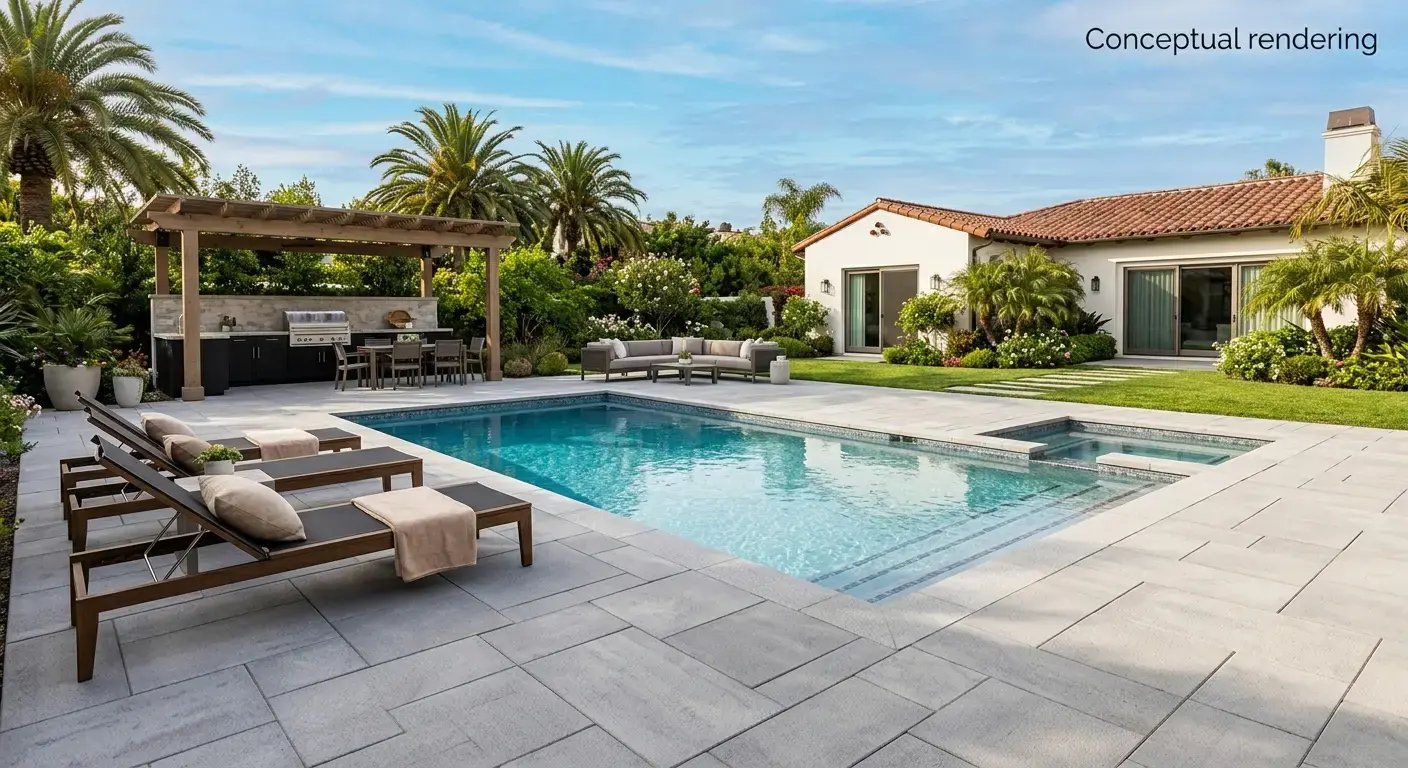
Large-format pavers are a recognizable feature of many modern patios. Sizes such as 24 by 24 inches, 12 by 24 inches, and 24 by 48 inches cover more ground per unit, so the finished surface has fewer joints and a quieter overall look.
There are trade-offs to plan for. Larger units are heavier, and they need a flat, well-prepared base so edges stay level with one another. Outdoor porcelain pavers are commonly produced around 2 centimeters (20 millimeters) thick, which differs from standard interior tile, so it is worth confirming the thickness and intended use of any product with your installer before ordering. Contractors and designers sourcing pavers for client projects can apply for a trade account to get trade pricing and job-site delivery.
Choosing a Neutral Stone Palette
Neutral colors are central to modern hardscape, and each shade behaves differently outdoors.
Light gray is a frequent starting point. It reads bright without the glare of pure white and pairs easily with concrete, steel, and dark window frames.
Charcoal and black anchor a design and create strong contrast against light walls or pale gravel. Basalt and dark porcelain fall in this range. Dark surfaces absorb more sunlight, so they can get hot underfoot in summer, which matters for pool decks and barefoot areas.
White and ivory surfaces, including light limestone and pale porcelain, reflect more heat and brighten shaded courtyards.
Beige and greige warm up a modern scheme. These tones suit homes with stucco, wood siding, or warm-toned trim, where a cool gray might look disconnected from the house.
A tone-on-tone approach works well for this style: pick one color family and vary the shade between surfaces. For example, a mid-gray patio, a charcoal step edge, and pale gray gravel stay cohesive while still giving each area definition.
Color consistency is another factor. Porcelain pavers offer a very uniform color from piece to piece. Natural stone carries some variation even in neutral shades, and a little movement can add interest without breaking the minimal look. If you are flexible on the exact shade, browsing our overstock materials can turn up options for smaller areas like side paths or courtyards.
Surface Finishes and Edge Profiles
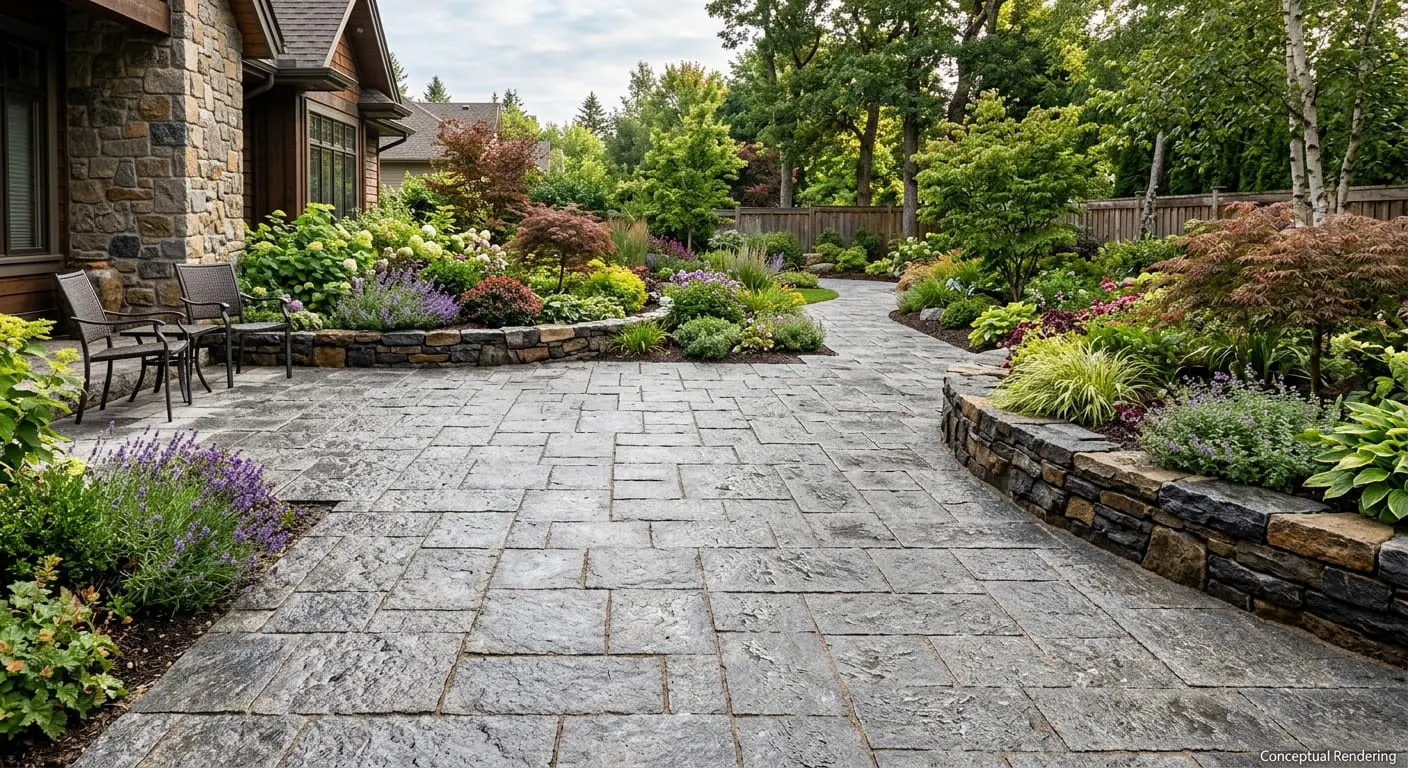
The finish of a paver affects both how it looks and how it feels underfoot. For modern hardscape, low-sheen and lightly textured finishes are the usual choices. Comparing finishes in person at one of our local showrooms shows differences in sheen and texture more clearly than photos do.
Honed or matte finishes have a smooth, flat appearance with little reflection. They show color clearly and suit the understated look of the style, though smooth surfaces should be checked for traction before use in wet areas.
Flamed finishes are created by exposing granite or basalt to high heat, which roughens the surface. The result has more grip and a slight change in color compared with a honed face of the same stone.
Brushed finishes sit between the two, with a soft texture and low sheen.
Edges matter just as much as faces. Modern designs favor sawn or cut edges that meet cleanly, rather than tumbled or chipped edges. Rectified porcelain, which is ground to precise dimensions after firing, allows for tight, consistent joints.
Porcelain, Concrete, and Natural Stone Compared
Three material groups suit modern hardscape. Each can achieve the look, and the right one depends on how the space will be used and maintained.
Porcelain pavers are made from dense clay bodies fired at high temperatures. ANSI A137.1 defines porcelain tile as tile with a water absorption of 0.5 percent or less when tested under ASTM C373, which means it takes in very little moisture. Porcelain offers uniform color and comes in looks that imitate concrete, limestone, and other stones. In climates with winter freezes, check that the product is rated for exterior use and has been tested for frost resistance under ASTM C1026.
Concrete pavers are manufactured units that are widely used for patios, walkways, and driveways. Smaller interlocking concrete pavers are covered by ASTM C936, while larger concrete paving slabs fall under a separate specification, ASTM C1782. Those larger slabs, in smooth or lightly textured finishes, are a common concrete option for modern layouts.
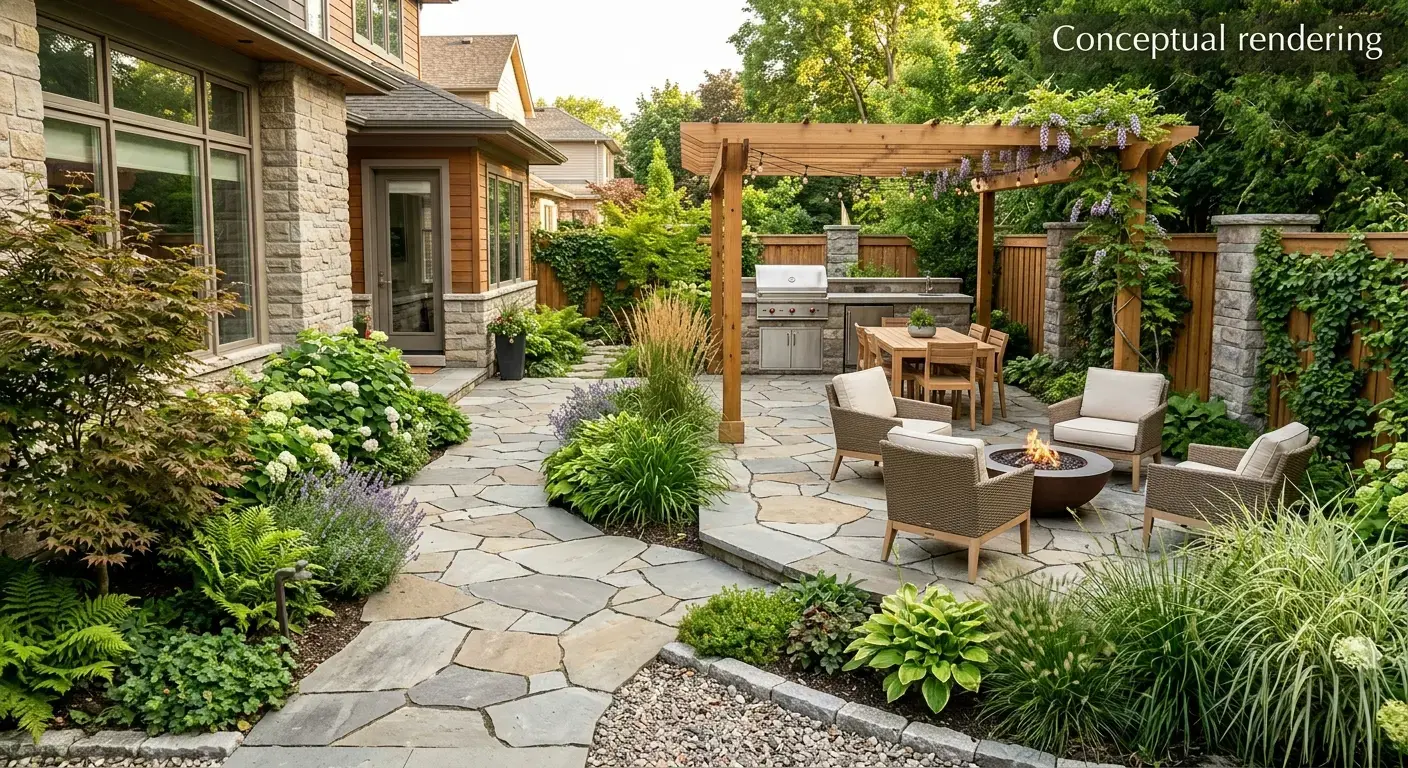
Natural stone brings subtle variation that porcelain and concrete do not. Several types fit a modern palette:
- Limestone in light gray and cream tones, with a smooth, even texture
- Basalt in dark gray to near-black, often with a fine, consistent grain
- Granite in grays and blacks, frequently given a flamed finish for outdoor use
- Bluestone in blue-gray tones, often cut into clean rectangular pieces
We carry pavers and exterior stone, including small to large format pavers and pool coping, and comparing these materials in person can help narrow down the options.
Layout Patterns That Keep Lines Clean
The pattern a paver is laid in shapes the character of the whole space. Modern designs tend toward simple, ordered arrangements.
Stack bond, also called a grid pattern, aligns every joint in both directions. It creates a formal grid and suits square pavers in particular.
Running bond offsets each row, usually by half or a third of a paver length. It emphasizes one direction and works well with plank formats on paths and long patios.
Joint details make a noticeable difference. Narrow, consistent joints keep the surface reading as one plane. A joint color close to the paver color minimizes the grid, while a contrasting color turns the grid into a deliberate design element.
Alignment with the house ties the outdoor space to the architecture. Lining up joints with door openings, window edges, or wall corners makes the hardscape feel like an extension of the building. Wide, shallow steps and floating step designs, where each tread appears to hover over the one below, follow the same principle. If you want help matching paver sizes and colors to the layout you have in mind, you can book a free design consultation and bring a site plan or photos of the space.
Pairing Stone with Planting and Gravel
Structured plants suit the style. Ornamental grasses, succulents, clipped shrubs, and low groundcovers planted in repeated groups echo the order of the paving. A single plant type repeated along a border usually looks more modern than a mix of many varieties.
Gravel works as a transition between stone and planting. A bed of crushed stone in a complementary neutral, such as pale gray gravel beside charcoal pavers, fills space with texture and needs less water than lawn. It also lets rain soak into the ground.
Edging holds the composition together. Steel edging, stone borders, or a soldier course of pavers along the perimeter keeps gravel and soil in place and gives every boundary a sharp, defined line.
Performance Factors Beyond Appearance
Slip resistance. Smooth, minimal surfaces can be slick when wet. ANSI A326.3 sets the method for measuring dynamic coefficient of friction (DCOF) and includes product use classifications, one of which is Exterior, Wet, for areas such as patios, walkways, and pool decks. Checking a product's declared classification is a simple way to confirm it is intended for outdoor wet use. Textured or flamed finishes are a common choice around pools, spas, and outdoor showers.
Surface heat. Dark pavers and stone absorb more sunlight than light ones. In hot summers, charcoal and black surfaces in full sun can become uncomfortable for bare feet, so many homeowners use lighter tones near pools and save darker colors for shaded areas or accents.
Freeze and thaw. Where winter temperatures drop below freezing, water that enters a material can expand as it freezes. Low-absorption materials and stones suited to exterior use in cold climates perform better in these conditions. For higher-elevation and mountain properties, ask about frost resistance before choosing a material.
Maintenance. Light colors show stains from leaves, rust, and grease more readily than mid-tones. Natural stone may need periodic sealing, depending on its porosity, while porcelain typically needs only routine cleaning. Factoring maintenance into the color and material decision helps the finished space keep its clean look.
Bringing a Modern Hardscape Together
A modern hardscape comes down to straight lines, a short list of materials, large pavers with narrow joints, and a neutral palette that relates to the house.
Seeing colors and materials side by side makes the final choice easier. Visit our showrooms in Sacramento, Reno, Minden, and Fernley to compare pavers, finishes, and formats in person. Bring photos or plans of your space so we can help you narrow down a palette that fits your home.
Note: Some images on this page may be conceptual renderings created to illustrate design possibilities and may not depict actual installations.
Frequently Asked Questions
Neutral colors are typical of modern hardscape. Light gray, charcoal, white, ivory, beige, and greige all fit the style. Many designs use one color family in two or three shades, such as a mid-gray patio with charcoal step edges and pale gravel, to keep the space cohesive while giving each area definition.
Yes, large-format pavers often suit small patios well. Units such as 24 by 24 inches create fewer joints than small pavers, and fewer lines usually make a compact space feel more open. Planning the layout around the paver dimensions helps reduce small cut pieces at the edges.
Stack bond, also called a grid pattern, is a frequent choice for modern hardscape because every joint aligns in both directions. Running bond, with each row offset, also suits the style and works well with long plank-shaped pavers on paths and narrow patios.
Both can work, and the choice depends on priorities. Porcelain pavers offer uniform color and low water absorption, defined by ANSI A137.1 as 0.5 percent or less. Natural stones such as limestone, basalt, granite, and bluestone carry subtle variation and may need periodic sealing depending on the stone type.
Dark pavers can be used around a pool, but they absorb more sunlight and can become hot underfoot in summer. Many homeowners choose lighter neutral tones for pool decks in full sun and use darker colors for shaded areas or accents. A textured finish suited to exterior wet areas is also a common choice near water.