Modern hardscape ideas center on large-format pavers, straight lines, and a neutral color palette of grays, charcoals, soft whites, and warm sand tones. Large-format pavers measure about 24 inches or more on at least one side, and their size reduces visible joints so patios, walkways, and pool decks read as one clean, continuous surface.
Common modern hardscape ideas include carrying indoor porcelain tile outside, framing pavers with gravel bands, creating a floating stepping-stone path, and building a simple pool surround with matching coping. For materials, 2 cm porcelain pavers offer consistent color and size, while natural stone such as granite, basalt, bluestone, and limestone adds subtle variation. Simple layouts like a stack bond grid or a one-third offset keep the lines crisp.
What Makes a Hardscape Look Modern?
A hardscape looks modern when it relies on simple shapes, consistent materials, and clear transitions between spaces. Most modern outdoor designs share a handful of traits:
- Straight lines and right angles. Rectangular patios, linear walkways, and squared-off steps replace the curves and irregular shapes common in traditional or rustic yards.
- A limited material palette. One main paver, often paired with a single accent like gravel, steel, or wood, keeps the space cohesive.
- Large, uniform pieces. Bigger pavers mean fewer joints, and fewer joints make the ground plane look quieter.
- Neutral, muted color. Grays, charcoals, soft whites, and warm sand tones let plants, furniture, and the architecture of the home stand out.
- Negative space. Open areas are part of the design. A modern yard rarely fills every corner.
None of these traits requires a large yard or a big budget. A small patio with three or four oversized pavers and a border of crushed gravel can feel just as contemporary as a full backyard redesign. If you are working with a tighter budget, our overstock sale is a good place to look for discounted materials.
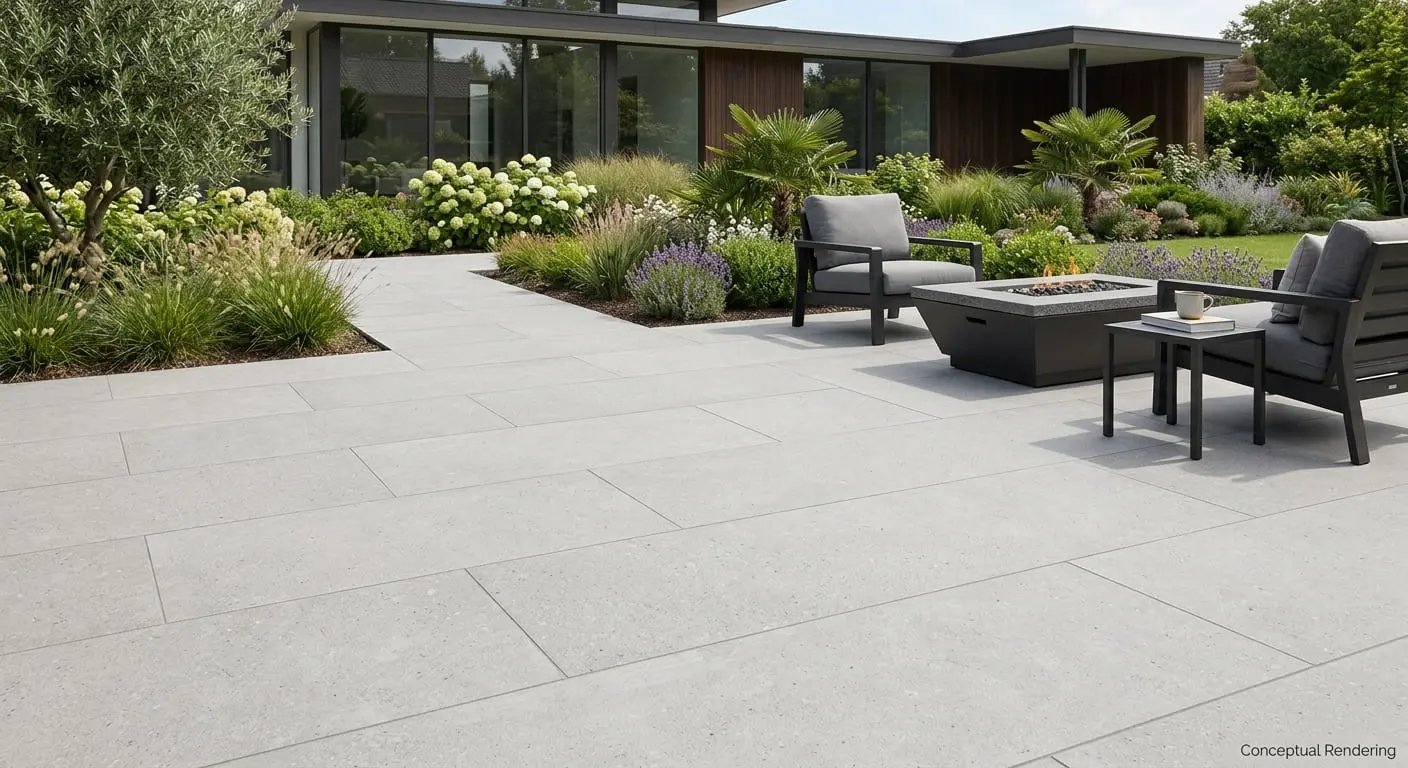
Why Do Large-Format Pavers Suit Modern Designs?
Large-format pavers suit modern designs because they create a smooth, uninterrupted surface with far fewer grout or sand lines. A 24 by 48 inch paver covers the same area as eight 12 by 12 inch pieces, so the eye reads the patio as one calm plane instead of a busy grid.
That simplicity has a few practical benefits beyond looks:
- Fewer joints to keep clean. Less joint area usually means less room for weeds and debris to settle.
- A sense of scale. Oversized pieces can make a small patio feel larger, much like large tile does indoors.
- Easier indoor-outdoor continuity. Many porcelain lines are made in both indoor tile and outdoor paver versions, so the floor can carry from the living room straight onto the patio.
What Sizes Count as Large-Format Pavers?
ANSI A108.T, the tile industry’s terminology standard, defines large-format tile as having a face dimension greater than 23 inches, so pavers sold as large-format typically start at 24 inches on at least one side. Exact sizes vary by manufacturer, and many are based on metric sizes, so a 24 x 24 paver may actually measure about 23.6 inches. These are the formats homeowners see most often:
| Size (inches) | Shape | Where it works well |
| 24 x 24 | Square | Patios, pool decks, and a classic grid layout |
| 24 x 36 | Rectangle | Patios and terraces where a slightly linear look is wanted |
| 24 x 48 | Rectangle | Large patios, entertaining areas, and stepping pieces |
| 12 x 48 or 16 x 48 | Plank | Walkways, side yards, and wood-look porcelain designs |
| 30 x 30 and larger | Square | Spacious terraces and open courtyards |
Scale matters. A very large paver in a tight space can look out of proportion and leave awkward cuts at the edges. A useful starting point is to measure the area and sketch how many full pieces fit across each direction before choosing a size.
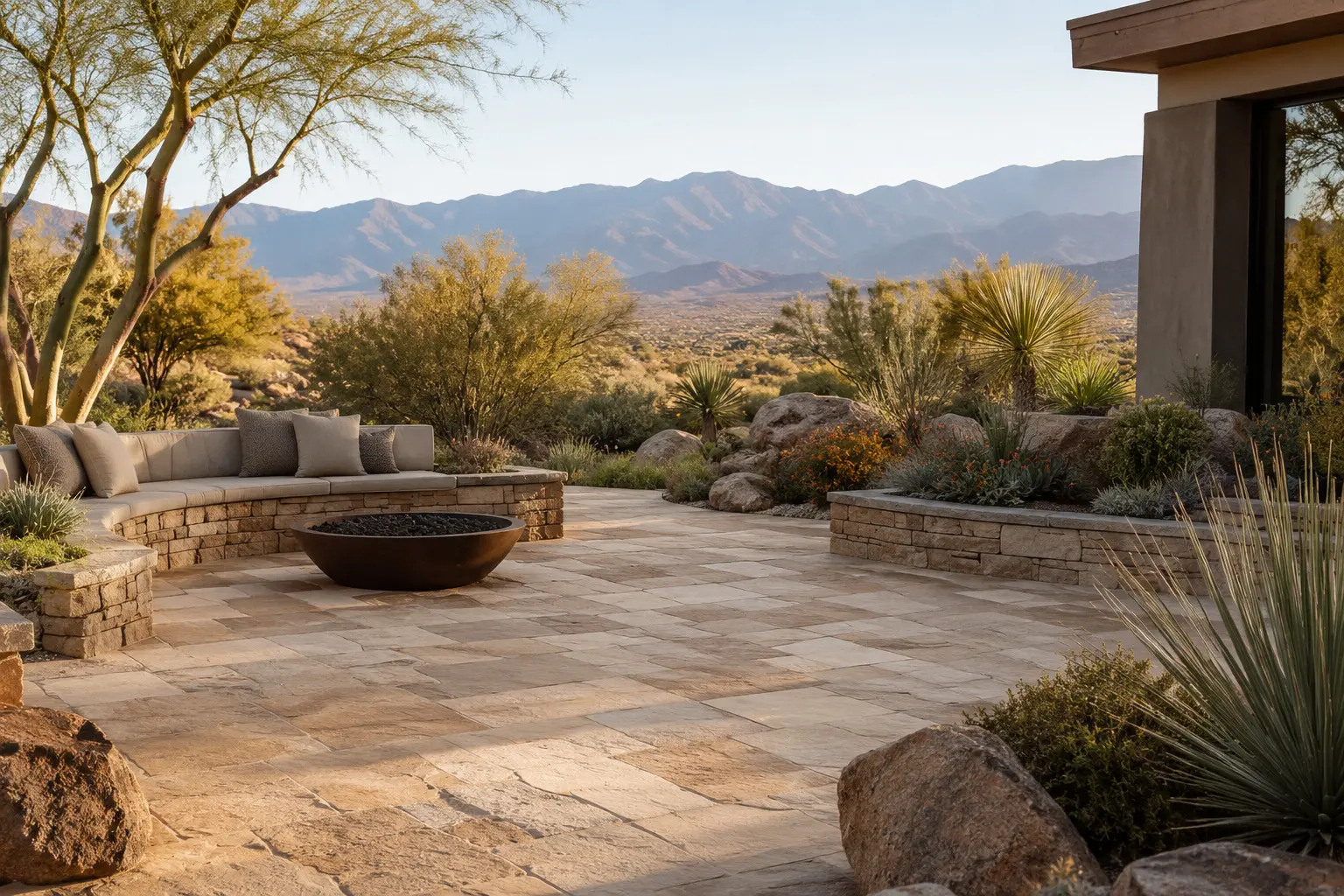
Porcelain or Natural Stone: Which Is Better for a Modern Hardscape?
Both porcelain and natural stone come in large formats and both fit a modern design. The right choice depends on whether you want strict uniformity or natural variation.
Porcelain Pavers
Outdoor porcelain pavers are usually about 2 cm (roughly 3/4 inch) thick and are made to look like concrete, stone, or wood. Because porcelain is manufactured, color and size stay consistent from piece to piece, which suits designs built on crisp, repeating lines. Porcelain is also very dense. Under ANSI A137.1, porcelain tile must absorb 0.5 percent water or less, which helps it handle freeze-thaw cycles and resist staining. Concrete-look and limestone-look finishes are common choices for modern yards.
Natural Stone Pavers
Natural stone has shifts in tone and texture that come from how each stone formed, while porcelain reproduces those looks with more consistency from piece to piece. Stones that lend themselves to modern designs include:
- Granite and basalt in gray and charcoal tones, often with a flamed or brushed finish for grip.
- Bluestone, with a cool blue-gray color that reads clean and architectural.
- Limestone, in soft creams and grays for a quieter, warmer look.
- Quartzite, for a hard surface with gentle movement in the stone.
Natural stone pavers are typically thicker than porcelain, and each piece will vary slightly in color. For a modern look, many homeowners choose stones with a tight, even pattern rather than heavy veining or strong color swings.
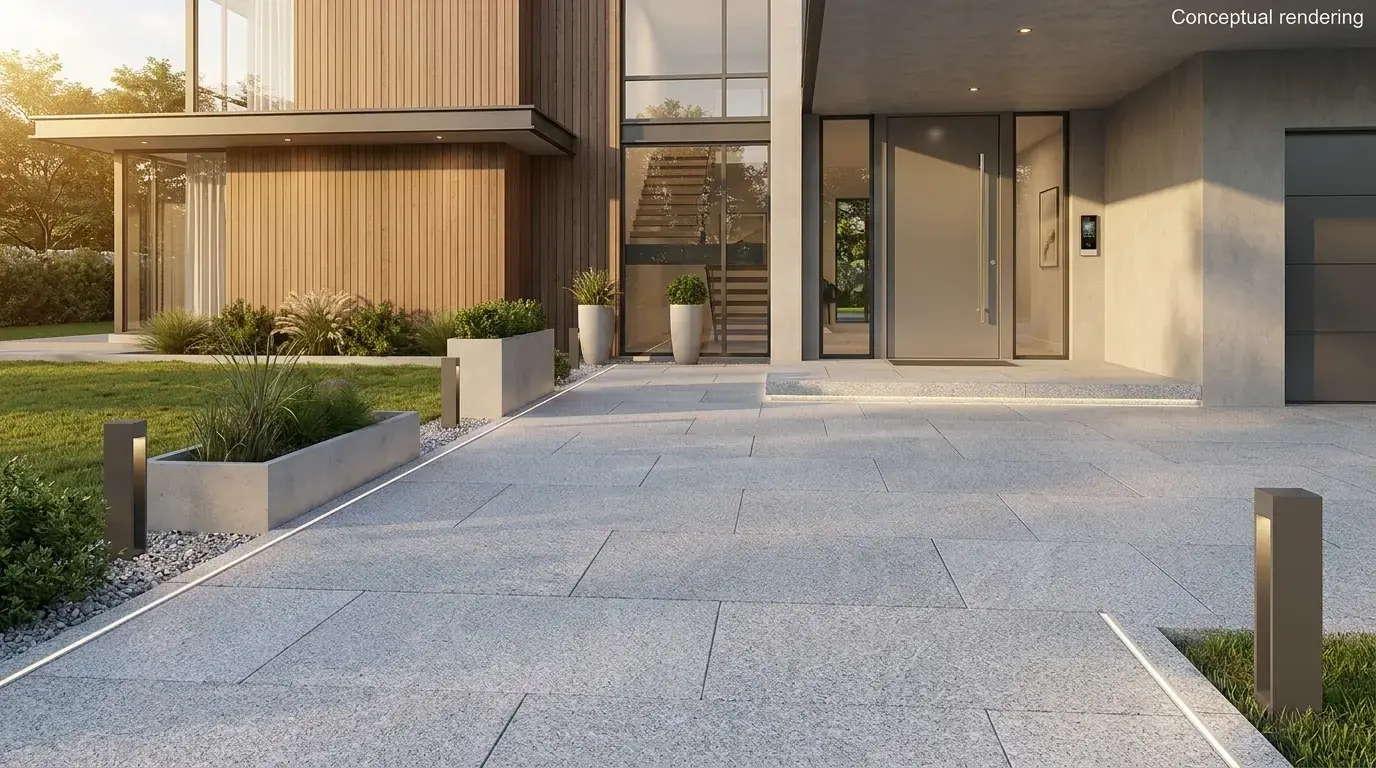
How Do You Choose Colors for a Modern Hardscape?
Modern hardscapes usually stick to one main neutral and, at most, one contrasting accent. Keeping the palette tight is what makes the large surfaces feel intentional instead of plain.
Common directions include:
- Light gray and soft white. These feel bright and airy, and lighter surfaces generally stay cooler underfoot in direct sun.
- Mid-gray and concrete tones. A flexible middle ground that pairs well with both white and dark exteriors.
- Charcoal and near-black. High contrast, especially against white stucco or light siding. Dark surfaces absorb more heat, so they suit shaded areas better than a sun-baked pool deck.
- Warm sand and greige. A softer take on modern that works with wood accents and warm-toned homes.
A simple way to test a palette is to look at the paver beside your home’s exterior color, window frames, and any existing stone or concrete. The paver should feel related to the house, not competing with it. Looking at pavers in natural daylight helps, since showroom lighting can shift how a color reads. If you want a second opinion on color pairings, you can book a free design consultation and bring photos of your home’s exterior.
Which Layout Patterns Keep Lines Clean?
The simplest patterns look the most modern. Complex layouts like herringbone or random ashlar can look busy with oversized pieces, so most contemporary designs use one of these:
- Stack bond (grid). Every joint lines up in both directions. It creates the most structured, formal look and works best with square pavers.
- One-third offset. Each row shifts by a third of a paver’s length. For porcelain pieces where the offset side is 15 inches or longer, the ANSI A108.02 standard calls for an offset of 33 percent or less, because a half offset can make slight bowing in long pieces show up as uneven edges.
- Linear plank layout. Long, narrow pavers run in one direction, which can make a narrow walkway or side yard feel longer.
- Spaced stepping pieces. Individual pavers sit apart with gravel, grass, or ground cover in the gaps.
The direction of the layout matters too. Running long pavers parallel to the house tends to widen a space, while running them away from the house draws the eye toward the yard. Consistent, narrow joints also help. Even, tight spacing keeps the grid crisp, while uneven joints break up the clean lines that define the style. Your contractor can advise on the right joint width and setting method for the paver you choose.
Modern Hardscape Ideas to Try
Carry the Indoor Floor Outside
Choose a porcelain paver that matches or closely complements your interior tile. When the sliding door opens, the floor appears to continue outdoors, which makes both spaces feel larger. Seeing indoor tile and outdoor pavers side by side at one of our local showrooms makes it easier to judge how well they match.
Frame Pavers With Gravel Bands
Set large pavers in a grid with a few inches of crushed gravel between them instead of tight joints. Dark gravel against light pavers, or pale gravel against charcoal, creates a clean graphic pattern that also lets water soak in between pieces.
Create a Floating Path
Space large rectangular pavers across ground cover, low grasses, or decomposed granite. Each paver reads as its own shape, and the path uses less material than a solid walkway.
Design a Simple Pool Surround
A wide band of light, textured pavers around a rectangular pool keeps the focus on the water. Many paver lines offer matching coping pieces, so the pool edge and the deck can share one material for a continuous edge.
Build an Outdoor Room Around a Fire Feature
Define a lounge area with a square of large-format pavers, a linear fire feature, and built-in seating. Keeping the paver consistent with the main patio ties the spaces together while the furniture marks the zone.
Pair Pavers With One Warm Accent
A single contrasting material, such as wood decking, corten steel edging, or a stone-clad planter wall, adds warmth without cluttering the design. Limiting it to one accent keeps the overall look calm.
What Should You Check Before Choosing Large-Format Pavers?
A modern look only works if the material also suits how you use the space. Before you commit, consider these points:
- Slip resistance. Smooth, polished surfaces can be slippery when wet. Look for textured, matte, flamed, or brushed finishes for outdoor use, and check whether the product is rated for exterior wet areas under ANSI A326.3.
- Heat. Dark pavers in full sun can get uncomfortably warm. Lighter colors are a better fit for pool decks and barefoot areas.
- Freeze-thaw. In areas with winter freezes, choose dense, low-absorption materials like porcelain or hard natural stones rated for exterior use.
- Intended traffic. Most 2 cm porcelain pavers set on sand, gravel, or pedestals are meant for foot traffic. Some manufacturers rate them for light vehicle traffic only when mortar-set on a concrete slab, and thicker vehicular pavers are also made. Review the manufacturer’s specifications with your contractor before planning a driveway.
- Drainage. Large solid surfaces still need a slight slope so water runs away from the house. Gravel joints or permeable gaps can also help manage runoff.
- Weight and handling. Large pieces are heavy and often need two people or special equipment to place, which your contractor will factor into planning.
Bringing these questions to your contractor early helps avoid choosing a paver that looks right but does not suit the site. Contractors and designers sourcing materials across several projects can also open a trade account for trade pricing and job-site delivery.
Conclusion
A modern hardscape comes down to a few clear choices: large-format pavers, straight lines, a tight neutral palette, and a simple layout with consistent joints. Whether you lean toward the uniformity of porcelain or the natural variation of granite or quartzite, the goal is the same: an outdoor space that feels open, orderly, and connected to your home. Thinking through size, color, finish, and how the space will be used before you choose makes it much easier to land on a paver that looks right and works day to day.
If you are planning a modern patio, walkway, or pool deck, we would be glad to help you compare options in person. We carry porcelain and natural stone pavers, and our team at the Sacramento, Reno, Minden, and Fernley showrooms can walk you through sizes, finishes, and color pairings so you can bring a clear plan to your contractor.
Note: Some images on this page may be conceptual renderings created to illustrate design possibilities and may not depict actual installations.
Frequently Asked Questions
A modern hardscape is an outdoor design built on straight lines, simple geometry, and a limited, neutral material palette. It typically uses large-format pavers, minimal joints, and open space to create a clean, organized look.
Many modern patios use pavers that are 24 by 24 inches or larger, such as 24 by 36 or 24 by 48 inches. The best size depends on the patio’s dimensions, since very large pieces can look out of scale or require awkward cuts in small spaces.
Yes, porcelain pavers made for exterior use are dense and absorb very little water, which helps them resist staining and freeze-thaw damage. Choose a textured or matte finish rated for exterior wet areas for better traction.
Neutral tones are the most common choice, including light gray, mid-gray, charcoal, soft white, and warm sand. Lighter colors stay cooler in direct sun, while darker shades create stronger contrast against light exterior walls.
Some can, depending on the product and how it is set. Many 2 cm porcelain pavers are rated for foot traffic when laid on sand or gravel, while some manufacturers allow light vehicle traffic when the pavers are mortar-set on a concrete slab. Always check the manufacturer’s specifications and confirm the setting method with your contractor.