To match exterior stone to your home's roof, siding, and trim colors, choose a stone whose undertone (warm, cool, or neutral) agrees with your roof first, then confirm it works with your siding, and use trim to connect the two. Matching undertones matters more than matching exact colors, because stone, roofing, and siding rarely share the same shade.
Warm stones such as sandstone, travertine, and honey-toned ledgestone pair well with brown, cedar, and terracotta roofs. Cool stones such as bluestone, charcoal slate, and gray granite work best with black and charcoal roofs. Neutral fieldstone blends and mixed-tone stone veneers suit weathered wood roofs and can bridge warm and cool materials on the same facade.
Exterior stone is seen from the street in full sun and deep shade, so the right choice should be judged in daylight and from a distance, not only up close in a showroom. In this guide, we explain how stone undertones work, which stone types pair with common roof and siding colors, how trim, doors, and architectural style tie a facade together, how to extend the palette to patios and walkways, and how to evaluate stone before you decide.
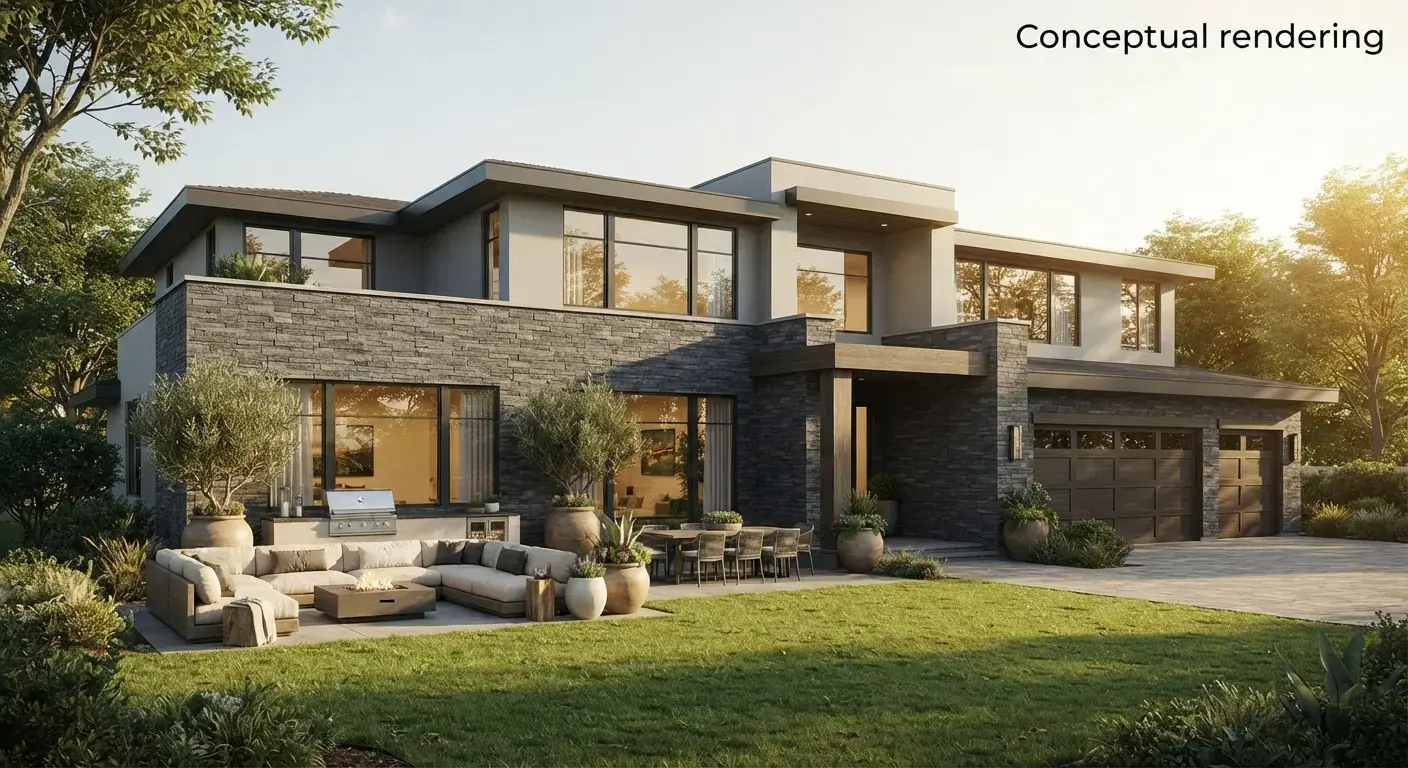
Start With Undertones: Warm, Cool, and Neutral Stone
Every exterior stone has an undertone that shows up once it sits next to other materials. Warm stones lean toward yellow, gold, red, rust, or tan. Cool stones lean toward blue, gray, charcoal, or green. Neutral stones fall in between and can move in either direction depending on what surrounds them.
Here is how common exterior stone types tend to read:
- Warm: sandstone, travertine, tan and golden limestone, buff and honey-toned ledgestone, and quartzite blends with rust or gold streaking.
- Cool: bluestone, charcoal and silver slate, gray granite, and cool-toned stacked stone blends.
- Neutral or mixed: fieldstone blends, cream limestone, and multi-tone veneers that combine gray, beige, and brown.
To check a stone's undertone, set a sample next to a sheet of pure white paper in daylight. A warm stone will look yellow or peach beside the paper. A cool stone will look blue, gray, or green. If it is hard to tell, the stone is probably neutral, which gives you more flexibility.
The same test works on your existing materials. Hold the white paper against your roof shingles, siding, and trim so you know what undertones you are working with before you look at stone.
Let Your Roof Lead the Palette
Your roof is usually the most expensive exterior surface to replace, so it makes sense to treat it as the anchor. Trim can be repainted with relatively little effort and siding can often be repainted or updated, but a roof typically stays in place for 20 years or more.
Here are pairings that tend to work with common roof colors:
Roof color | Stone direction | Stone examples |
| Black or charcoal shingles | Cool or neutral stone with gray tones | Gray ledgestone, bluestone, charcoal slate, silver quartzite |
| Weathered wood or driftwood brown | Neutral blends with both beige and gray | Fieldstone blends, cream limestone, mixed-tone veneer |
| Warm brown or cedar | Warm stone with tan, gold, or rust | Sandstone, honey ledgestone, travertine |
| Terracotta or red clay tile | Warm stone in cream, buff, or tan | Limestone, travertine, buff sandstone |
| Metal roof in gray or bronze | Stone that echoes the metal tone | Gray granite with gray metal; rust-veined quartzite with bronze |
A useful rule of thumb is to pull one color from the roof into the stone. If your shingles have flecks of brown mixed into gray, a stone blend with a little brown will connect the two surfaces. If the roof is a flat, uniform black, a stone with gray and charcoal pieces will feel related without looking identical. Comparing options across our exterior stone, tile, and flooring selection in one visit makes it easier to test stone against your existing roof and siding colors.
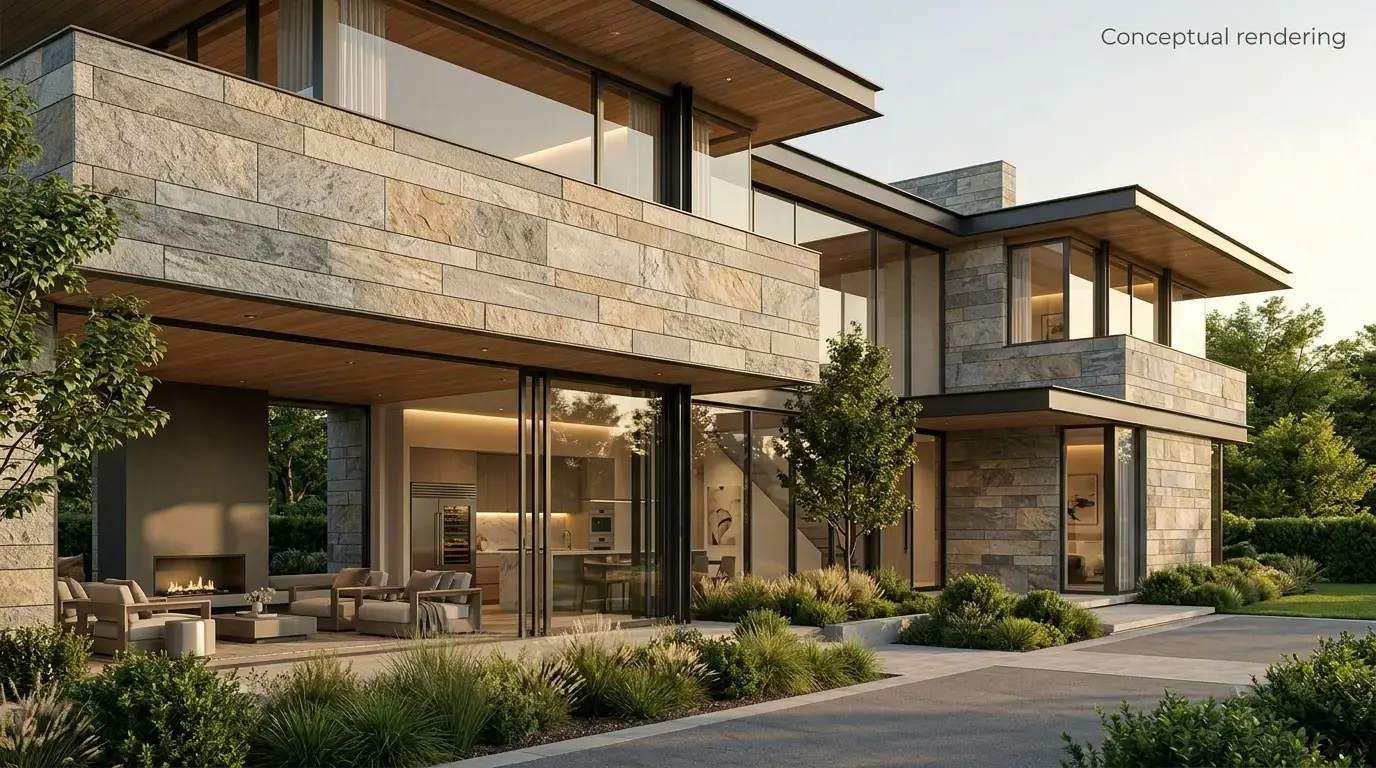
Pairing Stone With Your Siding Color
Siding covers the most wall area, so it sets the overall tone of the house. The stone should either share its undertone or provide a clear, intentional contrast.
White or off-white siding. Crisp white works with almost any stone, but the undertone of the white matters. Bright, cool whites pair well with gray ledgestone or bluestone for a clean, modern look. Creamy whites with a yellow base look better beside warm limestone, buff sandstone, or honey-toned stacked stone.
Gray siding. Light and mid-gray siding pairs naturally with cool stone like charcoal slate or gray granite. For more warmth, choose a neutral fieldstone blend that includes some tan pieces. Strongly orange or red stone can look out of place against cool gray siding.
Beige, tan, or greige siding. These colors sit close to many natural stones, so the goal is enough variation to keep the stone from disappearing. A stone blend that is a few shades darker than the siding, with some brown or rust accents, adds depth.
Dark siding (navy, charcoal, black, or deep green). Dark siding is a strong backdrop that makes lighter stone stand out. Cream limestone, light gray ledgestone, and pale quartzite all read clearly against dark walls. Very dark stone on very dark siding can blend into one flat mass.
Brick. When stone meets existing brick, look at the mortar color as well as the brick itself. Stone that picks up the mortar tone, often gray or cream, usually looks more deliberate than stone that tries to match red brick.
Tying It Together With Trim, Doors, and Accents
Trim frames the windows, doors, and edges of the house, so it often acts as a visual bridge between stone and siding. Window frames, fascia, corner boards, and door surrounds all sit near the stone and influence how it reads.
A few approaches work well:
- Echo the lightest tone in the stone. If your stone blend includes cream or pale gray pieces, painting trim in a similar shade connects the stone to the rest of the facade.
- Echo the darkest tone. Black or dark bronze window frames can pick up charcoal pieces in a gray stone blend and give the exterior a sharper outline.
- Keep trim neutral when the stone is busy. A multi-color fieldstone or rustic blend already carries a lot of visual activity. Simple white, cream, or black trim keeps the overall look calm.
The front door is a good place for a single accent color, but check it against the stone before painting. An orange or terracotta door looks warm beside tan sandstone but can compete with a cool blue-gray slate. Deep blue, green, or natural wood doors tend to be easier to pair with a wide range of stone.
Don't forget hardware and lighting. Exterior fixtures, house numbers, and railings in black, bronze, or brushed nickel should relate to either the trim or the darker tones in the stone.
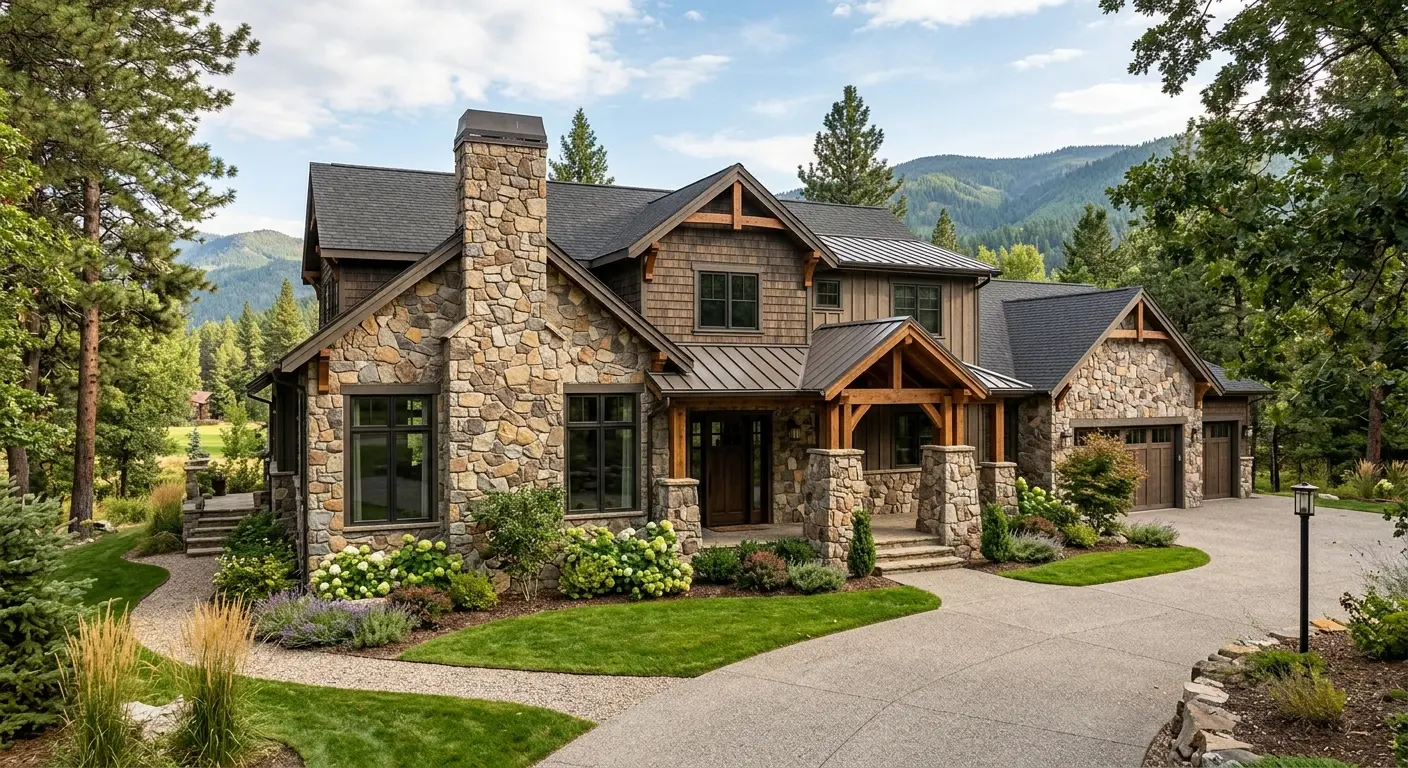
Consider Your Home's Architectural Style
Color is only part of the equation. The shape, texture, and pattern of the stone should also fit the style of the house.
- Craftsman and bungalow homes often pair well with rounded river rock or rugged fieldstone at the base of tapered columns, in warm or neutral tones that suit earthy siding colors.
- Modern and contemporary homes usually look best with linear ledgestone or large-format stone panels in gray, charcoal, or white, with clean lines that echo the architecture.
- Farmhouse exteriors with white or light siding and black trim work well with gray or cream stacked stone, or a whitewashed stone look.
- Mediterranean and Spanish-style homes with stucco and clay tile roofs suit warm limestone, travertine, or sandstone in cream and tan.
- Ranch and mountain-style homes can handle larger, more irregular stone with mixed colors, often in browns, grays, and rust that relate to wood siding and natural surroundings.
If your home mixes styles, let the roofline and siding material guide you. The stone should feel like it belongs to the house, not like a separate design idea added on later. Builders and designers who specify stone for different home styles across multiple projects can apply for a trade account for trade pricing and job-site delivery.
Blend or Contrast: Deciding How Much the Stone Should Stand Out
Once you know which undertones work, decide whether the stone should blend with the house or stand apart from it.
Blending means choosing stone close in value (lightness or darkness) to the siding. The result is soft and cohesive, and it works well when the stone covers a large area, such as a full front elevation.
Contrasting means choosing stone noticeably lighter or darker than the siding. This draws attention to the stone and works best when it covers a smaller, well-defined area, such as a wainscot band, column bases, a chimney, or an entry wall.
Proportion matters as much as color. One approach borrowed from interior design is a rough 60-30-10 split: about 60 percent of the facade in the main siding color, 30 percent in a secondary material or color, and 10 percent in accents. Stone often fills that 30 percent role. When stone covers too little area in a strong contrasting color, it can look like an afterthought. When it covers too much in a busy blend, it can overwhelm the facade.
It also helps to think about where stone stops. Stone that ends at an inside corner or wraps around the side of the house looks more intentional than stone that ends abruptly on a flat wall.
Carrying the Palette to Patios, Walkways, and Entries
The same roof, siding, and trim palette applies to ground surfaces. Natural stone and porcelain pavers for patios, walkways, pool decks, and front entries sit in the same view as the house, so choose tones that share its undertones. A warm travertine walkway suits tan siding and a brown roof, while gray porcelain or granite pavers work well with charcoal roofing and cool stone accents. If budget is part of the decision, our overstock and close-out deals are worth checking before you finalize materials for a patio or walkway.
How to Evaluate Stone Against Your Home Before You Decide
Exterior stone can look very different outdoors than it does inside a showroom. Whether you are comparing options at one of our local showrooms or from photos at home, take a few steps before you settle on a color to see how it will actually read on your house.
- Photograph your home at different times of day. Take pictures of the front elevation in morning light, midday sun, and late afternoon. Note which direction the house faces, since north-facing walls receive indirect light that reads cooler, west-facing walls pick up warm late-afternoon light, and south-facing walls get strong direct sun that can wash out color.
- Bring your photos and material details when you visit. Photos of your roof, siding, and trim, plus any paint or shingle color names, help our team narrow down stone options that fit your existing palette. You can book a free design consultation to set aside time for your project before you visit.
- View stone in natural light. Whenever possible, look at stone pieces outdoors or near a window rather than only under indoor lighting.
- Look at a large enough area. A single piece of stone rarely shows the full color range of a blend. Look at a display board or a photo of a finished wall to see how the colors mix across a larger surface.
- Step back. Most people see the exterior of a home from the street or driveway. View stone options from a distance of 20 to 30 feet, where individual pieces blend into an overall tone.
- Check the stone wet and dry. Porous stones such as sandstone, limestone, and travertine often darken noticeably when wet. If your area gets regular rain or snow, see how the color shifts when damp.
These steps take a little extra time, but they reduce the chance of choosing a stone that looks right up close and wrong from the curb.
Conclusion
Matching exterior stone to your roof, siding, and trim comes down to a few clear steps: identify the undertones of your existing materials, let the roof anchor the palette, choose stone that suits your siding color and home style, and use trim and accents to connect everything. Decide early whether the stone should blend or contrast, keep proportions balanced, and always judge color in natural light and from a distance.
When you are ready to compare options side by side, you can visit one of our showrooms in Sacramento, Reno, Minden, or Fernley. Bring photos of your home and the names of your roof and paint colors, and our team can walk you through exterior stone and paver options that fit the palette you already have.
Note: Some images on this page may be conceptual renderings created to illustrate design possibilities and may not depict actual installations.
Frequently Asked Questions
The roof is usually the better starting point because it is the hardest surface to change. Choose stone that shares the roof's undertone, then confirm it also works with your siding. If the stone connects to both, the exterior will feel cohesive.
Gray, charcoal, and silver stones complement black or charcoal roofing. Neutral blends with both gray and beige pieces also work well, especially if your siding is white, cream, or light gray.
It depends on the undertone of the white. Cool, bright whites pair well with gray ledgestone or bluestone. Warm, creamy whites look best with tan limestone, buff sandstone, or honey-toned stacked stone.
Yes, as long as there is a connecting element. A neutral stone blend that contains both warm and cool pieces can bridge a warm roof and cool siding. Trim in a neutral shade can also help tie mixed tones together.
There is no fixed rule, but stone often works as a secondary material covering up to about 30 percent of the front elevation, such as a wainscot, columns, or an entry wall. Larger coverage works best with stone close in value to the siding so the facade does not feel heavy.