Low-maintenance hardscape starts with the stone itself: a siliceous stone such as granite or quartzite generally resists most food and drink acids, cleans up with a neutral cleaner, and is the forgiving choice for outdoor dining. The Natural Stone Institute's care and cleaning guidance explains that calcareous stone calls for mild, non-acidic cleaners, and that many stones do not require sealing at all.
Finish and porosity decide the rest of the upkeep. A textured finish adds grip outdoors and a less porous stone resists staining, so at Nova Tile and Stone we suggest choosing a patio, path, or pool deck stone for upkeep first and color second.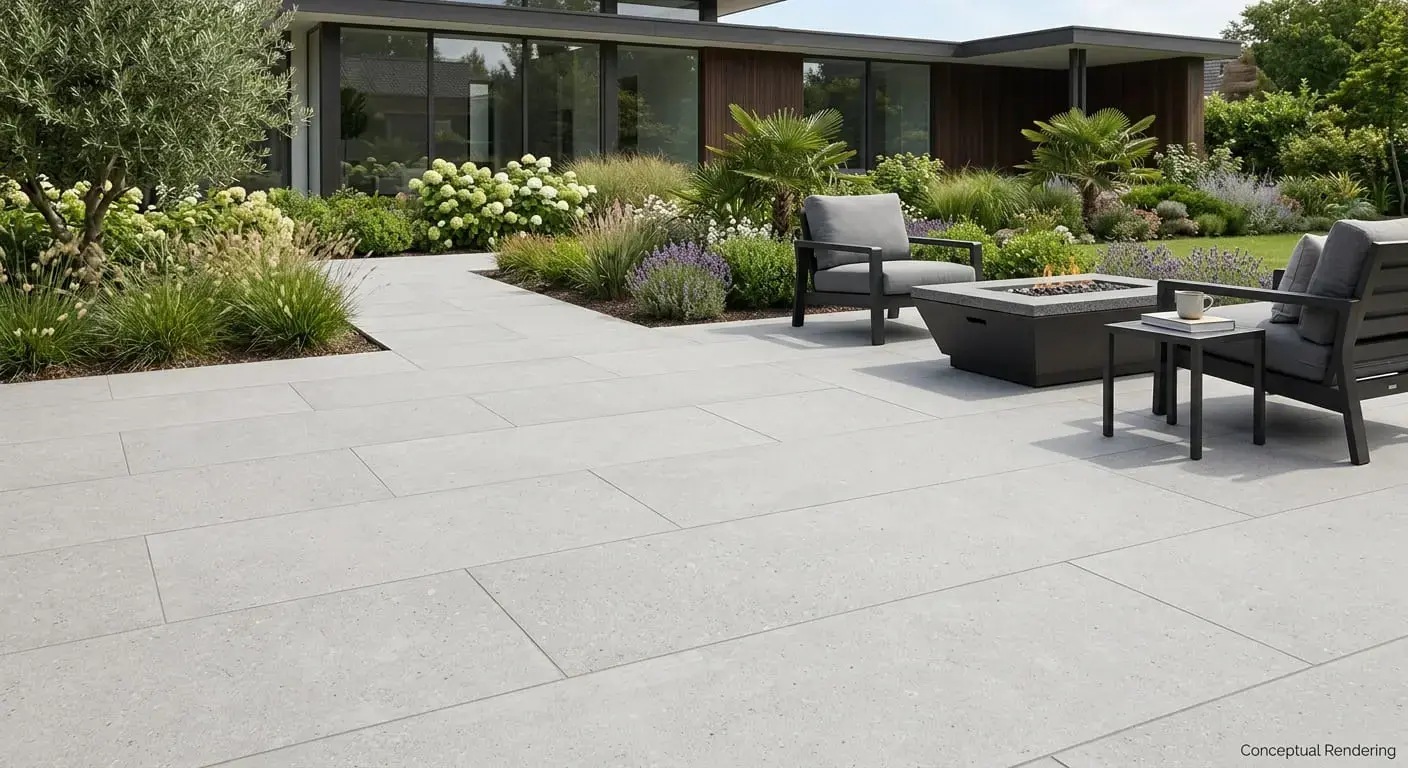
Start Your Hardscape With the Right Stone Chemistry
Natural stone is generally grouped into two chemical families. Calcareous stone is mostly calcium carbonate and reacts to acids, while siliceous stone is built from silicates such as quartz and feldspar.
A Natural Stone Institute course on specifying stone sorts granite and quartzite into the siliceous family and travertine, marble, and limestone into the calcareous one. Lemonade, wine, and citrus marinades on a dining patio are exactly the spills where that split matters.
Granite and quartzite, both part of our natural stone selection, are where we start for the easiest hardscape upkeep. The course describes granite as hard, stable, and low in porosity, and describes metamorphic stones such as quartzite as usually denser and more compact than the rock they formed from.
Travertine still earns a place outdoors when its look is the priority, provided you are comfortable sticking to mild, non-acidic cleaners. Marble stays indoors in our recommendations.
Pick a Paver Finish for Grip, Then Plan on Sweeping
Texture is a trade. The same course explains that finish affects how readily a surface holds dirt or stains, and that a more textured surface offers more grip along with more surface to catch particles.
For patios, paths, and pool decks, we steer toward textured finishes and save polished and honed stone for indoors. Ask our team which textured finishes are available for the stone you like, and match one to each zone.
Grit is why a regular sweep pays off, since the care page warns that sand and dirt are abrasive to natural stone. If you also want a patio that looks tidy between sweeps, pick a variegated or medium tone over stark white or near black.
Ask About Absorption Before You Fall for a Color
The course calls absorption an indicator of a stone's stain resistance, and notes that a highly absorbent stone can be more prone to stains while less porous materials resist staining better in most cases. It also calls the ASTM C97 absorption test one of the most important and universally administered stone tests, and each stone type has a maximum allowable absorption set in its materials specification, from 0.20 percent for marble to 12 percent for low-density limestone.
Sealing is not a shortcut around a thirsty stone. The institute describes stone sealers as repellents that make stone more stain resistant rather than stain proof, and it notes that many stones need no sealing at all.
That leaves two useful questions for any hardscape stone you compare in our showroom: how absorbent is it, and will it need sealing outdoors? The institute points homeowners to the stone supplier for both answers, and a stone that needs resealing every year is a different commitment from one that rarely does.
Keep the Wrong Bottles Off the Patio
A good hardscape stone can still be dulled by the wrong product. The care page recommends a neutral cleaner, stone soap, or a mild dishwashing detergent, and warns that lemon, vinegar, and other acids can dull or etch calcareous stone.
Granite and quartzite are not a free pass. Many rust removers contain trace levels of hydrofluoric acid, which attacks all stone including both of those, and scouring powders often carry abrasives that can scratch certain stones. The care page also advises against acidic cleaners even on siliceous stone, since it can contain trace minerals that are acid sensitive.
Keep one stone-safe cleaner for outdoor use and deal with spills promptly. Even the easiest stone stays that way only if harsh cleaners stay off it.
Winter Brings Its Own Products
Snow season in Reno, Minden, and Fernley puts deicers on the hardscape maintenance list, and salt is the product to be careful with. A University of Maryland Extension fact sheet on melting ice safely advises that sodium chloride and calcium chloride should not be applied to brick or stone surfaces, and Iowa State University Extension's guide to deicing salts adds that these products can damage concrete surfaces and landscape plants.
For stone hardscape, the safer routine is to deal with ice before it builds up, follow the directions on any product you use, and rely on sand for traction, all steps the Maryland fact sheet recommends. The Iowa State guide also advises against piling salt-laden snow and ice around trees and shrubs.
Sand does get tracked indoors and needs a spring cleanup, which makes a mat at the back door worth having.
White Powder on Hardscape Is a Water Problem
A white powder on stone is often efflorescence: mineral salts carried up by water from below that stay behind when the water evaporates. Washing it only hides it for a while, according to the care page, because the source is moisture below the surface.
That makes drainage part of any hardscape maintenance plan. Correct installation is essential to how easy any stone is to live with, so raise drainage with your contractor before the first paver goes down. Even a low-absorption stone cannot fix water that collects beneath it.
Plan Separately for the Grill and the Pool
Grease is the grill's signature stain. The care page classes cooking oil and grease as oil-based stains that darken stone and usually must be chemically dissolved before they rinse away, so the least porous stone in your plan belongs near the cooking area, ideally in a medium or darker tone.
Pools bring constant water instead. Rinsing outdoor pool and patio areas with clear water is routine care in the institute's guidance, and even a moisture-resistant coping should not hold standing water for long periods.
Summer heat matters at the pool too. The EPA notes that paving materials that reflect more solar energy stay cooler than conventional pavements, so for barefoot areas in Reno and Sacramento summers we suggest a lighter, more reflective tone. You can compare tones in person in our showroom.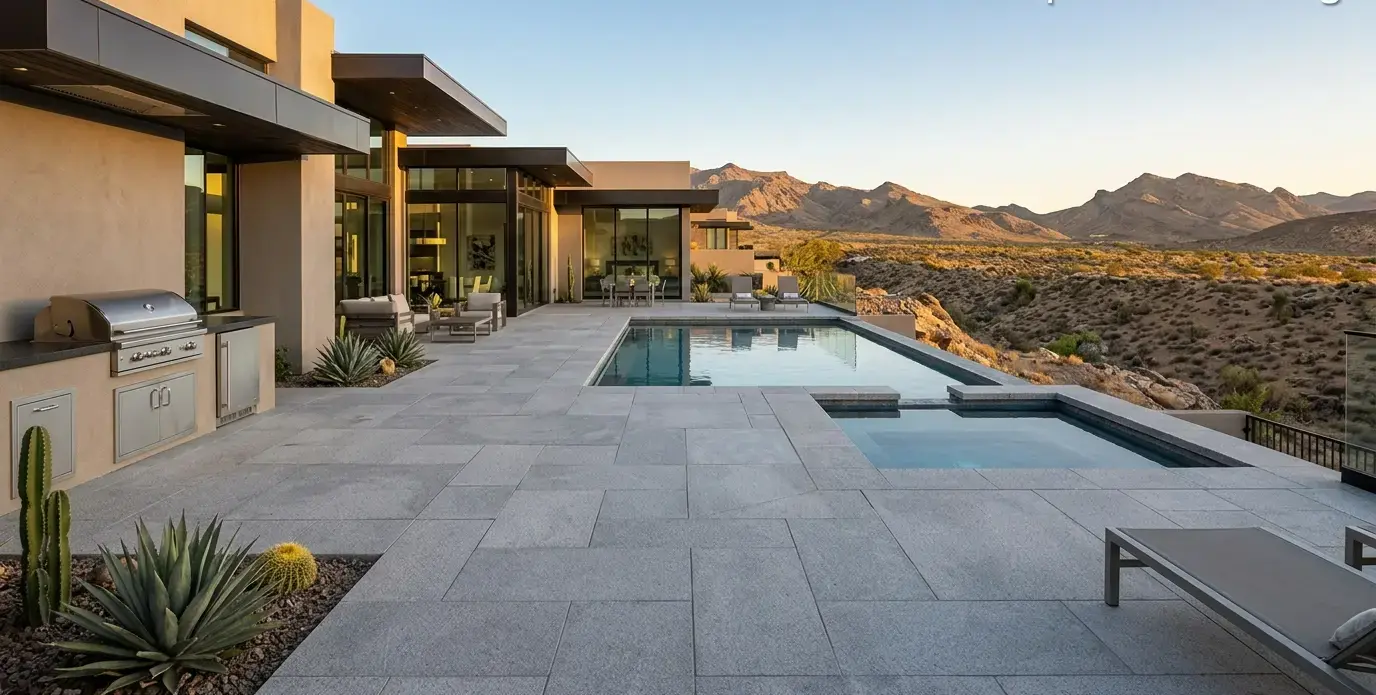
Match Each Hardscape Zone to the Right Stone
Not every hardscape zone needs the same stone. Our tile and stone selection covers pool coping, stacked stone, and pavers from small to large format, and each one asks for a different amount of care.
Stacked stone on a wall or raised planter barely gets walked on, so it typically asks for the least sweeping of the three and can be chosen mostly for looks.
Pavers carry the traffic. At the back door they take the most wear, and the care page recommends mats inside and outside an entrance to keep scratching grit off stone floors. Paver paths beside planting beds can pick up soil and mulch after watering, so some color variation and a quick rinse keep them presentable.
Pool coping sits where water, deck, and planting meet, so it deserves the most careful choice of the three. Pick it for low absorption and a textured finish first, since it sees more water and wet feet than the rest of the hardscape.
Conclusion
Tell us how much hardscape cleaning you actually want to do, and we will start there. Our showrooms are set up so a full project can be planned from one location, so every zone can be talked through in one visit.
A free design consultation takes about 45 minutes with no obligation, and our commission-free design experts will explore materials with you. Bring photos of the yard, inspiration images, and rough measurements if you have them, along with a note on which areas get the most foot traffic.
Contractors and landscape designers working on your yard can apply for a trade account for a dedicated rep and job-site delivery. If a granite bar top or bench is part of the plan, our live slab inventory photographs every bundle on the floor, and you can request a quote by slab name and bundle number.
Note: Some images on this page may be conceptual renderings created to illustrate design possibilities and may not depict actual installations.
Frequently Asked Questions
Generally, yes. Quartzite is a siliceous stone, which the Natural Stone Institute describes as generally resistant to most food and drink acids, while travertine is calcareous and calls for mild, non-acidic cleaners.
No. Vinegar, lemon, and other acids can dull or etch calcareous stone, and the Natural Stone Institute does not recommend acidic cleaners even on acid-resistant stone. Many rust removers also contain hydrofluoric acid, which attacks granite and quartzite too, so a neutral cleaner, stone soap, or mild dishwashing detergent is the safer choice.
Ask about its absorption. Stone absorption is measured with the ASTM C97 test, and a highly absorbent stone can be more prone to staining, while a less porous stone is more stain resistant in most cases.
It is best avoided. A University of Maryland Extension fact sheet advises that sodium chloride and calcium chloride should not be applied to brick or stone surfaces, so use sand for traction and follow the directions on any deicer you choose.
No. The Natural Stone Institute explains that sealers act as repellents and make stone more stain resistant rather than stain proof, and that many stones do not need sealing, so ask your stone supplier whether a specific stone does.