Common low-maintenance hardscape ideas for busy homeowners include porcelain pavers, large-format pavers, stabilized paver joints, gravel or decomposed granite paths, stepping stones set in gravel, dry creek beds, stone veneer walls, patios that replace lawn, and built-in seat walls and raised planters. These options reduce upkeep because they absorb little water, have fewer joints where weeds can grow, drain well, and reduce or remove mowing and turf irrigation.
Porcelain pavers are often among the lowest-maintenance choices. Porcelain has a water absorption rate of 0.5 percent or less under ANSI A137.1, so it resists stains and typically does not need sealing. Even the simplest hardscape still benefits from a regular sweep, a rinse a few times a year, and an annual check of joints and drainage.
In this guide, we explain how each idea saves time, which design choices help prevent problems, and what upkeep to realistically expect.
What Makes Hardscape Low Maintenance
A hardscape stays low maintenance when its materials resist moisture, its layout sheds water, and its surfaces hide everyday dust and debris. Four factors matter most.
Porosity. Materials that absorb less water are less likely to stain, grow moss or algae, or crack from freeze and thaw cycles. That is why low-absorption porcelain rarely needs sealing, while more porous materials, like some sandstones and limestones, take in spills and moisture more readily.
Joints. Every gap between pavers or stones is a place where weeds can sprout, sand can wash out, and ants can dig in. Designs with fewer, tighter, or stabilized joints need less weeding and touch-up.
Drainage. Standing water leads to stains, slick spots, mildew, and shifting bases. A surface with proper slope and a clear path for runoff stays cleaner and more stable over time.
Surface finish and color. Textured, mid-tone, and blended surfaces disguise dust, pollen, leaf litter, and water spots better than smooth, very light, or very dark ones.
When you evaluate a hardscape idea, weigh it against these four factors. The options below score well on most or all of them.
Low-Maintenance Hardscape Ideas
Porcelain Pavers for Patios and Walkways
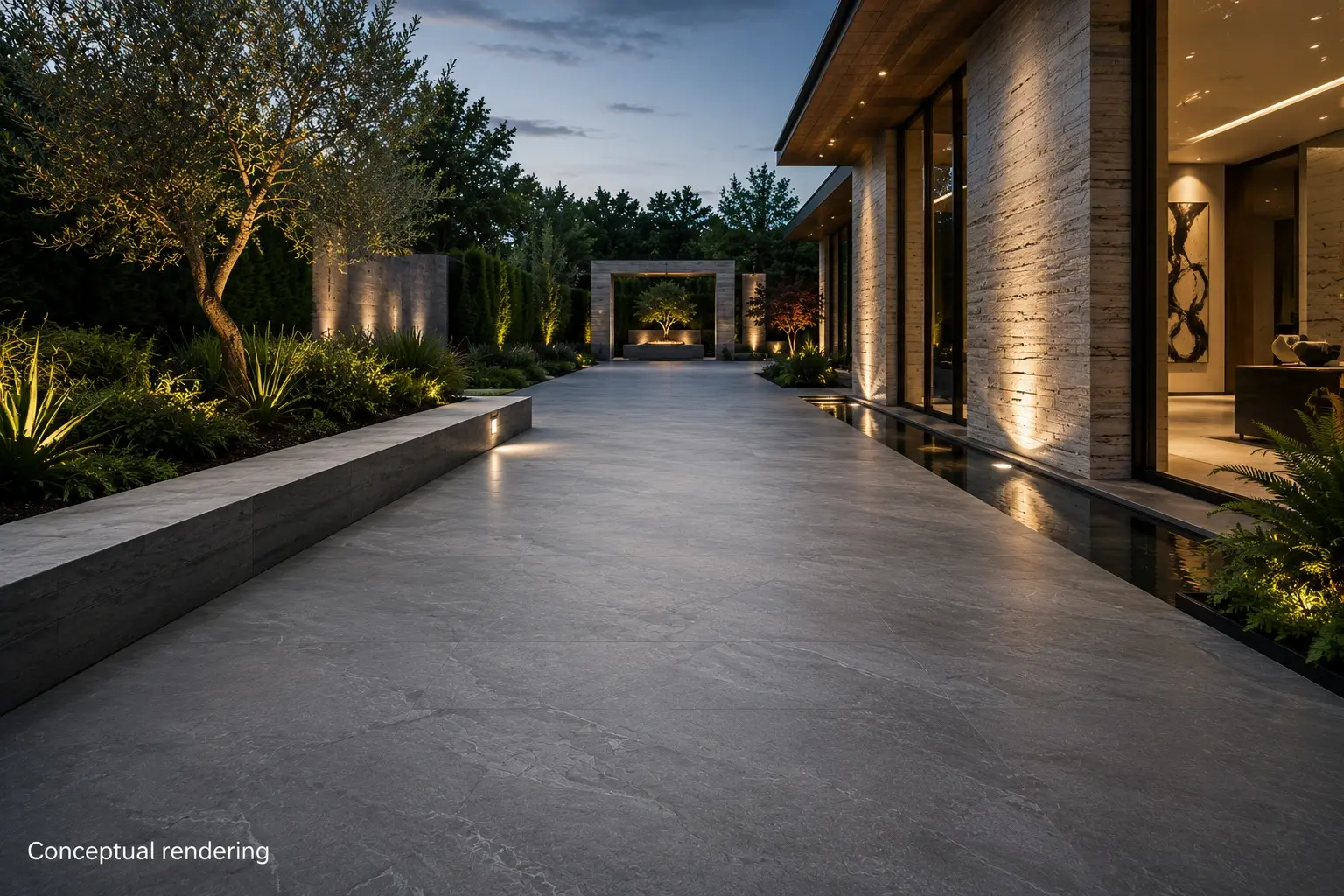
Porcelain pavers are among the lower-upkeep surfaces for outdoor living areas. They are typically 2 centimeters thick, resist stains from grease, wine, and fallen leaves, and do not need sealing in most cases. Their low absorption also makes them less prone to moss and mildew, though constantly shaded, damp areas may still need an occasional scrub. Many collections replicate the look of wood, travertine, slate, and concrete, giving you a specific style without the care routine the original material requires. Routine cleaning is usually a sweep and a rinse with a hose.
Large-Format Pavers and Slabs
Larger units mean fewer joints across the same area. A patio laid with 24 by 24 inch pavers has about half the joint length of one laid with 12 by 12 inch pavers. With fewer joints, there are fewer places for weeds, less joint material to maintain, and an open surface that is quick to sweep. Our outdoor selection includes small to large format pavers, so you can choose a unit size that suits the scale of your patio or walkway.
Stabilized Joints
How the gaps are filled matters as much as the pavers themselves. Polymeric sand, which contains binders that harden after it is wetted, stays in place better than loose sand and discourages weeds and ants. For porcelain and some natural stone, cement-based or resin-based jointing compounds are also common. Stabilized joints still wear over the years, but they need less frequent attention than open sand joints.
Gravel and Decomposed Granite for Side Yards and Paths
For low-traffic areas like side yards, dog runs, and paths between garden beds, gravel and decomposed granite (DG) cover ground quickly and typically cost less than pavers or stone. Angular crushed gravel locks together better than round pea gravel, so it shifts less underfoot. Stabilized DG, which is mixed with a binder, packs into a firm surface that resists washout. Both work best with a weed barrier underneath and a solid edge to keep material from spreading into lawns and beds. Plan to rake occasionally and top up every few years.
Stepping Stones in Gravel or Groundcover
Large flagstone or porcelain stepping stones set into gravel or a low groundcover create a simple path without a fully paved surface. Water drains through the gaps, which reduces runoff and pooling, and debris that settles into the gravel or groundcover is less noticeable than it would be on a solid patio. This approach suits garden routes, side yards, and paths to utility areas.
Dry Creek Beds and River Rock
A dry creek bed lined with river rock and boulders directs roof and yard runoff while replacing hard-to-maintain turf in low spots. It fits well along property lines, under downspouts, and in areas where grass struggles. Beyond occasional debris removal, a well-built creek bed needs little attention, and it adds natural texture to the landscape.
Stone Veneer and Stacked Stone Walls
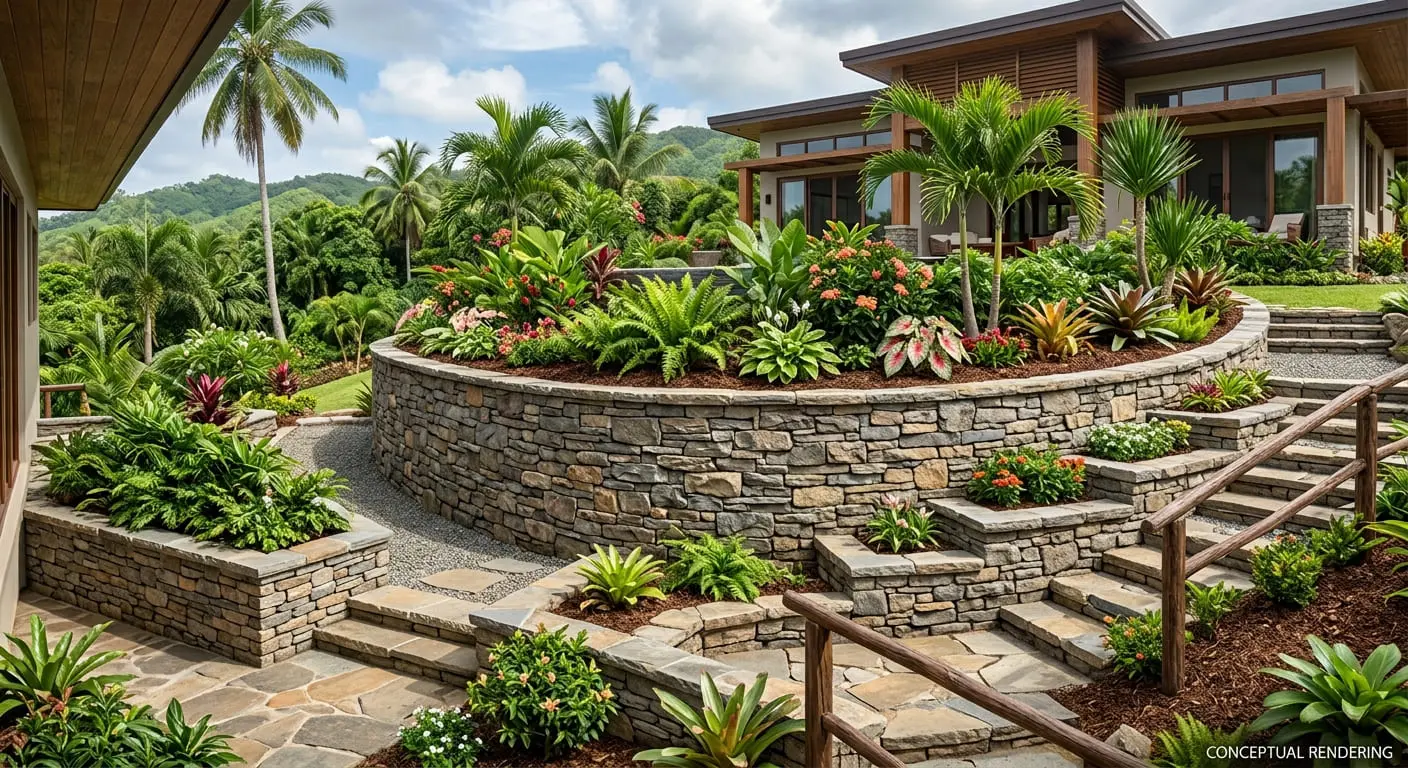
Stone veneer on garden walls, planters, and columns does not need painting or staining, and natural stone veneer holds its color well in the sun. Manufactured veneer can fade gradually with UV exposure, so check the product's care and warranty guidance. A rinse to remove dust and cobwebs is usually all it takes. Compared with painted stucco or wood on outdoor structures, stone takes a recurring chore off your list. Because color and texture read differently outdoors than on a screen, it helps to visit one of our local showrooms and compare natural and manufactured veneers in person.
Replace Lawn With a Patio or Courtyard
Turning part of your lawn into a stone or paver patio can save a significant amount of yard work. In the converted area, you no longer need to mow, edge, or fertilize, and most of the irrigation that turf requires goes away. In the dry summers common to Northern California and Northern Nevada, this can also lower outdoor water use. A few planting pockets or containers can soften the space without bringing back a full lawn's worth of work. If budget is a factor, our overstock and close-out materials can help you cover a larger patio area for less when quantities match your project.
Built-In Seat Walls and Raised Planters
Stone seat walls provide permanent seating that does not need covers, storage, or replacement cushions each season. Raised planters built with pavers or stone keep soil and mulch contained, so they do not wash onto patios and walkways. Both features help define the space and reduce the amount of loose furniture and edging you have to manage.
Design Choices That Cut Upkeep
The right material is only part of the picture. These planning choices help any hardscape stay easier to care for.
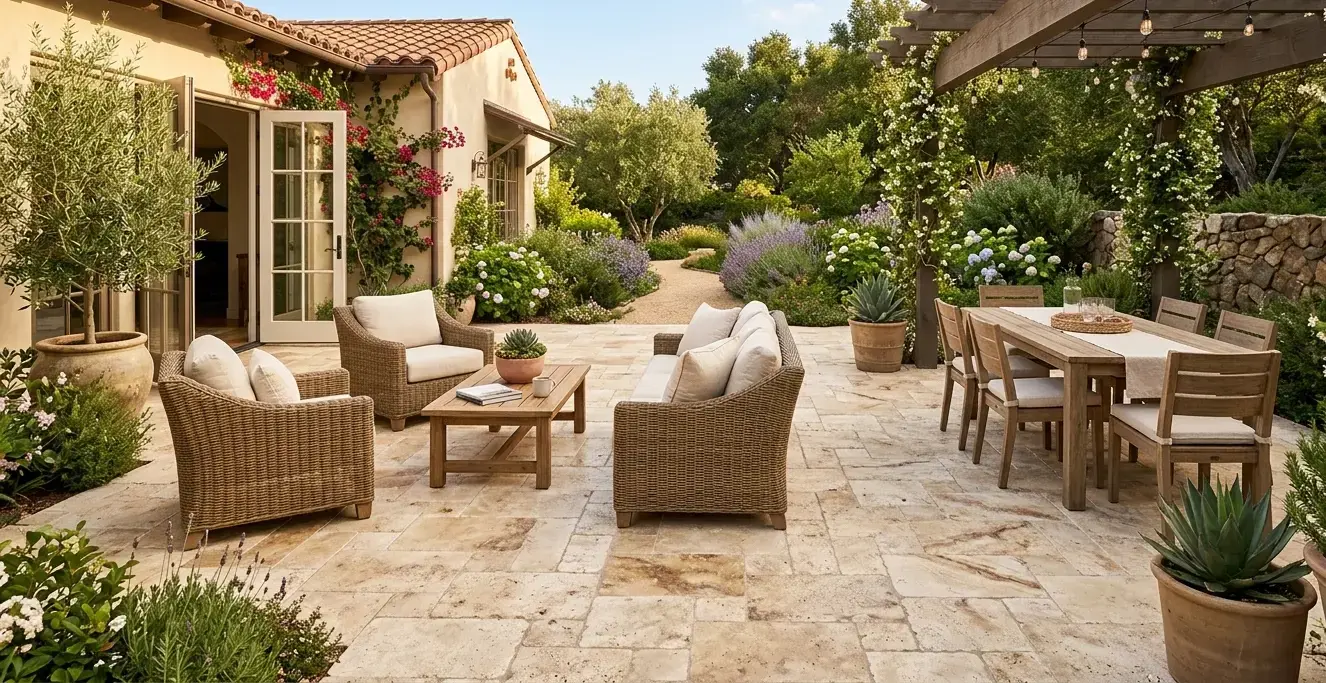
- Choose mid-tone, blended colors. Warm grays, taupes, and mixed earth tones hide dust, pollen, and footprints. Very white surfaces show dirt quickly, while very dark ones show dust and water spots and absorb more heat.
- Pick textured finishes outdoors. Matte, structured, or tumbled surfaces offer better traction when wet and disguise everyday wear. Polished finishes are better suited to indoor spaces.
- Plan for slope and runoff. Patios are commonly sloped about 1/8 to 1/4 inch per foot away from the house so water drains instead of pooling. Bring up drainage early in planning, before the surface goes down.
- Watch tree placement. Trees that drop fruit, sap, needles, or heavy leaves over a patio create ongoing cleanup and can stain some stone. Leave clearance or choose tidier species near hard surfaces.
- Use edge restraints. Borders and edging keep pavers from spreading and gravel from migrating, which prevents the gaps where weeds take hold.
- Limit the number of materials. Two or three coordinated materials are easier to maintain than many, since each one may need its own cleaning method. If you are unsure which combination works best, a free design consultation lets you narrow down pavers, stone, and finishes with a specialist.
- Think about heat. Lighter pavers stay cooler underfoot in full sun, which matters for pool decks and patios used on summer afternoons.
- Plan lighting and power early. Running conduit before the hardscape goes in avoids cutting into finished surfaces later.
Landscape contractors and designers who plan these details for clients can apply for a trade account to access trade pricing, a dedicated rep, and job-site delivery.
What Low Maintenance Still Requires
Low maintenance does not mean no maintenance. A realistic routine for most hardscapes looks like this:
- Weekly or as needed: Sweep or blow off leaves and debris so they do not sit and stain.
- A few times a year: Rinse surfaces with a hose and use a mild, pH-neutral cleaner for spots. Pull any weeds from joints before they spread.
- Once a year: Check for low spots, loose pavers, and worn joint material, and clear drains and creek beds before the rainy season.
- Every few years: Reseal natural stone that calls for it, top up gravel and DG, and refresh joint sand where needed.
In winter, use a plastic shovel on stone and pavers, and check the manufacturer's guidance before applying deicers, since some salts can damage natural stone and concrete. Avoid high-pressure washing close to joints, which can blow out joint sand and erode the surface of softer stone.
Keeping these tasks to a few short sessions a year is what separates a low-maintenance hardscape from a high-maintenance one.
Conclusion
A low-maintenance hardscape comes down to choosing dense, stain-resistant materials, reducing joints, planning for drainage, and replacing high-upkeep lawn with surfaces that clean up quickly. Porcelain pavers, stabilized joints, gravel paths, dry creek beds, and stone veneer walls all help busy homeowners spend more time enjoying their outdoor spaces and less time maintaining them. The right combination depends on how you use your yard, how much sun and shade it gets, and the look you want.
You can see our paver and exterior stone selections in person at our showrooms in Sacramento, Reno, Minden, and Fernley. Our team can talk through which materials fit your routine and help you plan a hardscape that suits both your style and your schedule.
Note: Some images on this page may be conceptual renderings created to illustrate design possibilities and may not depict actual installations.
Frequently Asked Questions
Porcelain pavers are often considered the lowest-maintenance hardscape material. Their water absorption is 0.5 percent or less, so they resist stains and freeze damage, are less prone to moss, and typically do not need sealing. Most care comes down to sweeping and rinsing with a hose.
In most cases, porcelain pavers do not need to be sealed because the material itself absorbs very little water. The joints between pavers may still benefit from a stabilized jointing compound or sealer, depending on the product used. Follow the manufacturer's care guidance for your specific product.
A reliable approach is to fill joints with polymeric sand or another stabilized jointing material, install a solid edge restraint, and sweep regularly so seeds and soil do not collect in the gaps. Pulling weeds early, before roots spread, keeps the task small.
Gravel is lower maintenance than lawn but still needs some care. Plan to rake it occasionally, remove leaves, and top it up every few years as it compacts or migrates. A weed barrier underneath and a firm edge around it help reduce upkeep.
Mid-tone and blended colors, such as warm grays, taupes, and mixed earth tones, tend to hide dirt, dust, pollen, and footprints best. Textured or tumbled finishes help further by breaking up the surface visually. Very light and very dark colors tend to show debris and water spots more readily.