Limestone Facades: A Timeless Choice for Exterior Walls
Limestone facades bring a soft, quarried texture to exterior walls, offering a look that blends historic architecture with contemporary design. Because limestone is a sedimentary stone, its outdoor performance depends heavily on the specific quarry source, density, and sealing regimen chosen for a project. For homeowners and design teams exploring limestone facade slabs with modern sealing techniques, confirming these details early helps avoid costly surprises later.
This guide walks through where limestone exteriors tend to work best, how stone sealing extends their outdoor lifespan, and how designers often pair limestone with other confirmed exterior stone materials for a balanced facade system. Because outdoor performance varies by limestone type, always confirm the exact product's exterior rating with a stone specialist before finalizing a facade plan.
That single confirmation step protects both the look and the longevity of the finished wall. It also shapes which sealer, finish, and maintenance schedule make sense for the climate a project sits in, from coastal humidity to high desert sun exposure. Skipping that step and treating limestone like a confirmed all-climate exterior material is one of the more common planning mistakes design teams run into midway through a project.
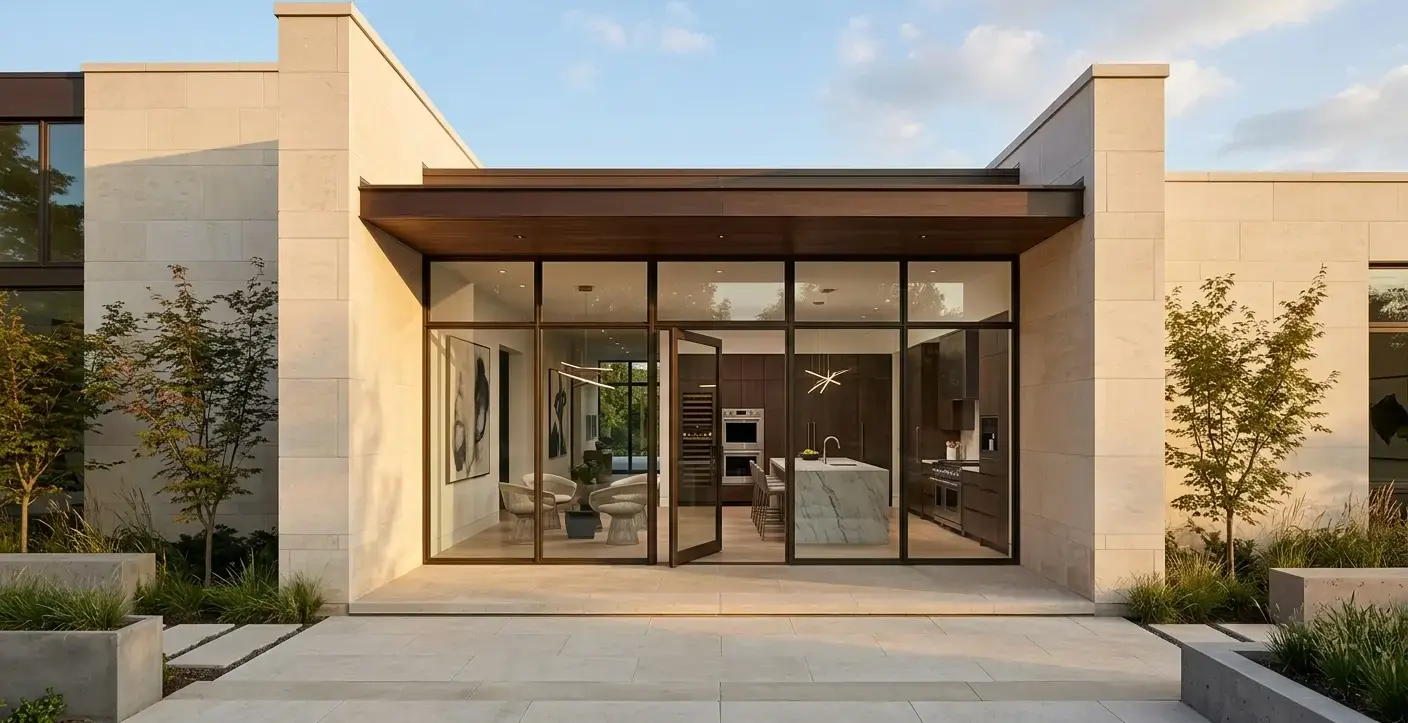 Conceptual rendering
Benefits That Draw Designers to Limestone Exteriors
Limestone continues to appeal to architects and homeowners who want a facade material with depth and character rather than a uniform, manufactured look. Each block carries subtle variation, which many designers treat as a feature rather than an inconsistency. A few qualities stand out:
- Warm, quarried texture that suits both traditional and modern architecture, though color and veining can vary between blocks.
- Broad range of specialty finishes, giving designers flexibility for accent walls, columns, and detail features.
- Softer surface feel compared with many engineered materials, which makes proper sealing especially important over time.
- Long-standing use in facade architecture, still popular in updated builds and renovation projects today.
- Compatibility with confirmed exterior stone like travertine and granite for layered, multi-material facade designs.
- Support from modern stone sealing techniques that help manage everyday moisture exposure, though no sealer removes the need for routine care.
Industry benchmarks such as ASTM dimension stone standards outline testing approaches used to evaluate stone performance across different climates and exposure levels. Reviewing these benchmarks alongside a stone specialist's guidance gives a clearer picture of how a specific limestone product is likely to perform outdoors, rather than relying on assumptions carried over from indoor applications.
Because limestone is porous by nature, its long-term appearance depends more on maintenance discipline than on the stone alone. Prompt cleanup of spills, periodic resealing, and avoiding abrasive cleaners all extend how long a facade keeps its original character. Matte or honed finishes also tend to show water spotting less than a high polish, which is worth weighing against the desired look for a given elevation.
Where Limestone Facade Slabs Fit Best
Design teams typically approach limestone facade slabs with modern sealing techniques as part of a broader exterior material plan rather than a stand-alone decision. The sections below outline common placements architects consider first.
Residential Exterior Walls and Entry Features
Limestone often appears on entryway columns, accent walls, and covered porch surrounds, where its texture creates a warm first impression before a visitor even reaches the door. Full-sun exposure and freeze-thaw cycles vary considerably by region, so confirming the exact product's exterior rating before specifying it for a sun-facing wall protects against premature wear and surface changes.
Covered or partially shaded entry areas tend to reduce direct weather exposure, which some design teams factor into where they place limestone accents relative to fully exposed elevations. Pairing placement decisions with a documented product rating keeps the plan grounded in specifications rather than guesswork.
Homeowners updating an older facade sometimes reach for limestone specifically because it echoes older masonry traditions, giving a renovation a sense of continuity with the surrounding neighborhood rather than an obviously new material.
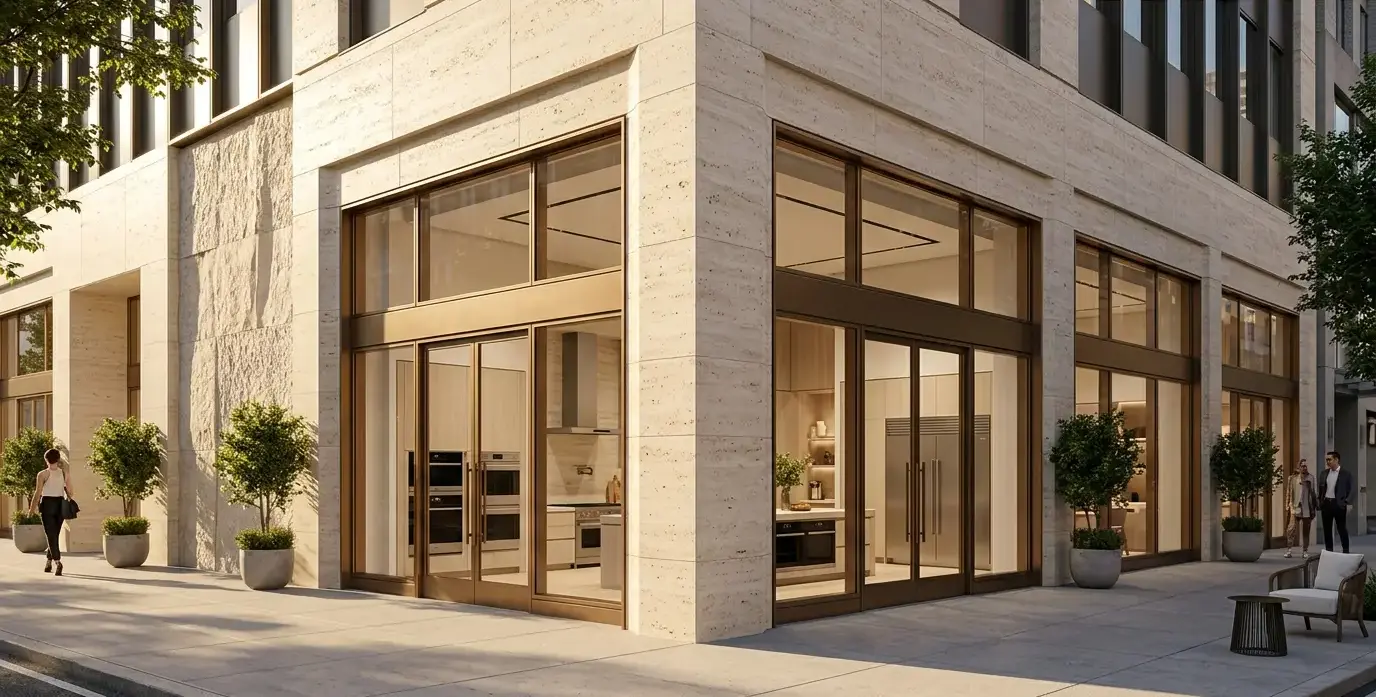 Conceptual rendering
Commercial Storefronts and Facade Accents
Limestone accents also show up on commercial storefronts, often paired with tile or engineered stone for contrast and visual interest along a street-facing elevation.
Commercial applications typically see more foot traffic and closer public viewing distance, which makes consistent sealing and periodic cleaning schedules even more relevant to keeping a storefront looking intentional rather than worn.
Pairing Limestone With Confirmed Outdoor Stone
Many facade plans combine limestone accents with stone types already confirmed for exterior use, such as travertine or granite, to balance character with documented outdoor performance. Design teams can browse the slab collection online to compare finishes and textures before narrowing down a facade palette.
This layered approach lets a design keep the softer, quarried look of limestone in select areas while relying on confirmed exterior materials for the bulk of a facade's weather-exposed surfaces.
Limestone vs. Travertine Facades
Feature | Limestone | Travertine |
Stone Type | Natural sedimentary stone | Natural stone, confirmed for outdoor use |
Outdoor Suitability | Varies by quarry; confirm exact product rating | Generally approved for outdoor exterior applications |
Sealing Needs | Typically requires periodic sealing | Requires periodic sealing |
Finish Options | Honed and specialty finishes common | Polished, honed, and specialty finishes available |
Surface Feel | Soft, matte texture | Slightly more textured surface |
Best Use Case | Accent walls, entry features (confirm rating) | Facades, patios, and exterior walls |
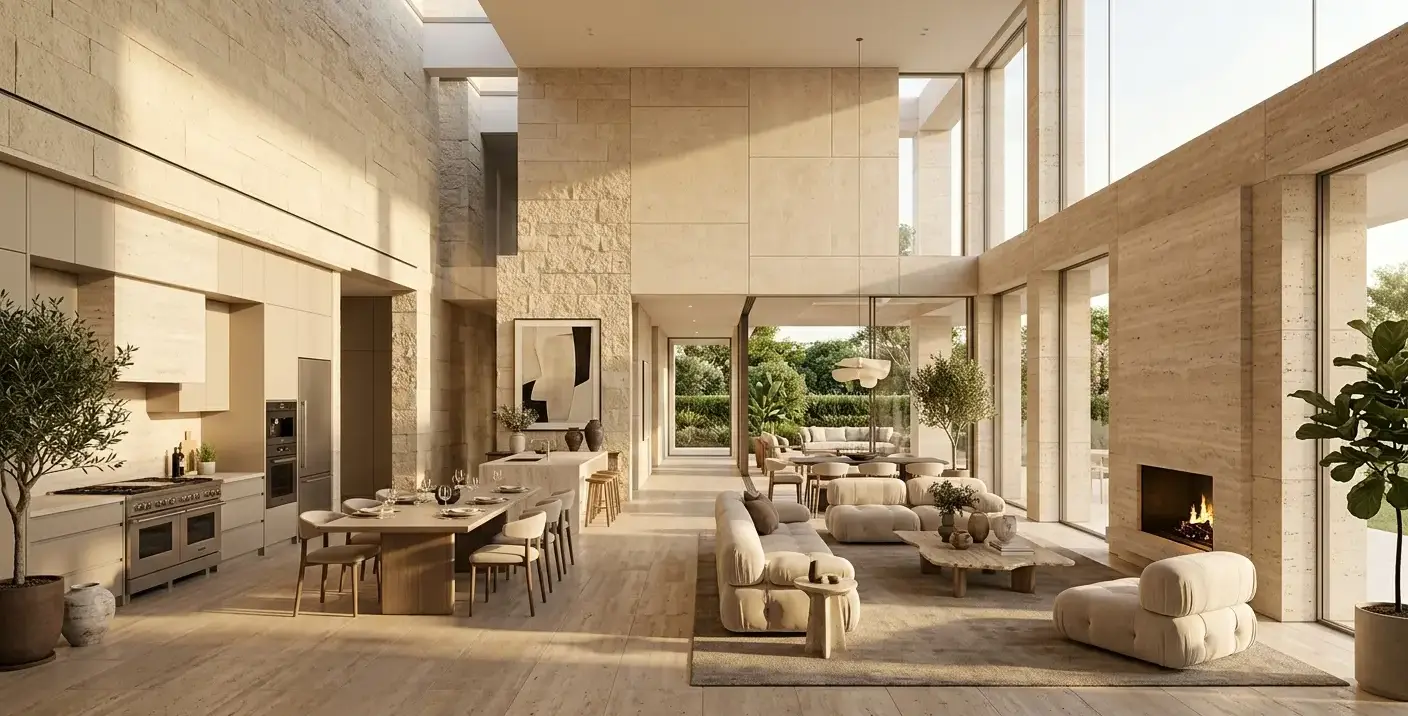 Conceptual rendering
A 5-Step Approach to Specifying Limestone Facade Slabs
- Confirm the quarry source and density rating before assuming outdoor suitability for a given elevation.
- Select a sealer formulated for porous, natural stone surfaces rather than a generic all-purpose product.
- Apply the sealer before the wall faces ongoing exterior exposure, following the manufacturer's stated intervals.
- Reapply sealer on a schedule based on climate, sun exposure, and how much of the wall sits in direct weather.
- Schedule periodic inspections to catch early signs of wear before they become larger repairs.
Exploring Limestone Options With Nova Tile and Stone
Specialists at Nova Tile and Stone help design teams evaluate exterior stone options, including sourcing conversations for limestone facade slabs with modern sealing techniques alongside confirmed outdoor materials like travertine, granite, and quartzite. Expert guidance at this stage helps match a facade concept to a stone product with a documented exterior rating, rather than assuming any limestone block will perform the same way outdoors.
Reviewing specifications and finish options with a specialist before placing a slab order helps avoid facade commitments that don't match the intended look or performance. Design teams near the region can visit the Fernley showroom to view finishes in person and discuss project specifics.
Reno-based projects can explore the Reno location for the same hands-on comparison. Those in the Minden area can visit the Minden showroom instead. Sacramento-based teams can explore the Sacramento showroom for similar in-person guidance.
Architects and designers researching current facade trends may also find industry event resources useful when benchmarking limestone against other exterior stone categories. A direct conversation with a stone specialist remains the most reliable way to confirm whether a specific limestone product fits a given facade plan, especially for projects facing full sun or harsh winters.
Conclusion
Limestone facades offer a distinctive, quarried look for exterior walls, but outdoor performance depends on the specific product's rating and a consistent stone sealing routine. Pairing limestone with confirmed exterior materials like travertine or granite often produces a balanced, durable facade design, especially across elevations with mixed sun and shade exposure. Confirming sourcing details before ordering keeps a project's appearance and performance predictable for years to come. To review options for a specific project, book a free consultation with a Nova Tile and Stone specialist.
Note: Some images on this page may be conceptual renderings created to illustrate design possibilities and may not depict actual installations.
Frequently Asked Questions
Suitability depends on the specific limestone product's density and quarry source, so confirming the exact rating with a stone specialist before specifying it for an exterior wall is recommended.
A properly applied sealer helps reduce surface staining and moisture absorption, though sealing schedules should match the specific limestone type and local climate conditions for best results.
Resealing intervals vary by sealer type, climate, and sun exposure, so following the sealer manufacturer's guidance and scheduling periodic inspections helps maintain consistent protection.
Yes, limestone is often paired with materials like travertine or granite to create layered facade designs, combining varied textures across a single exterior elevation.
Limestone is commonly available in honed and specialty finishes, giving designers options for both smooth and textured facade surfaces depending on the desired look.
Ready to move a limestone facade concept forward? A short consultation can clarify sourcing, sealing, and pairing options before any material gets ordered.
Visit our Showrooms Now!
FERNLEY
1855 US Highway 95A North, Fernley, NV 89408
 Google Maps
Store hours this week:
- Mon. - Fri.: 7:30 am - 4:00 pm
- Sat. - Sun.: Closed
RENO
12835 Old Virginia Rd Suite 24, Reno, NV 89521
Store hours this week:
- Mon. - Fri.: 7:30 am - 6:00 pm
- Sat.: 9:00 am - 3:00 pm
- Sun.: Closed
MINDEN
2548 Business Pkwy, Minden, NV 89423
Store hours this week:
- Mon. - Fri.: 7:30 am - 6:00 pm
- Sat.: 9:00 am - 3:00 pm
- Sun.: Closed
SACRAMENTO
6100 Warehouse Way, Sacramento, CA 95826
Store hours this week:
- Mon. - Fri.: 7:30 am - 5:00 pm
- Sat. - Sun.: Closed