Ledger stone and stacked stone are largely the same product category: both describe thin natural or manufactured stone laid in horizontal layers to create a textured, dry-stacked surface on exterior walls, columns, chimneys, and outdoor features. The main difference is scope. Stacked stone is the broad term for the look, while ledger stone usually refers to a specific format: natural stone strips, such as quartzite, slate, or limestone, pre-assembled into interlocking panels (commonly about 6 by 24 inches) with matching L-shaped corners.
One exception applies to manufactured stone veneer, where some brands sell ledgestone and stacked stone as separate profiles, with stacked stone typically more uniform and ledgestone more varied in stone height and depth. Outdoors, the label matters less than how a product handles sun, rain, and freeze and thaw cycles. In this guide, we explain what each term means, compare natural stone, manufactured veneer, and porcelain options for exterior use, and cover where each is typically used on the outside of a home.
What the Terms Mean on a Home's Exterior
Stacked stone is a descriptive term rather than a specific product. It refers to stone laid in tight horizontal courses, like a traditional dry-stacked wall built without mortar. On today's homes, stacked stone is most often a thin veneer adhered to an exterior wall. Even a "dry-stack" veneer is set in mortar or an adhesive behind each piece; the term describes the finished look, not the absence of a bonding material.
Because it describes an appearance, the stacked stone label can apply to natural stone panels, individual pieces of natural thin veneer, cast manufactured veneer, or porcelain tile with a stacked stone face.
Ledger stone is narrower. It most often means natural stone strips bonded into panels with staggered or Z-shaped ends, so each panel interlocks with the next and seams are harder to spot across a large facade. Matching L-shaped corner pieces wrap outside corners on columns, wall ends, and chimney chases so they look like solid stone.
Manufactured stone veneer complicates the picture. Many veneer makers sell "ledgestone" (sometimes "ledge stone") and "stacked stone" as two separate exterior profiles. In those catalogs, stacked stone usually means longer, more uniform pieces in tight, clean lines, while ledgestone shows more variation in stone height, length, and depth and may be set dry-stacked or with light grout joints. Definitions still shift from brand to brand, so product photos and specifications are more reliable than the name.
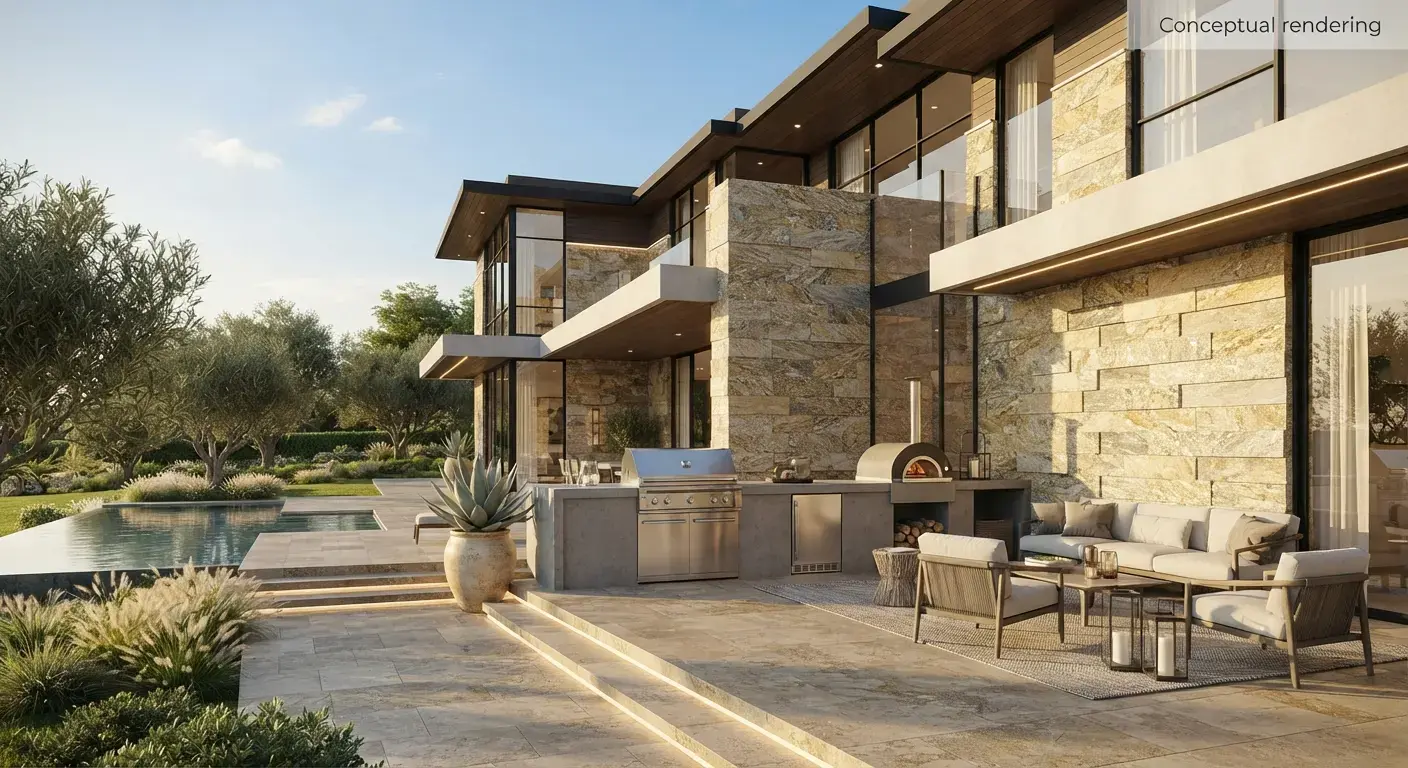
Ledger Stone vs. Stacked Stone: Side by Side
For exterior projects, the overlap between the two terms is far larger than the difference. The distinctions that do exist come down to format and scope rather than appearance.
Ledger Stone | Stacked Stone | |
| What the term usually means | Natural stone strips assembled into interlocking panels | Any exterior wall treatment with a layered, dry-stacked look |
| Typical format | Panels with staggered ends and matching L-shaped corners | Panels, individual pieces, cast veneer, or tile |
| Common materials | Mostly natural stone, plus some manufactured lines | Natural stone, manufactured veneer, or porcelain |
| How specific the term is | Narrower, often describes a product format | Broad, describes a look |
| Appearance | Horizontal layers with a textured face; as a manufactured profile, often more varied in stone height and depth | Horizontal layers with a textured face; as a manufactured profile, often more uniform with tighter lines |
A simple way to think about it: most ledger stone is stacked stone, but not all stacked stone is ledger stone. If someone says ledger stone, they are probably talking about natural stone panels. If someone says stacked stone, they could mean almost any product with that layered look.
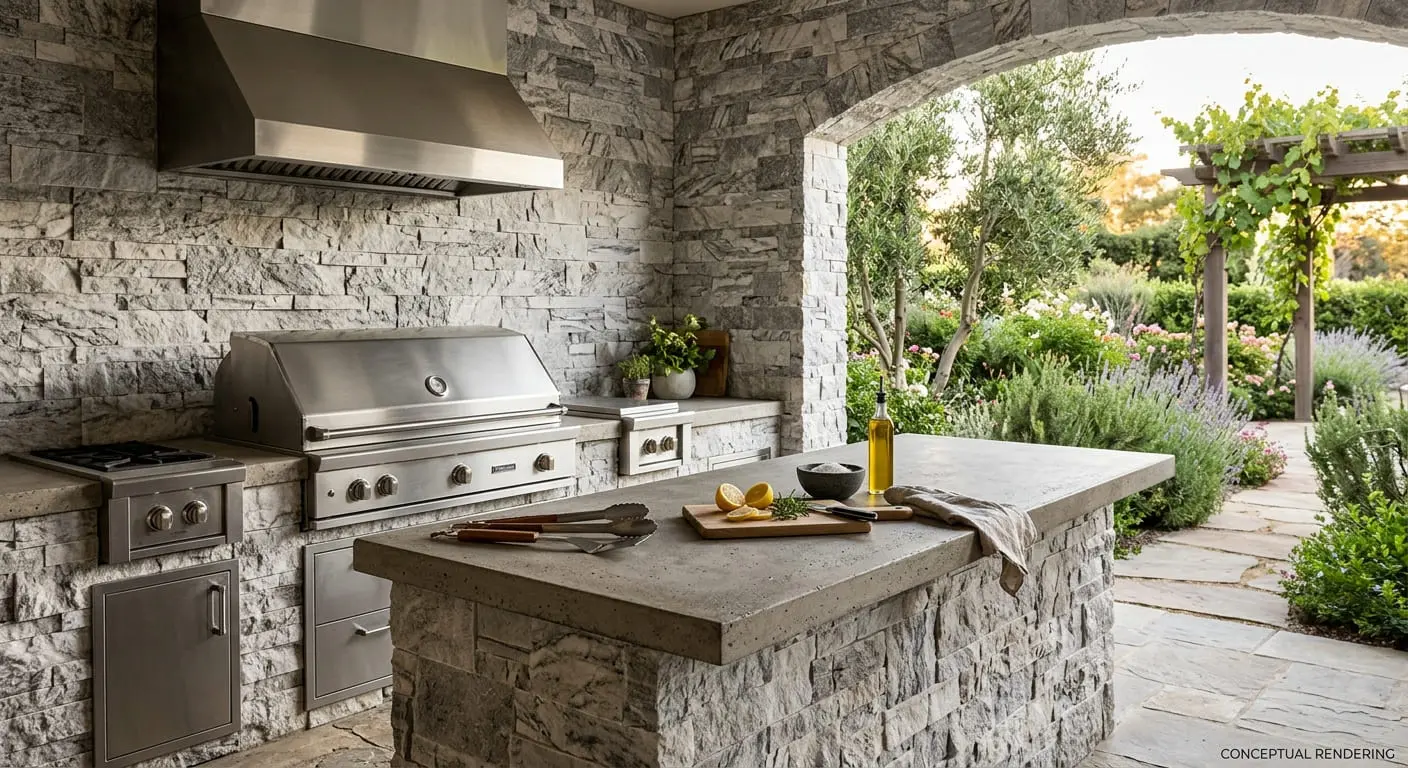
Where Ledger Stone and Stacked Stone Are Used on a House
Because the two terms describe the same look, ledger stone and stacked stone are used in the same places on a home, often alongside pavers and other exterior stone. Common exterior uses include:
- Facades and full walls: Covering a front elevation, or an entire wall, for a solid stone look.
- Wainscot and skirting: A band of stone along the lower portion of a wall, often paired with siding or stucco above.
- Porch columns and pillars: Wrapping posts and column bases, where corner pieces keep the edges clean.
- Entry walls: Framing the front door or a covered entry.
- Chimneys: Cladding a chimney chase so it reads as solid masonry.
- Outdoor kitchens and bars: Finishing the sides of a grill island or bar counter base.
- Fire features: Facing outdoor fireplaces and fire pit surrounds.
- Garden and retaining wall faces: Adding texture to low walls, planters, and the visible face of retaining walls.
- Mailbox and gate columns: Smaller projects that carry the same stone out to the street.
With their horizontal lines, both styles appear often on rustic, craftsman, mountain, and contemporary homes.
Natural Stone vs. Manufactured Veneer vs. Porcelain Outdoors
For an exterior project, the more important question is not ledger versus stacked, but which material the product is made from. Sun, rain, and temperature swings affect each one differently.
Natural stone panels are cut from quarried stone. Their color comes from the stone itself rather than added pigment, so it generally holds up well in direct sun, and a chipped piece shows the same stone underneath. Some stones still weather or shift slightly in tone over time. Performance outdoors depends on the stone's density and how much water it absorbs. Natural panels are often heavier than manufactured veneer, though weights overlap depending on the stone and thickness, so check the weight per square foot during planning.
Manufactured stone veneer is cast in molds taken from real stone and colored with pigments. It is usually lighter and more consistent in shape and color than natural stone. Because the color is added to a cement-based product, a deep chip may reveal a different shade underneath, and some products can lighten after years of strong, direct sun. Quality varies widely between manufacturers, so look for products rated for exterior use.
Porcelain ledger tile carries a molded or printed stone texture on a dense porcelain body. Frost-resistant porcelain absorbs very little water, which helps in freezing climates and around pools or water features. It is usually the lightest and most uniform option, with a shallower face than natural stone.
No single option is right for every exterior. The best fit depends on the look you want, your climate, how much of the wall gets direct sun, and how much natural variation you are comfortable with.
Stone Types That Suit Exterior Walls
Natural ledger stone comes in several stone types, and their density affects how they hold up outside:
- Quartzite: Hard and dense, with low water absorption, which generally helps in freeze and thaw climates. Colors run from white and silver to gold, rust, and black.
- Slate: Fine-grained and naturally layered, in charcoal, gray, green, and multicolor blends with rust and plum. Many slates absorb little water, though quality varies by source.
- Sandstone: Warm tans, buffs, and reds with a grainy texture. Some varieties are more porous, so check that a specific product is rated for exterior use in your climate.
- Limestone: Creams, beiges, and soft grays with a quieter surface. Denser limestones work well outdoors; softer ones may weather faster.
- Marble and travertine: Less common in exterior ledger format. Some panels are rated for outdoor use, so confirm the exterior and frost rating of a specific product.
Finish changes the look from the street. Split-face panels have a rough, mechanically split surface that casts shadow lines in low morning and evening sun. Natural cleft panels follow the stone's own layers, a finish common with slate. Honed or smooth-face panels have a flatter, more uniform surface that is often used on contemporary homes.
Exterior stone is usually viewed from a distance, so it helps to look at full panels at one of our showrooms and step back several feet. Colors and textures that look busy up close often blend together on a full wall.
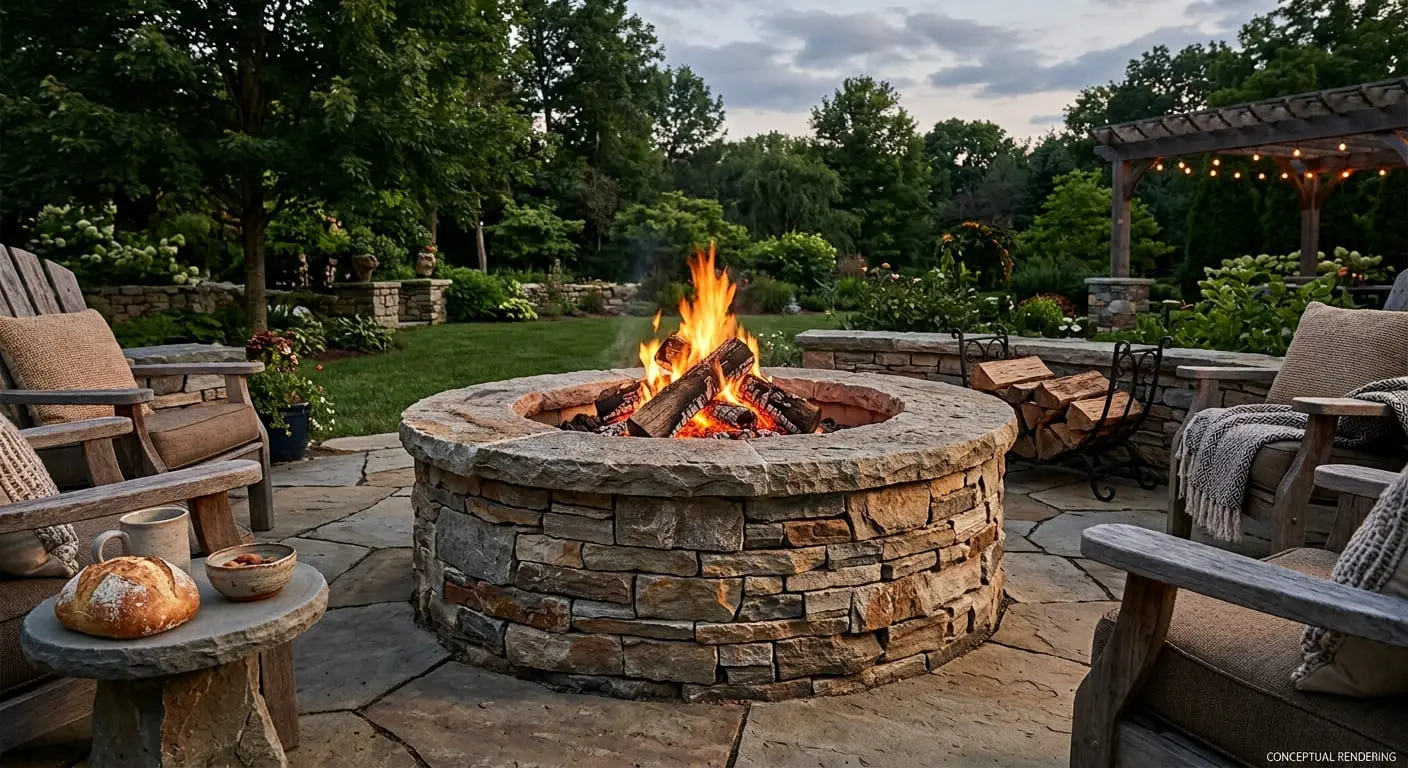
Exterior Considerations Before You Choose
Outdoor stone faces conditions an interior accent wall never does. A few points apply to any exterior ledger stone or stacked stone project:
- Water management: Adhered stone veneer is not a waterproofing layer. On framed walls, exterior installations typically sit over a water-resistive barrier with a way for incidental moisture to drain out at the base of the wall. Building codes and manufacturer instructions spell out the details.
- Clearance from the ground: Most manufacturers call for a gap between the bottom of the veneer and soil, mulch, or paving, so the stone is not constantly wicking up moisture.
- Substrate and weight: Natural stone panels add real load to a wall, and exterior products usually call for a solid, properly prepared surface such as masonry, concrete, exterior-grade cement board, or a lath-and-scratch-coat system. Requirements vary by product.
- Freeze and thaw: Water that soaks into porous stone or mortar can expand when it freezes. Denser stones and frost-resistant porcelain generally handle repeated cycles better.
- Efflorescence: White, powdery mineral deposits can appear when water moves through stone or mortar and evaporates at the surface. It is common on exterior masonry and is usually a sign of moisture movement worth watching.
- Sealing: Many exterior stone and veneer products do not require sealing. If a manufacturer recommends it, a breathable, penetrating sealer is usually preferred over a film-forming coating that can trap moisture.
- Professional guidance: A qualified installer can confirm what your specific wall, climate, and product require. Contractors can apply for a trade account to access pro pricing and job-site delivery.
How to Choose: Questions to Ask When Shopping
Since labels vary from brand to brand, the product name alone will not tell you much. These questions help clarify what you are looking at for an exterior project:
- Is it natural stone, manufactured veneer, or porcelain?
- Is it rated for exterior use and for freeze and thaw conditions?
- What type of stone is it, and where does the color come from?
- What are the panel dimensions and the weight per square foot?
- Does the line include matching corner pieces for columns and wall ends?
- Does the manufacturer recommend sealing outdoors, and with what type of product?
- How much color and thickness variation should you expect from box to box?
Ordering a little more than the measured area is common practice to allow for cuts, corners, and color blending. Pulling panels from several boxes and mixing them as the wall goes up helps spread natural variation evenly across a large facade. For small projects like mailbox columns, our overstock materials are another option, though all sales are final.
Finally, consider the stone alongside the rest of the exterior. Ledger stone sits next to siding, trim, roofing, and hardscape, so a sample that looks right on its own can read differently against warm stucco or dark siding. Our team can help you compare options side by side during a free design consultation.
Conclusion
So, is there a difference between ledger stone and stacked stone for a home's exterior? Mostly, no. Stacked stone describes a look, and ledger stone usually describes one specific way of delivering that look: natural stone strips assembled into interlocking panels with matching corners. The main exception is manufactured stone veneer, where some brands sell ledgestone and stacked stone as separate profiles. Outdoors, the more useful step is to look past the label and check the material, exterior rating, weight, and freeze and thaw performance of each product you are considering.
If you are planning a facade, porch columns, a chimney, or an outdoor kitchen, we can walk through options with you in person. We carry both natural stone and manufactured stone veneer, including ledgestone, along with porcelain and natural stone tile. You can visit our Sacramento showroom, the Reno location, our Minden design center, or the Fernley showroom to see ledger stone and stacked stone up close and talk through what will work on the outside of your home.
Note: Some images on this page may be conceptual renderings created to illustrate design possibilities and may not depict actual installations.
Frequently Asked Questions
For the most part, yes. Both terms describe stone laid in horizontal layers with a textured, dry-stacked look. Ledger stone usually refers to natural stone pre-assembled into interlocking panels, while stacked stone is a broader term that can include panels, individual pieces, manufactured veneer, and porcelain tile. Some manufactured veneer brands also use the two names for separate profiles, with ledgestone typically showing more variation in stone size and depth.
Yes, as long as the product is rated for exterior use. Natural ledger stone panels, exterior-rated manufactured veneer, and frost-resistant porcelain are all used on facades, columns, chimneys, and outdoor kitchens. Check the manufacturer's guidance for freeze and thaw performance and installation requirements.
Each has trade-offs. Natural stone generally holds its color well in direct sun and shows the same stone if chipped, but it can be heavier. Manufactured veneer is usually lighter and more consistent, though some products can lighten over years of strong sun. The right choice depends on your climate, budget, and the look you want.
Not always. Many exterior stone and veneer products do not require sealing. If the manufacturer recommends it, a breathable, penetrating sealer is usually preferred over a film-forming coating, which can trap moisture behind the surface.
Yes, chimney chases, outdoor fireplaces, and fire pit surrounds are common uses. Natural stone is noncombustible, but clearances and heat exposure guidelines still apply. Review the fire feature manufacturer's instructions and local building code before selecting materials.