Ledger stone is natural stone cut into thin rectangular strips and set into mesh-backed panels, commonly sized around 6 by 24 inches, then installed as sheets to create a dry-stacked masonry look. Slate, quartzite, limestone, and marble are the most common materials used for this style of panel. On a front entry or porch, a ledger stone accent wall is one of the more direct ways to add texture, shadow, and material contrast to an elevation without a full exterior renovation.
What Ledger Stone Actually Is
Ledger stone (sometimes called stacked stone or ledgestone) is cut into thin, rectangular pieces, typically arranged in a mesh-backed panel format, most commonly sized around 6 by 24 inches. Unlike full-bed stone veneer, which is set piece by piece, ledger panels install as sheets, which keeps the layout consistent and speeds up the layout process. The stone itself is real and quarried, most often slate, quartzite, limestone, marble, or travertine, so the color variation and texture come from the material rather than a printed or molded surface.
This distinguishes it from manufactured stone veneer, which is cast from concrete and pigment to resemble stone. Manufactured veneer is lighter and often less expensive, but it is not natural stone. Homeowners choosing between the two are usually weighing budget and weight against the character of quarried material. Ledger stone tends to read as more substantial and varied from panel to panel, since natural veining and mineral streaks never repeat exactly.
Why Entryways and Porches Are a Natural Fit for Ledger Stone
A front entry or porch is a small, contained area, which makes it an efficient place to use a material that has more visual weight and cost per square foot than paint or siding. A few square feet of ledger stone around a door, up a porch column, or across a small knee wall can change the entire first impression of a home without the scope of a full exterior renovation.
The texture also does something flat materials can't: it catches light. Splitface and textured finishes have a raised, uneven surface, so morning and evening sun rake across the stone and create shadow lines that shift throughout the day. On a covered porch, where direct light is filtered, this shadow play is often what makes the wall feel dimensional rather than flat, even without direct sun.
Ledger stone reads well against stucco, board-and-batten siding, and painted brick, which covers most common exterior styles. It gives the entry a grounded, tactile base while the rest of the facade stays clean and simple.
Choosing a Stone Type and Color Palette
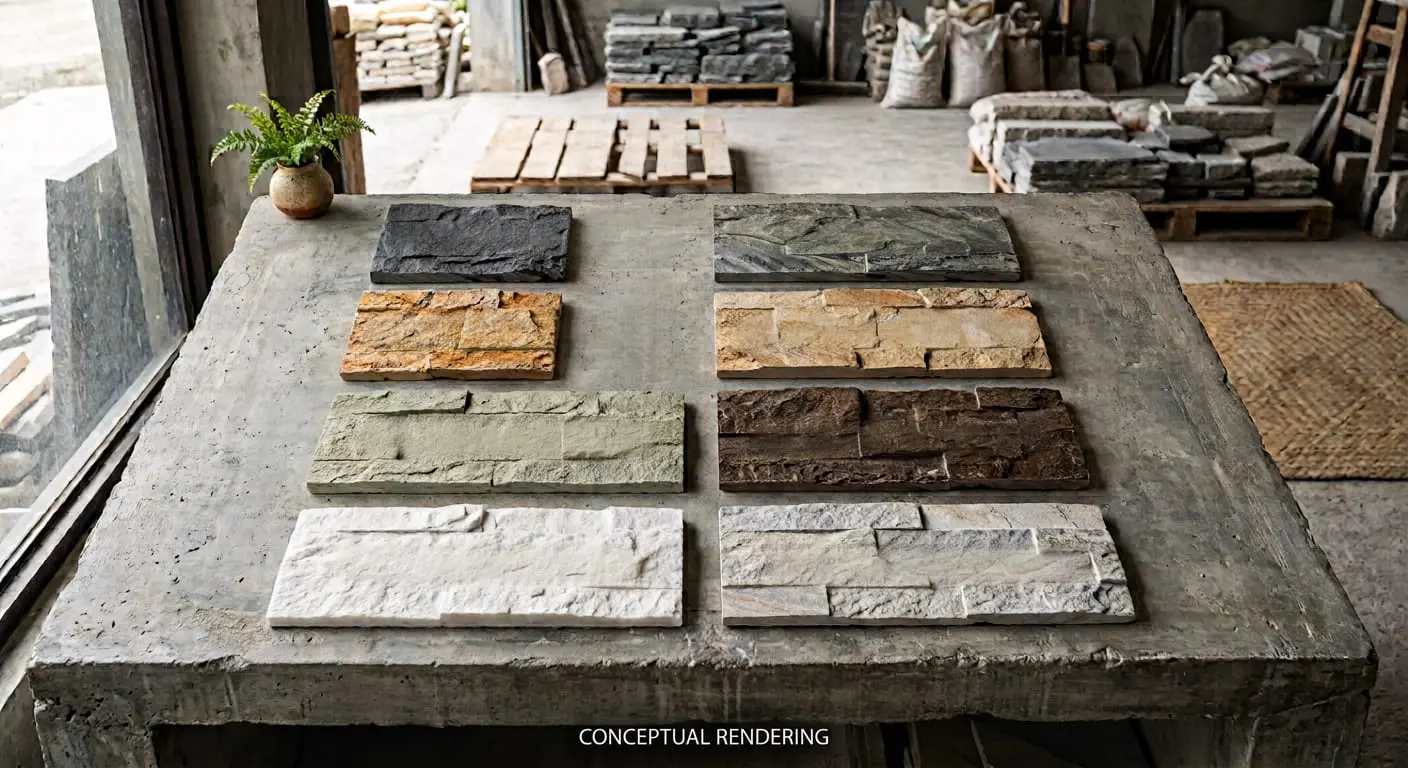
Slate tends to run in grays, charcoals, and rust tones, and its natural cleft surface gives strong texture and shadow definition. It works well on modern or transitional exteriors where a cooler, architectural feel is the goal.
Quartzite ledger panels often show warmer beiges, golds, and soft grays with more subtle veining than slate. It holds up well outdoors and pairs naturally with warm-toned stucco or wood accents.
Limestone is typically the softest and most neutral option, running in creams and warm whites with a more uniform texture. It suits farmhouse and traditional entries where the goal is a quieter backdrop rather than a bold statement.
Marble ledger panels may be considered for a covered porch only when the specific product is approved for exterior use and the expected moisture and temperature conditions. A roof alone does not establish suitability. The same product-specific verification is required for any marble slab proposed as an alternative.
Homeowners who want a larger, uninterrupted stretch of marble rather than the seamed look of stacked panels can browse our live slab inventory for book-matched alternatives, and submit a slab quote request once a piece stands out.
A useful way to narrow the choice is to start with the home's existing rooflines, trim color, and door color, then choose a stone tone that either matches that palette closely (for a cohesive look) or contrasts it deliberately (for a bolder accent). Bringing a sample panel outside and viewing it against the actual facade in daylight, rather than deciding from a photo, tends to produce better results, since lighting changes how a stone's undertones read.
Design Approaches for Entry and Porch Accent Walls
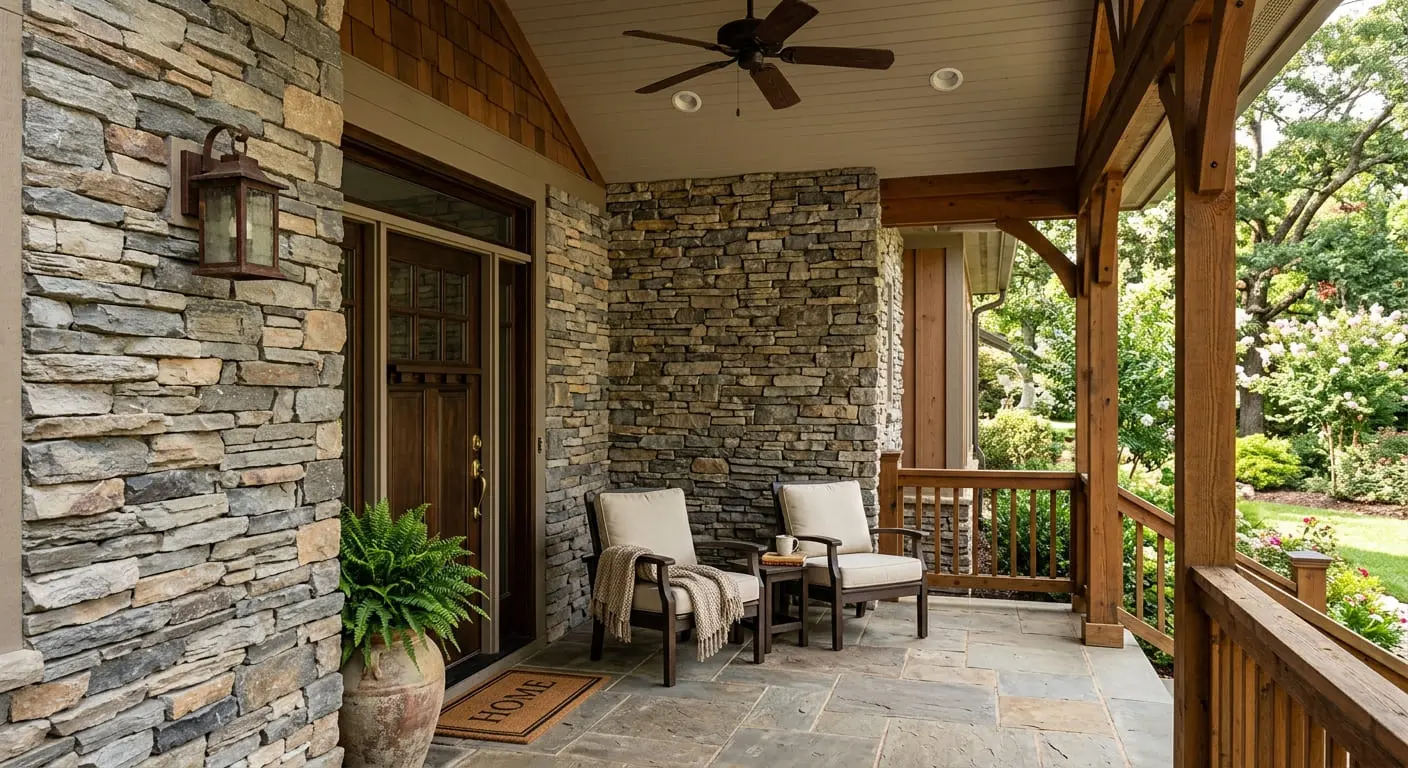
Full accent wall. Covering an entire porch wall or the wall flanking the front door in ledger stone creates the strongest visual statement. This works especially well when the wall is otherwise unbroken by windows or utility fixtures, since a clean run of stone reads more intentional.
Partial or wainscot-height coverage. Running ledger stone from the ground up to 3 or 4 feet, then transitioning to siding or stucco above, gives a grounded, substantial base without the material cost or visual weight of a full wall. This approach is common on porches with a lot of glass or trim detail up top, where full coverage would compete with those features.
Column wraps. Wrapping porch support columns in ledger stone is one of the highest-impact, lowest-material-cost ways to use the product. Two or three wrapped columns can anchor an entire porch's look even if the surrounding walls stay untouched.
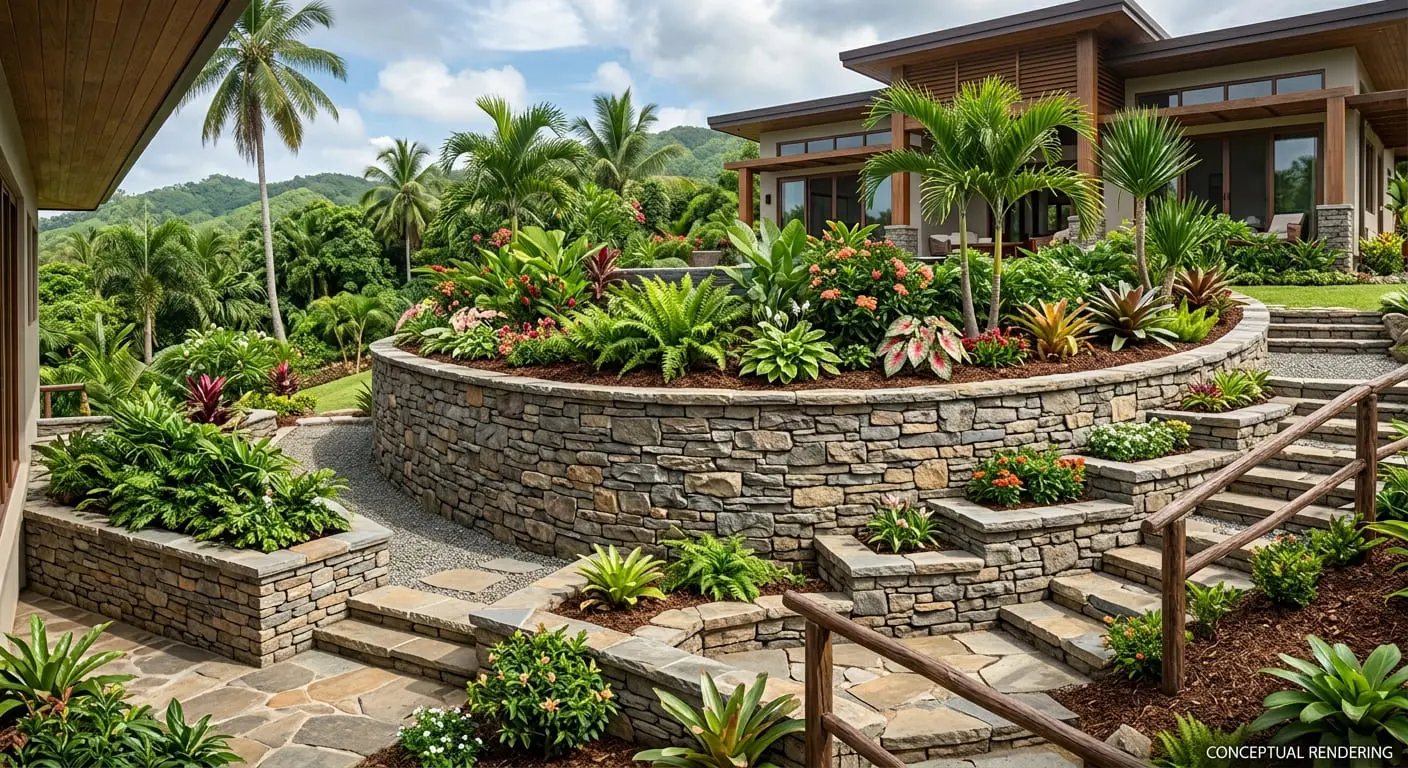
Planter walls and low knee walls. For homes with a stepped entry or a low wall bordering the front walkway, ledger stone on that wall extends the material logic from the porch to the approach, so the accent doesn't feel isolated to just the door.
Pairing with house numbers and lighting. A ledger stone panel is a natural backdrop for mounted house numbers or a sconce, since the texture gives contrast to flush-mounted metal or matte fixtures. Wall-washing the stone from below with a low-profile fixture also extends the shadow effect into the evening. If the porch floor or entry tile is also part of the update, our full range of tile, stone, and flooring has options that pair naturally with a stacked stone accent wall.
Practical Considerations Before Choosing Ledger Stone for an Exterior
Weight and substrate. Natural stone ledger panels are heavier than manufactured veneer or siding, so the wall needs to support that load, and exterior installations require a substrate rated for outdoor moisture exposure, typically a cement backer board over a weather-resistant barrier. This is a structural and installation question best worked through with a qualified installer or contractor familiar with local building code, since requirements vary by wall type and exposure. Contractors sourcing ledger stone across multiple client projects can also look into our trade account program for job-site delivery and dedicated pricing.
Sealing. Natural stone is porous to some degree, and porosity varies by material. Slate and quartzite are generally less absorbent, while limestone and some marbles are more porous and benefit from a penetrating sealer to reduce staining and moisture absorption over time in an exterior setting. Sealing needs and reapplication intervals depend on the specific stone, the sealer product, and the climate the home is in, so this is worth discussing stone by stone rather than assuming one schedule fits every material.
Grout and joint style. Many ledger panels are designed for a tight, grout-minimal look, but exterior applications still need attention to joint sealing at panel edges and corners to keep water from getting behind the stone. Matching corner pieces are usually available for outside corners so the stacked look wraps cleanly around columns or wall edges.
Sample viewing. Because natural stone varies from batch to batch, viewing an actual panel sample against the home's existing colors, ideally at the time of day the porch gets the most light, gives a much more accurate read than photos or a small chip. Walking through options at one of our showroom locations tends to give the clearest sense of color and texture before committing to a wall's worth of material.
Bringing It Together
A ledger stone accent wall is one of the more efficient ways to add texture, shadow, and material contrast to a home's entry or porch without touching the rest of the exterior. The right choice comes down to matching the stone type and finish to the home's existing palette, deciding how much of the wall to cover, and planning for the substrate and sealing needs that come with any exterior natural stone installation. Homeowners weighing these choices are welcome to walk through slate, quartzite, limestone, and marble ledger panels in person at any of our showrooms in Sacramento, Reno, Minden, or Fernley, where our team can talk through color pairing, panel sizing, and finish options for a specific entry or porch layout and check current stock on a particular stone before a visit.
Note: Some images on this page may be conceptual renderings created to illustrate design possibilities and may not depict actual installations.
Frequently Asked Questions
Yes, ledger stone and stacked stone refer to the same product: thin, rectangular pieces of natural stone arranged in a mesh-backed panel that mimics a dry-stacked masonry look.
Some ledger stone products are suitable for exterior walls, but approval must be confirmed for the specific panel, including its backing and bonding system. Follow the manufacturer’s exterior installation requirements and verify suitability for local moisture and freeze-thaw conditions. Sealing alone does not make an interior-only product suitable for outdoor use.
Natural ledger stone is cut from quarried stone like slate, quartzite, limestone, or marble, so color and texture vary piece to piece. Manufactured stone veneer is cast from concrete and pigment to resemble stone and is typically lighter and less expensive.
It depends on the stone. More porous materials like limestone and some marbles generally benefit from a penetrating sealer in exterior settings, while denser stones like slate and quartzite need it less. A stone-specific recommendation is the safest approach.
That depends on the wall's layout and the look you want. A full wall creates the boldest statement, while wainscot-height coverage or wrapped porch columns give a similar accent effect with less material and a lighter visual weight.