Ledger stone, also called ledgestone or stacked stone, is a thin veneer of natural or manufactured stone strips arranged in tight horizontal courses, and it is widely used to clad exterior porch columns, driveway gate pillars, and entry walkway pillars. Popular front porch applications include stone bases beneath tapered wood columns on Craftsman homes, full-height stone columns, and wainscot-height stone columns. Common gate ideas include paired driveway pillars, walkway pillars, pillars with integrated lighting, and address pillars. Natural ledger stone is typically quartzite, slate, or sandstone, while manufactured ledger stone is a cast concrete product. For exterior columns and pillars, the key considerations are choosing a product rated for outdoor and freeze-thaw use, confirming the structure can support the stone's weight, and finishing each pillar with L-shaped corner units and a capstone to shed water.
What Is Ledger Stone?
You can buy ledger stone as individual pieces or as pre-assembled panels. Either way, the finished surface looks like a dry-stacked stone wall with little or no visible mortar. People often use the terms ledger stone and stacked stone interchangeably, though some suppliers reserve "ledger panel" for panelized products with a more linear, uniform look. Because naming varies by brand, it helps to read product descriptions closely.
Natural ledger stone is cut from a range of quarried materials. Quartzite, slate, and sandstone are the most common, and you can also find limestone, travertine, and marble versions. Manufactured ledger stone is made from cast concrete, tinted with pigments and molded to mimic the texture of natural stone.
What really sets ledger stone apart is its texture. The individual pieces vary slightly in thickness, so the surface catches light unevenly and forms small shadow lines between each course. On a column or pillar, where light moves across several faces throughout the day, that texture shows up from every angle.
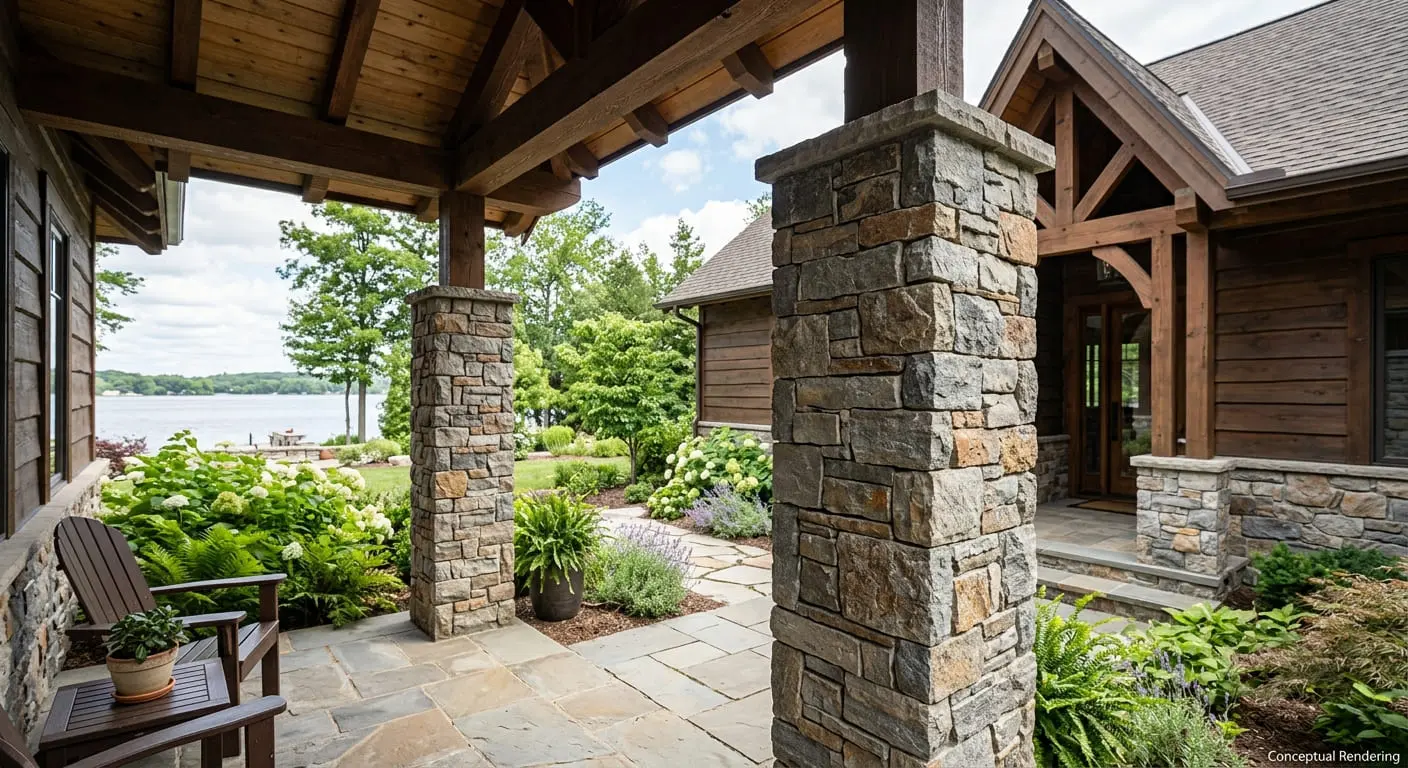
Why Ledger Stone Works Well on Columns and Pillars
Columns and pillars are seen from several sides, so they make an ideal canvas for a textured material. A few qualities make ledger stone especially well suited to them.
It adds visual weight. Porch columns and gate pillars often anchor an exterior design. Wrapping them in stone makes them feel grounded and helps balance a large roofline or a long stretch of fencing.
Horizontal lines contrast with vertical forms. The stone courses run across the height of the column, and that contrast keeps a tall column from looking flat.
It pairs well with other exterior materials. Ledger stone sits comfortably next to wood, stucco, fiber cement siding, brick, and metal, so you can add it to an existing facade without a full redesign. It also coordinates easily with the pavers and exterior stone on patios and walkways, giving the whole property a consistent look.
Corner pieces create a finished look. Many ledger stone lines include L-shaped corner units that let the stone wrap continuously around each edge. On square columns and pillars, this makes the structure read as solid stone rather than a surface layer.
Front Porch Column Ideas
The front porch is often the first thing guests and passersby notice, and its columns do a lot to shape the home's character. Homeowners use ledger stone on porch columns in several ways.
Stone Bases with Tapered Wood Columns
This look is a hallmark of Craftsman architecture. A short, wide pier clad in ledger stone supports a tapered wood or composite column above it. The stone base usually rises about two to four feet, giving the porch a solid foundation and letting the upper column feel lighter. Warm-toned stone in browns, tans, and rust shades complements the painted or stained wood above.
Full-Height Stone Columns
For a bolder statement, some homeowners clad the entire column from porch floor to beam. Depending on the palette, full-height stone columns can suit mountain, lodge, rustic, or contemporary homes. Gray or charcoal stone feels clean and modern, and multicolor blends lean rustic. With this much stone on display, a product with even color distribution keeps the look cohesive.
Stone Wainscot Columns
A wainscot-style column carries ledger stone roughly a third to halfway up, then transitions to trim, siding, or stucco. This approach works especially well when the home's facade already has a stone wainscot, since the columns can repeat the same height and material. If you are torn between a stone base, a wainscot-height column, and full-height stone, a free design consultation is a good time to compare them side by side.
Wide Box Columns for Modern Farmhouse Homes
Modern farmhouse exteriors often feature chunky, square columns with clean lines. A light gray or off-white ledger stone keeps the palette bright and looks right at home with white board and batten siding and black window frames. The stone adds texture without competing with the style.
Pillars That Frame the Porch Steps
Even a modest porch gains presence from a pair of short ledger stone pillars flanking the front steps. Topped with a flat cap and a planter or lantern, they turn the walk up to the front door into a small focal point.
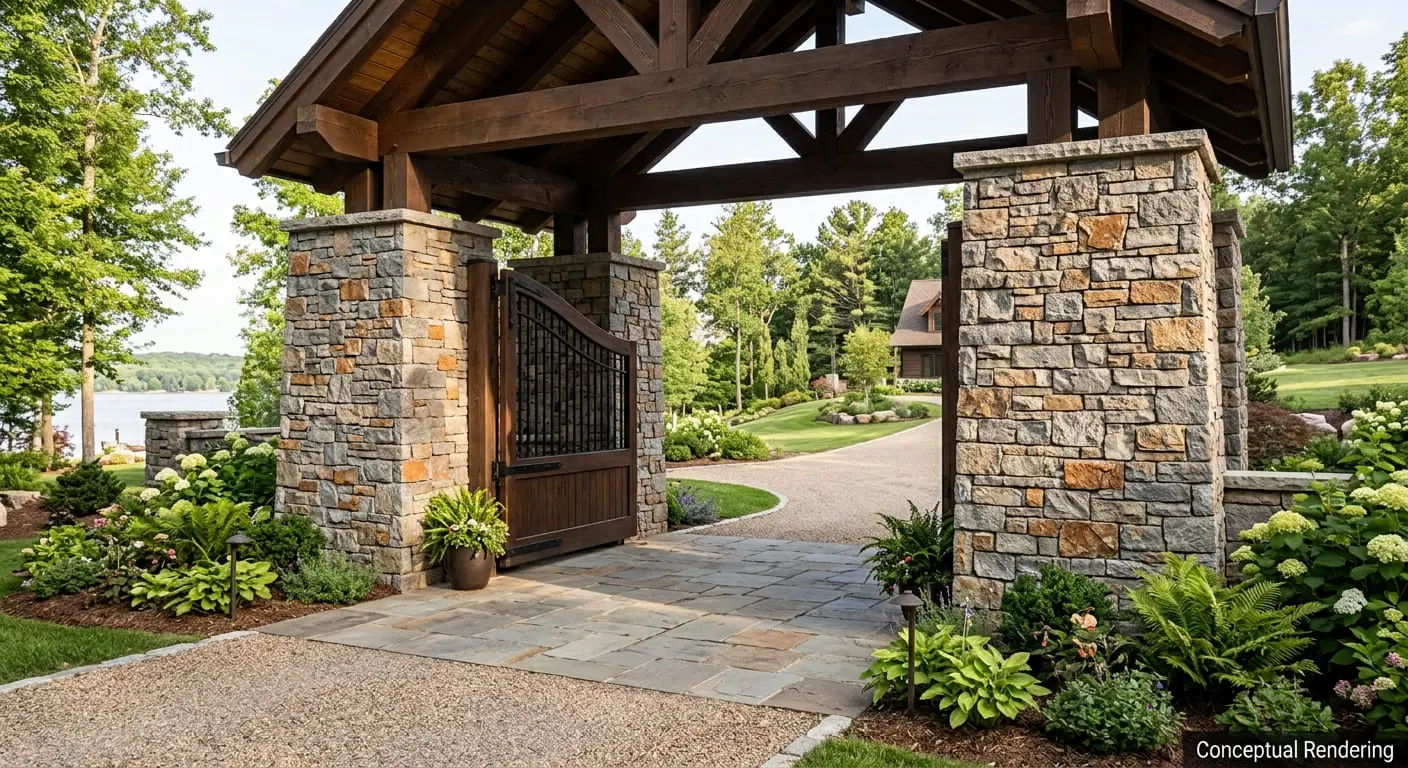
Gate and Entry Pillar Ideas
Ledger stone is just as popular at the edge of a property, where pillars help define the entrance and set the tone for the rest of the home.
Driveway Gate Pillars
A pair of ledger stone pillars on either side of a driveway gate creates a formal entrance. These pillars are usually larger than porch columns so they read as substantial from the street. An iron or powder-coated steel gate is a classic pairing, and a horizontal wood slat gate gives the entrance a more contemporary feel.
Pedestrian Gate and Walkway Pillars
Smaller pillars can mark the start of a front walkway or frame a garden gate. Shorter and slimmer than driveway pillars, they suit cottage, traditional, and Craftsman homes. Using the same stone as your porch columns ties the walkway and home together.
Pillars with Integrated Lighting
A light fixture on top of a pillar, or a sconce mounted on its face, makes the entrance easier to see after dark. Low-angle light also brings out ledger stone's texture by casting shadows between the courses. If you want lighting, plan for it early so wiring can be routed before the stone goes on, and have a licensed electrician handle the electrical work.
Address Pillars and Mailbox Considerations
A ledger stone pillar with house numbers or an address plaque near the driveway is a simple way to bring stone toward the street without building a full gate. If you would like the pillar to hold a curbside mailbox as well, check with your local post office first. USPS guidance favors lighter supports that give way if struck and discourages heavy, rigid ones, and custom-built mailboxes need approval from the local postmaster. Local rules for structures near the roadway may also apply. Many homeowners get the look by setting an address pillar back from the curb and keeping the mailbox on a standard post.
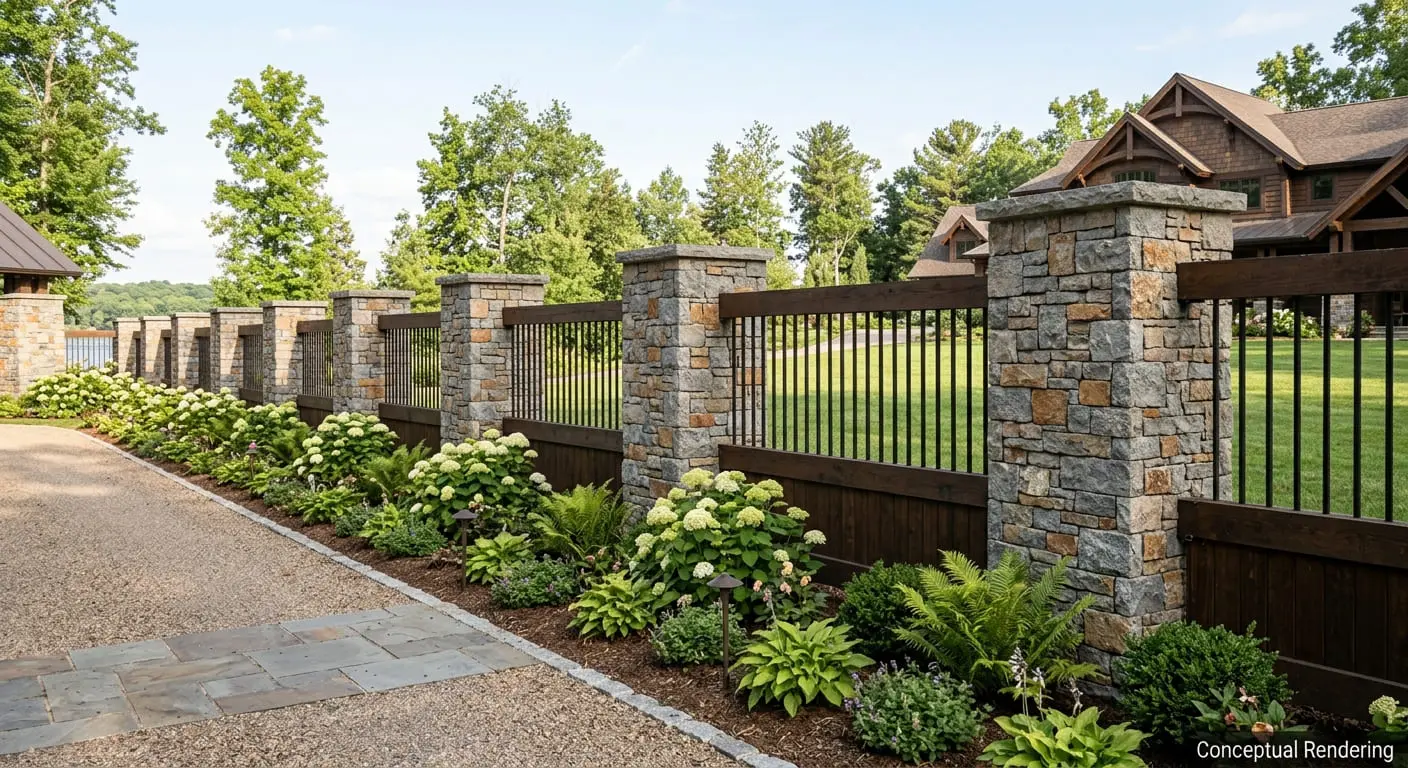
Fence Line Pillars
On properties with a long fence, ledger stone pillars spaced at regular intervals break up the run and add rhythm. Wood, metal, or vinyl panels can span between them, giving the fence line more structure. Since a fence line can call for several pillars, material costs add up quickly, and our overstock sale can be a smart place to start. Quantities are limited and all sales are final, so make sure there is enough material for every pillar before you buy.
Choosing Colors and Textures for Exterior Columns
The right ledger stone color depends on your home's existing materials and the look you are after.
Coordinate with your roof. The roof is one of the largest areas of color on any exterior. Many homeowners choose a stone that shares its undertone, such as warm browns with a brown shingle roof or cool grays with a charcoal roof.
Consider your siding and trim. The stone should complement the main body color of the house. A multicolor blend can bridge several existing colors, and a single-tone stone gives a cleaner, more modern result.
Look at the surrounding landscape. Earth-toned stone tends to blend into gardens and trees. Lighter stones stand out against dense greenery, and darker stones tend to recede.
Weigh texture alongside color. Split-face ledger stone has a rough surface with pronounced shadows, and smoother, more uniform profiles feel more refined. Because people see columns up close, texture shapes the overall impression as much as color does.
Seeing options in person at one of our local showrooms makes it much easier to compare color and texture side by side. When you can, look at your top choices outdoors in natural daylight too, since indoor lighting can change how a stone's color appears.
Caps, Corners, and Finishing Details
Small details at the top and edges of a column make a big difference in how finished it looks.
Capstones sit on top of a pillar or stone base, giving it a clean edge and helping shed water away from the stone below. You can find them in natural stone, cast stone, or precast concrete, with flat, beveled, or peaked profiles. A cap that extends slightly past the stone face creates a crisp shadow line and directs runoff away from the face.
Corner units let ledger stone wrap the edges of square columns, so the column looks like it was built from solid stone rather than pieced together.
Transitions between stone and other materials, such as where a stone base meets a wood column, look more intentional with a clear trim or cap detail.
Practical Considerations for Exterior Use
Before you choose ledger stone for columns or pillars, a few practical points are worth keeping in mind.
Confirm the product is rated for exterior use. Not every ledger stone product is meant for outdoor applications, and some are not recommended where freeze-thaw cycles occur. Check the manufacturer's specifications for your climate.
Understand how natural and manufactured stone differ outdoors. Some natural stones are more porous than others and may absorb water or show staining over time. Manufactured stone varies from product to product in color consistency and in how well its pigments hold up under sun exposure.
Account for weight and structure. Weight per square foot varies widely by stone type, panel thickness, and manufacturer, so check the specifications for any product you are considering. The column or pillar behind the stone has to support that load, and a qualified contractor can evaluate existing columns or plan new ones. Contractors and designers handling this evaluation for a client can apply for a trade account for trade pricing and job-site delivery.
Ask about moisture protection and anchoring. Ledger stone assemblies are not watertight on their own. Wood-framed columns generally need a water-resistive barrier and flashing behind the stone, and requirements differ for masonry or concrete cores. For taller structures, some manufacturers and local building codes also call for supplemental mechanical anchoring. These are good questions to bring to your contractor and local building department.
Follow the manufacturer's care guidance. An occasional rinse with water removes dust and debris. Harsh or acidic cleaners and high-pressure washing, on the other hand, can damage both the stone and its joints. Some natural stones benefit from a breathable penetrating sealer, but many manufactured stone producers do not require sealing, so check the product's care instructions first.
Conclusion
Ledger stone columns and pillars are a straightforward way to give a home's exterior more depth, structure, and curb appeal. Whether you are cladding porch columns with a Craftsman-style stone base, framing a driveway with gate pillars, or adding an address pillar near the driveway, the layered texture of ledger stone brings character to vertical surfaces that often go overlooked. The best results come from coordinating color and texture with your roof, siding, and landscape, choosing a product rated for your climate, and paying attention to details like capstones and corners. When you are ready to compare exterior stone and veneer options in person, visit one of our showrooms in Sacramento, Reno, Minden, or Fernley. Our design team can walk you through colors, textures, and product specifications, including which options are rated for exterior use, so you can find the right look for your porch, gate, or entryway.
Note: Some images on this page may be conceptual renderings created to illustrate design possibilities and may not depict actual installations.
Frequently Asked Questions
The two terms are generally used interchangeably. Both describe thin strips of stone arranged in horizontal layers. Some suppliers use "ledger stone" or "ledger panel" for panelized products with a more uniform, linear look, but there is no single industry-wide distinction.
Yes, as long as the product is rated for exterior use. In areas with freezing winters, confirm that the stone is suitable for freeze-thaw conditions, and make sure the column structure can support its weight.
There is no standard height. Driveway pillars are often a little taller than the gate they frame, and walkway and address pillars are usually shorter. Proportion to the gate, fence, and home matters more than any single measurement, and local codes or HOA rules may also apply.
A capstone is not always required, but it is commonly recommended. It gives the pillar a finished look and helps shed water off the top of the stone, which reduces moisture exposure over time.
It depends on your roof, siding, and trim. Warm browns and tans suit Craftsman and rustic homes, grays and charcoals fit modern styles, and light gray or off-white tones pair well with modern farmhouse exteriors. Looking at the stone in natural daylight helps confirm the right match.