At A Glance
- Best for: patios, pool decks, walkways, and outdoor dining areas
- Materials: porcelain, granite, quartzite, and travertine
- Visual benefit: fewer joints and cleaner sight lines
- Key checks: freeze-thaw results, slip rating, and sun exposure approval
- Finishes: polished, honed, and leathered availability varies by material
- Care: natural stone needs sealing, while porcelain generally does not
- Service areas: Fernley, Reno, Minden, and Sacramento
In This Guide
- Benefits of fewer joints
- Outdoor materials compared
- Finish choices and slip safety
- Advantages and trade-offs
- Applications and design ideas
- Layout, color, and joint planning
- A four-step selection guide
- How Nova supports your project
- Key takeaways and FAQs
Why Fewer Joints Change The Whole Look Of A Patio
Large-format pavers are oversized stone or porcelain units that reduce the number of joints across a patio, walkway, or pool deck. Fewer joints create a calmer, more continuous surface. Results still depend on material, finish, and site conditions.
Nova Tile and Stone supplies outdoor-approved porcelain, granite, quartzite, and travertine for homeowners and designers in Fernley, Reno, Minden, and Sacramento. Each material behaves differently outdoors, so matching it to the space matters.
This guide explains the main benefits, the best applications, and a simple way to choose. It also covers the freeze-thaw, slip, and sun exposure checks that matter across Northern Nevada and Northern California.
Creating seamless outdoor spaces with large-format pavers starts with understanding how unit size, edge detail, and surface finish work together to shape the final look.
A well-chosen paver also keeps the design flexible, so the same material can flow from a dining terrace to a garden path without visual breaks.
Why Choose Oversized Pavers for Outdoor Living Areas?
The biggest advantage is visual. Fewer joints mean fewer interruptions, so a terrace reads as one continuous plane instead of a busy grid. Color and light also look more consistent across the surface.
Fewer joints can simplify upkeep too, since fewer lines collect debris and moisture. Natural stone still benefits from sealing, and stone industry resources explain general care principles.
Scale matters as well. A large unit makes a small courtyard feel wider and gives a big yard a deliberate, architectural order. To compare related materials, browse outdoor stone slabs online.
Everyday care stays straightforward. Sweep regularly, clean spills promptly, and avoid abrasive cleaners, which can dull surfaces. Natural stone should be resealed as the product guidance recommends.
- Cleaner sight lines and a modern, continuous look
- Fewer joints to maintain, though regular care is still needed
- Durable materials, but proper care preserves appearance
- A wide range of colors, textures, and finishes
- One material that can span several outdoor zones
Outdoor Materials Compared
Material | Type | Outdoor Use | Sealing | Key Note |
Porcelain | Engineered | Approved | Generally not required | UV-resistant group; choose textured finishes for wet areas |
Granite | Natural stone | Approved | Needed | UV-resistant group; dense, natural character |
Quartzite | Natural stone | Approved | Needed | UV-resistant group; distinctive veining |
Travertine | Natural stone | Generally approved | Needed | Not in the UV-resistant group; confirm sun exposure approval |
How Finish Choice Shapes Performance
Finish availability varies by material. Polished is offered in granite, quartzite, travertine, and porcelain, while honed suits quartzite, travertine, and porcelain. Leathered is offered in granite and travertine.
Polished surfaces look refined but become slipperier when wet. Honed, leathered, and textured surfaces usually suit wet areas better, though the exact product still needs a verified slip rating.
Advantages And Trade-Offs
Advantages
- Cleaner, more continuous surfaces with fewer joints
- Strong architectural presence in open spaces
- Wide material choice across outdoor-approved stone and porcelain
Trade-offs
- Units are heavy, so handling and delivery planning need attention
- Cuts and edges are more visible, so layout planning matters
- Natural stone needs sealing and periodic care
- Polished finishes can be slippery when wet
Where Large-Format Pavers Work Best Outdoors
Oversized units suit open, rectangular spaces best, though thoughtful layouts also work around curves and steps. Match the finish and material to how each area will be used.
Patios And Outdoor Dining Areas
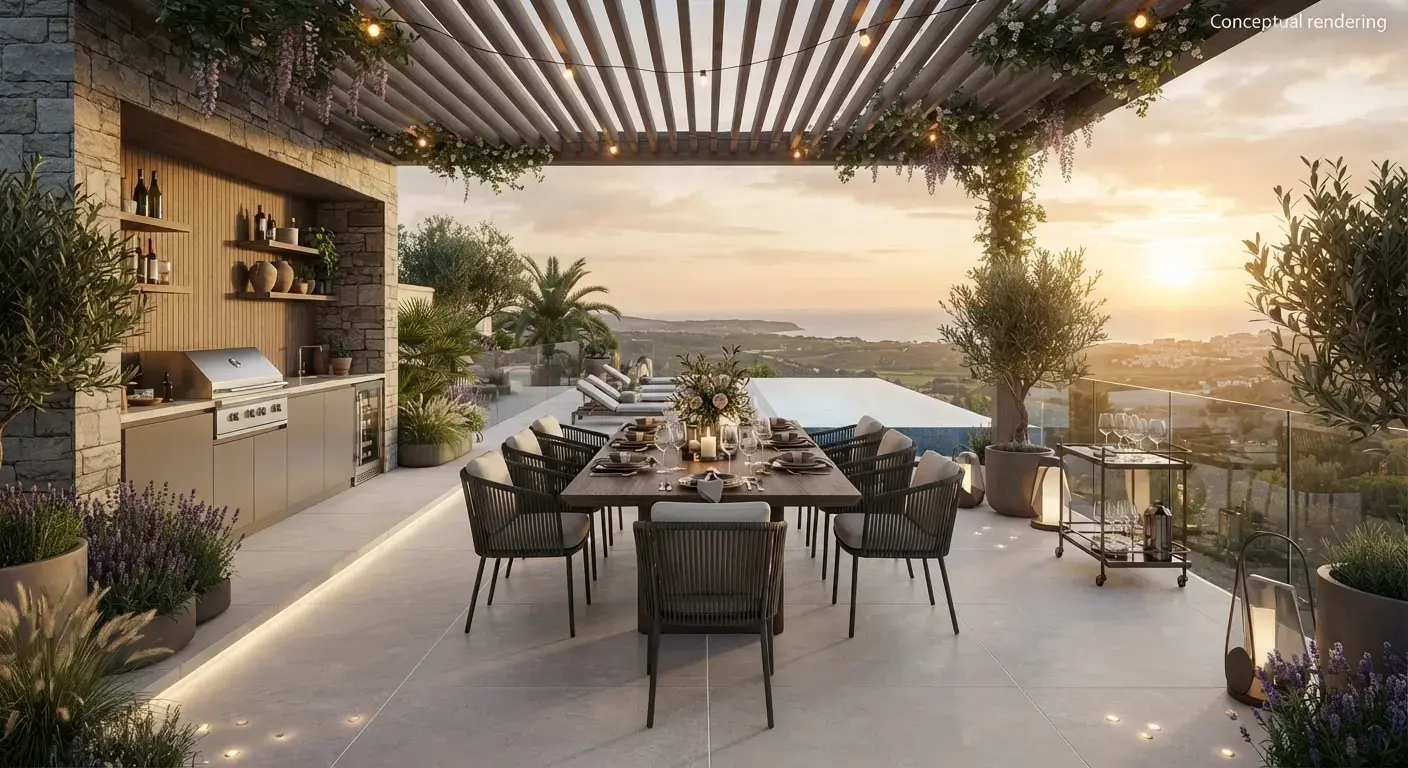
A single clean surface under a dining set looks calm and keeps chair legs from catching on frequent joints. Choose a matte or lightly textured finish for dependable footing and easy sweeping.
Pool Decks And Wet Zones
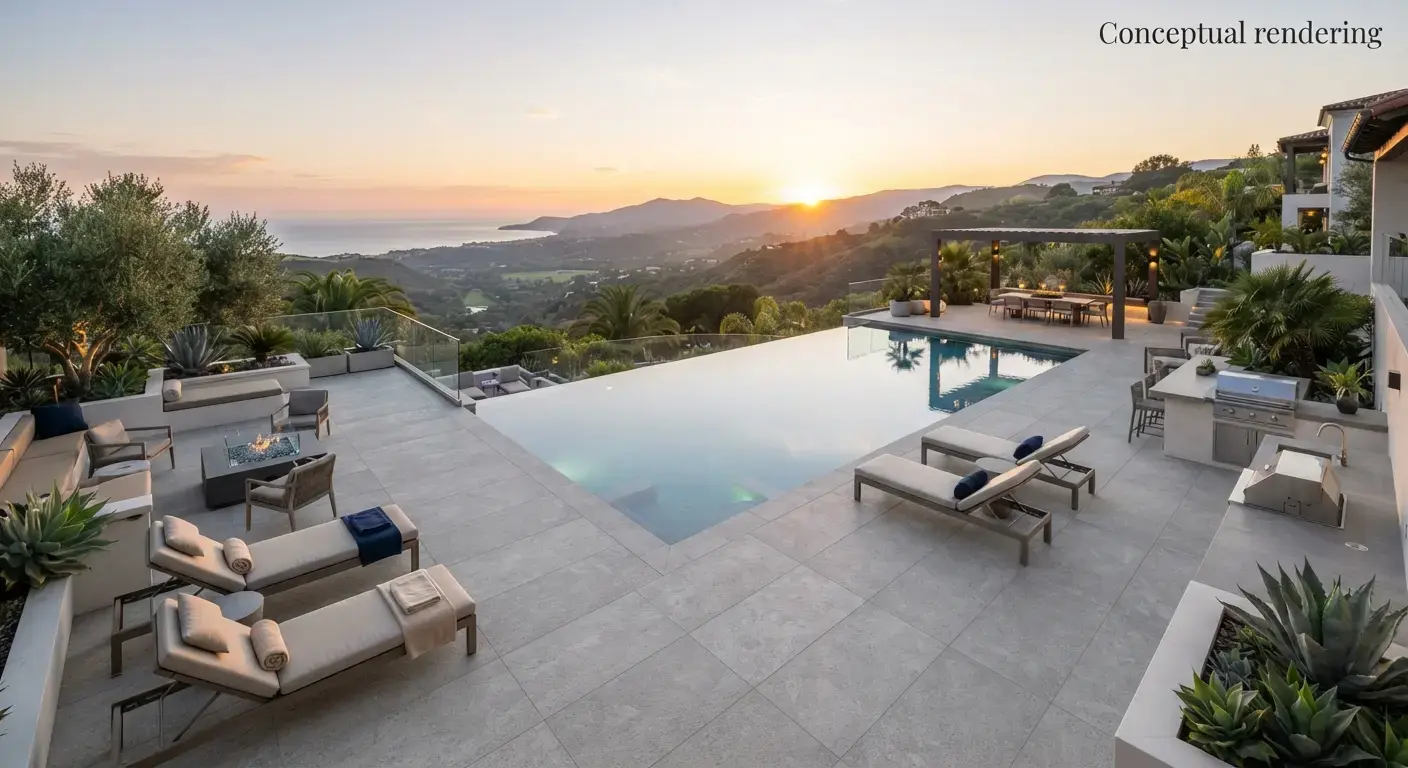
Wet areas call for matte or textured surfaces, since polished finishes are slipperier when wet. Confirm a DCOF of 0.42 or higher for the exact product. Review the tile industry standards behind that rating.
Walkways, Entries, And Garden Paths
Long units emphasize direction and flow. Granite, quartzite, travertine, and porcelain are the outdoor-approved choices, while marble and dolomite are better reserved for indoor spaces. Entries and steps deserve extra attention, since matte finishes and consistent texture help footing as conditions change.
Winters in Reno, Minden, and Fernley bring freeze-thaw cycles. Verify a passed freeze-thaw test or water absorption of 0.5% or less for any outdoor paver.
Sun-Exposed Areas
Granite, quartzite, and porcelain fall in the general UV-resistant group, while travertine does not. Confirm manufacturer sun exposure approval for the exact product. Light-colored surfaces stay cooler, and cool pavement research explains why.
Layout, Color, And Joint Planning
Match unit size to the space. A very small terrace can feel crowded by oversized units, so balance scale with the area and use clean borders or smaller formats at steps and edges.
Tone consistency strengthens the seamless effect. Light neutrals suit modern designs, while deeper charcoals add contrast against planters and lawns. Porcelain in a tone similar to indoor flooring can also support a smooth flow between inside and out.
Joint width depends on edge style. Rectified edges allow tighter joints when the specification confirms it, while non-rectified edges show natural size variation and need wider joints.

A Four-Step Selection Guide
- Define the use. Decide whether the space is for dining, a pool deck, a walkway, or an entry.
- Choose the material. Start with outdoor-approved porcelain, granite, quartzite, or travertine.
- Check the numbers. Verify freeze-thaw results, DCOF, and sun exposure approval for the exact product.
- Confirm edges and joints. Check whether the edge is rectified, then plan the joint width to match.
How Nova Tile And Stone Supports Your Paver Project
Nova supplies outdoor-approved stone and porcelain through four showrooms. Commission-free design consultants help compare colors, finishes, and performance details without sales pressure. Browse the online catalog first to narrow ideas before a visit.
Visit the Reno showroom to see oversized units beside smaller formats. The Minden showroom is another place to explore stone in person. Homeowners near Fernley can explore the Fernley showroom. Sacramento projects are supported through the Sacramento showroom.
Creating seamless outdoor spaces with large-format pavers works best when material, finish, and layout are chosen together. Consultants can review each factor and note what to verify on a specific product.
Bring measurements, photos, and notes on sun exposure, drainage, and foot traffic. These details help consultants narrow the material and finish options quickly and flag what needs verification.
Nova serves projects in Fernley, Reno, Minden, and Sacramento, so most customers can pair a showroom visit with a hands-on look at the materials.
Thoughtful planning before large paver installation begins should start with material choice. Arranged delivery assistance can also help coordinate heavy units for your project.
Ready to compare options? Book a design consultation to review materials for your space.
Key Takeaways
- Fewer joints create a cleaner, more continuous modern look.
- Outdoor-approved choices include porcelain, granite, quartzite, and travertine.
- Verify freeze-thaw results, DCOF, and sun exposure approval for the exact product.
- Natural stone needs sealing, while porcelain generally does not.
- Matching unit size, tone, and joint width to the space keeps the look intentional.
- Early consultation helps match material, finish, and layout.
Plan Your Outdoor Space With Expert Guidance
Choosing the right surface is easier with someone who knows the materials. A Nova design consultant can walk you through outdoor-approved options, finishes, and performance checks so your plan fits your space and climate. Bring layout ideas, photos, or measurements and leave with a clear direction. Schedule your free consultation now.
SACRAMENTO SHOWROOM
6100 Warehouse Way, Sacramento, CA 95826
 Google Maps
Store hours this week:
- Mon. - Fri.: 7:30 am - 5:00 pm
- Sat. - Sun.: Closed
MINDEN SHOWROOM
2548 Business Pkwy, Minden, NV 89423
Store hours this week:
- Mon. - Fri.: 7:30 am - 6:00 pm
- Sat.: 9:00 am - 3:00 pm
- Sun.: Closed
RENO SHOWROOM
12835 Old Virginia Rd Suite 24, Reno, NV 89521
Store hours this week:
- Mon. - Fri.: 7:30 am - 6:00 pm
- Sat.: 9:00 am - 3:00 pm
- Sun.: Closed
FERNLEY SHOWROOM
1855 US Highway 95A North, Fernley, NV 89408
Store hours this week:
- Mon. - Fri.: 7:30 am - 4:00 pm
- Sat. - Sun.: Closed
Note: Some images on this page may be conceptual renderings created to illustrate design possibilities and may not depict actual installations.
Frequently Asked Questions
There is no single industry cutoff. Oversized pavers are generally larger than standard tile-scale units, and sizes vary by product. Check the exact dimensions and thickness listed for the specific product you are considering.
Natural stone such as granite, quartzite, and travertine needs sealing. Porcelain generally does not, though product guidance varies. Confirm the sealing needs of the exact product, and clean spills promptly.
Only when the specific product has the right slip rating. Choose matte or textured finishes, avoid polished surfaces in wet areas, and confirm a DCOF of 0.42 or higher before specifying the product.
Frost performance is product-specific. Look for a passed freeze-thaw test or water absorption of 0.5% or less. If neither is documented, treat the product as indoor use only.
Granite, quartzite, and porcelain are generally treated as UV-resistant. Travertine is generally outdoor-approved but is not in that group, so verify the exact product's UV rating or confirm manufacturer sun exposure approval.