At a Glance
- True quartzite works outdoors on walls, patios, steps, pool coping, and fireplaces.
- It’s hard, resists everyday acids, and absorbs very little water.
- Ask whether the slab is resin-filled, since some resins darken in sun.
- Real quartzite scratches glass and doesn’t etch from lemon juice or vinegar.
- Use leathered, honed, or brushed finishes underfoot, and polished on walls.
- Choose lighter tones around pools to keep the stone cooler.
- Pick the slab for the most visible surface first, then match the rest.
- Clean with a neutral cleaner, avoid rust removers, and seal where water collects.
In This Post
- What Quartzite Is Made Of
- Is Quartzite Durable Outside?
- Is Every Quartzite Real Quartzite?
- How Does Quartzite Handle Freezing Winters?
- Where to Use Quartzite Outdoors
- Which Finish Works Best for Outdoor Quartzite?
- Design Ideas for Quartzite Across the Exterior
- A Natural Choice for Sustainable Projects
- How Do You Care for Outdoor Quartzite?
- For Designers and Contractors
- See Quartzite in Person
- Conclusion
- Frequently Asked Questions
Yes, quartzite is good for outdoor use. True quartzite is a natural stone made almost entirely of quartz, it rates about 7 on the Mohs hardness scale, it does not etch from everyday acids, and it absorbs very little water, so it suits outdoor walls, patios, steps, pool coping, and fireplace surrounds.
For surfaces people walk on, choose a leathered, honed, or brushed finish, and save polished quartzite for walls and fireplaces. Before buying, confirm the slab is true quartzite and ask whether it has been resin-filled, since both affect how it performs outside.
At Nova Tile and Stone, quartzite is a stone we’re glad to recommend for exteriors. This guide covers what it is, how to confirm you have the real thing, where it works outside, and how to care for it.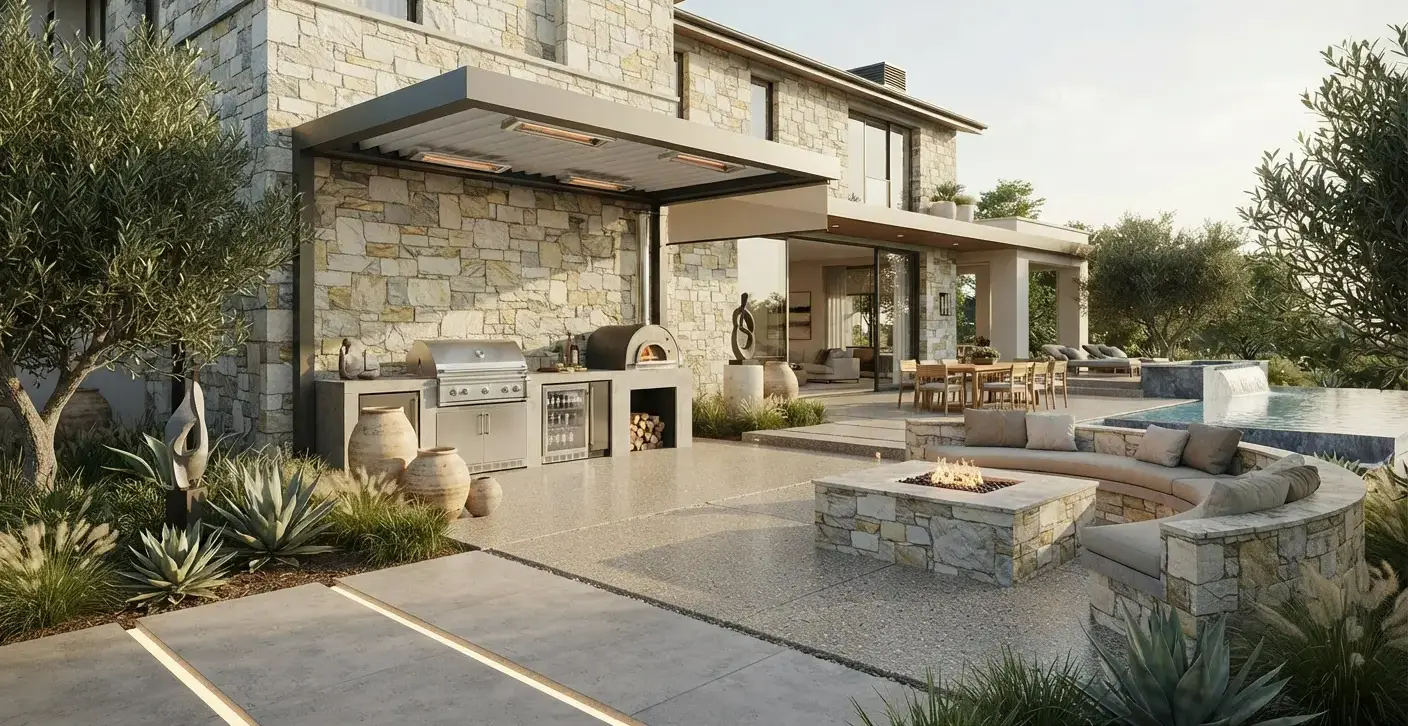
What Quartzite Is Made Of
Quartzite starts as sandstone. Geologist Karin Kirk’s definitive guide to quartzite, published on the Natural Stone Institute’s Use Natural Stone site, explains that heat and pressure fuse the sand grains so tightly that they form a dense, durable rock made almost entirely of the mineral quartz.
Most quartzite is white or light colored, because quartz sand is light. Kirk notes that minerals carried by groundwater can add green, blue, or iron-red tones to some stones.
Every slab is different. Each one has natural variation in tone, veining, and movement, which is why we recommend seeing the actual slab before choosing it for a visible wall or patio.
Is Quartzite Durable Outside?
Hardness is the first reason it holds up. Kirk’s guide puts quartz at 7 on the Mohs scale, harder than glass and harder than a knife blade, so quartzite resists scratching from grit, furniture, and foot traffic. That doesn’t make it immune to wear, so routine care still matters.
Acid resistance is the second. The Natural Stone Institute’s guide to natural stone care classifies quartz-based stones as siliceous and notes they are generally resistant to most acids found in a kitchen, which helps with drink and food spills on a patio or around a pool.
Sun is the third. The stone itself holds up well in sun, but many slabs are resin-filled at the factory to seal natural pits and fissures, and a Stone World article on resined slabs notes that some resins are not UV resistant and can darken in direct sun. Ask whether a slab is resined, and whether that resin suits outdoor use, before it goes on a sunny wall or patio.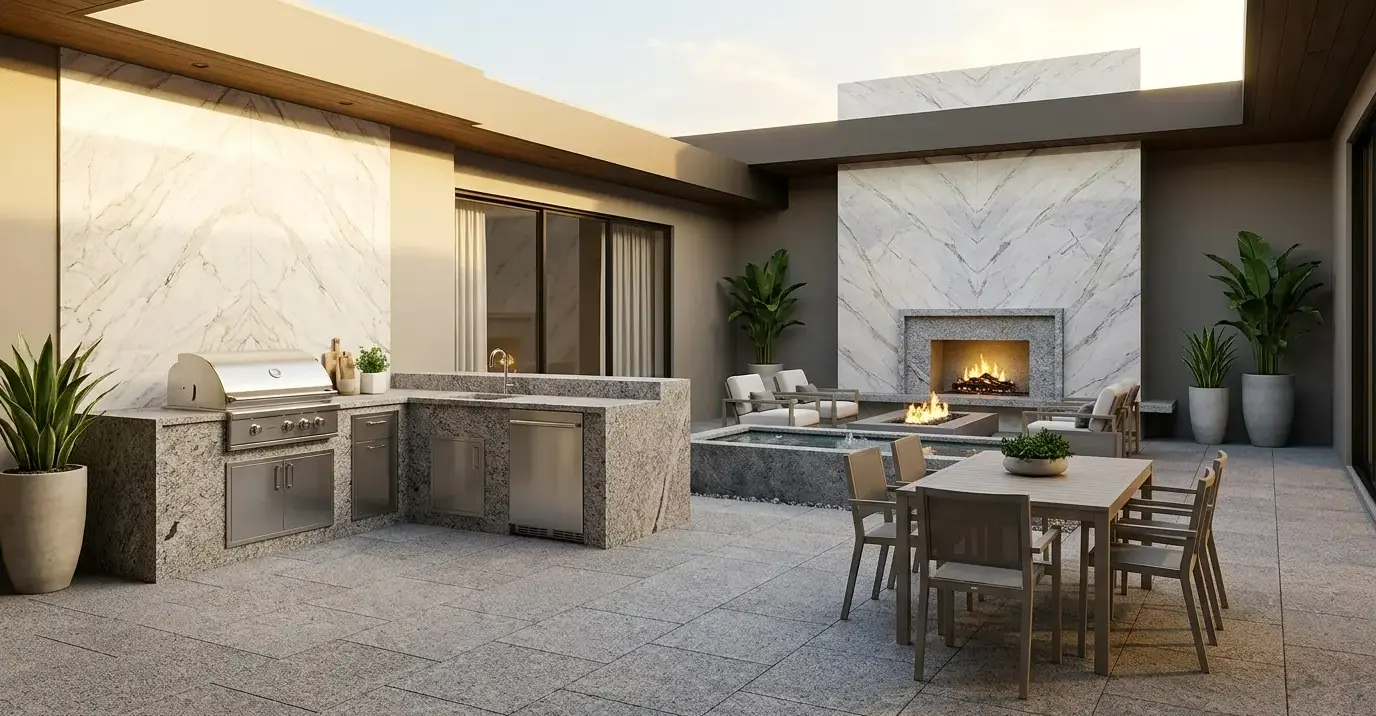
Is Every Quartzite Real Quartzite?
Not always, and this is the most common quartzite complaint. Kirk’s guide explains that quartzite is often mislabeled, and that a stone sold as “soft quartzite” is not quartzite at all, but most often a carbonate stone that scratches and etches far more easily.
That matters outside, because the hardness and acid resistance described above only apply to true quartzite. Kirk describes two simple checks: real quartzite scratches glass easily and is barely marked by a knife blade, and it shows no etching after lemon juice or vinegar sits on it for about 15 minutes.
Before buying quartzite for a patio, steps, or pool coping, ask at the showroom whether you can test an inconspicuous edge of the slab you’re considering. A glass tile is enough for the scratch test, and testing several spots is worthwhile on stones with more than one color or texture.
How Does Quartzite Handle Freezing Winters?
Reno, Minden, and Fernley all see freezing winter nights, and water that freezes inside stone expands. The less water a stone takes in, the less there is to freeze, which is where quartzite stands out.
ASTM C616, the industry standard for quartz-based dimension stone, sets a maximum water absorption of 1 percent for stone classified as quartzite. That low ceiling is a real advantage on steps and patios that see snow, meltwater, and freezing nights.
Porosity still varies from slab to slab. Kirk notes that less intensely formed quartzites are more porous and benefit from sealing, so ask how a specific slab performs before it goes on an exposed walking surface.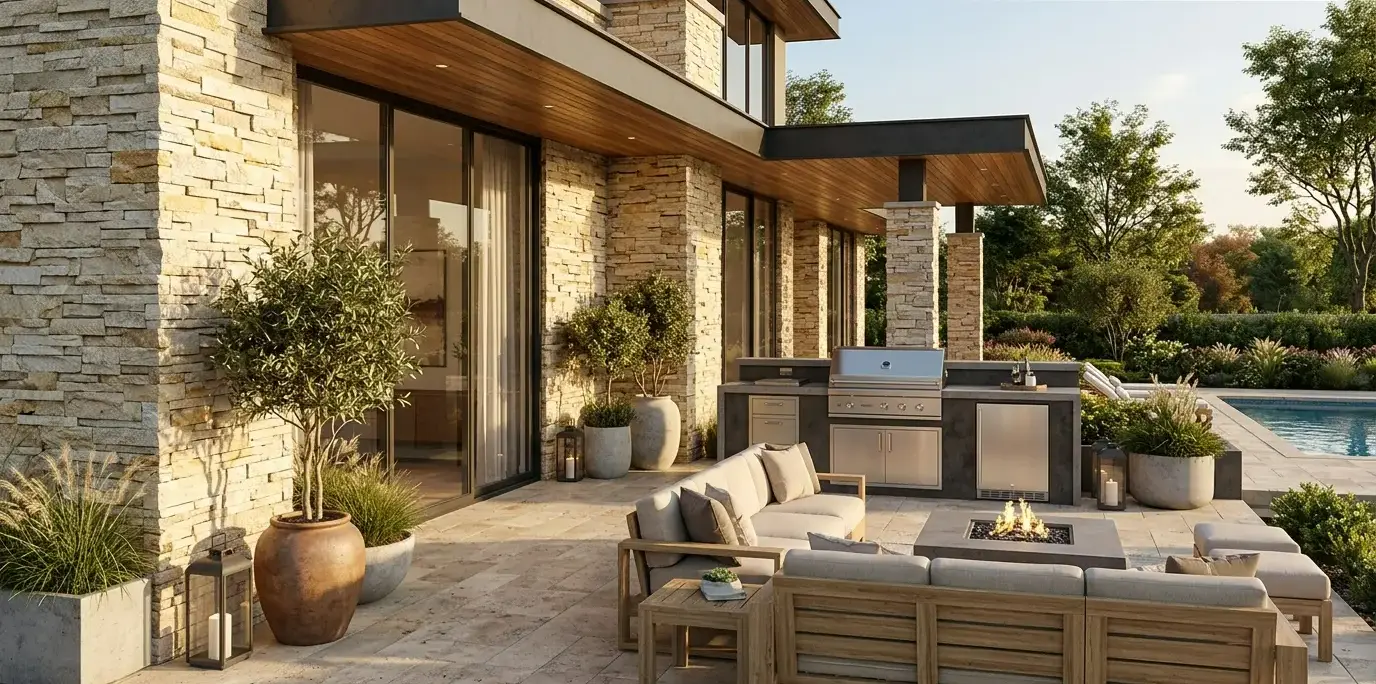
Where to Use Quartzite Outdoors
Walls and entry columns are the most familiar use. Our quartzite ledger stone comes in standard 6 by 24 inch silver gray panels, 1 to 1.5 inches thick, for facades, columns, and accent walls, and our exterior stone guide covers how to choose exterior stone by climate, color, and upkeep.
Quartzite slabs open up more options. Pieces cut from a slab can become patio paving, step treads, pool coping, or the surround of an outdoor fireplace, and quartzite is a good fit for each of those floor, wall, and fireplace applications.
Around a pool, color matters as much as finish. Lighter quartzite tones absorb less sunlight than dark ones and stay more comfortable underfoot on hot Nevada and Sacramento afternoons.
Which Finish Works Best for Outdoor Quartzite?
Quartzite is available in polished, honed, and leathered finishes, and the right one depends on whether people will walk on it. Use Natural Stone’s guide to selecting a stone finish notes that a honed finish can increase slip resistance on many stones, and that a brushed finish provides some traction on wet surfaces, although its texture can collect dust and debris.
Leathered quartzite is a strong middle ground for patios and steps. It is textured but soft to the touch, with deeper contrast and color than a basic brushed finish, and it resists fingerprints and smudges.
Polished quartzite belongs on vertical surfaces. Its reflective finish brings out the stone’s veining, which makes it a good choice for walls, columns, and fireplace surrounds where nobody walks.
Design Ideas for Quartzite Across the Exterior
Using the same quartzite on an entry wall, the front steps, and an outdoor fireplace gives the exterior one consistent material, even when each surface has a different job. Mixing finishes keeps that from looking flat: a polished fireplace surround can sit above leathered steps in the same stone.
Lighting adds depth too. Low lights aimed up a quartzite wall at dusk pick out the texture of each panel, and the same light across a leathered patio shows the depth of the finish.
Because every slab varies, plan the most visible surface first. Choose the slab for the entry wall or fireplace, then match steps and coping to it, so the pieces people see together come from stone that looks right side by side.
A Natural Choice for Sustainable Projects
For designers working toward green building goals, quartzite comes with useful documentation. Use Natural Stone’s article on environmental and health product labels explains that the Natural Stone Institute has developed industry-wide Health Product Declarations for common stone types, including quartzite.
The article also notes that natural stone is essentially a single-ingredient material with no volatile organic compounds, and that industry-wide Environmental Product Declarations cover stone cladding, paving, and countertops. Those labels can support material credits in rating systems such as LEED.
How Do You Care for Outdoor Quartzite?
Routine care is simple. The Natural Stone Institute recommends a neutral cleaner or mild soap, and for patio and pool areas, flushing with clear water and using a mild bleach solution to remove algae or moss. It also warns that many rust removers contain hydrofluoric acid, which attacks quartzite along with other stones.
Sealing matters most where water and spills collect: patios, steps, and pool coping. The institute notes that many stones do not need sealing, so ask whether your slab’s porosity calls for it. On resined slabs, Stone World recommends water-based impregnators, since some solvent-based products can react with the resin.
Pool coping deserves extra attention. Rinse splash-out from chlorinated or salt-water pools with fresh water, since salt left behind as water dries can work into the pores of more porous stone, and ask about a sealer suited to the pool’s chemistry.
For Designers and Contractors
Quartzite projects can combine cladding and slab pieces, so it helps to lock in material early. Our trade account program offers a dedicated rep, job-site delivery across Northern Nevada and Northern California, slab holds, and commercial estimating that turns plans into a material takeoff.
Once treads, coping, or fireplace pieces are measured, you can request a slab quote for each one.
See Quartzite in Person
Quartzite is easiest to choose in person, where you can see the full veining of a slab and run a hand over each finish. Browse our live slab inventory to shortlist quartzite slabs, then bring your plans and photos of the space to a free design consultation.
You can also explore our full selection of natural stone online before you visit.
Conclusion
True quartzite, finished for the way each surface is used, is a dependable way to bring natural stone outside. Start with the space where it will be most visible, and our team at Nova Tile and Stone can help you compare slabs and finishes at any of our four showrooms in Reno, Minden, Sacramento, and Fernley.
Note: Some images on this page may be conceptual renderings created to illustrate design possibilities and may not depict actual installations.
Frequently Asked Questions
Yes. True quartzite is a dense natural stone made almost entirely of quartz, and it is suited to outdoor walls, floors, steps, pool coping, and fireplaces. Ask whether a slab is resin-filled, since some resins can darken in direct sun.
Yes. Quartzite forms when sandstone is fused by heat and pressure into a dense rock made almost entirely of quartz. It should not be confused with engineered quartz, a manufactured material bound with resin, which is not recommended for outdoor use because resin can discolor in sun.
True quartzite scratches glass easily, is barely marked by a knife blade, and does not etch when lemon juice or vinegar sits on it. Stones sold as “soft quartzite” are usually a different stone, so ask whether you can test an inconspicuous edge of the slab before buying.
For patios, steps, and pool coping, a leathered, honed, or brushed finish is a better match than a polished one. Polished quartzite works well on walls, columns, and fireplace surrounds where people do not walk.
It depends on the slab’s porosity and where it is used. Patios, steps, and pool coping benefit most from sealing, and resined slabs call for a water-based impregnator. Ask about the specific quartzite you choose.