Yes, natural stone is considered hardscaping. Hardscaping refers to the non-living, structural features of a landscape, such as patios, walkways, retaining walls, and pool decks, built from materials like natural stone, concrete, brick, or manufactured pavers. Softscape, by contrast, describes the living elements of a yard, including plants, lawns, and trees.
Natural stone fits within the hardscape category whether it's cut into uniform pavers or left as irregular flagstone. For homeowners planning an outdoor project, understanding where natural stone fits clarifies how it compares to alternatives like concrete or manufactured pavers when weighing design, cost, and long-term care.
What Counts as Hardscaping
Hardscaping includes any fixed, non-living feature built into a landscape. Patios, walkways, driveways, retaining walls, steps, fire pits, and outdoor kitchen surfaces are all common examples. These elements typically use materials like poured concrete, manufactured pavers, brick, wood, or natural stone.
The purpose of hardscaping goes beyond appearance. These features often solve practical problems, including uneven grading, poor drainage, and limited usable space. A well-planned hardscape layout can direct water away from a home's foundation, create level surfaces on a sloped lot, and establish clear pathways through a yard. Because these elements are structural, the material chosen for them affects both how the space looks and how it performs over time.
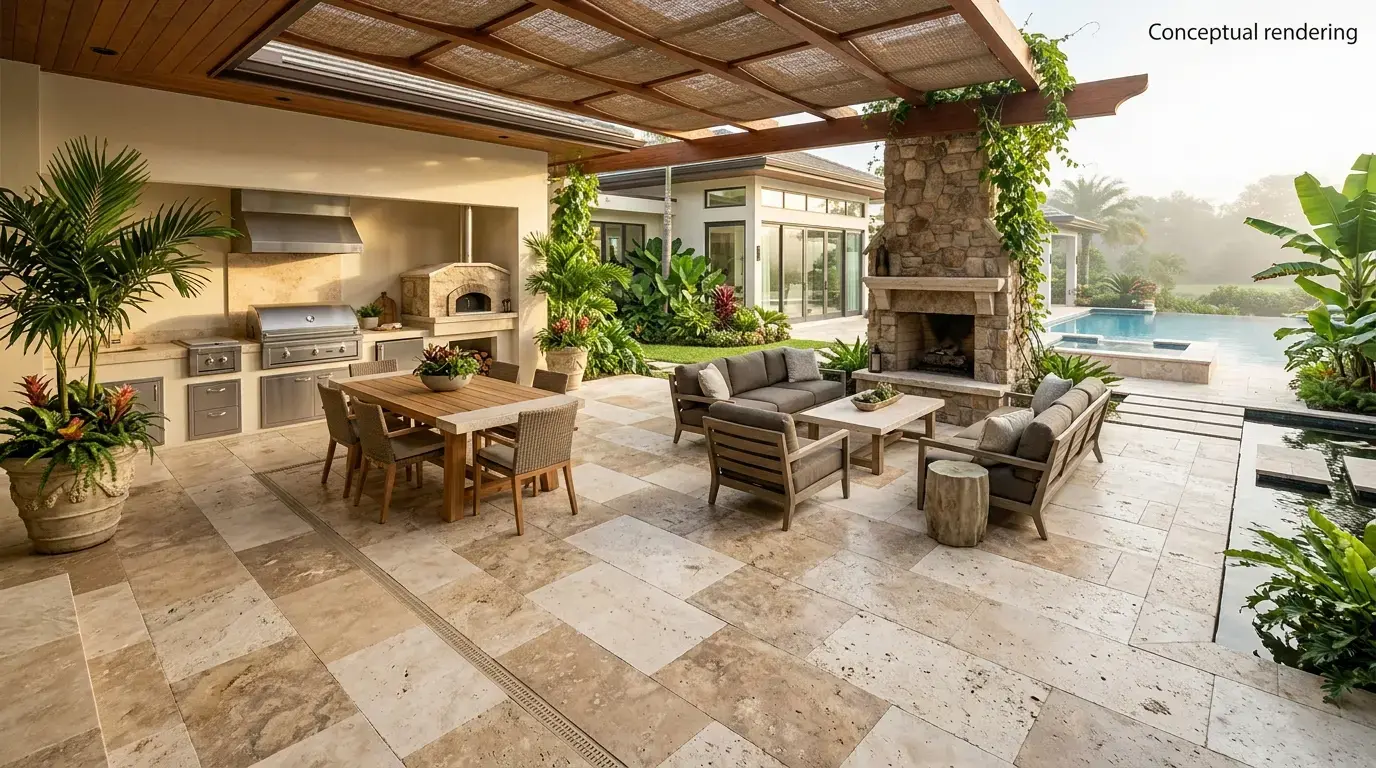
Where Natural Stone Fits Into Hardscaping
Natural stone has been used in outdoor construction for centuries, long before manufactured pavers or poured concrete existed. Flagstone walkways, fieldstone walls, and slate patios are all traditional forms of stone hardscaping that remain popular today.
What sets natural stone apart from other hardscape materials is that each piece is quarried rather than manufactured. This means natural variation in color, veining, and texture from one stone to the next, which gives outdoor spaces a look that manufactured materials are designed to imitate but can't fully replicate. Natural stone can be cut into uniform pavers for a more structured layout, or used in irregular shapes for a looser, organic pattern.
Common applications for natural stone in hardscaping include:
- Patios and outdoor living areas
- Walkways and garden paths
- Pool decks and surrounds
- Retaining walls and garden edging
- Steps and entryways
- Fire pit surrounds
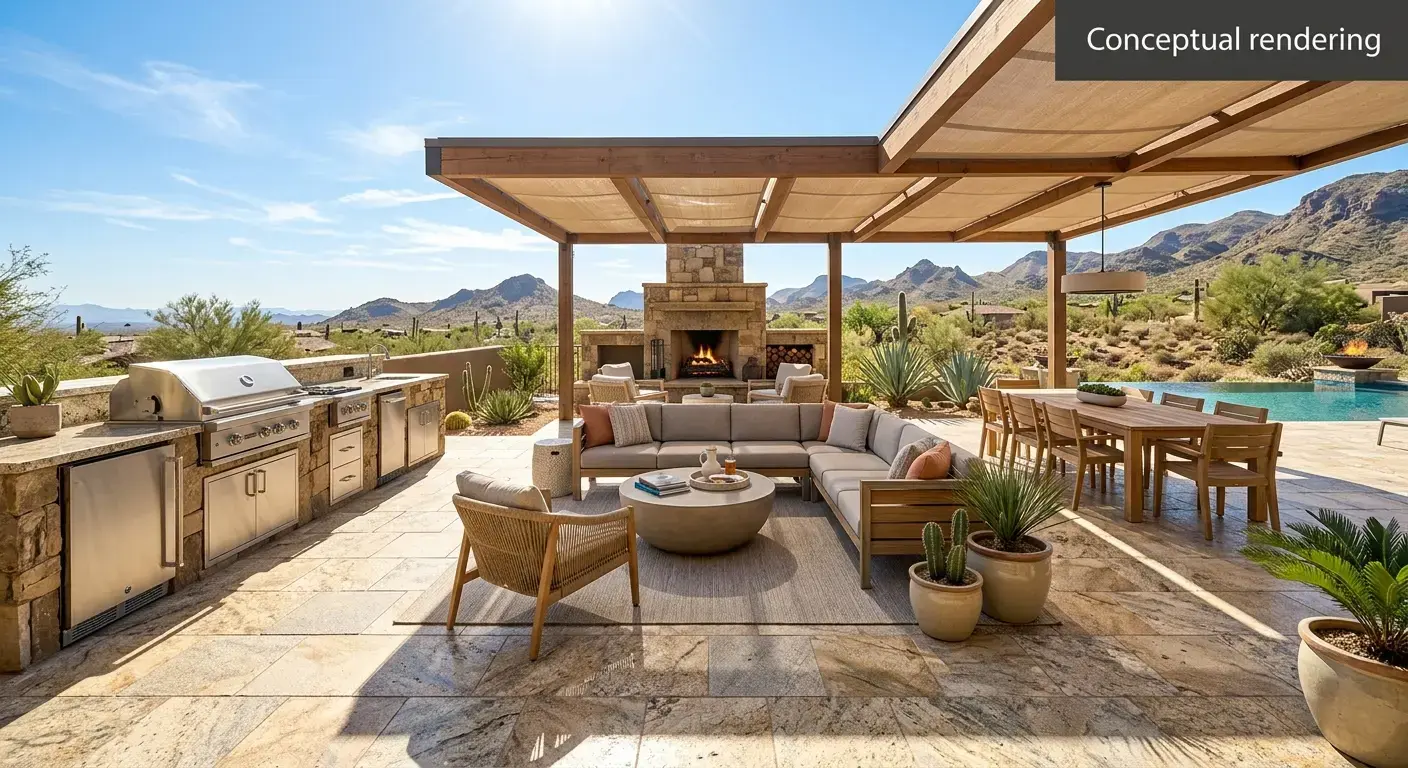
Types of Natural Stone Used Outdoors
Several types of natural stone are commonly used in hardscape projects, each with its own characteristics.
Flagstone is a general term for flat sedimentary stone, often sandstone or quartzite, that splits naturally into slabs. It's frequently used for patios and walkways because of its flat surface and irregular, organic shapes.
Travertine is a form of limestone with a naturally porous surface, often used for pool decks because it stays cooler underfoot than denser materials and provides a textured, slip-resistant surface.
Slate has a fine-grained, layered structure that gives it a smooth, slightly textured finish. It's a popular choice for pathways and stepping stones.
Granite is a dense, hard-wearing igneous stone often used for pavers, steps, and areas that see heavy foot traffic.
Fieldstone refers to naturally rounded or irregular stones gathered from fields and riverbeds, commonly used for retaining walls, edging, and rustic-style walkways.
Limestone is a sedimentary stone that typically appears in muted tones like buff, gray, or tan, and is often used for patios and steps where a softer, understated look is preferred. Color can vary somewhat between quarries, so seeing a sample from the actual batch being used is worthwhile.
Sandstone offers a warm color palette, ranging from tan to deep red, and is frequently chosen for pathways and patio surfaces in regions with a warmer, earth-toned aesthetic.
Each of these materials handles weather, foot traffic, and moisture differently, which is why the right choice depends on the specific application and local climate conditions. Denser stones like granite and slate tend to hold up well in areas with heavy foot traffic or freeze-thaw cycles, while softer, more porous stones like limestone and travertine are better suited to areas with less structural demand.
Sourcing and Regional Availability
Natural stone is quarried in specific regions around the world, and availability can vary depending on the type of stone and where a project is located. Some stone types, such as certain sandstones and limestones, are quarried domestically and tend to be more readily available, while others are imported from regions known for a particular color or texture, such as travertine sourced from Turkey or Italy.
This regional sourcing affects both cost and lead time. A stone type that's widely quarried and stocked locally is generally easier to source in the quantities needed for a larger patio or walkway project, while a less common or imported stone may require more advance planning. Homeowners working within a specific timeline should factor sourcing into their planning early, particularly for larger hardscape projects that require a consistent supply of matching stone. Browsing a live stone inventory can still offer a useful preview of current stone colors and characteristics, since many of the same quarries that supply slab material also supply exterior stone.
Contractors and designers sourcing stone for multiple client projects often find it worthwhile to set up a trade account, which can streamline pricing and ordering across several jobs at once.
Natural Stone vs. Other Hardscape Materials
Homeowners planning a hardscape project often weigh natural stone against manufactured pavers or poured concrete. Each material offers different advantages.
Manufactured concrete pavers are produced to consistent shapes, sizes, and colors, which can simplify planning and make patterns easier to replicate. Poured concrete offers a seamless surface with fewer joints, which some homeowners prefer for a clean, minimal look.
Natural stone, by contrast, offers variation that no two manufactured products can fully match. Because it's a quarried material rather than a molded one, color and texture shift naturally across a finished surface. This variation is often the main reason homeowners choose natural stone over manufactured alternatives, even though it typically requires more careful planning to achieve a cohesive layout.
Cost, texture underfoot, and regional availability also factor into this comparison. Certain stone types are more readily available in some regions than others, which can affect both pricing and lead time. Once a stone type has been narrowed down, requesting a quote is a useful next step for firming up a project budget before committing to a final material.
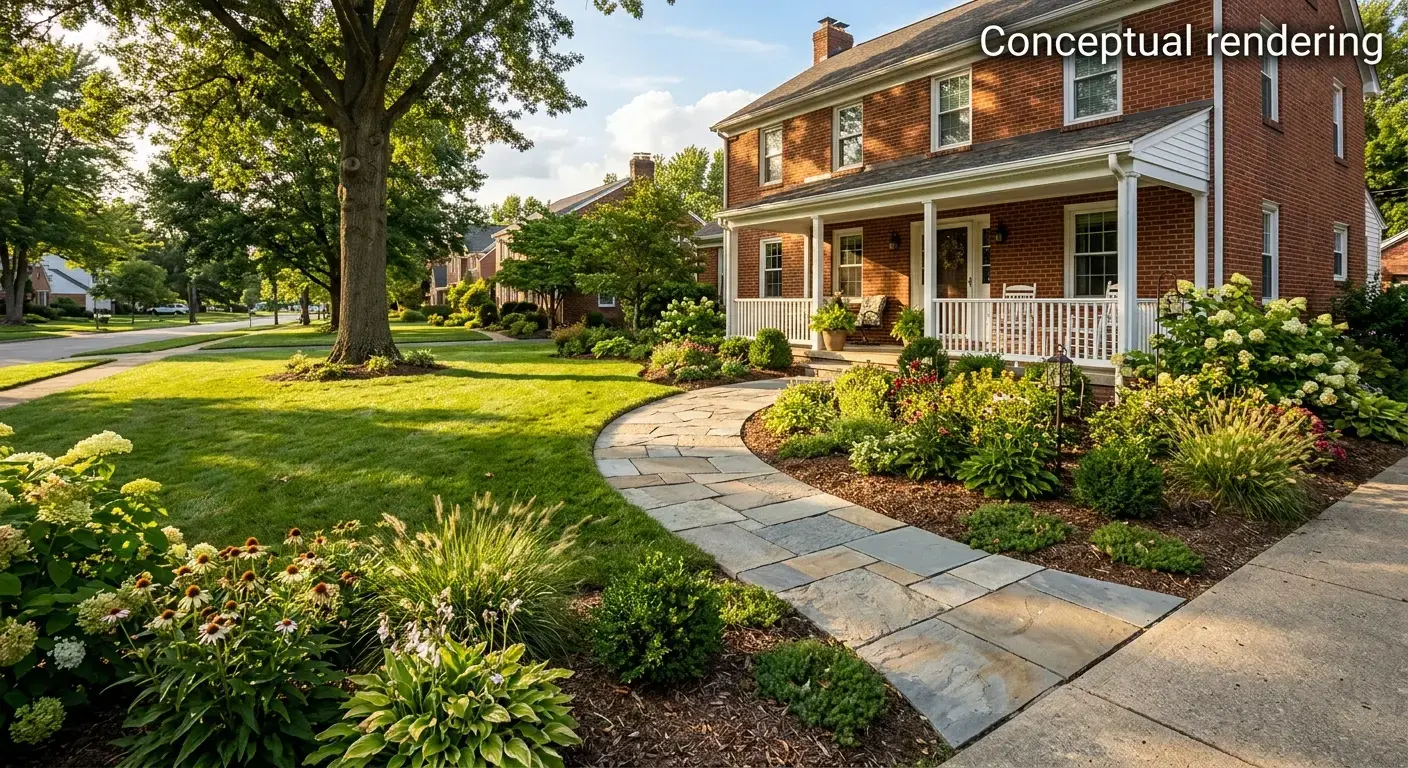
Design Considerations for Natural Stone Hardscaping
When planning a natural stone hardscape feature, a few factors typically guide the decision-making process.
Color and finish should complement the exterior of the home, including siding, roofing, and existing landscaping elements. Warmer stone tones tend to pair well with earth-toned exteriors, while cooler grays and blues suit more contemporary homes.
Texture affects both appearance and function. A honed or tumbled finish offers a smoother surface, while a natural cleft finish provides more grip, which matters for pool decks, steps, and any area exposed to moisture.
Pattern layout varies depending on whether the stone is cut into uniform pavers or left in irregular shapes. Uniform cuts allow for a structured grid or running-bond pattern, while irregular flagstone is typically laid in a puzzle-like arrangement with mortar or gravel joints.
Scale matters too. Larger stone pieces tend to suit expansive patios, while smaller stone works well for pathways or accent areas.
Joint style is another consideration that's often overlooked. Wide, gravel-filled joints between irregular flagstone pieces create a relaxed, garden-path feel, while tight, mortared joints between uniform pavers produce a more formal, structured appearance. The joint width and material also affect drainage, since gravel and sand joints allow water to pass through more easily than solid mortar.
How Natural Stone Performs Over Time
One of the questions homeowners ask most often is how natural stone holds up outdoors compared to manufactured alternatives. Because natural stone is a dense, quarried material, it generally resists fading from sun exposure better than some manufactured products, since its color comes from mineral composition rather than an applied pigment. That said, performance still depends heavily on the specific stone type, the climate it's installed in, and how well the surface is maintained over the years.
Porous stones such as travertine and limestone can absorb moisture, which makes proper drainage and, in some cases, periodic sealing an important part of long-term care. Denser stones like granite and slate are less prone to moisture absorption and typically need less upkeep. Regardless of stone type, proper site preparation and drainage planning play a significant role in how well a hardscape surface performs through seasonal temperature swings and moisture exposure.
Working With Natural Stone for Your Outdoor Space
Choosing natural stone for a hardscape project starts with understanding the specific use case, whether that's a patio, walkway, retaining wall, or pool surround, since different applications call for different stone types and finishes. Local climate also plays a role in this decision, as freeze-thaw cycles, humidity, and sun exposure all affect how a given stone performs over time.
Seeing stone in person before making a final decision is one of the most useful steps in the process. Photos and digital renderings can only convey so much of a stone's actual color range and texture, and natural stone often looks noticeably different in outdoor light compared to indoor lighting. Visiting a showroom in person makes this comparison much easier.
Working with a knowledgeable team during this stage can help match a stone type to a project's specific requirements, from the visual style being pursued to the practical demands of the space. Our design team walks homeowners through available stone types, finishes, and design considerations so the final selection fits both the intended use and the surrounding landscape, and booking a design consultation ahead of time helps make the most of that visit.
Conclusion
Natural stone is a well-established hardscape material, used in outdoor spaces for centuries and still favored today for the natural variation and character it brings to patios, walkways, retaining walls, and pool surrounds. Whether the goal is a structured paver layout or a more organic flagstone path, natural stone offers a range of options suited to different design styles and outdoor applications. Homeowners weighing natural stone against manufactured pavers or poured concrete should consider how each material performs in their specific climate and use case, along with the visual character each one brings to a finished space, and can browse our full range of surfaces to see how outdoor stone fits alongside other materials for a project. Our showrooms in Sacramento, Reno, Minden, and Fernley give homeowners a chance to see and compare natural stone options in person. Wherever a project is located, our team is available to help answer questions about which stone type and finish might work best for a specific outdoor space.
Note: Some images on this page may be conceptual renderings created to illustrate design possibilities and may not depict actual installations.
Frequently Asked Questions
Natural stone is one material used within hardscaping, not a separate category. Hardscaping refers to any non-living, structural element in a landscape, and natural stone is one of several materials, along with concrete and manufactured pavers, used to build those elements.
Flagstone and travertine are both common choices for patios. Flagstone offers a flat, irregular surface well-suited to informal layouts, while travertine's porous texture stays cooler underfoot and works well in sunny areas.
Maintenance needs depend on the specific stone type and finish. Porous stones like travertine may need periodic sealing, while denser stones like granite typically require less upkeep. Manufactured pavers can also need joint sand replenishment and occasional cleaning, so maintenance differences vary by material rather than by natural versus manufactured status alone.
Natural stone is used across a wide range of hardscape applications, including walkways, retaining walls, steps, pool surrounds, and fire pit areas. The right stone type often depends on the specific application and the amount of foot traffic or structural support required.
Natural stone is quarried, which means each piece has natural variation in color and texture. Manufactured pavers are produced in consistent shapes and colors, offering more uniformity but less natural variation than quarried stone.