Ledger stone is real, quarried natural stone when it's cut from rock such as quartzite, slate, limestone, or granite, but the same name is also used for a manufactured product made from cement, aggregate, and pigment cast to look like it. Both are marketed as "ledger stone," "ledgestone," or "stacked stone," so the label alone doesn't tell you which one a specific product is.
Natural ledger stone carries color through the material and generally lasts longer outdoors, while manufactured ledger stone is lighter, less expensive, and more prone to fading and moisture absorption over time. The way to know which one you're getting is to ask the supplier directly whether the product is natural quarried stone or a manufactured cement-based veneer, since that answer determines how it should be installed and maintained on an exterior wall.
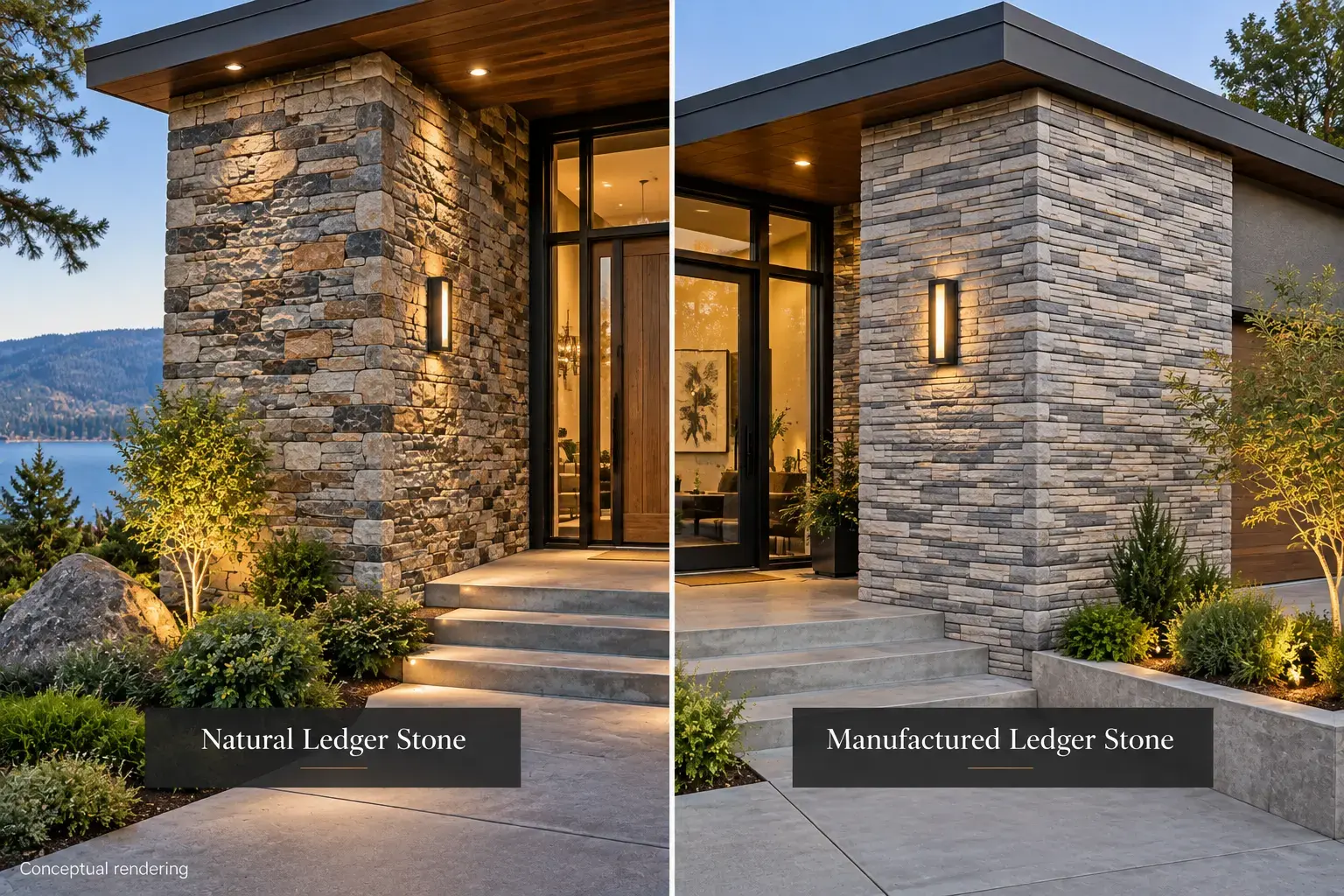
Natural vs. Manufactured Ledger Stone: The Core Difference
Natural ledger stone is cut from quarried rock, most commonly quartzite, slate, limestone, travertine, or granite. Individual pieces typically run from about 5/8 inch to 1 1/4 inches thick, mounted on a mesh backing or adhered together into a panel for easier installation. Because each piece is a genuine stone fragment, the color runs through the material rather than sitting on the surface, and the mineral variation between pieces occurs naturally rather than being molded in. How well a specific stone performs outdoors over time also depends on its mineral density and porosity. That's part of what separates a dense stone like granite from a more porous one like limestone, a distinction covered in more depth in a technical overview of exterior natural stone assemblies.
Manufactured ledger stone (also marketed as cultured stone or faux ledger stone) is cast from a mixture of Portland cement, lightweight aggregate, and iron oxide pigment, poured into molds taken from actual quarried stone. Casting from real stone molds is what allows the surface texture and color variation to closely mimic natural stone, even though the finished product contains no quarried rock itself. It's significantly lighter than natural stone, which is part of why it became popular for retrofits and DIY installation, and why it doesn't require the wall ties or structural backing that natural stone often needs.
How to Tell Which One You're Looking At
A few checks help distinguish the two before you commit to an order:
- Weight. Natural stone panels are noticeably heavier per square foot. If a supplier describes the product as lightweight and easy to handle without special anchoring, it's very likely manufactured.
- Surface pattern. Natural stone shows irregular, non-repeating mineral variation piece to piece. Manufactured stone is cast from a limited set of molds, so patterns can repeat across a wall if you look for it.
- Edge and back. A cut or sawn back with visible mineral grain indicates natural stone. A uniform, slightly textured cement-gray back is a sign of manufactured veneer.
- Ask for the spec sheet. A legitimate supplier can tell you the stone type and quarry source for a natural product, or the mix composition for a manufactured product. Vague answers on either point are a reason to ask more questions before buying.
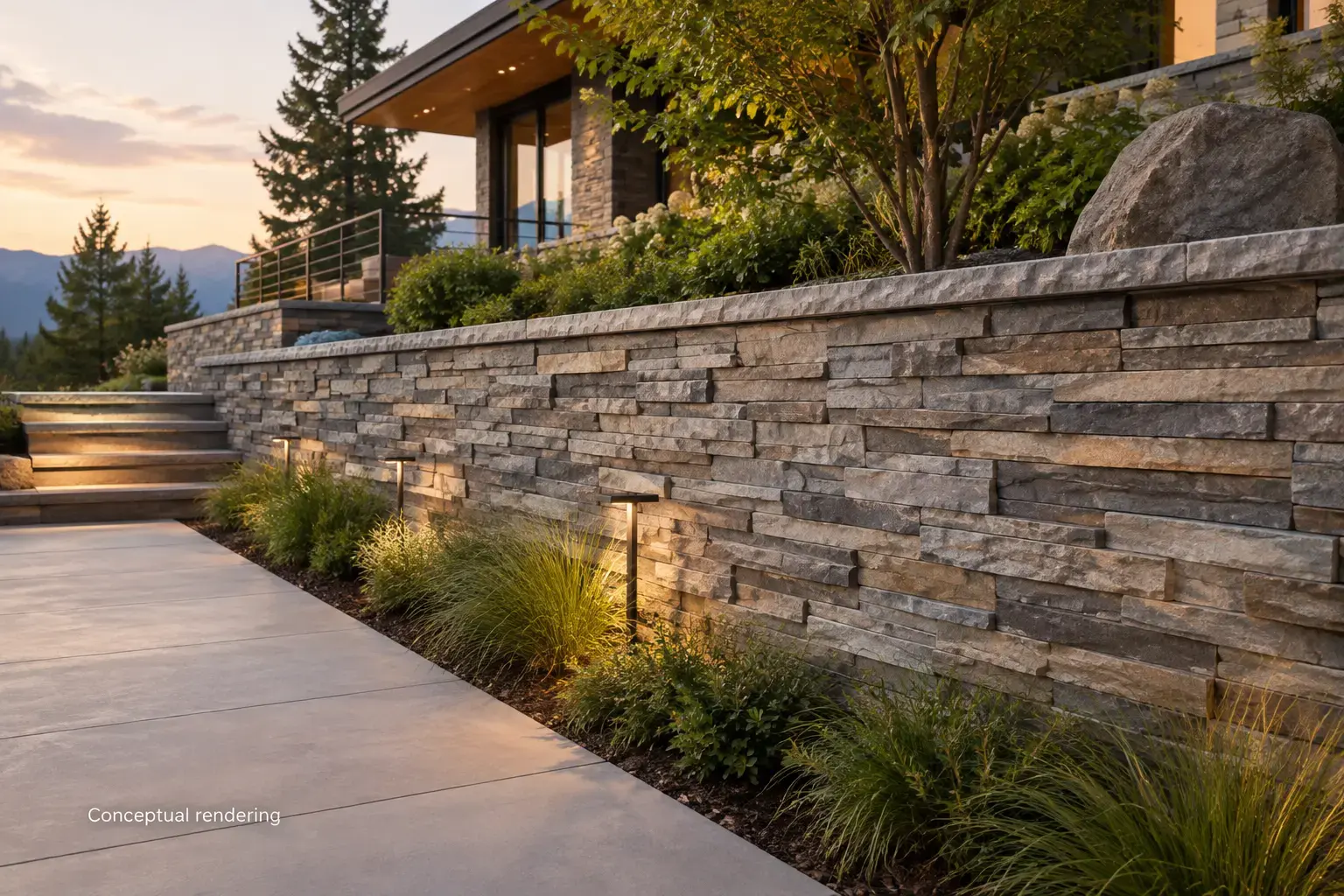
Where Ledger Stone Is Used on Exteriors
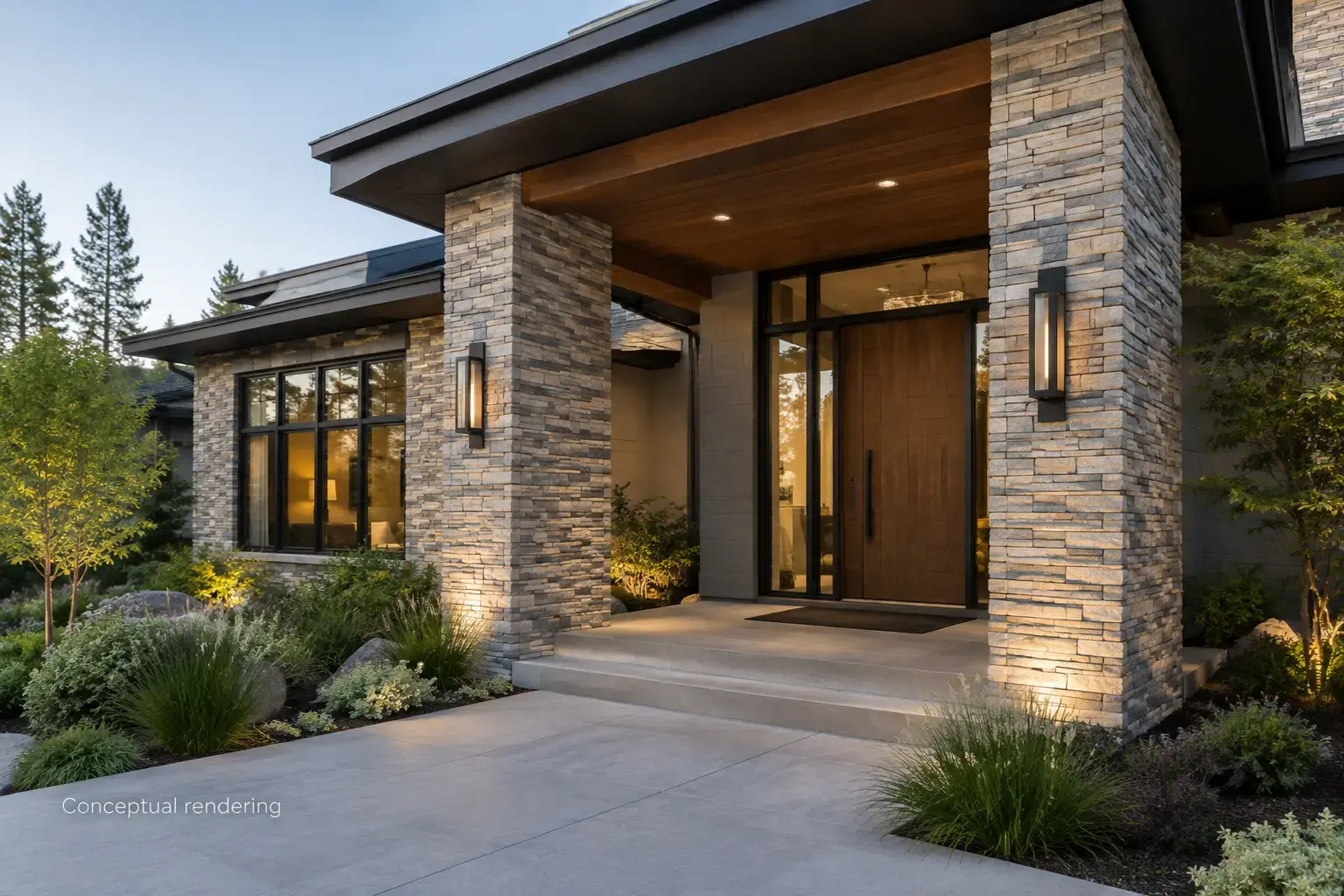
Outdoors, ledger stone is applied to home facades, foundations, entry columns, outdoor kitchens, and retaining walls, and its horizontal, layered profile pairs well with rustic, craftsman, and mountain-style architecture. It's also common as a focal accent rather than a full-wall material, wrapping a column base or a section of foundation to add texture without the material and labor cost of cladding an entire structure.
Action step: if budget or long-term maintenance is a concern, start with an accent application. A stone-wrapped column or foundation band delivers the same visual texture as a full facade at a fraction of the cost, and it gives you a smaller-scale test of how the material performs in your climate before committing further.
Installation Requirements for Exterior Ledger Stone
Both natural and manufactured ledger stone are installed as adhered veneer, a defined category under the International Building Code that is distinct from full-thickness masonry. Manufactured stone veneer units are limited to a maximum saturated weight of 15 pounds per square foot under the ASTM specification that governs manufactured stone veneer materials and testing, ASTM C1670. Natural stone used in adhered veneer systems is designed to a similarly light range, which is part of what allows either type to be installed without the wall ties or footings that full-thickness stone requires.
Installation should follow the Building Stone Institute's Adhered Stone Veneer Installation guide along with the applicable building code chapter for adhered masonry veneer. Key requirements include:
- A water-resistive barrier installed behind the veneer over the backing wall.
- A corrosion-resistant weep screed or flashing at the base of the wall, extending below the foundation plate line to allow any moisture that gets behind the veneer to drain out. This differs from the weep-hole spacing used in brick cavity wall systems, since adhered veneer is a solid, mortared assembly rather than a cavity wall.
- Minimum clearance above grade, commonly around 4 inches above soil and 2 inches above paved surfaces, so the veneer isn't sitting in standing water or wicking moisture from the ground.
- Clean backup surfaces, free of paint, sealant, or form-release residue, since these coatings prevent proper mortar bonding.
Action step: get the flashing, weep screed, and grade clearance details from your installer in writing before work starts. Adhered veneer failures are almost always a drainage or clearance problem, not a stone problem, and it's far cheaper to correct on paper than to open up a finished wall.
Maintenance: Natural vs. Manufactured Over Time
Natural ledger stone tends to hold its color and texture longer outdoors, since the pigment is part of the mineral structure rather than applied to it. Manufactured veneer, being cement-based, is more porous and more prone to fading and moisture absorption over years of sun and weather exposure, which is part of why sealing schedules matter more for manufactured products. A continuing-education course on natural stone care and sealing practices covers when sealing is warranted and when it isn't, since that varies by stone type.
A basic maintenance routine applies to both:
- Inspect twice a year for cracked mortar joints or gaps, especially after freeze-thaw seasons.
- Clean with a mild detergent and water, or a low-pressure wash. Avoid acid-based cleaners, which can etch or discolor the surface.
- Reseal on the interval recommended for your specific product, since porous manufactured stone typically needs it more often than dense natural stone.
Cost Considerations
Manufactured ledger stone is generally less expensive upfront, since it's lighter to ship and faster to install than stone that has to be cut and hand-fitted piece by piece. Natural ledger stone costs more at the outset but carries greater color and durability permanence over time, which affects long-term maintenance costs, not just the initial price.
Action step: compare installed cost per square foot rather than material cost alone. Labor time differs significantly between hand-fitted natural stone and standardized manufactured panels, and that difference often matters more to the total project cost than the material price itself.
Conclusion
Whether ledger stone is "real" comes down to which product you're actually buying, not the category name on a price list. Natural ledger stone is genuine quarried rock with mineral color and durability built in, while manufactured ledger stone is a cement-based product cast to imitate that look at a lower cost and weight. Both can work well on an exterior wall, but they call for different questions before you buy: what the material actually is, how the installer plans to manage drainage and clearance behind it, and what maintenance schedule fits the specific product rather than the general category. Getting those three answers up front is what determines whether a ledger stone installation holds up for decades or needs early repairs.
If you'd like to see natural and manufactured ledger stone samples side by side, Nova Tile and Stone has four showrooms to visit, in Reno, Minden, Sacramento, and Fernley.
Frequently Asked Questions
The names are often used interchangeably, but stacked stone typically refers to shorter, more uniform pieces arranged in precise layers, while ledger stone leans into irregular lengths and depths for a more textured, organic look.
It depends on the material. Dense natural stones like quartzite generally don't require sealing, while more porous natural stones and cement-based manufactured veneer usually need periodic sealing to resist staining and moisture absorption.
Yes, in many cases, but the existing surface needs to be clean, structurally sound, and free of paint or sealant residue, and it still needs a proper weep screed and water-resistive barrier behind it regardless of what's underneath.
Natural ledger stone can last for decades, often outlasting the structure itself, since the stone itself doesn't degrade the way manufactured materials can. Manufactured ledger stone has a shorter but still substantial lifespan, generally holding up well for several decades when properly installed and maintained, though its cement-based composition makes it more susceptible to fading and moisture-related wear over time than natural stone.
Dense natural stones such as granite and quartzite generally resist freeze-thaw cycling well due to low porosity, while more porous natural stones and manufactured veneer are more vulnerable to moisture absorption and cracking if they aren't sealed and properly drained. Manufactured products are commonly tested for freeze-thaw performance before they reach the market, but proper installation, including drainage and clearance above grade, matters as much as the material itself in cold climates.
Note: Some images on this page may be conceptual renderings created to illustrate design possibilities and may not depict actual installations.