You can use hardscape to improve your front yard’s curb appeal by upgrading four key features: the front walkway, the entry steps and landing, the borders around planting beds, and the edges of the driveway. Front yard hardscape is the permanent, non-living part of the landscape, including stone and paver walkways, steps, low garden walls, and edging, and it gives the yard structure in every season. Popular materials include natural stone such as travertine, quartzite, and flagstone, along with porcelain pavers and concrete pavers.
In most cases, the improvement comes from a few well-proportioned features rather than paving the whole yard. A front walkway at least four feet wide, stone treads on the entry steps, a clean border around planting beds, and a paver edge along the driveway can change how a home reads from the street, especially when the materials repeat and suit the architecture. In this guide, we cover each of these features, how to match stone and pavers to Craftsman, modern, Mediterranean, ranch, and traditional homes, and how to keep a front yard design in proportion.
Start with the Front Walkway
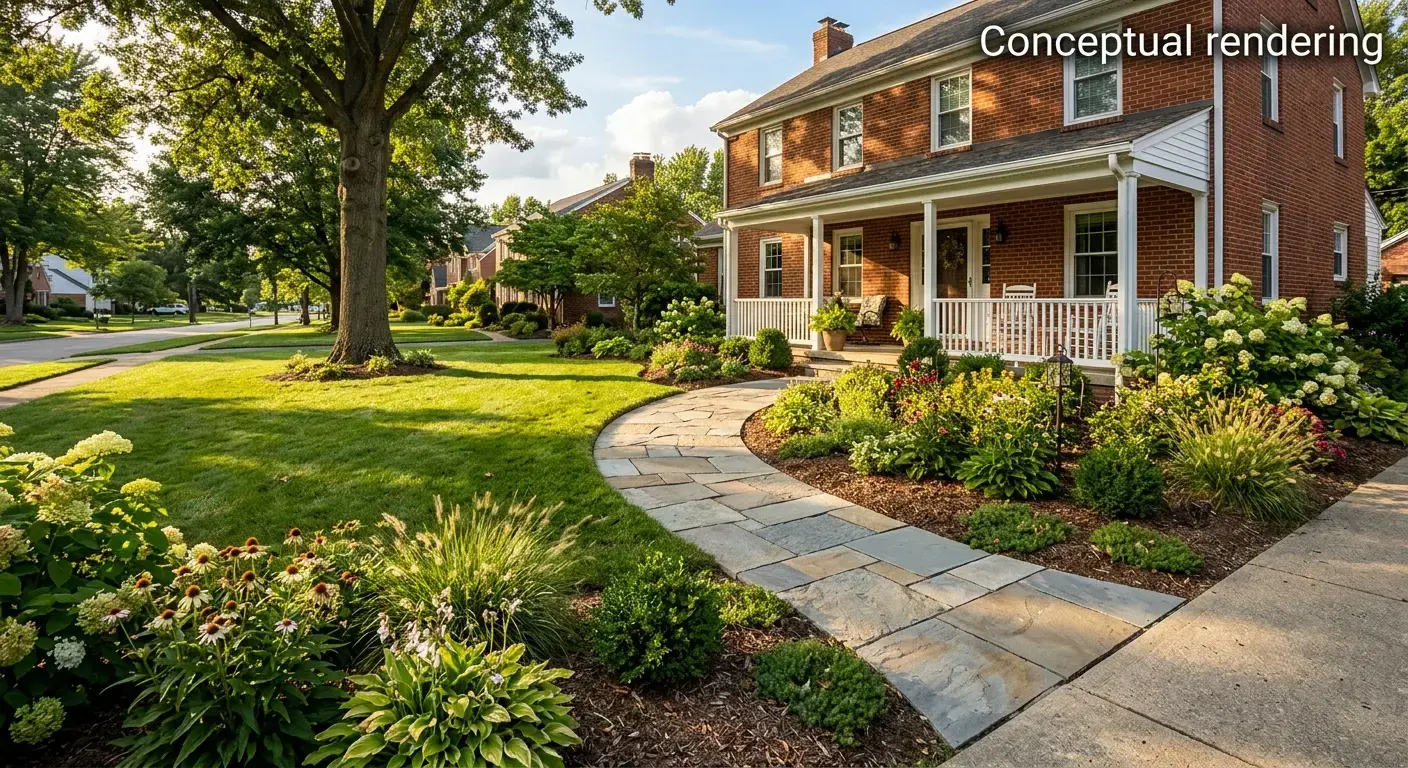
The front walkway is usually the most visible hardscape element in a front yard because it’s the line the eye follows from the street to your door. A walkway that looks narrow, cracked, or mismatched to the house drags the whole facade down, while a well-proportioned path in the right material makes the entry feel intentional and welcoming.
Width. Landscape designers commonly recommend a front walkway at least four feet wide, which lets two people walk side by side, and some prefer five feet when space allows. It also helps to relate the walkway’s width to the front door and its trim so the path and the entry look proportioned to each other. Paths that feel cramped tend to look like an afterthought, especially on larger homes. If your current walkway is narrow, widening it can make a noticeable difference from the street.
Shape. A straight path suits formal and symmetrical homes, where the walkway lines up with the front door. A gentle curve works well on ranch homes and cottages, where it softens the approach and leaves room for planting along the edges. The key is that a curve should feel natural. If it bends for no reason, people will cut across the lawn instead.
Material. The material sets much of the walkway’s character. A few common directions:
- Large-format porcelain pavers give a clean, contemporary look with tight joints and consistent color.
- Natural stone pavers such as travertine or quartzite bring natural variation in tone and texture that reads as more organic.
- Flagstone in irregular shapes suits cottage, Craftsman, and rustic homes.
- Concrete pavers offer a wide range of colors and shapes at a more modest cost.
Our pavers and exterior stone selection spans small to large formats, which makes it easier to compare sizes, colors, and finishes side by side before you commit to one.
Pattern. The laying pattern changes the feel of the same material. A running bond pattern reads as calm and orderly, herringbone adds movement and a traditional character, and a multi-size French pattern looks relaxed and old-world. It’s also worth thinking about surface texture. A tumbled or textured finish offers better grip than a smooth, polished surface when the walkway gets wet.
Give the Entry Steps and Landing Room to Breathe
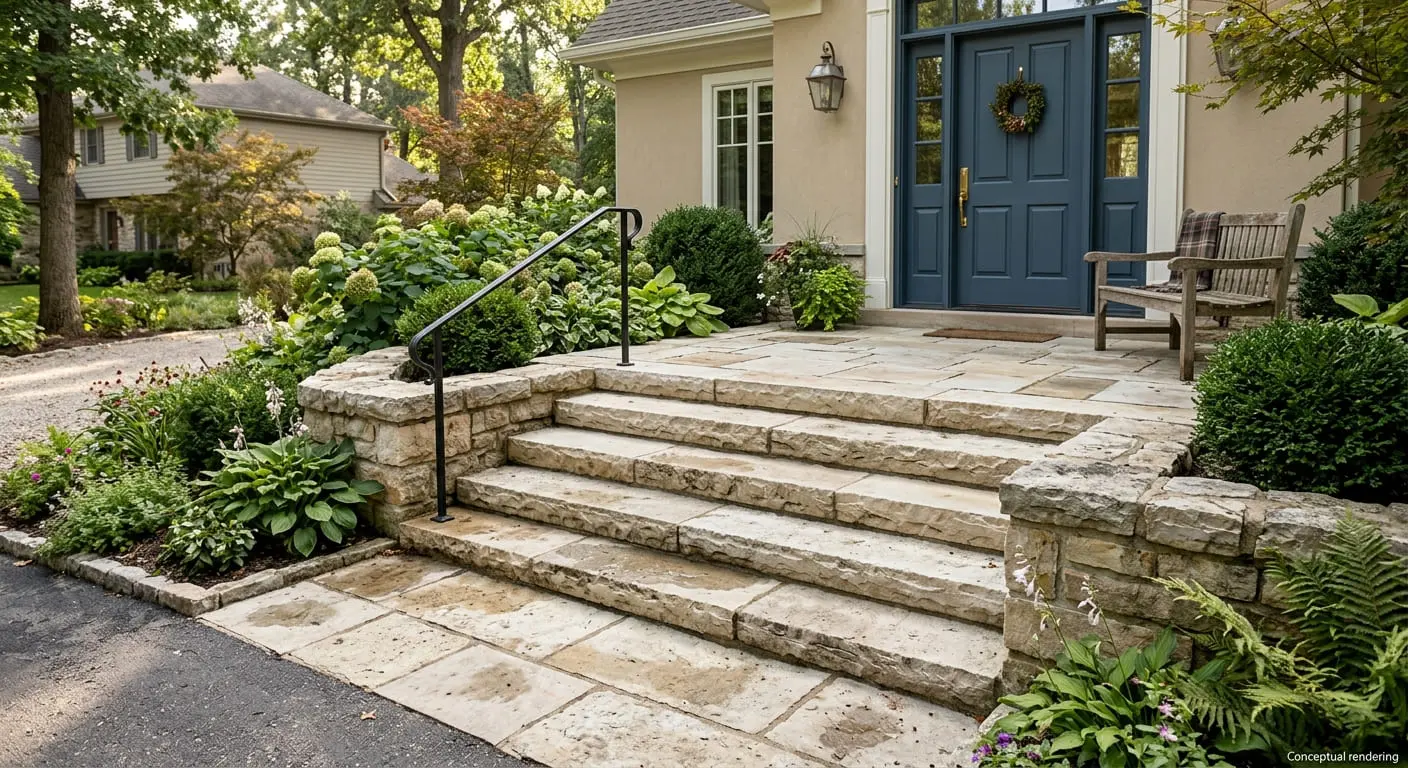
Entry steps and the landing in front of the door are the last thing visitors see before they knock, so they deserve the same attention as the walkway. Plain poured concrete steps are functional, but they often look unfinished next to an updated path or a refreshed facade.
Stone treads and risers are a common way to update an entry. Thick stone treads with a softened or rounded edge give the steps a substantial, finished look, and they create a clear visual break between each step. Many homeowners choose to match the tread material to the walkway for continuity, then use a slightly different stone or finish on the risers to add definition.
The landing matters just as much as the steps. A cramped landing makes the entry feel tight, especially if you have a storm or screen door that swings outward and forces visitors to step back. If you’re reworking the entry, it’s worth giving the landing enough depth for a person to stand comfortably, plus room for a planter or a doormat. A generous landing also creates a natural spot for a pair of potted plants or a bench, which helps the entry feel lived in.
Finally, consider how the steps meet the walkway. When the two use the same material or a closely related one, the path and the entry read as one continuous design rather than separate projects added over time. If you’re weighing tread and riser combinations, a free design consultation gives you time to compare options with photos of your entry in hand.
Define Planting Beds with Borders and Low Walls
Borders and low walls help a front yard look cared for. A crisp line between the lawn, the planting beds, and the walkway signals that every part of the yard has a purpose, and it keeps mulch and soil from spilling onto hard surfaces.
The simplest version is a stone or paver edge along the walkway and around planting beds. Even a single row of pavers set flush with the ground creates a clean frame that makes plants look fuller and the lawn look sharper. For a more natural feel, irregular stone edging works well along curved beds.
Low garden walls take the idea a step further. A short wall in stacked stone or natural fieldstone can raise a planting bed, add height to a flat yard, and give the front of the house more depth. In the front yard, keep these walls low. Tall walls can block the view of the house and make the entry feel closed off, which works against curb appeal rather than for it.
Borders are also a practical place to introduce a second material. If your walkway is a light porcelain paver, a darker natural stone border can outline it and add contrast without competing with the main surface. Because edging and border runs usually need modest quantities, our overstock sale lists discounted materials in limited quantities, so it may be worth checking for border or accent pieces.
Finish the Driveway Edges and Apron
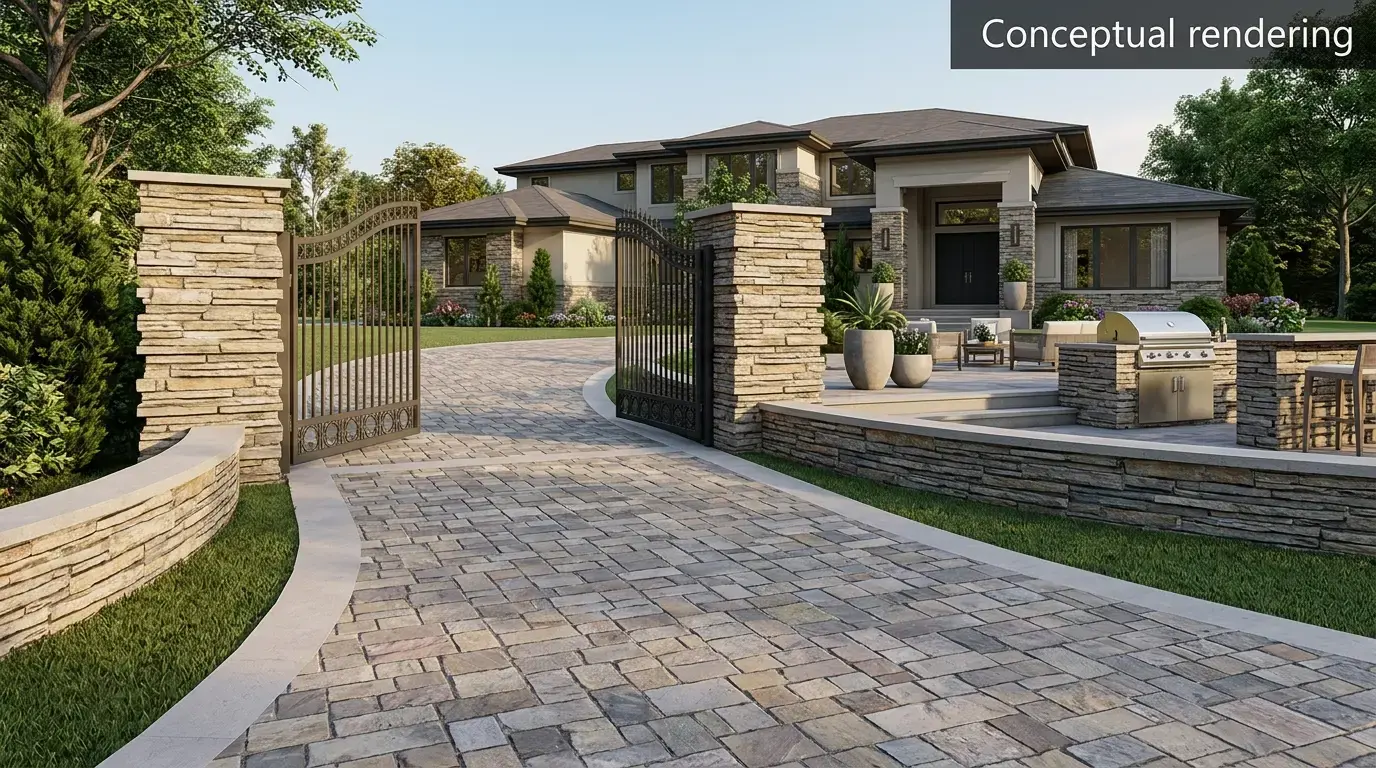
In many homes, the driveway is the largest hard surface in the front yard, which means it has an outsized effect on how the property looks from the street. Replacing an entire driveway is a big undertaking, but you don’t always need to. Small additions at the edges can tie the driveway into the rest of the design.
A paver border running along both sides of a concrete driveway is a common upgrade. It frames the slab, hides worn edges, and lets you repeat the walkway material so the front yard feels coordinated. A paver apron, the section where the driveway meets the street or sidewalk, works the same way and creates a finished entrance to the property. Keep in mind that the apron often sits in the public right-of-way, so many cities have their own standards or permit requirements for it.
If you plan to use pavers anywhere cars will drive, make sure the product you choose is suited to vehicle traffic. The Interlocking Concrete Pavement Institute (ICPI) recommends minimum thicknesses for concrete pavers and cautions against large, thin units in vehicular areas, and it recommends herringbone laying patterns for vehicle traffic. That means the large-format paver that works on your walkway may not be the right choice for the driveway border, even if you match its color. Our team can point you toward options suited to driveway use, and contractors or landscapers sourcing material for client projects can apply for a trade account for trade pricing and job-site delivery.
Match the Hardscape to Your Home’s Architecture
The front yard hardscape that looks best is usually the one that fits the house. A sleek porcelain walkway can look out of place in front of a 1920s bungalow, and rustic flagstone can feel mismatched against a minimalist modern facade. Starting with your home’s architectural style narrows the choices quickly.
- Craftsman and bungalow homes pair well with natural flagstone, earthy browns and grays, and slightly irregular shapes that echo the handcrafted character of the architecture.
- Modern and contemporary homes suit large-format porcelain or natural stone pavers in gray, charcoal, or warm white, laid in straight lines with narrow joints.
- Spanish and Mediterranean homes pair naturally with travertine in cream, ivory, or walnut tones, often in a French pattern or tumbled finish.
- Ranch homes benefit from horizontal lines and wider paths that emphasize the long, low profile of the house.
- Colonial and traditional homes look most at home with orderly patterns like running bond or herringbone and a restrained color palette.
Color is the other half of the equation. A simple approach is to pull one tone from something already on the facade, such as existing stone veneer, brick, roof shingles, or trim, and choose hardscape that complements it. Warm-toned stone generally sits well next to tan, cream, and earthy siding, while cooler grays suit white, black, and blue-gray exteriors.
It also helps to see materials in daylight before deciding. Stone and pavers can look quite different under showroom lighting than they do in full sun, so viewing larger pieces in natural light gives you a more accurate sense of how they’ll read from the street. You can find a showroom near you to see full-size pieces in person.
Keep the Scale Right: Less Is Often More Up Front
The front yard is a frame for the house, not the main event. Too much paving can make it feel like a parking area, while the right amount of hardscape leaves room for plants, trees, and the facade to stand out.
A few guidelines help keep a front yard design in proportion:
- Limit the palette. Two or three materials are usually plenty. More than that tends to look busy, especially in a space viewed all at once from the street.
- Repeat what you use. When the walkway, step treads, and driveway border share a material or color, the whole yard looks planned rather than pieced together.
- Leave space for green. Hardscape looks best when it’s softened by planting along its edges. A walkway lined with low shrubs or groundcover feels more inviting than one bordered by bare stone.
- Check the rules first. Some HOAs and cities have requirements about front yard paving, drainage, or setbacks, so it’s worth confirming before you finalize a plan.
Restraint also makes the project easier to manage. Focusing on the walkway and entry first, then adding borders or a driveway apron later, lets you build a cohesive front yard in phases without losing the overall vision.
Conclusion
Improving your front yard’s curb appeal with hardscape comes down to a few well-chosen moves: a walkway that’s wide enough and suited to the house, entry steps and a landing that feel finished, clean borders that define the planting beds, and driveway edges that tie everything together. When those pieces share a consistent palette and fit your home’s architecture, the front yard looks intentional from the street and welcoming up close.
We know that choosing stone and pavers is easier when you can see and compare them in person. At Nova Tile and Stone, we carry a wide range of natural stone, pavers, and other exterior materials, and our team is happy to help you narrow down options that suit your home’s style and the way you use your front yard. You’re welcome to visit any of our showrooms in Sacramento, Reno, Minden, or Fernley, bring photos of your home’s exterior, and talk through ideas with us. Your contractor or designer can join you, too.
Note: Some images on this page may be conceptual renderings created to illustrate design possibilities and may not depict actual installations.
Frequently Asked Questions
The best material depends on your home’s style and how you want the entry to feel. Large-format porcelain pavers suit modern homes, natural stone such as travertine or quartzite brings organic variation in tone, flagstone fits cottage and Craftsman homes, and concrete pavers offer a broad range of colors at a more modest cost. A textured finish is a good choice for walkways that get wet.
Landscape designers commonly recommend at least four feet for a front walkway so two people can walk side by side, and some suggest five feet when the yard allows. Narrower paths can work for small homes or side entries, but a main walkway that feels cramped often looks like an afterthought from the street.
Yes, as long as you keep the palette small. Two or three materials that complement each other, such as a porcelain walkway with a natural stone border, can look more polished than one material alone. Repeating those same materials on the steps and driveway edges helps the whole yard feel coordinated.
There’s no fixed percentage, but the front yard generally looks best when hardscape supports the house and planting rather than dominating them. Focus on the walkway, entry, and borders first, and leave generous space for lawn, shrubs, or groundcover. Too much paving can make a front yard feel like a parking area.
Start by pulling one tone from something already on your facade, such as stone veneer, brick, roofing, or trim. Warm-toned stone tends to complement tan, cream, and earthy exteriors, while cooler grays suit white, black, and blue-gray homes. Viewing larger pieces in natural daylight gives the most accurate sense of how a material will look outside.