To plan a hardscape, start by deciding how you'll use your outdoor space, then map out a layout with defined zones, paths, and drainage, and finally choose materials and colors that suit each area and complement your home's exterior. Hardscape refers to the non-living, built elements of a landscape, such as patios, walkways, driveways, pool decks, steps, retaining walls, fire pit areas, and outdoor kitchens. Common hardscape materials include natural stone like travertine, granite, and quartzite, along with porcelain pavers, concrete pavers, poured concrete, brick, and gravel. Following this order helps each surface suit how it will be used, whether that means a slip-resistant surface around a pool or one that handles sun and heat on an open patio. Below, we walk through each step of the process.
Start With How You Want to Use the Space
Before looking at a single paver, think about how your household actually spends time outside. A patio built for weekend grilling has different needs than one meant for morning coffee, and a pool deck has different demands than a front entry path.
Ask yourself a few practical questions:
- How many people do you usually host outdoors?
- Do you want a dining area, a lounge area, or both?
- Will you cook outside on a portable grill or a built-in kitchen?
- Do kids or pets use the yard for play?
- Which parts of the yard get full afternoon sun, and which stay shaded?
- Where does water collect after a heavy rain?
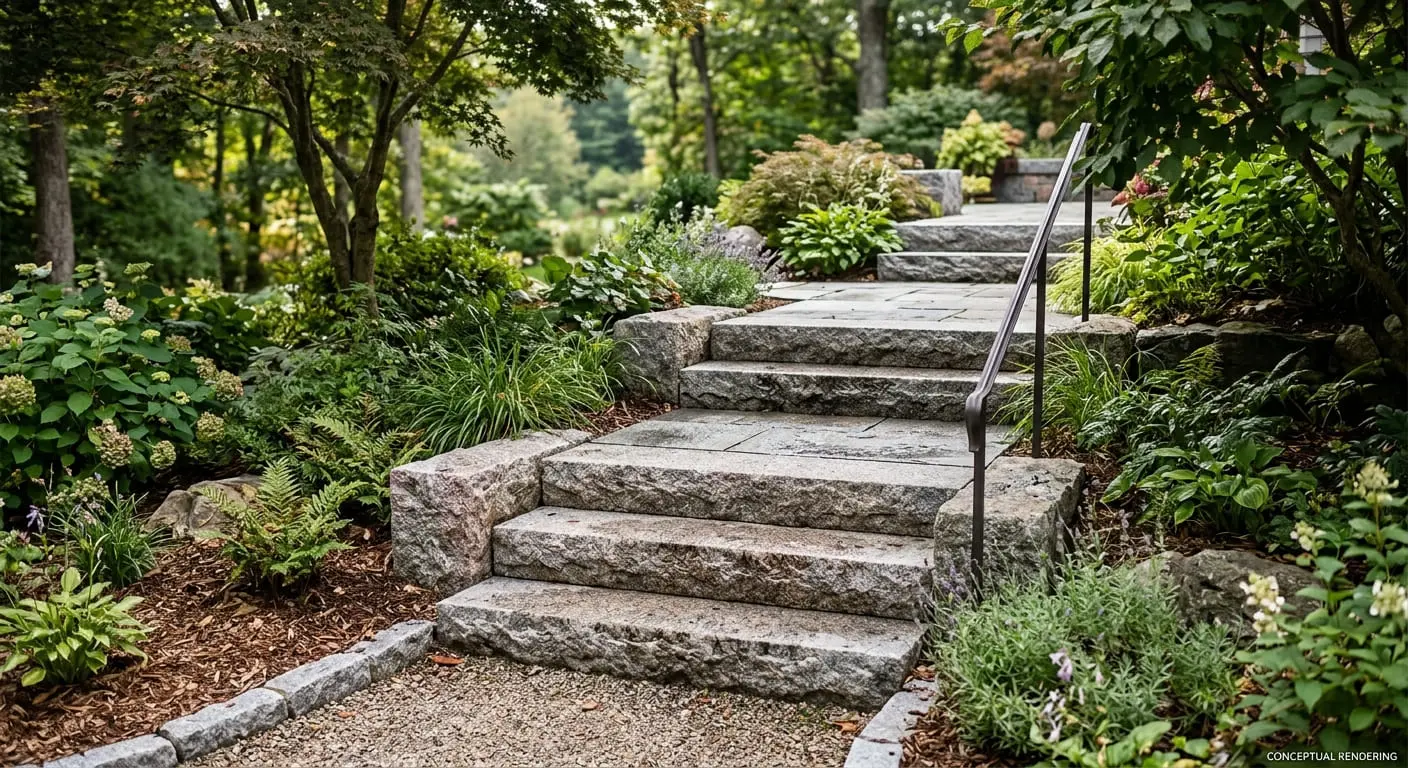
Your answers shape everything that follows. They tell you how large each area needs to be, which surfaces need extra traction or heat resistance, and where paths should go. Keep the list handy when you start comparing materials, and bring it along to a free design consultation so our team can match materials to how you plan to use each space.
Planning the Layout
Layout is where a hardscape either feels natural or feels like an afterthought. A good layout connects your home to the yard, separates areas by purpose, moves people from one space to the next without awkward detours, and gives water a clear path away from the house.
Divide the Yard Into Zones
Think of your outdoor space as a series of rooms. Common zones include a dining area near the kitchen door, a lounge or fire pit area a short walk away, a pool or play zone, and a service area for trash bins or storage. Place high-traffic zones closest to the house. Dining areas work best within a few steps of the kitchen so carrying food and dishes doesn't become a chore. Quieter spaces, like a reading nook or fire pit circle, can sit farther out where they feel more like a destination. Once your zones are set, note where you'll want lighting, power, or irrigation lines, since these are much easier to plan before any surfaces go in.
Size Each Area Realistically
Undersized patios are a common planning regret. Outdoor furniture takes up more room than most people expect once you add space to pull out chairs and walk around the table. A simple way to test your plan is to outline each area on the ground with a garden hose, then set your furniture inside it. If it feels cramped, it probably is, so give yourself a little extra room before committing.
Plan Paths and Flow
Paths should follow the routes people naturally take. If everyone already cuts across the lawn from the driveway to the back gate, that worn line is a good starting point for a walkway. Gentle curves feel relaxed and suit informal yards, while straight lines and right angles fit modern and formal homes. Avoid paths that dead-end or force people to squeeze past furniture. Where paths meet patios or steps, widen the connection slightly so the transition feels open.
Account for Slope and Drainage
Every hard surface needs somewhere for water to go. Patios and walkways within 10 feet of the house are typically sloped at least 2 percent away from the foundation, or about a quarter inch of fall per foot, so rain runs off instead of pooling against walls. If your yard has a noticeable grade, you may need steps, terraces, or retaining walls, which affect both layout and budget. Low spots that collect water may call for permeable pavers or gravel. Talk through grading and drainage with a qualified hardscape contractor early, since these details influence which materials make sense. If you're a contractor or designer planning a hardscape for a client, you can also apply for a trade account with us to source materials for the project.
Choosing Hardscape Materials
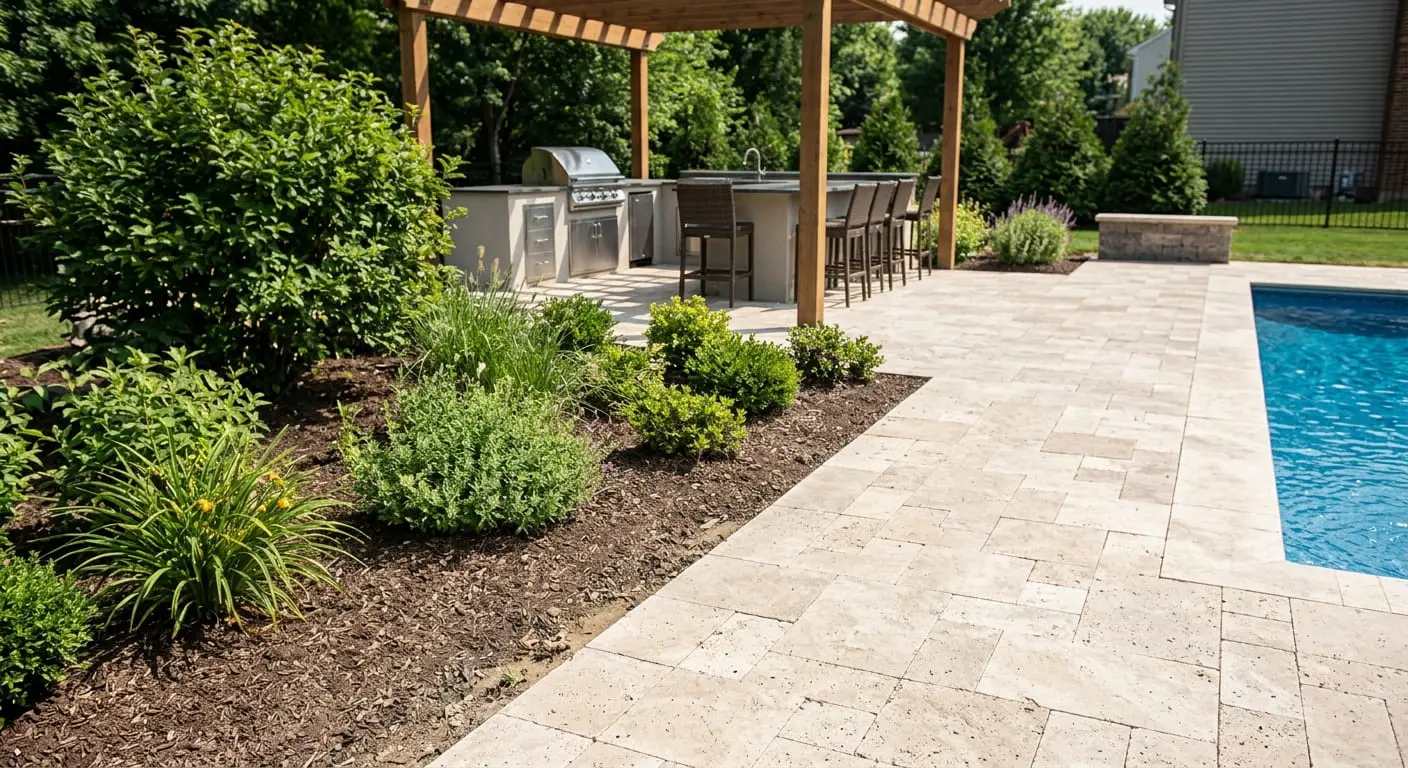
Once you know how each area will be used and how large it needs to be, you can start narrowing down your options for pavers and exterior stone. Each material has trade-offs in look, feel, surface temperature, maintenance, and cost.
Natural Stone
With natural stone, color and texture vary from piece to piece. Common outdoor choices include:
- Travertine: Light-colored travertine tends to stay cooler underfoot than darker or denser surfaces, which makes it a common choice for pool decks. Textured finishes like leathered add traction in wet areas.
- Flagstone: A term for flat, irregular or cut pieces of stone, often sandstone, quartzite, or slate, that suit natural and rustic designs.
- Bluestone: A dense sandstone with blue-gray tones, often used for patios and steps.
- Granite: Very hard and dense, well suited to driveways, steps, and high-traffic areas.
- Quartzite: A dense, hard natural stone that handles direct sun well, used for patios, walkways, and outdoor walls.
- Limestone: Known for soft, muted tones that fit Mediterranean and contemporary homes, though softer varieties need more care.
Porosity varies widely between stones, so ask about water absorption and freeze-thaw suitability if your winters dip below freezing. Many natural stones benefit from periodic sealing outdoors.
Concrete Pavers
Concrete pavers are manufactured units available in a wide range of shapes, sizes, and colors. They are a practical choice for driveways, large patios, and walkways where budget matters. Interlocking pavers flex slightly with ground movement, and individual units can be lifted and replaced if one cracks or stains. Color can fade with prolonged sun exposure, and joints may need occasional re-sanding.
Porcelain Pavers
Outdoor porcelain pavers, usually about 2 centimeters thick, offer another option alongside stone and concrete. Porcelain has a water absorption rate of 0.5 percent or less, which helps it resist staining, and many outdoor porcelain products are tested for freeze-thaw resistance under ASTM C1026. Porcelain comes in looks that replicate stone, wood, and concrete, and many collections offer matching indoor and outdoor versions, so you can carry the same look from your living room floor straight onto the patio. Look for textured outdoor finishes with good slip resistance, and keep in mind that darker colors absorb more heat in direct sun. If you're working with a tighter budget, our overstock sale can turn up discounted tile and stone. Quantities are limited, so it works best for smaller areas like steps or accent borders.
Brick and Gravel
Clay brick has a warm color that suits traditional, colonial, and cottage-style homes. Gravel and loose decomposed granite are budget-friendly, let water drain through, and work well for side yards, garden paths, and seating areas under trees. They shift underfoot, though, and are less comfortable for furniture or anything with wheels.
Match the Material to the Area
Different parts of the yard ask different things of a surface:
- Pool decks: Prioritize slip resistance and cooler surface temperatures. Light-colored travertine and textured porcelain are common choices.
- Driveways: Choose materials and thicknesses rated for vehicle loads.
- Walkways and steps: Focus on traction, especially where paths get wet or stay shaded.
- Fire pit areas: Use materials suited to high heat near the fire itself.
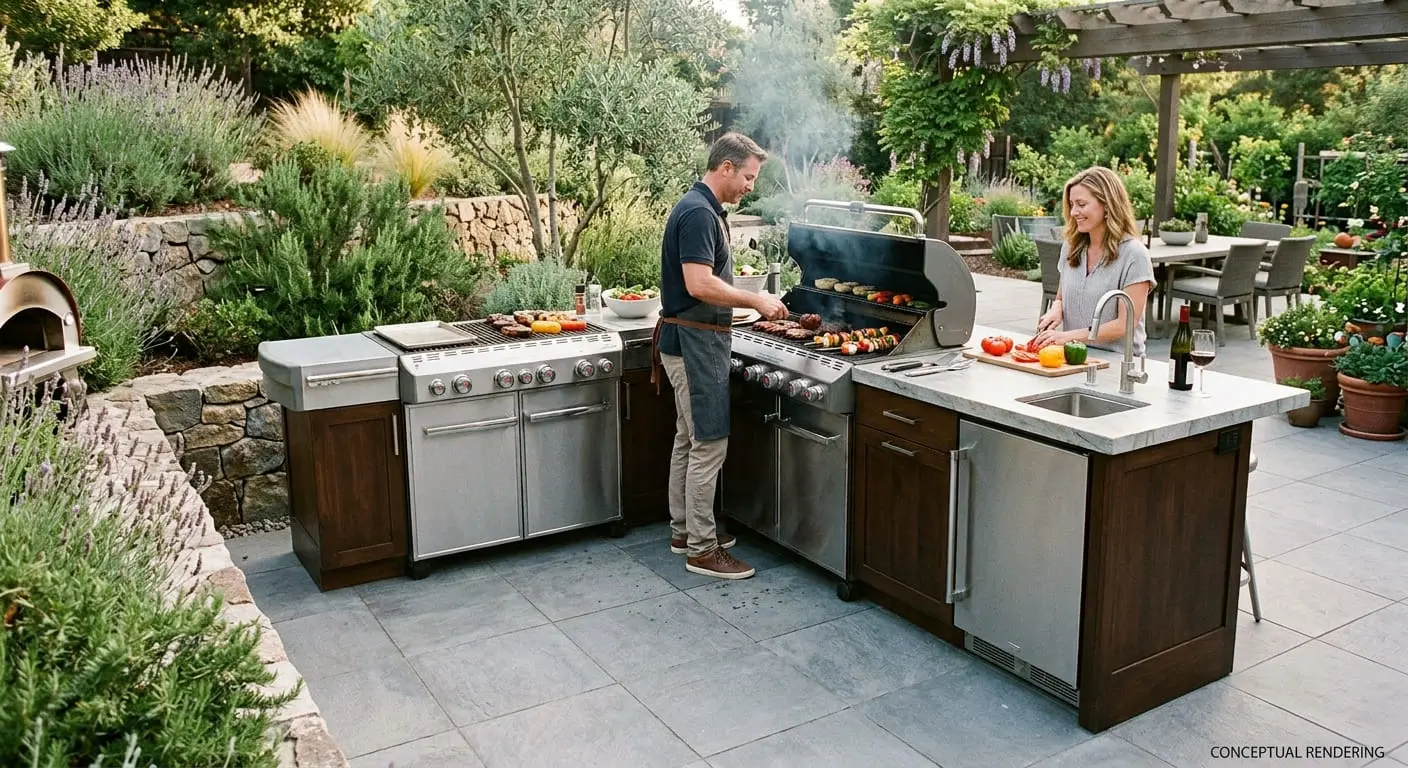
- Outdoor kitchens: Pick surfaces that handle grease and food spills and clean up easily.
Using one primary material across most areas and a second as an accent keeps the design cohesive.
Choosing Hardscape Colors
Color is often the last decision homeowners make, but it has a big effect on how finished and connected the space feels. The goal is a palette that works with your home instead of competing with it.
Start With What Won't Change
Your roof, siding or stucco, stone accents, and window trim are the fixed elements of your exterior palette. Choose hardscape colors that echo or complement these tones. A home with a warm terracotta roof pairs naturally with beige, gold, and tan stone, while a gray roof and white siding lean toward cooler grays, charcoals, and blue-gray tones.
Consider Light vs. Dark
Light colors reflect heat and stay cooler in summer sun, which matters for bare feet around pools and play areas. They can create glare on bright days and tend to show dirt and leaf stains. Darker colors hide dirt and give a grounded, modern look, but they absorb more heat and can become uncomfortable in full sun. Mid-tones and blended colors are a practical middle ground for many yards.
Blend or Contrast
A blended approach uses tones close to the house for a calm, unified look. A contrasting approach uses a border, banding, or accent material in a darker or lighter shade to outline patios and paths. Either works, but limit your palette to two or three colors or materials so the design doesn't feel busy.
View Colors Outdoors
Stone and pavers look different indoors than they do in full sun or afternoon shade. For porcelain and other tile, take samples outside, check them at different times of day, and wet them to see how they look after rain or near a pool. For natural stone, see full pieces in person at one of our local showrooms, ideally in natural light. Many natural stones darken when wet or when treated with a color-enhancing sealer, which can shift your impression of a color.
Common Hardscape Planning Mistakes
A few missteps come up again and again:
- Making patios too small for the furniture you plan to use
- Skipping a drainage plan
- Choosing smooth, polished surfaces for wet areas
- Mixing too many materials or colors
- Forgetting lighting, irrigation lines, or power for outdoor kitchens before surfaces go in
- Judging color without seeing the material in natural light
Catching these during planning costs far less than fixing them after the hardscape is complete.
Conclusion
A well-planned hardscape starts with how you want to live outdoors, builds out a layout sized for real use, and finishes with materials and colors that suit your home, your climate, and your routines. Taking time on each step helps your patio, walkways, and outdoor living areas fit the way you use them. If you'd like help comparing travertine, granite, quartzite, and porcelain pavers for your outdoor project, our team offers design consultations at our showrooms in Sacramento, Reno, Minden, and Fernley. We're happy to talk through your plans and help you narrow down the materials and colors that work for your project.
Note: Some images on this page may be conceptual renderings created to illustrate design possibilities and may not depict actual installations.
Frequently Asked Questions
Landscape refers to the entire outdoor space, and it's made up of two parts: hardscape and softscape. Hardscape includes the non-living, built elements, such as patios, walkways, driveways, retaining walls, and pool decks made from stone, pavers, concrete, brick, or gravel. Softscape includes the living elements, like lawns, trees, shrubs, and flower beds. Most outdoor designs balance the two so hard surfaces and plantings complement each other.
The best pool deck materials combine slip resistance with a cooler surface temperature. Light-colored travertine in a honed or leathered finish is a common choice because it tends to stay cooler underfoot than darker surfaces. Textured outdoor porcelain pavers in light colors are also worth considering because of their low water absorption and slip-resistant finishes.
Start with the fixed elements of your exterior, including the roof, siding, stucco, and trim. Choose hardscape colors that repeat one of those tones or complement them. Warm roofs and siding pair well with beige, tan, and gold stone, while cool exteriors suit grays, charcoals, and blue-gray tones. Always view materials in natural light before deciding.
Yes, with the right product. Many porcelain collections come in matching indoor and outdoor versions, with the outdoor version offered in a thicker paver format and a textured, slip-resistant finish. This lets you create a continuous look from an interior room onto a patio. Always check the manufacturer's rating before using a tile outside, since many indoor tiles are not rated for exterior use or freeze-thaw exposure.
Many natural stones used outdoors benefit from sealing, especially porous types like travertine, limestone, and some sandstones. A penetrating sealer helps reduce staining and water absorption. How often to reseal depends on the stone, its exposure to sun and water, and the sealer used, so follow the sealer manufacturer's guidance for your specific material. Porcelain pavers generally do not need sealing because of their very low water absorption.