Granite, quartzite, travertine, and porcelain are the four stone materials rated for outdoor use, and picking between them starts with where the stone is actually going: pool coping, wall cladding, or patio flooring each puts different stress on a slab. Granite and quartzite carry a UV resistant rating and rank among the hardest natural stones available, roughly 6 to 7 on the Mohs scale, while travertine sits lower on that scale, closer to 3 to 5, and isn't UV rated at all.
Porcelain is UV resistant as well, though outdoor ratings vary by product line, so it's worth confirming before assuming any porcelain will hold up outside. Matching material to zone, rather than picking one slab for an entire project, is what keeps an exterior stone project looking right years later.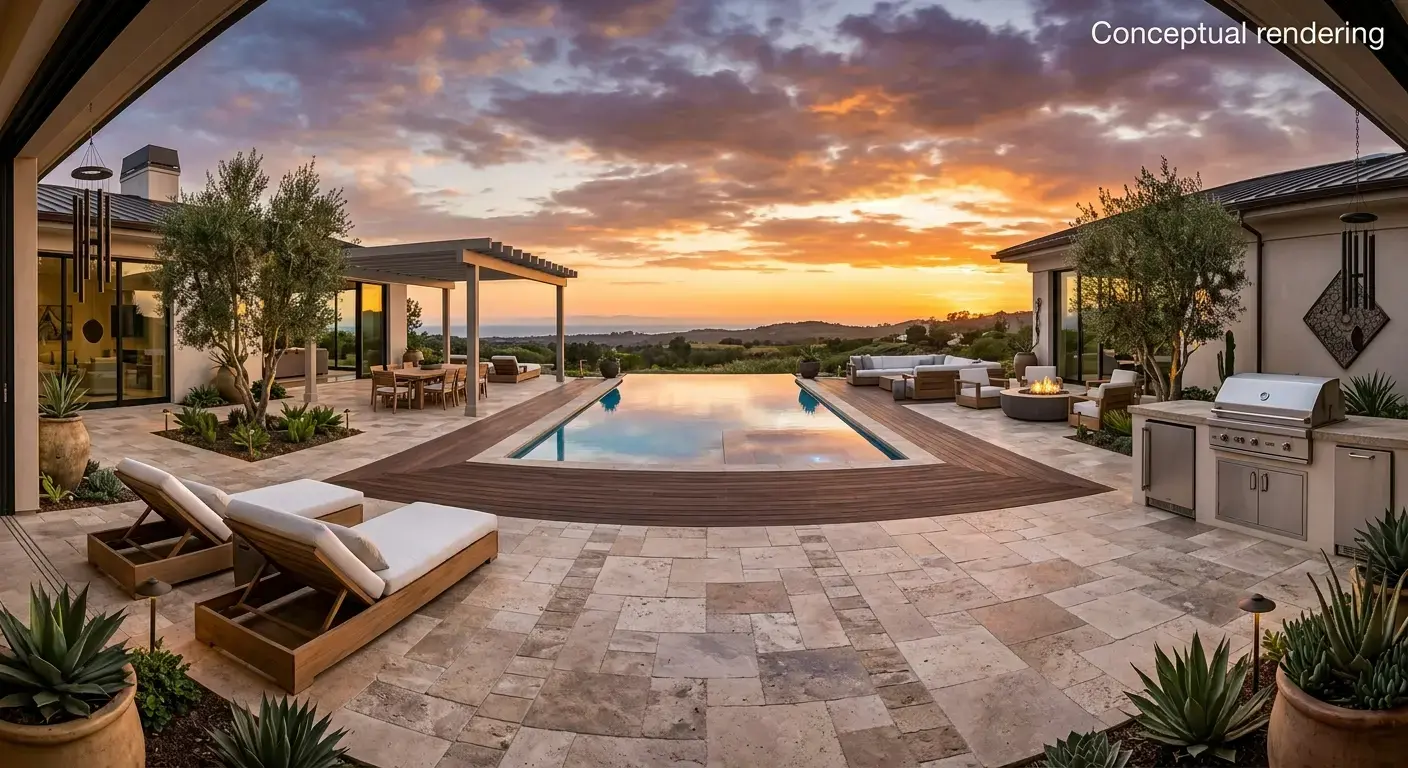
What's the Best Stone for Pool Coping?
Pool coping deals with constant splash, sustained moisture, and chemical exposure that other surfaces rarely see. Granite and quartzite hold up well here since both are dense, UV resistant, and hard enough, roughly 6 to 7 on the Mohs scale, to shrug off the scrapes a pool edge collects over the years. A physical slab is still worth checking under bright light before ordering, since coping takes more direct exposure than almost any other application in this guide.
Porcelain fits here too. Not every porcelain line carries the same outdoor rating, so it's worth confirming a specific product matches pool-adjacent use before ordering enough to line a full coping run. Travertine also gets used for coping regularly, especially with a honed or leathered finish, but since it isn't UV rated, it tends to perform best on coping runs that get some shade during peak sun rather than full, unbroken exposure all day.
Pool chemicals add another layer beyond plain moisture. Chlorine and salt residue left to dry on a coping edge can dull a finish faster than rainwater alone, so a quick rinse after heavy pool use does more for a coping edge's long-term look than most homeowners expect.
Homeowners weighing coping options can review the current slab inventory to compare finish and color side by side, and anyone in northern Nevada can see coping-ready pieces in person at our Reno location.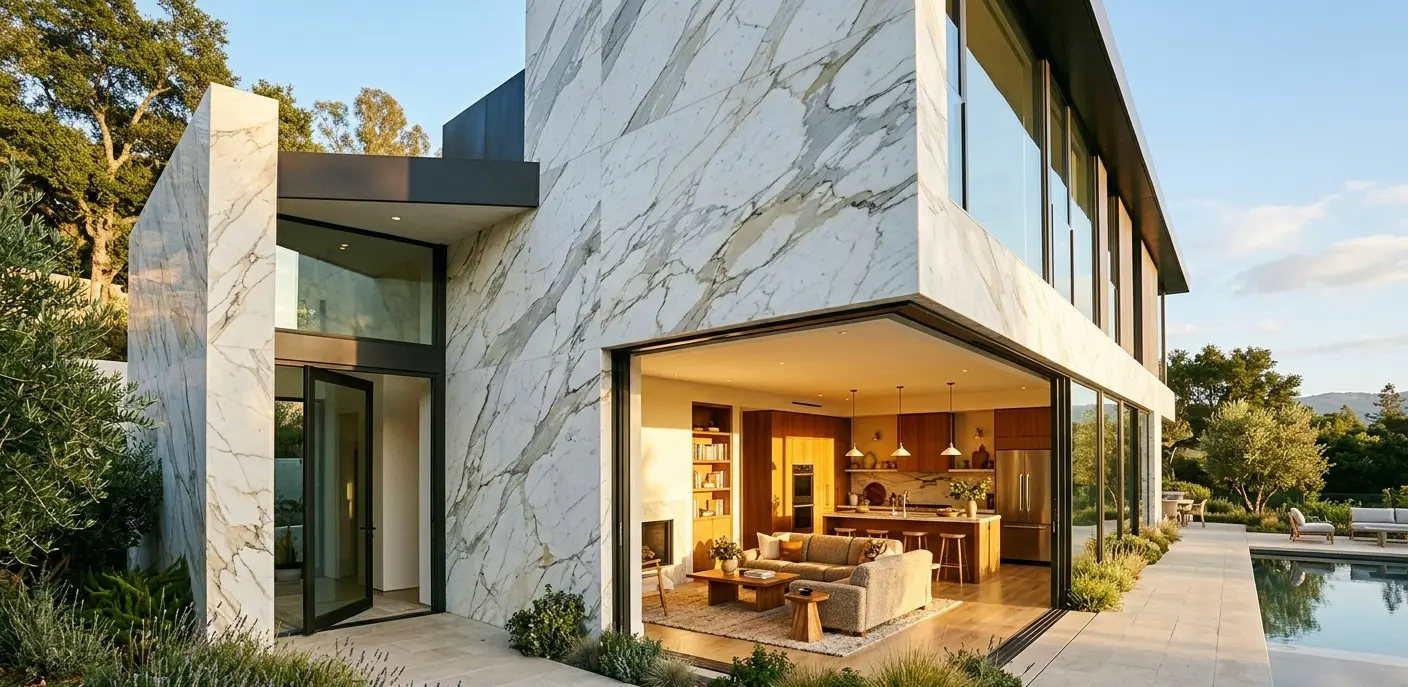
Wall Cladding Faces the Most Direct Sun
Vertical surfaces catch sun differently than flooring. A south-facing accent wall or exterior facade can sit in direct light most of the day with no shade from surrounding landscaping, which makes UV performance matter more for cladding than for a partially shaded patio.
Granite, quartzite, and porcelain hold their color under continuous sun better than travertine does, though darker tones in any of the three still show more visible change over years of full exposure than lighter ones. Travertine can still work as a cladding material, it just tends to read better on a wall with some tree cover or a north-facing orientation instead of one that gets sun from morning to evening.
Cladding rarely deals with standing water the way coping or flooring does, but it still needs to hold color and texture through repeated freeze and thaw cycles, which is a different kind of stress than moisture alone.
Reviewing the full material lineup before narrowing down a wall material helps, since cladding decisions usually come down to comparing a few options side by side rather than picking the first slab that looks right in a photo. Homeowners in the Sacramento area can do exactly that at our Sacramento showroom.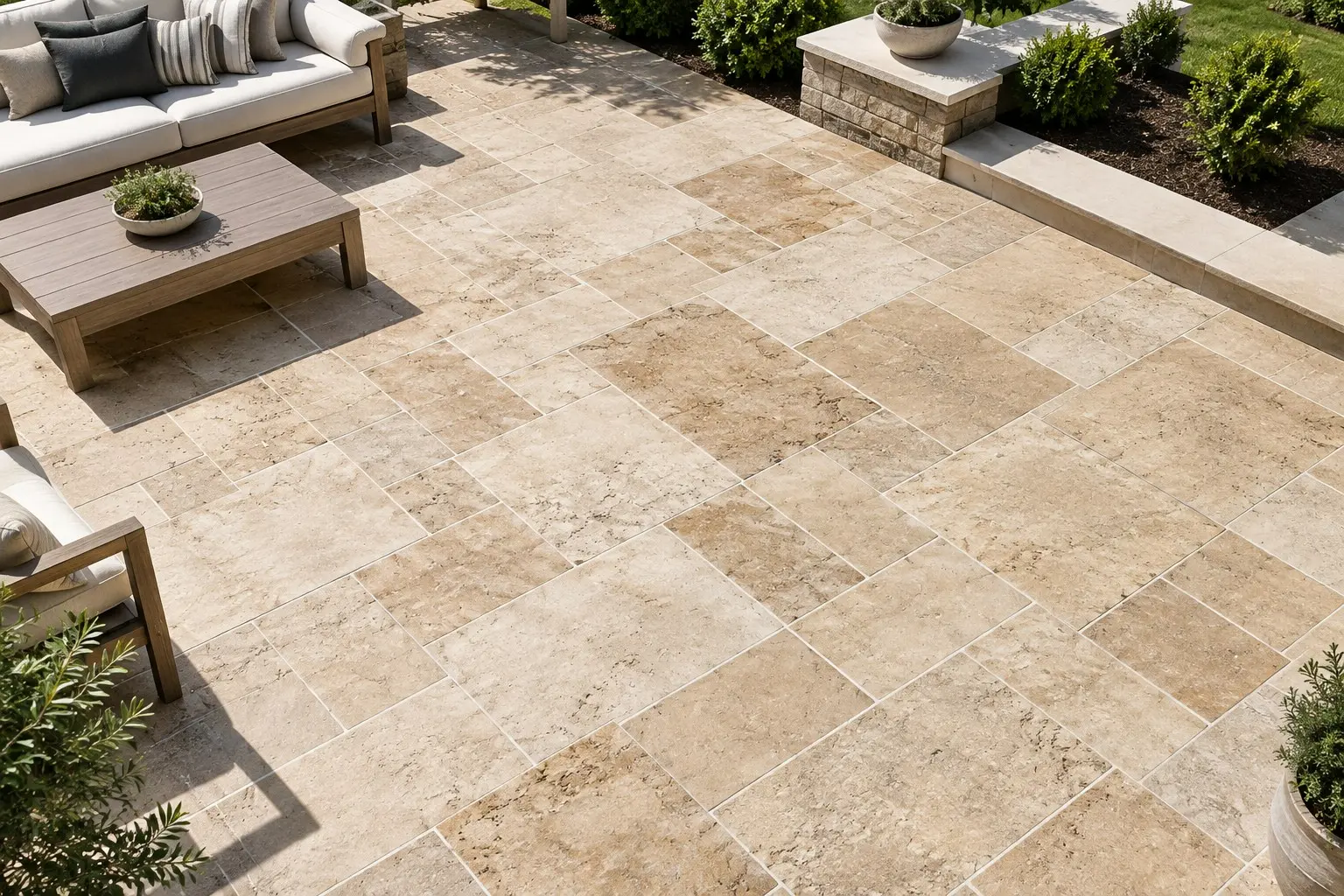
Does a Patio Need a Different Finish Than a Wall?
A patio gets walked on barefoot, sat on, and left exposed to standing water after rain, which is a different job than a wall or a coping edge ever does. All four exterior-rated materials, granite, quartzite, travertine, and porcelain, are rated for floor use, so the real decision usually comes down to finish rather than whether the material can handle foot traffic at all.
A polished finish on a patio can get slick the moment it's wet, which is exactly the moment bare feet are most likely to be on it around a pool. Travertine and quartzite in a leathered finish read less glossy than a polished granite or porcelain surface, a texture difference that's more than cosmetic on a wet patio.
Getting an accurate sense of what a specific patio size will need starts with requesting a slab quote rather than guessing at square footage, and homeowners near the Carson Valley can compare patio-ready material at our Minden location.
Is Natural Stone or Porcelain Better for Exterior Projects?
Granite, quartzite, and travertine are quarried, so no two slabs match exactly, veining, tone, and movement shift from one piece to the next even within the same lot. Porcelain is manufactured, which means consistent sizing and color across an entire order, plus the option to choose a granite look, quartzite look, or travertine look finish for homeowners who want that appearance without sourcing enough matching natural slabs to cover a large run.
Neither approach is automatically the better choice. A homeowner who wants a one-of-a-kind patio where every slab looks slightly different usually leans natural, while one covering a long coping run or a large patio where visual consistency matters more than natural variation usually leans porcelain.
Contractors or homeowners managing more than one property at once can streamline repeat sourcing by applying for a trade account, and anyone near Fernley can compare both natural stone and porcelain in person at our Fernley location.
Finish Selection Matters as Much as Material
Granite, quartzite, travertine, and porcelain each come in three finishes: polished, honed, and leathered, so picking the material is only half the decision. A polished finish reads more formal and shows more shine, but it's generally better suited to surfaces with lighter foot traffic, like a cladding panel, than a wet pool deck.
Honed and leathered finishes bring a more matte, textured surface that tends to get chosen more often for coping and patio flooring, where extra texture underfoot is preferred around water. A polished finish shows a cleaning misstep the fastest of the three, since acidic or abrasive products dull its shine in a way that's much harder to notice on an already-matte honed or leathered surface.
Travertine's natural porosity is why it's typically filled and honed, or left tumbled for added texture, treatments that don't apply the same way to denser materials like granite and quartzite.
General care guidance from the Natural Stone Institute is a useful reference once a finish is chosen, and homeowners who want to see finish options without relying on photos can find the nearest showroom.
Comparing Options Before You Commit
A tile sample from Nova Tile and Stone is the most direct way to check how a color reads in actual outdoor light rather than under a showroom bulb. Slab material varies enough piece to piece that it's worth seeing in person rather than relying on a sample chip alone.
For natural stone specifically, checking how a supplier labels environmental and health information is worth doing before finalizing a large exterior order. The Use Natural Stone resource breaks down what those labels actually mean, which is context most homeowners never see before buying.
Scheduling a design consultation is the most direct way to walk through which of the four materials fits a specific coping, cladding, or patio project, once color and finish are narrowed down.
Conclusion
A cladding wall and an adjoining patio don't have to use the same material to look intentional together. Coordinating tone and finish across two different materials, say a leathered quartzite wall next to a honed porcelain patio, often reads more deliberate than defaulting to one slab everywhere out of convenience.
The material that works best for a pool coping edge isn't always the one that works best on an adjoining wall or the patio surrounding it, even when all three sit a few feet apart in the same backyard. Treating each zone as its own decision, rather than picking one slab for the whole project, is what actually prevents a mismatched surface a few years down the line.
Note: Some images on this page may be conceptual renderings created to illustrate design possibilities and may not depict actual installations.
Frequently Asked Questions
Granite, quartzite, and porcelain are strong picks for pool coping since all three carry a UV rating. Granite and quartzite are also among the hardest natural stones available, which helps at a pool edge that takes more bumps and scrapes than most other surfaces. Travertine also holds up well around a pool, especially with a honed or leathered finish, but since it isn't UV rated, it performs best where it gets some relief from constant direct sun.
Yes. Porcelain is rated for outdoor use and for walls, and because it's manufactured rather than quarried, its color and finish stay consistent panel to panel in a way that's harder to guarantee with a natural, quarried stone. Porcelain's outdoor performance also is not universal across every line a manufacturer makes, so checking that a specific product carries an exterior rating is a better bet than assuming the whole category behaves the same way outside.
Often, yes. Coping and patio flooring tend to use honed or leathered finishes for a more textured, matte surface, while a polished finish is more common on cladding or areas with lighter foot traffic. Granite, quartzite, travertine, and porcelain are all available in each of these finishes.
Granite, quartzite, and travertine are quarried, so each slab has some natural variation in tone and veining. Porcelain is manufactured, which means consistent sizing and color, and it's also available in granite look, quartzite look, and travertine look options for a similar appearance with more uniformity.
Ordering a tile sample is the most direct way to check color and finish in actual outdoor light, and viewing slab material in person at a showroom gives a clearer sense of natural variation than photos can. A design consultation with Nova Tile and Stone is also available for walking through which material fits a specific coping, cladding, or patio project.
Curious About Something Else?