To choose quartzite ledger stone for your home's exterior, match the stone's color to your roof and trim, pick a texture and panel format that suit the wall, confirm the product is rated for exterior and freeze-thaw use, and make sure the wall can support its weight. Quartzite ledger stone is a natural stone veneer made from split strips of quartzite bonded into panels, most often 6 by 24 inches, and it is commonly used on exterior facades, wainscoting, columns, chimneys, and outdoor kitchens. Quartzite is a dense metamorphic stone that rates around 7 on the Mohs hardness scale and typically absorbs less than 1 percent water by weight, which helps it handle sun, rain, and freezing temperatures. Natural quartzite ledger panels weigh about 6 to 14 pounds per square foot, and their color comes from the stone's own minerals rather than the added pigments used in cast concrete manufactured stone veneer.
What Is Quartzite Ledger Stone?
Quartzite is a metamorphic rock that forms when quartz-rich sandstone is exposed to intense heat and pressure underground. The process fuses the quartz grains together into a dense, hard stone. Many quartzites also contain mica, which gives the surface a natural shimmer in sunlight.
Ledger stone, sometimes called stacked stone, describes the format rather than the stone type. Narrow pieces are split along their natural layers, cut to length, and bonded together in offset rows to form panels, sometimes with a mesh backing. The result resembles a hand-stacked dry stone wall, with horizontal lines and shadow gaps between pieces, but it goes up in panels instead of one stone at a time.
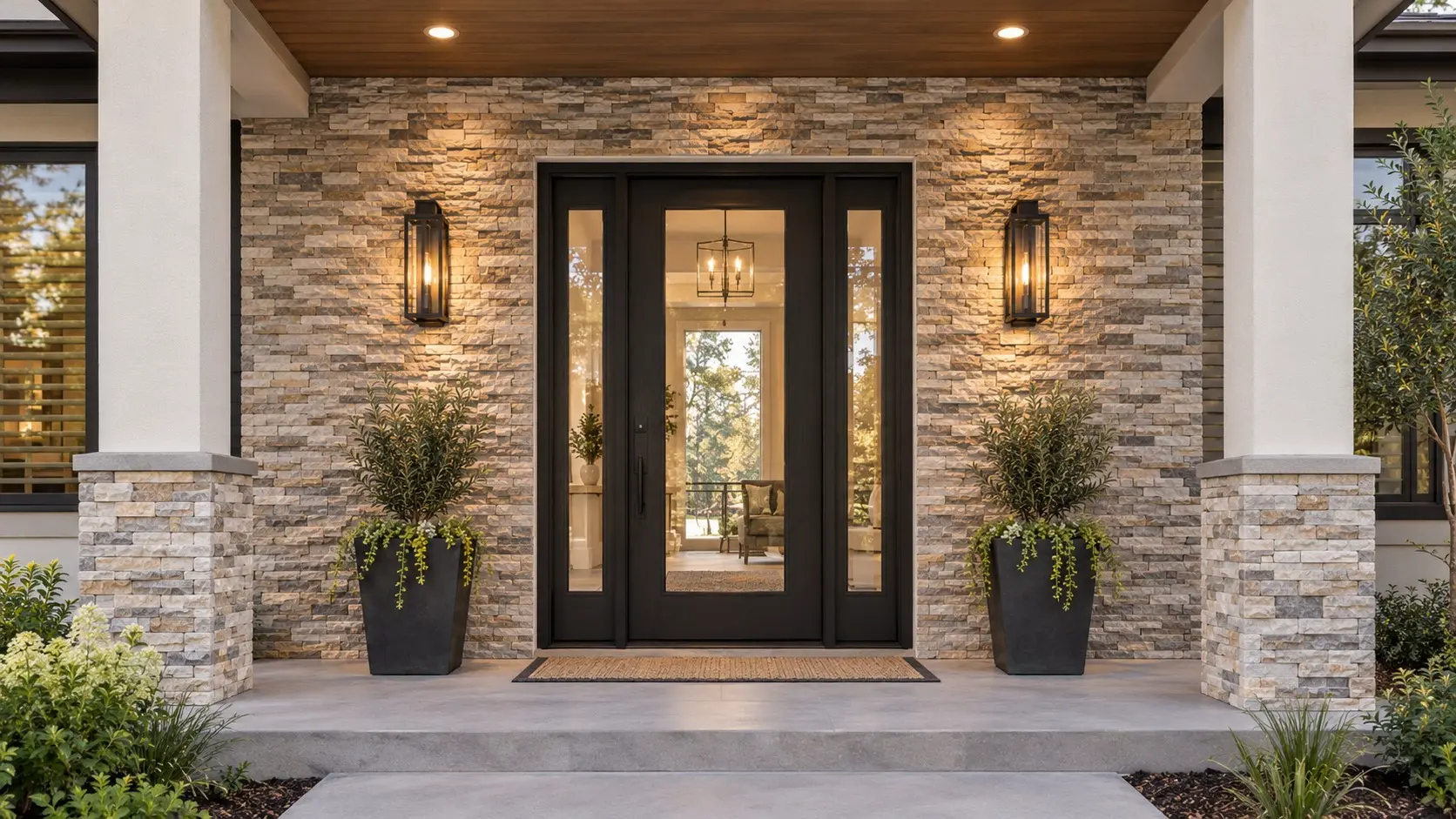
Why Quartzite Works Well on Exterior Walls
Exterior stone deals with sun, rain, wind, temperature swings, and in many areas, freezing nights. Quartzite has several qualities that suit that environment.
It is dense. Quartzite typically absorbs less water than softer sedimentary stones such as limestone. The ASTM C616 standard caps quartzite dimension stone at 1 percent absorption, while ASTM C568 allows up to 12 percent for low-density limestone. Less absorbed water means less risk of damage when moisture inside the stone freezes and expands.
It holds its color. The color in quartzite comes from minerals in the stone itself, not from pigments or dyes, so it does not fade in strong sun the way some colored manufactured products can.
It resists abrasion. Quartzite's hardness helps it stand up to wind-blown grit, garden equipment, and everyday contact along walkways and entries.
None of this makes quartzite maintenance-free or right for every wall, but these qualities make it worth considering for exterior use.
Step 1: Decide Where the Stone Will Go
Location shapes almost every other choice, from color to panel size. Walk around your home and identify the surfaces you want to cover. Common exterior applications include:
- Full facades or accent sections, such as the wall around a front door or a gable
- Wainscoting along the lower portion of exterior walls, with siding or stucco above
- Porch columns, carport posts, and gate pillars
- Chimney exteriors
- Outdoor kitchen bases, fire pit surrounds, and outdoor fireplace walls
- Mailbox posts, planter walls, and low garden walls
Large areas like a full facade tend to look best with a color and texture that stay consistent from a distance, while small features like a mailbox post can handle a bolder blend. Note the approximate square footage of each area, along with every outside corner, since corners and wall caps are usually purchased separately.
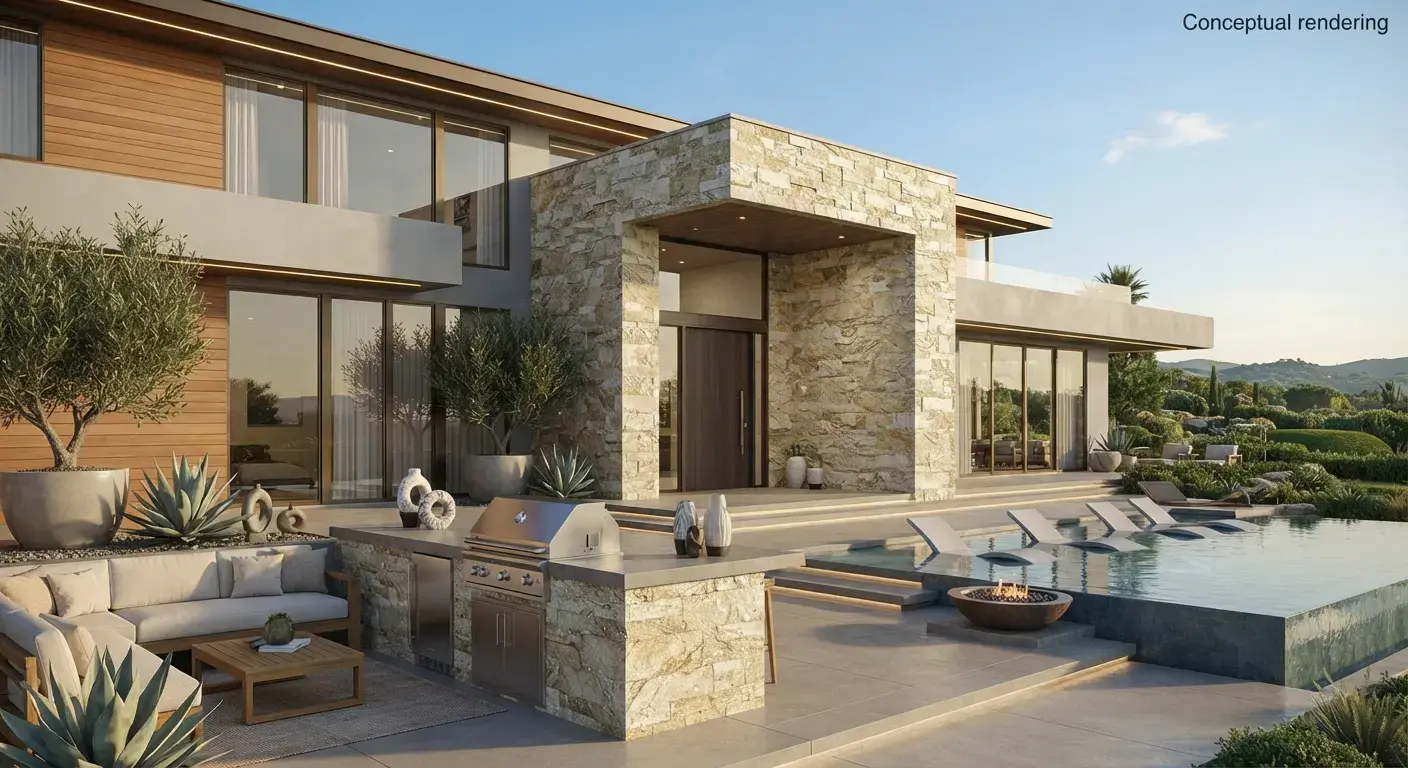
Step 2: Choose a Color That Works With Your Exterior Palette
Quartzite ledger stone comes in a wide range of natural colors, and most options fall into a few families.
White and silver. Bright and clean, with soft gray movement and often a noticeable sparkle. These pair well with modern farmhouse exteriors, light siding, and black window trim.
Gray and charcoal. Cool and contemporary, including blue-gray tones. These work with modern, mountain, and transitional homes and complement dark roofs and metal accents.
Gold, honey, and rust. Warm shades of tan, amber, and copper that suit Craftsman, ranch, Mediterranean, and rustic homes, especially with warm stucco, wood siding, or brown roofing.
Multicolor blends. Several tones in one panel, such as gold with gray. Blends can tie together a home with mixed materials, though they may look busy across a very large wall.
Start with the fixed elements of your exterior: the roof, trim, window frames, and any existing brick or concrete. Choose a stone that shares at least one undertone with them. A warm gold stone next to a cool blue-gray roof can feel disconnected, while the same stone beside a brown roof and cream trim looks intentional.
Sun exposure matters too. A wall in full afternoon sun makes light stone look brighter and can wash out subtle color, while a shaded wall makes dark stone read even darker. If you are unsure how a stone will look against your exterior, a free design consultation gives you time to compare options against photos of your home.
Step 3: Pick a Texture and Profile
Texture affects how the stone reads from the street and how much shadow it casts.
Split face ledger stone has a rough, irregular surface created when the stone is split along its natural layers. It is a widely used exterior finish and shows the most variation in depth.
Flat or low-profile ledger stone uses pieces of similar thickness for a tighter, more uniform surface. It suits modern exteriors where you want texture without heavy relief.
Three-dimensional profiles stagger pieces at different depths so some strips project farther than others. The deeper shadow lines can create a focal point on a chimney or entry wall but may feel heavy across a full facade.
Deeper textures also collect more dust and leaves, so a heavily textured stone near a driveway or under a tree may need an occasional rinse.
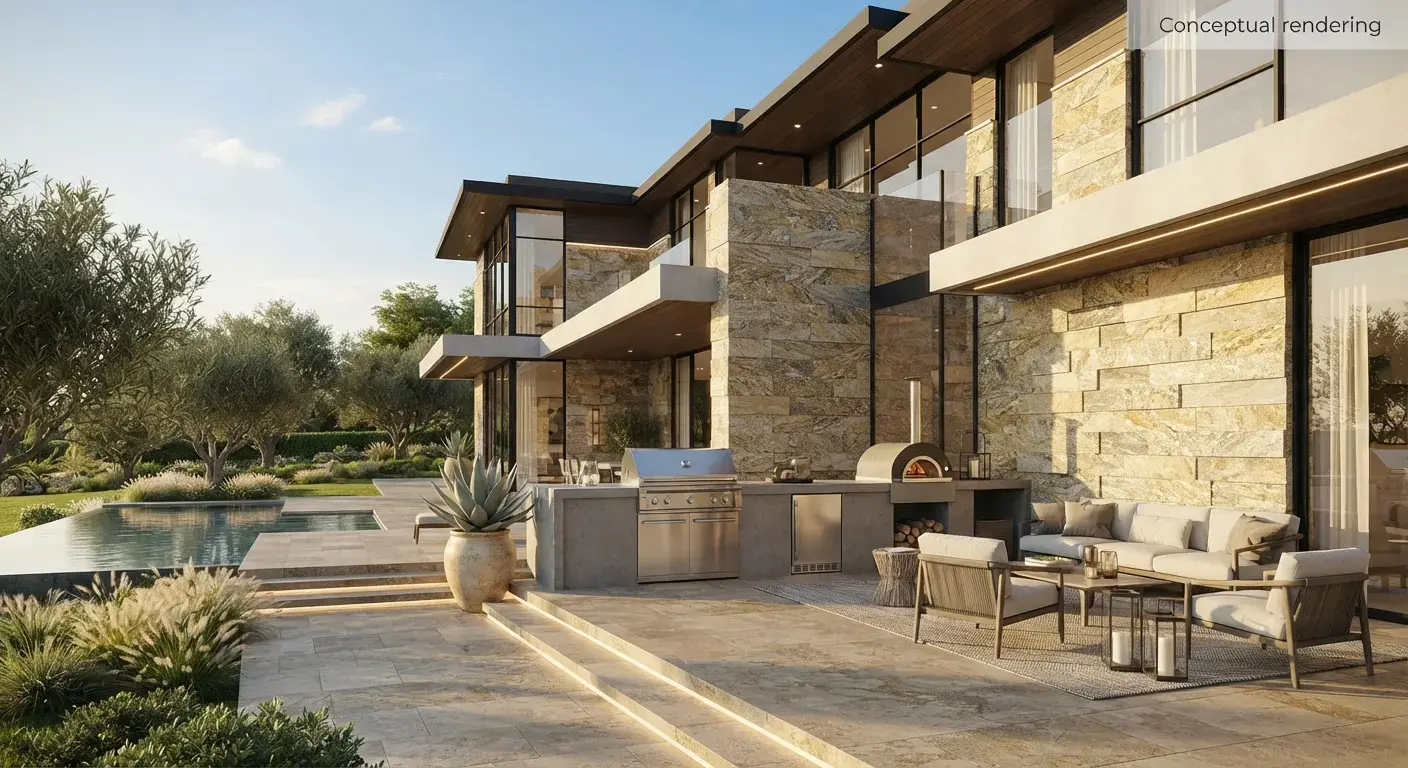
Step 4: Understand Panel Formats and Accessories
Most quartzite ledger stone is sold in panels rather than loose pieces.
- Rectangular panels, often around 6 by 24 inches, are the most common format, with pieces offset so joints stagger between panels.
- Stepped or Z-shaped panels have notched, interlocking ends that help hide vertical seams for a more random look.
- Corner pieces are L-shaped panels that wrap outside corners so you see stone on both faces instead of a cut edge. Depending on the manufacturer, they are sold by the piece, the box, or the linear foot.
- Caps and sills finish the top of a wainscot, column, or low wall and help shed water.
To estimate, measure each wall in square feet, subtract windows and doors, and measure outside corners in linear feet. Check the coverage per box and plan for extra material to allow for cuts and color blending between boxes. Small accents like a mailbox post or planter wall need less material, so our overstock and close-out materials may be an option if a suitable product is available. Those sales are final.
Step 5: Consider Climate and Weather
Your local climate should guide the final choice, especially if your home sees both hot summers and freezing winters.
Freeze and thaw. Water that soaks into stone and then freezes can cause cracking or flaking over time. Quartzite's low absorption helps, and many quartzite ledger panels are rated freeze-thaw resistant, but ratings vary by product. Confirm the panel is approved for exterior use, and remember that the mortar, adhesive, and wall system behind the stone matter just as much.
Heat. Dark stone on a sun-facing wall can become very warm to the touch, which is worth considering for a seating wall or an outdoor kitchen base people lean against.
Iron content. Some quartzites contain iron-bearing minerals that can oxidize and leave small rust-colored spots. Oxidation is often triggered or sped up by contact with fertilizers, chlorine, salts, bleach, or acidic cleaners, so keep those products off the stone and clean it with a product made for natural stone.
Efflorescence. This white, powdery deposit forms when water dissolves salts in the mortar, backing, or nearby soil and carries them to the surface, where they are left behind as the water evaporates. Good drainage helps reduce it.
Sealing. Many manufacturers recommend sealing exterior stacked stone with a breathable, penetrating sealer once installation is complete. A sealer helps reduce staining from sprinklers, hard water, and outdoor cooking. Avoid film-forming coatings that can trap moisture, and follow the care instructions for your specific product.
Step 6: Plan for Weight and the Wall Behind the Stone
Natural quartzite ledger panels commonly weigh around 6 to 14 pounds per square foot, depending on thickness and profile. That overlaps with, and can exceed, the 8 to 12 pounds per square foot typical of manufactured stone veneer. Check the weight on the product specifications and share it with your contractor before you buy. Contractors and designers sourcing materials for a project can apply for a trade account for trade pricing and job-site delivery.
Adhered stone veneer on an exterior wall needs a suitable substrate and moisture barrier, and building codes set requirements for this type of cladding, including a general limit of 15 pounds per square foot for adhered veneer. Questions worth raising with your contractor early include:
- Can this wall support the weight of the stone?
- What backing and moisture barrier will be used?
- How will the bottom edge stay clear of soil and standing water?
- How will windows, corners, and roof lines be flashed and finished?
Step 7: Compare Natural Quartzite With Manufactured Stone
Manufactured stone veneer is a cast concrete product colored to look like stone. It is typically lighter, often costs less per square foot, and many homes use it successfully.
Natural quartzite ledger stone offers real stone surfaces, color that runs through the material, and natural mineral sparkle. It can weigh as much as or more than manufactured stone, can cost more, and color can vary from one production lot to the next. The right choice depends on your budget, your wall structure, and how much the look and feel of natural stone matters to you. Viewing both materials alongside other tile, stone, and flooring options can also help you coordinate the stone with the rest of your project.
Tips for Comparing Options in Person
Photos rarely capture the depth, sparkle, and color range of quartzite ledger stone. Look at full panels rather than small chips at one of our showroom locations, and view several side by side, since natural stone shifts in tone from piece to piece. If possible, see the stone in daylight. Bring photos of your home's roof, siding, and trim so you can compare colors directly. Ask whether the quantity you need is available from the same lot, which helps keep color consistent across the wall.
Conclusion
Choosing quartzite ledger stone for your home's exterior is easier when you take it one decision at a time. Start with where the stone will go, find a color that works with your roof and trim, choose a texture and panel format that fit your home's style, and make sure the material suits your climate and wall structure. When you are ready to compare options in person, we invite you to visit one of our showrooms in Sacramento, Reno, Minden, or Fernley. Seeing panels in person makes it easier to compare formats, corner options, and color families before you make a decision.
Note: Some images on this page may be conceptual renderings created to illustrate design possibilities and may not depict actual installations.
Frequently Asked Questions
Yes. Quartzite is a dense, hard natural stone with typically low water absorption, which helps it handle rain, sun, and freezing temperatures. Its color comes from the minerals in the stone, so it does not fade in sunlight. The wall system behind the stone, including the backing and moisture barrier, also plays a major role in how well an exterior application performs.
Many manufacturers recommend it. A breathable, penetrating sealer applied after installation helps reduce staining in areas exposed to sprinkler water, hard water, or outdoor cooking. Avoid film-forming coatings, which can trap moisture inside the stone. Follow the recommendations for the specific product you choose.
Quartzite's mineral color does not fade in sunlight. However, some quartzites contain iron-bearing minerals that can oxidize and leave small rust-colored spots, especially after contact with fertilizers, chlorine, salts, or acidic cleaners. Using a cleaner made for natural stone and keeping lawn and pool chemicals off the wall helps prevent it.
Most 6 by 24 inch quartzite ledger panels cover 1 square foot and weigh roughly 6 to 14 pounds each, depending on thickness and profile. Check the product specifications for the exact figure, and have your contractor confirm that the wall and backing can support it.
Quartzite ledger stone is a common facing material for outdoor fireplace walls and fire pit surrounds. Surfaces exposed directly to flame are typically lined with firebrick, a steel ring, or other heat-rated materials, with the stone applied to the exterior faces. Follow the fire feature manufacturer's guidelines and local code requirements.