Pavers are individual paving units made from concrete, porcelain, natural stone, clay brick, or rubber, set side by side over a compacted base to form patios, walkways, pool decks, and driveways. Unlike a poured concrete slab, a paver surface is built from separate pieces, so it can flex with minor ground movement and be repaired by replacing a single unit, and permeable systems can also drain water through their joints. Choosing the right paver comes down to four factors: material, shape, laying pattern, and color, each of which affects durability, maintenance, surface heat, and appearance. According to the ASTM C936 standard, solid interlocking concrete paving units must meet minimum requirements for properties such as compressive strength, water absorption, and freeze-thaw durability, with abrasion resistance tested when specified.
This guide from Nova Tile and Stone explains how each material performs, which shapes and patterns suit different uses, and how to select colors for sun, heat, and upkeep, whether you are planning a small backyard patio or a larger commercial project.
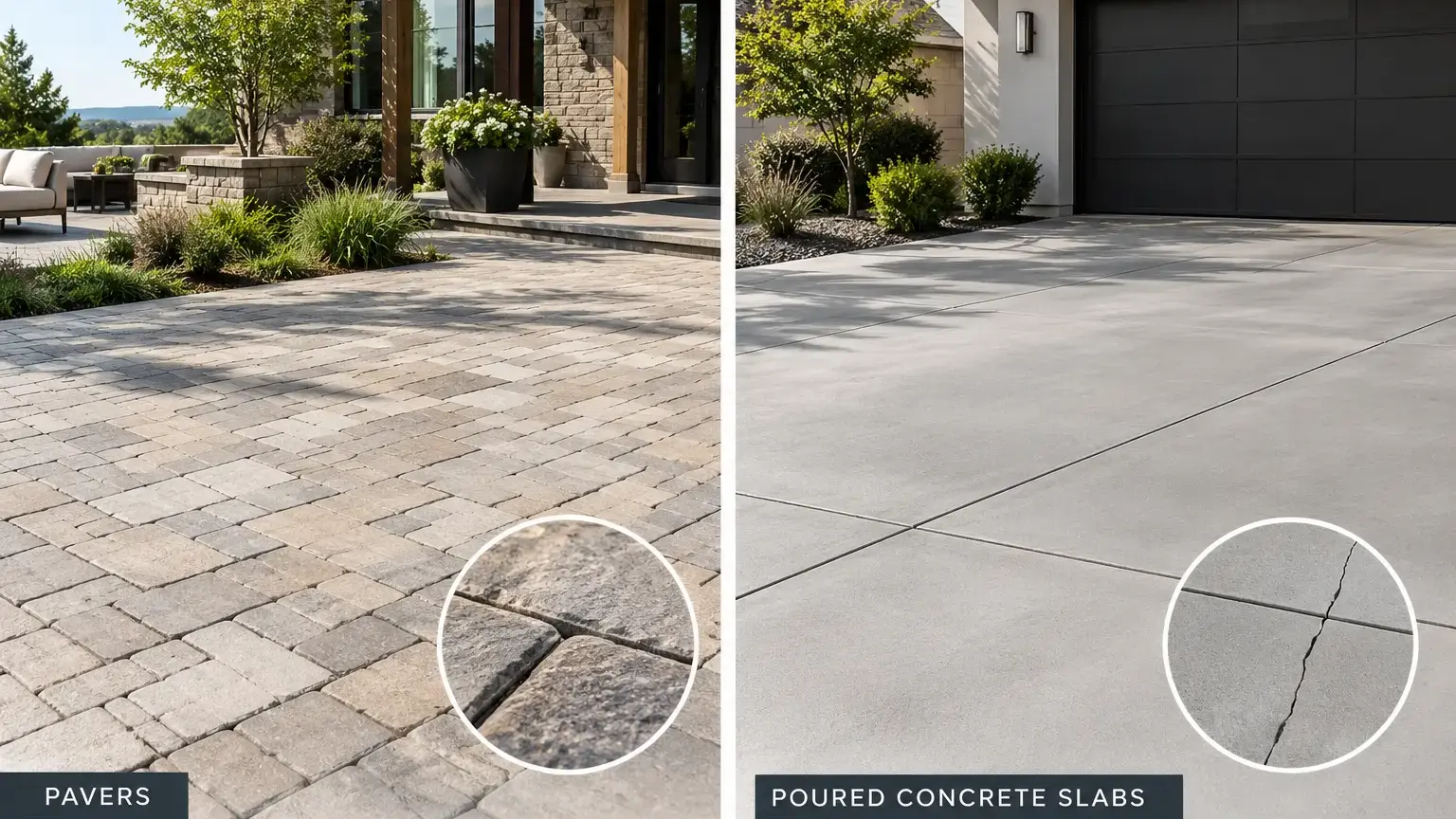
Pavers vs. Poured Concrete Slabs
A segmented surface gives you far more design freedom than a single slab. Colors, shapes, textures, and patterns can be combined to match the style of your home or to create a layout that is entirely your own.
The way the surface handles stress also differs. A slab is rigid, so ground movement and temperature swings tend to show up as cracks. In a paver surface, the joints between units absorb small movements that often crack solid slabs, allowing the surface to keep functioning even when the ground beneath it settles slightly.
Paver Materials
How well a paver surface performs over time depends largely on the material you choose.
Concrete
Concrete is one of the most common choices for driveways, walkways, pool decks, and patios. It typically needs less upkeep than gravel, which shifts and scatters, and it generally costs less than natural stone or clay brick. Because the units are made in a controlled factory setting, color and size stay consistent from piece to piece, and the interlocking design helps resist cracking and shifting under traffic.
Concrete units come in several styles:
- Textured finishes add visual depth and help improve traction on patios, paths, and driveways.
- Smooth finishes create a sleek, refined look that suits modern outdoor spaces.
- Cobblestone-style units recreate the rustic look of natural cobblestone with the consistency and lower cost of concrete, in tones ranging from earthy to contemporary.
- Permeable systems use wider joints filled with open-graded aggregate so water can drain down to the base. This can reduce runoff and help return water to the ground, which makes them useful around pools, in areas prone to runoff, and in dry climates.
- Non-permeable systems shed water across the surface instead of letting it soak in. They suit areas where you want to keep water out of the ground below, provided the surface is graded to carry runoff away from the home.
- One thing to know about new concrete units is efflorescence, a white, powdery haze that can appear after installation. It forms when natural salts in the cement are carried to the surface by moisture and react with carbon dioxide in the air. It is a cosmetic issue rather than a structural one, tends to be more visible on darker colors, and usually fades with time and weather. If you plan to seal your pavers, wait until any efflorescence is gone, since sealing over it can trap the haze beneath the sealer.
Porcelain
Porcelain has grown in popularity for outdoor use thanks to its low maintenance and resistance to stains, scratches, and fading. It can closely mimic natural stone or wood, giving you a wide range of design options. Standard porcelain tile is typically 8 to 10 mm thick, while outdoor porcelain pavers are commonly made 2 cm (about 3/4 inch) or thicker, giving them the added strength needed for exterior conditions.
Natural Stone
Granite, limestone, travertine, marble, and cobblestone are valued for their natural beauty and long service life. They tend to cost more than concrete or porcelain and usually need periodic cleaning and sealing. Some stones are porous and can absorb water or become slippery when wet, so the finish you choose matters. In regions with freezing winters, porous stone that absorbs water can be more vulnerable to freeze-thaw damage, so ask about a stone's suitability for your climate before buying.
- Granite is dense and durable, with a wide range of colors and textures that suit both traditional and modern designs.
- Limestone offers warm, earthy tones and blends well with many architectural styles.
- Travertine is known for its natural color variation and is a common choice around pools and patios.
- Marble brings an elegant look but is used outdoors less often than granite or travertine. Polished marble can be slippery when wet, so honed or tumbled finishes are typically chosen for exterior paving.
- Cobblestone has a weathered, old-world character and holds up well to traffic on driveways and walkways.
When selecting natural stone, seeing the actual color, pattern, and surface variation can make it easier to determine what will work for the project. Explore our available slabs, or request a slab quote when you are ready to discuss a specific selection.
Clay Brick
Clay brick has a long history and a classic, warm appearance, and it comes in several shapes, sizes, and colors. On the downside, it often costs more than concrete, and it can shift or crack over time if the base is not prepared properly.
Rubber
Made from recycled rubber, these units absorb impact and provide traction in wet conditions, making them a practical option for playgrounds and other safety-focused areas. They are easy to install and maintain, but they prioritize function over appearance and can get very hot in direct sun, which is worth weighing in hot, dry climates.
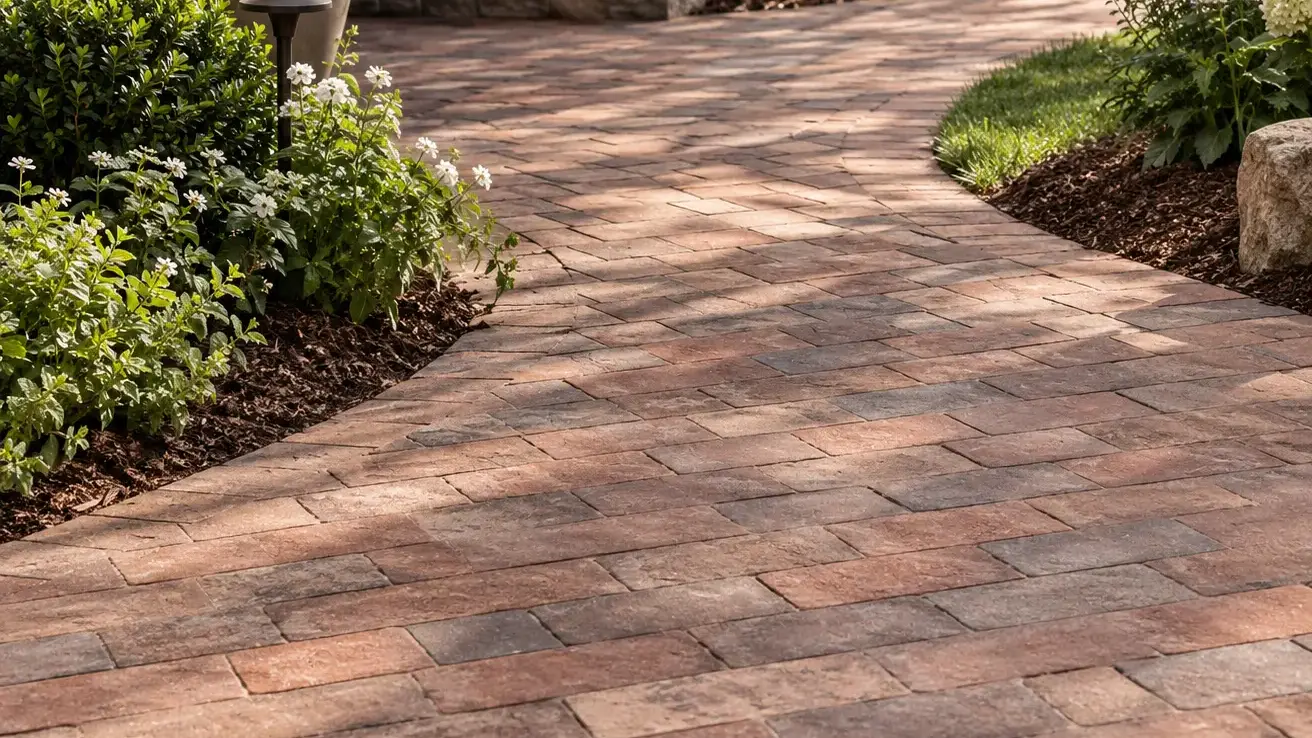
Common Shapes
Once you have chosen a material, the shape of each unit shapes the character of the finished surface, from clean and modern to rustic and organic.
- Squares and rectangles are the most widely used shapes. They can be arranged in many patterns, and larger rectangular units are sometimes sold as slab pavers.
- Brick shapes recreate the look of traditional clay brick in other materials, often for a rustic or vintage feel.
- Hexagons, octagons, and diamonds add a geometric look and can be arranged in a variety of repeating patterns.
- Circular and fan shapes are often used for decorative features, such as a focal point in a patio or a curved border.
- Irregular shapes, usually natural stone but sometimes concrete, create an organic, natural look.
- Stepping stones, in square, round, or irregular shapes, are set individually to form garden paths and walkways.
Paver Laying Patterns
The way units are arranged affects both how the surface looks and how well it holds together under traffic, so the pattern deserves as much thought as the shape.
- Herringbone sets rectangular units in a zigzag, usually at a 45 or 90 degree angle to the direction of traffic. This pattern provides maximum interlock between units, which is why industry guidelines recommend it for driveways and other areas that carry vehicles.
- Running bond staggers rectangular units like a brick wall. It is simple, versatile, and suits both modern and traditional homes, making it a good fit for walkways, patios, and other pedestrian areas. It is structurally weaker than herringbone, so it is generally not recommended where vehicles will drive.
- Basket weave arranges units in pairs, with each pair perpendicular to the next, creating a woven effect. It is often used on patios or as an accent within larger paved areas.
Paver Color Options
Color is the final design layer, and it influences not only the style of your outdoor space but also how the surface feels and how much cleaning it needs.
Earth tones such as beige, tan, and brown remain widely favored because they blend with natural surroundings. Gray offers a clean, contemporary look that suits modern architecture. Red adds warmth, while charcoal and black create a bold, sophisticated finish.
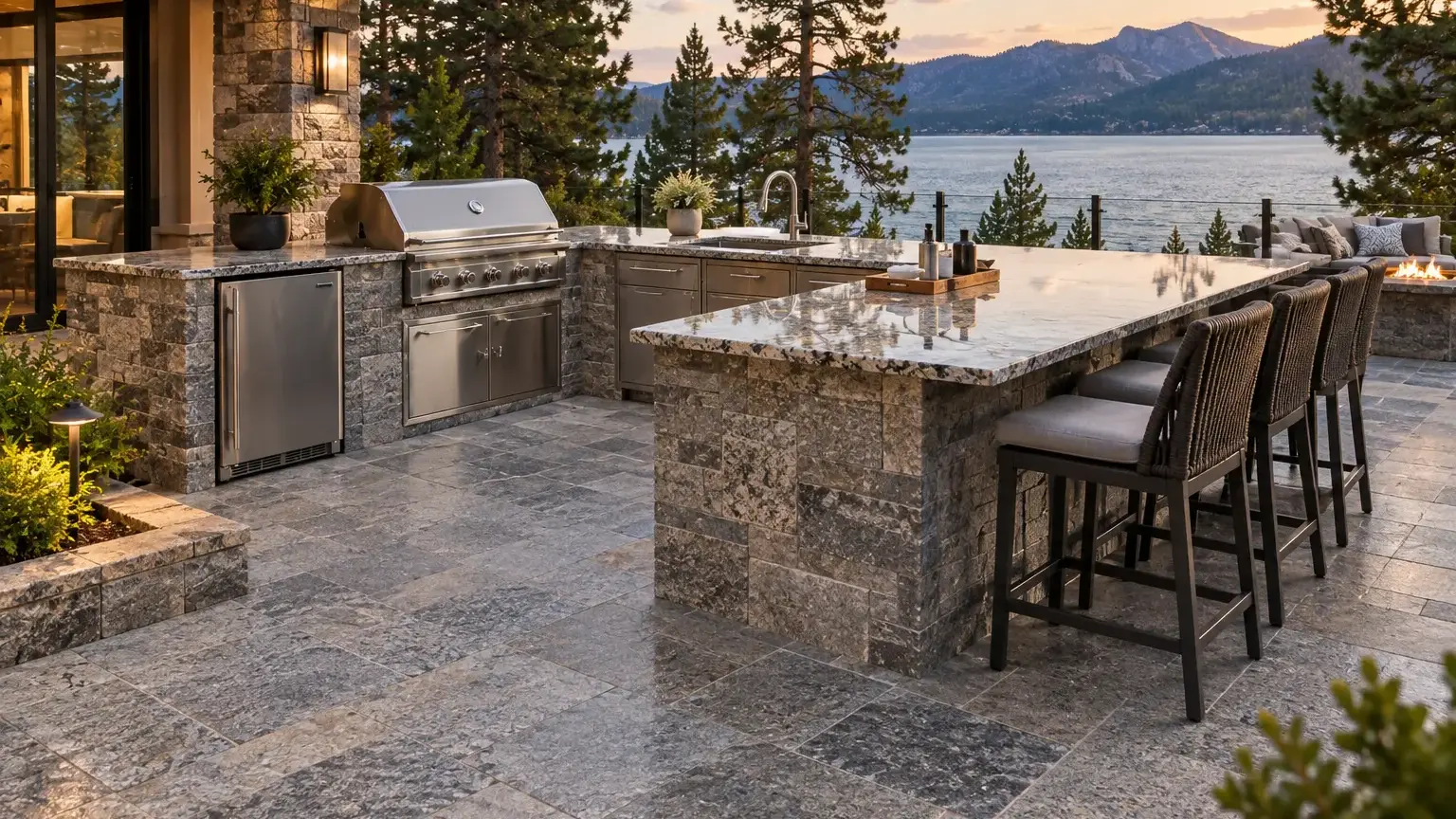
Where Pavers Work Well
With materials, shapes, patterns, and colors in mind, it helps to see how they come together in the areas where pavers are most often used.
Pool Decks
A segmented surface offers plenty of design options around a pool, and textured concrete can provide better slip resistance than smooth surfaces. These materials generally tolerate water and sun well, and the manufacturer can confirm suitability for exposure to pool chemicals.
Patios
Concrete, brick, and natural stone are the most common patio materials. Concrete offers the widest range of colors and shapes, brick brings a classic look, and stones such as flagstone or travertine create a more natural setting.
Outdoor Kitchens
Outdoor kitchen floors should match the look of the space while standing up to spills and frequent cleaning. Concrete is a practical option because it is easy to clean, while natural stone and clay offer a more traditional or rustic look. If grease and food spills are likely, a sealed surface can make cleanup easier.
Driveways and High-Traffic Areas
Walkways, driveways, and busy patios need materials that handle constant use without showing heavy wear. Concrete is a common choice here, available in colors from muted neutrals to bolder shades, and with proper installation and maintenance, it can hold up to vehicle traffic for many years. For driveways, a well-compacted base helps prevent rutting and settling, and a herringbone pattern helps keep the units locked together under braking and turning tires.
Driveways have different load, drainage, base preparation, and pattern requirements than patios or walkways, so the units, base, and layout should be planned around vehicle traffic from the start.
Landscape and Garden Borders
Concrete and natural stone are both popular for borders and edging. Concrete is easy to form into almost any shape and size, while natural stone offers a timeless look and can be cut to create custom transitions between paths, flower beds, and seating areas.
Tips for Making Your Final Selection
Before you commit to a design, a few practical considerations can help you avoid surprises once the surface is in use.
Consider Sunlight and Heat
Color affects surface temperature. Lighter shades like beige, sand, and light gray reflect more sunlight and stay cooler, which matters in warm climates and sunny spaces. Darker colors absorb more heat and can become uncomfortable underfoot in summer, so they are often better suited to shaded areas or cooler climates.
Think About Visibility and Upkeep
Consider whether walkways and steps need to stand out from surrounding surfaces so they are easy to see at night. Also keep in mind that some colors show dirt, mildew, rust, or tire marks more readily, which means more frequent cleaning, especially on driveways.
Match Shape and Size to Function and Space
Choose shapes that complement your home's style: sleek rectangles for modern designs and irregular or cobblestone shapes for traditional or rustic ones. Make sure the unit suits its use, since driveways call for units rated for vehicle loads, while patios and walkways offer more flexibility. Scale matters, too. Smaller units can make a compact yard feel larger, while larger formats suit open spaces.
Mix and Match
Combining colors or shapes can add depth and interest. Contrasting tones create striking patterns, while shades from the same color family give a more subtle result. Aim for a cohesive design that complements the rest of your property.
Plan for Long-Term Care
Every paving material needs some upkeep, so factor it into your choice from the start. Sealing is optional for many concrete surfaces but can help with stain resistance and color retention, while most natural stone benefits from periodic resealing. If you prefer minimal ongoing care, weigh that against the distinctive appearance natural stone offers.
When comparing materials, consider the maintenance requirements alongside the Nova Tile and Stone offerings to find an option that fits both the look and level of care you want. You can also shop local to explore available materials for your project.
Conclusion
The best paver for your project depends on how the space will be used, the climate it will face, and how much upkeep you are comfortable with. Start by choosing a material that matches your budget and maintenance expectations, and then select a shape and laying pattern suited to the traffic the surface will carry, especially if vehicles are involved. Finish with a color that balances appearance with heat, visibility, and cleaning needs.
If you would like to compare materials, colors, and finishes side by side, Nova Tile and Stone has showrooms in Reno, Minden, Fernley, and Sacramento, and free design consultations are available.
Frequently Asked Questions
In terms of the material itself, they often are. According to the Concrete Masonry & Hardscapes Association, concrete pavers are manufactured with two to three times the strength of typical poured concrete, partly because they are cured under controlled factory conditions rather than on site.
Generally, no. Porcelain is dense and highly resistant to moisture, so it does not need sealers or protective coatings to resist staining. This is one of the main maintenance differences between porcelain and concrete or natural stone.
For concrete pavers, industry guidance recommends units about 2 3/8 inches (60 mm) thick for walkways, patios, and residential driveways. Pavements that carry more regular vehicle traffic typically call for units about 3 1/8 inches (80 mm) thick.
Some gradual change is normal. Color is added as pigment during manufacturing, and over the years, foot traffic, tires, and weather slowly wear away the surface cement, exposing more of the aggregate beneath. Regular cleaning and sealing can help slow the rate of change.
Rock salt (sodium chloride) is considered the least damaging deicer for concrete pavers, while magnesium chloride and calcium magnesium acetate are not recommended because they can chemically degrade concrete. Use only as much deicer as needed, remove slush promptly, and shovel or plow diagonally to the joints to avoid catching paver edges.
Note: Some images on this page may be conceptual renderings created to illustrate design possibilities and may not depict actual installations.