The best exterior stone for a front entry and porch is typically a dense, low-absorption material with a textured, exterior-rated finish, such as thermal-finished granite, quartzite, or porcelain pavers. These materials provide traction on wet steps, resist freeze-thaw damage, and need little maintenance. Travertine, bluestone, flagstone, slate, and limestone also work well when the grade and finish suit the climate.
To choose the right stone, compare five factors: slip resistance, climate performance, maintenance needs, your home's architectural style, and how the stone coordinates with your siding, roof, walkway, and interior flooring. Polished stone is generally not recommended outdoors because it becomes slippery when wet.
In this guide, we compare nine common entry materials, explain which finishes provide the best grip, and share how to match stone to your home's style and climate so your porch looks cohesive and suits your climate.
Why Your Front Entry Needs Its Own Material Decision
It's tempting to pick one stone for the whole property and use it everywhere, and sometimes that works well. But a front entry has conditions that a back patio or garden path may not. It is often partially covered, so some areas stay shaded and damp while others take direct sun. It usually includes steps, a landing, and a threshold at the door, each with its own safety needs. It also sits right next to your front door, trim, and siding, so color and texture carry more visual weight here than they do at the back of the yard. Treating the entry as its own design decision, even if you end up using the same material elsewhere, helps you catch these details early.
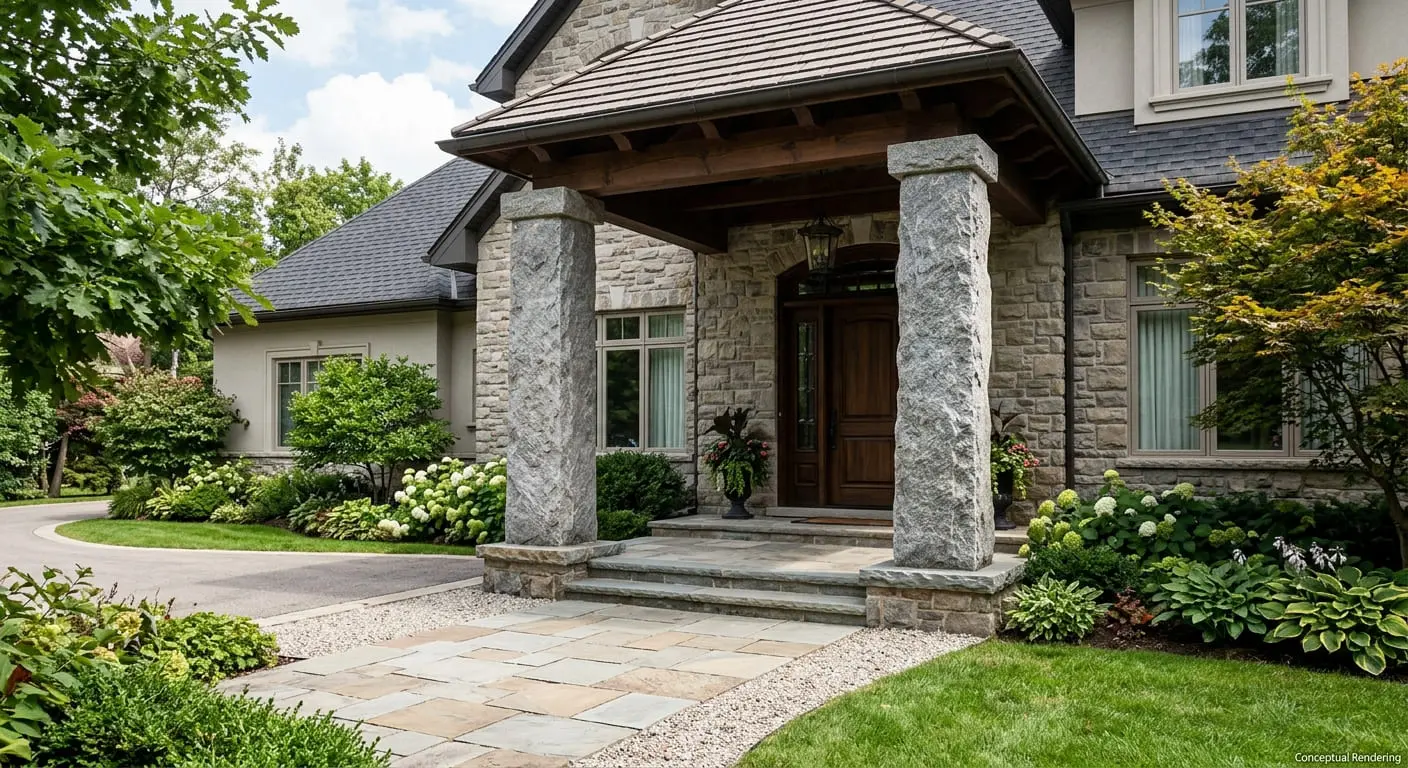
Start With Safety: Slip Resistance and Surface Finish
Safety should come first. Entry steps and landings get wet from rain, sprinklers, and snowmelt, and people often walk on them while carrying bags or looking at their phones. A smooth, polished surface that works well indoors can become slippery outdoors. For exterior entries, look for textured finishes such as these:
- Natural cleft: The split face of stones like slate and bluestone, with a naturally uneven texture that provides grip.
- Thermal or flamed: A heat-treated surface common on granite and bluestone that creates a rough, textured finish with good grip.
- Tumbled: Softened edges and a worn texture, often seen on travertine and some limestone.
- Brushed: A gently textured surface that offers more traction than honed stone while still feeling smooth underfoot.
When comparing products, ask whether the material is rated for exterior use and what slip-resistance information the manufacturer provides. Porcelain pavers made for outdoor use, for example, are typically thicker and more textured than interior porcelain tile. For porcelain pavers, check the spec sheet for an exterior slip rating such as R11.
Consider How Your Climate Affects Stone
Climate plays a big role in how exterior stone performs over time. In regions with hot, dry summers, dark stone can absorb enough heat to feel uncomfortable underfoot, especially on uncovered steps that face south or west. Lighter tones such as buff limestone, ivory travertine, and light gray granite tend to stay cooler.
In areas with freezing winters, the main concern is freeze-thaw cycling. Water that soaks into porous stone expands when it freezes, which can lead to cracking or surface flaking over time. Denser materials such as granite, quartzite, many bluestones, and porcelain pavers absorb less water and generally handle these cycles well. More porous stones can still work in cold climates, but drainage and sealing matter more. If your area sees both intense summer sun and hard winter freezes, look for a material that balances heat comfort with low water absorption.
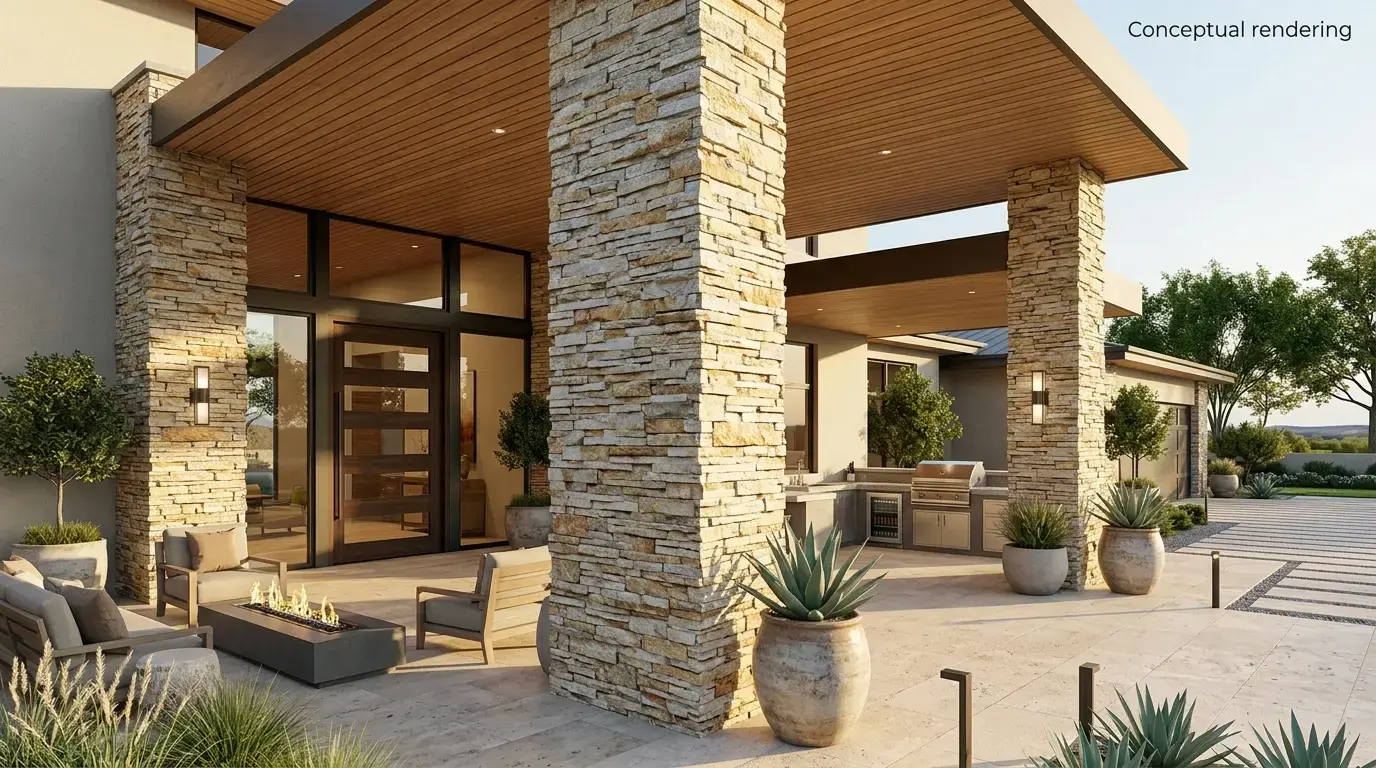
Compare Common Stone Options for Front Entries
Here's a closer look at the materials homeowners most often consider for entries and porches.
Granite
Granite is one of the densest natural stones used outdoors. With a thermal or flamed finish, it offers good traction and low water absorption, making it a good fit for steps and landings in cold climates. Granite comes in a wide range of colors, from light gray and white to deep charcoal and black, and it pairs well with both traditional and contemporary homes.
Quartzite
Quartzite is a hard, dense natural stone formed when sandstone is transformed by heat and pressure. Its low porosity helps it resist water absorption and freeze-thaw damage, and it handles strong sun. Quartzite comes in whites, grays, golds, and earthy blends, and with a textured finish it suits both traditional and contemporary entries.
Travertine
Travertine is a form of limestone with a warm, earthy look in shades of ivory, beige, walnut, and silver. Tumbled travertine pavers are a common choice for Mediterranean, Spanish, and Tuscan-inspired homes. Light-colored travertine tends to stay comparatively cool underfoot, and its natural pores add texture. Those same pores can trap water and debris, which is why grade matters in freezing climates. Higher-grade travertine is denser, with fewer surface holes, so it handles freeze-thaw cycles better. Filled or regularly sealed travertine also absorbs less water than unfilled stone.
Flagstone
Flagstone is a general term for flat, split stone, often sandstone, quartzite, limestone, or slate. It comes in irregular shapes for a natural, organic look or in cut rectangles for a more tailored layout. Irregular flagstone suits cottage, Craftsman, and rustic homes, while cut flagstone works with more structured designs. Its natural cleft surface usually provides good traction.
Bluestone
In North America, bluestone typically refers to a dense sandstone known for its blue-gray color, though many pieces show hints of lilac, rust, or green. Thermal-finished bluestone has a consistent texture and color that fits traditional, colonial, and transitional homes, while natural cleft bluestone offers more variation. Bluestone absorbs heat and can get warm in direct sun, which is worth considering for uncovered steps.
Slate
Slate has a fine, layered texture and colors ranging from charcoal and green to plum and rust. Its natural cleft surface is slip resistant, and it has been used on entries and walkways for centuries. Quality varies by source, and some slates are softer than others, so ask whether a specific slate is suited to outdoor, freeze-prone areas.
Limestone
Limestone has a soft look in cream, buff, gray, and blue tones. It suits European-inspired, French country, and traditional homes. Some limestones are dense and well suited to exterior use, while others are softer and better for covered areas. Choosing an exterior-grade limestone with a textured finish helps it perform well on a porch.
Porcelain Pavers
Porcelain pavers are manufactured products, usually around 2 centimeters thick, designed specifically for outdoor use. They can mimic the look of wood, stone, or concrete, and their very low water absorption helps in freeze-thaw conditions. Their consistent sizing makes them a natural fit for modern entries with clean lines and large-format layouts.
Concrete Pavers
Concrete pavers are a budget-friendly option available in many colors, shapes, and textures, including designs made to resemble natural stone. They work well for larger entry areas where cost matters, though their color may fade over time with sun, weather, and foot traffic. If you're working with a tight budget, our overstock and close-out deals may also be worth checking, since availability changes often.
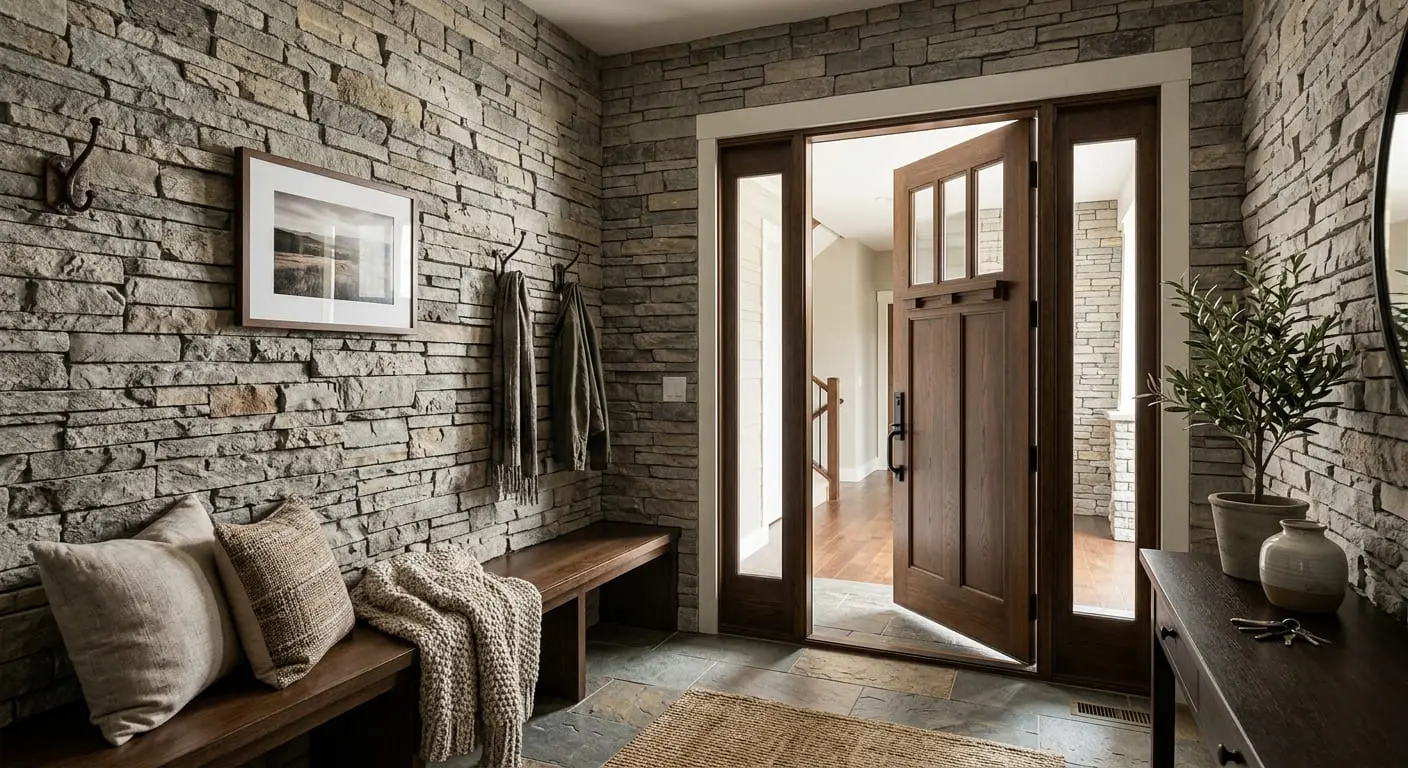
Match the Stone to Your Home's Architectural Style
Your home's architecture offers some of the best clues for choosing an entry material. Craftsman and bungalow homes often look right with natural cleft flagstone or slate in earthy tones that echo wood trim and tapered columns. Modern and contemporary homes tend to favor large-format porcelain pavers, thermal-finished granite or quartzite, or cut bluestone in simple, linear patterns. Mediterranean and Spanish-style homes pair naturally with tumbled travertine or warm limestone. Farmhouse and ranch homes can go either way: rustic flagstone for a relaxed feel, or clean-cut bluestone for a more updated take. Traditional and colonial homes often suit bluestone or gray granite. Treat these as starting points rather than rules.
Coordinate Color With the Rest of Your Exterior
Your entry sits among many other materials: siding, roofing, trim, the front door, window frames, and any existing walkway or driveway. A stone that looks right on its own can clash when placed next to these elements. One helpful approach is to pick one or two colors from the home's fixed features, such as the roof or brick, and choose stone that shares those undertones. Homes with tan, cream, or red brick usually pair best with warm stones, while homes with gray, white, or blue siding usually pair best with gray, charcoal, or blue-toned stones.
Contrast can work well too. A charcoal stone landing in front of a white farmhouse creates clear contrast, while a pale stone in front of dark siding brightens the approach. Look at samples outdoors in daylight and at different times of day, since exterior light changes how stone color reads. Comparing several options side by side at one of our local showrooms also makes undertones easier to spot.
Think About Size, Shape, and Layout
The size and shape of the stone influence how the entry feels. Large-format pieces create a calm, open look with fewer joints, which suits modern homes and wide porches. Smaller units and irregular shapes add texture and movement and feel more casual. Common patterns include running bond, stacked grid, herringbone, basketweave, and random ashlar, which combines rectangles of several sizes.
Keep scale in mind. A narrow entry with small, busy pieces can feel cluttered, while very large pieces on a small stoop can look out of proportion. It also helps to think about how the pattern lines up with the front door and steps, since a centered, aligned layout often makes the entry feel more intentional.
Plan for Steps, Thresholds, and Transitions
Front entries rarely consist of one flat surface. Steps need treads and often risers, and many homeowners prefer a thicker tread or a rounded edge for a finished look. Ask whether your chosen material comes in matching treads, coping, or step pieces, since coordinating pieces can be hard to find later. If a contractor or designer is sourcing materials for your project, they can apply for a trade account and order directly through our team.
Think about the transition at your front door, too. The porch stone meets your door threshold, and just inside is your entry flooring. Choosing a porch material that complements your interior tile, hardwood, or LVP creates a smooth visual flow from outside to inside.
Understand Maintenance Expectations
All exterior stone needs some care, but the amount varies. Dense materials such as granite, quartzite, and porcelain pavers need little beyond regular sweeping and occasional rinsing. More porous stones such as travertine, limestone, and some sandstones may benefit from periodic sealing with a penetrating, breathable sealer made for exterior stone. This matters most under covered porches, where leaves, planters, and doormats trap moisture.
In winter, use de-icing products with care. Many ice melts can damage natural stone and concrete pavers over time, especially when overapplied, and the right product depends on the material. Use only as much as you need and follow the stone or paver manufacturer's recommendations. Sand is another option for traction, though it can get tracked indoors, so keep a sturdy doormat at the door.
What to Bring When Shopping for Entry Stone
A little preparation makes the selection process easier, especially if you book a free design consultation. Bring daylight photos of the front of your home, including the siding, roof, trim, and front door. Rough measurements of the porch, landing, and steps help you estimate quantities and see which sizes fit the space. If you plan to keep existing materials, such as a brick walkway or stone veneer, bring a photo of those as well.
Conclusion
Choosing exterior stone for your front entry and porch is about balancing safety, climate, maintenance, and style. Start with a textured, exterior-rated surface, consider how the material handles heat and freezing, and then narrow your choices based on your home's architecture and color palette. Details such as matching step pieces and a thoughtful transition to your interior flooring help the finished entry feel cohesive. If you'd like to see exterior stone options in person, our team offers free design consultations at our showrooms in Sacramento, Reno, Minden, and Fernley. Stop by with your ideas, and we'll help you find a stone that fits your home and the way you use your entry every day.
Note: Some images on this page may be conceptual renderings created to illustrate design possibilities and may not depict actual installations.
Frequently Asked Questions
There is no single best stone for every porch. Granite, quartzite, and porcelain pavers are popular because they absorb little water and come in textured finishes that provide good traction. Travertine and limestone suit Mediterranean and European-inspired homes. The best choice depends on your climate, your home's style, and whether the porch is covered.
Travertine can work in cold climates, but grade matters. Higher-grade travertine is denser, with fewer surface holes, so it handles freeze-thaw cycles better than lower grades, which can crack or crumble when water gets in and freezes. Choosing an exterior-rated product, sealing it periodically, and making sure water drains away from the steps all help.
Polished stone is generally not recommended for exterior entries because it can become slippery when wet. Textured finishes such as thermal, flamed, natural cleft, tumbled, or brushed provide better traction on steps and landings exposed to rain, sprinklers, or snow.
It doesn't have to match exactly, but it should coordinate. Many homeowners use the same stone on the entry and walkway for continuity, then choose a complementary paver for the driveway. Sharing undertones between materials, such as warm with warm or cool with cool, helps everything feel connected.
Start with a textured, exterior-rated surface and make sure water drains off the steps instead of pooling. Clear snow promptly, use de-icing products sparingly, and check which products the stone or paver manufacturer recommends, since some ice melts can damage natural stone and concrete over time. Sand adds traction without chemicals. A covered entry and good lighting also make a difference.