AT A GLANCE
- Quartzite, granite, travertine, and porcelain suit outdoor use.
- Textured finishes grip better than polished when wet.
- Look for an ANSI A326.3 Exterior, Wet (EW) rating.
- Porcelain absorbs 0.5% water or less.
- Outdoor porcelain pavers are typically 2 cm thick.
- Light-colored stone stays cooler underfoot.
- Travertine needs non-acidic cleaners.
IN THIS POST
- What makes a stone paver good for outdoor use?
- What types of stone pavers work best outdoors?
- Porcelain pavers vs. natural stone pavers: which is better?
- What is the most slip-resistant finish for stone pavers?
- What size and thickness should outdoor pavers be?
- What is the best stone for a pool deck?
- How do you clean and seal outdoor stone pavers?
- Conclusion
- Frequently Asked Questions
- Sources
To choose exterior stone for patios, paths, and pool decks, look for four things: low water absorption, a textured surface that grips when wet, enough hardness to resist wear, and a color that stays comfortable in the sun. According to the ANSI A326.3 standard, flooring for level outdoor areas that may be walked on when wet, such as patios, walkways, and pool decks, falls under the Exterior, Wet (EW) classification, which is generally expected to have a wet DCOF of at least 0.55.
Exterior stone is natural stone or porcelain made to handle rain, sun, freeze-thaw cycles, and daily foot traffic. Below, we cover how to judge those traits, how stone compares with porcelain, which finishes and formats suit outdoor spaces, what matters around pools, and how to care for stone.
What Makes a Stone Paver Good for Outdoor Use?
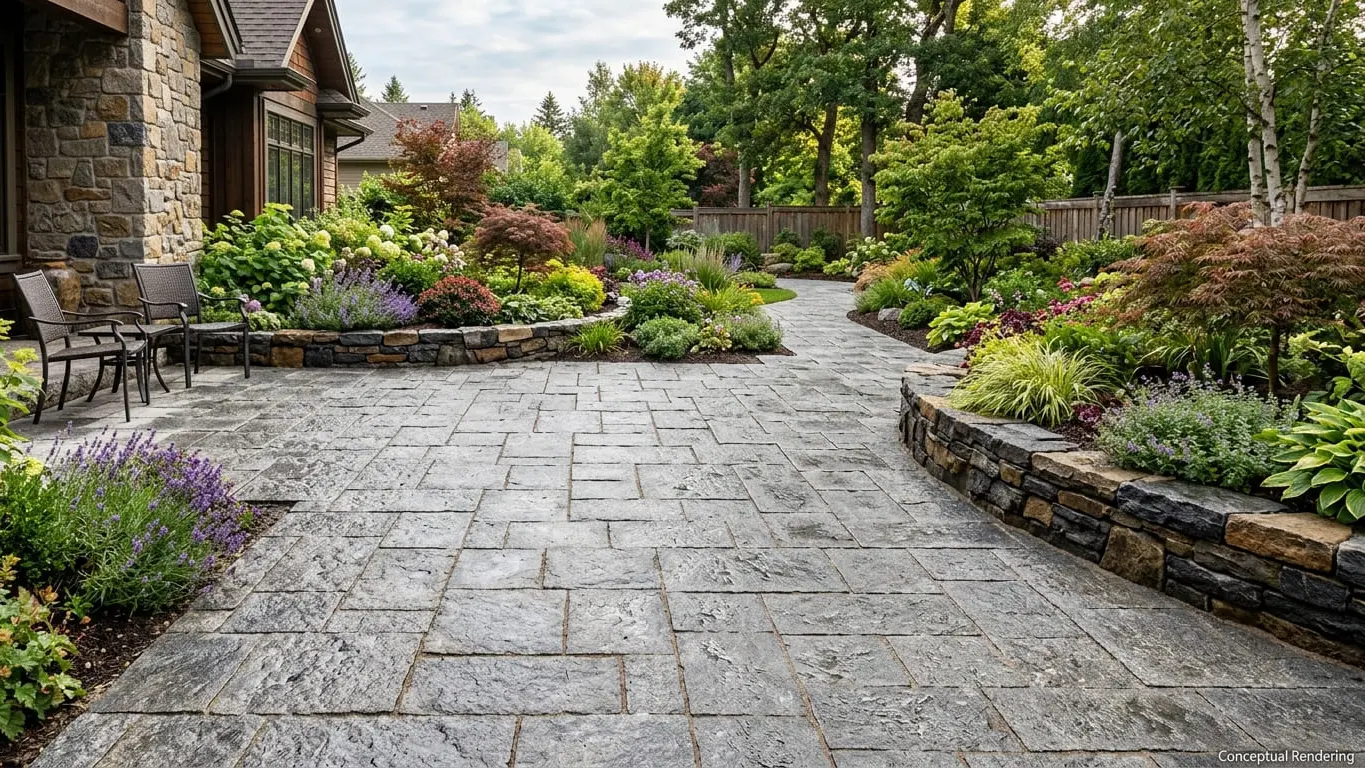
A stone paver is good for outdoor use when it absorbs little water, resists wear, offers good wet traction, and can handle the weather and chemicals where it will be installed.
Here is what to check for each.
Water absorption. Absorption is a measure of how porous a stone is. A stone that readily takes on water may be more prone to freeze-thaw damage and staining, which is why a low absorption value is generally preferred outside. For natural stone, absorption is measured by the ASTM C97 test. For porcelain, frost resistance is evaluated separately, and our guide to the ASTM C1026 freeze-thaw standard explains how that testing works.
Abrasion resistance. Industry guidance suggests a minimum abrasive hardness value of 12 for exterior pavers, the same level used for busy commercial lobbies.
Traction. Rain, sprinklers, and splash-out keep outdoor surfaces wet, so a stone's finish and texture largely decide how safe it feels underfoot.
Exposure. Stone experts often note that outdoor problems usually come from choosing the wrong stone for its environment, not from a defect in the stone itself. Think about freeze-thaw cycles, de-icing salts, pool chemicals, and full sun before narrowing down colors.
What Types of Stone Pavers Work Best Outdoors?
Quartzite, granite, travertine, and porcelain pavers are among the best-suited options for patios, paths, and pool decks, and each handles moisture, heat, and wear a little differently.
It helps to know that natural stone falls into two chemical families. Siliceous stones such as granite and quartzite are made mostly of silica minerals and resist most acids, while calcareous stones such as travertine, limestone, and marble are made of calcium carbonate and are sensitive to acidic cleaners. That difference shapes both where a stone works best and how you clean it.
Quartzite is a dense metamorphic stone similar to granite in hardness. Our quartzite slabs are rated for outdoor use and UV resistant, and for paving, textured finishes are the better fit.
Granite is a hard igneous stone known for strong durability and low absorption. Our granite slabs are rated for outdoor use and UV resistant. Darker colors can get warm in full sun.
Travertine is a calcareous stone formed around mineral springs, with natural pits and a soft, warm look. It is a long-standing favorite around pools in tumbled or brushed finishes. Its absorption varies widely by variety, and only a limited number of varieties have a proven track record in outdoor paving where freeze-thaw cycles occur, so ask for test data if your area sees hard winters.
Porcelain pavers are engineered, very low-absorption pavers that can mimic stone, wood, or concrete, and comparing them side by side with natural stone is easier when you shop for outdoor pavers locally.
What about marble? Most marble is best kept indoors. Softer marbles in particular can wear quickly when exposed to pool chemicals and salt, so we do not list marble for outdoor use.
Porcelain Pavers vs. Natural Stone Pavers: Which Is Better?
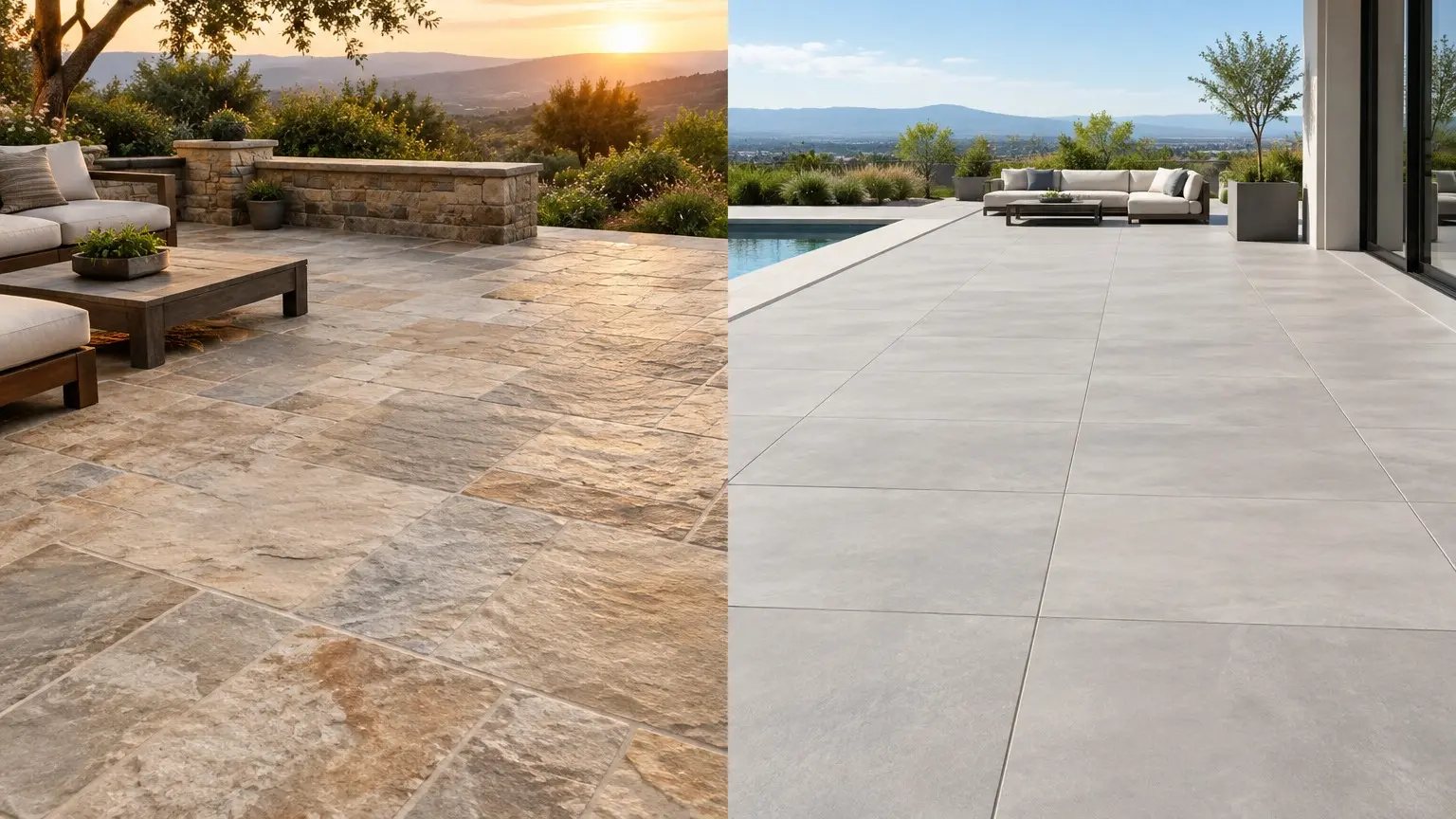
Neither porcelain nor natural stone pavers are better in every case. Natural stone offers one-of-a-kind color and texture, while porcelain pavers offer very low absorption and consistent sizing from piece to piece.
Factor | Natural stone | Porcelain pavers |
Look | Each piece is unique, with natural variation in color and veining | Printed surface that can mimic stone, wood, or concrete with repeatable patterns |
Water absorption | Varies by stone type; dense granite and quartzite are typically low | 0.5% or less by definition |
Slip rating | Depends on the finish; textured finishes give better wet traction | Many outdoor pavers carry a manufacturer-declared EW rating |
Acid sensitivity | Calcareous stones such as travertine can etch | Check the manufacturer's chemical resistance rating |
Sealing | Often benefits from a penetrating sealer | Usually not needed on the paver face |
Repairs | Worn or stained surfaces can often be refinished | Damaged pieces are typically replaced |
That absorption figure is a formal definition. The ANSI A137.1 standard defines porcelain tile as tile with water absorption of 0.5% or less under the ASTM C373 test, and an independent certification program verifies that claim.
Natural stone still has a strong case for homeowners who want the depth and variation only quarried stone offers. The key is pairing it with the right finish and care routine, and contractors or designers sourcing either material for client projects can apply for a trade account with us.
What Is the Most Slip-Resistant Finish for Stone Pavers?
Textured finishes such as tumbled, brushed, flamed, and structured porcelain are usually the most slip-resistant choice for outdoor pavers because they give more grip when wet, while polished finishes are best kept to walls and indoor floors.
Industry friction testing on 51 natural stones found that polished finishes fell below the 0.42 wet benchmark on average across every stone family tested. The same research noted that exterior stone is typically supplied in textured finishes for this reason. It also found that harder, denser stones tend to test lower than softer stones in the same finish, so a polished granite can offer less wet traction than a polished travertine.
Common outdoor-friendly finishes include:
Tumbled: softened edges and a weathered surface, common on travertine.
Brushed: a gently textured, satin feel.
Leathered: a soft-sheen texture with more grip than polished stone.
Flamed or thermal: a rough, heat-treated surface, mainly on granite.
Structured porcelain: a raised or grippy surface made for wet areas.
Honed finishes fall in between, so check the product's slip data before using one where it will often be wet.
One caution applies to any finish: a topical coating can change how well a surface grips when wet, so on outdoor walking surfaces, use only a coating its maker approves for wet exterior areas.
What Size and Thickness Should Outdoor Pavers Be?
Exterior porcelain pavers are commonly about 2 cm (3/4 inch) thick, noticeably thicker than most indoor floor tile, so they can carry more weight outdoors. The best size depends mostly on the look and layout you want.
These pavers have their own manufacturing standard, ANSI A137.3, and can be set on a gravel or sand bed, in mortar over concrete, or on raised pedestals. Pedestal systems have very specific requirements, and industry experts stress that they perform well only when installed correctly. Your installer or hardscape contractor should choose the setting method for your base, drainage, and climate.
Format affects both look and performance:
- Larger formats give a clean, modern look with fewer joints.
- Smaller formats and pattern sets add joints for grip and a classic feel on paths.
- Matching indoor and outdoor colors can visually connect a living room to a patio.
Natural stone pavers also come in a range of thicknesses and sizes, so compare spec sheets for thickness, recommended uses, and slip data.
What Is the Best Stone for a Pool Deck?
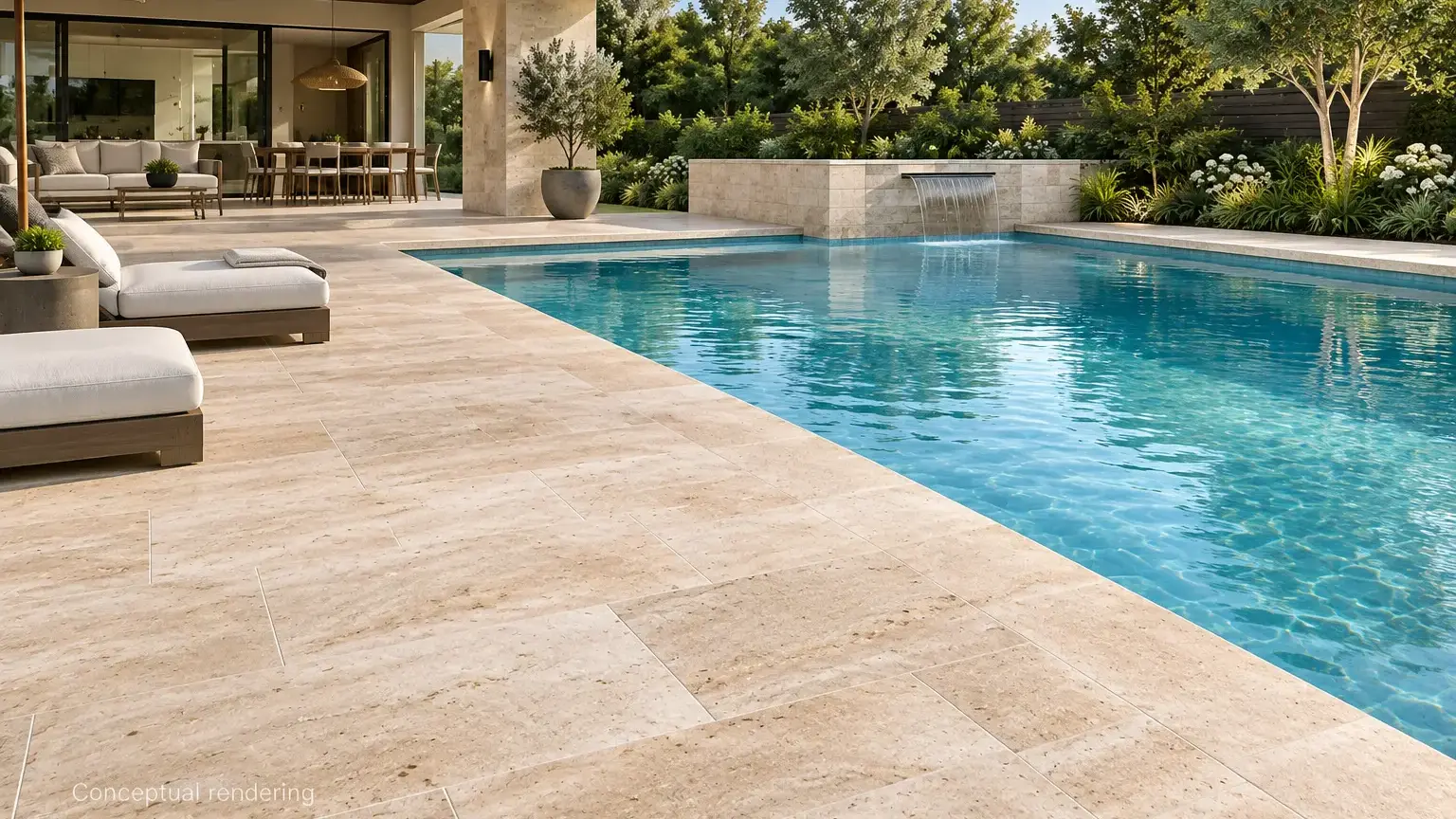
The best pool deck stone has a textured, slip-resistant surface, a lighter color that stays cooler in the sun, and enough density to handle constant splash-out and pool chemicals. Any of the materials covered above can work when those boxes are checked.
Slip resistance comes first. Pool decks are one of the areas the ANSI A326.3 standard lists under its Exterior, Wet category. The standard does not set a single required number for outdoor areas, because drainage, surface texture, and footwear all affect traction. Its general guideline of 0.55 is well above the 0.42 benchmark used for level indoor floors that get wet, and it notes that no surface fully removes slip risk when standing water is present.
Surface heat matters for bare feet. Dark paving can absorb 80 to 95% of sunlight, and in one thermal image a light pavement segment read about 30°F cooler than a dark one beside it. Pale quartzite, ivory or beige travertine, and light porcelain are worth a close look, and since color is easiest to judge in person, you can compare these lighter options at our Reno, Minden, and Sacramento showrooms.
Chemicals and salt. Pool designers often favor granite and quartzite for durability and caution that soft stone can degrade quickly when exposed to salt and pool chemicals. Porous stones can also absorb salty water, which leaves salt crystals behind as it evaporates. A dense stone and the care routine below can help reduce that risk.
Coping and deck together. Using the same stone for the pool edge and deck creates a seamless look, but coping gets the most water and chemical contact, so weigh that choice carefully.
How Do You Clean and Seal Outdoor Stone Pavers?
Clean outdoor stone pavers with regular sweeping, rinsing, and a pH-neutral stone cleaner, and seal natural stone periodically with a penetrating sealer. Porcelain pavers usually do not need sealing on the paver face.
Use the right cleaner. Clean natural stone with a neutral cleaner, stone soap, or mild dish soap and water. Avoid acidic products such as vinegar or lemon on calcareous stones like travertine. Be careful with rust removers too, since many contain hydrofluoric acid, which can attack every stone type, including granite and quartzite.
Handle algae and moss gently. Around pools, patios, and hot tubs, flush the surface with clear water and use a mild bleach solution to remove algae or moss. Never mix bleach and ammonia.
Seal natural stone thoughtfully. Most stone sealers are impregnators that act as a repellent, so they make stone more stain resistant, not stain proof. As noted in the finishes section, topical coatings may reduce wet traction, so penetrating sealers suit walking surfaces better. Follow the sealer maker's guidance on how often to reapply.
Rinse splash zones. Around salt-water or heavily chlorinated pools, rinse coping and nearby pavers with fresh water to limit residue buildup.
Watch for loose pieces. Check paths and patios each spring for pavers that have shifted or started to rock, and have them reset before they become a trip hazard.
Conclusion
Choosing exterior stone for patios, paths, and pool decks starts with performance, then looks. Low water absorption, a textured finish with a suitable wet slip rating, and a color suited to the area's sun exposure will narrow your options quickly.
Quartzite, granite, travertine, and porcelain pavers can each perform well outdoors when matched to the right location and care. At Nova Tile and Stone, we carry pavers and exterior stone in these materials, and our team offers free design consultations to help you compare finishes, sizes, and spec sheet details.
Frequently Asked Questions
Dense, low-absorption stones such as granite and quartzite are known for strong durability outdoors. Porcelain pavers also hold up well, since porcelain absorbs 0.5% water or less. The best fit still depends on your climate, foot traffic, and chosen finish.
Outdoor porcelain pavers are usually made with a textured surface, and many carry a manufacturer-declared Exterior, Wet (EW) rating under ANSI A326.3. Smooth or polished porcelain can be slippery when wet, so check the product's slip classification before using it outside.
Both can work in cold climates when the product suits freeze-thaw exposure. Low absorption helps, but it does not prove frost resistance on its own, so confirm the paver is rated frost resistant for exterior use. Dense natural stones like granite and quartzite are common choices. For travertine, ask for test data, since only some varieties have a proven record in freeze-thaw paving.
Many natural stones benefit from a penetrating sealer, which makes the surface more stain resistant, though not stain proof. Glossy film-forming coatings can reduce wet traction, so they are usually avoided on walking surfaces. Follow the sealer maker's guidance on how often to reapply.
Lighter colors reflect more sunlight and tend to stay cooler underfoot than dark ones. Pale quartzite, ivory or beige travertine, and light porcelain pavers are popular choices for barefoot areas around a pool.
Sources
- ANSI A326.3, Test Method for Measuring Dynamic Coefficient of Friction of Hard Surface Flooring Materials (TCNA) | https://tcnatile.com/wp-content/uploads/2023/01/ANSI_A326.3_2021_February_2022_Locked.pdf
- TCNA, ANSI A326.3 Product Use Classifications | https://tcnatile.com/national-standard-ansi-a326-3-now-requires-hard-surface-flooring-manufacturers-to-provide-product-use-classifications-based-on-their-slip-resistance-properties/
- ANSI, ANSI A137.1 Definition of Porcelain Tile | https://blog.ansi.org/ansi/porcelain-ceramic-tile-ansi-a137-1-astm-definition/
- TCNA, Porcelain Tile Certification | https://tcnatile.com/resource-center/porcelain-tile-certification/
- TCNA, ANSI A137.3 Specifications for 2 cm Gauged Porcelain Tile Pavers | https://whytile.com/2022/09/new-2-cm-gauged-porcelain-tile-paver-specifications-released/
- ASTM International, Dimension Stone Standards | https://www.astm.org/news/stone-cold-dimension-stone-standards-jf24
- Natural Stone Institute, Care and Cleaning of Natural Stone | https://www.naturalstoneinstitute.org/consumers/care/
- Natural Stone Institute, Care and Cleaning of Natural Stone (PDF guide) | https://associationdatabase.com/aws/NSI/asset_manager/get_file/923132
- Natural Stone Institute, Travertine, Limestone, and Dolomitic Limestone | https://www.naturalstoneinstitute.org/consumers/varieties/limestone/
- Natural Stone Institute, Testing Frictional Properties of Natural Stone Walking Surfaces | https://usenaturalstone.org/testing-frictional-properties-of-natural-stone-walking-surface/
- Natural Stone Institute, Using Natural Stone Poolside | https://usenaturalstone.org/using-natural-stone-poolside/
- Natural Stone Institute, The Importance of Testing When Specifying Natural Stone (continuing education course) | https://continuingeducation.bnpmedia.com/architect/courses/natural-stone-institute/the-importance-of-testing-when-specifying-natural-stone/4
- National Tile Contractors Association, Guidelines for 2 cm Pavers on Pedestals (TileLetter) | https://www.tileletter.com/ntca-reference-manual-guidelines-for-installing-2cm-pavers-on-pedestals/
- Lawrence Berkeley National Laboratory Heat Island Group, Cool Pavements | https://heatisland.lbl.gov/coolscience/cool-pavements
Note: Some images on this page may be conceptual renderings created to illustrate design possibilities and may not depict actual installations.