Hardscaping is too much when paved surfaces and built features take up more of a yard than you actually use, cause drainage or heat problems, or exceed local lot-coverage or impervious-surface limits. No single percentage applies to every home. The right amount of hardscape depends on local zoning rules, climate, lot size and slope, and how the outdoor space is used.
Hardscape refers to the hard-surfaced, built parts of a landscape, such as patios, pavers, driveways, walkways, retaining walls, and pool decks. Softscape refers to the planted parts, including lawn, plants, trees, and planting beds. A balanced yard sizes each hardscape area to a specific activity and keeps enough softscape for shade, rainwater absorption, and room for trees to grow.
In this guide, we cover the warning signs of too much hardscape, how lot-coverage rules work, and the planning and material choices that keep a yard comfortable and functional.
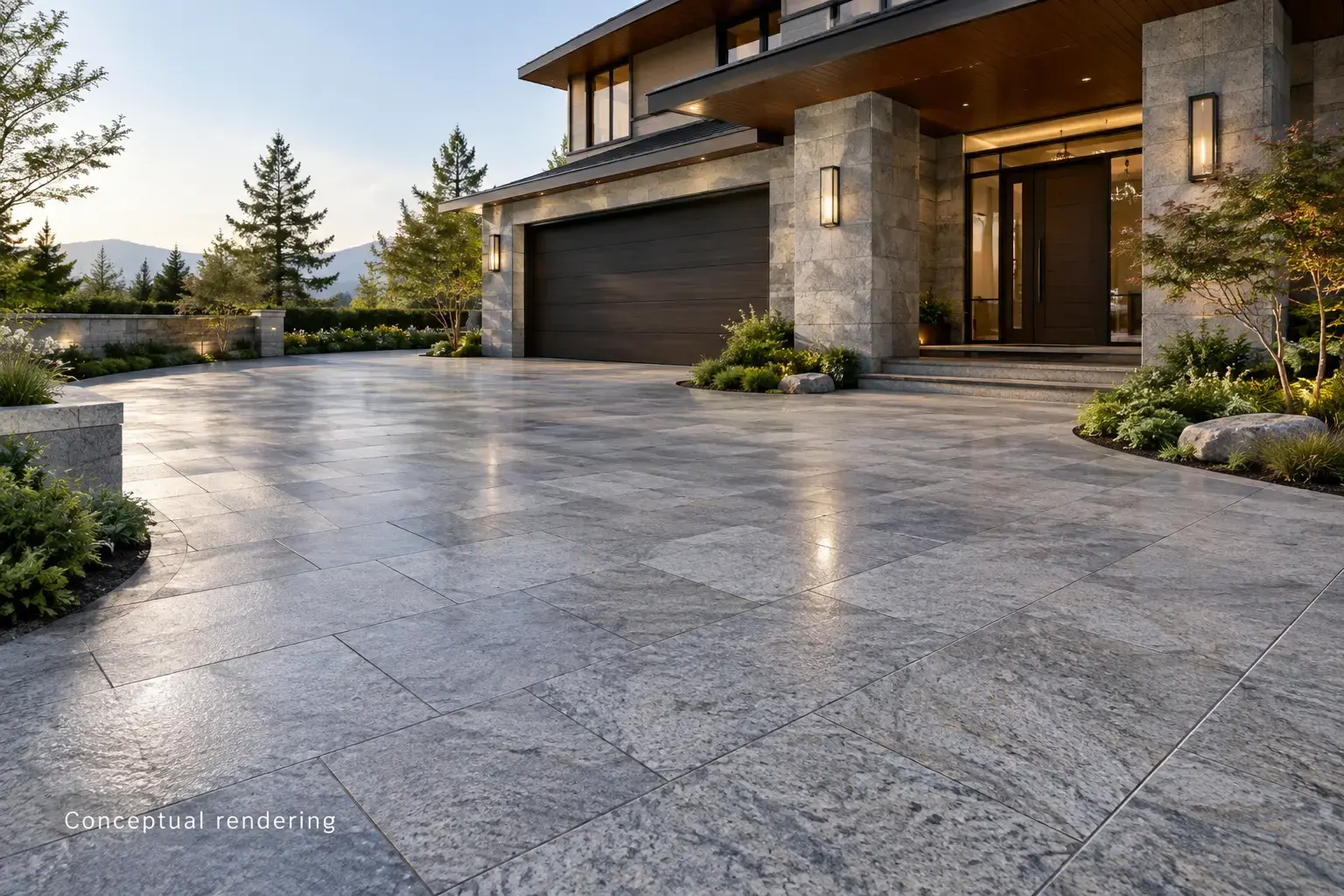
What Counts as Hardscape?
Hardscape covers more than the patio. It includes every built surface and structure in the yard, and each one adds to the total.
Common hardscape elements include:
- Patios made of pavers, natural stone, porcelain, or poured concrete
- Driveways and parking pads
- Walkways, stepping-stone paths, and steps
- Retaining walls, seat walls, and garden borders
- Pool decks and coping
- Fire pit areas and outdoor kitchen surrounds
- Gravel areas and decomposed granite paths
- Pergolas, decks, and other built structures
To judge whether a yard has too much hardscape, add these elements together. Many homeowners think only about the patio, but the driveway, side-yard paths, and pool deck often make up a large share of the total paved area. Counting everything gives you a more accurate picture of how much of the lot is hard surface and how much is still open ground. If you are still choosing materials for these areas, our pavers and exterior stone range includes options for patios, pool coping, and wall features.
Signs Your Yard Has Too Much Hardscape
A practical way to judge whether you have gone too far is to look at how the space behaves and how you use it. These are some of the common warning signs.
Water pools or runs off after rain. When most of a yard is hard surface, rainwater has fewer places to soak in. You may see puddles on patios, water sheeting toward the house, or soil washing out at the edges of paved areas.
The yard feels hot in summer. Stone, concrete, and pavers absorb heat during the day and release it in the late afternoon and evening. A yard with little shade and few plants can stay uncomfortable well after sunset.
Large areas sit empty. If part of your patio never gets furniture or foot traffic, that space is likely oversized. Paving an area you do not use adds cost and heat without adding value to daily life.
The space looks flat or stark. A long stretch of uninterrupted stone can make a yard feel more like a parking lot than a garden. Plants, trees, and soft edges give the eye somewhere to rest.
There is little room for shade trees. Mature trees need open soil for their roots. Those roots often spread well beyond the trunk, so paving over a tree’s root zone limits where new trees can grow and can stress existing ones.
One or two of these signs does not mean you need to pull up stone. It usually means the next change to the yard should add softscape rather than more paving.
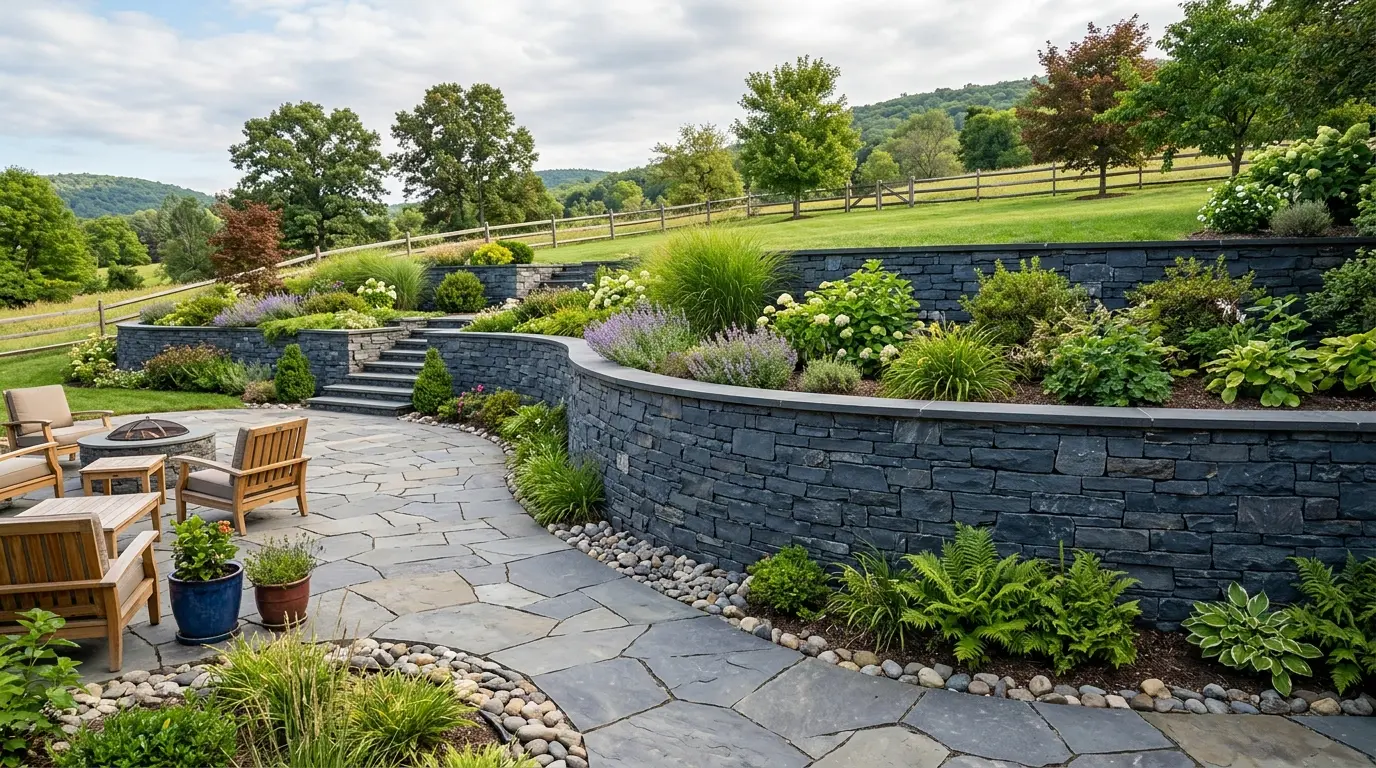
Lot Coverage Rules and Local Limits
Before you think about style, check the rules. Many cities and counties limit how much of a residential lot can be covered by buildings and impervious surfaces. These limits are usually written into zoning codes as lot coverage or impervious surface ratios.
What counts toward the limit varies. Some codes measure lot coverage by building footprints only and may set a separate impervious surface limit that covers driveways, patios, walkways, and pool decks. Others fold all of these into a single lot coverage number. Some treat gravel or permeable pavers as pervious, while others count them as impervious, the same as solid concrete. This means a project can fall within a lot coverage limit and still exceed an impervious surface limit. The allowed percentage also differs by town and by zoning district, so a number that applies on one street may not apply a few miles away.
Homeowners associations can add their own rules on top of city requirements. These may cover how much of the front yard can be paved, what materials are allowed, and whether a certain amount of planting must remain.
A few practical steps help you stay on the right side of these rules:
- Look up your property’s zoning district and read the lot coverage section of the local code.
- Ask the planning or building department which surfaces count as impervious.
- Check whether your project size triggers a permit or a drainage review.
- Review HOA guidelines before you finalize a layout.
Knowing your limit early keeps you from designing a patio that cannot be built as drawn. Landscape designers and contractors who sort out these details for clients can apply for a trade account to get trade pricing and job-site delivery.
Heat, Drainage, and Permeability
Even where local rules allow a lot of paving, the site itself often sets a practical ceiling. Heat and water are two of the biggest factors in how much hardscape a yard can comfortably hold.
Heat
Hard surfaces store heat. Dark materials generally absorb more sunlight and get hotter than light ones, and surfaces in full sun heat up more than shaded ones. A sunny patio next to a south- or west-facing wall can bounce sunlight and radiate stored heat toward the house, which can make nearby rooms warmer. Lighter surfaces stay cooler themselves, but they reflect more sunlight, which can add glare and warmth for people and walls nearby, so they work best when paired with shade.
In regions with hot, dry summers, this matters a great deal. Lighter-colored stone, shade from trees or a pergola, and planting beds between paved areas all help keep outdoor spaces usable on warm afternoons. If you are replacing lawn with hardscape, think about where the sun falls in July before deciding where stone should go. Comparing light and dark stone in person at one of our local showrooms can make these color differences easier to judge than photos alone.
Drainage
Every square foot of solid paving sends rainwater somewhere else. On a small lot, that runoff can collect against the foundation, flood low corners, or flow onto a neighbor’s property. Paved areas need to slope away from the house, and the water needs somewhere to go, such as a planting bed, a gravel strip, or a drain.
Permeable Options
Permeable surfaces let water pass through to the ground below. Gravel, decomposed granite, stepping stones set in planting, and permeable paver systems designed to drain through their joints all allow some infiltration. These options can help you keep a usable hard surface while reducing runoff. Some local codes treat them more favorably in coverage calculations, while others still count them as impervious, so confirm how your city classifies them. Each has trade-offs in comfort underfoot, maintenance, and how it handles furniture, so match the surface to how the area will be used.
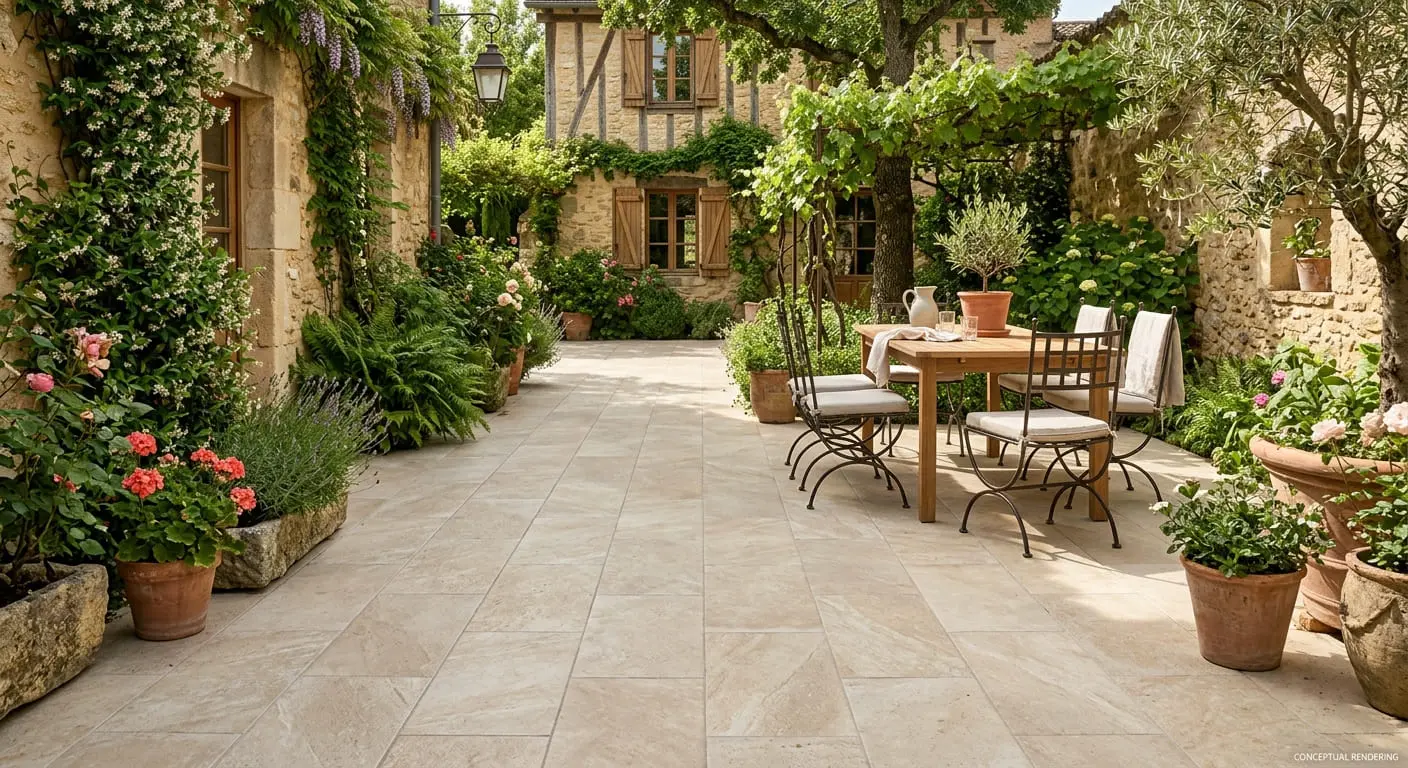
How to Find the Right Balance
The best way to size hardscape is to start with what you want to do outside, not with a target percentage. Paving should follow use.
List your activities first. Write down how you plan to use the yard: dining, lounging, grilling, kids’ play, gardening, a hot tub, or a place for the dog. Each activity needs a certain amount of space, and anything beyond that is optional.
Size each area to its furniture. A dining patio needs room for the table, chairs pulled out, and a path around them. A fire pit area needs space for seating in a circle. Measuring your actual furniture, or the furniture you plan to buy, keeps patios from growing larger than they need to be.
Keep paths only as wide as they need to be. Main walkways should be wide enough for two people or a wheelbarrow, while secondary paths can be narrower or made of stepping stones set in planting.
Protect space for trees and beds. Mark where shade trees, planting beds, and lawn will go before you lay out paving. It is easier to keep open ground than to remove stone later.
Think in rooms. Breaking hardscape into smaller connected areas, each with a purpose, feels more inviting than one large slab. Planting between these areas softens the edges and helps with drainage.
Plan for change. Children grow up, hobbies change, and you may want a garden someday. Leaving some unpaved space gives you room to adapt without tearing anything out.
If you would like a second opinion, you can book a free design consultation and we will talk through layouts and material options with you. Bringing a rough sketch of your yard with measurements makes that conversation more useful.
Material Choices That Soften Hardscape
The materials you choose can make the same amount of hardscape feel lighter or heavier.
- Natural stone with color variation reads as less uniform than solid concrete, which helps large areas feel more relaxed.
- Lighter tones reflect more sunlight and tend to stay cooler than dark surfaces in full sun, especially when combined with shade.
- Mixed sizes and patterns break up long, flat expanses and add visual interest without more square footage.
- Wider planted joints between flagstones or stepping stones let groundcover grow through the hardscape.
- Tumbled or textured finishes feel more organic than smooth, uniform surfaces.
- Gravel or decomposed granite for low-traffic zones gives a softer look and lets more water soak in than solid paving, though heavily compacted or stabilized mixes drain more slowly.
Repeating one or two materials across the yard also helps. A patio, path, and seat wall in related tones look like parts of one plan, while too many different materials can make a modest amount of hardscape feel crowded. If budget is a factor, our overstock sale lists close-out materials at reduced prices, though those sales are final.
Conclusion
There is no universal number that tells you when hardscaping is too much. The answer comes from your local lot-coverage rules, how water and heat behave on your site, and how you actually live outdoors. Size each paved area to a real use, keep space for trees and planting, and choose materials that work with your climate, and you are more likely to end up with a yard that feels comfortable and complete rather than overbuilt.
If you are weighing patio sizes, paver styles, or natural stone for an outdoor project, we invite you to visit one of our showrooms in Sacramento, Reno, Minden, or Fernley. Our team can walk you through our exterior stone and paver options and help you think through a layout that fits both your space and the way you plan to use it.
Note: Some images on this page may be conceptual renderings created to illustrate design possibilities and may not depict actual installations.
Frequently Asked Questions
There is no standard percentage that works for every home. The right amount depends on your local lot-coverage limits, your lot size, and how you use the space. A practical approach is to size each paved area to a specific activity and leave the rest for planting, trees, and open ground.
It can. Solid paving keeps rainwater from soaking into the soil, so the water runs off to other areas. Without proper slope and somewhere for runoff to go, it can pool on patios, collect near the foundation, or flow onto neighboring lots.
It depends on your local code. Some cities count only buildings toward lot coverage, though they may limit driveways, patios, walkways, and pool decks under a separate impervious surface rule. Others include all of these in one lot coverage figure. Check with your planning or building department to learn which surfaces count where you live.
You may be able to, but check local coverage rules and HOA guidelines first. A yard that is fully paved can get hot in summer and shed more runoff. Mixing in planting beds, trees, or permeable surfaces such as loose gravel helps manage heat and water.
Add planting between paved areas, include shade from trees or a pergola, and choose lighter or naturally varied stone. Breaking large areas into smaller outdoor rooms and using textured finishes also softens the overall look.