The latest hardscaping trends for 2026 focus on outdoor spaces divided into smaller, purposeful zones and built with warm, natural materials. Landscape professionals and design experts point to natural stone with honed or tumbled surfaces, stone-look porcelain pavers in larger formats, earthy color palettes replacing cool gray, and permeable paving that lets rainwater soak into the ground.
These shifts are driven as much by practicality as by style. Homeowners are prioritizing durable, low-maintenance surfaces that stay comfortable underfoot, handle water well, and age gracefully.
Hardscape refers to the non-living parts of a landscape, such as patios, walkways, driveways, retaining walls, steps, fire features, and outdoor kitchen surrounds. Because these elements often stay in place for decades, outdoor design tends to change more slowly than interior design. The sections below cover how outdoor spaces are being organized, the materials and finishes behind them, and how surfaces and features are coming together.
Zoned Outdoor Spaces That Extend the Home
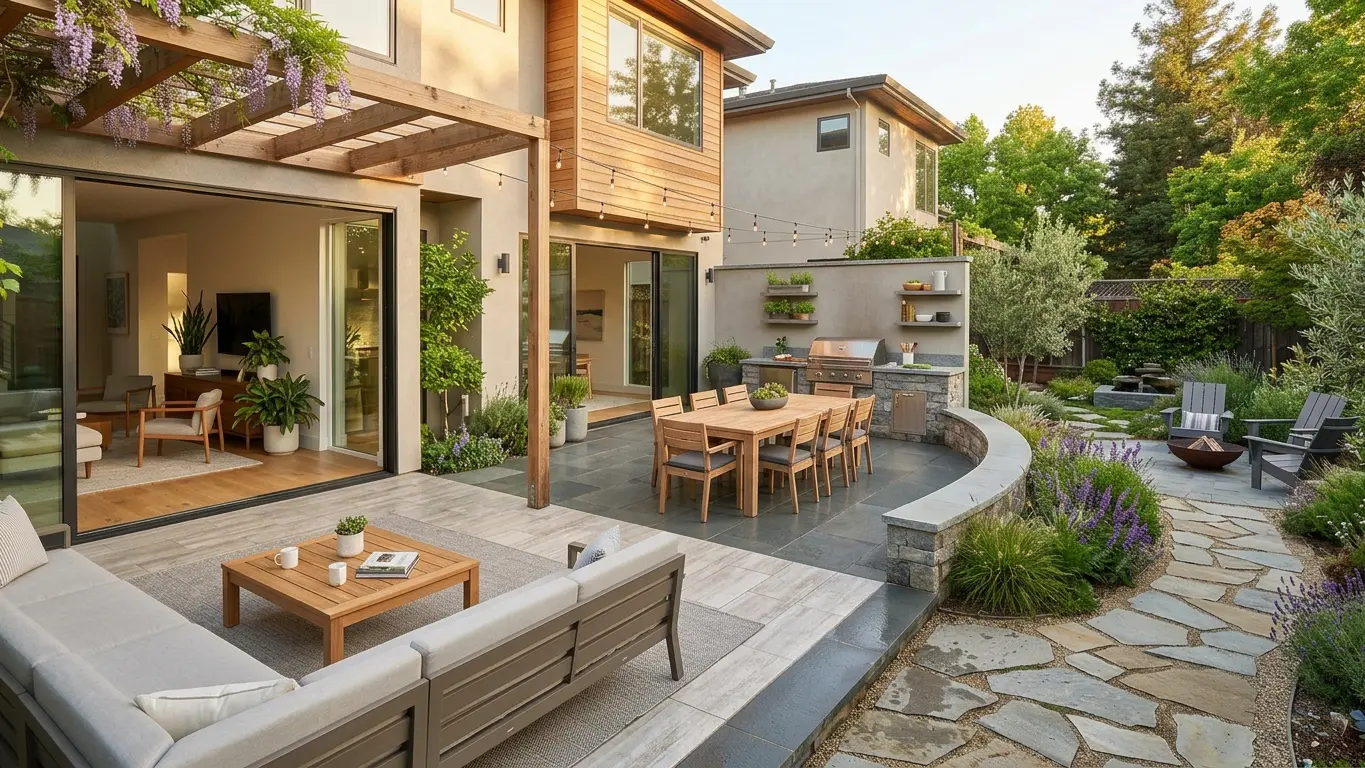
One of the clearest changes is a move away from a single, large expanse of pavement toward smaller spaces, each with a specific purpose. Lounge and seating areas, dining spaces, cooking stations, and quiet garden nooks are among the most common zones homeowners are creating, turning the yard into a series of connected outdoor rooms.
Materials do much of the work in defining these zones. A change in paving material, pattern, or color signals a change in function without the need for walls, as can a low seat wall or a single step down. The same idea is extending to front yards, where courtyards and seating areas are turning a pass-through into another livable space.
As outdoor zones become more like rooms, the line between inside and out is also blurring. Using a similar tone, texture, or format on both sides of a large sliding or folding door helps the two spaces read as one. Some porcelain collections are made in both an indoor tile and a matching outdoor paver for this purpose. Outdoor versions are usually more textured and slip-resistant, which matters on patios exposed to rain, sprinklers, or pool splash.
More Balance Between Paving and Planting
Defining zones doesn't always mean adding more pavement. Some designers now describe yards dominated by paving as feeling dated and uninviting. Planting pockets within patios, gravel joints with groundcovers, and planted borders along walkways help hard surfaces feel integrated rather than imposed, and the added shade can make outdoor spaces feel cooler in summer.
Authentic Natural Stone and Organic Materials
Once the layout takes shape, material choice determines how the space looks, feels, and performs over time. According to a 2026 roundup of landscape design trends, clients are asking for limestone, warm-toned pavers, stacked stone, gravel, and wood accents, with a growing preference for authenticity and character over uniform, manufactured looks.
Each stone behaves differently outdoors, largely because of its composition:
Siliceous stones, such as granite, quartzite, slate, and sandstone, are made up mostly of silica or quartz-like minerals. Most are acid-resistant, and granite and quartzite are generally considered resistant to UV exposure, so their color tends to hold up in full sun. Some exotic stones contain calcite veins that can make them acid-sensitive, so it's worth asking about a specific stone's composition.
Calcareous stones, such as marble, limestone, and travertine, are acid-sensitive and made up mostly of calcium carbonate. Lemon juice, vinegar, and some cleaners can leave dull "etch" marks, which is worth considering near outdoor kitchens and bars. Limestone and travertine remain popular for patios and pool surrounds, often in honed or tumbled finishes that make minor etching less noticeable.
Sealing helps reduce staining on porous stone by slowing liquid absorption, but sealers are stain inhibitors rather than acid barriers, so they do not prevent etching. Visiting one of our showrooms makes it easier to compare natural stone options and finishes suited to the project’s appearance, location, and maintenance needs.
Textured, Tumbled, and Aged Finishes
The finish on a stone matters as much as the stone itself. Highly polished, uniform surfaces are giving way to tumbled edges, brushed and honed surfaces, and stone with a softly aged look. Designers tracking 2026 patio flooring trends report growing interest in textured natural stone and finishes that add warmth and character, and one garden designer expects clay pavers to see wider use.
Texture has functional benefits as well. Tumbled and textured finishes generally provide better grip than polished ones, which matters around pools, on steps, and anywhere that gets wet.
Large-Format and Stone-Look Porcelain Pavers
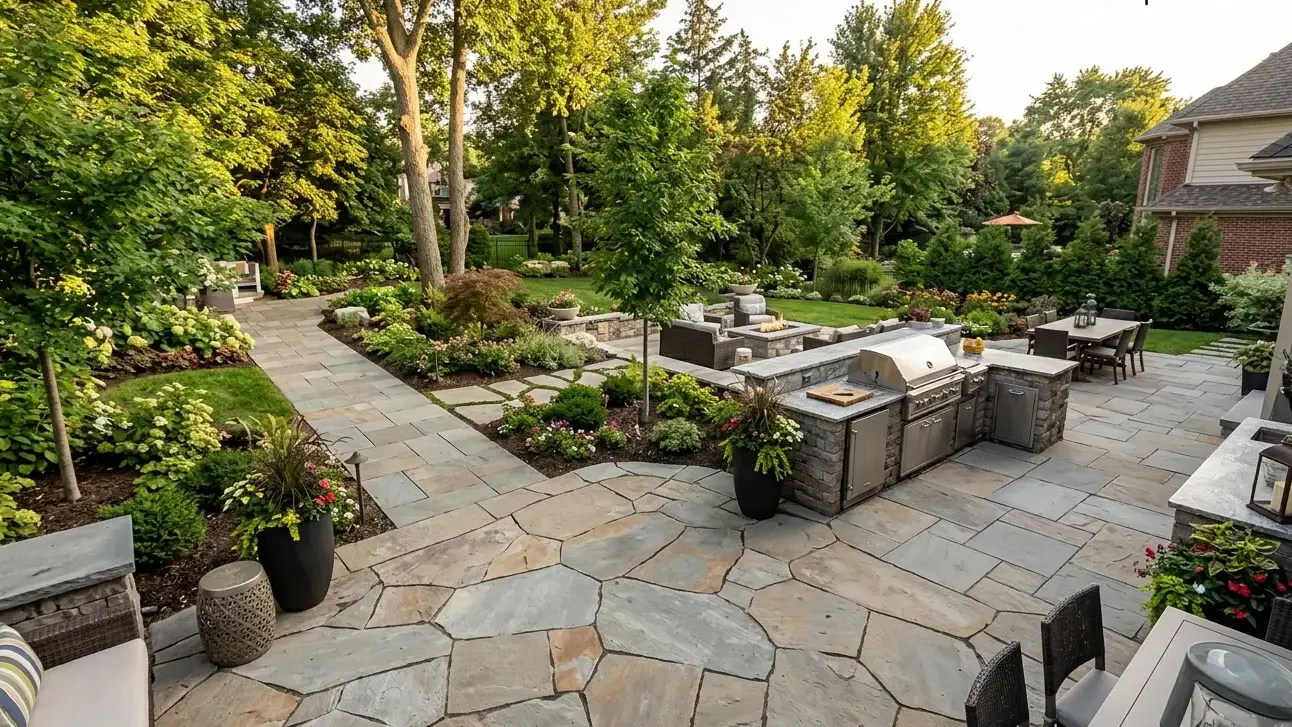
For homeowners who like the look of natural stone but want more consistency and less upkeep, porcelain pavers have become a popular alternative, especially in larger formats with fewer joints. Digital printing allows porcelain to closely resemble natural stone, wood, or concrete with consistent color from piece to piece.
Low water absorption is one reason porcelain performs well outside. According to the ANSI A137.1 standard, porcelain tile must have a water absorption rate of 0.5% or less when tested under ASTM C373, which helps it resist staining and moisture-related damage.
Outdoor porcelain pavers are typically 2cm (20mm) thick, about twice the thickness of standard porcelain tile. The added thickness increases breaking strength and allows them to be laid on gravel, sand, or raised pedestals as well as set in mortar. Indoor tile is not designed for those methods, so it's worth confirming that any porcelain intended for a patio is rated as an exterior paver. Many projects combine both materials, using natural stone where character matters most and porcelain in high-traffic areas.
Warm, Earthy Color Palettes
Whichever material is chosen, color is shifting too. Outdoor palettes are moving away from the cool gray and stark white of the past decade toward sandy beige, warm stone, putty, clay, and terracotta tones. Gray is not disappearing, but it is more often warmed with beige or brown undertones or used as an accent.
This mirrors what is happening on home exteriors. Design experts discussing nature-inspired exterior color choices describe a move toward sage, olive, warm stone, and terracotta tones that help a house sit comfortably within its landscape, and they suggest letting fixed elements such as the roof and existing stone guide the palette.
Color also affects comfort. Dark paving materials can absorb 80 to 95 percent of sunlight, making them hotter underfoot, so lighter and mid-tone surfaces are often a better fit for sunny patios and pool decks. Very bright white can create glare and show dirt quickly, which makes warm mid-tones a common middle ground.
Permeable Paving, Wider Joints, and Gravel
How surfaces handle water is changing as well. Rather than solid paving across an entire yard, more designs include surfaces that let water soak into the ground. Permeable pavement surfaces allow rain and snowmelt to pass through to the soil and gravel below, which can help reduce runoff and filter out pollutants.
At the residential scale, this often means pavers set with wider joints filled with gravel or low-growing plants, stepping stones set into gravel, or self-binding gravel paths. These approaches are especially useful near planting beds or in areas prone to puddling.
Permeable surfaces need regular care to keep draining well. Established maintenance guidance for permeable pavements recommends removing debris regularly and deep cleaning once or twice a year. For pavers with gravel-filled joints, vacuuming is effective, while pressure washing is not recommended, and spreading sand in winter should be avoided because it can clog the joints.
Decorative Paving Patterns
The way pavers are arranged is getting more attention too. Herringbone, chevron, basketweave, and irregular flagstone patterns add personality without introducing extra materials, and they can tie a space together by leading the eye from one outdoor room to the next.
Outdoor Kitchens and Fire Features
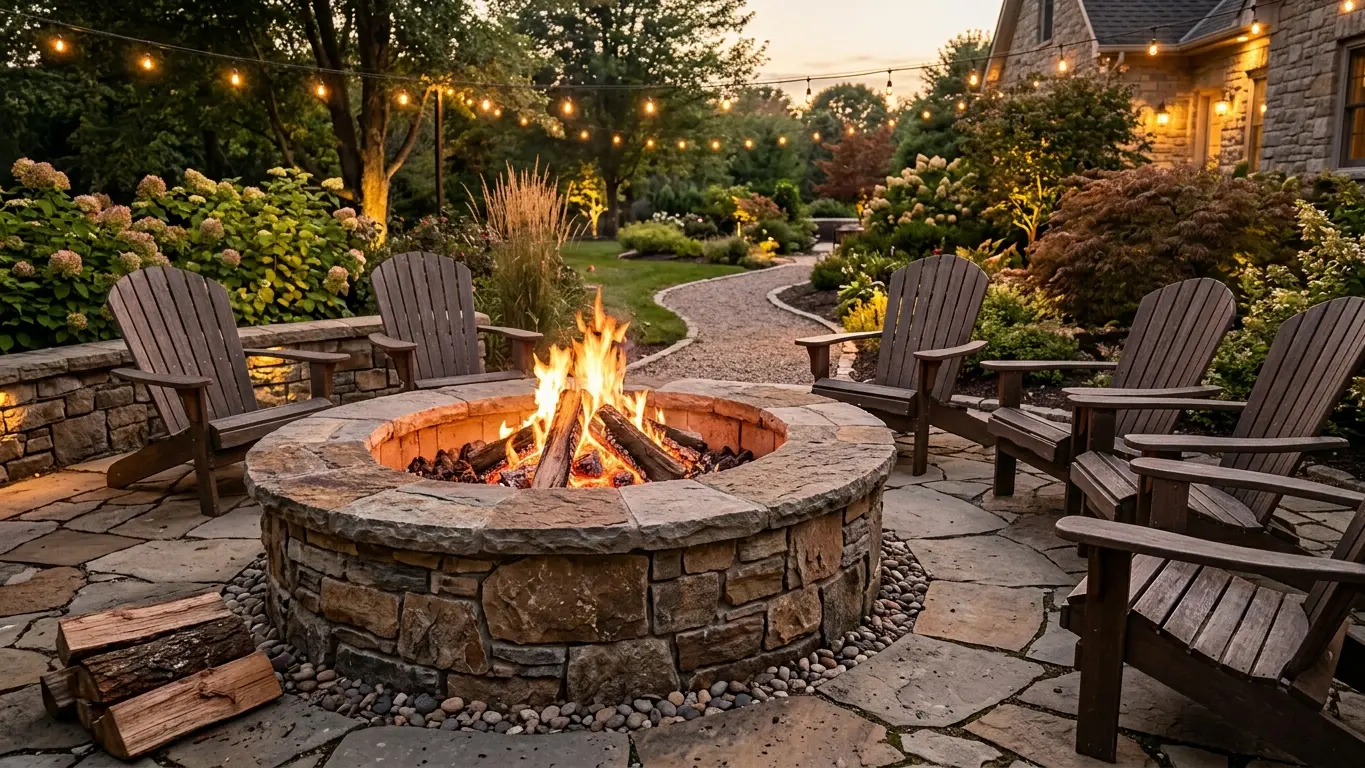
With the surfaces in place, attention turns to the features that make outdoor rooms usable. Outdoor kitchens continue to grow in scope, with homeowners adding pizza ovens, side burners, refrigeration, and storage. These kitchens rely heavily on hardscape materials, from stone or porcelain cladding to countertops and paving that can handle sun, spills, and grease. Non-porous or well-sealed surfaces near the grill tend to be easier to keep clean.
Fire features remain popular, though their form varies. Some designers favor communal fire pits, while others note interest in smaller fire bowls that leave more room for seating and planting. Natural stone surrounds are a common choice for a warmer, more crafted feel.
How to Apply These Ideas to Your Own Project
Trends are useful for inspiration, but the right choices depend on your home, climate, and how you plan to use the space:
Start with function. Decide which activities you want to support and size each zone before choosing materials. Laying out furniture with tape or rope helps, since zones that look generous on paper can feel cramped once furnished.
Map your site conditions. Note where the yard gets full sun, deep shade, standing water, and heavy foot traffic. These conditions narrow down which colors, finishes, and materials will work in each zone.
Look at what isn't changing. Your roof, siding, and existing stonework will influence which colors and textures look cohesive. See materials outdoors. Color and texture can look quite different in natural light, so view samples outside at different times of day.
Conclusion
Taken together, these trends point toward outdoor spaces that feel warmer, more personal, and more closely tied to the surrounding landscape. The common thread is intention: each zone, surface, and feature is chosen for how it will be used and how it will age, not just for how it looks on day one.
Nova Tile and Stone's four showrooms in Reno, Minden, Fernley, and Sacramento offer a place to compare natural stone and outdoor-rated porcelain side by side. Free design consultations are also available for anyone who would like help narrowing down options for a specific space.
Frequently Asked Questions
Not entirely. It is less often the dominant color now. Many designers favor warmer neutrals like sandy beige, warm stone, and terracotta, or use gray with warmer undertones as an accent.
Neither is better across the board. Natural stone offers one-of-a-kind variation and character but may need periodic sealing, while outdoor porcelain offers consistent color and very low water absorption with minimal upkeep. Many projects use both, with stone in feature areas and porcelain in high-traffic zones.
No. Sealing slows liquid absorption and helps reduce staining, but it does not stop acids from etching calcareous stones such as marble, limestone, and travertine.
Lighter and mid-tone surfaces generally stay cooler than dark ones, which absorb more sunlight and heat up faster. Very bright white can cause glare, so many homeowners choose warm mid-tones for patios and pool decks in full sun.
Debris should be removed regularly, with a deeper cleaning once or twice a year. Vacuuming works well for pavers with gravel-filled joints, while pressure washing can wash out the joint stone and is generally not recommended.
Note: Some images on this page may be conceptual renderings created to illustrate design possibilities and may not depict actual installations.