AT A GLANCE
- Light-colored stone stays cooler in direct sun than dark stone.
- Granite, true quartzite, and exterior porcelain pavers resist urine damage best.
- Travertine, limestone, and marble can etch from dog urine, and sealing does not prevent etching.
- Flamed, tumbled, and brushed finishes give the most reliable grip.
- Firmly set joints, such as polymeric sand, discourage digging.
- A rinse-friendly potty zone keeps urine away from patios and planting beds.
IN THIS POST
- What makes hardscape dog-friendly?
- Which patio stones stay cooler under paws?
- Does dog urine damage natural stone or pavers?
- Which stone finishes give dogs the best traction?
- Can dog claws scratch patio stone?
- How do dogs affect paver joints and gravel?
- How should you lay out paths and potty areas for dogs?
- Frequently Asked Questions
The best hardscape for dogs uses light-colored, textured stone that stays cooler in the sun, gives paws steady grip, and resists damage from urine and claws. Granite, true quartzite, and exterior porcelain pavers meet all three needs. Concrete pavers are a lower-cost option that absorbs more. Calcium-based stones like travertine, limestone, and marble can etch from dog urine.
Choosing patio and path stone for a dog-friendly yard comes down to four factors: surface temperature, traction, urine resistance, and how well the stone hides wear. In this guide, we explain how each factor affects common hardscape materials and finishes, and how to plan paths and potty areas around the way your dog uses the yard.
What makes hardscape dog-friendly?
No single material comes out ahead on all four factors, so the right choice depends on how your dog actually spends time outside.
Start by watching your yard for a few days. Notice where your dog runs along the fence, where it naps in the afternoon, where it digs, and where it goes to the bathroom. Those patterns tell you which areas need the most wear-resistant surface and which areas can stay softer.
A few questions help narrow things down:
- How big and active is your dog? A large dog that sprints and pivots puts more stress on paver joints and surface finishes than a small dog that strolls.
- How much sun does the area get? A west-facing patio with no shade calls for a different stone than a covered side yard.
- Is your dog still in training? Puppies and newly adopted dogs tend to have more accidents, which matters if you are considering acid-sensitive stone.
- Does your dog dig? Diggers need firm joints and solid edges around planting beds.
Which patio stones stay cooler under paws?
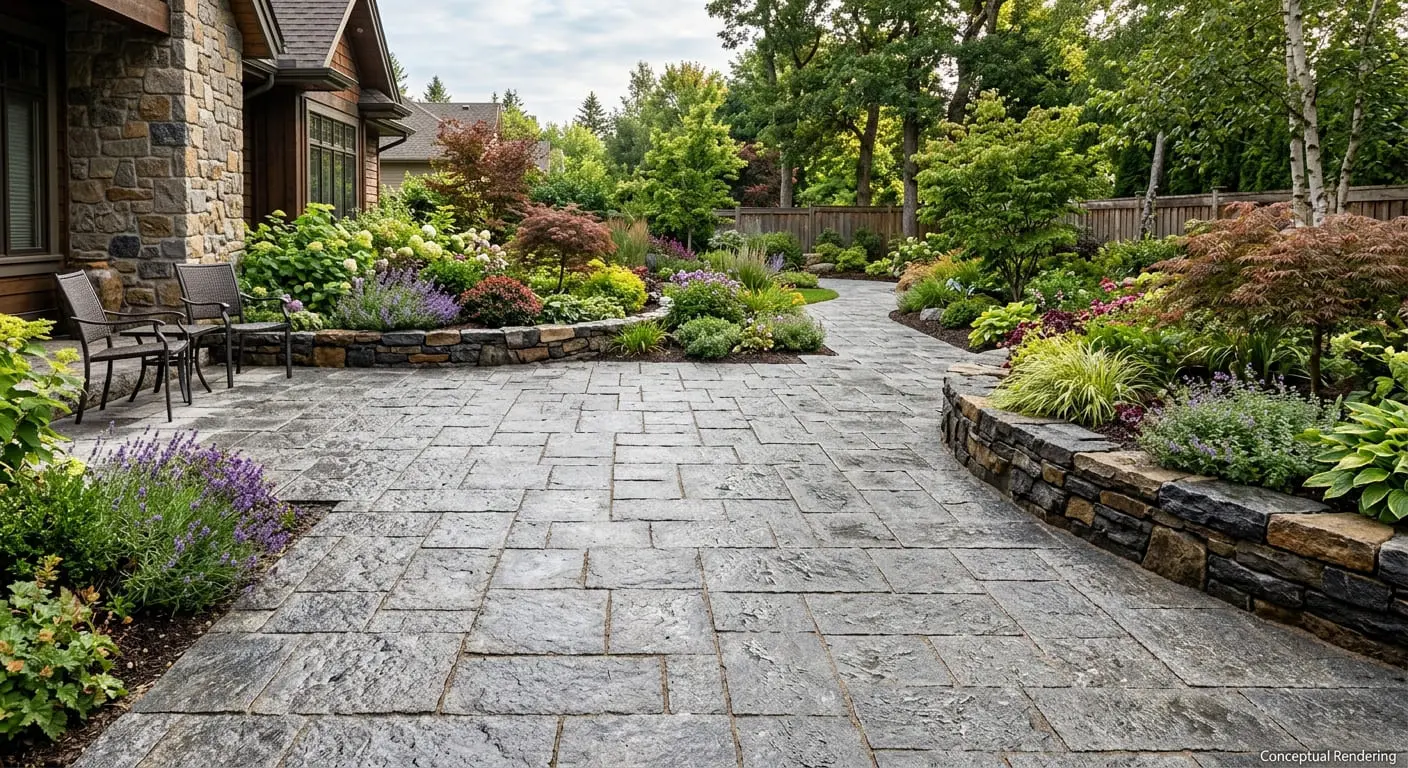
Light-colored stone and pavers generally stay cooler in direct sun than dark ones, because darker surfaces absorb more sunlight. Surface temperature matters because dogs walk barefoot, and paw pads can burn on hot surfaces.
Pet health sources warn that hard outdoor surfaces can get far hotter than the air. According to Chewy, the risk of paw pad burns becomes serious once pavement reaches about 125°F, which can happen in direct sun on a day that is only around 77°F. That figure refers to pavement in general, and dark asphalt is the worst case, but any hard surface in full sun deserves a check. Surfaces also tend to stay hot into the evening after the sun has been on them all afternoon.
For areas your dog uses in summer, consider:
- Light granite or quartzite pavers in cream, gray, or soft tan tones.
- Light porcelain pavers, which come in many pale colors and textures.
- Light concrete pavers, rather than charcoal or deep red blends.
Seeing a range of pavers and exterior stone side by side makes it easier to judge how light each color reads outdoors. Shade from a pergola, tree, or covered patio often does more to cool a surface than any stone choice. A small patch of grass or a shaded rest area gives your dog a cooler option when the stone heats up.
A simple check that pet health sources commonly recommend is the seven-second test. Press the back of your hand on the surface for seven seconds. If it is too hot for your hand, it is too hot for your dog’s paws.
Does dog urine damage natural stone or pavers?
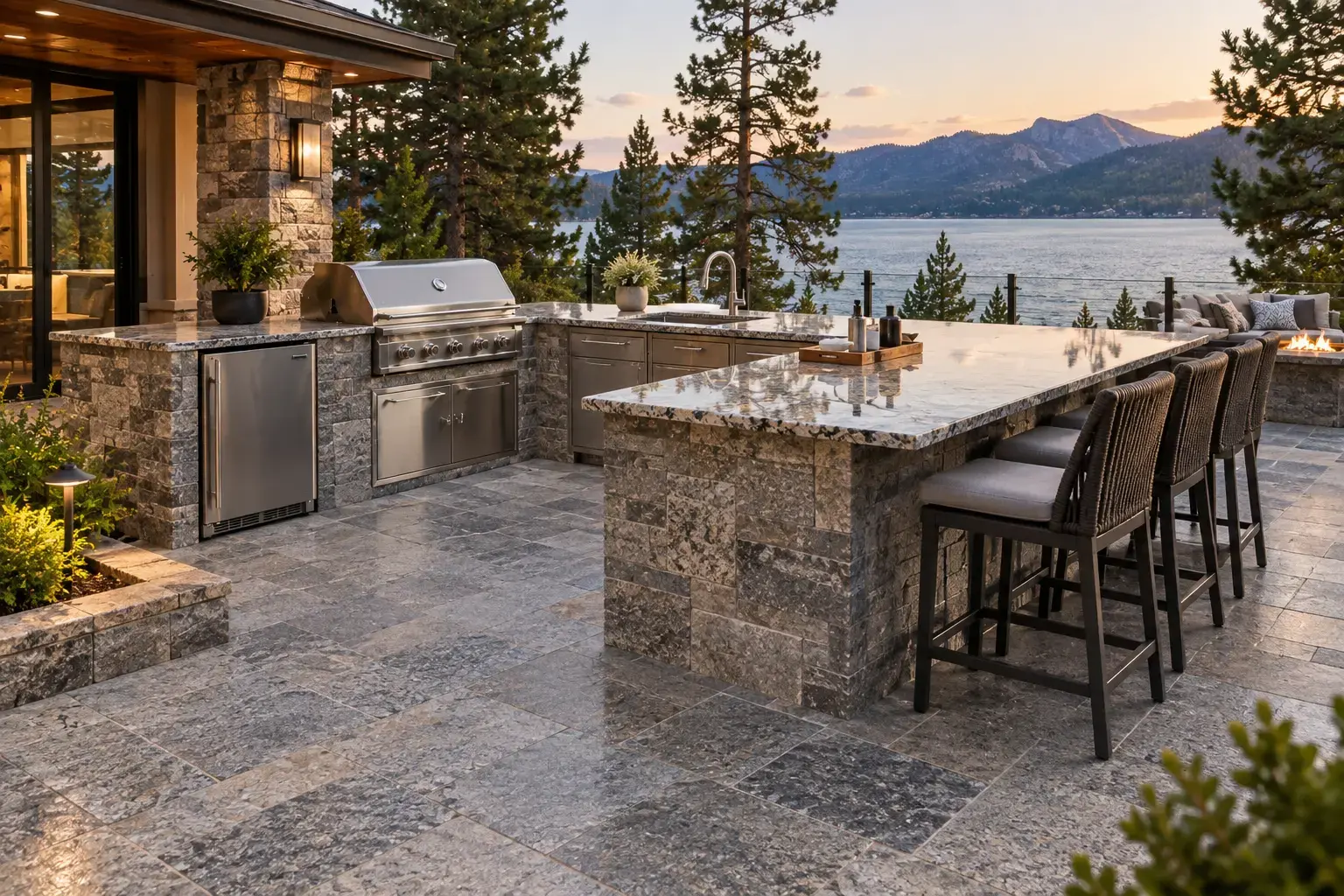
Dog urine can etch and stain calcium-based stones like marble, limestone, and travertine, and it can stain other porous stones if it sits. Granite, quartzite, and porcelain are generally more forgiving, while concrete pavers can absorb urine and discolor over time.
The reason comes down to chemistry. Stone care references explain that urine is typically mildly acidic when fresh and turns strongly alkaline as it dries. The acid reacts with the calcium carbonate in marble, limestone, and travertine, leaving dull, rough patches called etch marks. Urine that soaks into porous stone can also leave discoloration and odor behind.
Here is how common hardscape materials compare:
Material | Urine damage risk | Notes for dog owners |
| Porcelain pavers | Very low | Dense surface absorbs very little; rinses clean easily |
| Granite | Low | Generally acid-resistant, but can stain if urine soaks in |
| Quartzite (true) | Low | Dense and acid-resistant; confirm it is a true quartzite |
| Concrete pavers | Moderate | Cement-based and porous; can absorb urine, discolor, and hold odor |
| Travertine | High | Soft, calcium-rich, and porous; etches easily |
| Limestone | High | Calcium-based; prone to etching and staining |
| Marble | High | Calcium-based and acid-sensitive; etches readily |
If you love the look of travertine or limestone, you do not have to rule it out. Keep it to areas your dog rarely uses as a bathroom, such as a front entry or a seating area, and choose a different surface for the potty zone. Rinsing outdoor stone with water regularly helps with staining and odor. Sealing can limit staining, but it does not prevent etching on calcium-based stone.
Which stone finishes give dogs the best traction?
Textured finishes like flamed, tumbled, and brushed give dogs the most reliable grip outdoors. Smooth or polished surfaces can become slick when wet. That raises the risk of slips during sudden bursts of running, especially for older dogs or breeds prone to joint problems.
How each finish behaves around dogs:
- Flamed: Heat treatment leaves a rough, slightly uneven surface. It offers strong grip and is most common on granite.
- Tumbled: Softened edges and a worn texture give good footing and a relaxed look on paths and patios. This finish is common on travertine and marble pavers, so keep those away from the potty zone.
- Brushed: A softly textured surface that still offers grip.
- Honed: Smooth and matte. It has less grip than textured finishes when wet, so it suits dry or covered areas.
- Polished: Too slick for wet outdoor areas, so it is generally an indoor finish.
With porcelain pavers, choose products made for exterior use and check the slip-resistance rating on the product’s spec sheet.
Think about where your dog accelerates and turns. Corners of paths, steps, and the area around a pool or water feature see the most sudden movement, so those spots benefit most from a textured finish. Finishes are easier to judge in person, so it helps to visit one of our showrooms and compare flamed, tumbled, and honed surfaces up close.
Can dog claws scratch patio stone?
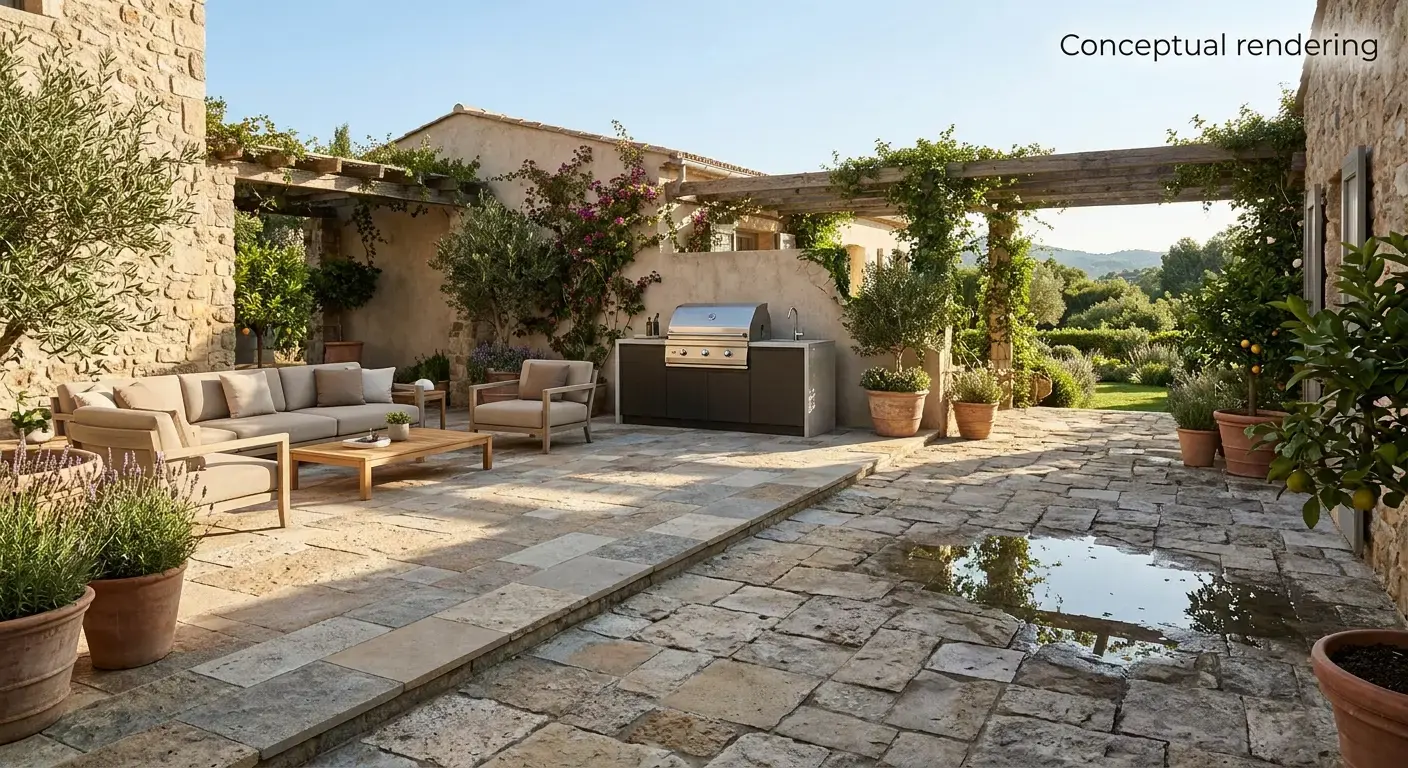
Dog claws rarely damage hard stones like granite, quartzite, or porcelain. They can leave light marks on softer stones like limestone and travertine, and on smooth surfaces or topical coatings where scratches catch the light.
Granite and quartzite are among the harder natural stones used outdoors, so everyday claw contact typically leaves no visible trace. Softer, calcium-based stones scratch more easily, though textured outdoor finishes tend to hide minor marks because the surface is already varied.
A few choices make wear less noticeable:
- Pick a textured finish. Tumbled and flamed surfaces hide scuffs better than honed or smooth surfaces.
- Choose stone with natural variation. Speckled granite, veined quartzite, or multi-tone pavers hide marks better than solid, uniform colors.
- Consider pattern. A blend of colors or a busier laying pattern draws the eye away from small imperfections.
Regular nail trims help too, both for your stone and for your dog’s comfort. If a high-traffic run along the fence line is wearing down, that is usually a sign the area needs a harder material or a wider path, not just more care.
How do dogs affect paver joints and gravel?
Dogs that dig often go after loose joint sand, gravel, and soft edges first, so tight joints and firm borders make a big difference. Loose fill also tends to get kicked out of place along the routes dogs run every day.
For paver patios and paths, ask your installer about joint options that set firmly, such as polymeric sand, rather than loose sand that is easy to scratch out. Narrow joints between large-format pavers or stone slabs leave less material exposed in the first place. Contractors and landscape designers planning dog-friendly yards for clients can apply for a trade account for trade pricing and job-site delivery.
Gravel and decomposed granite deserve a second look in dog areas. They are affordable and drain well, but they have a few drawbacks:
- Small stones can lodge between paw pads.
- Some dogs chew or swallow pebbles.
- Loose material scatters along fence runs and gets tracked indoors.
- Gravel in full sun can get hot.
If you want the look of gravel, consider larger, smoother stones or stepping stones set into it, so your dog has a solid surface along its main routes. If budget is a factor, our overstock sale is one place to compare discounted materials.
Edges matter as much as joints. A defined stone or paver border around planting beds helps keep mulch and soil in place and gives diggers a clear boundary. Some owners also set aside a designated digging spot with loose soil or sand, which can redirect the habit away from patios.
How should you lay out paths and potty areas for dogs?
The most practical layout does three things. It follows the routes your dog already uses, puts a hard surface where the grass keeps wearing out, and sets aside one easy-to-rinse spot for bathroom breaks.
Dogs tend to wear the same track along a fence line or between the back door and a favorite corner. Instead of reseeding that strip every season, turn it into a stone or paver path. A path about two to three feet wide gives most dogs room to move without stepping off onto plants.
A dedicated potty area keeps urine away from your main patio and planting beds. A few layout tips:
- Pick a spot close to the door so it is easy to reach in bad weather, but not right next to seating areas.
- Use a forgiving surface, such as porcelain pavers or granite, that you can rinse with a hose.
- Plan for drainage so rinse water runs away from the house and patio instead of pooling.
- Avoid acid-sensitive stone like travertine and limestone in this zone.
Add comfort features where your dog spends downtime. A shaded spot near the patio, a water bowl station on a stone pad, and a clear line of sight to the back door all make the space easier to share. If you have a pool, a textured, light-colored deck surface helps with both heat and footing. If you would like help matching materials to each zone, you can book a free design consultation and bring rough measurements of your yard.
Conclusion
Planning hardscape with dogs in mind comes down to a few practical choices. Lighter colors and shade keep surfaces more comfortable in summer, and textured finishes give steady footing. Dense materials like granite, quartzite, and porcelain pavers handle accidents and claws with less upkeep. Softer, calcium-based stones such as travertine and limestone can still have a place in your yard, as long as they sit away from the spots your dog uses most.
The best results usually come from watching how your dog moves through the yard first, then matching each area to the surface that suits it. A path along the fence, a rinse-friendly potty corner, and a shaded place to rest can make your outdoor space easier to enjoy for everyone.
If you would like to see exterior stone and paver options in person, our team is happy to help you compare colors, finishes, and textures at any of our showrooms in Sacramento, Reno, Minden, and Fernley.
Note: Some images on this page may be conceptual renderings created to illustrate design possibilities and may not depict actual installations.
Frequently Asked Questions
Light-colored granite, quartzite, and porcelain pavers with a textured finish are among the easiest patio materials for dog owners. They resist urine etching better than calcium-based stones, give good traction, and stay cooler in the sun than dark surfaces.
Travertine is fine for dogs to walk on, but it is calcium-based and porous, so urine can etch and stain it. It works best in areas your dog does not use as a bathroom. Sealing helps limit staining but will not prevent etching, so rinse accidents promptly.
They can. Any hard surface in direct sun can get much hotter than the air, especially dark colors. Choosing lighter pavers, adding shade, and checking the surface with the back of your hand for seven seconds before letting your dog out helps prevent paw discomfort.
Firmly set joint material, such as polymeric sand, is harder for dogs to scratch out than loose sand. Narrower joints, solid edging around beds, and a separate designated digging spot can also help redirect the behavior.
A dense, easy-to-rinse surface such as porcelain pavers or granite works well. Concrete pavers can work if they are sealed and rinsed often, but they absorb more than porcelain or granite. Plan for drainage so rinse water flows away from the house, and avoid acid-sensitive stones like travertine, limestone, and marble in that zone.
SOURCES
- Chewy, “How Hot Is Pavement for Dogs? 9 Surfaces That Can Burn Your Pup’s Paws,” reviewed by Hannah Hart, DVM: https://www.chewy.com/education/dog/general/how-hot-is-pavement-for-dogs
- Frederick M. Hueston, “Removing Urine Stains and Odors from Stone Surfaces,” Stone and Tile Restoration: The Manual: https://sr-manual.com/?p=9151
- Granite Gold, “What Are the Best & Worst Types of Stone Floors for Pets?”: https://granitegold.com/blogs/blog/best-and-worst-stone-floors-for-pets