The top hardscape trends for 2026 are warm earth-tone palettes, mixed-material layouts, and textured natural stone. Sand, taupe, mocha, clay, and tan-tinted warm white are replacing cool gray on patios and walkways. Mixed layouts pair two or more materials, such as large-format pavers with a cobblestone or tumbled-stone border. Tumbled travertine, limestone, and cobblestone bring Mediterranean texture to patios, paths, and garden walls.
Four supporting trends round out the year. Stone-look porcelain pavers, commonly 20 mm thick with water absorption of 0.5 percent or less under ANSI A137.1, offer a natural stone look without the sealing porous stone needs. Permeable pavers and gravel joints let rainwater drain into the ground instead of running off. Dedicated hardscape pads support saunas, cold plunges, and outdoor yoga. Planting beds and groundcover now share space with stone rather than being replaced by it.
Below, we cover each trend, where it works, and what to check before choosing materials for a patio, walkway, pool deck, or courtyard.
Warm Earth Tones Replace Cool Gray
A major color shift in 2026 hardscape is the move from cool gray to warm neutrals. Industry design reports this year describe patio palettes built on mocha, sandy beige, soft taupe, and clay. White is still in use, but the version gaining ground is a warm white with a slight tan cast rather than a bright, blue-leaning white.
Natural stone already covers much of this range. Travertine runs from ivory to walnut. Many limestones sit in cream and buff ranges. Sandstone and some quartzites carry gold, rust, and tan movement across each piece. Gray stones with brown or beige mineral flecks can also bridge cool and warm palettes.
Like any outdoor material, warm-toned stone can look different in direct sun than in shade, so it helps to see a color in both conditions before deciding.
A few points to weigh before committing to a warm palette:
- Surface temperature. Lighter colors generally absorb less heat in direct sun than darker ones, which matters around pools and seating areas in hot summer climates.
- Existing exterior colors. Warm stone coordinates with cream stucco, natural brick, and wood siding. Against cool blue-gray siding, a warm patio can read as a mismatch unless a transitional material bridges the two.
- Shade variation. Natural stone varies from piece to piece. Viewing several pieces together at one of our local showrooms gives a more accurate picture than a single piece.
Mixing Stone, Pavers, and Edging in One Layout
Single-material patios are giving way to layouts that combine two or more materials. The goal is contrast in color, texture, or scale, so different zones of a yard read as distinct spaces without walls or fences.
Combinations that fit this approach include:
- Large-format pavers in the main seating area with a cobblestone or tumbled-stone border
- Smooth porcelain pavers on a dining patio that transition to flagstone on a garden path
- A band of darker stone running through a lighter field to mark a walkway or entry
- Two coordinating tones laid in a checkerboard, used mostly in courtyards and smaller patios
Mixing materials works best when the pieces share at least one trait. Two stones in the same color family can differ in finish, such as a honed field with a tumbled border. Two stones in different colors can share a finish, so the layout still feels connected.
Thickness is another planning detail. Natural stone, porcelain, and concrete pavers come in different thicknesses, and combining them on one surface can mean adjusting the base so finished heights meet. Raising this with a contractor early helps avoid uneven transitions.
A mixed layout can also help with budget planning. A smaller quantity of a higher-cost stone used as a border or inlay can define a space while a more economical material covers the larger area. Browsing overstock and close-out materials is another way to stretch a hardscape budget.
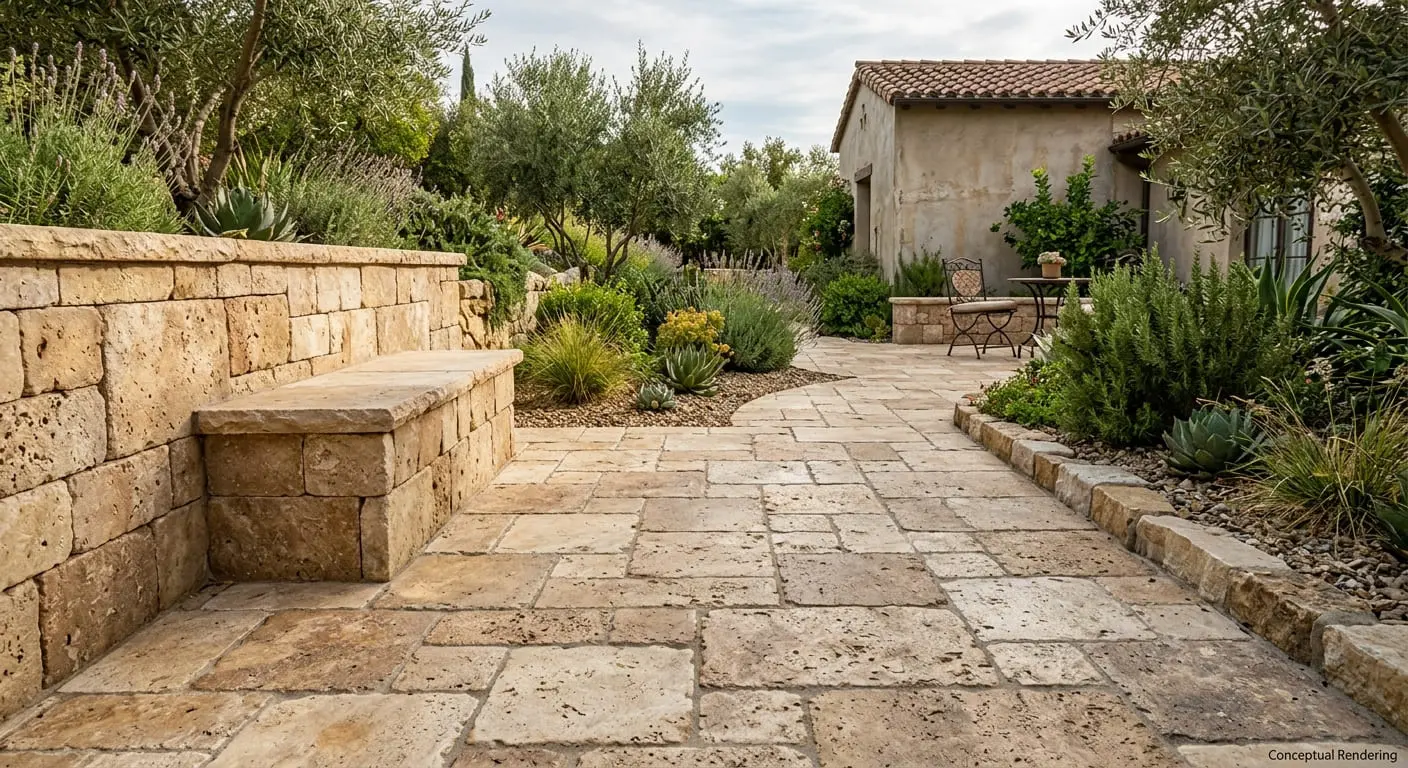
Tumbled Finishes and Mediterranean-Inspired Stone
Texture is a defining feature of 2026 hardscape. Homeowners are choosing stone with softened edges, worn surfaces, and visible variation instead of the crisp, uniform look common in many modern patios.
Much of this direction draws on Mediterranean courtyards and villas. Key elements include:
- Tumbled travertine and limestone. Tumbling softens the edges and surface, giving new stone a worn, aged look.
- Cobblestone paths and borders. Small-format cobbles add texture and rhythm, especially along edges and steps.
- Stone garden walls. Low walls in warm stone frame seating areas and planting beds.
- Curved layouts. Rounded patios, winding paths, and circular fire pit areas soften the straight lines of the house.
Finish choice affects more than appearance. A tumbled or textured face generally offers more grip underfoot than a polished face, which is one reason polished finishes are rarely used on outdoor floors. Textured surfaces can also hide dust, pollen, and minor wear between cleanings.
Climate matters with porous stones. Travertine and some limestones absorb more water than granite or porcelain, and absorbed water that freezes can damage the surface over time. In areas with freezing winters, it is worth confirming that a material is suited to exterior freeze-thaw exposure. Porcelain and other ceramic pavers are tested under ASTM C1026, and concrete interlocking pavers under ASTM C1645. For natural stone, water absorption data and the supplier's guidance on exterior use are the main reference points.
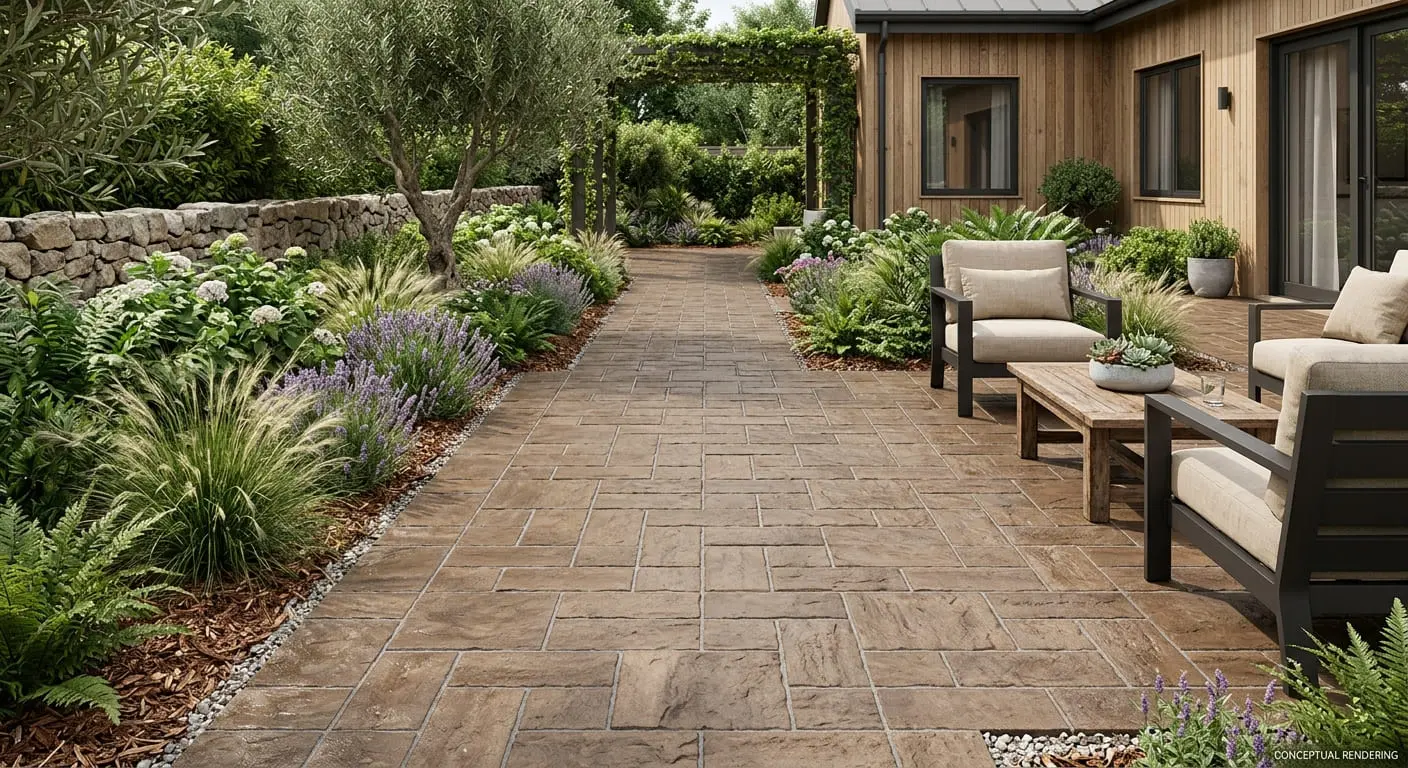
Stone-Look Porcelain Pavers Gain Ground
Porcelain pavers that replicate natural stone are a growing hardscape category. Printing technology has advanced to the point where current stone-look porcelain can be hard to tell apart from natural stone at a glance, including travertine, limestone, and slate looks.
The appeal comes down to material properties. ANSI A137.1 defines porcelain tile as having water absorption of 0.5 percent or less, measured by ASTM C373. That low absorption means porcelain pavers do not need sealing the way porous natural stones do, and the surface resists absorbing common outdoor stains.
Outdoor porcelain pavers are typically thicker than indoor floor tile, commonly 20 mm (about 3/4 inch). Depending on the product, they may be set in mortar, over gravel, or on pedestals. Specifications vary, so the manufacturer's data sheet is the place to confirm thickness, slip resistance, and approved setting methods. A free design consultation lets you compare porcelain and natural stone pavers side by side.
Each material has trade-offs:
- Natural stone shows color and pattern variation, since each piece is cut from quarried stone, and it can be honed or refinished over time.
- Porcelain offers a more consistent look across a large area and low absorption, though on glazed products the printed stone look sits on the surface rather than running through the body.
Some designs combine the two: porcelain for high-use dining and lounging areas, natural stone for borders, walls, and accents.
Permeable Surfaces and Rainwater Planning
Drainage has moved from a background detail to a visible part of hardscape design. Permeable pavers, gravel areas, and rain gardens are drawing more interest as homeowners and municipalities look for ways to reduce runoff.
Permeable paving lets water pass through the surface rather than sheeting off it, usually through joints filled with small aggregate that let water drain into the base below. Some municipalities have stormwater rules that favor permeable surfaces for new or expanded paved areas, so local requirements are worth checking before a project begins.
Permeable design also shows up in simpler forms:
- Flagstone or stepping stones set with gravel or low groundcover between them
- Decomposed granite or gravel zones framed by a stone border
- Wider joint spacing on patios to soften the look and let water reach the soil
These approaches fit the naturalistic direction of 2026 design, where hardscape provides structure and planting fills the gaps. A permeable system depends on correct base preparation, so site drainage is best discussed with a hardscape contractor before ordering stone. Contractors and designers sourcing materials for these projects can apply for a trade account for trade pricing and job-site delivery.
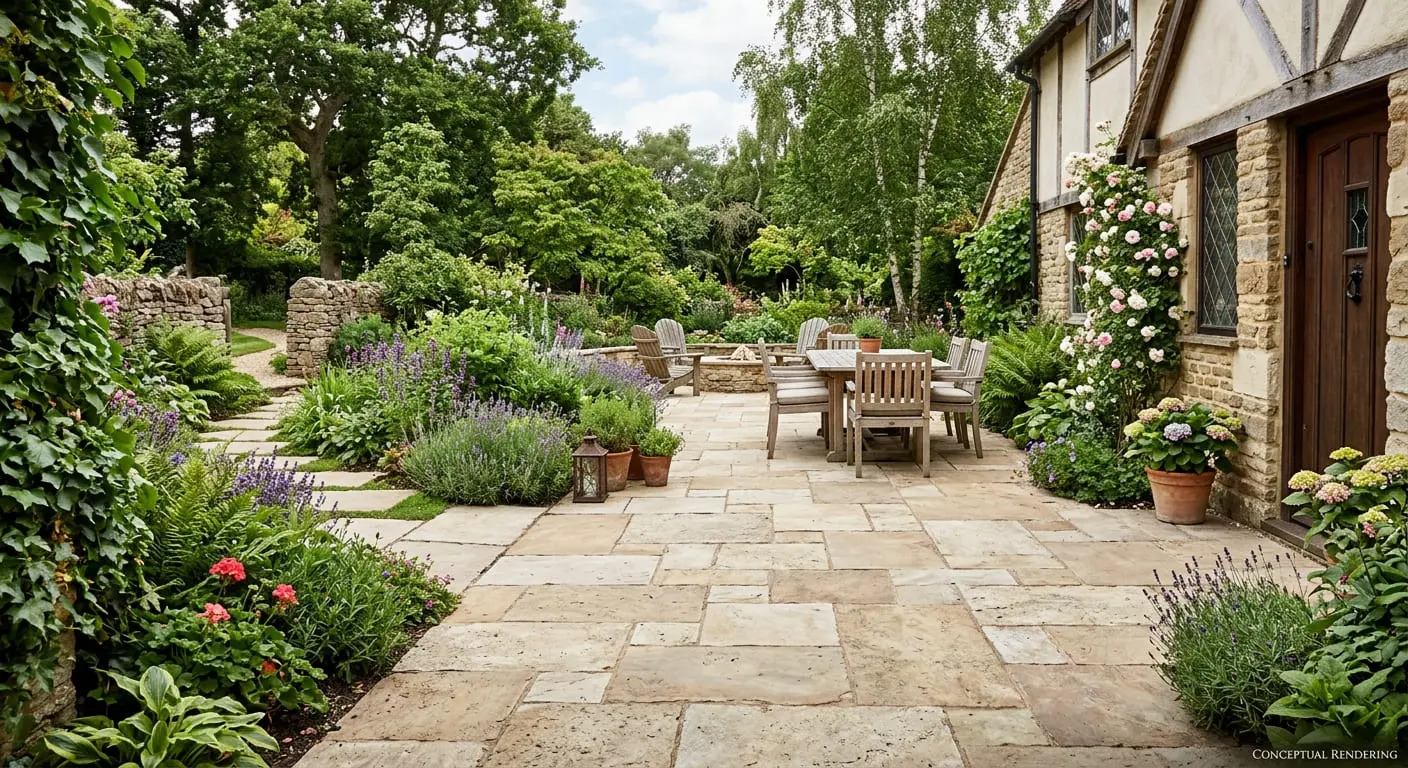
Outdoor Living Rooms, Wellness Spaces, and Planted Edges
Homeowners in 2026 are planning outdoor areas the way they plan interior rooms. Instead of one large patio, yards are divided into zones for dining, lounging, cooking, and gathering around a fire feature.
Hardscape defines those zones. A change in the size, pattern, or color of pavers and exterior stone can mark where the dining area ends and the lounge begins. A low stone wall can double as extra seating. Some designs also carry indoor flooring tones onto the patio, so the move from living room to outdoor room feels continuous.
Wellness spaces are a newer addition. Design reports this year describe requests for dedicated hardscape pads for saunas, cold plunges, and outdoor yoga. These areas call for:
- A level, stable surface sized to the equipment or activity
- A textured finish that offers grip when wet
- Materials that tolerate frequent water exposure
Fire features are changing too, with 2026 fire pit areas leaning toward simpler forms.
Planting is the other half of the picture. Yards that are mostly hardscape are falling out of favor, and design coverage this year points to rising interest in small patio gardens and cottage-style patios. Stone gives a naturalistic yard structure and usable surfaces, while beds and groundcover soften edges and break up large expanses of paving.
Applying 2026 Trends Without Dating Your Yard
Hardscape stays in place far longer than outdoor furniture and cushions, so it helps to separate foundational choices from trend-driven ones.
- Keep the largest surfaces neutral. Main patio and walkway fields in warm neutrals adapt to changing furniture, cushions, and planting.
- Put the trend in smaller elements. Borders, inlays, accent walls, and fire pit surrounds can carry bolder colors or patterns and are easier to change later.
- Match materials to climate. Northern California summers bring high surface temperatures, while Northern Nevada winters bring repeated freezing and thawing. Freeze-thaw performance, water absorption, and surface color all affect how a material performs in each setting.
- Start with the house. Roof, trim, and siding colors set the starting point. Hardscape that shares an undertone with the house keeps the exterior palette consistent.
- Look at materials in natural light. Showroom lighting differs from direct sun and shade, so check how a color reads outdoors before deciding.
Finding Hardscape Materials for Your 2026 Project
Hardscape in 2026 is warmer, more textured, and more varied. Warm neutrals are replacing gray, mixed materials are breaking up large surfaces, and tumbled natural stone is bringing Mediterranean character to patios and paths. Stone-look porcelain, permeable layouts, and planted edges give homeowners more ways to balance appearance, upkeep, and drainage.
We carry outdoor materials in a range of colors, finishes, and formats, and our team can walk you through how each option fits your home and climate. Bring photos of your house, your yard, and any existing stone or brick so we can compare options side by side. Visit our showrooms in Sacramento, Reno, Minden, and Fernley to see these products in person and start planning your outdoor space.
Note: Some images on this page may be conceptual renderings created to illustrate design possibilities and may not depict actual installations.
Frequently Asked Questions
Major hardscape trends for 2026 are warm earth-tone palettes, mixed-material layouts, and textured natural stone such as tumbled travertine and limestone. Stone-look porcelain pavers, permeable surfaces, wellness spaces, and planting integrated with stone are also gaining interest.
Cool gray pavers are being replaced in many new designs by warmer neutrals such as sand, taupe, mocha, and clay. Gray can still suit cool-toned exteriors, and gray stones with brown or beige flecks can bridge the two palettes.
Popular patio colors in 2026 include sandy beige, soft taupe, mocha brown, clay, and warm white with a tan undertone. These colors pair well with natural stone, brick, and wood.
Natural stone shows color and pattern variation and can be honed or refinished, but porous types may need sealing. Porcelain pavers have water absorption of 0.5 percent or less and a more consistent look. Some designs combine both, using each where its properties fit best.
Keep the largest surfaces, such as the main patio and walkways, in neutral tones. Use trend-driven colors, patterns, and textures in smaller elements like borders, inlays, and accent walls, which are easier to update later.