To stay on budget with hardscape materials, spend more on high-traffic, high-visibility areas like the main patio, front entry, pool deck, and driveway, and save on low-traffic areas like side yards, utility paths, and garden borders. Gravel and decomposed granite are the lowest-cost hardscape materials, concrete pavers are the most economical type of paver, and porcelain pavers and natural stone such as travertine, flagstone, bluestone, and quartzite typically cost more.
Hardscape materials are the hard, non-living surfaces in an outdoor space, including pavers, natural stone, and gravel. Material type has the biggest effect on what they cost, and thickness, size, finish, and layout waste also play a role. Most budget-friendly yards combine a higher-grade material in focal areas with a lower-cost material in secondary spaces, which keeps the design cohesive while controlling cost.
Below, we cover what drives hardscape material costs, where spending more pays off, where you can save, and how common materials compare.
What Affects the Cost of Hardscape Materials?
Five factors shape what you pay for hardscape materials: the type of material, its thickness, its size, its finish, and how much extra you need to cover cuts and waste. Understanding each one makes it easier to compare products on equal terms.
Material type. This is the biggest factor. Gravel and decomposed granite sit at the low end. Concrete pavers usually fall in the low to moderate range. Porcelain pavers and natural stone such as travertine, flagstone, bluestone, and quartzite typically cost more, with wide variation between specific stones and grades.
Thickness and load rating. A paver made for a driveway is thicker than one made for a patio because it has to carry vehicle weight. Thicker material costs more per square foot, which is why it makes sense to use driveway-rated material only where cars actually park and drive.
Size and format. Larger pieces cost more per piece, and large-format pavers can also carry a higher price per square foot and need more careful handling. Standard, widely stocked sizes are usually the more economical choice.
Finish. Extra processing adds cost. A natural cleft surface, which is the stone’s own split face, involves the least processing. Honed, flamed, tumbled, and calibrated finishes each add a production step.
Waste and overage. Curves, angles, and patterns like herringbone create more cuts, and more cuts mean more material ends up as offcuts. A complex layout can raise your material order noticeably compared to a simple rectangle.
Keep in mind that the visible surface is only part of the material list. Base gravel, bedding sand, joint sand, and edging all add to the total. Labor and site preparation are separate costs that vary by project, so your contractor’s quote is the right place to get those numbers.
Where Is It Worth Spending More on Hardscape?
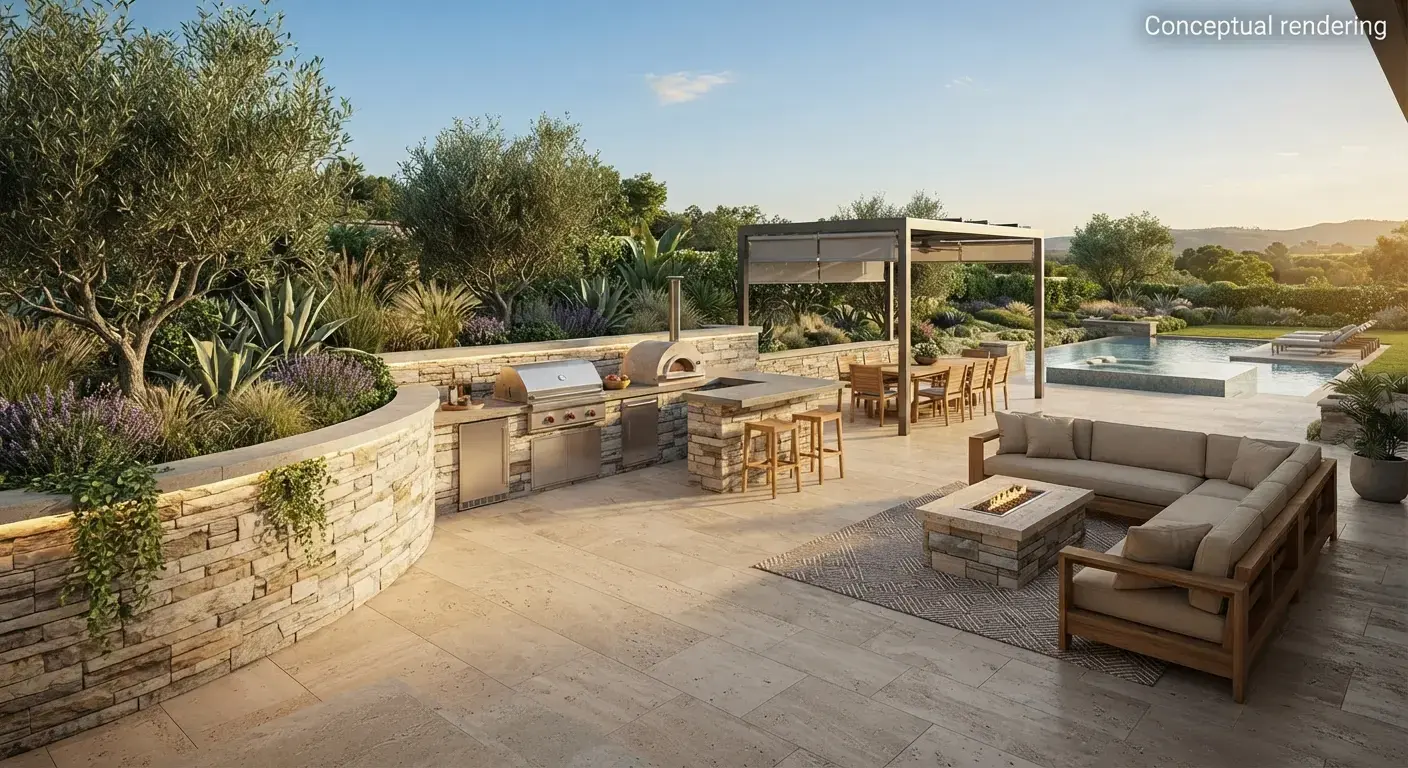
It is worth spending more on hardscape areas that get heavy daily use, set the first impression of your home, or have specific performance demands like heat, water, or vehicle weight. These are the places where a lower-cost material is most likely to fall short.
The main patio. Your primary outdoor living area is where you will spend the most time, host guests, and look at the surface up close. This is the natural focal point of a backyard, and it is where the color, texture, and finish of natural stone or porcelain pavers make the biggest visual difference.
The front walkway and entry. The path to your front door is the first thing visitors walk on and one of the first things people notice from the street. Putting more of your budget into this one area tends to have a bigger effect on curb appeal than spreading the same amount thinly across the whole yard.
Pool decks. Around a pool, surface temperature and traction matter as much as appearance. Lighter-colored stone such as travertine tends to stay cooler underfoot in direct sun than darker materials, and textured or tumbled finishes give better grip when wet. For porcelain, look for products specifically rated for outdoor and wet-area use. Spending more here is about comfort and safety, not just looks.
Driveways. A driveway needs material rated for vehicle loads. Downgrading to a thinner, patio-grade paver to save money can lead to cracking and shifting that costs more to fix later.
Steps, wall caps, and pool coping. These are edges people sit on, step on, and touch. Solid, properly finished pieces in these spots give the project a complete look, and because they cover a small area, upgrading them usually has a modest effect on the overall budget.
Climate-appropriate material. If your area sees freezing winters, choosing a material with low water absorption that handles freeze-thaw cycles well is worth the extra cost. Porcelain pavers absorb 0.5 percent water or less, and with natural stone such as travertine, a denser, higher-quality grade holds up better to freezing than a standard grade. A cheaper material that spalls or cracks after a few winters is not a savings.
Where Can You Save on Hardscape Materials?
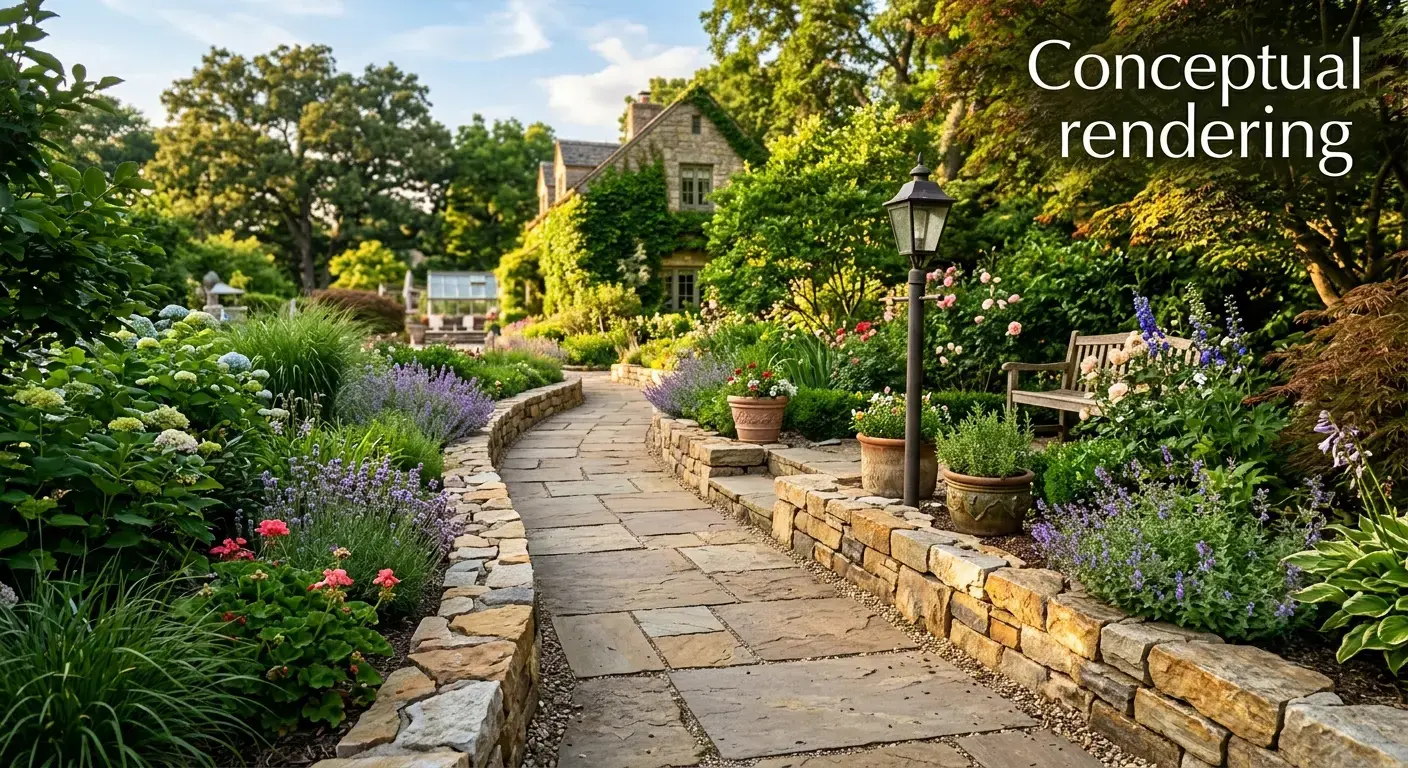
You can save on hardscape materials in low-traffic, low-visibility areas and by choosing simpler sizes, colors, and layouts. Savings in these spots rarely affect how your yard looks or works day to day.
Side yards and utility paths. The path to your trash bins, a side gate, or an equipment pad does not need the same material as your main patio. Gravel, decomposed granite, or a simple concrete paver handles these spaces well at a fraction of the cost.
Garden borders and planting beds. Edging and bed borders can use simpler materials without affecting the overall look, especially once plants fill in around them.
Stepping stones instead of solid walkways. For secondary paths through a garden or lawn, individual stepping stones set in gravel or groundcover use far less material than a continuous paved walkway and suit a more informal look.
Standard sizes and stocked colors. Choosing a common format and a color that is regularly stocked is usually more economical than a special-order size or finish. It also makes it easier to get matching material later for repairs or additions. Seeing what is on display at a local showroom before you finalize your design can point you toward options that are easy to source.
Simpler laying patterns. A running bond or stacked layout creates fewer cuts than herringbone or a curved design. Fewer cuts mean less waste and a smaller material order.
Covered or shaded areas. Space under a pergola or covered porch that is mostly filled with furniture may not need the same upgrade as an open, highly visible patio area.
Overstock and close-out materials. If your project is small or flexible on color, discounted overstock material can bring a higher-grade surface within reach. Selection in our overstock sale changes over time, quantities are limited, and sales are final, so confirm you have enough material for the whole area before you buy.
How Do Common Hardscape Materials Compare on Cost?
Gravel and decomposed granite are generally the lowest-cost hardscape materials, concrete pavers come next, and porcelain pavers and natural stone typically cost more, though some stones like travertine and flagstone can land in the middle of the range. Exact pricing varies by product, thickness, and availability, so treat the comparison below as a general guide rather than a fixed ranking.
Material | Relative cost | Where it works best |
Gravel and decomposed granite | Lowest | Side yards, utility paths, gaps between stepping stones |
Concrete pavers | Low to moderate | Patios, walkways, and driveways when driveway-rated |
Flagstone | Varies widely by stone and cut | Informal patios, garden paths, stepping stones |
Travertine pavers | Moderate, varies by grade | Pool decks, patios, courtyards |
Porcelain pavers | Moderate to higher | Modern patios, pool surrounds, low-maintenance spaces |
Bluestone, granite, and quartzite pavers | Moderate to higher, varies by stone | Front entries, main patios, steps and wall caps |
Purchase price is only one side of the comparison. Some materials cost more up front but ask less of you over time. Porcelain pavers, for example, have very low water absorption and generally do not need sealing. Many natural stones benefit from periodic sealing depending on the stone and how it is used. Concrete pavers can fade over years of sun exposure. Weighing upkeep alongside the initial cost gives you a more complete picture of value. If you want help sorting through these trade-offs for your own yard, a free design consultation lets you compare materials in person and set a realistic material budget before you commit.
How Can You Stretch a Hardscape Budget?
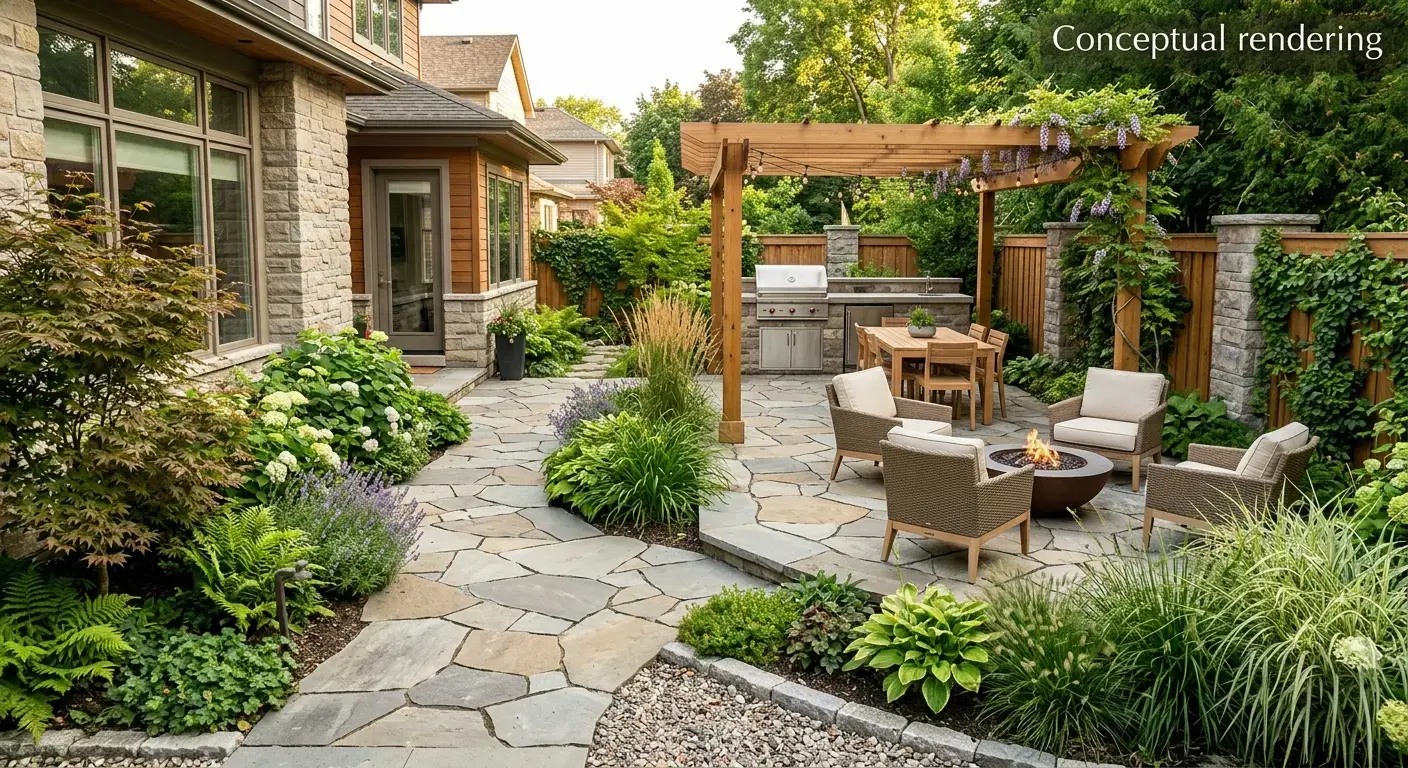
You can stretch a hardscape budget by mixing materials, sizing each area to how you will actually use it, phasing the project over time, and planning layouts that reduce waste. These approaches keep your spending focused on the areas that matter most.
Mix materials with purpose. Combining a higher-end material in focal areas with a more economical one elsewhere is a common design approach. A natural stone border around a concrete paver field, or a porcelain patio connected to gravel paths, can look intentional and cohesive while keeping costs in check. Repeating one color or texture across the different materials helps tie the spaces together.
Right-size your spaces. It is easy to plan a patio larger than you need. Before finalizing dimensions, lay out your outdoor furniture and grill on the ground and measure the footprint with comfortable walking room around it. Every square foot you trim from an oversized patio is material you do not have to buy.
Phase the project. You do not have to build everything at once. Many homeowners start with the main patio and add walkways, a fire pit area, or garden paths in later seasons. If you plan to phase, choose a material that is regularly stocked so you can match it later. Color can vary between production runs, so buying a few extra pieces with your first order helps with future repairs.
Plan the layout to reduce cuts. Working with the dimensions of your chosen paver or stone, rather than against them, cuts down on waste. Talk with your designer or contractor about adjusting patio edges slightly to fit full pieces where possible.
Order the right quantity. Ordering too little can mean a second order from a different production run that does not match. Ordering far too much ties up money in leftover material. Your contractor can help you calculate the right overage for your layout. Contractors and designers with a trade account can also send us their plans for a full material takeoff with quantities, pricing, and lead times.
Think about the whole life of the surface. A material that needs less sealing, cleaning, and replacement over the years may cost less in the long run than one with a lower price tag today.
Conclusion
A budget-friendly hardscape comes down to knowing where your money does the most work. Put higher-grade stone and pavers on the main patio, front entry, pool deck, driveway, and the edges people touch, then use gravel, simpler pavers, and stepping stones in side yards and secondary paths. Mixing materials, sizing spaces carefully, phasing the work, and planning layouts to limit waste all help a modest budget go further without making the yard feel like a compromise.
Comparing materials in person makes differences in color, texture, and finish easier to judge. Our showrooms in Sacramento, Reno, Minden, and Fernley carry a range of pavers and exterior stone, including pool coping and small to large format pavers. Bring your measurements, a few photos of your yard, and your contractor’s plan, and our team can help you decide where to spend and where to save.
Note: Some images on this page may be conceptual renderings created to illustrate design possibilities and may not depict actual installations.
Frequently Asked Questions
Gravel and decomposed granite are generally the lowest-cost hardscape materials. Among pavers, concrete pavers are usually the most economical option. Both work well for side yards, utility paths, and secondary walkways.
Porcelain pavers usually cost more than concrete pavers, but they have very low water absorption, resist staining, and generally do not need sealing. For patios and pool surrounds where you want a clean look with minimal upkeep, the extra cost can be worth it.
Natural stone typically costs more than concrete pavers, though prices vary widely by stone type. Flagstone and travertine often fall in the middle of the range, while bluestone, granite, and quartzite tend to sit at the higher end.
The right amount depends on your layout. Simple rectangular designs need less overage than curved edges or patterns like herringbone, which create more cuts. Your contractor can calculate the right quantity for your project, and buying a few extra pieces for future repairs is a good idea.
Yes. Mixing materials is a common way to manage a hardscape budget. Many homeowners use natural stone or porcelain in focal areas like the main patio and front entry, and gravel or concrete pavers for secondary paths. Repeating a shared color or texture helps the spaces feel connected.