AT A GLANCE
- Hardscape lighting lights stone steps, walls, patios, and walkways after dark.
- Riser lights and under-tread strips mark the edge of each stone step.
- Under-cap fixtures wash soft light down retaining and seating walls.
- Granite, quartzite, travertine, and porcelain are listed for outdoor use.
- Leathered and honed finishes diffuse light, while polished finishes reflect it.
- Matte or textured finishes are generally better than polished on wet steps.
IN THIS POST
- What Is Hardscape Lighting?
- What Are the Benefits of Hardscape Lighting?
- What Are the Best Hardscape Lighting Ideas?
- What Is the Best Stone for Outdoor Steps?
- Compare Exterior Stone in Our Showrooms
- Book a Free Design Consultation
- Frequently Asked Questions
- Sources
What Is Hardscape Lighting?
The best hardscape lighting ideas for outdoor steps and walkways combine low-glare step lights, warm path fixtures, and soft wall washing. Layered together, they guide movement and highlight stone texture, though results depend on placement and finish.
Hardscape covers patios, steps, retaining walls, and walkways, as explained in this overview of what hardscape includes. Stone gives those features a sturdy base for light, but color and finish change how every fixture glows.
Granite, quartzite, travertine, and porcelain suit exterior use, and our exterior stone slabs come in finishes that respond differently to light. Matching fixtures to the stone helps the result look intentional.
This guide covers benefits, placement ideas for steps, walls, and walkways, material choices, and a simple four-step planning process for evening-ready outdoor spaces of any size. Planning light and stone together also helps avoid surprises after dark, when finishes, joints, and surface variation look very different than they do at noon.
What Are the Benefits of Hardscape Lighting?
Hardscape lighting makes steps and walkways easier to see at night, extends the usable hours of patios and entries, and brings out natural stone texture. Results depend on fixture quality, placement, and stone color. Warm, shielded light often flatters natural stone without harsh glare.
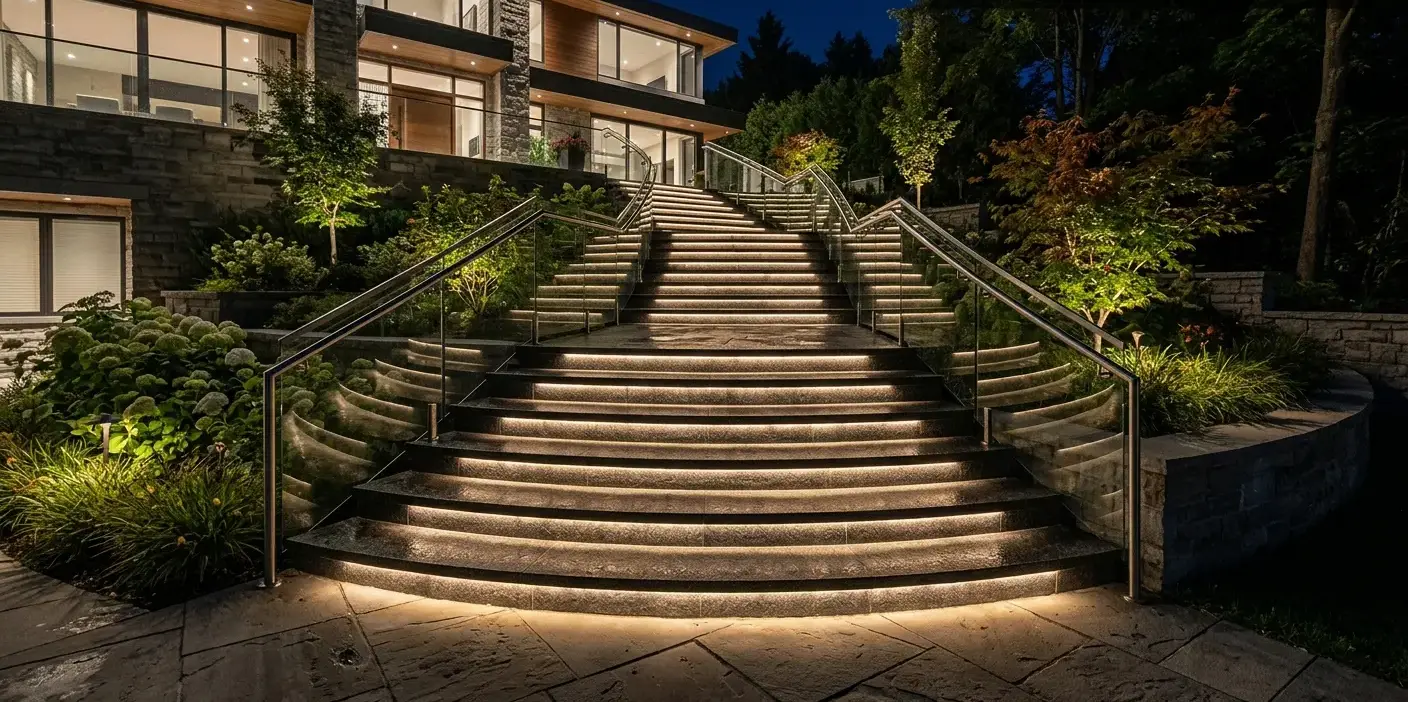
- Safer evening movement: Visible step edges and path boundaries can help reduce missteps at changes in level.
- Highlighted texture: Grazing light across leathered granite or textured travertine may reveal natural surface variation.
- Longer outdoor hours: Well-placed light keeps patios and walkways useful after dark, within local lighting codes.
- Stronger curb appeal: Subtle accents on walls and steps can give an entry more definition at night.
- Energy-conscious operation: LED fixtures generally draw less power than older halogen options, though total use depends on fixture count and run time.
Note: Some images on this page may be conceptual renderings created to illustrate design possibilities and may not depict actual installations.
Lighting also changes how stone is perceived through the day. A slab that looks pale in sunlight can appear warmer after dark, so viewing material in both conditions helps set realistic expectations for the finished space.
Lighting complements stone but does not replace smart material choices. Polished finishes can be slippery when wet, so matte or textured surfaces are generally better for wet areas. Design professionals who want deeper technical context can browse professional hardscape education resources.
What Are the Best Hardscape Lighting Ideas?
The best hardscape lighting ideas are riser or under-tread lights on stone steps, under-cap lighting on retaining and seating walls, and shielded path lights along walkways. Good layouts begin with one question: where does the eye need guidance? Answer that first, then layer accents around it.
Outdoor Step Lighting That Defines Each Edge
Outdoor step lighting works best when light falls on the tread, not into the eyes. Riser fixtures and under-nosing strips can mark each edge while keeping glare low. Honed or leathered finishes diffuse the glow, while polished stone can reflect fixtures as bright spots. Consistent light on every step usually reads more clearly than a few strong accents. Landings and turns deserve extra attention. A slightly brighter point at each landing can signal a change in direction before the next step is reached.
Wall and Seating Lighting for Soft Depth
Retaining and seat walls suit concealed lighting beneath cap stones, which washes light down the wall face. Textured stone tends to show more depth under grazing light. Keep brightness modest. Overly bright wall lights can flatten color and create glare, so dimmable fixtures offer useful flexibility. Warm light across a textured wall can emphasize shadows between stones, while smooth finishes tend to produce a more even, quiet glow. Preview the wall at night before choosing between them.
Walkway and Path Lighting Layouts
Path fixtures spaced so their pools of light overlap create a continuous, comfortable route. Shielded, low-profile fixtures keep attention on the stone rather than the bulb. Aligning fixtures with slab joints or planting breaks adds rhythm, so the layout looks deliberate from both the house and the street. Curved walkways often look best with fixtures on the inside of the curve, which reveals the path shape while limiting glare for people approaching.
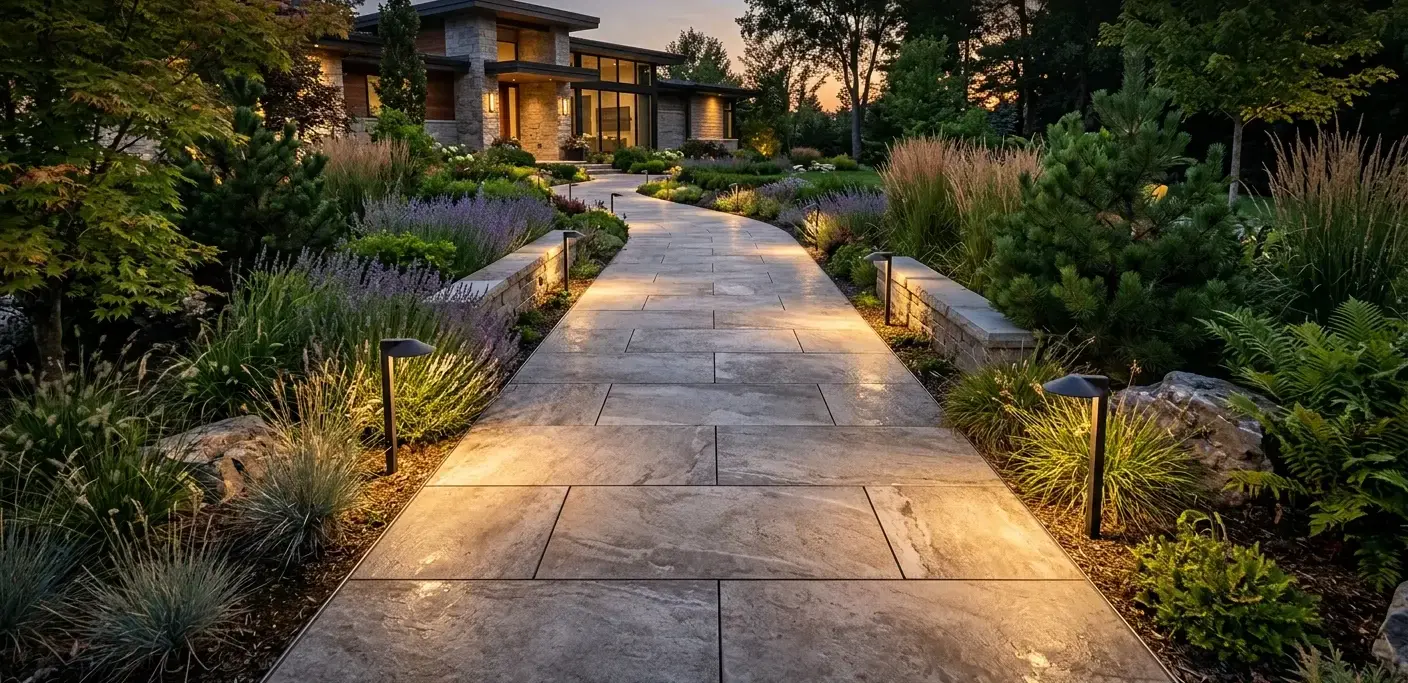 Conceptual rendering
Entry Steps and Patio Edge Lighting
Entry steps often carry the most foot traffic after dark, so they deserve the most consistent light. Soft illumination at landings helps visitors read changes in level before they reach them. Patio edges benefit from low, indirect light that outlines the surface without turning the space into a stage. Grouping fixtures on separate zones lets the mood shift from quiet evenings to gatherings.
Controls and Zoning for Flexible Light
Dimmers and timers let a single layout serve different moods and hours. Easing lights down late in the evening can also limit light spill toward neighboring spaces, though control options vary by system. Separate zones for steps, walls, and paths make adjustments easier. If one area feels too bright, only that zone needs attention rather than the whole layout.
What Is the Best Stone for Outdoor Steps?
Granite, quartzite, travertine, and porcelain are listed for outdoor use in our product specifications, and a matte or textured finish is generally better for steps than polished. Finish also changes how light looks: polished surfaces tend to reflect fixtures, while honed and leathered finishes diffuse the glow. In our product lineup, marble and dolomite are listed for indoor use.
Stone | Common Finishes | Sealing | Effect Under Light |
Granite | Polished, leathered, specialty | Typically sealed; follow the product care guide | Polished reflects fixtures; leathered softens the glow |
Quartzite | Polished, honed, leathered, specialty | Typically sealed; follow the product care guide | Honed diffuses light; polished adds shine |
Travertine | Polished, honed, leathered, specialty | Typically sealed; follow the product care guide | Natural texture catches grazing light |
Porcelain | Polished, honed, specialty | Typically not required | Consistent surface; confirm finish for wet areas |
In our product specifications, granite, quartzite, and porcelain are marked UV resistant. Travertine is listed for outdoor use, but sun exposure performance varies by product, so check the exact product’s spec sheet before choosing it for a sunny location. Proper care still helps preserve appearance.
Wet-area traction matters most on steps. Review the wet DCOF walkway standard to see how walkway traction is compared, then request product-specific data before choosing a finish.
Advantages and Disadvantages of Lighting Stone Surfaces
Advantages
- Fixtures placed at wall or step edges can keep surfaces looking clean and uncluttered.
- Warm light may bring out the natural color of earth-toned stone.
- Layered lighting can serve both safety and mood on the same stone features.
Disadvantages
- Fixture positions are best planned early, because later changes can be harder.
- Polished surfaces can reflect fixtures as glare, particularly when wet.
- Most natural stone benefits from periodic sealing, and cleaners should be non-abrasive with spills wiped promptly.
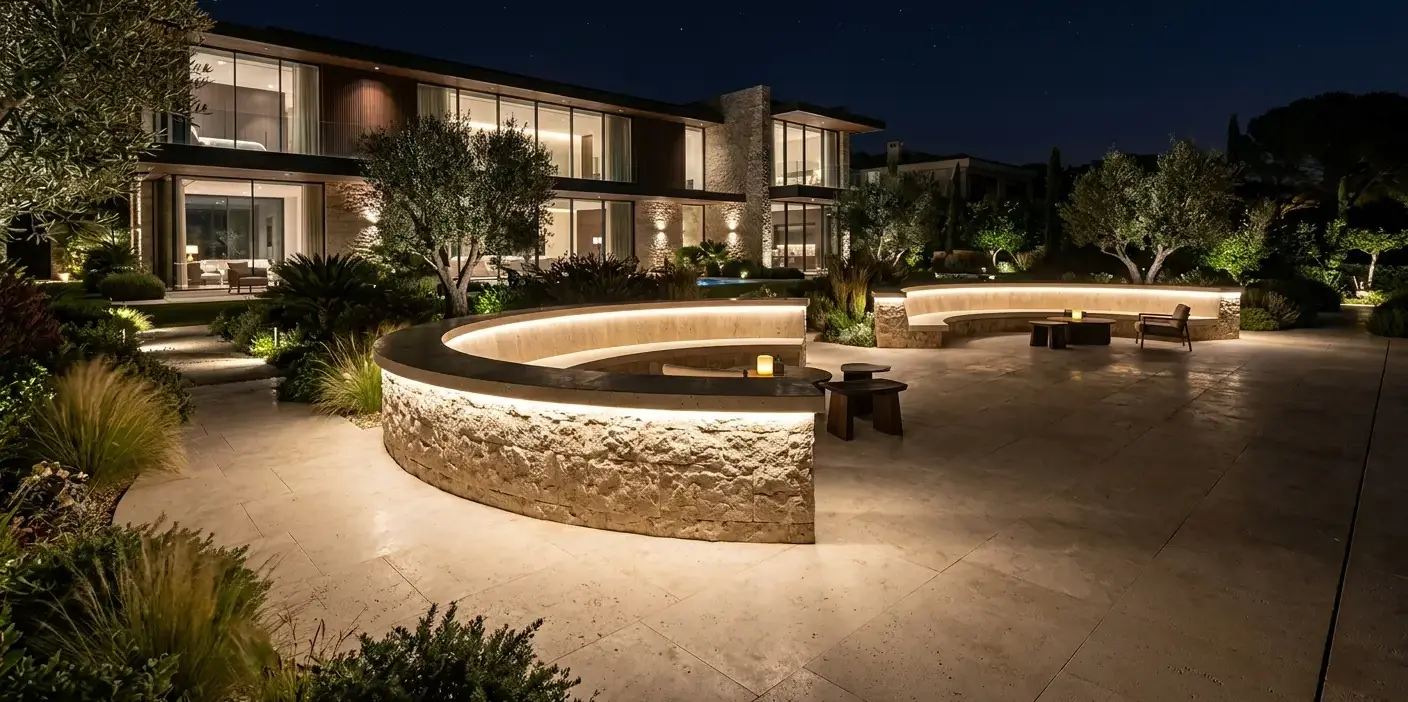 Conceptual rendering
How to Plan Hardscape Lighting
To plan hardscape lighting, map the routes, choose the stone and finish, layer the light, and preview it at dusk.
- Map the routes: Note every step, turn, and level change that needs visible edges.
- Choose stone and finish: Match the finish to wet-area needs and the glow you want.
- Layer the light: Combine step, wall, and path fixtures at modest brightness.
- Preview at dusk: Review glare and shadows with temporary fixtures, then confirm brightness and positions.
Compare Exterior Stone in Our Showrooms
We supply natural stone and porcelain slabs for patios, steps, walls, and walkways. Commission-free design consultants can discuss finishes, edge profiles, and how different stones respond to light.
Because lighting plans depend on how stone is arranged, bringing photos or a rough sketch of the steps, walls, and walkways can speed up the conversation. Consultants can then suggest slab formats and finishes that suit each surface. Arranged delivery assistance helps coordinate slab arrival with your project timeline, so materials are on hand when the project needs them.
We serve customers through our showrooms in Fernley, Reno, Minden, and Sacramento. Visit the Reno showroom to compare exterior finishes in person. Customers near Fernley can explore the Fernley showroom. The Minden showroom supports Minden-area projects. Sacramento customers can visit the Sacramento showroom as well.
For a first conversation about lit steps and walls, book a design appointment.
FERNLEY SHOWROOM
1855 US Highway 95A North, Fernley, NV 89408
 Google Maps
Store hours this week:
- Mon. - Fri.: 7:30 am - 4:00 pm
- Sat. - Sun.: Closed
RENO SHOWROOM
12835 Old Virginia Rd Suite 24, Reno, NV 89521
Store hours this week:
- Mon. - Fri.: 7:30 am - 6:00 pm
- Sat.: 9:00 am - 3:00 pm
- Sun.: Closed
MINDEN SHOWROOM
2548 Business Pkwy, Minden, NV 89423
Store hours this week:
- Mon. - Fri.: 7:30 am - 6:00 pm
- Sat.: 9:00 am - 3:00 pm
- Sun.: Closed
SACRAMENTO SHOWROOM
6100 Warehouse Way, Sacramento, CA 95826
Store hours this week:
- Mon. - Fri.: 7:30 am - 5:00 pm
- Sat. - Sun.: Closed
Book a Free Design Consultation
Hardscape lighting works best when stone, finish, and fixtures are planned together. Warm, shielded light can improve evening visibility and show off natural texture, while the right finish supports safer footing. Each layer should serve a purpose, so keep fixtures modest and glare low. To compare materials online, browse exterior stone options and shortlist favorites.
A design consultant can help match stone and lighting to your project goals and local conditions. Bring photos or measurements to make the visit more productive. Schedule your free consultation now.
Frequently Asked Questions
Low-glare fixtures near the riser or under the tread edge usually work well. They define each step without shining into the eyes. Final choices depend on stone finish and step height.
Granite, quartzite, travertine, and porcelain are suited to exterior use. Honed or leathered finishes tend to diffuse light, while polished surfaces can reflect it. In our product lineup, marble and dolomite are listed for indoor use.
Warm white light, often around 2700K to 3000K, tends to flatter earth-toned stone. Cooler light can look harsher, though the best choice varies with stone color and surroundings. Previewing a fixture at dusk helps confirm the effect.
Travertine is listed for outdoor use in our product specifications and can look rich under grazing light. It typically benefits from sealing, and sun exposure performance varies by product, so verify the exact product’s UV rating. Choose a textured finish for wet areas.
Polished finishes can be slippery when wet, so matte or textured stone is generally better for steps. Even lighting on every tread also helps people see edges clearly, although it does not replace slip-conscious material choices.
Sources
- ANSI/NFSI B101.3: Wet DCOF of Hard-Surface Walkways | https://blog.ansi.org/ansi/nfsi-b101-3-2022-wet-dcof-of-hard-surface-walkways/
- ANSI A137.1: Porcelain Tile Definition and Water Absorption | https://blog.ansi.org/porcelain-ceramic-tile-ansi-a137-1-astm-definition/
- Natural Stone Institute: Stone Care, What You Should Know | https://www.naturalstoneinstitute.org/education/ceu-page/classes-available/stone-care-what-you-should-know/
- FX Luminaire: Landscape Lighting Training Guide | https://www.fxl.com/sites/fxl.com/files/fx-229-dg-lightingtraining-us-web.pdf