How Do Hardscape Level Changes Work With Exterior Stone?
Hardscape level changes for modern outdoor living use terraces, steps, and retaining walls to turn a sloped yard into connected, usable zones. Exterior stone such as granite, quartzite, travertine, and porcelain can unify those transitions, though planning and care still matter.
A change in grade is more than a design puzzle. Slopes shed water, limit usable space, and can make entries feel awkward unless each level is resolved with intention.
Stone brings visual weight and natural texture to these transitions. Every surface still needs the right finish, sealing routine, and slip considerations, especially where steps meet wet weather.
This guide explains how terraces, steps, and retaining walls work together, which exterior stone options suit each element, and how to prepare before visiting a showroom.
Throughout, practical notes on slip resistance, sun exposure, and sealing keep expectations realistic for everyday outdoor use.
For technical references on exterior stone, browse the stone resource library from the Natural Stone Institute.
At a Glance
- Terraces: turn sloped ground into level zones, though drainage planning remains essential.
- Steps: matte or textured finishes give better grip than polished surfaces when wet.
- Retaining walls: hold back grade, but taller walls typically need engineered design and permits.
- Materials: granite, quartzite, travertine, and porcelain suit exterior use.
- Verification: sun exposure and sealing needs vary by product, so confirm each slab’s details.
In This Guide
- Benefits of multi-level hardscape
- Terrace, step, and retaining wall ideas
- Exterior stone options for each level
- Care basics and trade-offs
- How Nova Tile and Stone supports your project
- Five steps to plan outdoor level changes
Benefits of Multi-Level Hardscape for Outdoor Spaces
Multi-level layouts divide a yard into purposeful zones, such as dining, lounging, and planting areas, without relying on fences. Elevation itself becomes the boundary, which keeps sightlines open.
Well-planned levels also guide water and foot traffic. Terraces flatten sloped ground into usable space, while steps and walls manage the transitions between them, provided drainage is addressed.
Stone adds lasting character to each transition. Granite, quartzite, and porcelain sit in Nova's UV-resistant group, though sun exposure and finish still influence long-term appearance. Browse natural and engineered slabs to compare exterior-ready options.
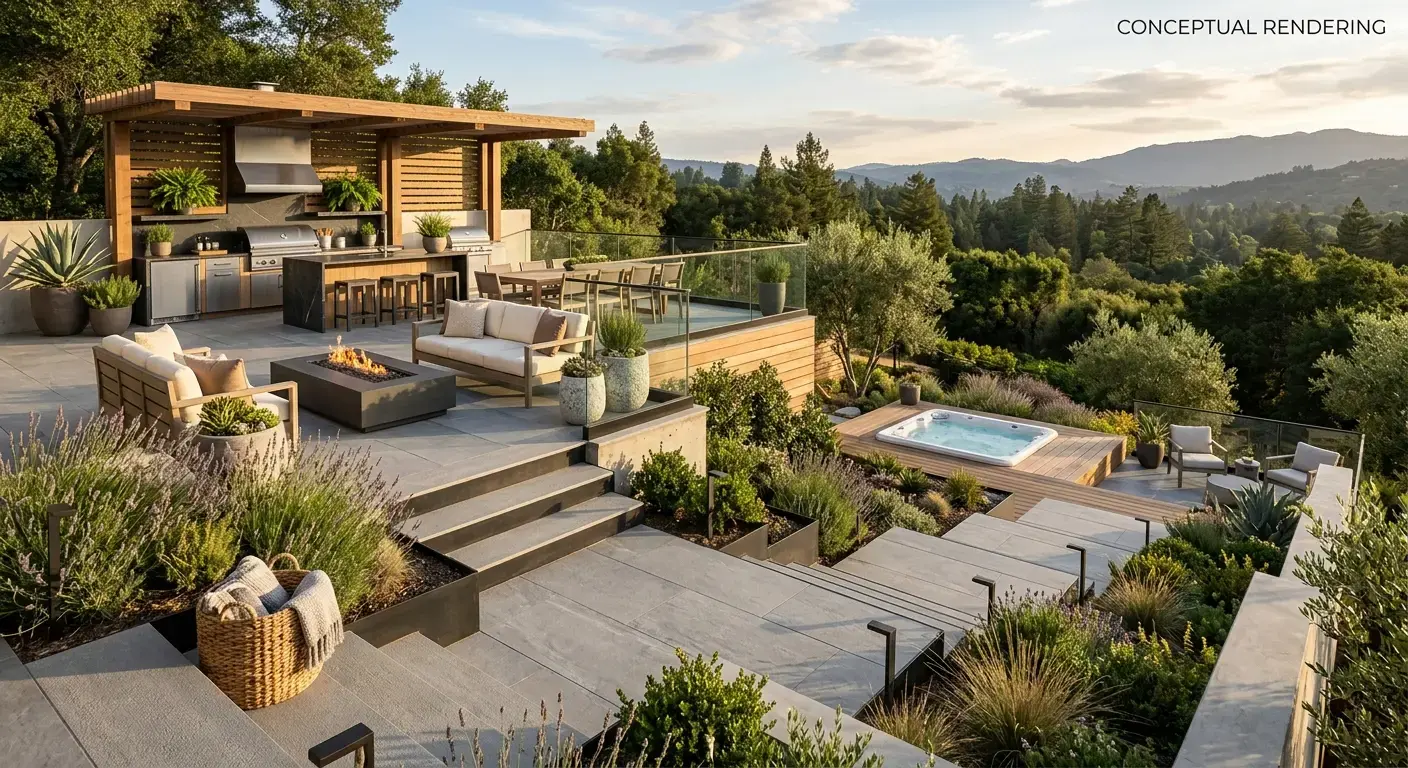 Conceptual rendering
- Usable flat space: Terraces convert steep ground into level areas, though drainage planning remains essential.
- Clear circulation: Steps and landings guide movement between levels, and consistent riser heights improve comfort.
- Soil retention: Retaining walls hold back grade changes, but taller walls typically need engineered design and permits.
- Visual depth: Layered levels add dimension, and natural stone textures vary from slab to slab.
- Exterior-ready materials: Granite, quartzite, travertine, and porcelain suit outdoor use, with sealing needs differing by stone.
Design Ideas for Terraces, Steps, and Retaining Walls
Each element solves a different problem, yet the strongest layouts treat them as one system. Shared materials, colors, and finishes keep proportions consistent from the lowest level to the highest. Planning them together also helps sightlines and drainage paths line up across levels.
Terraces That Create Usable Levels
Terraces work best when each level has one clear job, such as dining, lounging, or planting. Generous depth keeps furniture comfortable and traffic flowing. Clear edges between levels also help guests sense where one activity ends and the next begins.
Alternating wider and narrower terraces creates rhythm, while planting beds between levels soften hard edges. Following the slope's natural contour can also reduce how tall each wall needs to be.
Large-format porcelain or quartzite slabs reduce visible seams on terrace surfaces. Drainage planning and structural design should still be confirmed with a licensed professional. Visit the Sacramento showroom to view large-format slabs in person.
Steps That Connect Levels Safely
Steps deserve the most attention for safety. Polished surfaces become slipperier when wet, so matte or textured finishes are better choices for exterior treads and landings.
Textured options vary by stone. Granite offers leathered finishes, quartzite and porcelain offer textured finishes, and travertine offers both.
Consistent riser heights matter as much as the stone itself. Many codes cap risers near 7¾ inches, so confirm local requirements early.
Landings give people a place to pause where steps change direction, and contrasting tread edges help each step stay visible at dusk. Visit the Reno showroom to compare finish textures in person.
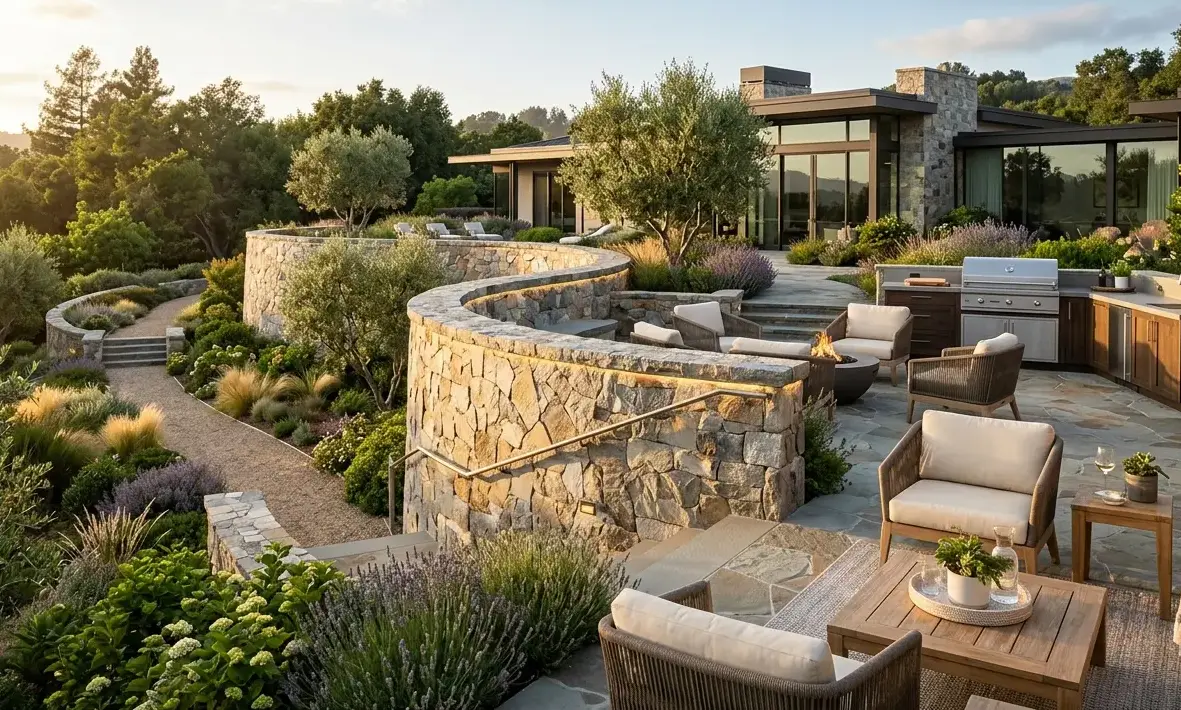 Conceptual rendering
Retaining Walls That Hold Grade
Retaining walls hold back soil where the grade shifts. Stone facing adds texture and color, and granite, quartzite, travertine, and porcelain are all suited to wall surfaces.
Structural capacity depends on engineered design, drainage, and soil conditions. Nova supplies stone materials, so those decisions rest with licensed professionals. ASTM C1528 states that every stone application must meet applicable building codes.
Wall height shapes the experience. Low walls can double as seating, while taller walls often work better in tiers that break up visual mass, subject to local requirements.
Textured surfaces and softened edges can give a wall an established look. Design professionals seeking deeper technical education can find stone education programs through the Natural Stone Institute.
Choosing Exterior Stone for Each Level
This comparison summarizes how the four exterior-ready materials differ.
Material | Type | Sealing | UV Note | Non-Polished Finishes |
Granite | Natural stone | Needs sealing | In Nova's UV-resistant group | Leathered, specialty |
Quartzite | Natural stone | Needs sealing | In Nova's UV-resistant group | Textured, specialty |
Travertine | Natural stone | Needs sealing | Verify the exact product's UV rating | Textured, leathered, specialty |
Porcelain | Engineered | Typically no sealing | In Nova's UV-resistant group | Textured, specialty |
Travertine is generally approved for exterior use, but UV tolerance is product-dependent. Confirm manufacturer sun exposure approval for full-sun areas, since travertine is not in Nova's general UV-resistant category.
Granite brings dense crystalline patterns, and quartzite often offers marble-like veining with strong exterior suitability. Travertine adds warm, banded character, while porcelain delivers more consistent patterns, though natural stone varies from slab to slab.
Note: Some images on this page may be conceptual renderings created to illustrate design possibilities and may not depict actual installations.
Care Basics for Exterior Stone
Sealing needs vary by stone, finish, and exposure, so follow product guidance for granite, quartzite, and travertine. Porcelain slabs typically need no sealing, though routine cleaning still helps.
Clean spills promptly and choose mild, stone-safe cleaners instead of abrasive products. In snowy climates, ask a design consultant which de-icing products suit the selected stone, since some can affect certain surfaces.
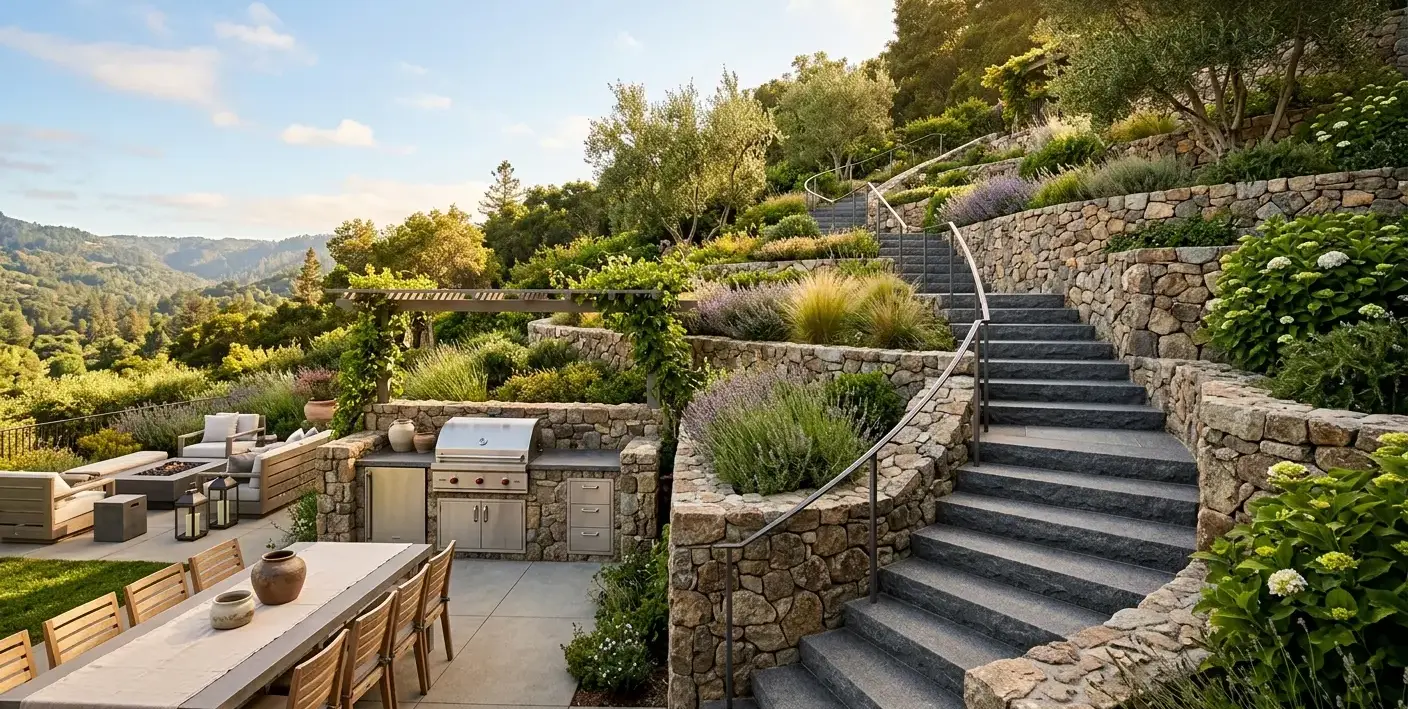 Conceptual rendering
Advantages and Trade-Offs of Stone Level Changes
Stone level changes reward careful planning. The lists below weigh what natural and engineered slabs offer against practical limits worth knowing before design decisions are finalized.
Advantages
- Natural stone offers varied color and texture, though each slab differs.
- Multi-level layouts add usable space and visual structure, and defined zones support dining, lounging, and planting without fences.
- Exterior-ready materials are durable, but proper care preserves appearance.
Trade-Offs
- Polished finishes can become slippery when wet.
- Natural stone typically needs periodic sealing.
- Taller walls and complex grades often require engineering and permits.
- Large slabs need delivery planning and clear site access.
- Sun exposure and finish choices should be verified product by product.
How Nova Tile and Stone Supports Your Project
Nova Tile and Stone supplies natural and engineered slabs suited to exterior use, with commission-free design consultants who help match materials to each level change. Bringing photos, rough measurements, and a sketch of the slope makes first conversations more productive.
Planning hardscape level changes for modern outdoor living goes more smoothly when finishes, slab sizes, and sun exposure are reviewed together. Nova also offers arranged delivery assistance for slab orders, helping projects stay organized from selection to arrival.
Nova serves Reno, Fernley, and Minden in Nevada, plus Sacramento in California. Visit the Fernley showroom to view available slabs in person. Explore the Minden showroom for exterior stone selections and expert guidance.
Five Steps to Plan Outdoor Level Changes
- Measure the grade. Record the total height change and note where water currently flows.
- Choose the elements. Decide whether terraces, steps, a retaining wall, or a combination fits the space.
- Select materials and finishes. Favor matte or textured surfaces for wet or sloped areas.
- Confirm structure and permits. Review drainage, wall height, and local rules with licensed professionals.
- Refine with a consultant. Bring measurements and photos to a design consultant to narrow stone choices.
Key Takeaways
- Hardscape level changes use terraces, steps, and retaining walls to turn a slope into usable zones.
- Terraces work best when each level has one clear job, such as dining, lounging, or planting.
- Matte or textured finishes are better choices than polished ones for exterior treads and landings.
- Consistent riser heights matter, and many codes cap risers near 7¾ inches, so confirm local requirements early.
- Taller retaining walls and complex grades often require engineering and permits from licensed professionals.
- Granite, quartzite, and porcelain sit in Nova’s UV-resistant group, but verify travertine’s exact UV rating for full sun.
- Granite, quartzite, and travertine need sealing, while porcelain typically does not.
Explore Outdoor Stone Options With Nova Tile and Stone
Ready to plan your hardscape level changes with confidence? Book your free consultation today! A Nova design consultant can match stone, finishes, and slab sizes to each terrace, step, and wall.
SACRAMENTO SHOWROOM
6100 Warehouse Way, Sacramento, CA 95826
 Google Maps
Store hours this week:
- Mon. - Fri.: 7:30 am - 5:00 pm
- Sat. - Sun.: Closed
MINDEN SHOWROOM
2548 Business Pkwy, Minden, NV 89423
Store hours this week:
- Mon. - Fri.: 7:30 am - 6:00 pm
- Sat.: 9:00 am - 3:00 pm
- Sun.: Closed
RENO SHOWROOM
12835 Old Virginia Rd Suite 24, Reno, NV 89521
Store hours this week:
- Mon. - Fri.: 7:30 am - 6:00 pm
- Sat.: 9:00 am - 3:00 pm
- Sun.: Closed
FERNLEY SHOWROOM
1855 US Highway 95A North, Fernley, NV 89408
Store hours this week:
- Mon. - Fri.: 7:30 am - 4:00 pm
- Sat. - Sun.: Closed
Frequently Asked Questions
Granite, quartzite, travertine, and porcelain are all suited to exterior use.
Choose textured or leathered finishes for better grip, since polished and honed surfaces can become slipperier when wet. Verify each product's details and ask a design consultant about exact finish options before finalizing.
Taller or load-bearing walls commonly require engineered plans and permits. Requirements vary by jurisdiction, so confirm local rules with a licensed professional before finalizing materials.
Yes. Even a modest grade change can support a terrace and a few steps. Compact levels, consistent materials, and clear circulation help small spaces feel functional rather than cluttered.
Travertine is generally approved for exterior use, but UV tolerance is product-dependent. Verify the exact product's UV rating and confirm manufacturer sun exposure approval before choosing it for full-sun areas.
Nova serves Reno, Fernley, and Minden in Nevada, plus Sacramento in California. Customers can visit a showroom or schedule a free consultation with a commission-free design consultant.