Hardscape is the non-living, built part of a landscape. It includes patios, walkways, steps, garden and seat walls, outdoor kitchens, fire features, and pool decks, typically made from natural stone, porcelain pavers, concrete, or gravel. Hardscape gives an outdoor living space its structure, defining where people walk, gather, cook, and relax, while plants and lawn soften the design around it.
Designing a beautiful outdoor living space generally comes down to five steps:
- Plan zones around how the space will be used.
- Choose surface materials suited to outdoor conditions.
- Limit the palette to two or three materials.
- Use lighter colors and textured finishes in sunny or wet areas.
- Plan drainage from the start.
Because these surfaces are among the most permanent parts of a yard, early decisions about layout and materials shape how the space looks and works for years.
Start With How You Want to Use the Space
Before looking at pavers, picture an ordinary week outdoors and ask:
- How many people will typically use the space at once?
- Will you cook, dine, lounge, garden, or do a mix of these?
- Where does the sun fall in the morning and late afternoon, and where does the wind come from?
- How will people move between the house, yard, side gates, and garage?
- Are there slopes or low spots where water collects?
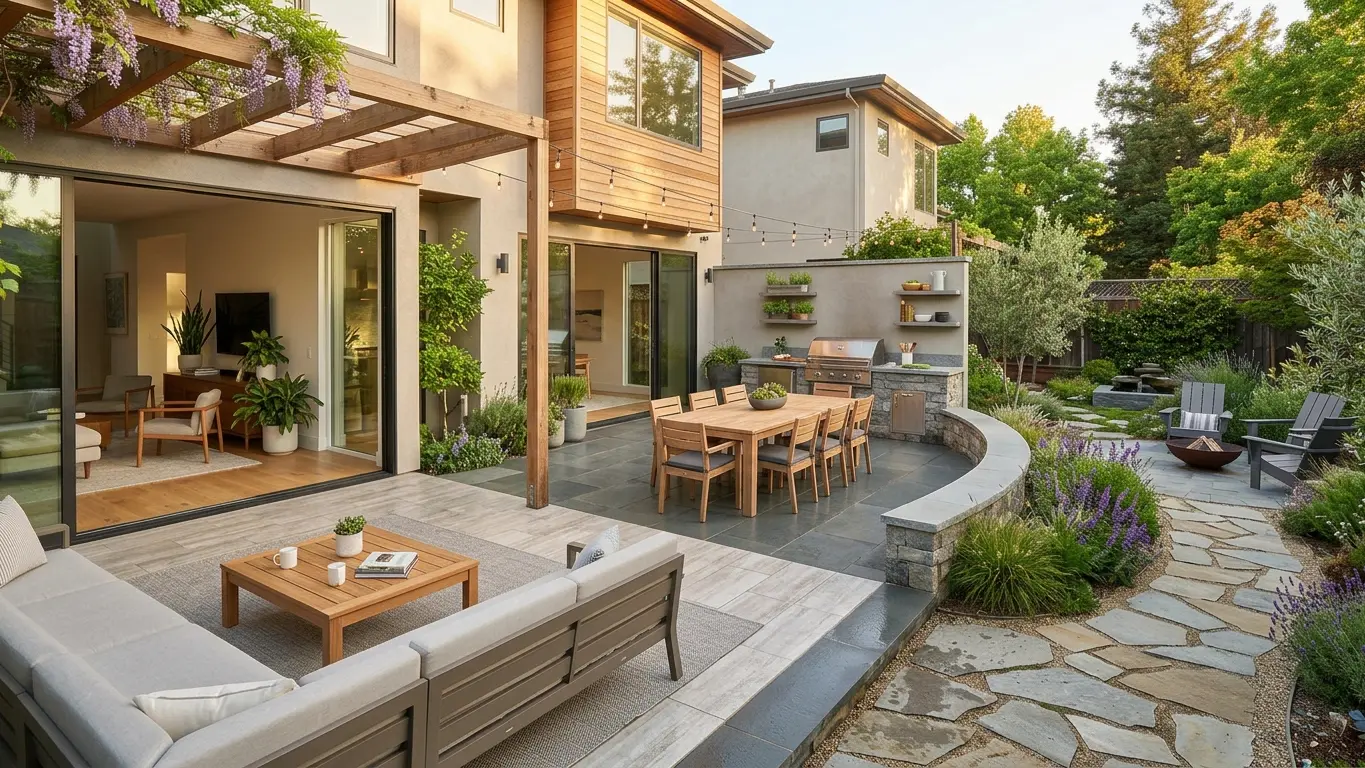
It also helps to look at the yard from inside the house. Placing a focal point, such as a fire feature or planted wall, within the view from a kitchen window keeps the yard connected to daily life. From there, dividing the yard into zones, each with a clear purpose, avoids a single large slab with nothing to anchor it.
Hardscape Ideas for Each Part of the Yard
Each area of a yard serves a different purpose, so the surfaces used in each one should suit how it will be used. Nova Tile and Stone carries materials used for these features, including porcelain and natural stone pavers, exterior stone, and slabs for outdoor counters.
A Patio That Works Like an Outdoor Room
Rather than defaulting to a rectangle off the back door, shape the patio around how it will be used. A dining area closest to the kitchen door shortens trips with food, while a lounge area can sit farther out. A change in paving pattern, a contrasting border, or a single step down can signal the shift from one zone to another without adding walls.
Walkways and Paths
Paths set the pace of a yard. A direct, wide path suits daily trips to a gate or garage, while a gently curving path through plantings encourages people to slow down. Stepping stones set in gravel or groundcover create a softer route for lighter foot traffic. Path width also affects scale: wide walks can carry large pavers, while narrow garden paths often look better with smaller pieces that follow curves.
Steps and Level Changes
Terracing a sloped yard into two or three flat areas creates distinct places for different activities, such as a dining patio above and a garden below. Broad, shallow steps between levels can double as casual seating.
Outdoor Kitchens and Fire Features
A grill set into a stone-clad base with a prep counter can make a patio far more useful, especially when it sits close to the house and smoke drifts away from seating. A fire pit or outdoor fireplace adds a natural gathering point for cooler evenings, and built-in seat walls around it reduce the need for extra furniture. Follow the manufacturer’s clearance guidance and keep fire features away from overhanging branches and structures.
Walls and Vertical Surfaces
Garden walls, raised planters, and seat walls add height and a sense of enclosure. Cladding a plain wall in natural stone or stone-look porcelain can turn it into a backdrop for the whole yard.
Pool Surrounds
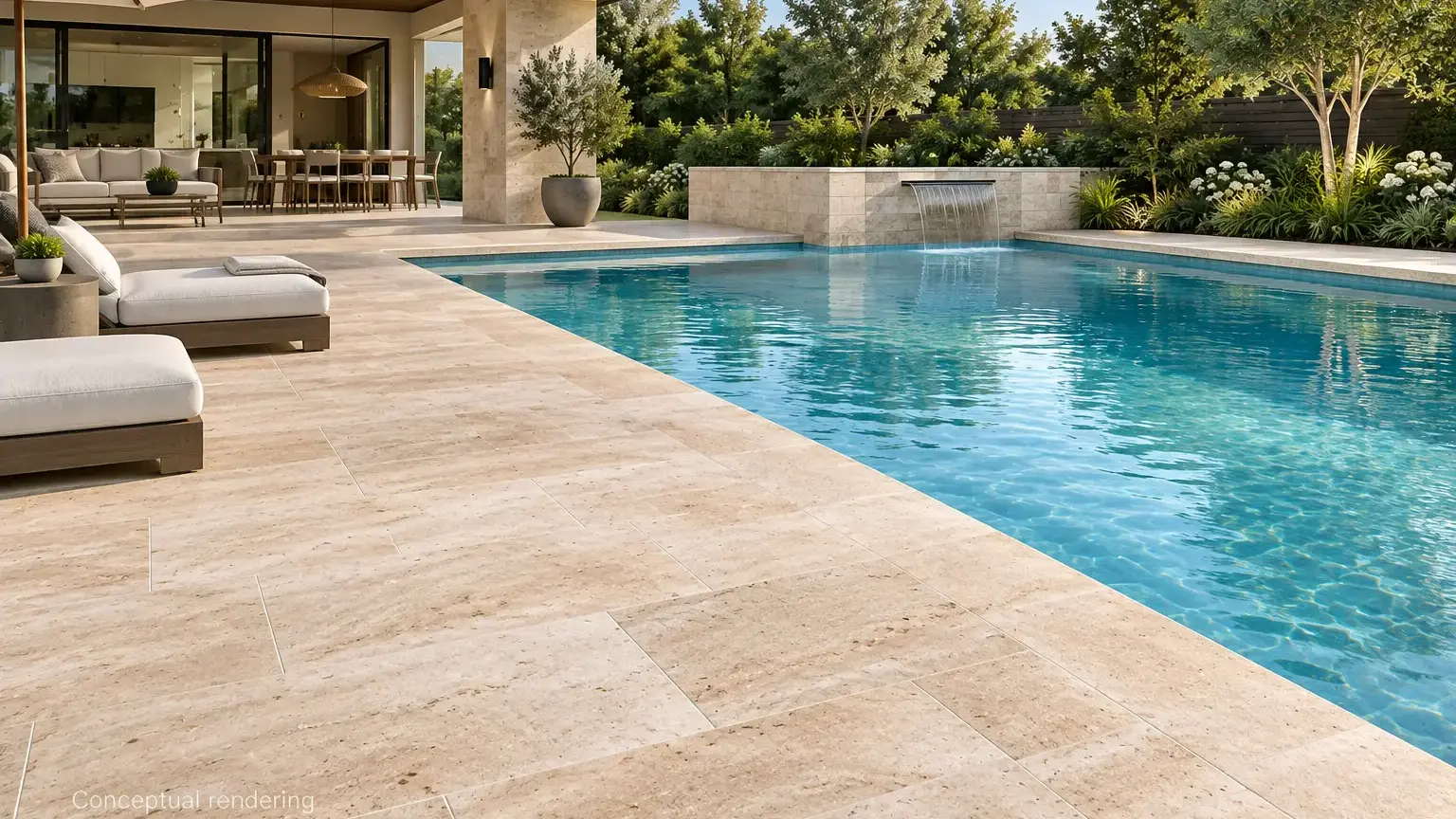
Pool decks combine constant water, bare feet, and direct sun. The material, finish, and color guidance below matters more here than anywhere else in the yard.
Choosing Outdoor Surface Materials
Once the layout is set, the next decision is what each surface will be made of. The options below differ in appearance, absorption, and upkeep, so it can help to compare them in person at one of our showrooms before deciding.
Porcelain
According to the ANSI A137.1 standard, porcelain tile has water absorption of 0.5% or less, which is the threshold that separates porcelain from other ceramic tile. Because it takes in very little water, porcelain can be a practical option for outdoor areas that get wet. It also comes in stone, concrete, travertine, and wood looks.
Nova Tile and Stone carries porcelain tile, including options suited to outdoor floors and walls; check each product’s rating for exterior use. For outdoor kitchen counters and wall cladding, large-format porcelain slabs offer broad surfaces with fewer seams.
Granite
Granite is a dense igneous stone formed from slowly cooled magma. It is commonly used for exterior steps, outdoor kitchen counters, and wall cladding because it tends to hold up well to weather and sun.
Quartzite
Quartzite forms when quartz-rich sandstone is exposed to high heat and pressure. Its veining can resemble marble, which makes it a popular choice for outdoor counters and accent walls. Current granite and quartzite options appear in our live slab inventory.
Travertine
Travertine is a form of limestone made of calcium carbonate that builds up around mineral springs, giving it warm, earthy tones and natural pitting. Travertine outdoor paving comes in formats suited to French pattern, running bond, herringbone, and straight layouts.
Travertine is more porous than granite, so it usually needs more care outdoors. An engineering review of exterior stone paving notes that travertine absorbs more water than granite and can gradually polish under heavy foot traffic. The review also cites an industry stone association that recommends against using travertine where de-icing salts are applied. At home, that means keeping de-icing salts off the surface and following a regular sealing and cleaning routine.
What About Marble?
Marble is made mainly of calcite, which dissolves in acidic rain, roughening exposed surfaces and rounding sharp edges over time. It is generally better suited to interiors and covered areas. On an open patio, marble-look porcelain or a veined quartzite can provide a similar appearance.
How Finish Changes Performance
- Polished: smooth, glossy, and mirror-like, with the most vivid color.
- Honed: smooth but non-reflective, with a softer look.
- Leathered: gently textured and matte.
- Tumbled: softened edges and a worn, aged look common on travertine.
- Flamed or sandblasted: rougher, textured surfaces often used outdoors.
Because finish affects both appearance and footing, compare tile samples, or full slabs in a showroom, both dry and wet, and in natural light.
Safety and Comfort
Most stone offers reasonable grip when clean and dry, but slip resistance can drop when wet, especially on polished finishes. That is why textured finishes are the usual choice for patios, steps, and pool decks, while polished surfaces suit walls, counters, and dry covered areas. Before choosing a product, confirm that it is suited to wet exterior use. Consistent step heights, clear walking routes around furniture and fire features, and shade from pergolas or trees in busy areas also improve everyday comfort.
Design Principles That Pull It Together
With the layout and materials chosen, a few design principles help the pieces read as one space.
Keep the Material Palette Small
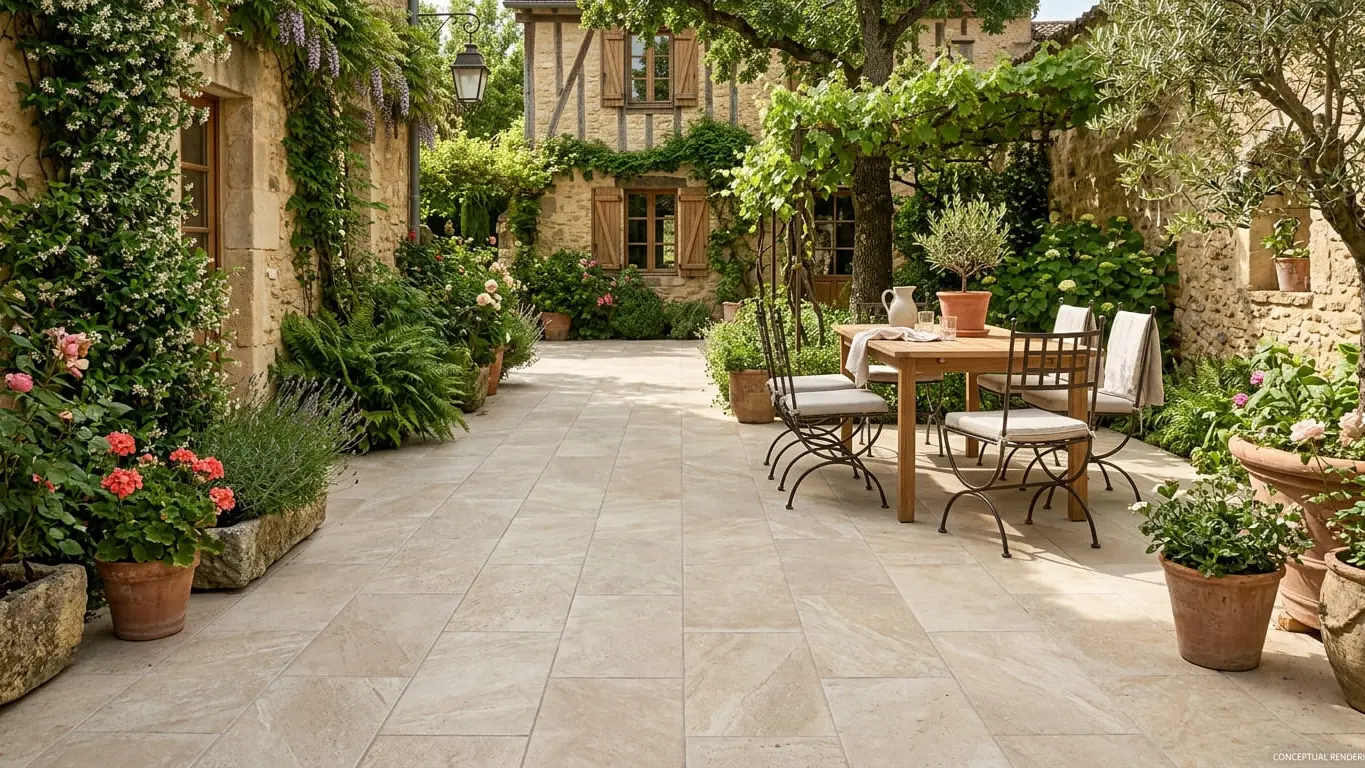
A common guideline is to use no more than two or three materials or textures in one outdoor space. A porcelain patio, a stone-clad wall, and a gravel border can look cohesive, while a fourth or fifth material often starts to feel busy.
Think About Color and Heat
Dark pavements absorb 80 to 95 percent of sunlight and get hot as a result, while lighter surfaces reflect more and stay cooler. In full afternoon sun, ivory, beige, and light gray can make a noticeable difference for bare feet. Darker tones work well in shade or as borders.
Connect to the House
Repeating a color or material from the home’s exterior helps the yard feel like part of the property. Carrying a similar floor color from an interior room out to the patio can make the two spaces read as one.
Use Pattern and Scale With Purpose
Large-format pavers in a straight grid have fewer joints, giving a clean, contemporary look. Herringbone and French patterns add movement, and a contrasting border gives a patio or path a finished edge.
Plan Drainage Early
Plan surfaces so runoff moves away from the house instead of collecting on the patio. Drainage is far easier to address during planning than afterward.
Balance Hard Surfaces With Plants and Light
Planting beds, trees, and groundcover soften edges, and leaving pockets for plants within a patio adds shade and seasonal change. Low-voltage lighting along paths and steps makes the yard usable after dark and helps people see changes in level.
Planning in Phases
A full outdoor project does not have to happen all at once. Many homeowners plan the complete layout first, then tackle it in stages, starting with the main patio and paths and adding a kitchen, fire feature, or wall cladding later. Since natural stone varies in color and pattern from one batch to the next, choosing materials for the whole plan at the start helps later phases match.
Seeing Materials in Person
Photos rarely show how stone looks in real light or how a finish feels underfoot. Nova Tile and Stone has showrooms in Reno, Minden, Fernley, and Sacramento, where you can compare surfaces side by side. Bringing rough measurements, photos of the house exterior, and notes on sun exposure helps narrow choices. A free design consultation is also available for talking through layout and material options.
Conclusion
The most successful outdoor spaces are designed first around the people who use them, then around the conditions their surfaces will face, and finally around the details that tie everything together. A clear plan keeps each area purposeful, materials matched to sun, water, and foot traffic help the space hold up, and a consistent look connects the yard to the home. Making these decisions early helps a patio, path, or pool surround feel like a natural extension of the house for years.
Frequently Asked Questions
Hardscape refers to non-living elements such as patios, paths, walls, and steps. Softscape refers to living elements, including plants, trees, shrubs, and lawn. Most well-designed outdoor spaces use both.
It depends on the look and upkeep you prefer. Natural stone offers one-of-a-kind variation, and some types need periodic sealing. Porcelain offers a more consistent appearance, low water absorption, and a wide range of stone, concrete, and wood looks.
Many porcelain and natural stone products work in both settings, creating a smooth visual transition. The outdoor version often calls for a more textured finish, and it is important to confirm the product is rated for exterior use.
Large-format pavers in a simple grid reduce visible joints, and a light palette keeps the surface feeling open. Limiting materials, choosing built-in seating, and keeping clear walking routes also help.
Regular sweeping keeps grit and leaves from building up, and cleaning spills promptly reduces staining on porous stones. Follow the supplier’s sealing and care recommendations, and keep de-icing salts off travertine.
Note: Some images on this page may be conceptual renderings created to illustrate design possibilities and may not depict actual installations.