Hardscape ideas for backyard spaces include paver patios, garden paths, fire pit and outdoor kitchen areas, pool decks, retaining and seat walls, raised planters, and permeable paving. Hardscape is the built, nonliving part of a landscape, and it gives a backyard its structure, defines how each area gets used, and stays in place through every season.
A strong plan starts with how the space will be used and the look you want, then moves to layout, drainage, and materials. Common planning guidance includes placing the main patio close to the house, dividing larger yards into zones for dining, lounging, and quiet seating, keeping ground surfaces to two or three coordinated materials, sloping paved areas so water drains away from the home, and choosing dense, low-absorption surfaces where winters bring freezing temperatures. Getting these choices right early matters, because paved surfaces cover a lot of ground and are costly to change later.
Choosing a Hardscape Style
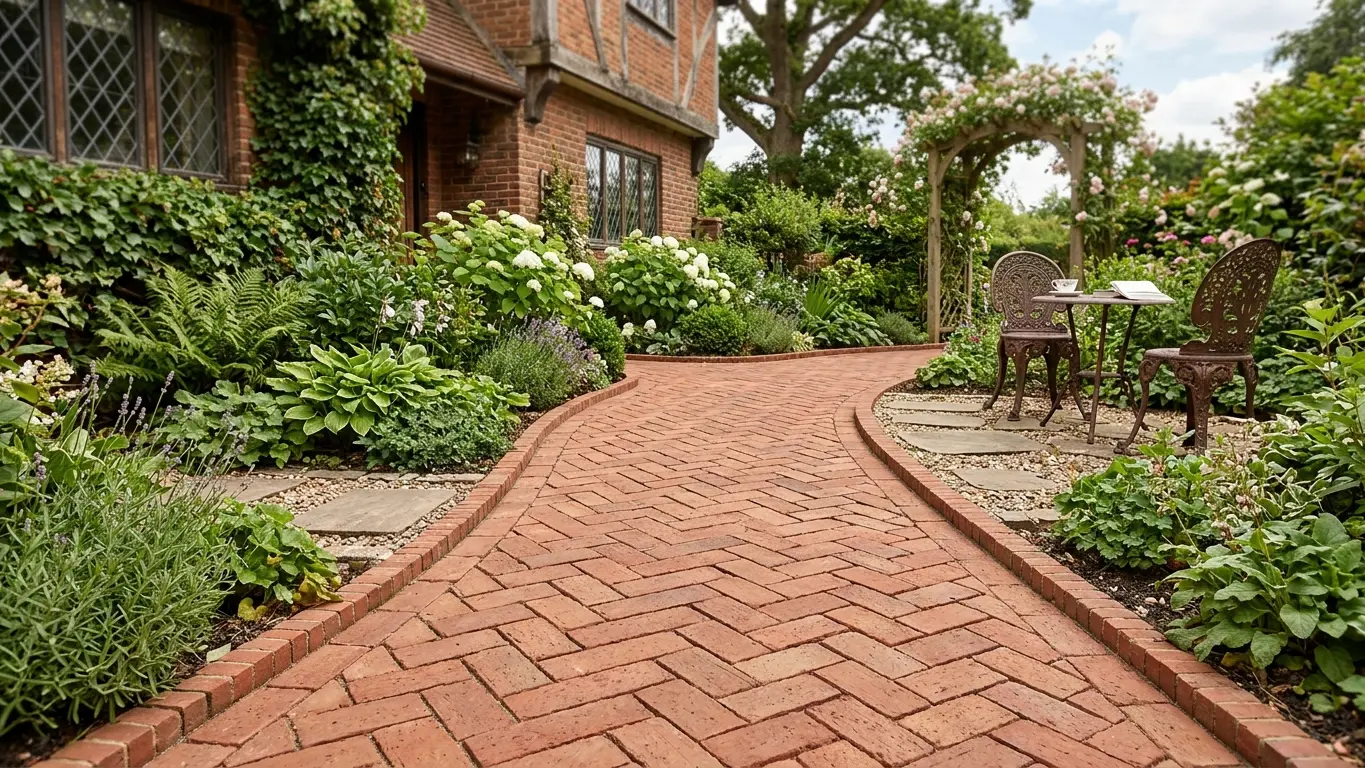
Once you know how the yard will be used, the next question is how it should feel. Materials set that tone before a single plant goes in. Crisp, large-format porcelain leans modern, tumbled stone feels relaxed and old-world, and granite reads as solid and grounded. Deciding on the overall feel early makes every later choice easier, from paving patterns to the stone used on walls and planters.
A practical way to find that direction is to look at the house itself. Pull a color or texture from the exterior, such as the roof, trim, or existing stonework, and repeat it in the yard. This simple step helps the outdoor space feel like an extension of the home rather than an add-on.
Backyard Hardscape Ideas to Plan Around
Start with One Main Patio
Most plans begin with a primary patio, usually close to the house so carrying food and drinks back and forth is easy. Before deciding on size, set out the furniture you actually plan to use, or mark its footprint on the ground, and check that chairs can be pulled out and people can walk around the table comfortably. It also helps to watch how sun and shade move across the yard over a full day. A patio that sits in harsh afternoon sun may call for a shade structure, a lighter surface, or a different location altogether.
Divide the Yard into Zones
Rather than paving one large area, many homeowners split the yard into smaller spaces with different purposes: a dining area, a lounge area around a fire feature, and a quiet seating nook farther from the house. A change in paving pattern, a single step up or down, or a shift to a complementary material can signal where one zone ends and the next begins. To keep everything cohesive, a common design guideline is to limit the ground surfaces to two or three materials or textures. One material alone can look flat across a large yard, while too many tend to look cluttered.
Connect Spaces with Paths
A path shapes how people experience a garden, not just how they get across it. A straight path with uniform pavers suits a formal layout and moves people efficiently. Stepping stones set in gravel or low groundcover feel more casual and let plants soften the edges. A gently curving path slows the pace and can reveal different views along the way. Whatever the style, the surface should feel steady underfoot and suit the amount of traffic it will carry.
Create a Fire Pit or Outdoor Kitchen Area
A fire feature gives people a natural reason to gather and stretches the hours a patio gets used into cool evenings and shoulder seasons. Natural stone and porcelain both work well for the seating area around it. For outdoor kitchens, granite and quartzite slabs are frequent choices for counters and bar tops, and browsing a live slab inventory is a helpful way to compare real colors, veining, and finishes before settling on one. Once you have chosen a stone, repeating it in nearby paving or a seat wall helps the area read as one designed space.
Rethink the Pool Deck
Pool surrounds deal with strong sun, splashing water, and bare feet, so material and color choices matter more here than almost anywhere else in the yard. Color has a measurable effect on surface temperature. Dark paving absorbs most of the sunlight that hits it, and in one infrared comparison of light and dark pavement, the lighter surface measured roughly 30°F cooler. That is why pale travertine, light quartzite, and light-toned porcelain are common around pools. Very bright, glossy surfaces can produce glare in strong sun, so many homeowners settle on light but matte tones. For surfaces that will regularly get wet, look at honed, textured, or matte finishes and ask for the slip resistance rating of the specific product.
Add Walls, Steps, and Raised Planters
Exterior stone on retaining walls, seat walls, and raised planters adds texture and height to a yard that might otherwise feel flat. On a sloped lot, terracing with short walls and steps can turn an awkward hillside into several level, usable areas. Stone veneer is another option for giving planters and fire features a natural stone look.
Consider Permeable Paving
Solid paving sends rainwater sideways, which can lead to puddles, runoff toward the house, and waterlogged planting beds. Permeable systems handle water differently: unlike standard asphalt or concrete, permeable surfaces let stormwater soak through into the soil below. Whatever paving you choose, planning for water to drain away from the house is one of the most important decisions in any outdoor project.
Considering Your Climate
Before choosing what each of these features is made of, it helps to understand how your climate will treat it. Sun, rain, and constant foot traffic all wear on outdoor surfaces, but freezing weather is where material choice matters most.
In places with freezing winters, porosity is the key factor. Water expands as it freezes, and when that happens inside porous stone, the pressure can crack it over time. Where a surface sits matters too. Horizontal paving exposed to standing water or snow faces harsher conditions than walls do, and areas that freeze and thaw frequently are tougher on stone than those that cycle less often. In climates that are both wet and cold, dense, low-absorption materials are the safer choice.
How Common Materials Behave Outdoors
With climate in mind, here is how the most common outdoor materials compare, and where each one tends to fit best. If you would like a second opinion on which options suit your yard, a free design consultation is an easy way to talk through the choices before deciding.
Porcelain Pavers
Porcelain is a dense ceramic. According to the ANSI A137.1 standard, tile qualifies as porcelain only if its water absorption rate is 0.5% or less, so porcelain takes in very little moisture compared with many other surfaces.
Outdoor porcelain pavers are commonly 2 cm thick, and the ANSI A137.3 standard was revised in 2022 to include specifications for 2 cm porcelain pavers. Porcelain is available in polished, honed, and specialty finishes, with exact options varying by product, and can be made to resemble stone, wood, or concrete. Because it is manufactured, its color is generally more uniform than natural stone, though shade can still vary between production runs. Buying enough for the whole project from a single lot helps keep large areas consistent.
Granite
Granite is a dense natural stone suited to outdoor floors, walls, and fireplaces, and it is generally considered UV resistant, though resin-treated slabs should be confirmed for outdoor use. It is available in polished, honed, leathered, and specialty finishes. Its strength makes it a common pick for outdoor counters, steps, and busy walkways. Like any dark surface, darker granite can become very warm in direct sun, which is worth weighing for areas people use barefoot.
Quartzite
Quartzite is a natural stone suited to both indoor and outdoor use, including floors, walls, and fireplaces, and it is generally considered UV resistant, though resin-treated slabs should be confirmed for outdoor use. It comes in polished, honed, leathered, and specialty finishes. Many quartzites have pronounced veining and a wide range of tones, from soft whites and grays to blues and greens, which makes them a popular choice for outdoor counters, bar tops, and feature walls where the stone itself is the focal point.
Travertine
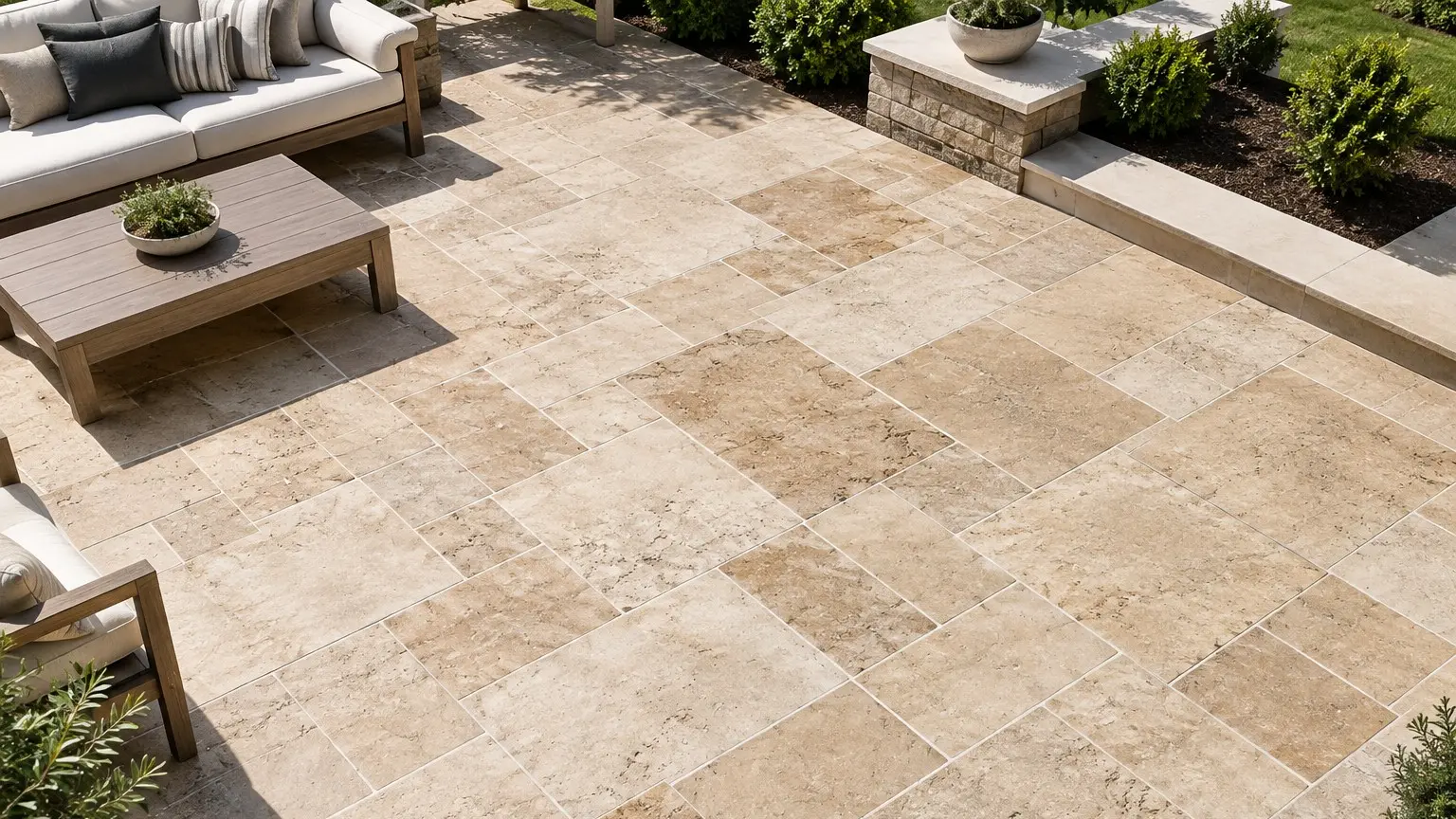
Travertine has a warm, softly textured appearance and a long history around patios and pools. It is suited to indoor and outdoor floors, walls, and fireplaces and is available in polished, honed, leathered, and specialty finishes. Its creams, tans, and walnut tones pair naturally with Mediterranean, Spanish, and traditional home styles.
Travertine is naturally more absorptive than granite, and it often has small surface voids that are filled before the stone is used for paving. That makes the climate factors above especially relevant. Stone industry guidance has recommended against travertine for exterior paving where de-icing salts are used. If you live where winters bring regular freezing and salted walkways, confirm that the specific travertine you are considering suits that exposure.
A Note on Marble
Marble is most often specified for interior floors, walls, and fireplaces. If you are considering it for an outdoor space, confirm that the specific stone is rated for exterior use. Marble-look porcelain pavers are another way to get a similar appearance in a material made for outdoor paving.
Conclusion
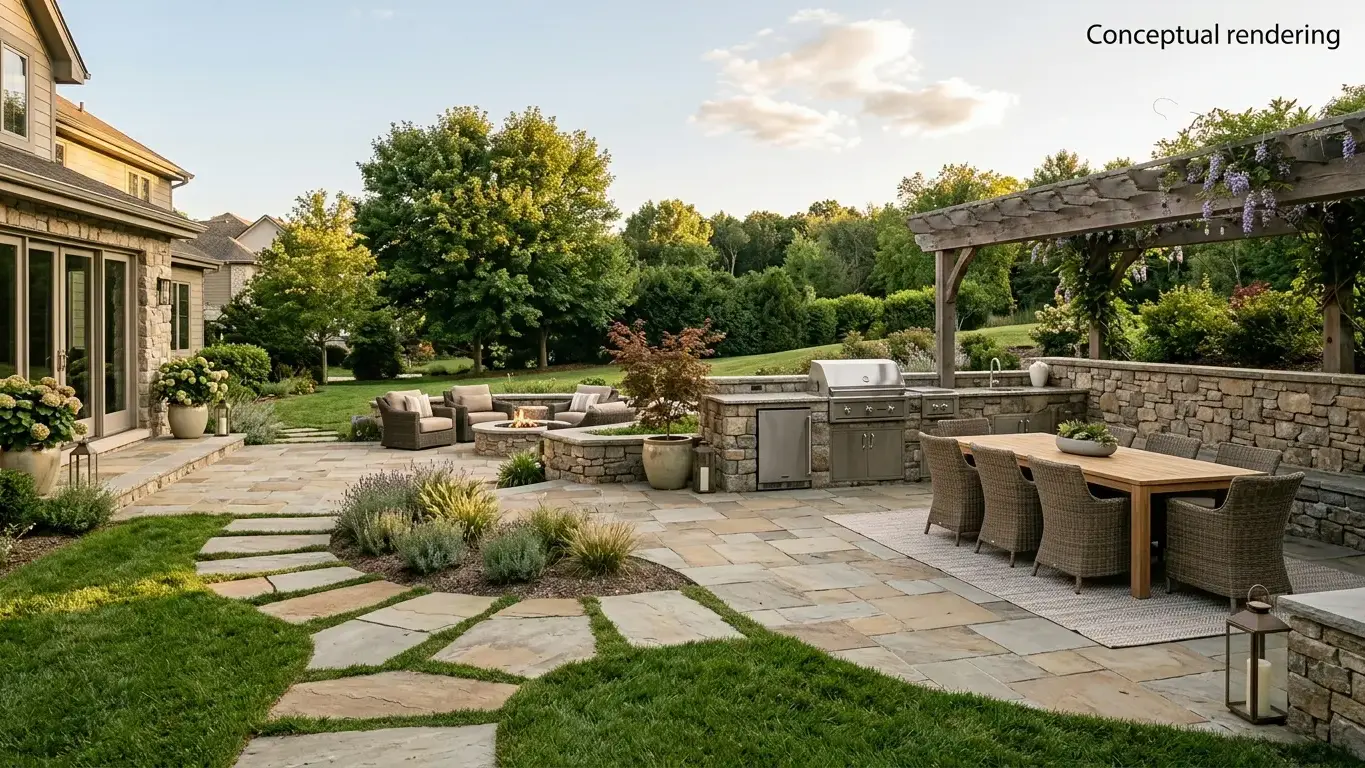
The ideas in this guide work best when they are planned together rather than one at a time. Where the patio sits affects how much sun it gets, sun exposure affects which colors stay comfortable, and climate affects which stones belong outside at all. Sketching the whole yard before choosing any single feature, even roughly, makes it easier to see how each decision shapes the next.
When you start comparing materials, bring that sketch along with notes on sun and shade and a few photos of your home's exterior. Photos rarely capture the movement in natural stone or the feel of a finish, so viewing full slabs and pavers side by side, ideally in natural light, gives a much clearer sense of how they will look outdoors. Nova Tile and Stone carries pavers, exterior stone, natural stone slabs, and outdoor-suited porcelain, and you can compare them in person at showrooms in Reno, Minden, Fernley, and Sacramento. Free design consultations are available if you would like help narrowing down options for your yard and climate.
Frequently Asked Questions
Hardscape refers to the built, nonliving parts of a yard, such as patios, walkways, retaining walls, steps, and fire features. Softscape covers the living parts, including lawn, trees, shrubs, and flower beds. Most well-designed yards balance the two, with hardscape providing structure and usable space and softscape adding color, shade, and texture.
A polished finish is glossy and reflective, and it brings out color and veining. Its smooth, shiny surface makes it better suited to counters and accent walls than to walking surfaces. A honed finish is smooth with a matte look. A leathered finish has a soft sheen and a subtle texture you can feel. Specialty finishes vary by product, so it is worth seeing the finish in person before choosing one.
Most natural stone benefits from periodic sealing, with frequency depending on the stone type, finish, and exposure. Many porcelain pavers need little more than routine cleaning because of their very low water absorption, although polished porcelain and grout joints may still need protection. Following the manufacturer's care guidance for the specific product is the most reliable approach.
Neither is better in every situation. Porcelain offers very low water absorption, more uniform color, and the ability to mimic stone, wood, or concrete. Natural stone offers one-of-a-kind veining and texture, but each type behaves differently, so suitability depends on the specific stone, your climate, and where it will be used. Many yards combine both, such as porcelain for large paved areas and natural stone for counters or feature walls.
Modern designs tend to favor clean lines, a limited color palette, and large surfaces with few visual breaks. Large-format porcelain pavers fit this look well because of their consistent color and wide range of stone, concrete, and wood-inspired finishes. Granite and quartzite in honed or leathered finishes also work well for counters, steps, and feature walls, adding natural texture without competing with the overall design.
Note: Some images on this page may be conceptual renderings created to illustrate design possibilities and may not depict actual installations.