Hardscape terms are the words used to describe the stone, pavers, finishes, and building methods behind patios, walkways, driveways, pool decks, steps, and garden walls. Some of the most common are pavers, flagstone, travertine, porcelain pavers, coping, bullnose, tumbled and flamed finishes, slip resistance, polymeric sand, and edge restraint. Knowing what these terms mean makes it easier to compare natural stone, concrete pavers, and porcelain pavers, understand contractor quotes, and choose materials suited to your climate and how you use your yard.
We grouped 45 hardscape terms into five categories: materials, shapes and patterns, finishes and edges, performance, and project planning. Each definition is written in plain language and includes a short note on why the term matters when you are choosing materials.
Hardscape Material Terms
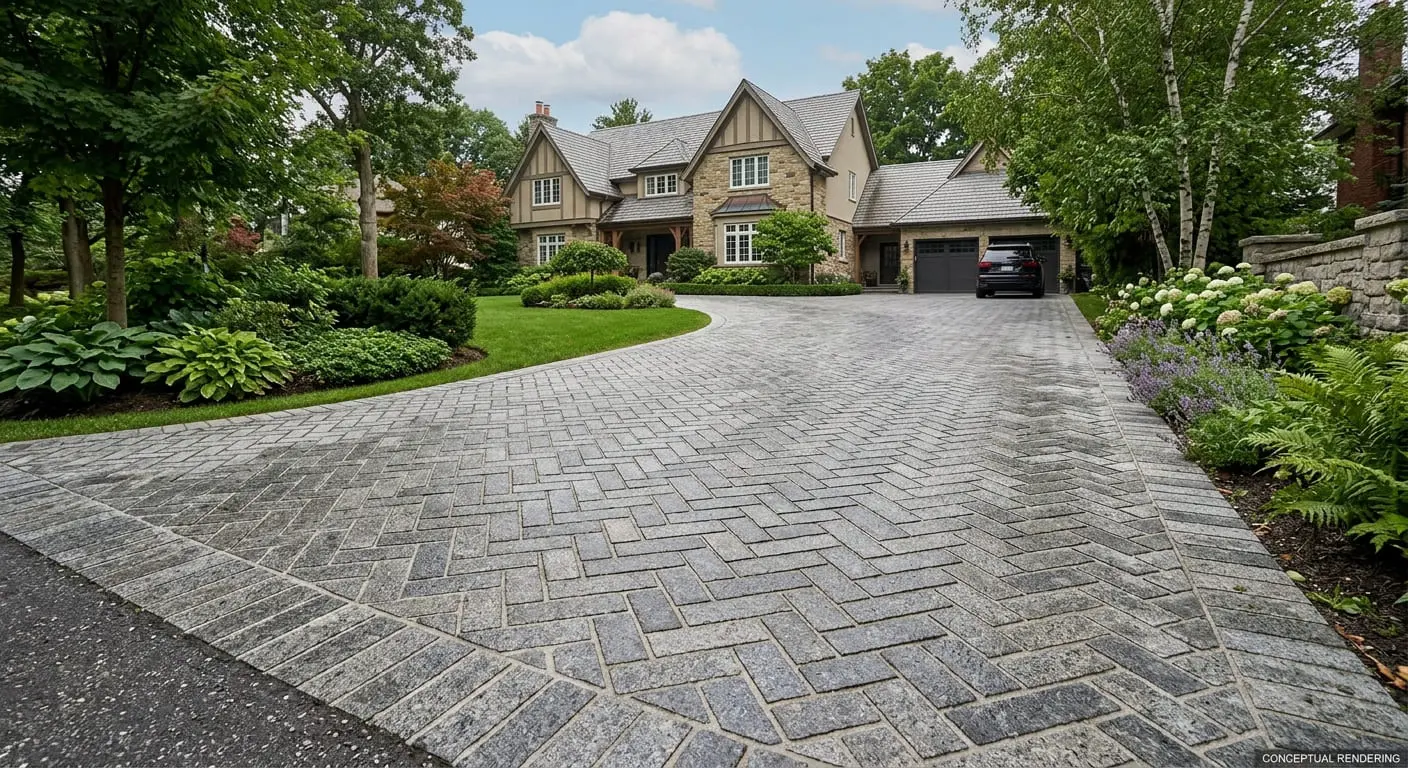
Pavers: Individual units laid side by side to form a surface. Pavers can be made from concrete, clay brick, natural stone, or porcelain. When pavers are set on sand rather than mortar, a single damaged piece can usually be lifted and replaced without disturbing the rest of the surface.
Natural stone: Stone quarried from the earth and cut or split for use, as opposed to manufactured materials like concrete or porcelain. Each piece shows natural variation in color and pattern, so it helps to view several pieces together before deciding and compare them with other pavers and exterior stone in person.
Flagstone: A general term for flat slabs of sedimentary or metamorphic stone, such as sandstone, slate, limestone, or quartzite, split into layers. Flagstone is a common choice for patios, walkways, and stepping stones. The word describes the form of the stone, not one specific rock type, so always ask which stone a flagstone product actually is.
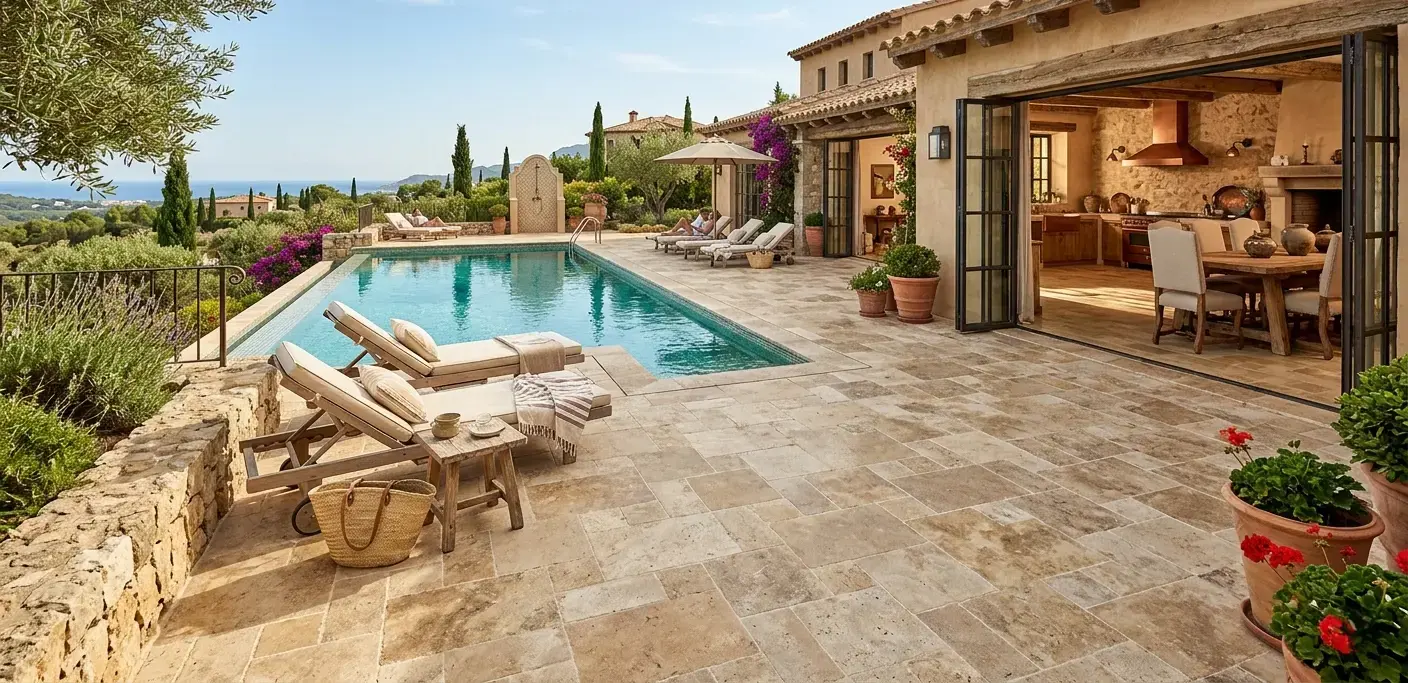
Travertine: A type of limestone formed by mineral deposits from springs. It has a warm, earthy look and natural pores. Travertine pavers are popular around pools because they tend to release heat faster than concrete, especially in lighter colors, though no paving material stays cool all day in direct sun.
Bluestone: A dense sandstone, traditionally quarried in Pennsylvania and New York, with blue-gray, lilac, and brown tones. It is often sold in cut rectangles or irregular flagstone.
Quartzite: A hard metamorphic stone formed when sandstone is exposed to heat and pressure. Quartzite pavers and flagstone resist wear well and come in tones ranging from silver and gray to gold and rust.
Porcelain pavers: Thick porcelain tiles, typically about 2 cm (3/4 inch), made for outdoor use. They can mimic the look of stone or wood, absorb very little water, and come in large formats.
Concrete pavers: Manufactured units made by pressing or casting concrete in molds. They come in many shapes, colors, and textures and are a common choice for driveways because of their consistency and cost.
Cobblestone: Small, roughly cut or rounded blocks of stone, often granite, used for driveways, borders, and accent areas. Cobblestone gives a textured, old-world surface.
Stone veneer: Thin pieces of real or manufactured stone applied to the face of a wall rather than used as structural blocks. Veneer gives the appearance of a solid stone wall at a lighter weight.
Stacked stone (ledgestone): Narrow strips of stone arranged in horizontal layers, often sold as panels. It is used on exterior walls, columns, and outdoor kitchen bases to add depth and texture.
Shape, Size, and Pattern Terms
Irregular flagstone: Flagstone left in natural, uneven shapes. It fits together like a puzzle and creates a relaxed, organic look suited to cottage gardens and rustic landscapes.
Cut (dimensional) stone: Stone sawn into squares and rectangles with straight edges. Cut stone gives a cleaner, more tailored appearance and is easier to lay in a set pattern.
Gauged vs. ungauged: Gauged stone has been calibrated to a consistent thickness. Ungauged stone varies in thickness from piece to piece. This affects how even the finished surface is and what kind of base the project needs.
Large-format pavers: Pavers noticeably larger than standard sizes, often 24 x 24 inches or bigger, though there is no single industry cutoff. Larger pieces mean fewer joints, which gives a modern, open look. They are heavier, need a very flat base, and some large sizes are rated for foot traffic only, so check before using them on a driveway.
French pattern (Versailles pattern): A repeating layout that combines several rectangle and square sizes. It is common with travertine and is often chosen for a traditional look. Material for this pattern is usually sold in sets so the sizes come in the right proportions.
Ashlar pattern: A random-looking arrangement of cut rectangles and squares in mixed sizes. It sits between the formality of a uniform grid and the looseness of irregular flagstone.
Modular sizing: A system where paver sizes are designed to work together, such as 6 x 12, 12 x 12, and 12 x 24 inches, so they can be combined without excessive cutting.
Laying pattern: The arrangement of pavers on the ground, such as running bond, herringbone, or basketweave. The pattern affects appearance, and some patterns are better suited to areas that carry vehicle traffic.
Finish and Edge Terms
Tumbled: Stone tumbled with grit or small stones to soften the edges and give a worn, aged surface. Tumbled pavers feel textured underfoot and suit traditional and Mediterranean designs.
Flamed (thermal): A finish created by applying high heat to the stone surface, which causes some crystals to fracture and leaves a rough texture. It is most common on granite and adds grip for outdoor areas.
Honed: A smooth, matte finish with little to no shine. Honed stone has a soft, understated appearance, but it can be less grippy when wet than textured finishes, so it is worth asking how a honed paver performs outdoors, something our team can cover during a free design consultation.
Split face: A rough, natural face created by splitting stone rather than sawing it. It is common on wall stone and stacked stone, where texture and shadow are part of the look.
Brushed and sandblasted: Finishes that use abrasive brushes or sandblasting to give the stone a softly textured, slightly weathered surface without the heavy roughness of a flamed finish.
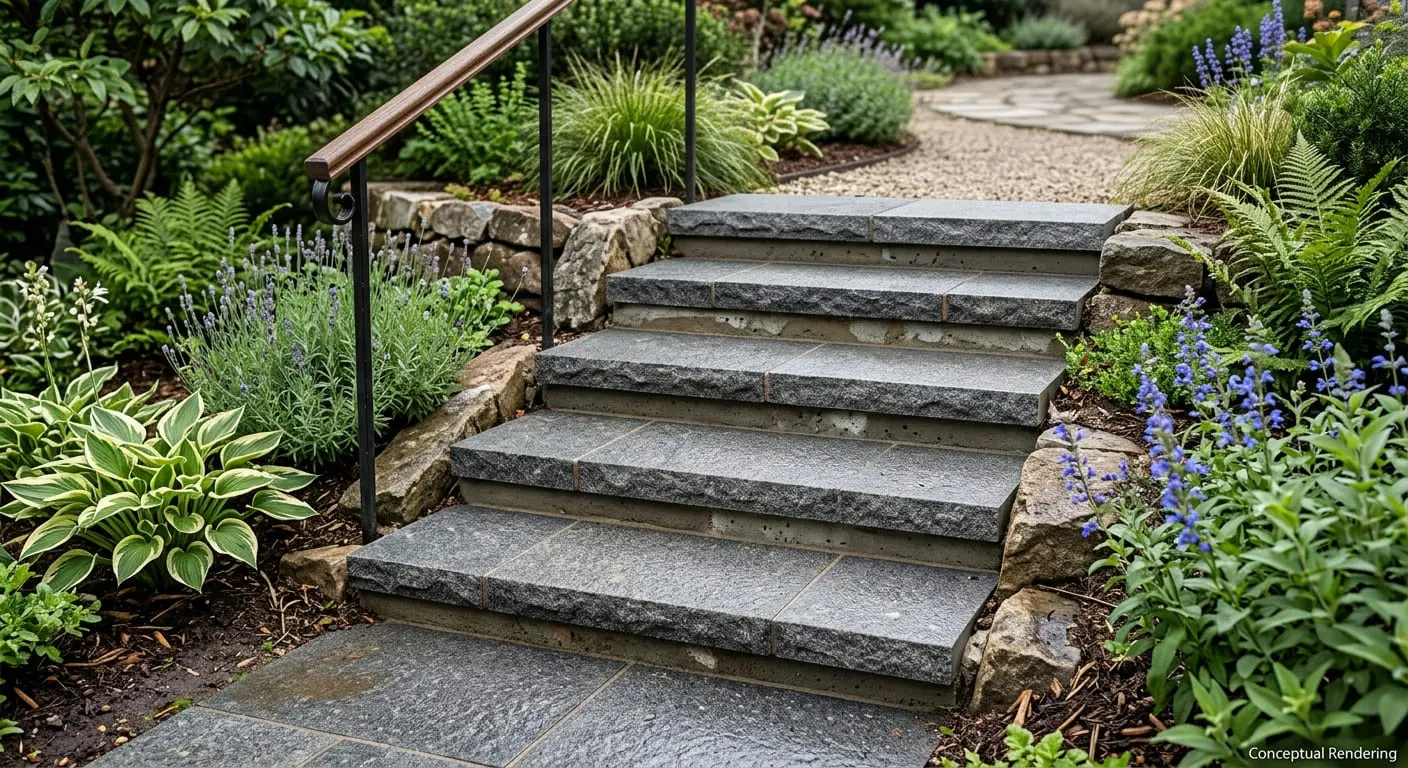
Bullnose: A rounded edge profile. Bullnose pieces are used on step edges, pool coping, and wall caps where a softer edge is more comfortable to sit on or walk past.
Eased edge: A slightly rounded or beveled edge that removes the sharpness of a straight cut while keeping a crisp, squared look.
Rock-face (chiseled) edge: An edge left rough and natural, often on treads, coping, or caps, for a rustic look.
Coping: The stone or paver pieces that cap the edge of a pool, spa, or raised wall. Coping frames the edge and should be comfortable to sit or stand on when wet.
Treads and risers: The horizontal surface you step on (tread) and the vertical face between steps (riser). Many stone collections offer matching tread pieces with finished edges.
Performance Terms
Slip resistance: How well a surface provides grip, especially when wet. It is commonly measured as DCOF (dynamic coefficient of friction) under the ANSI A326.3 standard, which includes an Exterior Wet classification for areas like pool decks and outdoor walkways. For these spaces, look for products the manufacturer classifies for exterior wet use and favor textured finishes.
Absorption (porosity): How much water a material takes in. Porous stones like some sandstones and travertine absorb more, while porcelain and dense quartzite absorb very little. Absorption affects staining, sealing needs, and cold-weather performance.
Freeze-thaw resistance: A material’s ability to handle water freezing and expanding inside it. This matters in areas with cold winters, including the high desert of northern Nevada. Low-absorption materials generally hold up better through freeze-thaw cycles, and our local showrooms carry options suited to colder climates.
Heat retention: How hot a surface gets in direct sun. Lighter-colored stone and pavers usually stay cooler than dark ones, which matters for pool decks and patios used barefoot during hot summers.
Efflorescence: A white, powdery residue that can appear on concrete pavers, brick, and some stone when moisture carries salts to the surface. It is common, often fades over time, and is a cosmetic issue rather than a structural one.
Permeable pavers: Pavers designed with wider joints filled with small gravel and set over an open-graded stone base, allowing rainwater to drain through the surface into the ground below instead of running off.
Colorfastness (UV stability): How well a material keeps its color under sunlight. Porcelain is highly color-stable, and most natural stone holds its color well, though some stones can lighten or shift in tone over time. Colored concrete pavers may look faded over the years as sun and wear affect the surface.
Project and Planning Terms
These are terms you are likely to hear from a landscape designer or contractor. Knowing them helps you follow the conversation and understand quotes. Designers and contractors sourcing materials for clients can also apply for a trade account with us.
Hardscape vs. softscape: Hardscape covers the built, non-living elements of a yard. Softscape covers the living elements, such as lawn, shrubs, trees, and flower beds. Most outdoor spaces balance the two.
Base and sub-base: The compacted layers of gravel or crushed rock beneath pavers or stone. The base supports the surface and helps it stay level, which is why quotes often list base preparation as its own line item.
Bedding layer: A thin layer, usually sand or fine aggregate, placed on top of the base for pavers or stone to sit on.
Joints: The gaps between individual pavers or stones. Joint width affects the look of a surface: narrow joints feel more formal, while wider joints filled with gravel or plantings feel more natural.
Polymeric sand: A joint sand mixed with binders that firm up when moistened. It helps hold pavers in place and discourages weeds and ants from settling in the joints.
Edge restraint: A border, such as a concrete curb, plastic or metal edging, or a border row of pavers anchored in concrete, that keeps pavers from shifting outward over time.
Drainage slope (pitch): A slight, intentional slope built into a patio or walkway so water runs away from the house instead of pooling on the surface.
Sealer: A protective treatment applied to stone or pavers to reduce staining and, in some cases, enhance color. Whether a material needs sealing depends on its absorption and how the area is used.
Overage (waste factor): Extra material ordered beyond the measured square footage to account for cuts, breakage, and future repairs. It is wise to keep a few leftover pieces from the same batch for later replacements. If you are browsing our overstock sale, plan your overage up front, since close-out quantities are limited.
Conclusion
A working knowledge of hardscape terms turns a confusing shopping trip into a clear set of decisions. Once you know the difference between irregular and cut flagstone, honed and flamed finishes, or porcelain and concrete pavers, it becomes much easier to narrow your options to materials that fit your style, your climate, and how you plan to use the space. Keep this glossary handy as you compare materials and talk through plans with your designer or contractor.
When you are ready to see materials in person, our team would be glad to walk you through our selection of natural stone, pavers, and exterior stone at our showrooms in Sacramento, Reno, Minden, and Fernley. Bring your questions, photos of your yard, and any terms you are still unsure about, and we will help you find the right fit for your project.
Note: Some images on this page may be conceptual renderings created to illustrate design possibilities and may not depict actual installations.
Frequently Asked Questions
Hardscape refers to the non-living elements of an outdoor space, such as patios, walkways, walls, and steps made from stone, pavers, or concrete. Landscape is a broader term for the whole outdoor design, and it is often used to mean the living elements, also called softscape, such as plants, trees, and lawn.
Flagstone is natural stone split into flat slabs, available in irregular or cut shapes. Pavers are individual units with consistent dimensions, made from concrete, clay brick, porcelain, or cut natural stone. Flagstone usually has a more natural, varied look, while pavers offer a more uniform surface.
Pool coping is the material that caps the edge of a pool or spa, sitting between the pool wall and the surrounding deck. Common coping materials include travertine, limestone, bluestone, porcelain, and concrete pavers, often with a bullnose or eased edge for comfort.
Tumbled pavers have been rotated in a drum with grit or small stones to soften their edges and give them a worn, aged appearance. The finish adds texture underfoot and suits traditional, rustic, and Mediterranean-style outdoor spaces.
It depends on the material and how the area is used. Porous stones such as travertine and some sandstones may benefit from sealing to reduce staining, while porcelain pavers and dense stones absorb very little water and often do not need it. Check the manufacturer’s care recommendations for the specific product.