The most common hardscape edging ideas for patios and walkways are soldier course paver borders, natural stone cobbles, bullnose coping, stacked stone seat walls, contrasting paver bands, steel or aluminum edging, and gravel or pebble strips. Hardscape edging is the border that frames a paved surface where it meets lawn, planting beds, or loose material such as mulch and gravel. It does two jobs: an edge restraint keeps interlocking pavers from shifting outward, and a visible border gives the patio or walkway a clear, defined shape.
The right edging depends on the field material, the style of the home, and how much contrast you want. A soldier course suits most paver patios, cobbles fit traditional and rustic landscapes, coping works well on raised patios and pool edges, and thin steel edging complements modern designs. In this guide, we compare each border type, explain how to choose between contrast and coordination, and share edging ideas for patios, walkways, and garden paths.
Why Borders and Edging Matter in Hardscape Design
Edging is easy to overlook during planning, but it affects both how a patio or walkway looks and how well it holds together over time.
Structure. Interlocking pavers depend on friction and a stable base to stay in place. Without a restraint along the outer edge, the outermost rows can slowly spread, opening gaps and uneven joints. A border course or hidden edge restraint gives the field a fixed boundary to push against.
Definition. A border tells the eye where a space begins and ends. It can separate a dining area from a lounge area, outline a path through a garden, or visually connect a patio to the house.
Maintenance. A clean edge keeps soil, mulch, and gravel from washing onto paved surfaces. It also gives mowers and string trimmers a clear line to follow, which cuts down on time spent tidying the margins of the yard.
Types of Hardscape Borders
Soldier Course and Sailor Course Pavers
The most common paver border is a soldier course, where rectangular pavers are set side by side with their short ends facing the field, forming a continuous band around the perimeter. A sailor course turns the same pavers so their long sides run along the edge, creating a narrower band. Both work with nearly any field pattern. Herringbone fields in particular look more finished with a border, since the pieces that have to be cut along the edge sit against a straight band instead of forming the outer line.
Natural Stone Cobbles
Granite, basalt, and porphyry cobbles have a rough, split texture that suits traditional, European, and cottage-style landscapes. A single or double row of cobbles along a paver or flagstone patio adds textural contrast and a slightly irregular line that feels less formal than a uniform paver band.
Bullnose and Coping Stone
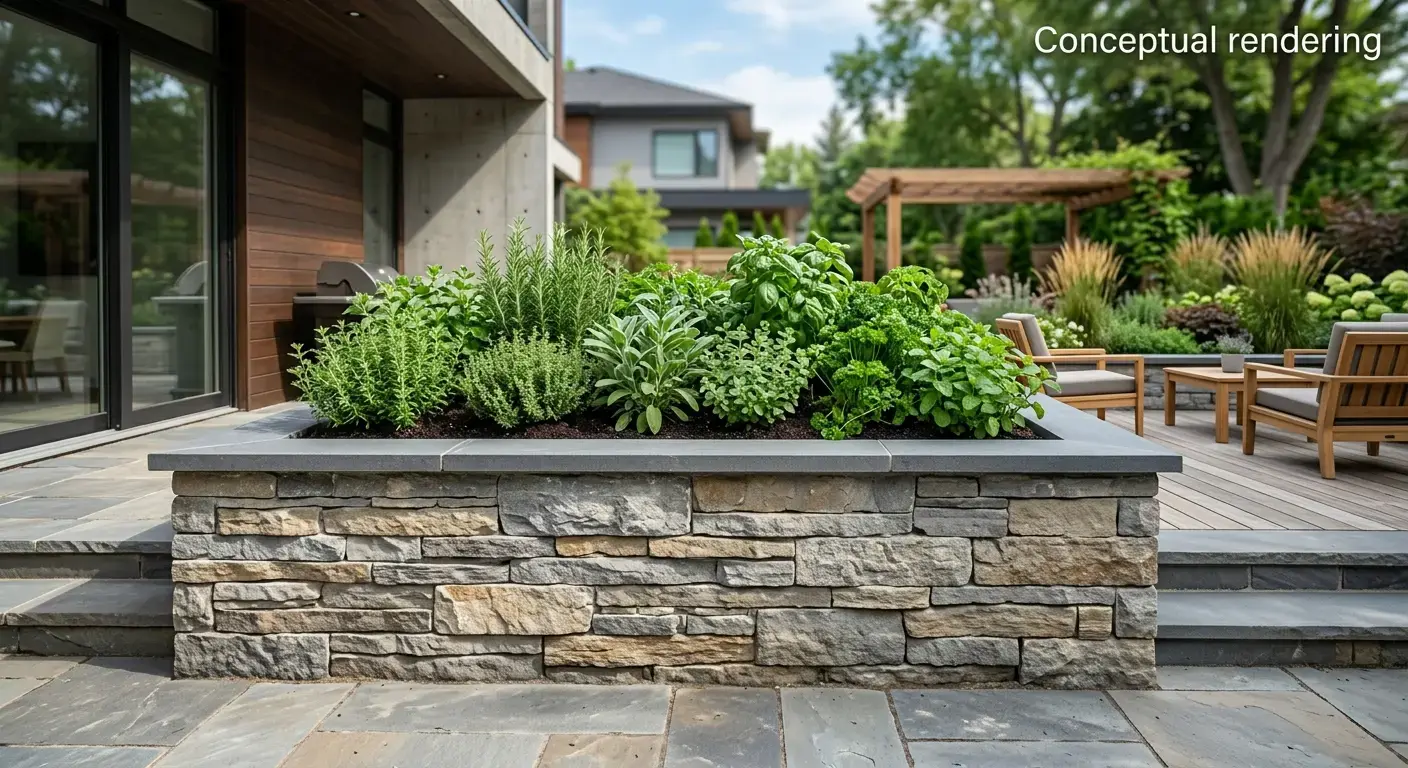
Coping pieces have a rounded or eased edge and are typically used where a paved surface meets a step down, a raised planter, or a pool. Travertine, limestone, and porcelain coping give a smooth edge that is comfortable to sit on or brush against, which makes them practical for raised patios. Our pavers and exterior stone selection includes pool coping for these kinds of edges, along with stacked stone for the low walls described below.
Stacked Stone and Low Seat Walls
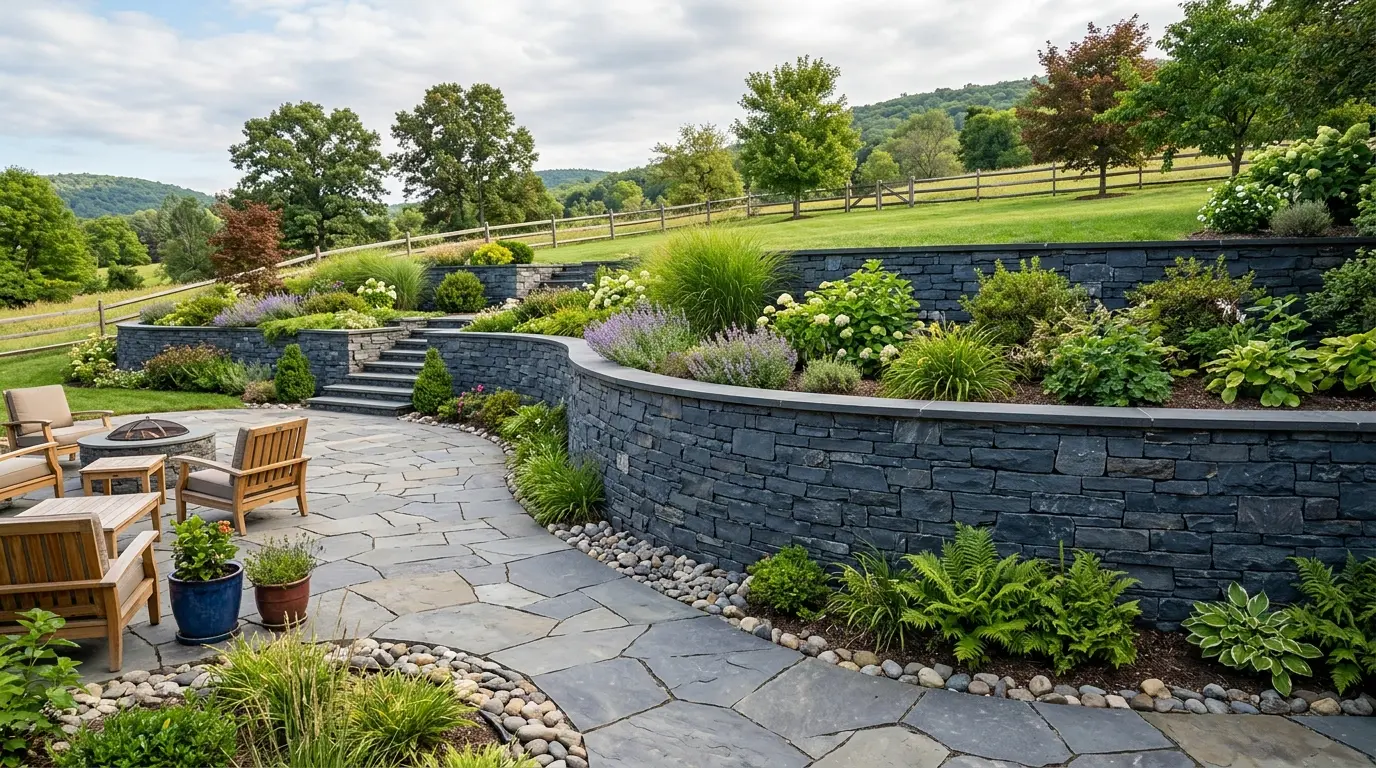
When a patio sits next to a slope or planting bed, a low wall can serve as the border. A wall built from natural wall stone, or a structural wall faced with stacked stone veneer, creates a vertical edge that holds back soil, adds extra seating, and gives the patio a sense of enclosure. Seat walls are often planned at roughly 18 to 20 inches high, a comfortable sitting height for most adults.
Contrasting Paver Bands and Inlays
Borders do not have to sit only on the outer edge. Bands of contrasting pavers can run through a large patio to divide it into zones, mark a path across it, or outline a fire pit or dining area. A circle pattern or stone medallion set inside a bordered square gives a large field a focal point.
Metal and Concealed Edge Restraints
For a minimal look, steel, aluminum, or heavy-duty plastic edge restraints hold pavers in place while staying hidden below the soil or mulch line. Steel edging set slightly above grade also creates a thin, crisp line between gravel and lawn, a detail that fits modern landscapes.
Gravel and Pebble Strips
A strip of gravel or river pebbles between a patio and a planting bed adds texture and helps rainwater drain away from the paved edge. Pebble strips are common in Japanese-inspired gardens and drought-tolerant yards, where they blend hardscape and planting areas.
Choosing Border Materials: Contrast or Coordination
Most border decisions come down to one question: should the edge stand out from the main surface or blend with it?
Contrast creates definition. A charcoal soldier course around a light gray patio, or dark basalt cobbles around tan flagstone, draws a clear outline and makes the shape of the space easy to read from a distance. This approach works well for large patios and for walkways that need to stand out against a lawn.
Coordination creates a calmer look. Using the same paver in a slightly darker or lighter shade, or the same stone in a different finish, frames the space without pulling attention from the field. Tone-on-tone borders suit small yards, where strong contrast can make the area feel busy.
A few guidelines help either approach work. Pull the border color from something already on the home, such as the roof, trim, or front door. Consider texture as well as color, since a tumbled border around a smooth field adds interest even in the same shade. Finally, limit the outdoor palette to two or three hardscape materials so the whole yard feels connected. Comparing border and field materials side by side at one of our local showrooms can make contrast easier to judge than photos alone.
Border Ideas for Patios
- Double soldier course. Two rows of border pavers create a wider frame that suits large patios and gives the edge more visual weight.
- Contrasting border around a fire pit. A circle or square of contrasting pavers around a fire feature defines the gathering area within a larger patio.
- Coping edge on a raised patio. When a patio sits above the surrounding yard, bullnose coping creates a finished step down and a comfortable place to sit.
- Seat wall along one or two sides. A low stacked stone wall adds seating and separates the patio from the lawn or garden without closing it in.
- Large-format porcelain with a slim stone edge. Large porcelain pavers framed by a narrow natural stone band give a clean, contemporary outline.
- Planting pockets in the border. Leaving small gaps in a long border for low plants or ornamental grasses softens a straight edge and connects the patio to the garden.
Border Ideas for Walkways and Garden Paths
Walkways are narrower than patios, so the border has a stronger effect on how the path looks and feels.
- Soldier border on both sides. A simple contrasting band along each edge makes a front walkway easy to follow and visually leads guests to the entry.
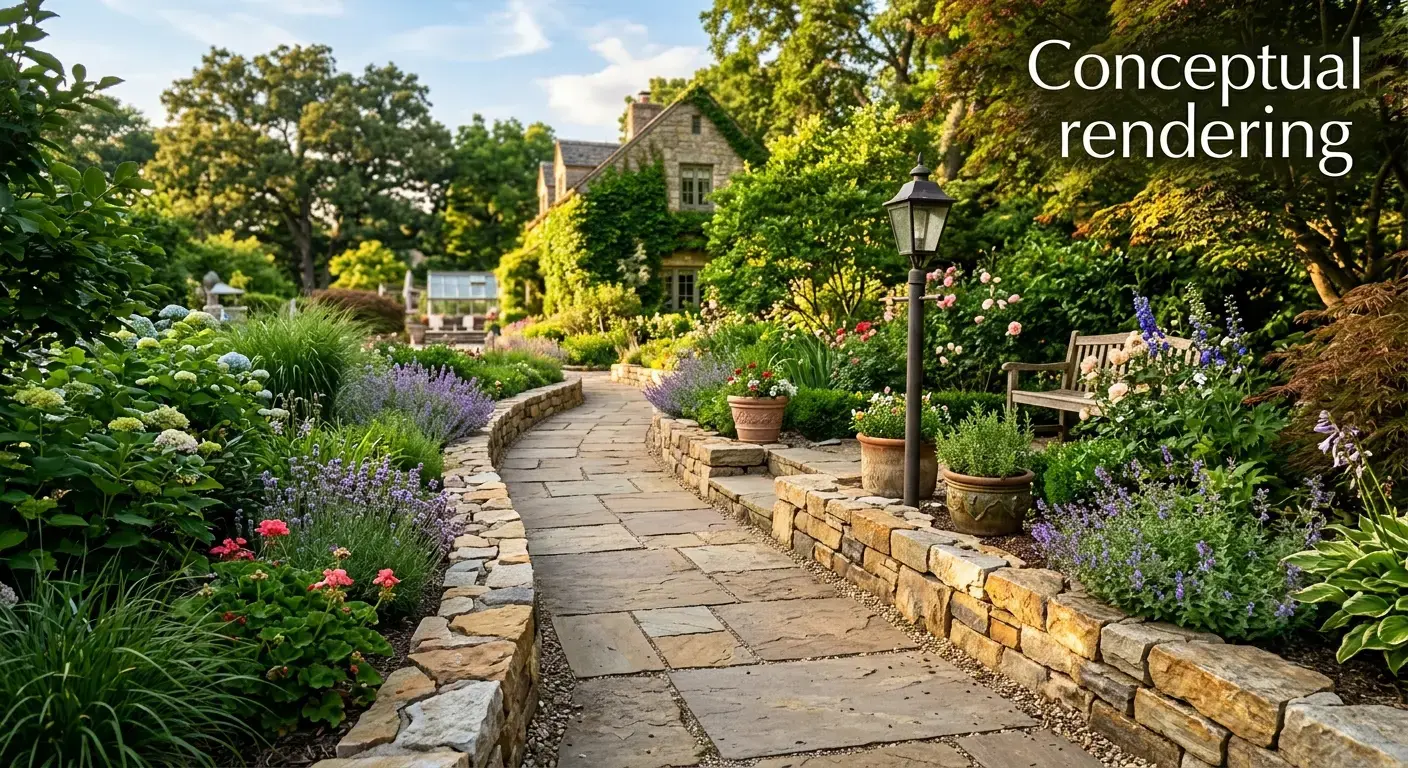
- Cobble edges on a flagstone path. Irregular flagstone with a cobble border gives a garden path structure while keeping a relaxed, natural look.
- Steel edging with gravel or decomposed granite. Thin metal edging keeps loose material in place and creates crisp lines along modern paths.
- Stepping stones in a pebble bed. Large stone steppers set in river rock and framed by a low edge create a path that drains well and needs little upkeep.
- Border on the open side only. When a walkway runs along a house wall or planting bed, a border on the lawn side alone is often enough to define it.
- Widened border at the entry. Stepping the border out into a small landing at the front door or garden gate marks the transition and gives guests room to pause.
Practical Considerations Before Choosing a Border
Curves or straight lines. Straight borders suit formal and modern designs, while curves feel softer and follow natural garden shapes. Curved edges need more cutting, so smaller pavers, cobbles, or flexible edging are usually easier to shape than large-format units.
Border width. Keep the border in proportion to the space. A single course of standard 4 x 8 inch pavers suits most walkways, while larger patios can carry a wider or double band. If a wider border means buying more material, our overstock sale may have discounted options to review before you finalize quantities.
Drainage. A border should never trap water against the paved surface. Gravel strips and a slight slope away from the house help water move off the hardscape.
Mowing strips. Setting the border flush with the lawn lets a mower wheel run along it, which reduces hand trimming along the edge.
Temperature swings. In areas with hot summers and freezing winters, choose border materials rated for exterior use and freeze-thaw exposure, and keep joints filled so water does not collect and expand.
Slip resistance. Borders around pools, steps, and entries are often wet, so a textured or slip-resistant finish is the safer choice.
Raised edges and walls. Seat walls and borders that hold back soil may need engineering or permits depending on their height. We recommend talking with a licensed contractor about structural details before finalizing your plans. Contractors, landscape designers, and architects sourcing materials for these projects can apply for a trade account for trade pricing and job-site delivery.
Matching Borders to Your Home’s Style
The border is often the detail that ties the hardscape back to the architecture of the house.
- Modern and contemporary. Thin steel edging, large-format porcelain, and tone-on-tone borders with tight joints keep lines clean and minimal.
- Traditional. Soldier course borders in brick-red or warm gray pavers, paired with a herringbone or running bond field, suit colonial and classic homes.
- Mediterranean and Spanish. Travertine coping, terracotta-toned pavers, and tumbled finishes pair well with stucco walls and clay tile roofs.
- Farmhouse and rustic. Natural cobbles, irregular flagstone, and stacked stone walls create a relaxed look that fits wood siding and board-and-batten exteriors.
- Craftsman. Earthy stone tones, wide soldier courses, and stacked stone seat walls echo the stone columns and porch bases common on Craftsman homes.
If you are unsure which pairing fits your home, a free design consultation can help you narrow down border and field materials with photos of your exterior in hand.
Conclusion
Hardscape borders and edging finish what a patio or walkway starts. The right border helps keep pavers in place, keeps soil and mulch where they belong, and gives the space a clear outline that ties it to the house and the yard around it. Whether you lean toward a crisp steel edge, a contrasting soldier course, or a cobble border with a natural feel, planning the edge alongside the main surface tends to produce a more cohesive result.
If you are comparing pavers and exterior stone for your next outdoor project, we can help you look at options in person at our showrooms in Sacramento, Reno, Minden, and Fernley, where our team can go over colors, finishes, and sizes and talk through border ideas that suit your patio, walkway, and home style.
Note: Some images on this page may be conceptual renderings created to illustrate design possibilities and may not depict actual installations.
Frequently Asked Questions
A soldier course of pavers is the most common choice because it frames the field, gives cut pieces a straight edge to sit against, and works with most laying patterns. Natural stone cobbles suit traditional or rustic designs, while bullnose coping is a better fit for raised patios and pool edges.
Yes. Interlocking pavers generally need some form of edge restraint to keep the outer rows from spreading over time. The restraint can be visible, such as a border course or cobble row, or concealed below the soil line with metal or plastic edging.
Either can work. A darker border frames the space and makes its shape stand out, while a lighter border can brighten a dark field. Pulling the border color from the roof, trim, or front door helps the hardscape feel connected to the home.
Most walkway borders use a single course of standard pavers. With common 4 x 8 inch pavers, that band is about 4 inches wide as a sailor course or about 8 inches wide as a soldier course. Larger patios can handle a wider or double band. The border should stay in proportion so it frames the path without crowding it.
Yes. A cobble border around a concrete paver field or a slim stone band around large-format porcelain are both common pairings. Keeping the overall palette to two or three hardscape materials helps the combination look planned rather than busy.