Hardscape design is the planning of the built, non-plant features of an outdoor space, such as paths, walls, steps, and paved areas. We recommend planning the layout before choosing the stone: decide what each zone has to carry, pick a pattern that suits those loads, and screen materials for water absorption and frost resistance before comparing colors.
That order holds up at large scale too. A team of engineers and preservation consultants presented a technical review of stone selection for the plaza at 140 Broadway to New York City's Landmarks Preservation Commission. The plaza's conditions came first: pedestrian traffic, intermittent vehicle loads, winter de-icing, and a roof deck over an occupied cellar.
Those conditions led the team to recommend against travertine for that plaza. The sections below apply the same method to residential hardscape projects in Northern Nevada and Sacramento, zone by zone.
What the 140 Broadway Review Actually Weighed
The review set granite against travertine on strength, slip resistance, freeze-thaw behavior, de-icing salt, staining, and upkeep. Its data table put travertine at 7,500 psi compressive strength and 2.5% absorption by weight, against 19,800 psi and 0.27% for Tudor Gold granite.
Two findings matter for anyone planning outdoor stone. Travertine's lower abrasion resistance means heavy foot traffic gradually polishes it and reduces slip resistance, and the Marble Institute of America (now the Natural Stone Institute) advises against travertine in exterior spots where de-icing salts are used.
The team also compared climates. New York averages 66 days a year at or below freezing and about 39 freeze-thaw cycles, compared with 28 freezing days and 21 cycles in Rome.
Drainage was part of the story too. Travertine plazas are still in use at the nearby W.R. Grace Building and Solow Building, but the team noted that drainage systems and a sloped "skirt" at the base of each tower move water quickly off the stone, as The Architect's Newspaper reported. For a homeowner, the lesson is to plan where water goes before choosing a porous stone.
In February 2019, the commissioners approved Tudor Gold granite for the plaza. None of this makes travertine a poor stone, only one that needs the right job, and finding that job is exactly what a layout-first plan does.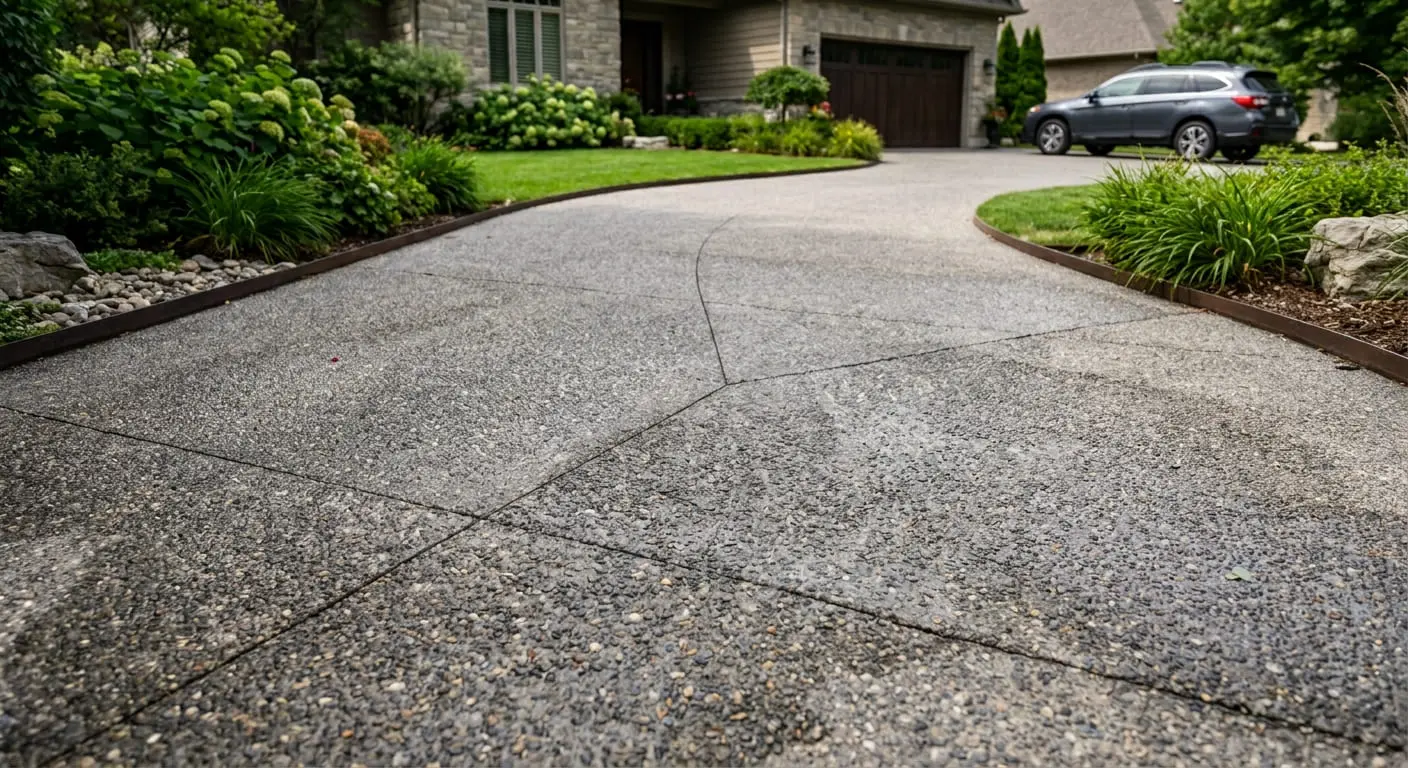
Start With What Each Surface Has to Carry
Before looking at a single stone, walk the property and label every hardscape zone by what it will carry. The 140 Broadway review sorted loads into three groups: moving loads like people, vehicles, and cleaning equipment; fixed loads like planters and bollards; and impact loads.
At home, that becomes a short list. A driveway apron carries cars, a front walk carries feet and snow shovels, a pool deck carries bare feet and splashing water, and a seat wall carries little beyond its own weight and the weather.
The review adds a line every hardscape plan should borrow: stone suited to vertical use is not automatically suited to horizontal use. That is why stacked stone on a fire pit surround and pavers underfoot are two separate decisions, even when the colors match.
Our Pavers and Exterior Stone category covers pool coping, stacked stone, and small to large format pavers. Match each zone on your map to one of those types, all part of our full range of tile and stone.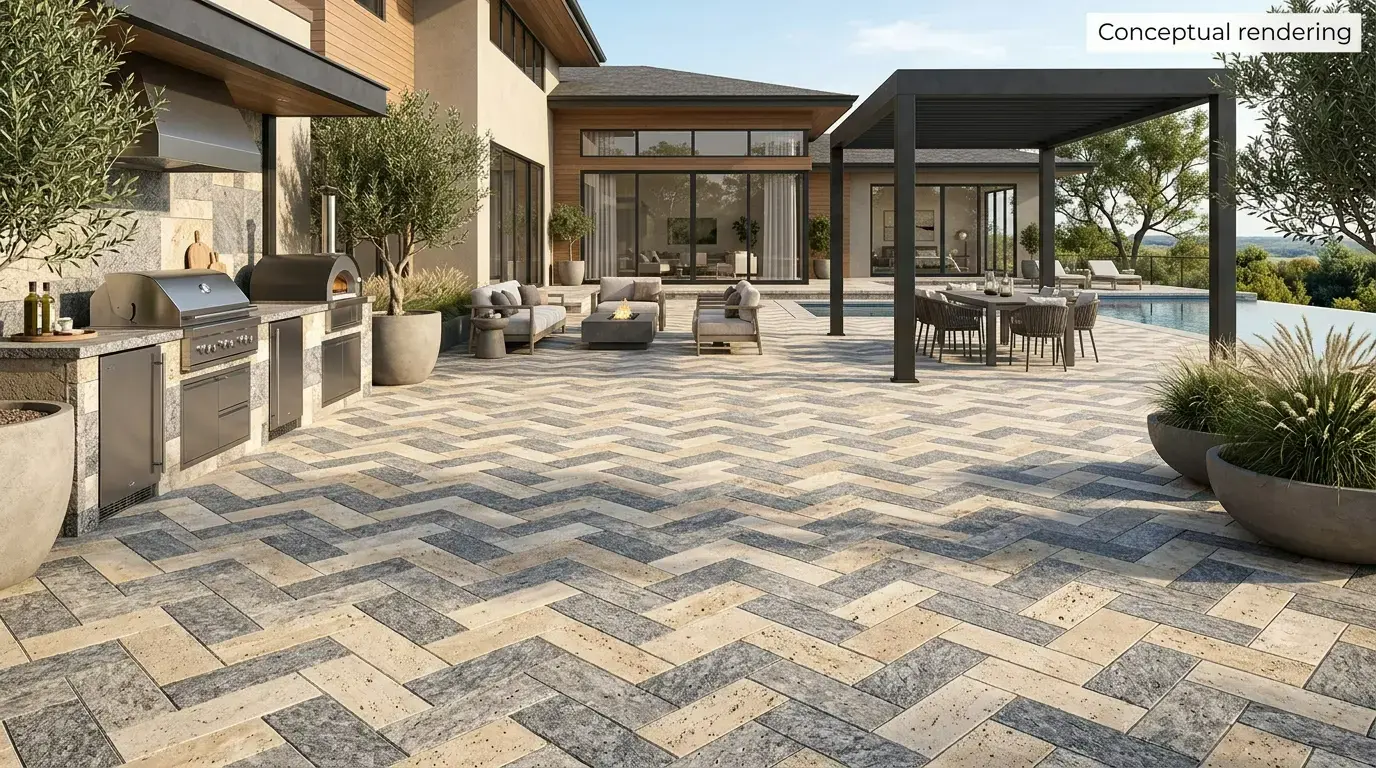
Choose the Pattern Before the Paver
Pattern is a layout decision, and it quietly shapes the stone order. Some layouts mix several stone sizes, while the two classics in Turf Magazine's paver pattern guide use one: running bond sets straight rows, each offset by half a paver, and herringbone interlocks pavers in a V at 45 or 90 degrees.
That choice changes what you can select. A layout that mixes sizes needs every size cut from the same stone, so your favorite has to come in the full set, while a single-size layout opens up far more options.
A quick test helps sort the zones. If a space will ever see a car, a rolling trash bin, or a snowblower, plan it as a loaded zone, even when it looks like part of the patio.
The 140 Broadway review lists large formats, long spans, and irregular joint patterns among the conditions to avoid in a paving system under load. Turf Magazine's guide makes a similar call, recommending herringbone for driveways and heavy-traffic areas. Our take: keep the busiest zones in a tight, regular pattern, and save multi-size layouts for patios and garden paths that only see foot traffic.
Which Stone Holds Up Best in Your Climate?
Northern Nevada: Freeze-Thaw and De-Icing Salt
Northern Nevada sees far more freezing nights than New York. NOAA's 1991 to 2020 normals for a Carson City station, compiled by Climate-Zone, show about 127 nights a year at or below freezing, while the review cited 66 freezing days for New York from an older normals period. Freezing nights alone don't measure frost damage, because the review ties freeze-thaw distress to how much water a stone absorbs.
That makes water absorption and frost resistance the first filters for Northern Nevada projects. The Tile Council of North America explains that porcelain absorbs 0.5% water or less, which is why it is usually frost resistant, though not always, so the manufacturer's literature for each product has the final word. For comparison, the 140 Broadway data put travertine at 2.5%.
TCNA guidance summarized in Construction Specifier's exterior tile article also points designers to local climate, temperature and humidity swings, and freeze-thaw cycling. The same article names ASTM C1026 as the freeze-thaw test standard for tile, so ask whether a porcelain paver has been tested to it before it goes on a shaded walk that never fully dries.
Travertine is a good fit for outdoor applications, but in salted zones the Natural Stone Institute caution applies. For a Reno-area driveway apron or front walk that gets de-icer, we'd point you to granite, which the review favored for exactly those conditions, and keep travertine for patios and pool surrounds away from the salt.
Sacramento: Heat and Afternoon Sun
Sacramento projects face a different test. NOAA's 1991 to 2020 normals for a Sacramento station, compiled by Climate-Zone, show well over 70 days a year at 90°F or hotter and only a small fraction of the Reno area's freezing nights, so heat and sun matter more than frost there.
Construction Specifier notes that light-colored tiles in site hardscaping can lower heat absorption, which is worth weighing on a pool deck people cross barefoot. With so few freezing nights, we see far less reason to worry about de-icing salt in Sacramento, which makes travertine an easier fit for pool surrounds and patios there.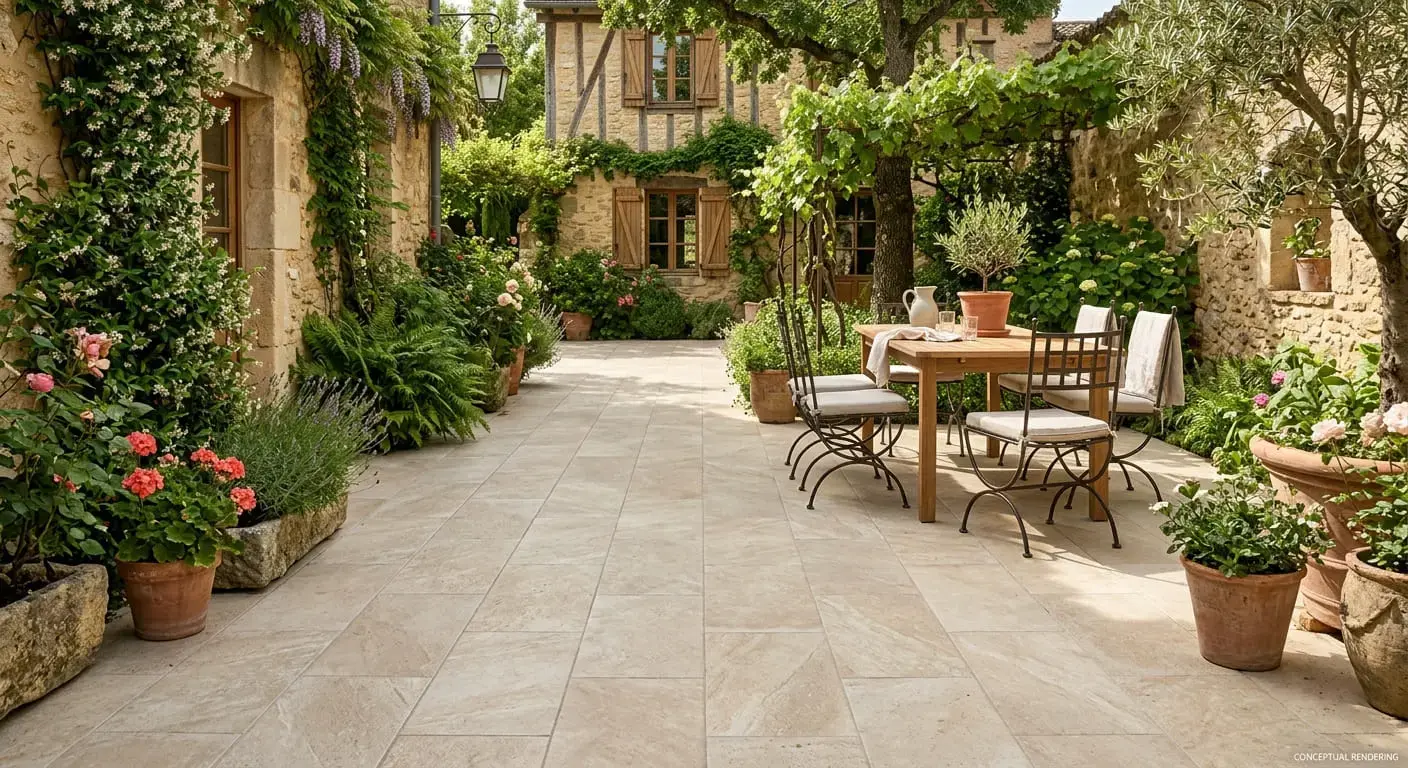
Why Does Finish Matter More Than a Slip Rating Outdoors?
A DCOF number on a spec sheet won't settle an outdoor decision. As TileLetter's technical experts explain, the familiar 0.42 DCOF benchmark applies to level interior floors walked on when wet, not to exterior installations, sloped surfaces, poorly drained areas, or polished products.
So the finish carries the weight. Construction Specifier notes that unglazed and textured tiles reduce the chance of slipping outdoors, and the 140 Broadway review showed how foot traffic can polish a stone with low abrasion resistance over time.
The TCNA porcelain FAQ adds that unglazed porcelain may have better slip resistance than glazed. That is worth asking about for pool surrounds and outdoor steps.
Granite, quartzite, travertine, and porcelain all come in honed, leathered, and specialty finishes, so the look you want rarely forces a slick surface. Our rule: no polished finish on any outdoor surface people walk on, pool decks above all, with high polish saved for vertical accents.
Which Stones Work Best for Each Hardscape Zone?
Once the zone, pattern, and climate filters are set, the shortlist nearly writes itself. Granite suits salted, heavier-use zones; quartzite, travertine, and porcelain suit patios and pool surrounds; and all four are a good fit for exterior stone applications.
Pool coping deserves its own line on the plan. It sits at the wettest edge of the yard, so pick its stone and finish alongside the deck, either matching it for a clean, continuous edge or contrasting it to frame the water.
Granite, quartzite, and porcelain are UV resistant, but performance may vary by color and finish. On a patio that sits in full afternoon sun, that caveat is a good reason to judge the actual color in person rather than from a photo.
Natural stone slabs can work in a hardscape plan too. An ASTM paper by Wiss, Janney, Elstner Associates notes that granite slabs one to three inches thick are commonly used as exterior pavers on building decks and plazas, with paver thickness chosen around the expected loads and support system. Stick to outdoor-rated stone such as granite, quartzite, or travertine, skip polished finishes underfoot, and have your fabricator cut pieces like steps, coping, or outdoor counters to fit the plan.
Whichever pieces you plan, choose the actual slab rather than a catalog photo, since natural stone varies in tone, veining, and movement. You can browse our live slab inventory, where more than 500 bundles across our four showrooms are photographed, then ask about a specific slab by name or bundle number once one fits the plan.
Plan for upkeep as well as looks. Natural stone is durable, but proper care will help preserve its appearance, and the 140 Broadway review noted that travertine needs sealers and fillers applied frequently.
Conclusion
The most useful thing to carry into a showroom is a rough site sketch with each zone labeled: cars, salt, water, walls, and shade. For homeowners and trade pros alike, we'd rather start from that sketch than from a phone photo of a neighbor's patio.
When you're ready, visit one of our showrooms in Reno, Minden, Fernley, or Sacramento to see stone at full scale and take tile samples home. If you'd rather work through the plan with a designer, book a free design consultation with Nova Tile and Stone, and the design help is commission-free.
For a quick question about a specific stone or zone, send our team your questions along with your sketch, and the reply can start from your layout instead of a guess.
Note: Some images on this page may be conceptual renderings created to illustrate design possibilities and may not depict actual installations.
Frequently Asked Questions
Yes. Dictionaries define hardscape as built features such as paths and walls that are incorporated into a landscape, so stone pavers, steps, and stacked stone walls all count. Planning them together keeps the layout, loads, and stone choices consistent.
Travertine is suitable for outdoor use, but installation must match the application. It absorbs more water than granite, and the Marble Institute of America (now the Natural Stone Institute) advises against it where de-icing salts are used, so in cold climates keep it away from salted paths and driveways.
No. The 0.42 DCOF benchmark applies to level interior floors walked on when wet, not to exterior, sloped, or poorly drained surfaces. Outdoors, choose a textured, non-polished finish and pay attention to how the area drains.
Usually, but not always. Porcelain absorbs 0.5% water or less, which generally helps in freeze-thaw conditions, but the Tile Council of North America recommends checking the manufacturer's literature for each product.
Bring photos of your outdoor space, rough measurements, and any inspiration images, which our consultation page lists as the most helpful items. We also suggest notes on which zones see cars, de-icing salt, pool water, or heavy foot traffic, and you're welcome to bring your contractor or designer along.