At a Glance
- Purpose: borders help contain pavers and separate hard surfaces from planting areas.
- Outdoor-suitable stone: granite, quartzite, travertine, and porcelain.
- Finish tip: leathered or textured finishes generally offer more grip than polished.
- Sealing: natural stone borders typically need sealing; porcelain generally does not.
- Sun exposure: confirm the UV rating of each specific product.
- Next step: book a free consultation with a commission-free design consultant.
In This Guide
- Why stone borders support surface stability
- Landscape edging ideas by layout and function
- An outdoor stone comparison
- Advantages, considerations, and planning steps
- How Nova supports border planning
- Answers to common questions
What Hardscape Borders and Edging Do for Outdoor Surfaces
Hardscape borders and edging frame a patio, walkway, or driveway and help hold the outer pavers in place. They define where paving ends and planting begins.
A well chosen border can reduce edge drift, limit soil and gravel spilling onto the surface, and give the layout a clean, finished outline that suits the home.
Exterior stone adds a design layer on top of that function. Granite, quartzite, travertine, and porcelain are outdoor-suitable options that can serve as borders, coping, and edge accents.
Many projects pair a visible stone border with a concealed restraint chosen for the paving type, the base beneath it, and the traffic it carries.
Paver edge restraint systems for long-term stability matter most where freeze-thaw winters, irrigation runoff, and vehicle loads put steady pressure on the outer row.
This guide covers benefits, material choices, design ideas, and next steps, so a project can move from rough concept to a confident plan.
Benefits of Stone Borders for Long-Term Surface Stability
Edges carry the most stress on a paved surface. Water, foot traffic, and vehicle loads push outward, so a defined border gives the outer row a firmer boundary.
Paver edge restraint systems for long-term stability work best when border and restraint are planned together. CMHA edge restraint guidance for concrete pavers lists cut stone and precast concrete among recognized restraint types.
Borders also affect water movement. The EPA permeable pavement overview explains how paving can reduce runoff, so edge planning often belongs in drainage discussions with the project team.
Climate matters as well. Northern Nevada winters bring freeze-thaw cycles and summers bring strong sun, so border materials should be matched to local exposure rather than chosen on looks alone.
- Edge definition: a clear line separates paving from lawn, gravel, and planting beds.
- Containment: a solid border can help limit sideways movement of outer pavers.
- Debris control: stone edges can reduce soil and mulch migration onto walkways.
- Visual structure: contrasting color or texture frames patios, steps, and pool surrounds.
- Weather performance: granite, quartzite, and porcelain fall in the UV-resistant category, though each product's rating deserves confirmation.
- Long service life: durable stone performs well when sealed as needed and cleaned with suitable products.
Landscape Edging Ideas and Stone Choices for Outdoor Spaces
The right border depends on the surface it frames, the climate, and how the area is used. These landscape edging ideas are grouped by layout, function, and material.
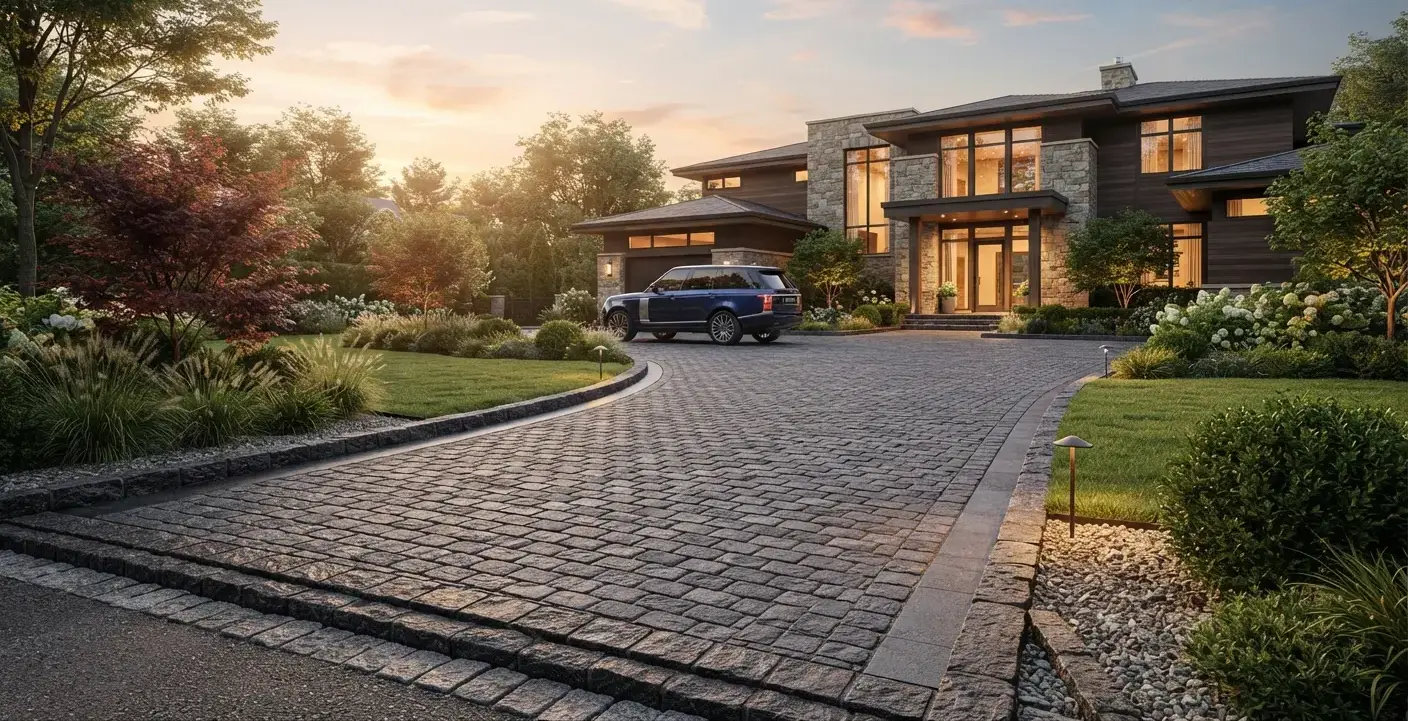 Conceptual rendering
Straight and Curved Stone Borders
Straight borders suit modern patios and driveways, while gentle curves soften garden paths. Cut granite or quartzite edging can follow either line, though tight curves may call for smaller units.
Consistent widths and joint spacing help the border read as one continuous line.
Soldier Course and Banded Edges
A soldier course turns the outer row on its short end to form a crisp band. A contrasting tone can frame the field and echo nearby architecture.
Many designers match the band to a home's trim, roof, or stone veneer for a cohesive look.
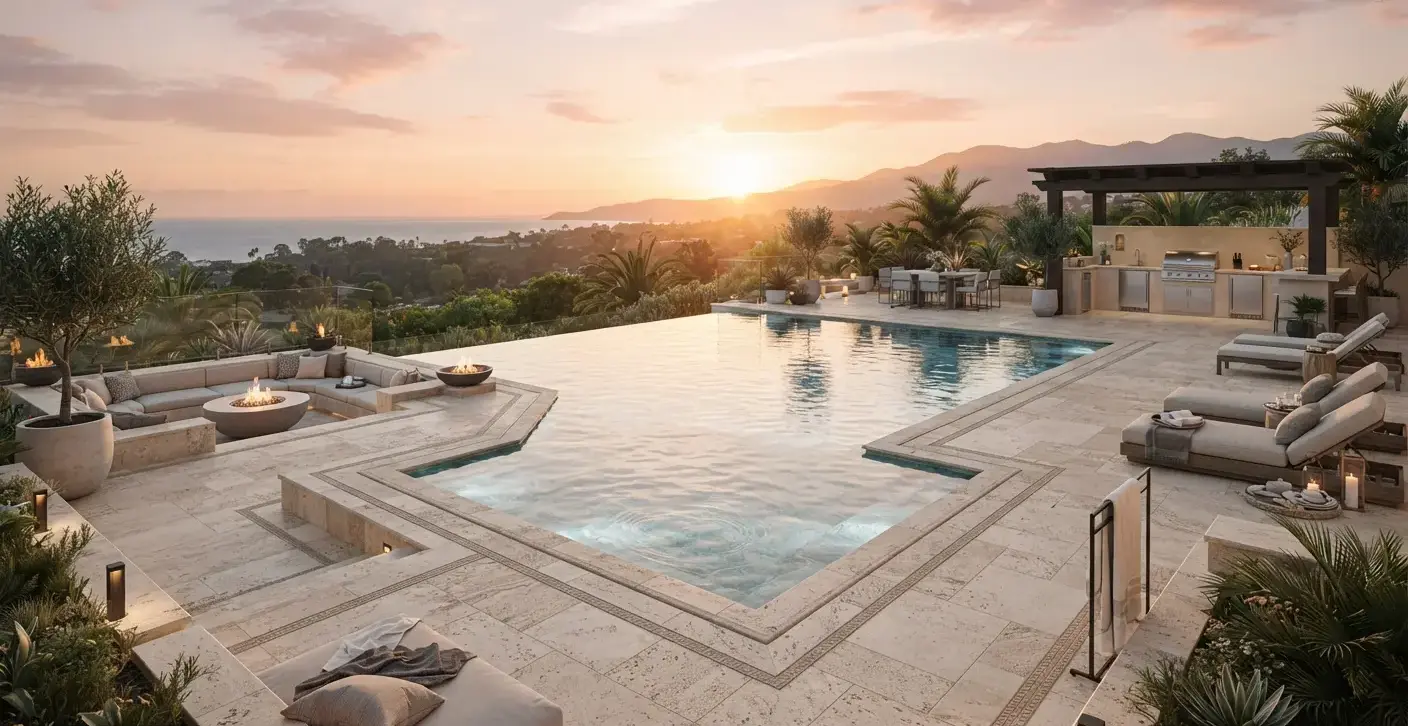 Conceptual rendering
Wet Area and Pool Deck Edges
Wet zones call for grip. Leathered or textured finishes are generally better than polished for pool surrounds and steps, since polished stone can be slippery when wet.
A consultant can suggest finishes that balance grip with the look of the surrounding paving.
Paver Edge Restraint Systems for Long-Term Stability
Visible stone can double as the restraint in some designs, while others hide the restraint beneath a decorative border. Ask the project contractor which approach suits the paver type, base, and load.
Lightweight garden edging made for planting beds is not intended to restrain pavers, so the two products should not be treated as interchangeable.
Heavier loads, such as driveways, generally call for sturdier restraint types than light foot traffic areas.
Outdoor Stone Comparison
This table summarizes outdoor-suitable options for borders and edge accents. Marble and dolomite are better reserved for indoor spaces, so they are left out here.
Material | Outdoor Border Use | Sealing | Grip-Friendly Finishes | Sun Exposure Note |
Granite | Suitable | Typically needed | Leathered | UV-resistant category |
Quartzite | Suitable | Typically needed | Leathered or textured | UV-resistant category |
Travertine | Suitable | Typically needed | Leathered or textured | Verify the product's UV rating |
Porcelain | Suitable | Generally not required | Textured | UV-resistant category |
Natural stone typically needs sealing, and stone care guidance from the Natural Stone Institute outlines general maintenance practices.
Browse stone slabs to compare granite, quartzite, travertine, and porcelain options for exterior borders and edge accents.
Stone Border Advantages and Considerations
Weighing both sides early helps set realistic expectations for upkeep, appearance, and long-term performance.
Advantages
- Natural variation adds character to the layout.
- Outdoor-suitable stone can handle sun and freeze-thaw cycles when the right product is chosen.
- Sealed natural stone can resist staining more effectively.
- Stone works as coping, curbs, and step accents.
Considerations
- Natural stone typically needs periodic sealing.
- Polished finishes can be slippery when wet.
- Heavier units need planning for delivery and handling.
- Color and veining vary from piece to piece.
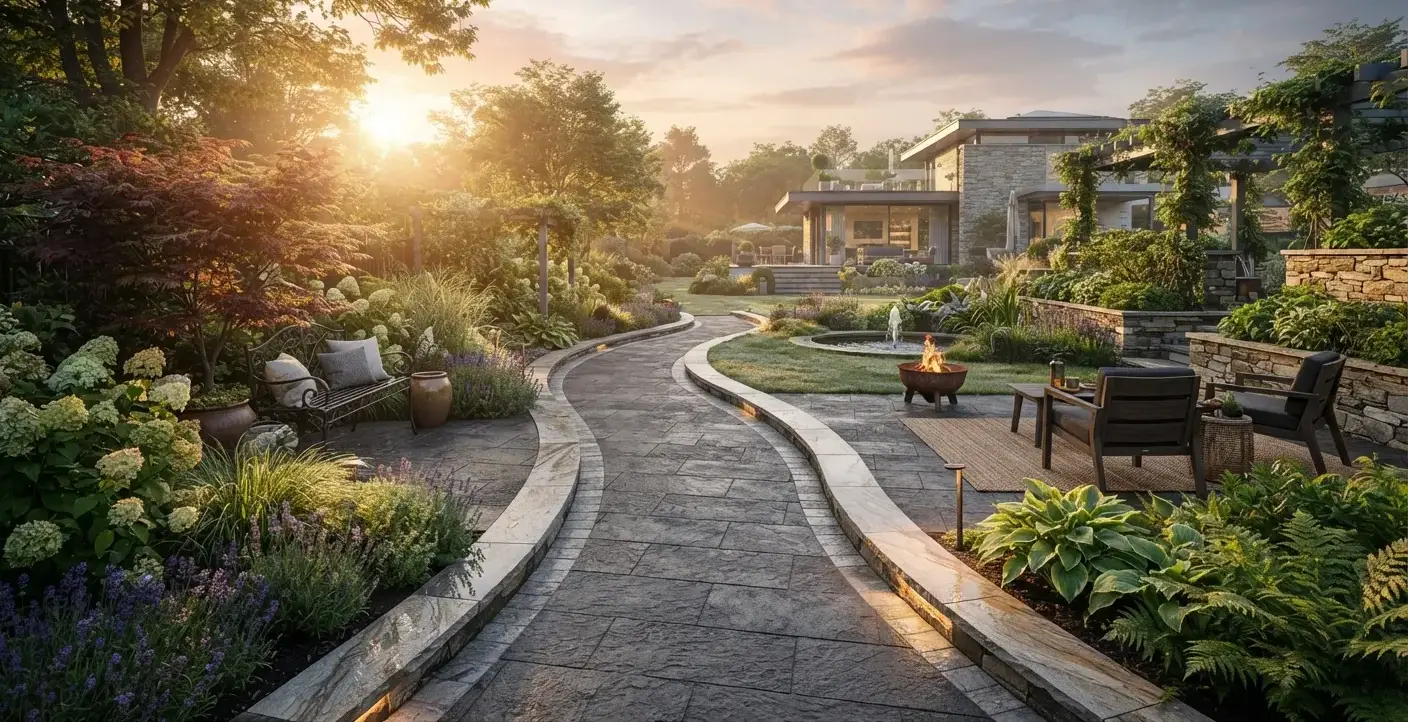 Conceptual rendering
Planning Steps for a Stone Border
These four steps organize the key questions to settle before ordering any stone.
- Define the surface: note the paver type, expected traffic, and drainage direction.
- Match the material: choose granite, quartzite, travertine, or porcelain for the exposure.
- Select the finish: favor leathered or textured finishes where footing matters.
- Confirm the details: ask the contractor about restraint type and ask Nova about product ratings.
How Nova Tile and Stone Supports Border Planning
Nova Tile and Stone supplies exterior stone materials and pairs shoppers with commission-free design consultants. Consultants can discuss color, finish, sealing needs, and exposure for each product, plus arranged delivery assistance.
Guidance is commission-free and centers on matching stone to the project.
Nova serves Reno, Minden, Fernley, and Sacramento. Visit the Reno showroom to compare finishes. The Minden showroom is also available for hands-on comparisons of color, texture, and edge profiles.
Fernley customers can visit the Fernley showroom. Sacramento customers can stop by the Sacramento showroom. Schedule an appointment to review stone and edge details.
Project photos and rough dimensions help consultants offer more specific suggestions during that conversation.
Key Takeaways
- Borders and edging define surfaces and support containment, but results depend on design and site conditions.
- Granite, quartzite, travertine, and porcelain are outdoor-suitable; marble and dolomite are better kept indoors.
- Leathered or textured finishes generally suit wet or high-traffic edges better than polished.
- The visible border and the concealed paver restraint should be planned together.
- Confirm UV ratings, sealing needs, and delivery details before ordering.
Plan Your Border With an Expert
Ready to turn landscape edging ideas into a clear material plan? A commission-free design consultant can review the surface, suggest suitable stone and finishes, and outline arranged delivery assistance.
SACRAMENTO SHOWROOM
6100 Warehouse Way, Sacramento, CA 95826
 Google Maps
Store hours this week:
- Mon. - Fri.: 7:30 am - 5:00 pm
- Sat. - Sun.: Closed
MINDEN SHOWROOM
2548 Business Pkwy, Minden, NV 89423
Store hours this week:
- Mon. - Fri.: 7:30 am - 6:00 pm
- Sat.: 9:00 am - 3:00 pm
- Sun.: Closed
RENO SHOWROOM
12835 Old Virginia Rd Suite 24, Reno, NV 89521
Store hours this week:
- Mon. - Fri.: 7:30 am - 6:00 pm
- Sat.: 9:00 am - 3:00 pm
- Sun.: Closed
FERNLEY SHOWROOM
1855 US Highway 95A North, Fernley, NV 89408
Store hours this week:
- Mon. - Fri.: 7:30 am - 4:00 pm
- Sat. - Sun.: Closed
Bring photos, rough dimensions, and questions to make the conversation productive and help the recommendations fit the space, the climate, and the way the area will be used. Book your free consultation today!
Note: Some images on this page may be conceptual renderings created to illustrate design possibilities and may not depict actual installations.
Frequently Asked Questions
Borders and edging define the outer boundary of patios, walkways, and driveways. They help contain pavers, separate paving from soil or planting beds, and add a finished design line. Performance still depends on the paver type, base preparation, drainage, and the loads the surface carries.
Granite, quartzite, travertine, and porcelain are outdoor-suitable options at Nova for borders, coping, and edge accents. Granite, quartzite, and porcelain fall in the UV-resistant category, while travertine calls for checking the exact product's UV rating. Marble and dolomite are better reserved for indoor spaces.
Paver edge restraint systems for long-term stability hold the outer row against outward pressure from traffic, water, and settlement. Concrete, cut stone, and manufactured restraints suit different loads. A qualified contractor should confirm the right type, since planting bed edging is not designed to restrain pavers.
Granite, quartzite, and travertine typically need sealing, while porcelain generally does not, though exact needs vary by product. Sealing helps resist staining but does not make stone stain-proof. Wipe spills promptly, avoid abrasive cleaners, and follow the sealer manufacturer's guidance on reapplication.
Leathered or textured finishes generally offer more traction than polished surfaces, which can be slippery when wet. Travertine, granite, quartzite, and porcelain each come in suitable textured options. Ask a design consultant to match the finish to the exact product and exposure.
Sources
- Concrete Masonry Hardscapes Association: Edge Restraints for Interlocking Concrete Pavements (PAV-TEC-003-22)
- Natural Stone Institute: Stone Care
- U.S. EPA: Soak Up the Rain: Permeable Pavement