Hardscape should be planned and chosen before the plants. Hardscape is the built structure of a yard, such as the patio, walkways, pool coping, and stone walls, as opposed to the softscape of living plants. University of California Master Gardener guidance finishes all of the hardscape before a single hole is dug for plants, and it calls plant shopping the last step.
We take that one step further. The stone you choose sets the color palette every plant around it has to suit, while plants are among the easier parts of a yard to change later. That is why we recommend settling the stone before the planting plan is even sketched.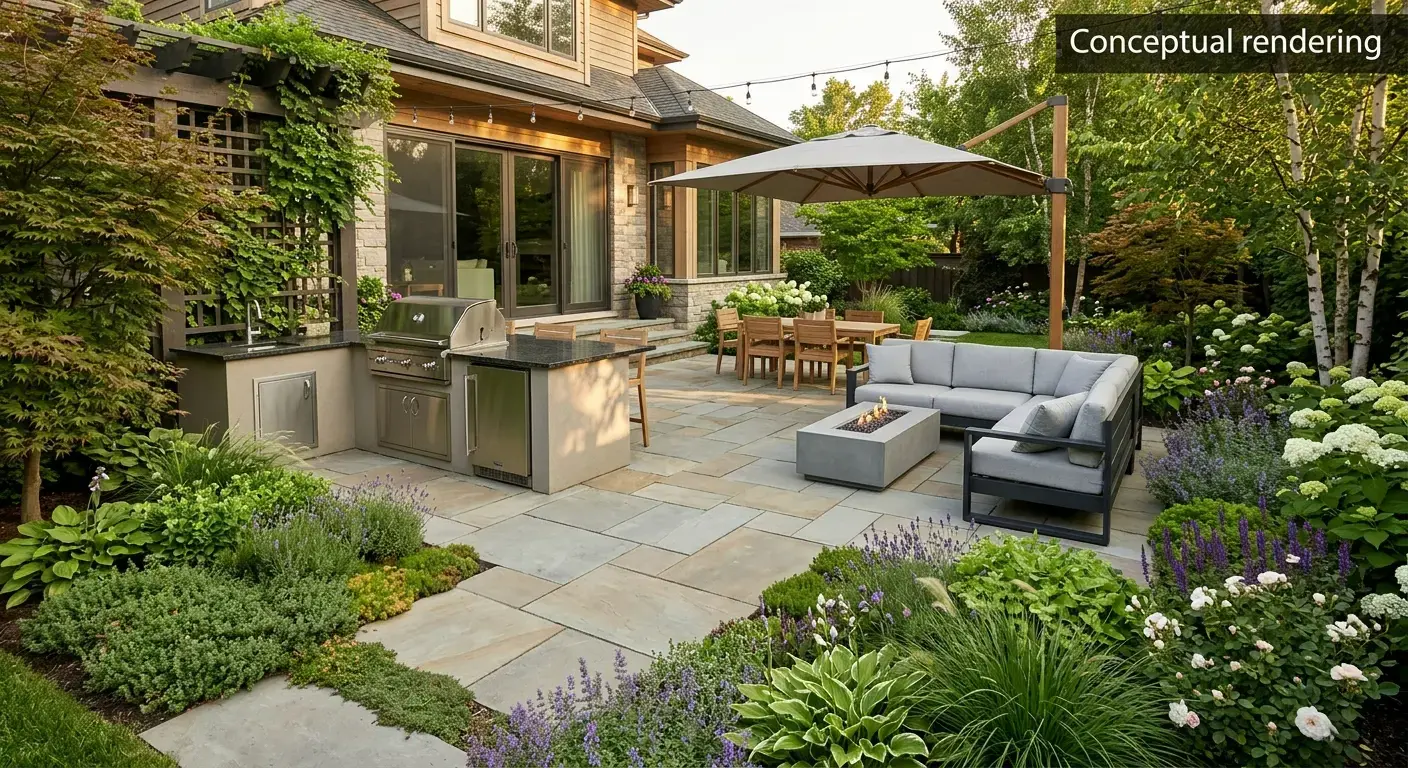
Why Does Hardscape Go In Before Plants?
The build order already favors stone. The Arizona Municipal Water Users Association's water-wise landscaping guide recommends putting most hardscape in before the irrigation system and the plants.
Soil is part of the reason. The same UC guidance warns that heavy equipment and foot traffic during hardscape work compact the soil, and it advises keeping that traffic to a small, restricted area, which is easier to manage when nothing has been planted yet.
If the stone goes in first, it makes sense to choose it first too. Picking plants and then hunting for a stone to match them runs the process backward.
Plants Change, Stone Stays
A planting plan is meant to evolve. Plants can be added, moved, or replaced as beds mature, while a finished patio is meant to stay put.
Stone is a one-time decision by comparison. The same water-wise guide recommends buying the full quantity of each hardscape material at once to help keep the color consistent, since colors can vary somewhat. For a yard paved in one stone from the back door to the pool, that means ordering the whole run together.
Let the stone lead. A warm-toned stone and a cool gray stone pull a planting plan in different directions, and once the stone is settled, every plant decision has something fixed to work with.
Picture a warm, sandy patio. You can lean into that warmth with bronze and rust foliage or cool it down with silver and blue-green leaves, and starting from the stone lets you make that call on purpose.
Trees are the one planting choice worth making early. The University of Nevada, Reno Extension notes that a properly planted tree can thrive through most of your lifetime, so a tree beside the patio can shade it and drop leaves on it for years.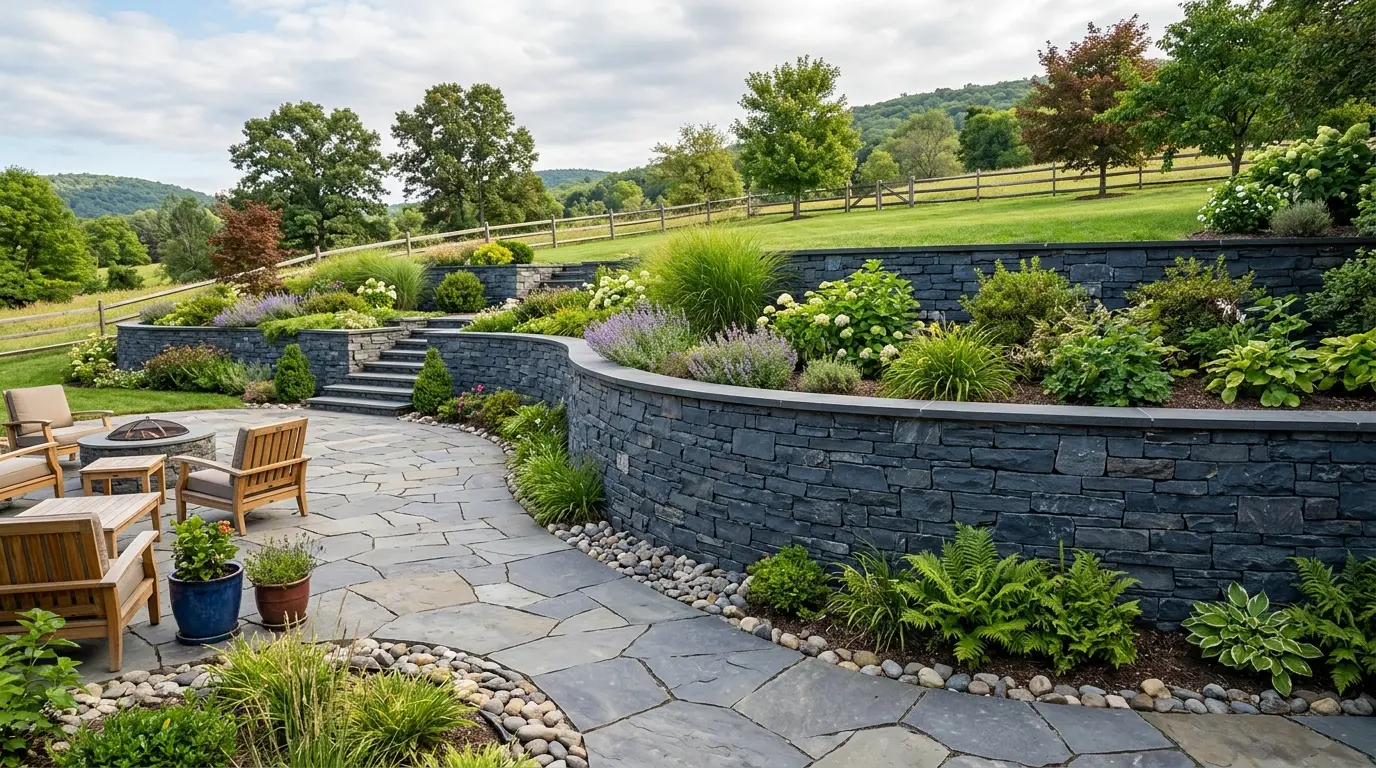
Map the Zones Before You Choose a Color
Most hardscape plans break into a few zones: the patio, the walkways, the pool edge, and any walls. Our tile and stone selection covers those zones with pool coping, stacked stone, and pavers from small to large format.
Decide which zones you are building before you pick a single tone. The patio and the path can share one stone or move through related ones, and that choice decides where the planting beds fall in between.
If the yard has a pool, start at the coping. It meets the water, the deck, and often a planting bed at once, so it narrows every choice that follows.
Paths connect every zone, so they are where a mismatch shows first. If the patio and pool deck use different stones, a path in one of the two tones ties them together without adding a third color.
Walls are the zone people forget. A stacked stone seat wall or raised planter is seen right alongside the patio, so choose it in the same sitting rather than adding it later as an accent.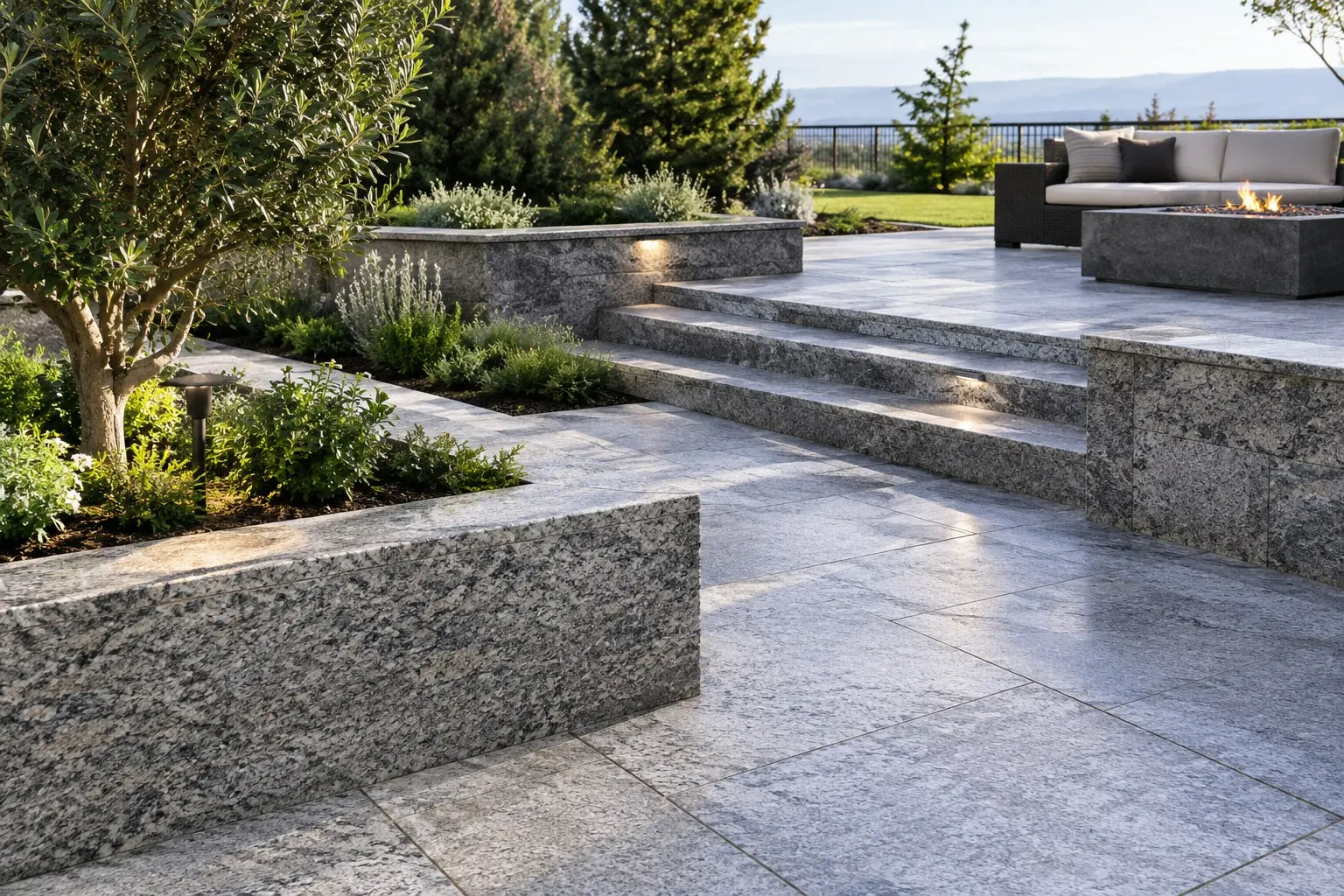
Choose Stone That Can Handle Winter
For the material itself, look for a long record outdoors. The Natural Stone Institute notes that granite has long been used for exterior cladding and paving, pointing to its strength, abrasion resistance, and weathering durability.
Freeze-thaw matters as much as color in a Reno, Minden, or Fernley winter. A Natural Stone Institute course on stone testing explains that stone that readily absorbs water can be more susceptible to damage in freezing weather, and that a low absorption value is generally desirable.
Before you fall for a color, ask how absorbent the stone is. For a patio that sees snow, it is one of the most useful questions you can bring to the showroom, because a stone that looks perfect in July still has to live through January.
Draw the Planting Beds Around the Stone
The edge where a bed meets the patio is where plants and stone interact most. The Natural Stone Institute's stone care and cleaning guidance lists leaves and bark among the causes of organic stains, so a tree that drops leaves over the patio, or a bark-mulched bed that spills onto the path, puts staining sources right on the surface.
Plan for that edge from the start. A strip of open ground or a firm edging between a dense bed and a pale patio helps keep leaf litter and mulch where they belong. Leave room for growth as well, since a shrub that spills over the edge in a few years brings its leaves with it.
Metal planters deserve the same thought. The institute notes that flower pots and metal furniture can leave rust marks shaped like the base of the object, and that deep-seated rust stains are extremely difficult to remove, so keep metal pots off the stone or set them on non-metal stands.
Time the Planting Around the Stone
Choosing stone first does not slow the garden down. Extension guidance in both of our regions favors fall planting.
The University of Nevada, Reno Extension names fall and early winter as the best time to plant trees in Northern Nevada, and warns that trees planted in summer heat often drop leaves from transplant shock. In Northern California's Butte County, UC Master Gardeners recommend planting most plants from fall through early spring, when they establish best.
That gives the project a simple rhythm. Settle the stone in spring or summer, get the hardscape in, and the yard is ready for fall tree planting, with smaller plants following on your local schedule.
While the stone goes in, take a photo of it to the nursery. Plants picked beside a picture of the actual patio have a better chance of suiting it than plants picked from memory.
Conclusion
The plant list can wait, because the yard plan is what the stone has to answer to. At Nova Tile and Stone, our showrooms in Reno, Sacramento, Minden, and Fernley are set up so a full project can be planned from one location, so every zone on that plan can get its stone in the same trip.
A free design consultation runs about 45 minutes, and our team suggests bringing photos of your space, inspiration images, and rough measurements. Bring the yard plan as well, even a rough sketch of where the patio, paths, pool edge, and beds will go, along with your landscape designer or contractor, since the consultation welcomes your build team. There is no obligation, and our design experts work commission-free.
Stone looks different in person than it does on a screen, so walk our showroom floor and see your options in person before you commit. Snap a photo of your favorites to hold up against the yard at home, because planting decisions get made outdoors, not under showroom lights.
Contractors and landscape designers can open a trade account for a dedicated rep and job-site delivery across Northern Nevada and Northern California. If your plan includes an outdoor counter cut from a full granite slab, our live slab inventory photographs every bundle on the floor, and you can request a quote by slab name and bundle number.
Note: Some images on this page may be conceptual renderings created to illustrate design possibilities and may not depict actual installations.
Frequently Asked Questions
Hardscaping comes first. University of California Master Gardener guidance finishes all of the hardscape before planting, and choosing the stone first gives the planting plan a fixed color palette to work with.
Work around them. The University of Nevada, Reno Extension notes that a properly planted tree can thrive through most of your lifetime, so choose a stone that suits the ones you are keeping, then let the smaller, easier-to-change plants follow the stone.
Look for a low-absorption stone, especially where winters freeze. The Natural Stone Institute notes that granite has long been used as an exterior paving material, and our Pavers and Exterior Stone category covers pool coping, stacked stone, and pavers from small to large format.
Yes. Leaves and bark can cause organic stains, which outdoors generally fade with sun and rain once the source is removed, while metal flower pots and furniture can leave rust marks that can be much harder to remove.
Choose the stone in spring or summer so the hardscape is in before fall. The University of Nevada, Reno Extension names fall and early winter as the best time to plant trees in Northern Nevada, which leaves the cooler months for planting around finished stone.
Curious About Something Else?