At A Glance
- Natural stone and pavers are laid as individual units, so they flex with the ground and can be repaired one piece at a time.
- Natural stone options: flagstone, travertine, bluestone, granite, limestone, and quartzite.
- Paver options: concrete, porcelain, permeable, and clay brick.
- Light travertine and porcelain stay cooler around pools; dark bluestone gets hot in full sun.
- Permeable pavers let rain drain through gravel-filled joints instead of running off.
- For driveways, look at concrete pavers, permeable pavers, or granite cobbles.
- Stone and pavers cost more up front than poured concrete, but repairs rarely mean starting over.
In This Post
- Why Do Homeowners Look for Alternatives to Concrete?
- What Natural Stone Works as a Concrete Alternative?
- What Types of Pavers Can Replace a Concrete Slab?
- How Do Stone and Pavers Compare to Concrete?
- Which Material Fits Each Part of Your Yard?
- What Should You Decide Before Choosing a Material?
- Frequently Asked Questions
- Sources
The best hardscape alternatives to concrete are natural stone, such as flagstone, travertine, bluestone, granite, limestone, and quartzite, and pavers, including concrete, porcelain, permeable, and clay brick pavers. Unlike a poured concrete slab, these materials are laid as individual units. When set on a compacted gravel and sand base, they can flex with the ground, be repaired one piece at a time, and offer far more color and texture options.
Each option suits different projects. Light-colored travertine and porcelain pavers stay more comfortable around pools, granite cobbles and concrete pavers handle driveway traffic, and permeable pavers let rainwater drain through gravel-filled joints instead of running off. The right choice depends on your climate, sun exposure, drainage needs, and how you plan to use the space.
Why Do Homeowners Look for Alternatives to Concrete?
Cracking is one of the most common reasons people look beyond concrete. A poured slab is one solid piece, so when soil settles, freezes, swells after rain, or gets pushed up by tree roots, the slab has nowhere to flex. Control joints help decide where a crack forms, but they don’t stop it from happening.
Repairs are the second issue. A patched section of concrete rarely matches the color and texture around it, and a badly cracked or heaved area often has to be broken out and repoured. Stone and pavers work differently. When they are laid as individual units on a compacted gravel and sand base, the joints let the surface move slightly without breaking. Stone mortared onto an existing slab doesn’t get this benefit, since it moves with the concrete underneath. If one piece gets stained, chipped, or lifted, it can be pulled up and reset or replaced without touching the rest of the patio.
Appearance plays a big part too. Plain concrete comes in gray, and the usual ways to dress it up, like stamping, staining, or color hardeners, usually rely on a sealer that wears with foot traffic and weather and needs to be reapplied. With natural stone, the color runs through the material itself. Pavers come in a wide range of shapes, blends, and finishes, and porcelain can mimic stone or wood.
Drainage is the last common reason. Concrete sheds water, so rain runs off a large slab into the lawn, drains, or street. Permeable pavers and stone set with open gravel joints let some of that water soak into the ground instead. Interest in all of these options is growing as outdoor design trends move toward warmer natural materials and away from large expanses of gray concrete.
What Natural Stone Works as a Concrete Alternative?
The natural stones most often used in place of concrete are flagstone, travertine, bluestone, granite, limestone, and quartzite. Each is quarried, then cut or split into pavers, treads, or irregular pieces, and given a finish suited to outdoor use. Because color and texture can vary from one lot to the next, a free design consultation is a good way to see the stone in person before you choose.
Flagstone
Flagstone is a general name for flat, split stone, usually sandstone, slate, limestone, or quartzite. It comes in irregular pieces for a relaxed, natural look or in cut rectangles for a more formal pattern. Its split surface gives good grip underfoot, which makes it a common pick for garden paths and patios.
Travertine
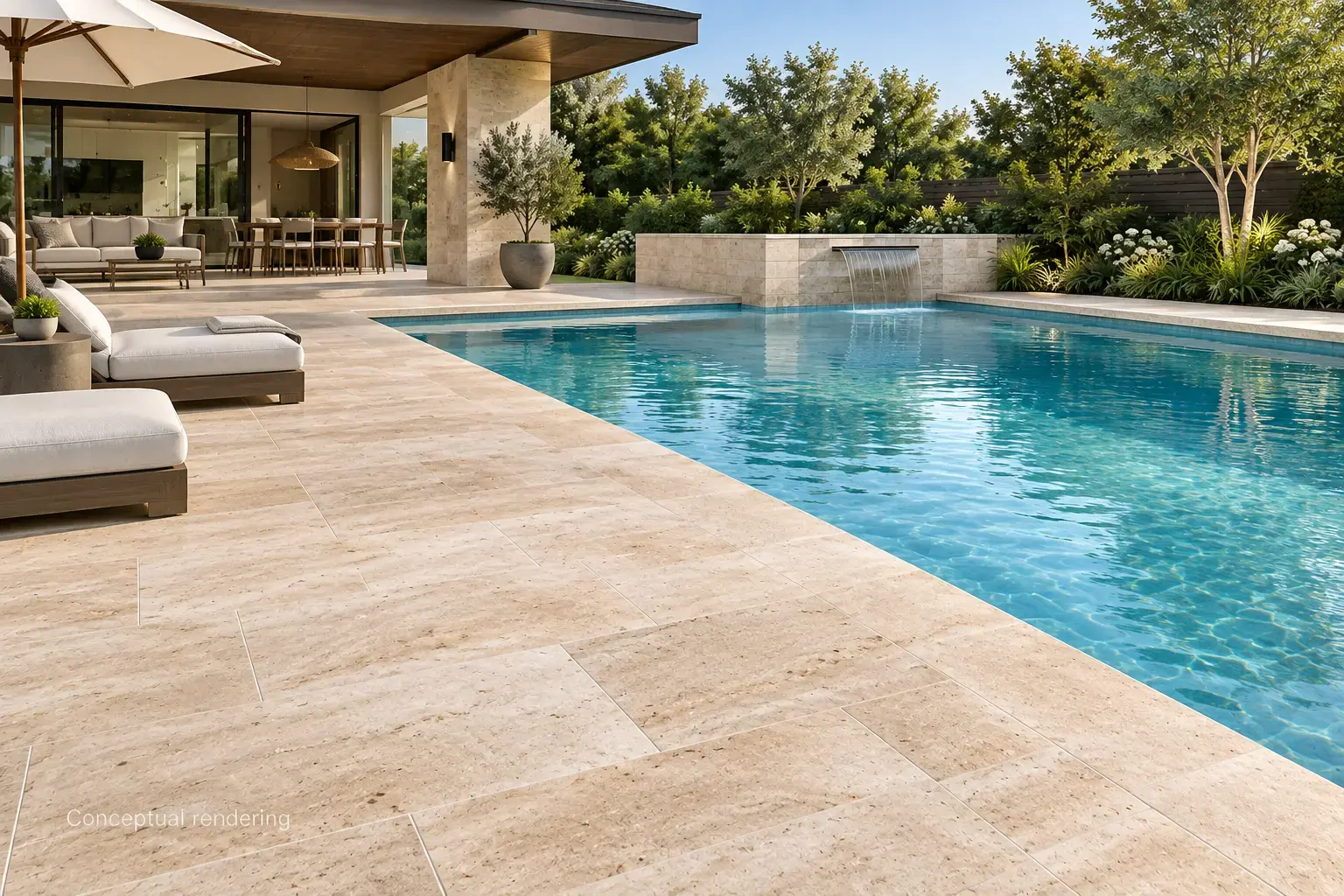
Travertine is a form of limestone with a warm, light palette of ivory, beige, and walnut. Outdoor travertine pavers often have a tumbled finish with softened edges. Lighter shades tend to stay more comfortable in direct sun than darker materials, which is why travertine shows up so often around pools. Its natural pores can be left open or filled, depending on the look you want.
Bluestone
In the U.S., bluestone usually refers to a dense sandstone known for blue-gray color, with some lots showing lilac, green, or rust tones. A thermal finish gives it a flat surface with a fine, slightly rough texture, while natural cleft bluestone keeps the uneven texture of the split stone. Keep in mind that its darker color absorbs more heat in full sun.
Granite
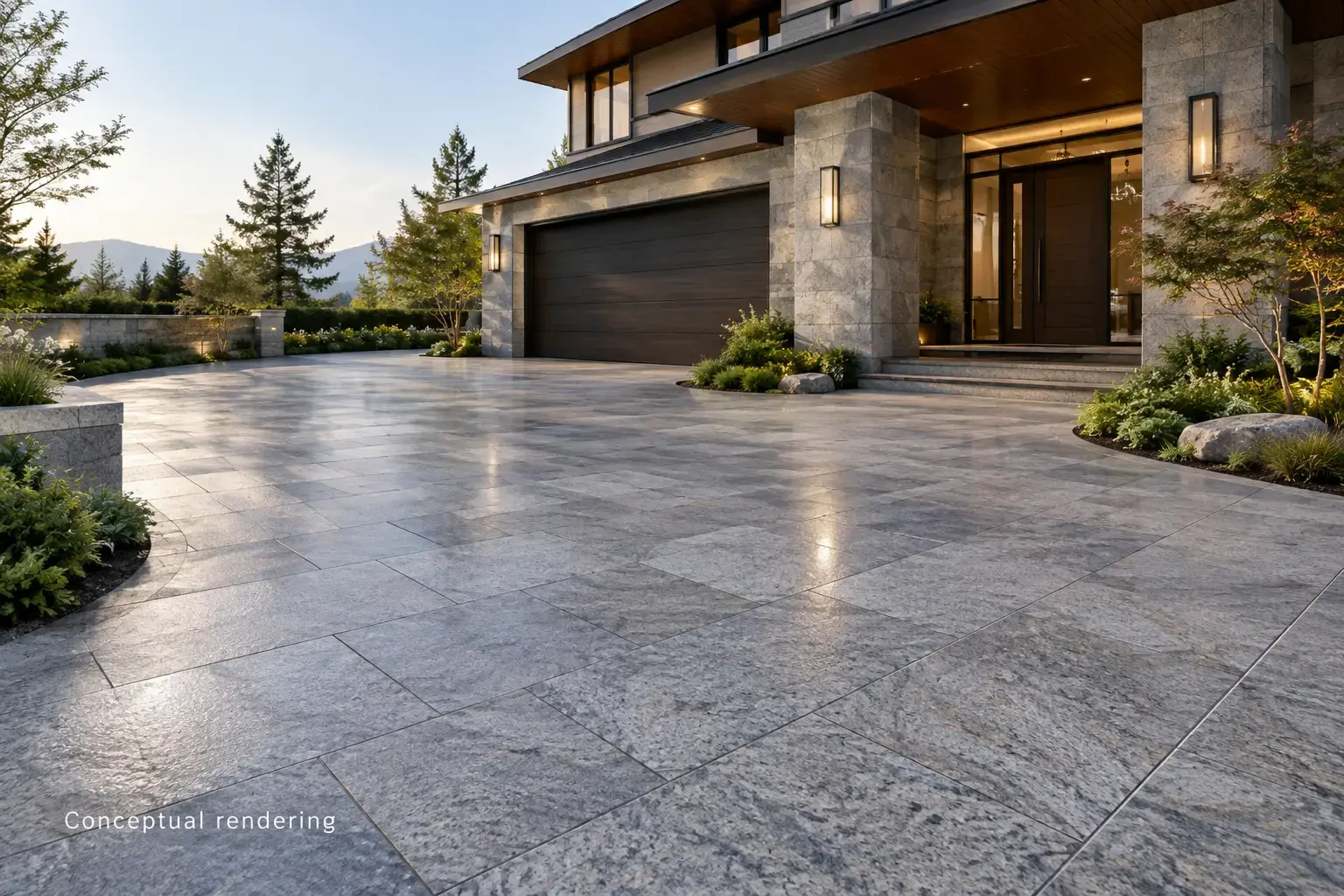
Granite is one of the hardest stones used outdoors. It is common as cobbles, setts, and flamed pavers, and it handles vehicle traffic well, so it works for driveways and entry courts. A flamed or bush-hammered finish adds texture for traction.
Limestone
Limestone offers soft, quiet colors and a refined look. Density varies a lot from one limestone to the next, so it is worth confirming that the stone you choose is rated for exterior use in your climate, especially where winters bring freeze-thaw cycles.
Quartzite
Quartzite is a hard metamorphic stone with low water absorption. As pavers and coping, it suits patios, pool surrounds, and walkways where you want the look of natural stone with strong resistance to wear.
What Types of Pavers Can Replace a Concrete Slab?
The four paver types that most often replace a poured slab are concrete pavers, porcelain pavers, permeable pavers, and clay brick. All of them are manufactured to consistent sizes, which makes layout and future repairs simpler. Our selection of pavers and exterior stone runs from small to large format pavers along with pool coping and stacked stone.
Concrete Pavers
Concrete pavers are made from concrete, but they behave very differently from a poured slab. They are pressed and cured in a factory, and units made to the ASTM C936 standard must reach an average compressive strength of at least 8,000 psi with an average water absorption of no more than 5 percent. Because each paver is separate, the surface flexes with the ground instead of cracking across. They come in a long list of shapes, sizes, colors, and textures, including large-format and stone-look styles.
Porcelain Pavers
Porcelain pavers are usually 2 cm (about 3/4 inch) thick and fired at high temperatures, which gives them very low water absorption. That makes them resistant to staining from spills, leaves, and grease near a grill. Many are made to look like natural stone, concrete, or wood. Some collections pair with matching indoor tile, so a kitchen or living room floor can carry straight out to the patio.
Permeable Pavers
Permeable pavers are spaced with wider joints filled with small, clean aggregate rather than sand. Rain passes through those joints into a gravel base, where it soaks into the soil instead of running off. On heavy clay soils, the base often includes a drain pipe to carry extra water away. This makes them useful for driveways, patios, and properties where local stormwater rules limit how much hard, water-shedding surface you can add.
Clay Brick Pavers
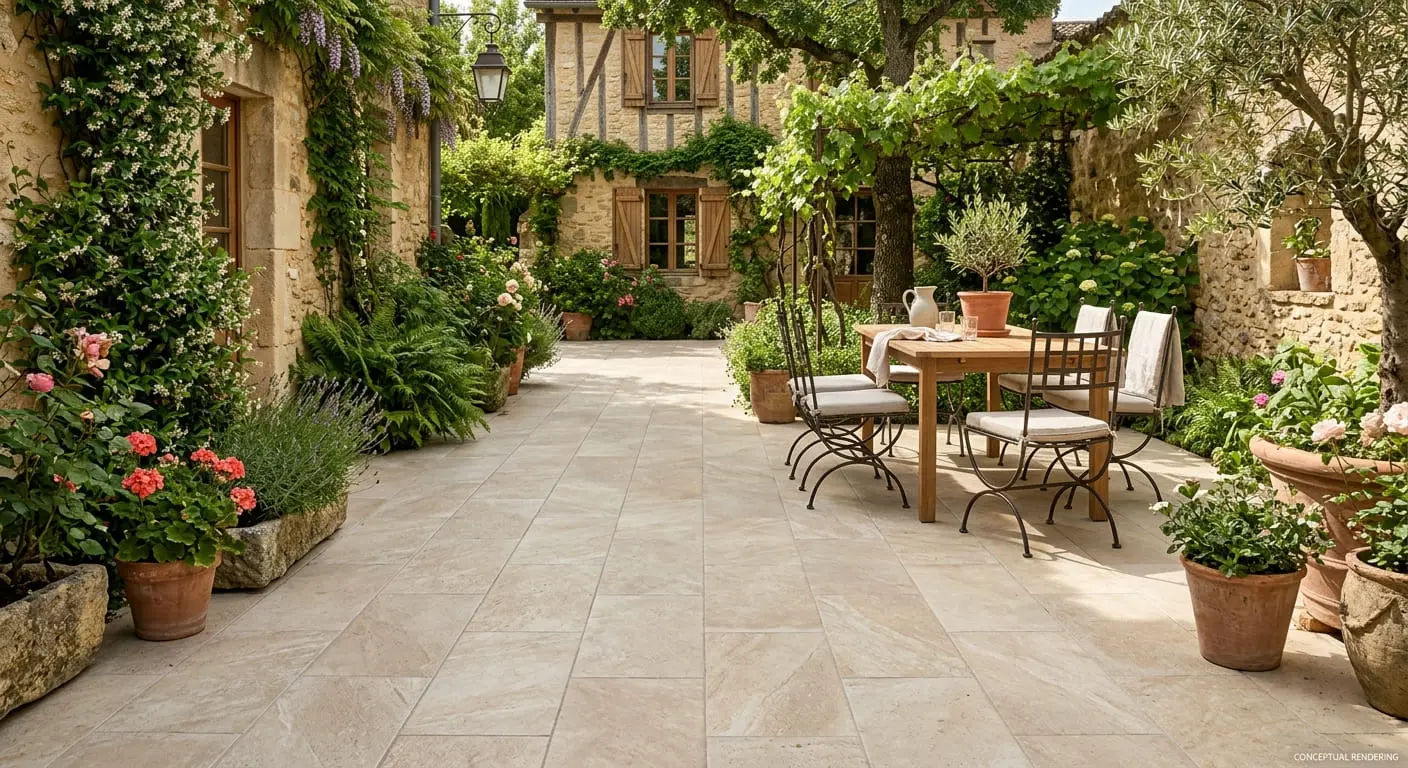
Clay brick pavers are fired from natural clay, so their color typically runs all the way through each unit. They suit traditional, cottage, and Spanish-style homes, and they look right in classic patterns like herringbone, running bond, and basketweave.
How Do Stone and Pavers Compare to Concrete?
The biggest difference is repairability: stone and pavers can be fixed one piece at a time, while a cracked slab usually needs patching or a full repour. Here is how the options compare on the points homeowners ask about most.
Material | Heat in full sun | Surface grip | Upkeep | Repairs |
Poured concrete | Depends on color | Varies by finish | Reseal decorative finishes | Patch or repour |
Flagstone | Varies by color | Good (split surface) | Refill joints | Reset single pieces |
Travertine | Stays cooler (light tones) | Good when tumbled | Sealing recommended | Replace single pavers |
Bluestone | Gets warm (dark tones) | Good (thermal or cleft) | Seal optional | Replace single pavers |
Granite | Varies by color | Good when flamed | Low | Replace single units |
Concrete pavers | Varies by color | Good | Top up joint sand | Lift and reset |
Porcelain pavers | Varies by color | Good with outdoor-rated finish | Low | Replace single pavers |
Permeable pavers | Varies by color | Good | Clear debris from joints | Lift and reset |
Clay brick | Varies by color | Good | Low | Replace single bricks |
Stone and pavers usually cost more up front than plain poured concrete. The trade-off is that a repair rarely means starting over, and a dry-laid surface can be lifted for utility work and set back in place. If budget is a concern, our overstock sale is worth checking for discounted materials.
Which Material Fits Each Part of Your Yard?
The right concrete alternative depends on what the surface has to do. A pool deck, a driveway, and a garden path each ask for something different.
Patios
For patios, almost every option works. Concrete pavers and porcelain give clean, even surfaces for furniture and dining tables. Flagstone and bluestone suit a more natural or traditional setting. If you want the patio to feel like part of the house, porcelain that matches your indoor flooring is worth a look.
Walkways and Garden Paths
Irregular flagstone set in gravel or ground cover keeps paths relaxed and informal. Clay brick and cut stone suit front walks that need a tidier edge.
Pool Decks
Around pools, comfort and traction come first. Light-colored tumbled travertine and textured porcelain are popular choices, and many homeowners use matching coping for a finished edge.
Driveways
Driveways carry the heaviest loads, so look at concrete pavers, permeable pavers, and granite cobbles made for vehicle traffic. Your contractor will size the base for the weight. Contractors and designers handling hardscape projects can apply for a trade account to get trade pricing and job-site delivery.
Steps and Entries
Thick stone treads in granite, bluestone, or quartzite give steps a solid, finished look and hold up to daily foot traffic.
What Should You Decide Before Choosing a Material?
A few answers will narrow the list quickly. Before you compare samples at one of our local showrooms, think through these questions:
- What is your climate? Hot summers favor lighter colors. Freeze-thaw winters call for dense stone and pavers rated for those conditions.
- How much sun does the area get? A shaded courtyard can handle darker stone that would get hot on an open, west-facing patio.
- How will the space be used? Bare feet, dining furniture, grills, and cars each favor different surfaces and finishes.
- Where does the water go? If runoff is already a problem, permeable pavers or dry-laid stone may be the better fit.
- What does your home look like? Match the material to your roof, siding, and trim so the hardscape feels connected to the house.
- How much upkeep do you want? Some stones need periodic sealing, while porcelain and clay brick need very little.
Conclusion
Natural stone and pavers give you more color, texture, and pattern choices than a plain poured slab. Flagstone and bluestone bring texture and a natural feel. Light travertine and light-colored porcelain help keep pool decks and patios comfortable in the sun. Concrete, permeable, and clay brick pavers offer flexibility, drainage, and easy repairs. The best choice comes down to your climate, how you use the space, and the look of your home.
Seeing these materials side by side makes the decision much easier than comparing photos online. We have showrooms in Sacramento, Reno, Minden, and Fernley, and our team is happy to talk through colors, finishes, and sizes with you. Bring photos of your home and a rough layout of the area you are planning, and we can help you narrow down the options that fit your project.
Note: Some images on this page may be conceptual renderings created to illustrate design possibilities and may not depict actual installations.
Frequently Asked Questions
Concrete pavers, porcelain pavers, and natural stone like flagstone, travertine, and bluestone are the most common alternatives. The best fit depends on your climate, sun exposure, and style. Pavers offer the most variety, while natural stone gives each patio its own color and texture.
Pavers set on a sand and gravel base handle ground movement better because each unit can shift slightly without cracking the whole surface. They are also easier to repair, since a damaged paver can be lifted and replaced. Poured concrete usually costs less up front but is harder to fix once it cracks.
Lighter materials generally stay cooler than dark ones. Light travertine and light-colored porcelain or concrete pavers are popular around pools for this reason. Dark stone like bluestone absorbs more heat in direct afternoon sun.
Yes. Granite cobbles and thick stone pavers made for vehicle traffic work well for driveways. The stone needs to be thick enough for the load and set on a properly built base, which your contractor will design for the project.
Permeable pavers are worth considering if you have drainage problems or local rules that limit hard surfaces. They let rainwater soak into the ground through gravel-filled joints. They do need occasional cleaning of the joints to keep water flowing.
Sources
- ASTM International. ASTM C936/C936M-26, Standard Specification for Solid Concrete Interlocking Paving Units. https://store.astm.org/c0936_c0936m-26.html
- Smith, David R. “Tech Brief: Permeable Interlocking Concrete Pavement” (FHWA-HIF-19-021). Federal Highway Administration. https://www.fhwa.dot.gov/pavement/concrete/pubs/hif19021.pdf
- Interlocking Concrete Pavement Institute. “Tech Spec 23: Maintenance Guide for Permeable Interlocking Concrete Pavements.” Revised February 2020. https://icpi.org/s/Tech-Spec-23-PICP-Maintenance.pdf
- Tile Council of North America. ANSI A137.3, A108.19, and A108.20 American National Standard Specifications for Gauged Porcelain Tiles and Tile Panels/Slabs, October 2025. https://tcnatile.com/products/publications/ansi-a137-3-a108-19-and-a108-20-american-national-standard-specifications-for-gauged-porcelain-tiles-and-tile-panels-slabs-specifications-october-2025/
- Tile Council of North America. “Porcelain Certification.” https://tcnatile.com/resource-center/porcelain-tile-certification/