Granite is one of the most durable natural stones available for exterior use, ranking 6 to 7 on the Mohs hardness scale and typically having low water absorption, although exact values vary by stone and should be checked in product-specific test reports. That combination of hardness and low porosity is why granite resists cracking from freeze-thaw cycles, holds its color under years of sun exposure, and handles heavy foot and vehicle traffic on driveways, patios, and walkways without significant wear.
Granite has been used this way for centuries, cut into blocks for monuments, bridges, and building facades long before it became a fixture in modern kitchens. That same durability is why it still shows up in hardscaping and exterior architecture today, not as a design trend but as a practical choice backed by how the stone actually performs outdoors.
This guide covers what granite is made of, why it holds up so well in exterior conditions, where it works best, and what it takes to maintain.
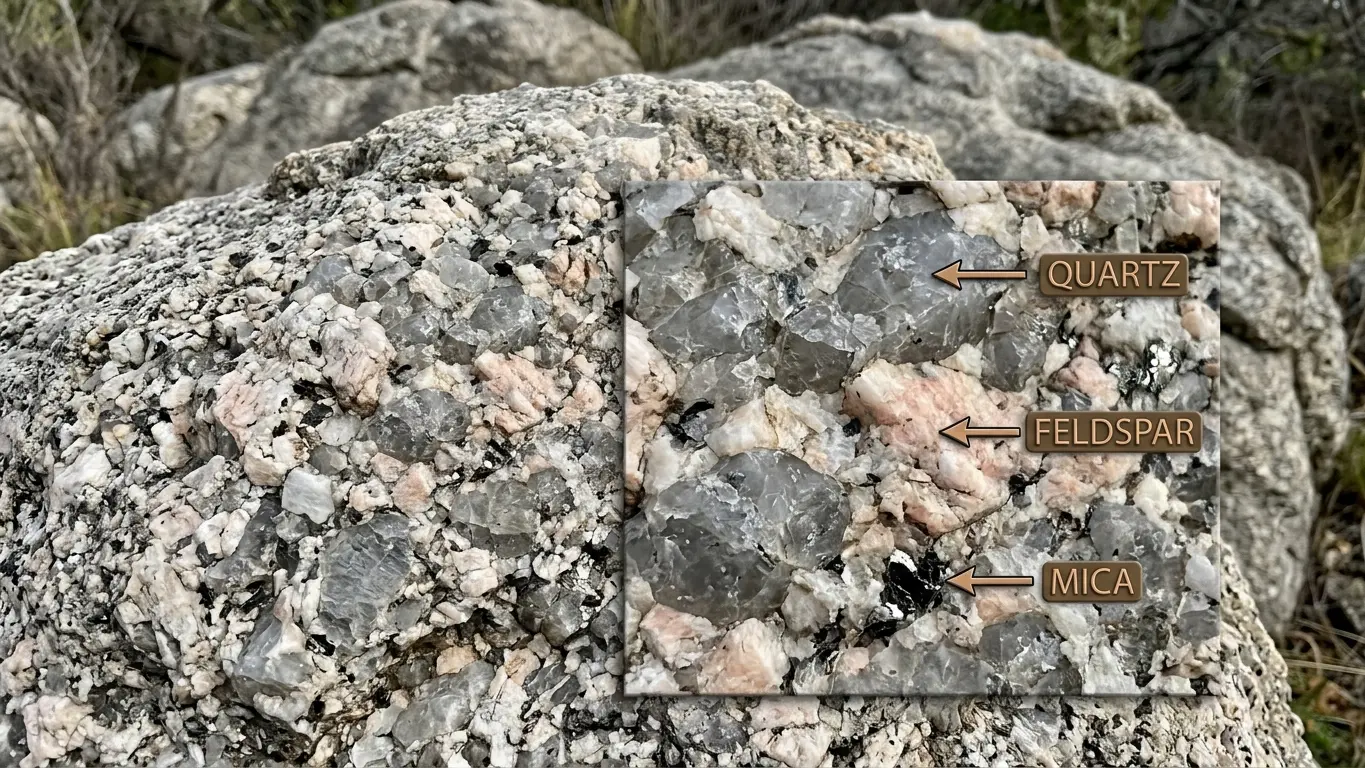
What Granite Is Made Of
Granite is an igneous rock, meaning it forms from magma that cools slowly beneath the earth's surface. That slow cooling is what gives granite its signature look: large, visible mineral crystals locked together in a dense, interlocking structure. The main minerals involved are quartz, feldspar, and mica, and the ratio of these three is what determines a slab's color, whether it leans gray, pink, black, or a warm gold. One resource on rock composition and formation notes that this interlocking crystal structure is also what makes granite so resistant to abrasion and scratching in the first place, since the minerals lock together rather than sitting in loose layers the way some sedimentary stones do.
That structural density matters more outdoors than almost anywhere else, because exterior surfaces face constant exposure to moisture, temperature swings, and physical wear that indoor surfaces never see.
Why Granite Holds Up Outside
A few specific properties explain why granite keeps showing up on lists of the most durable exterior stones, alongside quartzite and dense slate.
Hardness. Granite typically ranks 6 to 7 on the classic method geologists use to rank mineral hardness, which measures resistance to scratching. That range comes from its two main minerals: feldspar sits at 6 and quartz at 7 on the scale. This puts granite well above softer stones like limestone and marble, and it's a big part of why granite surfaces resist scuffing from foot traffic, patio furniture, and general outdoor wear.
Low porosity. Porosity is the single biggest factor in how well any stone survives outdoors, because water that seeps into a stone's pores expands when it freezes and causes cracking or spalling over time. The industry specification for granite building stone caps water absorption at 0.4 percent by weight, which lines up with what independent stone testing generally shows for dense, crystalline stones like granite and quartzite. That tight structure is what keeps granite from taking on the kind of freeze-thaw damage more porous stones are prone to.
Thermal stability. Granite tolerates temperature swings, direct sun, and heat without breaking down or discoloring the way some softer stones can. This is part of why it's a common choice around fire pits, outdoor fireplaces, and fully sun-exposed patios and pool decks.
Color retention. Because granite is so dense and largely non-porous once it's finished properly, it resists fading and staining better than more porous stones, holding its original color for years of sun and weather exposure.
Those same properties are what set granite apart when it's weighed against the other stones homeowners typically consider for outdoor projects.
How Granite Compares to Other Exterior Stones
Granite tends to sit near the top of the durability spectrum alongside quartzite, both of which resist weathering, moisture, and temperature swings better than most other natural stones. Slate performs well in wet climates thanks to its low water absorption. Limestone, sandstone, and travertine all bring their own aesthetic strengths, but their higher porosity means they generally need more frequent sealing and closer attention in freeze-prone regions. A rundown comparing common backyard surface options points out that porous stones like sandstone actually stay cooler underfoot in summer heat, a genuine upside, even though that same porosity is what leaves them more vulnerable to water damage over time. None of this makes those stones a poor choice, it just means the tradeoffs differ from stone to stone, and granite tends to ask less of homeowners over time.
With that durability profile in mind, it's worth looking at where granite actually gets put to use outdoors.
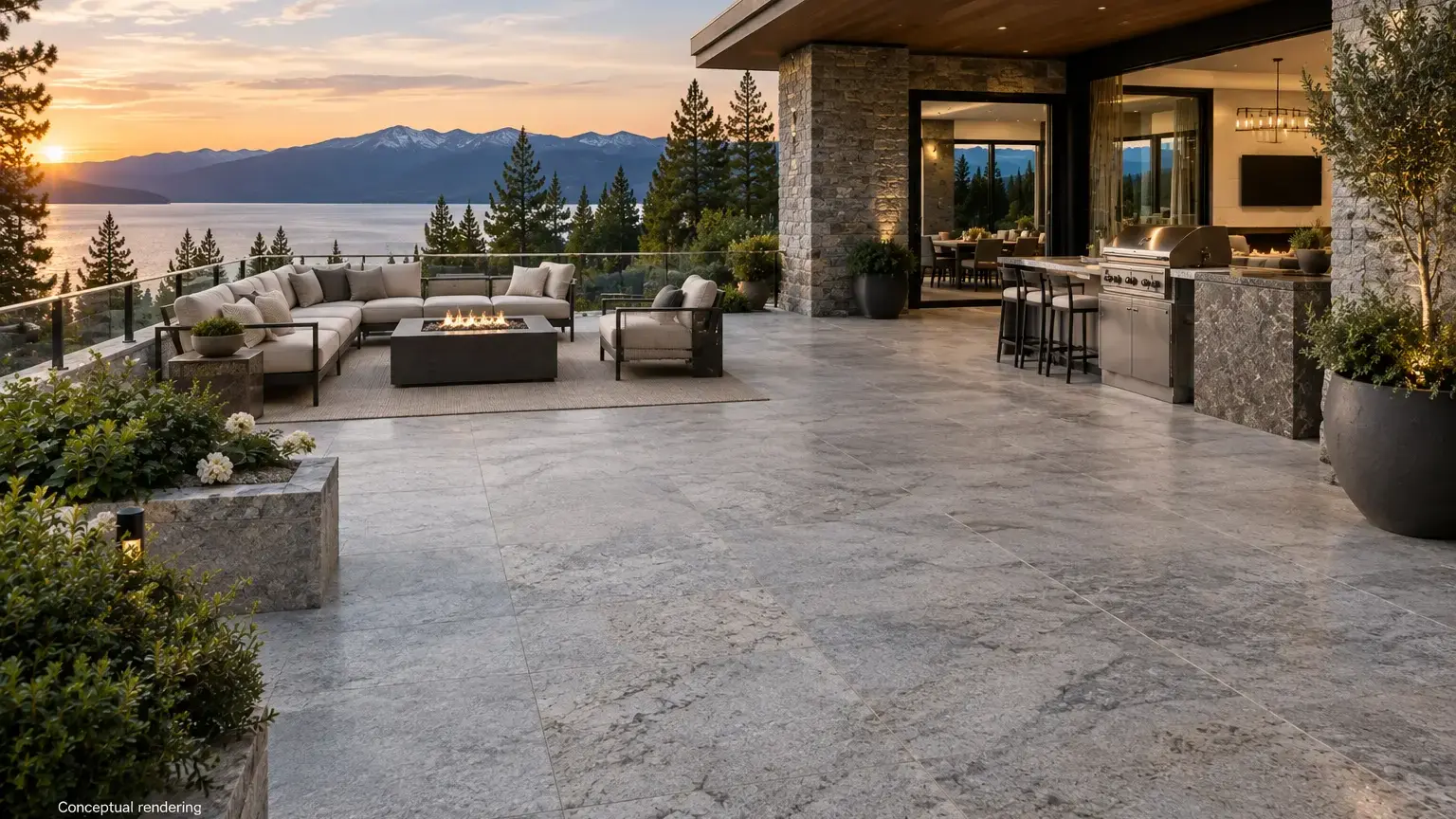
Where Granite Works Best Outdoors
Granite shows up across a wide range of exterior applications, and the right one often depends on how much foot traffic or vehicle weight the surface will need to handle. If you're comparing granite options for an outdoor project, visiting our showroom can also help you see different colors, textures, and finishes in person.
- Facades and cladding. Full stone cladding or veneer panels on exterior walls, entry columns, and chimney stacks take advantage of granite's weather resistance and low maintenance needs.
- Driveways and walkways. Granite pavers can support foot traffic and, when specified for vehicle loads, driveway use. Performance depends on paver thickness, base preparation, drainage, and installation.
- Patios and pool decks. Granite's heat tolerance and low water absorption make it a solid choice for surfaces that see constant sun and moisture.
- Retaining and garden walls. Denser stone handles the physical stress of holding back soil and moisture without breaking down.
- Outdoor kitchens and fire features. Granite can be used for outdoor countertops and some fireplace surrounds, subject to product-specific approval and the appliance manufacturer's clearance requirements. Avoid direct flame contact and use trivets under hot cookware.
Choosing the Right Finish for Outdoor Use
Finish matters just as much as the stone itself when granite is going outside, mostly because of slip resistance. A polished finish, the smooth, reflective look most people associate with countertops, becomes genuinely slippery when wet, which makes it a poor fit for walkways, pool decks, or anywhere moisture collects. Research tracking how surface traction affects fall risk is part of why standardized testing for wet-surface traction exists at all, since low-traction surfaces are a leading cause of slip-and-fall injuries.
For exterior applications, a few finishes come up repeatedly:
- Flamed. Created by applying intense heat to the surface, which causes the minerals to expand and pit, leaving a rough, textured surface; wet-area suitability requires product-specific verification. This is one of the most common finishes for walkways, pool surrounds, and exterior stairs.
- Bush-hammered. A mechanically textured finish that creates a rugged, textured surface, often used in high-traffic outdoor areas.
- Honed. A smooth, non-reflective matte finish that gives granite a refined appearance. Its matte appearance alone does not establish slip resistance; suitability for patios requires product-specific verification.
Matching the finish to the application is one of the more overlooked decisions in an exterior stone project, and it has a direct impact on both safety and long-term appearance.
Maintenance: What Granite Actually Needs
One reason granite keeps its reputation as a low-maintenance exterior material is that it needs comparatively little upkeep once installed correctly.
- Sealing. Even dense, low-porosity stone benefits from a penetrating sealer, which protects against staining and reduces moisture absorption without changing the stone's appearance. Because granite is already low-porosity, it typically needs resealing far less often than travertine, limestone, or sandstone, though exact intervals depend on the specific stone and exposure.
- Cleaning. A pH-neutral cleaner is the safest option for regular upkeep. Harsh acidic cleaners aren't necessary for granite the way they can be damaging on more sensitive stones like marble.
- Routine inspection. Checking joints, grout lines, and sealant condition every couple of years helps catch small issues before they become larger repairs.
Textured finishes like flamed or bush-hammered granite do require a bit more attention when cleaning, since dirt and debris can settle into the surface texture more easily than on a smooth finish. That tradeoff is usually worth it for the added slip resistance in high-traffic or pool-adjacent areas.
Granite's Changing Reputation
Beyond the practical case for granite, it's also worth knowing that the stone has gone through a real image shift over the past few decades. It was everywhere in the late 1990s and early 2000s, fell out of favor as trends moved toward quartz and marble-look surfaces, and has more recently found its way back into design conversations, this time with a wider range of finishes and colors than the dark, heavily speckled slabs that once defined it. Granite's comeback has been helped along by finishes like leathered and honed, which give the stone a softer, more understated look than the glossy, reflective slabs people associate with its earlier heyday. That same range of finish options is part of what makes granite work as well outdoors as it does indoors, since the right texture can shift the stone from a formal, polished look to something more rugged and suited to a patio or facade.
In other words, granite isn't just holding up structurally, it's also back in style, which makes now a reasonable time to consider it for an exterior project.
Conclusion
Granite earns its reputation as an exterior material honestly. Its density, low porosity, and resistance to temperature swings solve the exact problems that cause other stones to crack, stain, or wear down outdoors, and its range of finishes means it can suit anything from a formal entry facade to a slip-resistant pool deck. The main decisions that matter are picking a finish suited to the specific application and staying on top of basic sealing and cleaning, which for granite tends to be lighter than for more porous stones.
If you're weighing granite against other natural stone or engineered options for an upcoming exterior project, our team at Nova Tile and Stone is glad to walk through what fits your climate, application, and design goals. We have four showrooms across Northern Nevada and Sacramento:
- Reno: 12835 Old Virginia Rd, Suite 24, Reno, NV 89521, (775) 331-6682
- Minden: 2548 Business Pkwy, Minden, NV 89423, (775) 783-4970
- Fernley: 1855 Hwy 95A, Fernley, NV 89408, (775) 575-6682
- Sacramento: 6100 Warehouse Way, Sacramento, CA 95826, (916) 913-6682
Stop by whichever location is closest to you, or give us a call to talk through your project.
Frequently Asked Questions
Yes. Granite's hardness and low water absorption make it one of the more reliable natural stones for exterior applications, from facades and driveways to patios and pool decks. It holds up to foot and vehicle traffic, resists staining, and doesn't break down under repeated sun and temperature exposure the way softer, more porous stones can.
It benefits from sealing even though it's already low-porosity. A penetrating sealer adds a layer of stain protection without changing the stone's appearance. Because granite absorbs so little water to begin with, it typically needs resealing far less often than more porous stones like travertine, limestone, or sandstone.
It's far less likely to than porous stones, but it isn't entirely immune. Cracking from freeze-thaw cycles happens when water gets into a stone's pores and expands as it freezes. Granite's very low absorption rate means little water gets in to begin with, which is why it performs well in colder climates compared to stones with higher porosity.
Flamed or bush-hammered granite may be suitable for pool decks and walkways, but texture alone does not establish wet slip resistance. Confirm product-specific slip-resistance data and approval for the intended application, including pool surrounds or exterior stairs where relevant. Avoid polished finishes on walking surfaces regularly exposed to water.
The two are close. Both are dense, low-porosity stones that resist weathering, staining, and freeze-thaw damage far better than sandstone, limestone, or travertine. Quartzite can edge out granite slightly in raw hardness, but in practical exterior use, both perform reliably and the choice often comes down to color, finish options, and budget rather than durability alone.
Note: Some images on this page may be conceptual renderings created to illustrate design possibilities and may not depict actual installations.