Front yard hardscape uses stone in three places: the walkway, the borders, and the entry. Flagstone, porcelain pavers, concrete pavers, and travertine pavers are commonly used for front walkways. These paths are typically at least 36 inches wide for one person and 48 inches for two people side by side. Porcelain pavers absorb 0.5% water or less, the threshold set by ANSI A137.1, which helps in climates where winters freeze. Borders made from paver rows, cobbles, low stacked stone, or boulders keep the walkway separate from lawn and planting beds. Entry steps and landings need a textured finish for grip when wet. Using two or three stone types across all three areas keeps the front yard looking like one plan.
In this guide, we walk through each area, the materials that fit it, and how climate, traction, and drainage shape your choices.
What Front Yard Hardscape Usually Includes
The walkway sets the route, the borders define what sits on either side of it, and the entry gives the route a clear endpoint at the door.
A typical front yard plan may include some or all of these elements:
- A main walkway from the driveway or sidewalk to the front door
- Secondary paths to a side gate, garden bed, or mailbox
- Edging along planting beds, lawn, and driveway margins
- Steps, a landing, or a small stoop at the entry
- Low walls or raised planters near the house or along the property line
It helps to decide early which of these you need now and which might come later. Seeing pavers and exterior stone side by side makes it easier to plan the whole front yard at once, so the materials still match when you add the next piece.
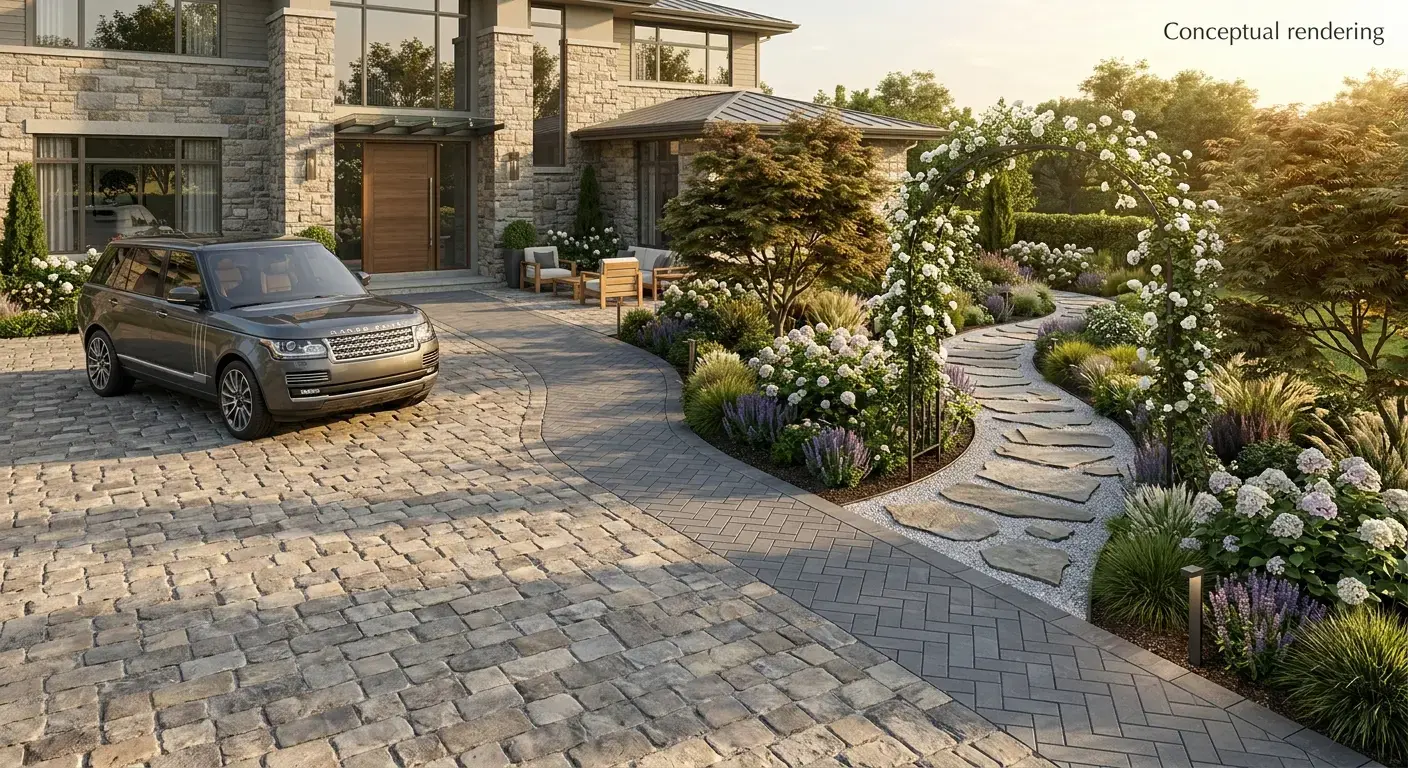
Choosing Stone for a Front Walkway
The front walkway gets daily foot traffic, rain, sprinkler overspray, and sometimes ice, so the surface needs to stay walkable in all of those conditions. Material, layout, and width all shape how the path works day to day.
Common Walkway Materials
Flagstone. Irregular flagstone gives a path an organic, hand-laid look. Sandstone, quartzite, and slate flagstone each come in different color ranges, from warm tans and golds to gray and blue tones. Irregular pieces create wider joints, which can be filled with gravel, polymeric sand rated for wide joints, or low groundcover.
Porcelain pavers. Outdoor porcelain pavers are typically 20mm (about 3/4 inch) thick and come in wood-look, stone-look, and concrete-look designs. Their low water absorption makes them suited to areas that see freeze-thaw cycles, and their consistent sizing produces tight, even joints.
Concrete pavers. Concrete pavers come in many shapes and colors and suit patterned layouts like herringbone or running bond. Pavers made to ASTM C936 are tested for strength and freeze-thaw resistance.
Travertine pavers. Tumbled travertine pavers have softened edges and a textured surface with natural pitting. Their light, warm tones are often paired with Mediterranean, Spanish, and California ranch homes.
Path Shape and Width
A straight walkway suits symmetrical, formal homes and makes the most direct route to the door. A gently curved path is common with cottage, craftsman, and ranch-style homes, and it can wrap around an existing tree or planting bed.
For width, many designers use 36 inches as a minimum for a single person and 48 inches or more for two people walking side by side. If your front door sits far from the driveway, a wider walkway helps the path feel in proportion to the house.
Joints and Patterns
Joint width affects both appearance and upkeep. Tight joints between rectified porcelain or cut stone give a clean, modern look. Wider joints between irregular flagstone leave room for planting but may need more weeding over time. A running bond pattern laid lengthwise leads the eye forward along the path, while a basketweave or random ashlar layout reads as more relaxed.
Stone Borders for Beds, Lawn, and Driveway Edges
Borders separate one surface from another and keep materials where they belong. A stone edge helps keep mulch from washing onto the walkway, helps contain gravel, and gives a mower a clean line to follow along the lawn.
Edging Styles to Consider
Soldier-course pavers. A soldier course is a single row of pavers laid with their long sides perpendicular to the walkway edge, creating a defined edge. Using a contrasting color for this border row outlines the path.
Cobblestone or setts. Small granite or basalt cobbles add texture and a traditional look to a border. They are used along driveways, curved beds, and walkway edges.
Stacked stone. Low stacked stone edges, one or two courses high, define raised planting beds and add height without building a full wall. Fieldstone and wallstone in mixed tones suit craftsman, rustic, and mountain-style homes.
Boulders and natural fieldstone. Partially buried boulders mark the corners of a bed or the start of a path. They are common in drought-tolerant and xeriscape front yards, where they pair with gravel and native plants.
Where Borders Make the Biggest Difference
The edge between a walkway and lawn is often the first place a front yard starts to look worn, since grass creeps in and soil shifts. Along the driveway, a border strip of pavers or cobbles can break up a large expanse of concrete and tie the driveway visually to the walkway. Around trees and foundation plantings, a low stone edge helps keep soil and mulch contained during heavy rain.
When choosing border stone, think about how it relates to the walkway. A border in the same material but a different size or color reads as coordinated. A border in a completely different stone fits in more easily when it repeats something else in the yard, such as the stone on the house facade or a planter wall. Since edging uses smaller quantities, our overstock sale can be a source for border and accent pieces.
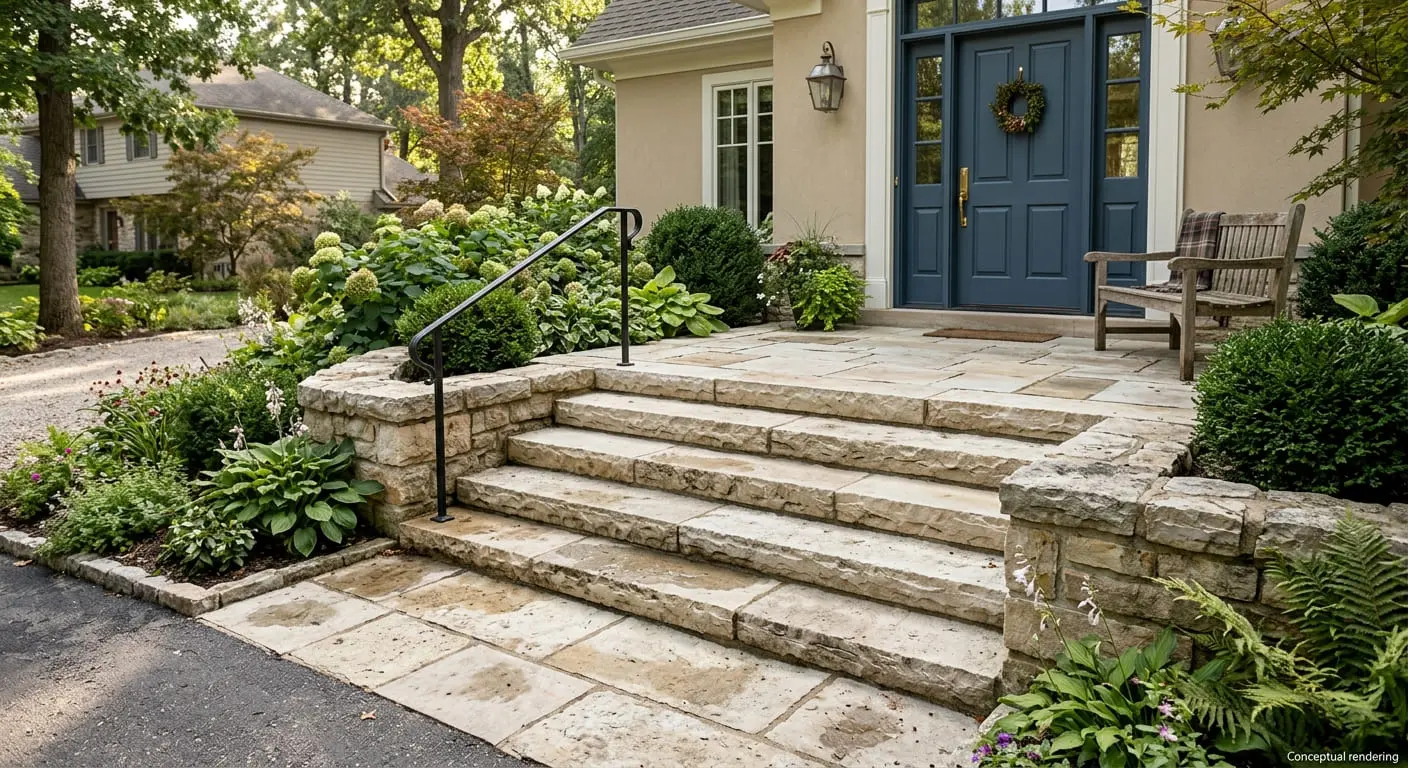
Designing the Entry: Steps, Landings, and the Approach
The entry is where the walkway ends and the house begins, so it often serves as the focal point of a front yard design.
Steps
If your front door sits above grade, the walkway needs steps to reach it. Stone treads can be cut from thick pieces of flagstone, bluestone, or granite, or built from pavers set on a step base. Bullnose or eased edges soften the front edge of each tread, and a contrasting color or texture along the edge makes each step easier to see.
Outdoor steps are often designed with shorter risers and deeper treads than indoor stairs, which creates a gentler climb. Your local building code sets the requirements for riser height, tread depth, and handrails, so confirm those details with your contractor or building department before finalizing a design. Contractors, installers, and designers sourcing stone for client projects can apply for a trade account for trade pricing and job-site delivery.
Landings
A landing at the top of the steps gives people room to stand while the door opens, set down packages, or greet guests. The landing is often where a larger format stone or a different pattern comes in, which separates the entry from the path. A large porcelain paver or a single slab of bluestone gives the landing its own surface instead of continuing the walkway material.
The Approach
The last few feet before the door are a common place for a small change in material, such as a border inlay, a shift from irregular flagstone to cut stone, or a contrasting threshold band. Planters, house numbers on a stone pillar, and path lighting set into a border also help mark the entry and make it easier to find after dark.
Tying the Walkway, Borders, and Entry Together
A front yard reads as one design when the walkway, borders, and entry share a common thread. That thread can be a color, a stone type, a finish, or a repeated shape.
A few approaches that help:
- Limit the palette. Two or three stone types across the whole front yard usually look more settled than four or five. One main walkway material, one border material, and one accent at the entry is a common starting point.
- Repeat the house. If your home has stone veneer, brick, or a painted trim color, pick hardscape tones that echo it. A walkway with gray and blue flagstone pairs with a gray stone facade, while warm travertine relates to stucco and terracotta roofs.
- Vary size, not just color. Using the same stone in a large format for the landing and a smaller format for borders creates contrast while keeping the materials related.
- Match finishes to use. Use tumbled, flamed, or other textured finishes on walkways, steps, and landings, where people walk on wet stone, and save smoother finishes for vertical surfaces like planter walls or pillar caps.
Laying samples outside next to the house, the driveway, and existing plants shows how each stone looks in its actual setting, since stone often looks different in direct sun than it does indoors. A free design consultation lets our team pull samples matched to your style for you to take home.
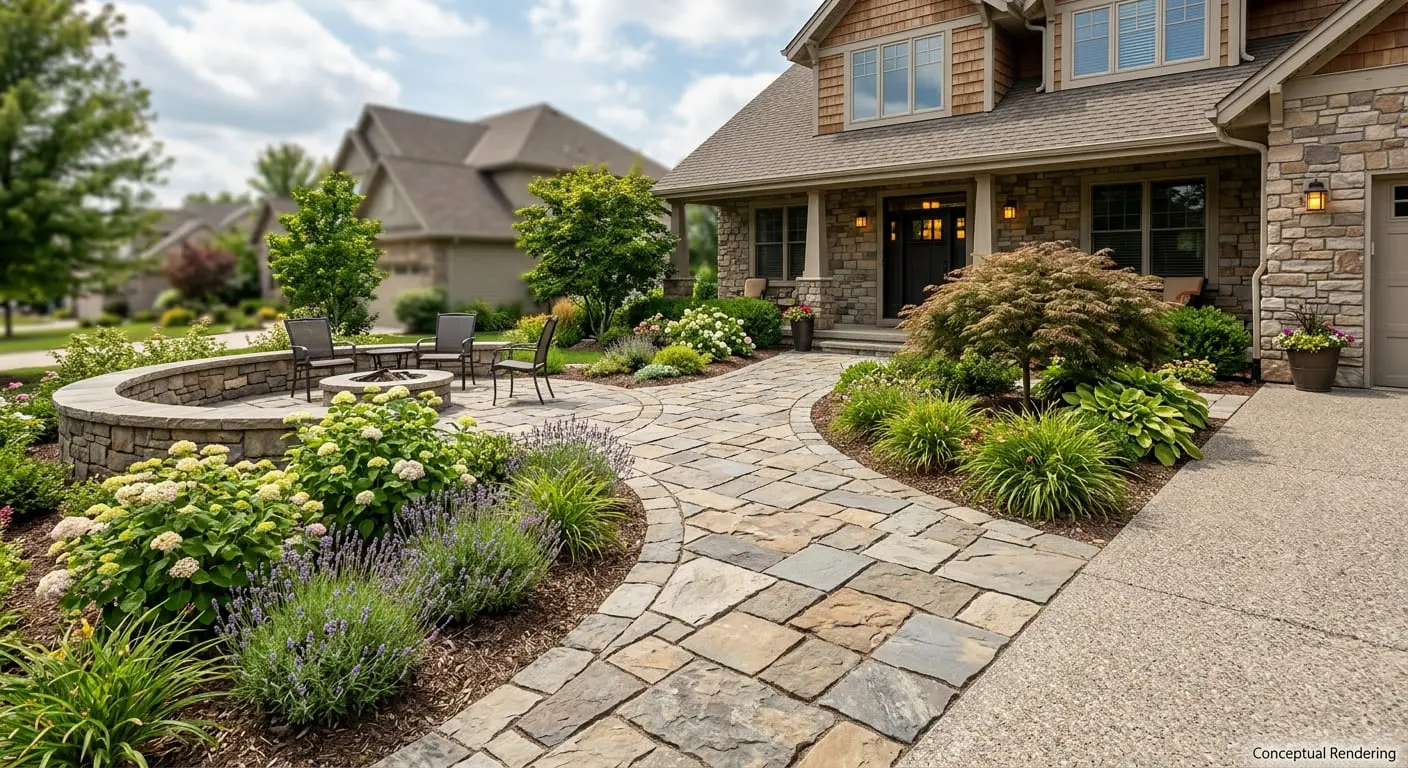
Weather, Traction, and Drainage in a Front Yard
Sun exposure, winter freezes, and seasonal rain all affect which surfaces make sense in a front yard. Our team at each local showroom can point you to materials suited to your area's weather.
Heat
Dark stone absorbs more heat than light stone. On a south- or west-facing front walk, lighter materials like travertine, light quartzite, and pale porcelain stay cooler underfoot during summer afternoons. Darker basalt or slate can still work in shaded areas or as borders, where people rarely walk barefoot.
Freeze-Thaw Cycles
In areas with winter freezes, water that soaks into stone can expand when it freezes and cause surface damage over time. Materials with low water absorption, such as porcelain pavers, and dense stones like granite and quartzite tend to handle these cycles well. For concrete pavers, look for products made to ASTM C936, which includes requirements for how pavers handle repeated freezing and thawing. For porcelain, ASTM C1026 is the test that measures how tile performs through the same freeze-thaw cycles. Sealing porous stones like travertine and some sandstones can also reduce water intake.
Traction
Walkways and steps get wet from rain, sprinklers, and morning dew, so surface texture matters. Tumbled, flamed, and textured finishes provide more grip than polished or honed surfaces. For porcelain, ANSI A326.3 sets the method for measuring dynamic coefficient of friction (DCOF) and includes product use classifications for exterior wet areas. Look for products the manufacturer classifies for exterior wet use rather than relying on an interior rating.
Drainage
A front walkway should be graded slightly so water runs off rather than pooling, and it should slope away from the house foundation. Permeable options, such as flagstone set in gravel or permeable paver systems with open joints, let water soak into the ground instead of running toward the street. Your hardscape contractor can recommend the right base and slope for your soil and site.
Planning Your Front Yard Hardscape
A well-planned front yard starts with a walkway that fits how you use the space, adds borders that keep each surface clearly defined, and finishes with an entry that leads directly to the door. Choosing materials that suit your climate, your home's exterior, and the amount of foot traffic each area sees helps the whole yard work together.
We carry exterior stone, including natural stone pavers, stacked stone, and porcelain options, at our showrooms in Sacramento, Reno, Minden, and Fernley. Our team can walk you through color, size, and finish options for your walkway, borders, and entry. Stop by any of our locations to compare exterior stone in person and start planning your front yard.
Note: Some images on this page may be conceptual renderings created to illustrate design possibilities and may not depict actual installations.
Frequently asked question
The right stone depends on your climate, the look of your home, and how much foot traffic the path gets. Porcelain pavers have low water absorption and consistent sizing. Flagstone gives an irregular, natural look. Concrete pavers suit patterned layouts, and travertine pavers offer warm, light tones.
Many designers use 36 inches as a minimum for one person and 48 inches or more for two people walking side by side. A wider walkway also makes deliveries and moving furniture easier. Check any local code or HOA requirements before finalizing the width.
Common edging options include a soldier course of pavers, granite or basalt cobbles, low stacked stone, and natural boulders. A stone border helps keep mulch and soil off the path, helps contain gravel, and creates a clean line along the lawn.
Both can work for entry steps. Dense natural stones like granite, bluestone, and quartzite are often cut into solid treads. Porcelain pavers offer low water absorption and consistent sizing. For either material, choose a textured or slip-resistant finish, since steps often get wet.
Limit the design to two or three stone types and repeat colors or textures from your home's exterior. Using the same stone in different sizes for the walkway, borders, and landing also creates a coordinated look. Viewing stone outdoors next to your house helps confirm the final choice.