At a Glance
- Granite, quartzite, travertine, and porcelain suit exterior use.
- Marble and dolomite are better reserved for indoor spaces.
- Low water absorption and verified test data matter most.
- Natural stone typically needs sealing, while porcelain typically does not.
- Leathered or textured finishes suit wet areas better than polished ones.
In This Guide
- Why low-absorption stone handles winter better
- Where exterior stone performs best around the home
- A materials comparison and a five-step selection checklist
- Local showroom guidance and next steps
- Answers to common questions
How Do Freeze-Thaw Cycles Affect Exterior Stone in Northern Nevada?
Freeze-thaw cycles happen when water enters stone, freezes, expands, and melts again. Over many winters, that pressure can crack or flake porous materials. Dense, low-absorption stone such as granite, quartzite, and porcelain generally performs best, depending on the exact product.
Reno sits in a high desert climate where winter afternoons average in the 40s and nights often fall below freezing. That daily swing can repeat for months.
Choosing freeze thaw resistant stone starts with understanding absorption, density, and finish. This guide covers those basics so homeowners, designers, and builders can compare materials for walls, patios, and outdoor features.
It also explains what to verify with a supplier, from frost test data to sun exposure ratings, so exterior stone keeps its appearance for years with proper care.
Nova Tile and Stone serves Reno, Fernley, Minden, and Sacramento, so the advice below reflects conditions that local projects commonly face, from valley floors to higher elevations.
Why Choose Freeze-Thaw Resistant Stone in Cold Climates?
Water is the root cause of winter stone damage. Stone that absorbs less moisture gives ice less room to form inside its pores, which may reduce the risk of flaking.
Industry testing guidance notes that absorption and density are key exterior considerations, since denser stone generally absorbs less water. Product data for the exact stone should always be confirmed.
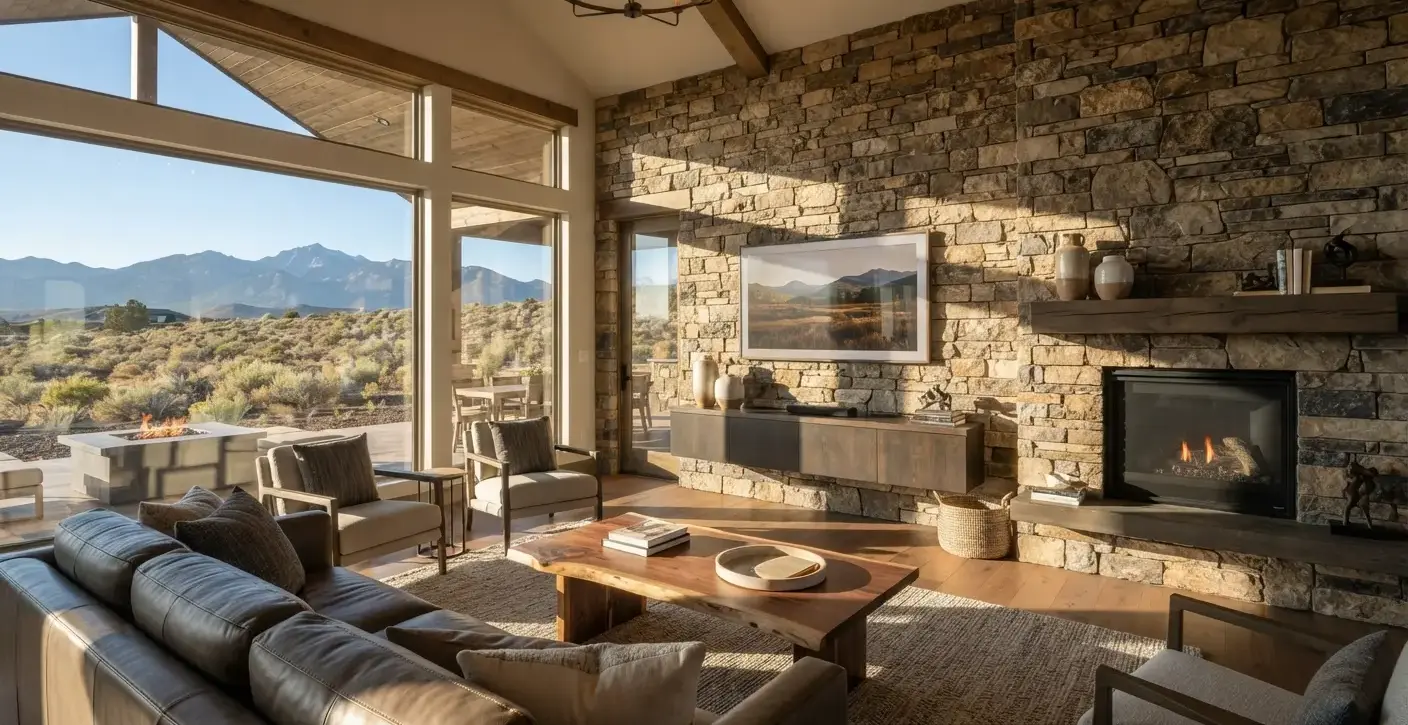
Browse natural stone slabs suited to outdoor use, then pair them with a freeze thaw resistant exterior stone veneer for a cohesive look across walls, steps, and ledges.
Natural stone also brings visual depth that is hard to replicate, though no two slabs match exactly. Viewing slabs in person helps confirm color and pattern before you decide.
- Lower moisture uptake: dense stone with low absorption may reduce freeze damage risk when product data supports it.
- UV considerations: granite, quartzite, and porcelain are UV-resistant materials, though sun exposure approval varies by product.
- Design range: natural stone offers distinctive veining and tone, with natural variation between slabs, so each project looks individual.
- Better traction: leathered or textured finishes typically grip better than polished stone when wet.
- Protective sealing: sealing natural stone helps limit moisture and stains, though periodic care is still needed.
 Conceptual rendering
Where Exterior Stone Performs Across Northern Nevada Homes
Different surfaces face different winter stress. Match the material and finish to how each area handles moisture, foot traffic, and sun.
Sunny days are plentiful in the region, so freezing is only one stress factor. Temperature swings, wet surfaces, and UV exposure often work together.
Shaded walls and areas that collect snowmelt may stay damp longer, which can increase winter moisture exposure. Plan material choices around the wettest spots on the property.
Exterior Walls and Stone Veneer
Walls face snowmelt, sun, and temperature swings. Granite, quartzite, and porcelain are strong exterior candidates, while marble and dolomite are better reserved for indoor spaces.
Request absorption and frost data for any freeze thaw resistant exterior stone veneer before committing to a product.
Matching slab and veneer palettes helps entries, garden walls, and fireplace surrounds read as one cohesive design.
Natural variation is part of the appeal, so review several pieces together to confirm the color range before choosing.
 Conceptual rendering
Patios, Steps, and Pool Surrounds
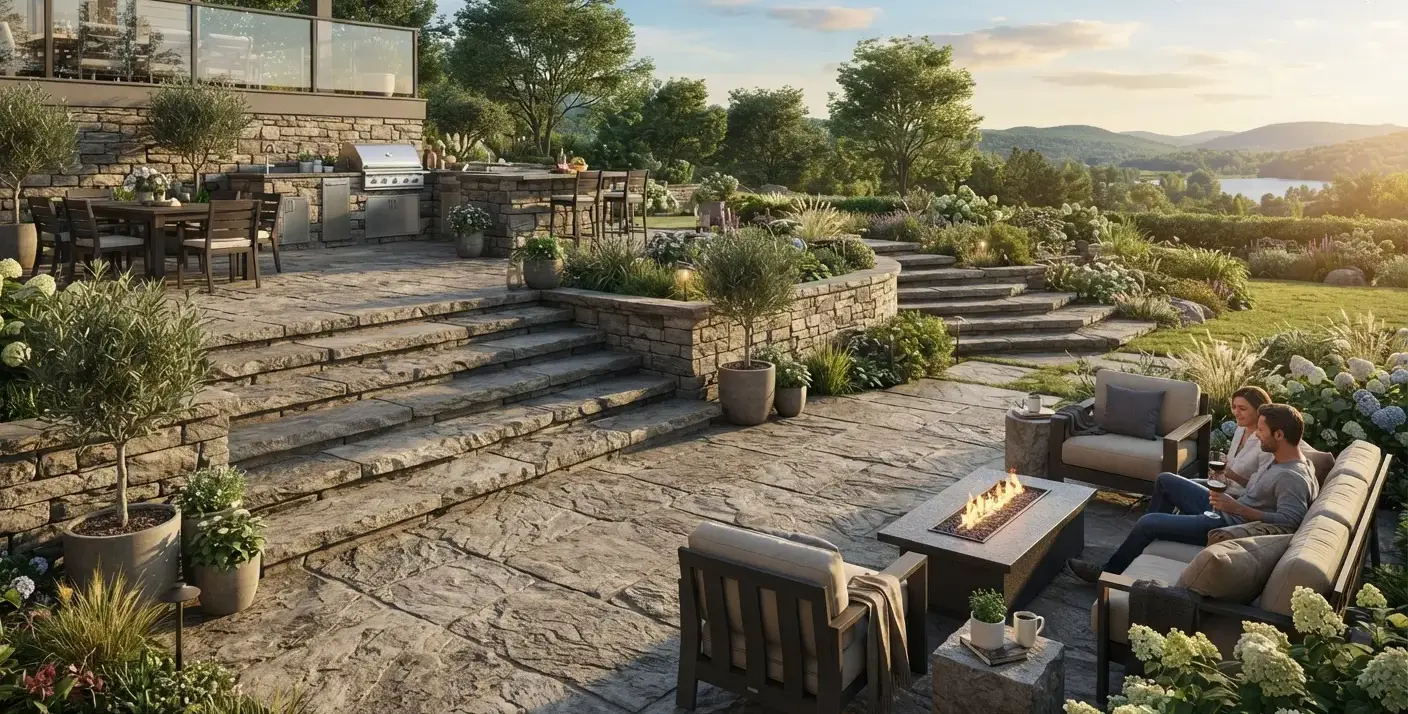
Horizontal surfaces hold water longest, so they see the most freezing and thawing. Granite, quartzite, travertine, and porcelain are suited to outdoor use.
Snowmelt and runoff reach these areas often in winter, which makes finish choice as important as material choice.
Choose leathered or textured finishes here, because polished stone becomes slipperier when wet.
Large-format slabs offer a clean, continuous look across terraces and walkways, with color that stays attractive through every season when properly cared for.
Outdoor Kitchens and Fireplaces
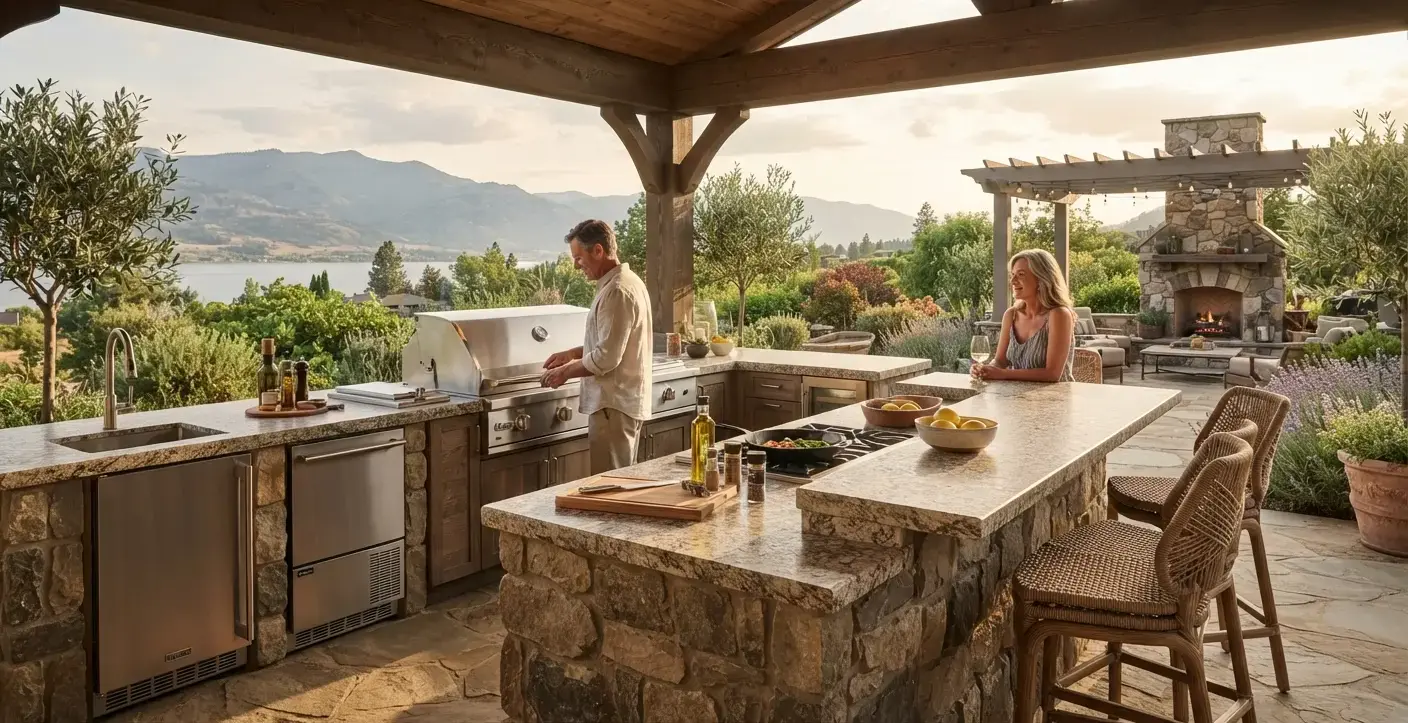
Granite, quartzite, and porcelain suit outdoor countertops, and travertine joins them for fireplace surrounds. Natural stone typically needs sealing, so plan for periodic care.
Heat-resistant does not mean thermal-shock proof, so trivets and cutting boards still protect the surface.
Pairing a granite or quartzite countertop with matching wall stone ties the cooking area to the rest of the landscape.
Exterior Stone Materials Compared
Use this table as a starting point, then confirm the exact product's data.
Material | Type | Exterior Use | Sealing | Finish Options |
Granite | Natural stone | Suited to outdoor use | Typically needed | Polished, leathered, specialty |
Quartzite | Natural stone | Suited to outdoor use | Typically needed | Polished, honed, specialty |
Travertine | Natural stone | Generally outdoor-approved | Typically needed | Polished, honed, leathered, specialty |
Porcelain | Engineered | Suited to outdoor use | Typically not needed | Polished, honed, specialty |
Marble and dolomite | Natural stone | Better reserved for indoor spaces | Typically needed | Varies by stone |
Advantages and Trade-Offs of Low-Absorption Stone
Advantages
- May reduce freeze damage risk when absorption data is low
- Wide palette, from warm travertine to bold granite and quartzite
- Durable outdoors, though proper care preserves appearance
- Finish options that add traction in wet areas
Trade-Offs
- Natural stone typically needs periodic sealing
- Polished finishes become slippery when wet
- Sun exposure ratings vary by product
- Scratch resistance varies, so cutting boards are still advised
- Some natural stones suit interiors better, so match each material to its location
How to Choose Freeze Thaw Resistant Stone in 5 Steps
- Check absorption and density. Lower absorption generally means less water available to freeze inside the stone.
- Request test results. Ask for absorption results based on ASTM dimension stone standards, plus the manufacturer’s frost approval or an independent accelerated weathering test for that exact product.
- Match the finish. Choose leathered or textured finishes for wet areas, since polished stone is slipperier when wet. Finish availability varies by material.
- Verify sun exposure. For full-sun walls, confirm the exact product's UV rating or manufacturer sun exposure approval.
- Plan for care. Natural stone typically needs sealing, while porcelain typically does not. Avoid abrasive cleaners and clean spills promptly.
 Conceptual rendering
Expert Guidance From Nova Tile and Stone
Nova Tile and Stone helps homeowners, designers, and builders match exterior stone to local winters. Commission-free design consultants review absorption data, finishes, and application needs with you.
Visit the Reno showroom to compare finishes in person. Explore the Fernley showroom for nearby support. Minden customers can stop by the Minden showroom. Sacramento projects can begin at the Sacramento showroom.
Consultants can explain how finishes, sealing, and care routines differ across granite, quartzite, travertine, and porcelain, so expectations stay realistic.
Bring photos, area details, and sun exposure notes, and the team can narrow options to the most suitable materials. Nova also provides arranged delivery assistance for slab orders.
When you are ready, schedule your free consultation and share your project goals.
Note: Some images on this page may be conceptual renderings created to illustrate design possibilities and may not depict actual installations.
Key Takeaways
- Freeze-thaw damage starts with water, so low absorption matters most.
- Granite, quartzite, travertine, and porcelain suit exterior use, while marble and dolomite are better kept indoors.
- Verify absorption, frost test data, and UV ratings for the exact product.
- Choose leathered or textured finishes for wet areas.
- Seal natural stone as needed and clean with non-abrasive products.
- A design consultant can help confirm product details before you decide.
Ready to Plan Winter-Ready Stone?
Ready to choose exterior stone that holds up through Northern Nevada winters? Schedule your free consultation now to review materials, finishes, and product data with a commission-free design consultant.
SACRAMENTO SHOWROOM
6100 Warehouse Way, Sacramento, CA 95826
 Google Maps
Store hours this week:
- Mon. - Fri.: 7:30 am - 5:00 pm
- Sat. - Sun.: Closed
MINDEN SHOWROOM
2548 Business Pkwy, Minden, NV 89423
Store hours this week:
- Mon. - Fri.: 7:30 am - 6:00 pm
- Sat.: 9:00 am - 3:00 pm
- Sun.: Closed
RENO SHOWROOM
12835 Old Virginia Rd Suite 24, Reno, NV 89521
Store hours this week:
- Mon. - Fri.: 7:30 am - 6:00 pm
- Sat.: 9:00 am - 3:00 pm
- Sun.: Closed
FERNLEY SHOWROOM
1855 US Highway 95A North, Fernley, NV 89408
Store hours this week:
- Mon. - Fri.: 7:30 am - 4:00 pm
- Sat. - Sun.: Closed
You will leave with a clearer shortlist, practical care guidance, and confidence that your selection fits your project's conditions. Bring photos and area details to make the conversation more productive.
Frequently Asked Questions
They occur when moisture in stone freezes, expands, and thaws repeatedly. Over time, porous or highly absorbent materials may crack or flake, so low absorption and verified product data matter.
Granite, quartzite, and porcelain are strong choices, and travertine is generally outdoor-approved. Marble and dolomite are better reserved for indoor spaces. Always confirm absorption and frost data for the exact product.
Travertine is generally outdoor-approved and typically needs sealing. It is not in Nova's general UV-resistant category, so verify the exact product's UV rating or manufacturer sun exposure approval before full-sun use.
Natural stone such as granite, quartzite, and travertine typically needs sealing, while porcelain slabs typically do not. Follow the product's care guidance, avoid abrasive cleaners, and clean spills promptly.
Choose leathered or textured finishes, because polished stone is slipperier when wet.
. Finish availability varies by material, so confirm options for your stone with a design consultant.
Sources
- Visit Reno Tahoe: Reno climate overview
- Natural Stone Institute: Stone testing guidance
- ASTM International: Dimension stone standards