The best exterior stone for your home depends on where it will be used and the climate it will face. Granite is well suited to driveways and high-traffic areas, light-colored travertine is often used for pool decks because it stays cooler in the sun, bluestone works well for walkways and steps in cold climates, and limestone suits pool coping and clean, uniform designs. Slate and sandstone add natural color to patios, garden paths, and walls. Flagstone is not a single stone type but flat paving slabs cut from stones like sandstone, bluestone, and slate. Porcelain pavers offer a manufactured alternative that resists moisture and freeze-thaw damage and needs little to no sealing. Below, we compare hardness, heat retention, slip resistance, freeze-thaw performance, and maintenance for each type so you can match the right material to your project.
What to Look for in Exterior Stone
Before comparing individual stones, it helps to know which qualities matter most outdoors. Indoors, stone is protected from the weather, but exterior stone faces sun, rain, frost, and constant use. These five factors shape how a stone performs over time:
Hardness and density. Harder, denser stones resist chipping, scratching, and wear from foot and vehicle traffic. Softer stones can still work well, but they are better suited to lighter-use areas.
Porosity. Porous stones absorb more water. In cold climates, absorbed water can freeze, expand, and cause cracking or surface flaking.
Heat retention. Darker stones absorb more sunlight and can become uncomfortable to walk on barefoot. Lighter stones reflect more heat and stay cooler.
Slip resistance. Texture matters more than stone type. A textured, flamed, or tumbled finish provides much better grip than a smooth or polished one, especially when wet.
Maintenance. Some stones benefit from periodic sealing and gentle cleaning, while others need very little attention.
Texture and color are hard to judge from photos alone, which is why we recommend visiting a showroom near you to see exterior materials up close before deciding. With those factors in mind, here is how the most popular exterior stones compare.
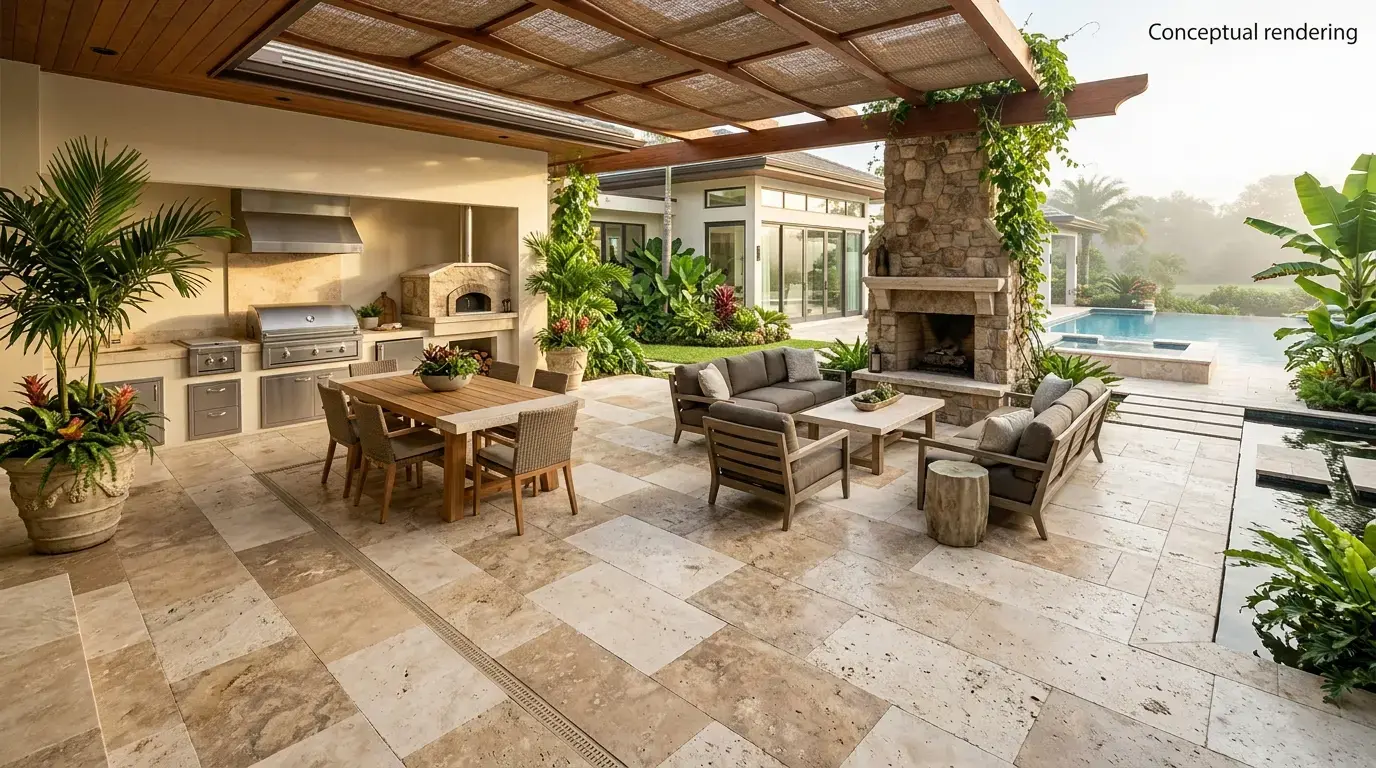
Travertine
Travertine is a type of limestone that forms near mineral springs, and it is known for the small pores and pits that run through its surface. For outdoor use, it is often sold tumbled or brushed, which softens the edges and adds a slightly rustic texture that improves grip.
A key feature of travertine is how it handles heat. Light colors like ivory, light beige, and silver reflect sunlight, so the surface stays cooler than many darker stones. That is why travertine is a common choice for pool decks and sun-exposed patios.
There are a few tradeoffs. Travertine is softer than granite and is sensitive to acids, so spilled citrus, wine, or harsh cleaners can etch the surface. In areas with hard winter freezes, it is important to choose dense, exterior-rated travertine pavers and ask about care and sealing recommendations for your conditions.
Best for: pool decks, patios, courtyards, and outdoor dining areas.
Limestone
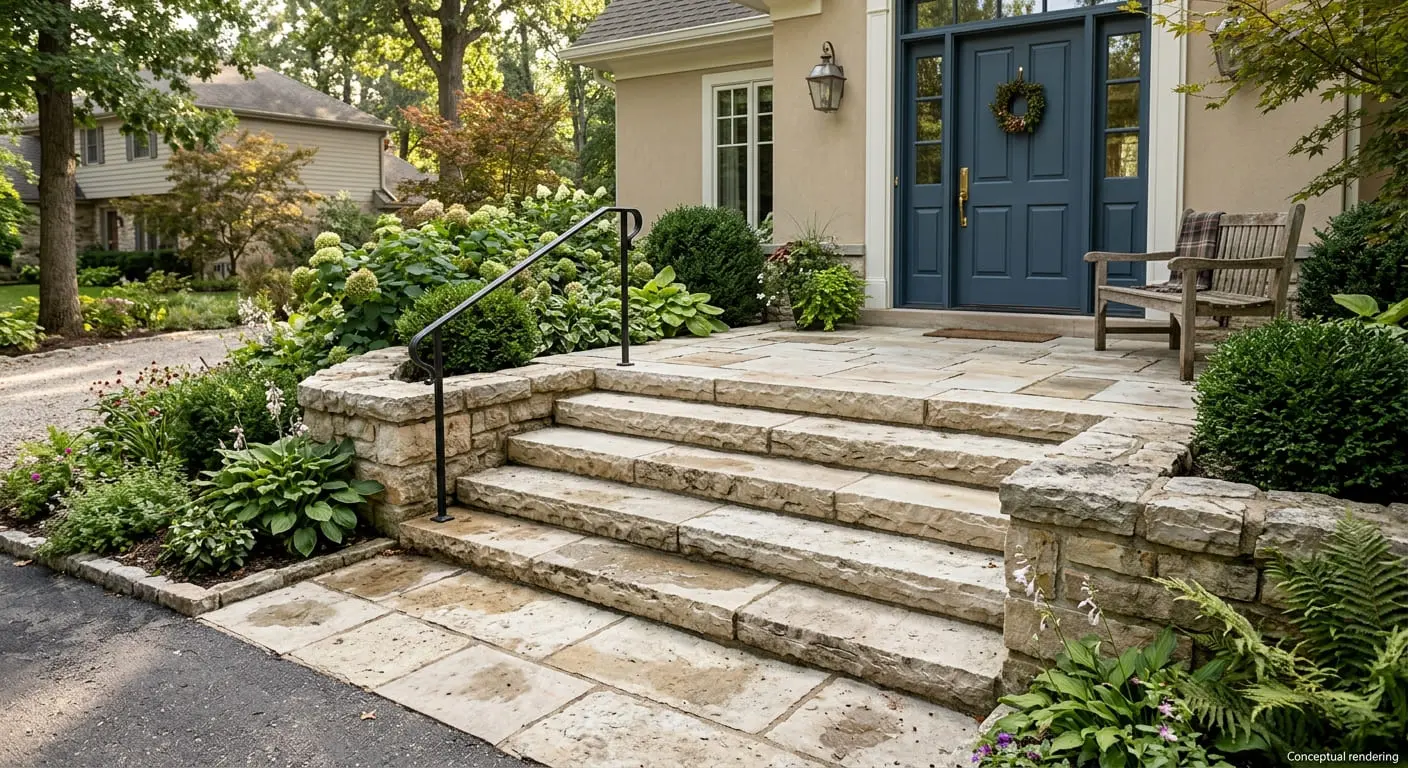
Limestone is a sedimentary stone made mostly of calcium carbonate. It is known for its consistent color and fine, even texture, which gives outdoor spaces a clean, uniform look. Common colors include cream, beige, soft gray, and blue-gray.
Because limestone has less visual movement than many other stones, it pairs well with both contemporary and classic architecture. It is often used for pool coping, steps, patio pavers, and wall cladding.
Limestone density varies widely from one quarry to the next. Denser varieties handle outdoor exposure well, while softer ones can weather, lose crisp edges, or absorb stains more easily. Like travertine, which is itself a form of limestone, limestone reacts to acids. When choosing limestone for exterior use, ask about its density and whether it is rated for freeze-thaw exposure in your area.
Best for: pool coping, steps, patios, and exterior wall accents.
Bluestone
In North America, bluestone typically refers to a dense, fine-grained sandstone quarried mainly in Pennsylvania and New York. Despite its name, it comes in more than one color. Classic bluestone is a steady blue-gray, while "full color" bluestone includes shades of lilac, rust, green, and brown within the same batch.
Bluestone is available in two main finishes. A thermal finish creates a flat, even surface with a fine texture that provides good traction. A natural cleft finish keeps the stone's split surface, which is more varied and informal.
Bluestone stands up well to freeze-thaw cycles because of its density, which makes it a common choice for walkways, front steps, and patios in regions with cold winters. The main drawback is heat. Its darker color absorbs sunlight, so bluestone in full sun can get hot on bare feet during summer afternoons.
Best for: walkways, front steps, stair treads, and patios with partial shade.
Granite
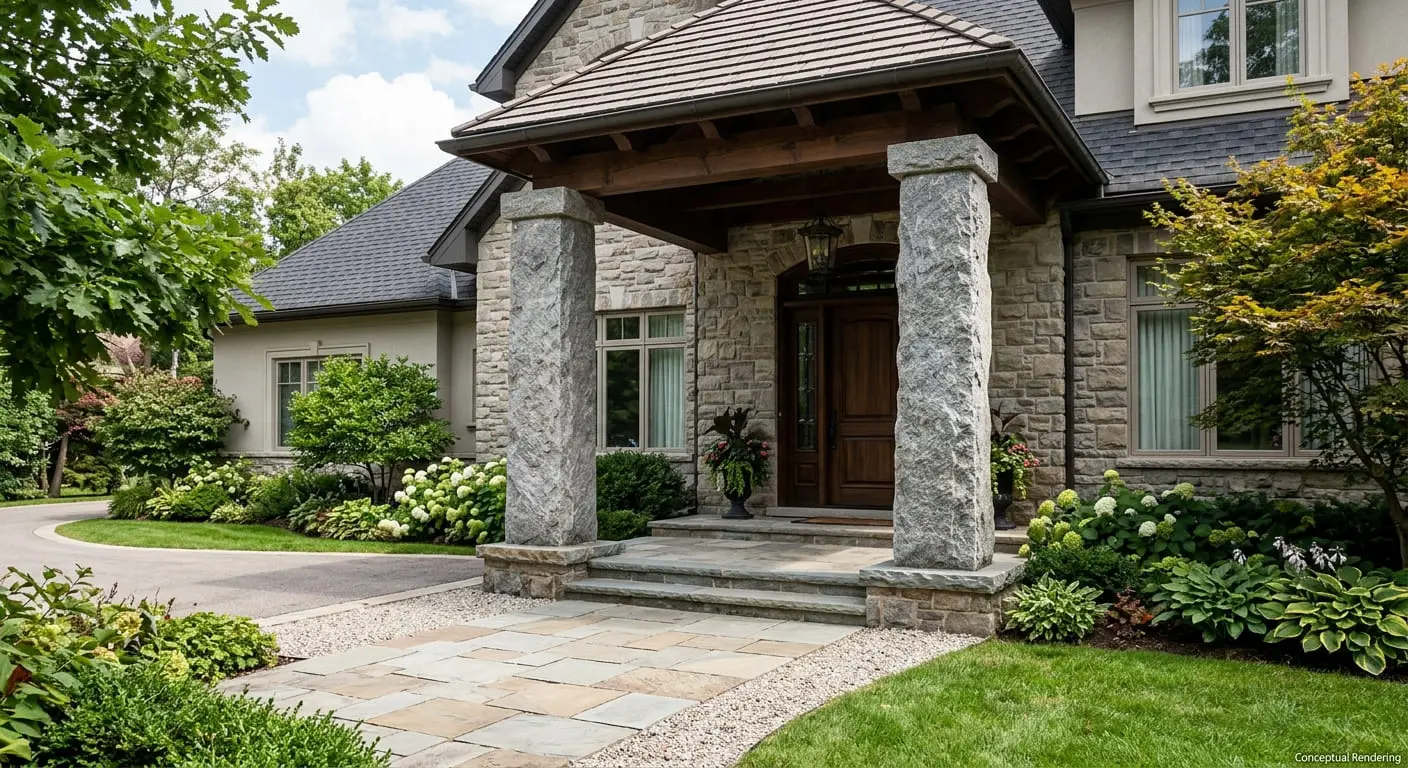
Granite is an igneous stone formed from cooled magma, and it is one of the hardest natural stones available. Outdoors, it is typically used as cobblestones, pavers, steps, curbing, and wall caps.
Granite's hardness and low porosity make it resistant to scratches, stains, and freeze-thaw damage. That makes it well suited to driveways and high-traffic paths where softer stones might wear down. For walking surfaces, choose a flamed or thermal finish. Polished granite, common on kitchen countertops, becomes slippery when wet and is not suited to outdoor floors.
Granite has a few drawbacks, too. Darker granites hold heat in direct sun, and pricing varies widely depending on the format, finish, and source. Its weight and hardness can also make it more demanding to cut and handle, which is worth discussing with your contractor during planning. Contractors and designers sourcing exterior stone for client projects can apply for a trade account to access trade pricing and job-site delivery.
Best for: driveways, high-traffic walkways, steps, and outdoor kitchen areas.
Slate
Slate is a metamorphic stone that splits naturally into thin layers. Its cleft surface has a built-in texture that provides good grip, and its colors range from charcoal and black to green, purple, and rust.
Slate adds earthy color and texture to patios, garden paths, and accent walls. However, slate quality varies. Softer slates can flake or spall over time, especially where water freezes in the layers during winter. Choosing a dense, exterior-grade slate helps reduce this risk. Like other dark stones, slate absorbs heat and can become warm in full sun.
Best for: shaded patios, garden paths, and exterior accent walls.
Sandstone
Sandstone is a sedimentary stone made of compressed sand grains, often rich in quartz. It is known for warm earth tones such as tan, buff, gold, red, and brown. Its naturally gritty surface offers good traction, though it can grow moss or algae in damp, shaded spots. Bluestone, covered above, is one especially dense variety.
Sandstone's porosity varies significantly. Some varieties are fairly dense, while others absorb water readily and may stain or weather faster without sealing. Softer sandstones can also erode gradually in high-traffic areas. When selecting sandstone, look for a product rated for exterior paving if it will be walked on.
Best for: patios, garden paths, retaining walls, and warm-toned landscape designs.
Flagstone: A Form, Not a Stone Type
Many people shop for flagstone as if it were its own stone, but the term does not refer to a single type of stone. Flagstone describes flat slabs of stone split into pieces suitable for paving. Those slabs can be sandstone, bluestone, slate, limestone, or quartzite.
Flagstone comes in two main styles. Irregular flagstone has natural, organic edges and creates a relaxed, puzzle-like pattern. Dimensional or pattern-cut flagstone is cut into squares and rectangles for a more orderly look.
Because flagstone can be several different stones, its performance depends entirely on what it is made from. Bluestone flagstone behaves like bluestone, and sandstone flagstone behaves like sandstone. When shopping for flagstone, always ask which stone it is so you know how it will handle heat, moisture, and traffic. If you are weighing several options, a free design consultation is a good time to compare them side by side with our team.
Best for: informal patios, garden walkways, stepping stone paths, and natural landscape designs.
Porcelain Pavers: A Natural Stone Alternative
Porcelain pavers are not natural stone, but they are often considered alongside it for outdoor projects. They are made from refined clay fired at high temperatures, and exterior-grade porcelain pavers are typically about 2 cm thick. Their very low water absorption helps them resist freeze-thaw damage, stains, and moisture, and they need little to no sealing. Porcelain pavers come in looks that replicate travertine, limestone, bluestone, slate, wood, and concrete, with more consistent color from piece to piece than natural stone. As with natural stone, choose a textured, slip-resistant finish for walking surfaces, and keep in mind that darker colors still absorb heat in direct sun.
Best for: patios, pool decks, outdoor kitchens, and projects that call for a uniform look.
Quick Comparison
| Material | Hardness | Stays Cool in Sun | Freeze-Thaw Performance | Acid Sensitivity |
| Travertine | Moderate | Very good (light colors) | Varies by density | High |
| Limestone | Soft to moderate | Good (light colors) | Varies by density | High |
| Bluestone | Hard | Fair | Very good | Low |
| Granite | Very hard | Fair (varies by color) | Excellent | Very low |
| Slate | Moderate | Poor | Varies by quality | Low |
| Sandstone | Soft to moderate | Good (light colors) | Varies by density | Low to moderate |
| Porcelain Pavers | Hard | Varies by color | Excellent | Very low |
Matching Exterior Stone to Your Project
Once you know how each material behaves, the next step is matching it to the space. Our pavers and exterior stone selection includes pool coping, stacked stone, and small to large format pavers, and knowing what your project needs makes it much easier to narrow down.
Pool decks. Comfort and grip matter most. Light travertine is a common choice, and light limestone, light sandstone, or textured porcelain pavers in light colors can also work well.
Driveways. Hardness and strength come first. Granite cobbles and pavers are a practical option, and thicker bluestone can also work. Driveway stone is typically thicker than patio stone, so confirm the right thickness with your contractor.
Walkways and steps. Traction and consistent footing are key. Thermal-finish bluestone, flamed granite, and dimensional flagstone cut from a dense stone all perform well.
Patios. Nearly every exterior stone can work for a patio, so let sun exposure and style guide you. Choose lighter stones for full sun and consider bluestone or slate for shaded areas. If you are working within a tighter budget, our overstock and close-out deals are worth browsing for discounted materials, though all sales are final.
Walls and cladding. Since walls are not walked on, heat and slip resistance matter less. Limestone, sandstone, and slate are popular for their color and texture.
Consider Your Climate
Climate plays a major role in how exterior stone performs. In areas with long, hot summers, lighter and more reflective stones keep outdoor spaces comfortable. In areas with freezing winters, dense stones with low water absorption hold up better to repeated freeze-thaw cycles. If your home experiences both, dense travertine, granite, bluestone, and porcelain pavers can handle the full range of conditions, as long as you choose lighter colors where people walk barefoot.
Conclusion
Choosing the right exterior stone starts with understanding how each type behaves outdoors. Light travertine helps keep pool decks comfortable, granite handles heavy traffic, bluestone performs well through cold winters, limestone offers a consistent, uniform appearance, and slate and sandstone add natural color variation. Flagstone gives you the flexibility of a natural paving style in several stone types, and porcelain pavers offer a low-maintenance alternative with a natural stone look. By weighing hardness, porosity, heat, and slip resistance against your project and climate, you can narrow your options quickly. When you are ready to see these materials in person, visit one of our showrooms in Sacramento, Reno, Minden, or Fernley, where our team can walk you through our natural stone and porcelain paver options during a design consultation and help you compare colors, finishes, and textures side by side.
Note: Some images on this page may be conceptual renderings created to illustrate design possibilities and may not depict actual installations.
Frequently Asked Questions
Granite is one of the hardest natural stones and is well suited to driveways, busy walkways, and steps. Bluestone is another dense option that handles heavy foot traffic well.
Light-colored travertine is a common choice for staying cool underfoot, since lighter colors reflect more sunlight. Light limestone and light sandstone also stay relatively cool compared to darker stones like bluestone, slate, and dark granite.
Not exactly. Flagstone describes flat slabs of stone used for paving, while bluestone is a specific type of sandstone. Bluestone is often sold as flagstone, but flagstone can also be slate, limestone, sandstone, or quartzite.
It depends on the material. Porous stones like travertine, limestone, and some sandstones often benefit from sealing, especially around pools or in freezing climates. Dense stones like granite typically need less, and porcelain pavers need little to no sealing. A stone care professional can recommend the right product and schedule.
Slip resistance depends mostly on the finish. Tumbled travertine, thermal-finish bluestone, flamed granite, and natural cleft slate all provide good traction. Avoid polished finishes on any outdoor walking surface.