Why Do Exterior Stone Spec Sheets Matter?
Exterior stone spec sheets list lab-tested values for absorption, density, and strength. Together, these numbers show how a slab handles moisture, weight, and load outdoors, which helps compare products before any decision is made.
A stone technical data sheet can look intimidating, with abbreviations, test codes, and mixed units. Knowing how to read a stone spec sheet turns that page into a practical filter.
Absorption shows how much water a stone can take in. Density hints at how compact the material is. Strength shows how much load or bending a slab can handle before cracking.
Outdoor slabs face rain, sun, temperature swings, and foot traffic. Granite, quartzite, travertine, and porcelain are the stone slabs generally approved for exterior use, though each product still needs individual review.
This guide explains each key reading, shows how to compare sheets side by side, and points out where the numbers stop and professional guidance begins.
At a Glance
- Absorption: lower readings generally mean less water enters the stone outdoors.
- Density: higher values often point to a tighter, less porous material.
- Strength: compressive and flexural figures show load and bending limits.
- Materials: granite, quartzite, travertine, and porcelain suit exterior use.
- Verification: results vary by product, so confirm each slab's exact ratings.
In This Guide
- What each spec reveals about outdoor performance
- Advantages and limits of relying on the numbers
- Where exterior stone performs best
- A comparison of exterior slab materials
- A four-step method for reading any sheet
- How Nova Tile and Stone supports your selection
What Absorption, Density, and Strength Reveal About Slabs
Water absorption is reported as the percentage of weight gained after soaking. Lower readings generally mean less moisture enters the stone, which matters where rain, irrigation, and freeze-thaw cycles occur.
Density is listed in pounds per cubic foot or kilograms per cubic meter. Denser stone often has fewer pores, though the number alone never guarantees weather performance.
Strength appears as compressive strength in psi or MPa, plus flexural strength for bending. Compressive values rarely limit stone outdoors, while flexural data matters for slabs with unsupported edges.
Units differ between sheets, so conversions help. As a quick guide, 1,000 psi is about 6.9 MPa, and 100 pounds per cubic foot is about 1,602 kilograms per cubic meter.
Reviewing the data first brings practical benefits:
- Compare slabs objectively, since values often follow shared test methods.
- Spot moisture concerns early, before a patio or wall faces its first winter.
- Match thickness and support needs to flexural data, not appearance alone.
- Plan finishes and sealing routines with realistic expectations.
- Reduce surprises, although lab results never replace professional guidance.
Advantages and Limits of Spec Sheets
Spec sheets help, yet they describe tested pieces rather than every slab. Treat them as a starting point, then pair them with in-person review.
Advantages
- Objective values make slab comparisons clearer.
- Named test methods create a common language across products.
- Missing data becomes visible before a decision is made.
Limitations
- Results come from tested pieces, and natural stone varies from block to block.
- Not every sheet reports every test.
- Finish, slip behavior, and sealing needs often require separate confirmation.
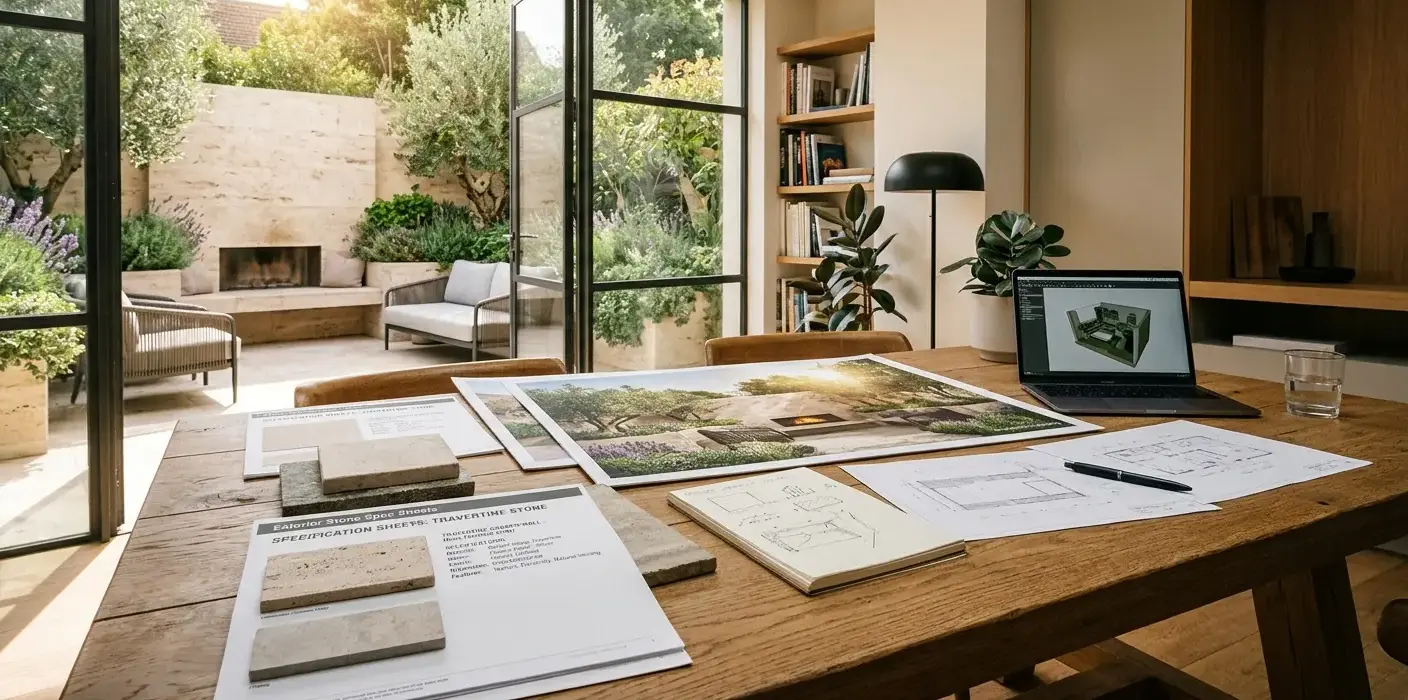 Conceptual rendering
Where Exterior Stone Performs: Applications and Design Ideas
Spec numbers matter most when tied to a real setting. These examples show how absorption, density, and strength readings translate into everyday outdoor decisions.
Patios, Steps, and Walkways
Granite, quartzite, travertine, and porcelain all suit exterior floors. Low absorption and solid density help paving shed moisture, though finish choice still shapes safety in rain.
Cold winter nights and hot summer sun in Reno, Fernley, and Minden make freeze-thaw data and UV ratings worth extra attention.
Polished surfaces turn slippery when wet, so matte or textured finishes suit steps and wet zones. Browse the shop to compare finishes alongside the technical data.
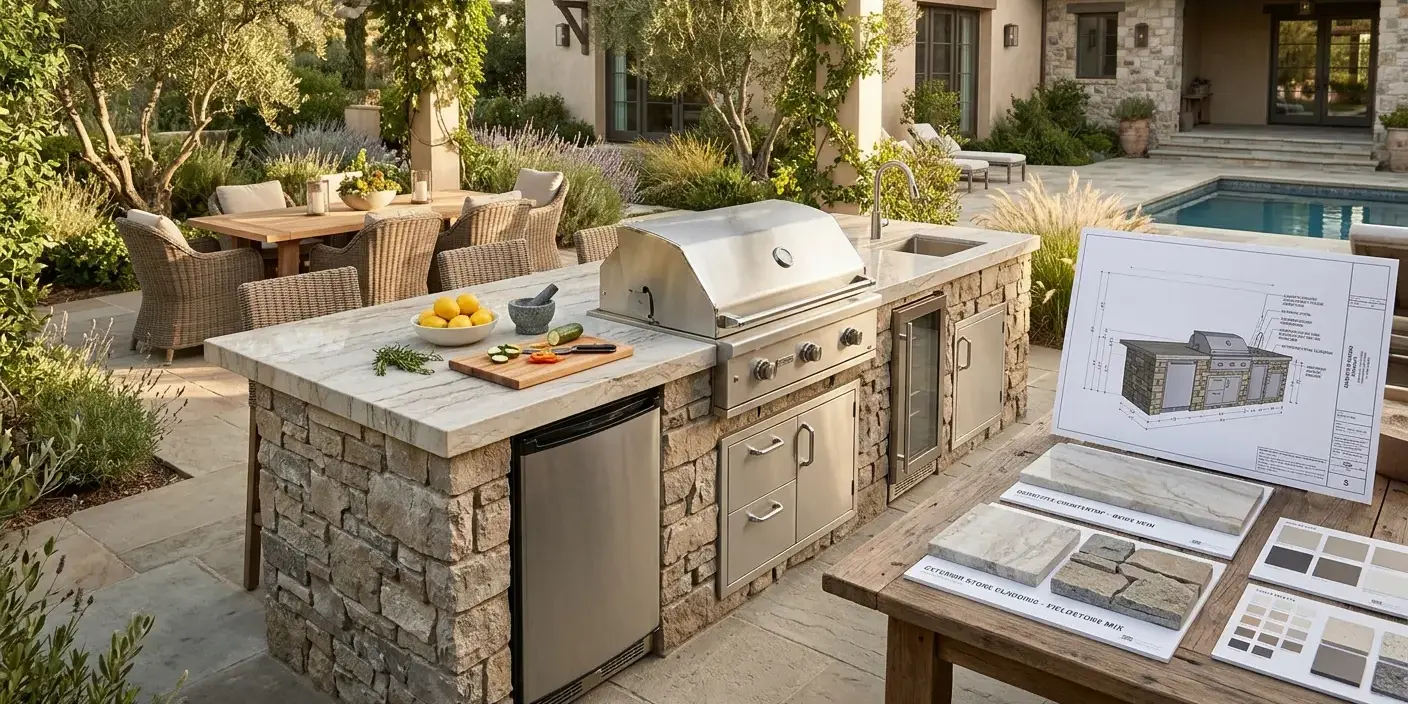 Conceptual rendering
Outdoor Kitchens and Countertops
Granite, quartzite, and porcelain suit countertops and sit in the UV-resistant group, though each product's UV rating should still be verified. Quartz is generally kept indoors.
Heat-resistant does not mean thermal-shock proof, so trivets are still needed. Cutting boards also protect surfaces, because scratch resistance varies by product.
Walls, Fireplaces, and Cladding
Granite, quartzite, travertine, and porcelain accept exterior walls and fireplace surrounds. Marble and dolomite are better reserved for indoor spaces.
Layered veneer behaves differently from slabs, so compare thickness and weight on each product's own sheet. A consultant can confirm exterior ratings for any veneer product.
Weight and water exposure matter even more in dry-stack retaining walls, where moisture contact is constant.
Exterior Slab Materials Compared
Material | Type | Sealing | UV Category | Common Exterior Uses |
Granite | Natural stone | Needs sealing | UV-resistant | Floors, walls, countertops |
Quartzite | Natural stone | Needs sealing | UV-resistant | Floors, walls, countertops |
Travertine | Natural stone | Needs sealing | Verify product UV rating | Floors, walls, fireplaces |
Porcelain | Engineered | Typically not required | UV-resistant | Floors, walls, countertops |
Ratings vary by product, so confirm each slab's own data before choosing. Marble, dolomite, and quartz are better kept indoors, so weigh their data for interior projects.
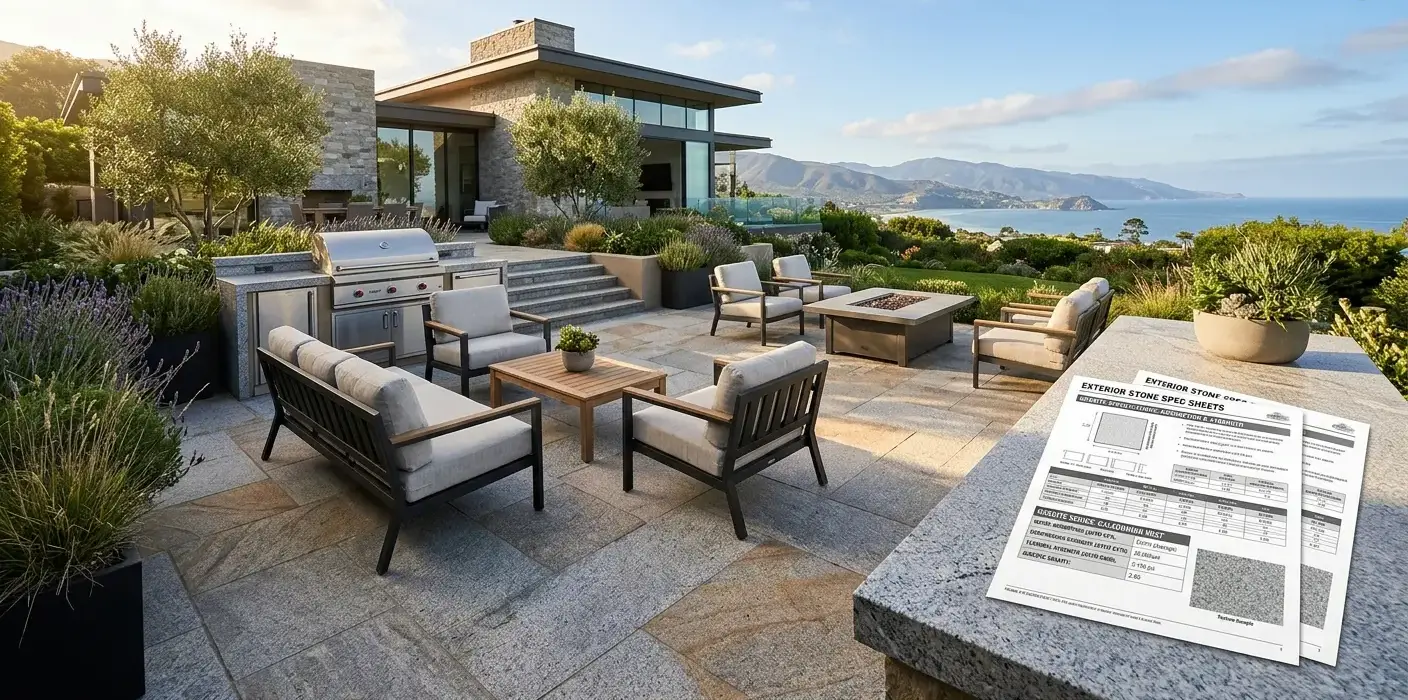 Conceptual rendering
How to Read a Stone Spec Sheet in 4 Steps
- Confirm the stone and finish. Values apply to one specific material, so match the sheet to the exact slab.
- Check absorption first. Lower percentages generally suit wet climates better. ASTM C97 is a common natural stone method for absorption and density.
- Compare density and strength. Confirm units first, since psi and MPa differ. ASTM C170 covers compressive strength and C880 covers flexural strength.
- Verify the fine print. Look for UV or sun ratings and freeze-thaw data, then ask about anything missing.
Watch for sheets that omit test methods, mix units, or fail to name the tested stone. Those gaps are worth raising before any order is placed. ASTM C1528 offers broader guidance on selecting dimension stone for construction.
How Nova Tile and Stone Supports Your Slab Selection
Nova Tile and Stone supplies natural stone and porcelain slabs to customers in Fernley, NV; Reno, NV; Sacramento, CA; and Minden, NV. Commission-free design consultants help translate each stone technical data sheet into a confident choice.
Readers who want background can learn about Nova. Trade professionals can set up a trade account for repeat slab orders.
Consultants can also outline sealing routines, cleaning habits, and finish choices, such as matte or textured surfaces for wet areas, so the stone keeps its look.
Key Takeaways
- Spec sheets pair absorption, density, and strength to show weather and load performance.
- Lower absorption generally suits wet or freezing climates, but confirm freeze-thaw data.
- Higher density often signals a tighter stone, though test data should confirm it.
- Compare only sheets that share matching units and test methods.
- Flexural strength matters for bending, while compressive strength rarely limits outdoor stone.
- Granite, quartzite, travertine, and porcelain suit exterior use; verify each product's UV rating.
- Granite, quartzite, and travertine need sealing, while porcelain typically does not.
Ready to Compare Slabs With Confidence?
Learning how to read a stone spec sheet is easier with a guide at your side. Bring the sheets you are comparing, and Nova's commission-free design consultants will match absorption, density, and strength data to your outdoor space, finish, and care routine. You will leave with a clearer shortlist and fewer unanswered questions. Schedule a free consultation now!
12835 Old Virginia Rd Suite 24, Reno, NV 89521
 Google Maps
Store hours this week:
- Mon. - Fri.: 7:30 am - 6:00 pm
- Sat.: 9:00 am - 3:00 pm
- Sun.: Closed
1855 US Highway 95A North, Fernley, NV 89408
Store hours this week:
- Mon. - Fri.: 7:30 am - 4:00 pm
- Sat. - Sun.: Closed
2548 Business Pkwy, Minden, NV 89423
Store hours this week:
- Mon. - Fri.: 7:30 am - 6:00 pm
- Sat.: 9:00 am - 3:00 pm
- Sun.: Closed
6100 Warehouse Way, Sacramento, CA 95826
Store hours this week:
- Mon. - Fri.: 7:30 am - 5:00 pm
- Sat. - Sun.: Closed
Bringing a few photos of the house exterior, along with rough measurements for walls, columns, or patio area, helps a showroom visit move faster.
Frequently Asked Questions
A stone technical data sheet is a document listing lab-tested properties for a specific stone, such as absorption, density, compressive strength, and flexural strength. It also names test methods, which helps compare slabs fairly, though natural stone results can vary between production batches.
Start by matching the sheet to the exact slab and finish. Then check absorption, density, and strength, confirming units and test methods before comparing products. Finally, look for UV or sun ratings and freeze-thaw data, and ask a consultant to clarify anything missing.
Lower absorption generally suits weather exposure better, because less water enters the stone during rain and freezing conditions. No single number guarantees performance, so compare readings that use the same test method and confirm freeze-thaw data for the exact product before choosing it outdoors.
Granite, quartzite, and travertine need sealing, so plan a sealing routine for those surfaces. Porcelain slabs typically do not require sealing, though that depends on the specific product. Clean spills promptly, avoid abrasive cleaners, and follow the manufacturer's care guidance for the chosen slab.
Travertine is generally outdoor-approved, and it needs sealing like other natural stone. It is not in Nova's general UV-resistant group, so verify the exact product's UV rating or confirm manufacturer sun exposure approval before choosing it for fully sunlit areas.