At a Glance
- Granite and quartzite are best for driveways and high-traffic walks.
- Light travertine and porcelain stay cooler on sunny pool decks and patios.
- Low water absorption means better freeze-thaw performance.
- Travertine needs sealing every 2–3 years; porcelain needs none.
- Match the stone to sun, shade, and traffic, and plan for drainage.
In This Post
- What Makes a Stone Suitable for Exterior Use
- Granite: The Strongest All-Around Performer
- Travertine: A Cooler Surface for Patios and Pool Decks
- Exterior-Rated Porcelain: Consistency and Low Maintenance
- Quartzite: Density for Open, Sun-Exposed Walkways
- Matching Stone to Sun and Shade Zones
- Why Performance Data Matters When Comparing Stone
- Comparing Long-Term Upkeep Across Materials
- Bringing It Together
- Frequently Asked Questions
The best stone for exterior use is granite or quartzite, both rated 6 to 7 on the Mohs hardness scale with very low water absorption, which makes them the strongest performers for driveways, walkways, and other high-traffic areas exposed to heavy use and freeze-thaw cycles. Light-colored travertine and exterior-rated porcelain are often the better choice for sunny pool decks and patios, where a cooler, more comfortable surface underfoot matters more than raw hardness. Here’s how granite, travertine, porcelain, and quartzite compare, and which fits which part of an outdoor space.
What Makes a Stone Suitable for Exterior Use
Exterior stone faces demands that indoor materials never encounter: direct UV exposure, temperature swings, rain, and in many climates, freeze-thaw cycles. A stone's performance outdoors comes down to a few core properties. Density and hardness determine how well a surface resists abrasion from foot or vehicle traffic. Water absorption indicates how a stone will hold up through wet seasons and cold snaps, since moisture trapped inside a porous stone can expand and cause surface damage when temperatures drop below freezing. Finish also plays a role: honed, tumbled, and brushed surfaces generally offer more slip resistance than polished finishes, which matters most around pools, walkways, and covered patios exposed to rain.
Homeowners planning an outdoor stone project typically start by mapping how much direct sun each area of the yard receives, since full-sun zones and shaded zones often call for different materials.
Granite: The Strongest All-Around Performer
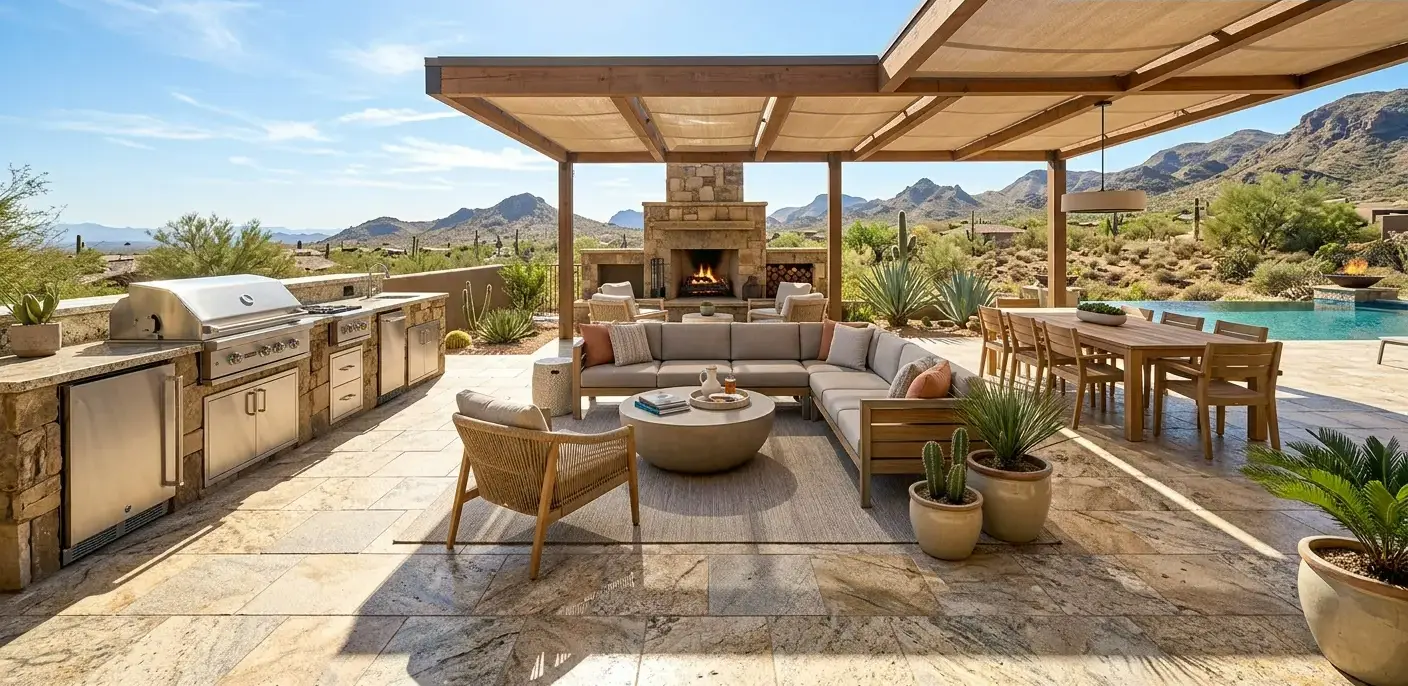
Granite is a common first choice for driveways, front walkways, and pool coping because of its density and abrasion resistance. As an igneous stone, granite has very low water absorption, which helps it resist staining and surface degradation through wet seasons. Its Mohs hardness of 6 to 7 makes it well suited to areas with heavy foot traffic or vehicle loads, and its UV stability keeps color from fading under prolonged sun exposure.
For homeowners who want a single material that performs well across a wide range of applications, from garden pavers to outdoor kitchen counters, granite is a good one to see in person before deciding. It's on display at our Reno showroom, and directions to the Reno location are here for anyone who'd like to stop by.
Travertine: A Cooler Surface for Patios and Pool Decks
Travertine is a sedimentary limestone formed around mineral-rich hot springs, and it's a frequent choice for patios and pool surrounds because it stays noticeably cooler underfoot than darker, denser stones in direct sun. It's also more porous than denser stones like marble and granite, and that natural texture, especially in honed or tumbled finishes, gives it grip that's useful around pools and splash zones where surfaces are regularly wet.
That same porosity means travertine benefits from a penetrating sealer every two to three years to guard against mineral staining and moisture infiltration, particularly in climates with a defined wet season. Ivory and silver tones reflect heat most effectively, while warmer walnut and gold shades suit garden paths and shaded courtyards. Layout also affects how a travertine surface reads outdoors: classic French pattern combines four tile sizes for an old-world rhythm, while ashlar, running bond, and herringbone layouts lean more modern. Homeowners can see travertine's finish types, quarry origins, and pattern layouts firsthand at our Sacramento showroom; directions to the Sacramento location are easy to pull up if a visit fits into your plans.
Exterior-Rated Porcelain: Consistency and Low Maintenance
Porcelain pavers have become a popular option for homeowners connecting an indoor living space to an outdoor patio. Unlike natural stone, porcelain is manufactured, which means consistent sizing, predictable coloring, and finishes engineered specifically for slip resistance in wet conditions. Exterior porcelain pavers typically run around 20 millimeters thick, roughly double a standard interior tile, which lets them be set over sand, gravel, or a pedestal system as well as a traditional mortar bed.
One advantage porcelain offers is the ability to match interior and exterior tile lines, creating a visual connection between an indoor floor and an outdoor patio at the same threshold. Since porcelain has virtually no water absorption, it resists staining from leaves, dirt, and irrigation runoff with less upkeep than natural stone requires. Homeowners can walk through matched interior-exterior porcelain formats and thickness options in person at our Minden showroom; directions to the Minden location make it easy to plan a stop.
Quartzite: Density for Open, Sun-Exposed Walkways
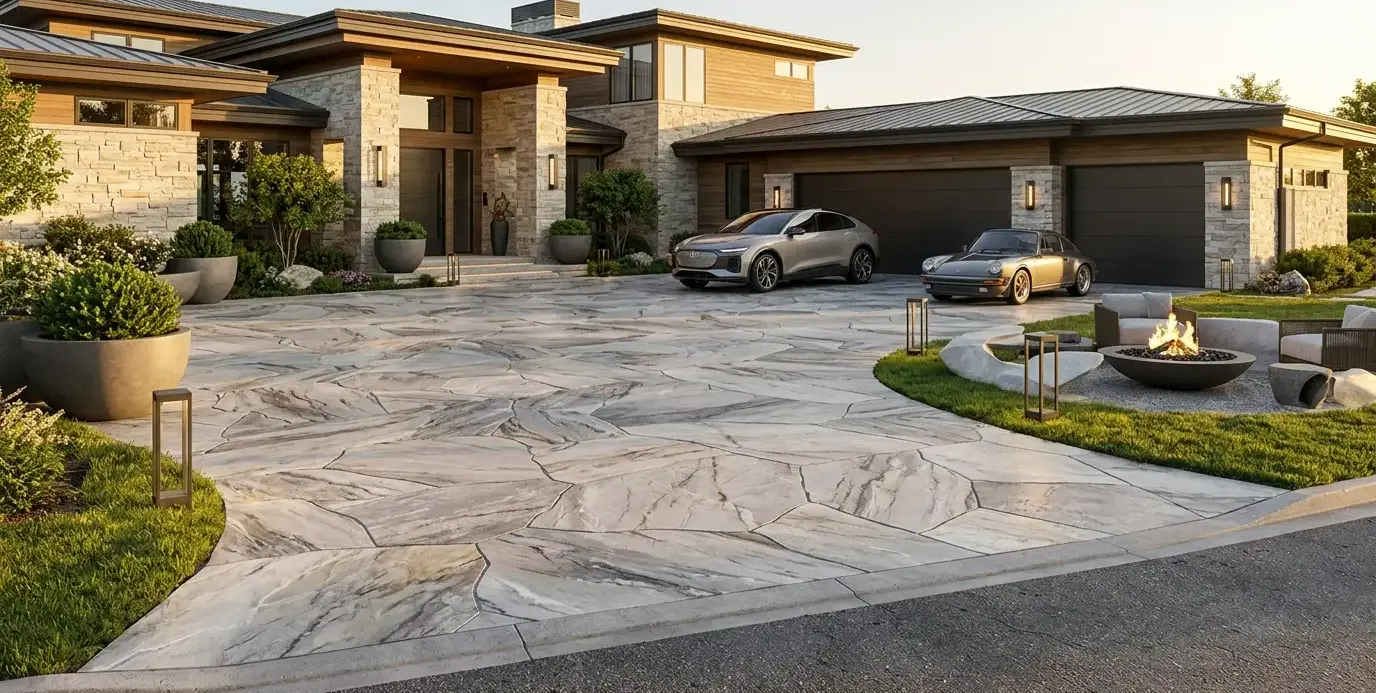
Quartzite forms through the metamorphosis of sandstone under heat and pressure, resulting in one of the hardest and least porous stones used in exterior applications, generally rating 7 on the Mohs scale. For open walkways, garden paths, and areas with no shade cover at all, quartzite tolerates direct sun and heat without the shading considerations that some softer stones require. It also resists staining and chemical exposure well, which matters for pathways near pool decks where chlorinated water or fertilizer runoff might come into contact with the surface.
Because quartzite runs close to granite in hardness and absorption, the two stones are often considered side by side for the same high-traffic zones, with the final choice usually coming down to color palette and veining preference rather than performance. Homeowners can compare quartzite directly against granite in person at our Fernley showroom, and directions to the Fernley location are just a click away.
Matching Stone to Sun and Shade Zones
The single biggest factor in how well an exterior stone performs isn’t the material’s overall quality. It’s whether that stone was matched to how the space is used and how much sun it gets. Granite and quartzite are the strongest choice where weight, traffic, and freeze-thaw are the main stress: driveways, front walks, and busy paths. Where people walk barefoot in full sun, around a pool or on an open patio, light-colored travertine or porcelain is usually more comfortable, since pale, textured surfaces stay cooler than dark, dense stone. Shaded courtyards and covered patios give you the most freedom, so the choice there can come down to look and upkeep. Seeing how a finish reads under both direct sun and shade is easier in person than online, which is one reason our showroom floors are laid out with both indoor and outdoor display areas.
Drainage and grading matter just as much as material selection. Water should always move away from a patio or walkway surface rather than pooling against it. For projects using permeable paver systems, water moves down through the joints and base layers instead of running off, which can reduce standing water on a patio and ease the load on storm drains during heavy rain events. The EPA’s Soak Up the Rain guide to permeable pavement explains how these surfaces let rain and melting snow soak into the ground instead of running off.
Why Performance Data Matters When Comparing Stone
Exterior stone specifications aren’t just marketing details. They reflect how a material was actually tested. Absorption testing shows how a stone will hold up through freeze-thaw cycles and wet seasons, compressive and flexural strength testing shows how much load or foot traffic it can take, and abrasion testing measures how well the surface resists wear over years of use. When comparing quotes or spec sheets from different suppliers, look for these results and the ASTM test method each one is based on, so you’re comparing like with like.
Freeze-thaw performance deserves extra attention in colder areas like Reno, Minden, and Fernley. Water absorption is the best quick indicator: the less water a stone takes in, the less there is to freeze and expand inside it. When comparing options, ask for the stone’s absorption and freeze-thaw test results, and confirm it’s rated for exterior use in your climate.
Comparing Long-Term Upkeep Across Materials
Maintenance requirements vary meaningfully by material, and factoring that in up front tends to save homeowners time later. Granite and quartzite need little beyond periodic cleaning with a pH-neutral cleaner, since both resist staining well and need sealing far less often than travertine. Travertine and other calcareous stones need a sealing schedule and should be cleaned with products that won't etch the surface, since acidic cleaners can damage calcium-based stone over time. Porcelain sits at the low-maintenance end of the spectrum, since its near-zero absorption means it doesn't require sealing at all, though grout lines in a porcelain paver system may still need occasional attention. The Natural Stone Institute's consumer care guide breaks down which cleaners are safe for calcareous versus siliceous stone, along with outdoor-specific tips for pool, patio, and hot tub areas.
Cost, availability, and lead time also factor into material choice, particularly for larger projects like a full driveway or an extended pool deck. Natural stone slabs vary in price by quarry origin and finish, while porcelain pricing tends to be more consistent across color lines since it's manufactured rather than quarried. Homeowners weighing several materials for the same project often benefit from comparing finish and color options in person and under natural outdoor light, since a stone or paver can look different in showroom lighting than it will on an actual patio or walkway.
Bringing It Together
Most exterior stone projects end up combining more than one material: granite or quartzite for a driveway, front walk, or other high-traffic path, light-colored travertine or porcelain for a sunny pool deck or patio where people walk barefoot, and careful attention to drainage and grading throughout. Browsing the live slab inventory is a good way to compare granite, travertine, and quartzite bundles side by side before deciding. Homeowners in colder climates or areas with a pronounced wet season should pay particular attention to freeze-thaw performance and sealing schedules, since these factors affect natural stone more than manufactured porcelain.
We help homeowners compare granite, travertine, porcelain, and quartzite side by side for patios, walkways, driveways, and pool decks at our Reno, Minden, Sacramento, and Fernley showrooms. Our design team can walk through finish options, sun and shade planning, and material pairing in person, and anyone ready to move forward can request a slab quote for granite, travertine, or quartzite directly.
Note: Some images on this page may be conceptual renderings created to illustrate design possibilities and may not depict actual installations.
Frequently Asked Questions
Granite and quartzite are generally the strongest performers outdoors because both have low water absorption and high resistance to abrasion, UV fading, and freeze-thaw cycles. Travertine and exterior-rated porcelain are solid alternatives for patios and pool decks where a cooler surface or a more uniform look is preferred.
Travertine and other porous natural stones benefit from a penetrating sealer every two to three years to guard against moisture and mineral staining. Granite and quartzite need sealing far less often, and exterior porcelain doesn’t need sealing at all, though the grout or joint material in a porcelain system may.
Yes. Exterior-rated porcelain resists staining, doesn’t need sealing, and can be matched to interior tile lines, making it a common choice for homeowners connecting an indoor living area to a backyard patio.
Stones with low water absorption, like granite and quartzite, are more frost-tolerant because there is less moisture inside the stone to expand when temperatures drop below freezing. More porous stones like travertine need proper sealing and drainage to perform well in freeze-thaw conditions.
Pattern choice depends on the stone, its size, and the look you want. Classic French pattern mixes four tile sizes for an old-world feel, while running bond, ashlar, and herringbone read more modern. Before choosing, check how much sun the area gets, where water drains, and whether it’s near a pool or irrigation, since those affect which stone and finish will hold up.