The best exterior stone for walls, steps, and garden borders is usually granite, quartzite, travertine, or exterior-rated porcelain, with the right choice depending on how each area is used. Granite and quartzite suit steps and wall caps because they are dense, hard, and absorb little water. Travertine works well for treads, caps, and paving near pools, since lighter tones stay cooler underfoot in summer sun. Exterior porcelain pavers offer a natural stone look with very low water absorption for patios, borders, and mowing strips.
For outdoor steps, a textured finish such as flamed, leathered, brushed, or tumbled provides better traction than polished stone. Walls typically use stone as cladding and capping over a concrete or block structure, while garden borders rely on cut edging strips or pavers set level with the lawn. Below, we cover how each material performs on walls, steps, and borders, which finishes to choose, and how to coordinate them across your landscape.
Why Each Outdoor Application Needs a Different Approach
It is tempting to pick one material and use it everywhere, and sometimes that works. But walls, steps, and borders put stone to work in very different ways.
A wall is mostly about appearance and protection. The stone faces the weather on its exposed side, and on a seat wall, the cap becomes a surface people touch and sit on. Steps carry concentrated foot traffic, often while wet from rain or sprinklers, so surface texture and thickness matter more than almost anything else. Garden borders sit at ground level, surrounded by soil, irrigation water, and plant roots, so the material needs to stay in place and resist shifting from season to season.
Understanding these differences helps you narrow your options quickly. You can still use a single material throughout your landscape, just in different formats: cladding panels and a thick capstone for a seat wall, cut treads for the stairs, and narrow edging pieces along the planting beds. That approach gives you variety in form while keeping the color story consistent.
The Main Materials at a Glance
Granite is an igneous stone known for its density and hardness. It handles heat, frost, and moisture well, and textured finishes such as flamed (also called thermal) or leathered give it reliable grip outdoors. Its color range runs from nearly white to deep black.
Quartzite is a metamorphic stone that forms when sandstone is transformed by heat and pressure. True quartzite is very hard and typically absorbs little water, which suits it to outdoor use. Because some stones sold under the quartzite name are softer, it is worth confirming the material's properties before choosing it for a high-traffic area.
Travertine is a form of limestone that develops around mineral springs, which gives it its natural pores and banded texture. Outdoors, it is usually chosen in tumbled, brushed, or honed finishes, and its lighter tones reflect heat well in full sun. As a more porous stone, it is commonly sealed for exterior use.
Porcelain pavers are manufactured rather than quarried, and many are designed to look like natural stone. Exterior porcelain has very low water absorption, but it is important to choose products specifically rated for outdoor use and freeze-thaw conditions. Textured surfaces are standard for patios and steps.
Exterior Stone for Walls
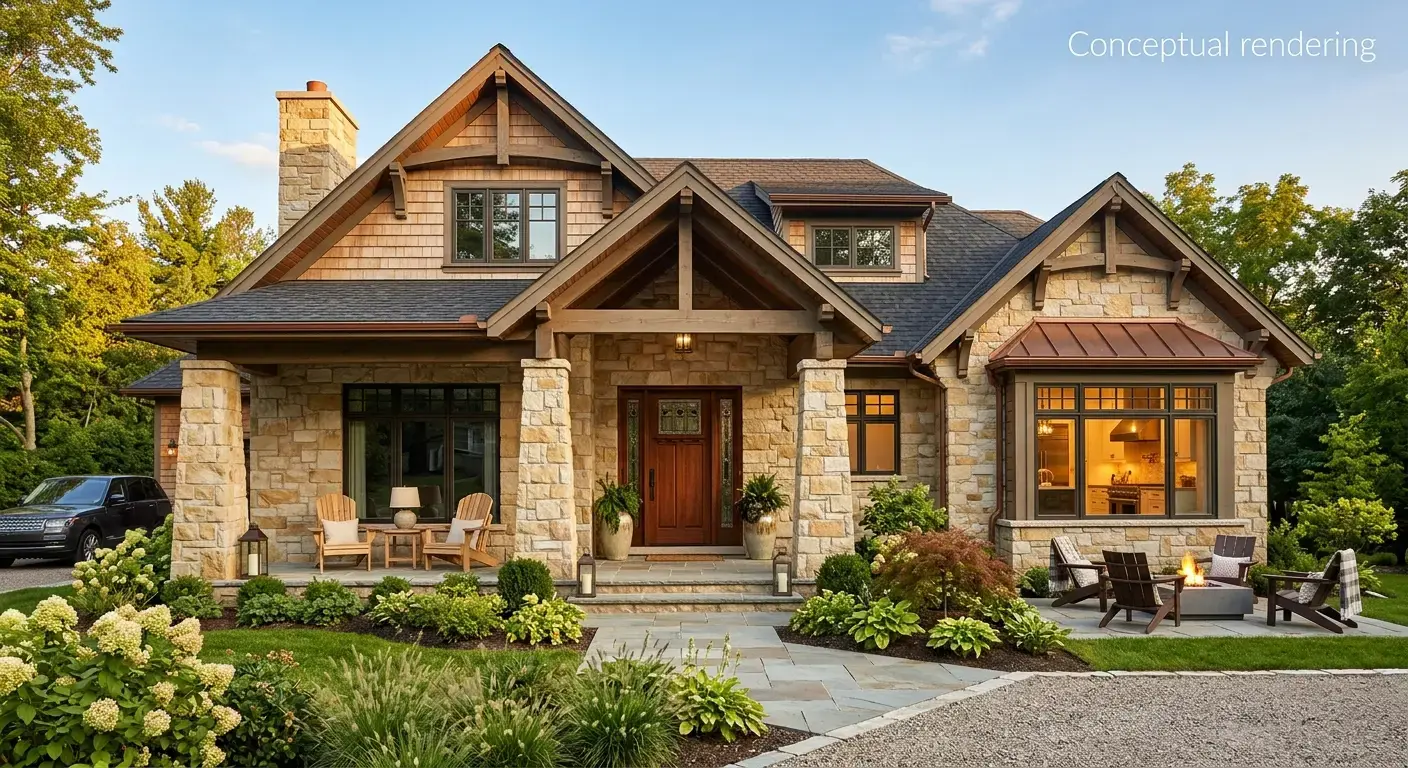
Stone walls define patios, create seating, hold back sloped soil, and add structure to planting areas. In most modern landscapes, the wall itself is built from concrete or block, and natural stone or porcelain is applied as cladding and capping.
Garden and Seat Walls
Low freestanding walls are one of the most popular places to use exterior stone. A seat wall typically stands around 18 to 24 inches tall, which is a comfortable height for sitting, and often borders a patio or fire pit area. Shorter garden walls can separate a lawn from a planting bed or frame an entry path.
The cap is where material choice matters most, since it is the surface people touch and sit on. Granite and quartzite caps hold up well to sun and weather, while travertine caps in honed or tumbled finishes offer a softer, warmer look. A slightly overhanging cap creates a clean shadow line and helps shed water away from the wall face.
Retaining Walls
Retaining walls hold back soil on a slope, so the structure behind the stone does the heavy lifting. Natural stone or porcelain cladding then gives the wall a finished appearance that ties into nearby paving.
Height is an important consideration. Taller retaining walls, or walls supporting a driveway or structure above, usually require engineering and may need a permit depending on your local jurisdiction. We always recommend confirming requirements with a qualified professional before finalizing plans for any retaining wall of significant height.
Cladding Existing Walls
If you already have a concrete block or poured concrete wall, exterior cladding can change its look without rebuilding it. Granite, quartzite, and travertine panels work well on garden walls, outdoor kitchen bases, and entry columns, and exterior-rated porcelain offers a consistent, stone-look alternative. Finish shapes the effect: sawn and honed panels create a smooth, contemporary face, while split or textured surfaces add depth and shadow. For a more layered, dimensional look, our pavers and exterior stone selection also includes stacked stone.
Exterior Stone for Steps
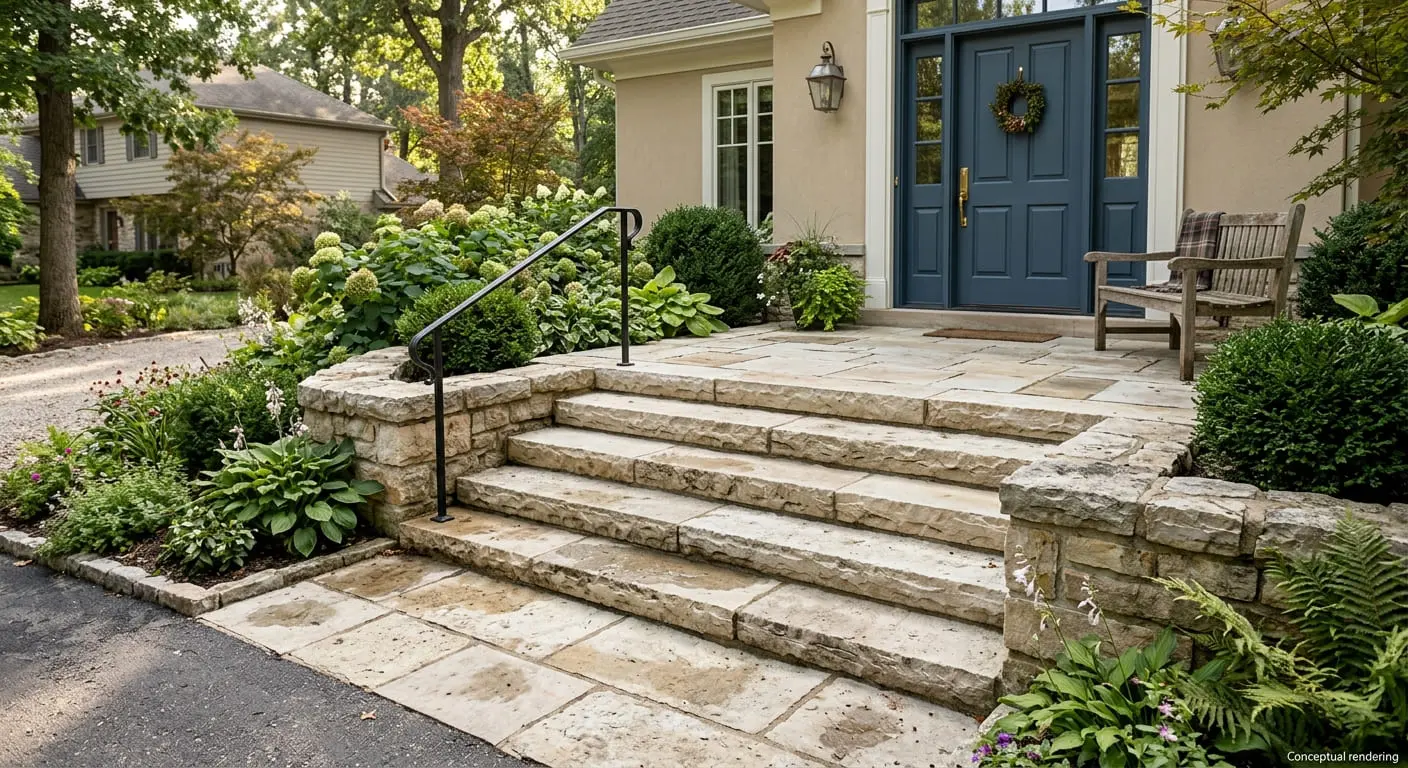
Outdoor steps connect levels in your yard, lead to front doors, and link patios to lawns. Because people use them every day, often while carrying things or walking in low light, steps deserve careful thought about material and finish.
Common Step Styles
Tread and riser steps pair a flat top piece with a separate vertical face, usually set over a concrete base. This is the most common approach for granite, quartzite, travertine, and porcelain steps. Solid block steps, cut from a single thick piece of stone, create a substantial, monolithic look and are most often made from granite.
Choosing a Material for Steps
Granite is a strong choice for steps because of its hardness and density, and a flamed finish adds traction. Quartzite offers similar hardness with a wider range of light and veined looks, often in a leathered finish for grip. Travertine treads are popular around pools and patios because they coordinate easily with travertine paving. Porcelain step treads, including pieces with a rounded front edge, let you continue a porcelain patio right onto the stairs.
Why Finish Matters Most
The surface finish on a step has a direct effect on traction. Polished stone is generally a poor choice outdoors because it becomes slick when wet. Instead, look for textured finishes such as flamed, leathered, brushed, sandblasted, or tumbled, or a porcelain surface designed for exterior use. Honed finishes can work in covered areas, but they are smoother than textured options, so they are less suited to steps exposed to rain and irrigation.
Many homeowners also choose a slightly contrasting color or a distinct edge profile on the front of each tread. A visible step edge helps people see where one step ends and the next begins, especially at dusk.
Thickness and Proportion
Step treads are typically thicker than paving, and solid block steps are thicker still. Thicker material looks more proportional on a staircase and resists cracking under concentrated loads. Comfortable riser heights and tread depths also matter, and local building codes may set specific requirements for steps leading to a home entry. A qualified contractor can confirm the right dimensions for your project. If you are a contractor or designer sourcing materials for clients, you can apply for a trade account to access trade pricing.
Exterior Stone for Garden Borders
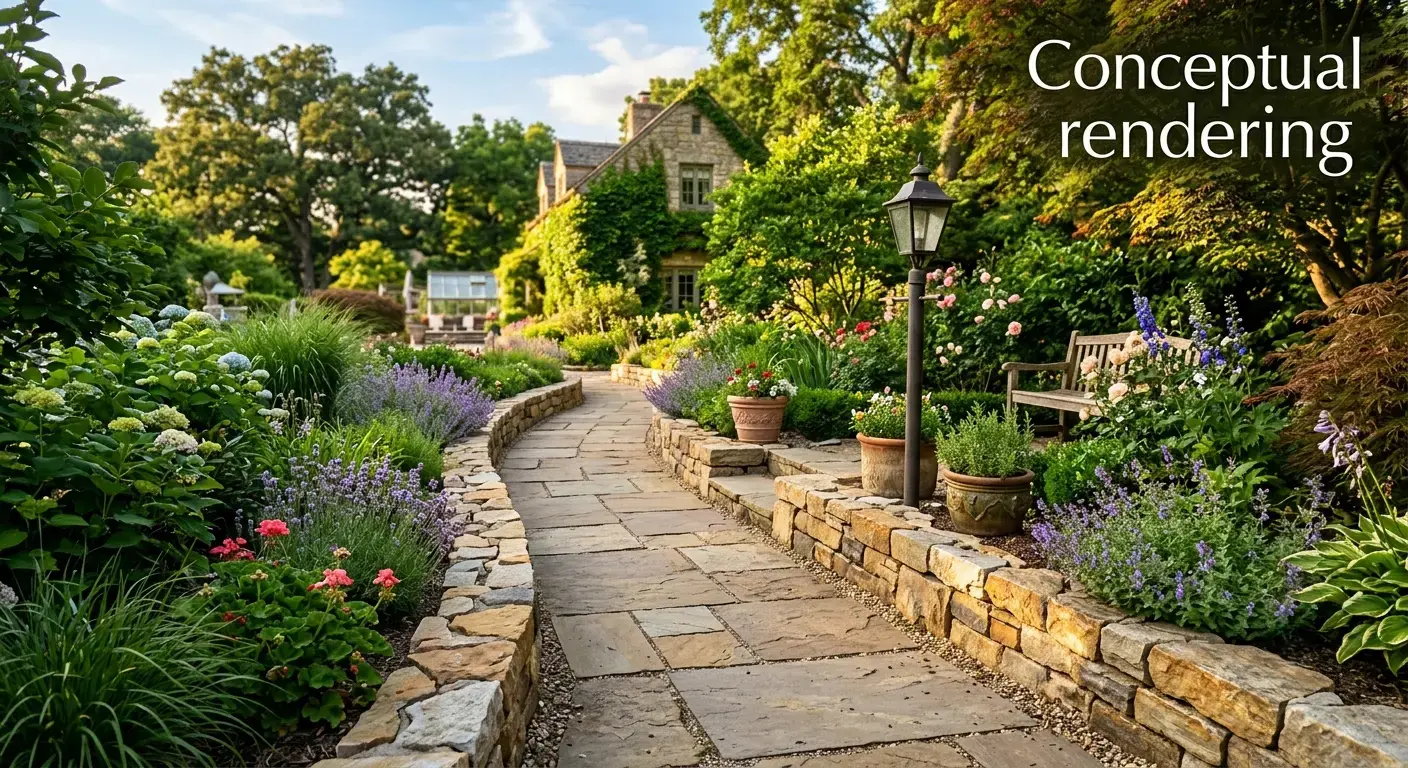
Garden borders are where exterior stone meets soil and plants. A well-chosen border keeps mulch in place, gives lawn edges a clean line, and adds definition to planting beds and paths.
Border Options
Narrow strips of cut granite or travertine make crisp, formal edges along beds and walkways. Travertine or porcelain pavers laid flat create a mowing strip between lawn and planting areas, and using the same pavers as your patio helps the border feel connected to the rest of the yard. For a naturalistic look, a cut stone edge can be paired with loose landscape materials such as river rock, gravel, or boulders inside the bed.
Practical Considerations for Borders
Border pieces should be set deep enough to stay in place when soil is watered, walked on, or disturbed by roots. Wider and heavier pieces tend to resist shifting better than thin, narrow ones. If you mow up to the border, a flat mowing strip set level with the lawn lets mower wheels ride along the edge, which reduces the need for string trimming.
Because borders need relatively little material, they are a good fit for close-out pavers, so our overstock sale may be worth a look. Color is worth considering too. Darker granites can make green foliage stand out, while light travertine and pale porcelain brighten shaded beds.
Matching Stone to Climate
The areas we serve see hot, dry summers across both the Sacramento Valley and the high desert of northern Nevada. Winters differ more: the valley rarely sees hard freezes, while the high desert and higher Sierra elevations experience regular freeze-thaw cycles.
Dense materials such as granite and true quartzite absorb little water, which helps them handle freeze-thaw cycles. Travertine can perform well outdoors, but its porosity makes sealing and good drainage especially important in freezing climates. Exterior porcelain resists water absorption, provided the product is rated for outdoor, freeze-thaw use. In hot areas, lighter colors tend to stay cooler underfoot, which is worth keeping in mind for steps near pools and patios. The team at any of our local showrooms can help match materials to conditions in your area.
Coordinating Walls, Steps, and Borders
A landscape feels most cohesive when the materials in different areas relate to each other. One approach is to use the same material in different formats, such as travertine caps on a seat wall, travertine treads on the steps, and travertine pavers as a mowing strip. Another is to repeat a color range while varying the material, such as pairing a charcoal granite cap with gray stone-look porcelain paving and dark granite edging.
It also helps to consider your home's exterior and interior. Stone that echoes the tones in your siding, roof, trim, or existing hardscape tends to look settled and intentional, and carrying the same stone from an indoor floor or countertop out to the patio creates a smooth transition between inside and out. Bringing photos of your home and yard to a free design consultation makes it easier to compare options against what you already have.
General Care for Exterior Stone
Exterior stone needs relatively little upkeep, but a few habits help keep it looking its best. Sweep steps and walls regularly, rinse off dirt with a garden hose, and use pH-neutral cleaners rather than harsh products, since acidic cleaners can etch travertine and other limestones. In winter, be cautious with deicing salts, as some products can damage stone; sand is a gentler option for traction. Natural stone may benefit from periodic sealing, so follow the guidance for the specific stone you choose. Porcelain generally does not need surface sealing, though the joints may need their own care. Once a year, check walls, steps, and borders for loose or shifted pieces.
Finding the Right Exterior Stone for Your Project
Exterior stone gives you many ways to shape your outdoor spaces, whether you are capping a seat wall around a fire pit, adding steps down to the garden, or framing planting beds with a crisp stone edge. Considering each area's purpose, the material's finish and thickness, and how everything will look together helps you make choices you will enjoy for years to come. Seeing stone in person makes a real difference, since color, texture, and scale are much easier to judge up close than in photos. We invite you to visit one of our showrooms in Sacramento, Reno, Minden, or Fernley, where our team can walk you through granite, quartzite, travertine, and porcelain options and help you plan a cohesive look for your walls, steps, and garden borders.
Note: Some images on this page may be conceptual renderings created to illustrate design possibilities and may not depict actual installations.
Frequently Asked Questions
Granite and quartzite are two of the strongest choices for outdoor steps because of their hardness and density. Travertine and exterior-rated porcelain are also popular, especially around pools and patios. Whichever material you choose, a textured finish such as flamed, leathered, brushed, or tumbled offers better traction than polished stone.
Yes. Many homeowners use one material throughout their landscape in different formats, such as cladding and caps on walls, thick treads on steps, and pavers or cut strips for borders. This keeps the color consistent while varying the shape and scale.
Narrow cut strips of granite or travertine create clean, formal edges, while travertine or porcelain pavers laid flat make a practical mowing strip. For a more natural look, a cut stone edge can be combined with river rock, gravel, or boulders inside the planting bed.
Travertine is widely used outdoors for treads, caps, cladding, and paving. Tumbled, brushed, and honed finishes suit exterior use better than polished, and lighter tones stay comfortable in the sun. Because travertine is porous, sealing and good drainage are important, particularly where winters bring freezing temperatures.
It depends on the material. Dense granite and true quartzite may need little sealing, while travertine commonly benefits from periodic sealing outdoors. Exterior porcelain generally does not need surface sealing, though the joints may need their own maintenance. Following the care guidance for your specific material is the best approach.