Exterior stone is natural stone that has been quarried, cut, and finished for use on the outside of a home, including facades, patios, outdoor kitchens, and fire features. The key factor in choosing it is water absorption, since stone that takes on less water is generally better at resisting freeze-thaw damage, staining, and weathering. According to the ASTM C97 standard, absorption is measured as the percentage of water a stone takes on by weight. In general, lower numbers point to better performance outdoors. Strength, surface finish, UV resistance, and exposure to sun, salt, and frost also affect how well a stone holds up over time.
Because stone gets its color from minerals rather than a surface coating, well-chosen exterior stone tends to weather gradually instead of peeling or fading. This guide explains what makes a stone suitable for outdoor use, compares common options, and covers where each works well and how to care for it.
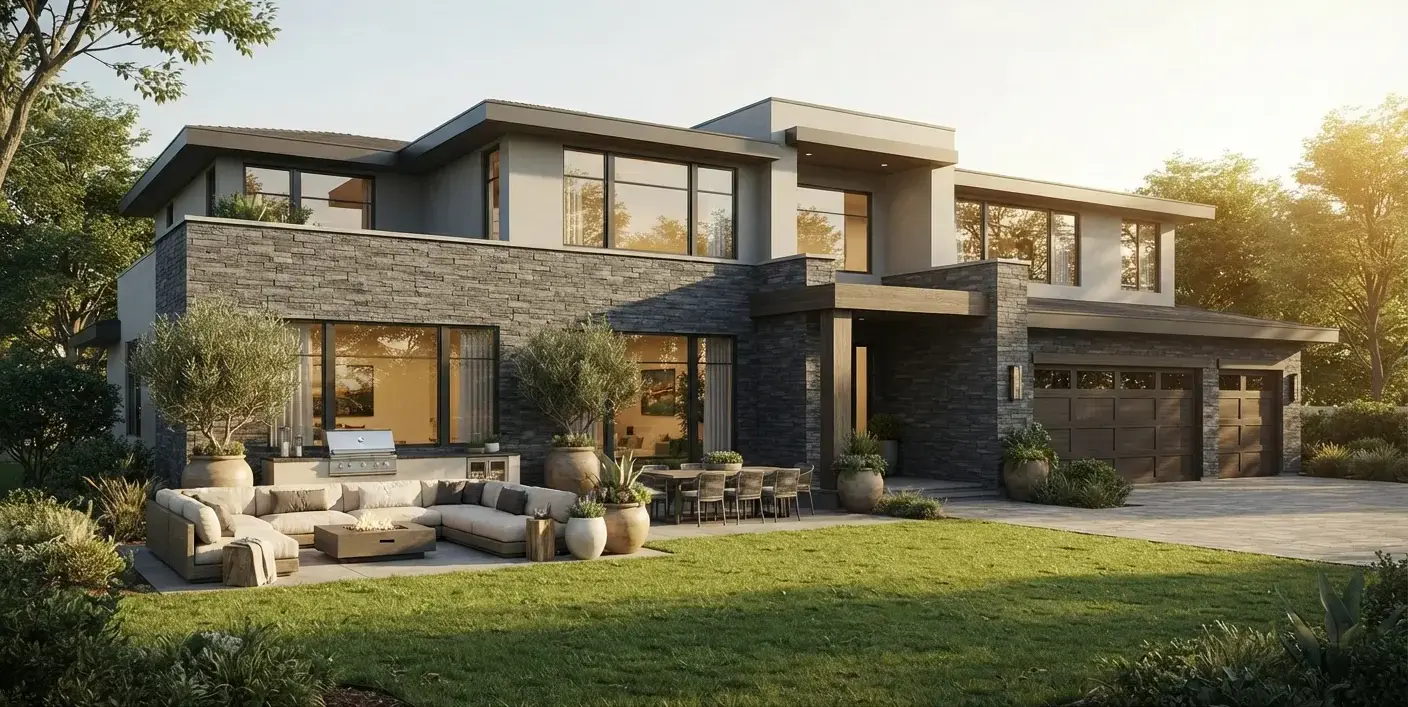
Why Homeowners Use Natural Stone Outdoors
Stone has been used on building exteriors for thousands of years, and several of its practical qualities explain why it is still specified today.
It does not burn. Natural stone is non-combustible, so it does not add fuel to a fire. That makes it a common choice around outdoor fireplaces, fire pits, and grill surrounds.
It carries weight and resists wear. Dense stones such as granite and quartzite hold up well to foot traffic, furniture, and the knocks that come with outdoor living.
Many varieties hold their color in sunlight. Because the color in natural stone comes from its minerals rather than a surface coating, UV-resistant stones like granite and quartzite can keep their appearance through years of sun exposure.
It ages rather than wears out. A well-chosen stone develops a softer, weathered look over time instead of peeling, warping, or delaminating the way some manufactured surfaces can.
None of these benefits apply equally to every stone, though. The right choice depends on the specific material and the conditions it will face.
What Makes a Stone Suitable for Exterior Use
Before looking at color or pattern, it helps to understand the physical properties that decide whether a stone can live outside.
Water Absorption and Freeze-Thaw Exposure
Water that soaks into stone expands when it freezes. Over many cycles, that expansion can open small cracks, cause surface flaking, or loosen pieces at the edges. Stones with low absorption give water fewer places to go, which is why density is the first thing to check for any exterior project in a climate that sees frost.
Strength and Thickness
Wall cladding and countertop overhangs put bending stress on stone. In most stone cladding projects, flexural strength testing provides the most useful information about how a stone will perform, since it shows how the material behaves under bending loads at a given thickness. For outdoor kitchens and wall applications, your designer or contractor can confirm that the stone and thickness you choose suit the design.
Finish and Surface Texture
The finish changes how a stone performs, not just how it looks. Polished surfaces can become slick when wet, which makes them better suited to vertical surfaces than walkways. Textured finishes can add grip underfoot, but some aggressive treatments, such as flaming, can open the surface and increase absorption.
Local Exposure Conditions
Beyond freeze-thaw cycles, exterior stone may face intense sun, salt air near the coast, deicing salts on walkways, pool chemicals, and heavy foot traffic. Industry guidance recommends identifying environmental exposure conditions before a stone is selected, because each one can narrow the list of suitable materials.
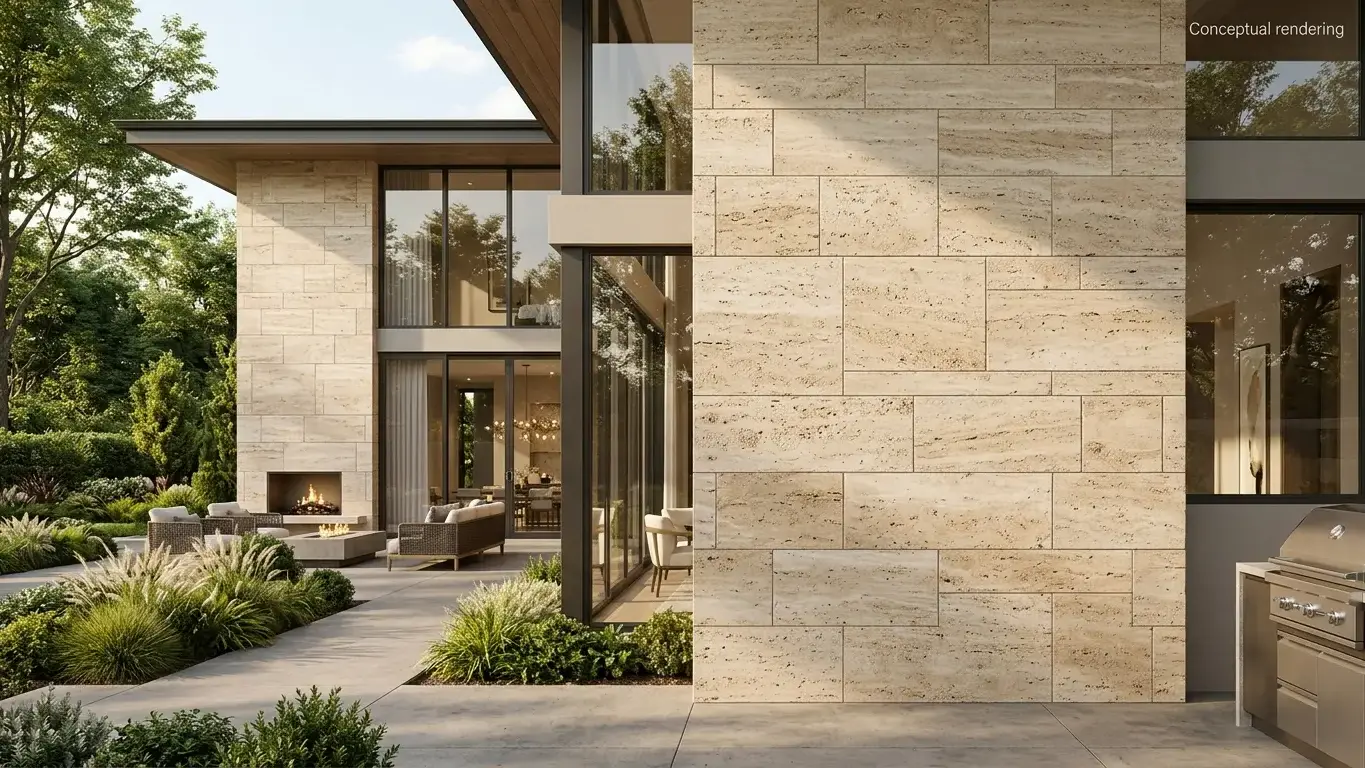
Stone Types to Consider for Exterior Projects
Granite
Granite is an igneous rock formed from cooled magma, made up mostly of feldspar, quartz, and mica. It is typically dense with low absorption, resists scratching, and is UV resistant, which makes it a dependable option for outdoor kitchens, bar tops, wall accents, and hardscape details. Its speckled or veined patterns range from pale grays and whites to deep blacks, blues, and browns.
Well suited for: outdoor kitchen counters, grill surrounds, wall cladding, steps, and fire features.
Quartzite
Quartzite is a metamorphic rock that begins as sandstone and is transformed by heat and pressure into a hard, quartz-rich stone. It is known for strong durability, low porosity in many varieties, and UV resistance. Quartzite often has a soft, flowing look that resembles marble while offering the toughness associated with granite, which appeals to homeowners who want a lighter, more refined appearance outdoors.
Well suited for: outdoor kitchens, patio accents, pool surrounds, and feature walls where a light, elegant look is the goal.
Travertine
Travertine forms when mineral-rich spring water deposits calcium carbonate that hardens into stone, and the natural holes and pits left behind give it a warm, textured character. It is widely used for patios and pool decks because tumbled and honed finishes can provide more traction than polished stone and the lighter tones tend to stay cooler underfoot than dark stone. Because travertine is calcite-based and more porous than granite or quartzite, it benefits from sealing and is sensitive to acidic cleaners. In climates with frequent freezing, choose a dense travertine that the supplier confirms for freeze-thaw exposure. Sealing can help limit staining, but it does not make travertine frost resistant.
Well suited for: pool decks, patios, walkways, and exterior wall accents in a warm, Mediterranean style.
Porcelain: An Engineered Alternative
Porcelain is not natural stone, but many exterior porcelain products are designed to mimic stone, and they are worth considering alongside it. Under the ANSI A137.1 standard, porcelain tile is defined as ceramic tile with a water absorption of 0.5% or less, which gives it strong moisture resistance and makes many porcelain products suitable for freeze-thaw exposure. Check that the product is rated for exterior use. It offers consistent color from piece to piece, which some homeowners prefer and others find less natural than quarried stone.
Well suited for: patios, pool decks, and covered outdoor spaces where low maintenance is a priority.
A Note on Marble and Softer Stones
Marble, many limestones, and some sandstones do appear on exteriors, especially in historic architecture. However, calcite-based stones such as marble and limestone can etch from acid rain, and softer or more porous stones tend to stain more easily and are more vulnerable in freezing climates. For most residential exterior projects, marble is best kept to interior spaces where its surface can be protected.
For projects where the right material still needs to be selected, exploring Nova Tile and Stone’s full offerings provides a broader view of available stone options and finishes. For a specific slab selection, a slab quote request can also help move the project from material considerations to the next step.
Comparing Exterior Stone Options at a Glance
Material | Type | Absorption | UV Resistance | Typical Exterior Uses | Care Level |
Granite | Natural (igneous) | Generally low | Yes | Outdoor kitchens, walls, steps | Low to moderate |
| Quartzite | Natural (metamorphic) | Generally low | Yes | Outdoor kitchens, pool surrounds, accents | Low to moderate |
Travertine | Natural (sedimentary) | Moderate, varies | Varies by variety | Patios, pool decks, walkways | Moderate |
Porcelain | Engineered | 0.5% or less | Yes | Patios, pool decks, covered areas | Low |
Marble | Natural (metamorphic) | Varies | No | Best kept indoors | Higher |
Absorption and performance vary between individual quarries and varieties, so it is worth asking for technical data on any specific stone you are considering.
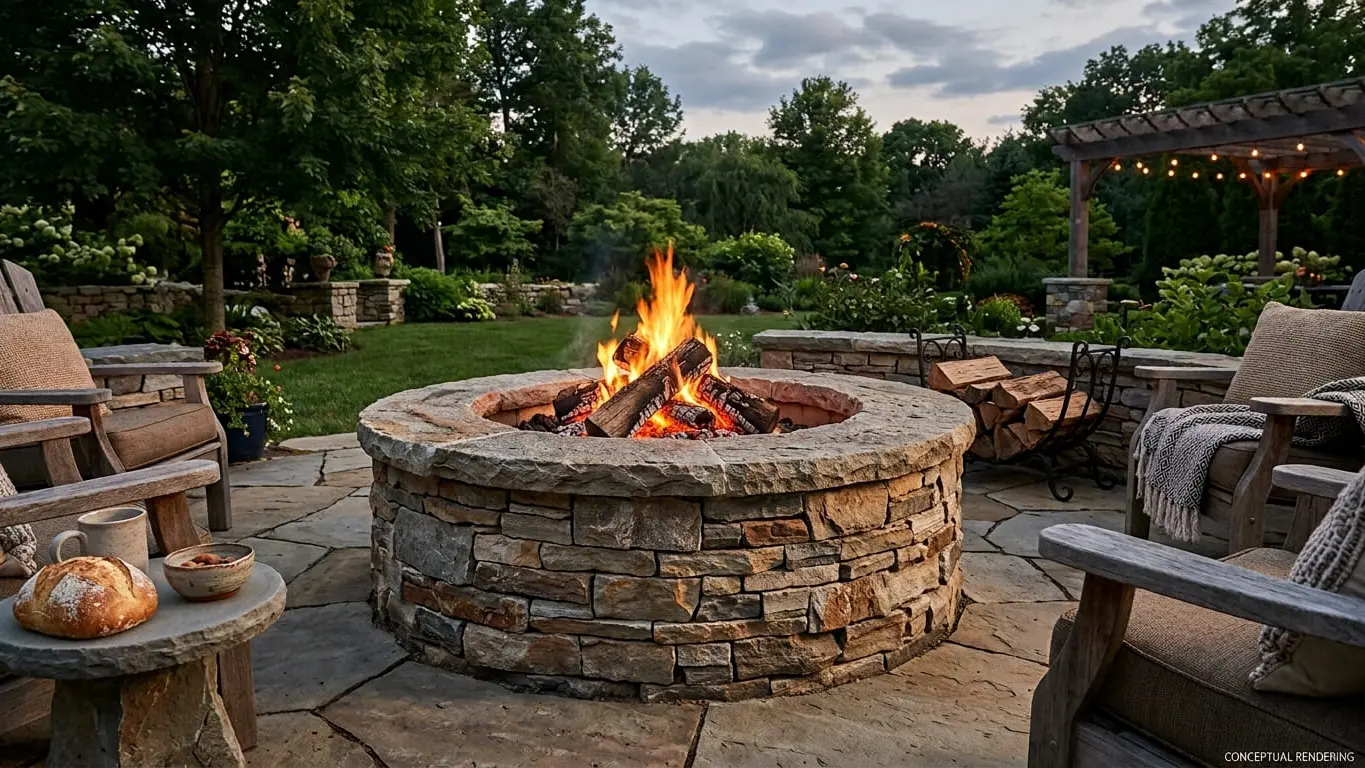
Where Exterior Stone Works Well Around the Home
Facades and accent walls. Stone on a front elevation, chimney, or entry wall adds texture and depth. Granite and quartzite are common choices for vertical surfaces, and many designers suggest choosing exterior stone early in a project, since it influences the colors of siding, trim, windows, and roofing.
Outdoor kitchens and bars. Countertops outside face sun, spills, heat from the grill, and rain. Dense, UV-resistant stones like granite and quartzite are practical here, ideally in a honed or leathered finish that hides water spots.
Patios, walkways, and pool decks. Surfaces underfoot need slip resistance and comfortable temperatures. Tumbled or honed travertine and textured porcelain are popular options.
Fireplaces and fire pits. Non-combustible stone is a natural fit for fire features, and the choice of stone often ties the outdoor space back to the home's exterior.
Columns, steps, and caps. Smaller stone details can connect a stone facade to the landscape without committing to full wall coverage.
Matching the Finish to the Location
- Polished: High shine that deepens color. Best reserved for vertical surfaces or covered areas, since it can be slippery when wet.
- Honed: A smooth, matte surface that shows fewer water spots and offers more grip than polished stone.
- Leathered: A soft, textured surface that hides fingerprints and water marks, well suited to outdoor counters.
- Tumbled or textured: An aged, rounded look that adds traction, commonly used for travertine pavers and pool decks.
When comparing finishes, keep in mind that surface treatment can affect both slip resistance and absorption, so the same stone may perform differently depending on how it is finished. Reviewing finish options at a local showroom can also make it easier to compare textures in person, while trade professionals can apply for a trade account when sourcing materials for a project. For locally available tile and stone options, shop local can also help narrow the selection.
Caring for Exterior Stone
Exterior stone generally needs less upkeep than many other materials, but it is not maintenance free.
- Seal where appropriate. Porous stones such as travertine benefit from a penetrating sealer, while dense granite and quartzite may need it less often. A simple water-drop test can help show when a surface is absorbing water again.
- Use pH-neutral cleaners. Stones made mainly of calcium carbonate, such as travertine, are sensitive to acids and are best cleaned with a neutral cleaner. Harsh cleaners can also dull finishes on other stones.
- Clear standing water, leaves, and debris. Organic material left on stone can stain it, and trapped water adds to freeze-thaw stress.
- Avoid harsh deicing salts where possible. Salts can damage some stones over time, so ask your installer about alternatives for walkways and steps.
- Inspect once a year. Checking joints, edges, and surfaces each spring can help you catch small issues early.
Conclusion
Choosing exterior stone comes down to balancing how a material looks with how it performs in the conditions around your home. Absorption, strength, finish, and local exposure all shape whether a stone will keep its appearance over time, which is why dense, UV-resistant options like granite and quartzite are common choices for outdoor kitchens, walls, and fire features, while travertine and exterior-rated porcelain are often used for patios and pool decks. Softer stones such as marble tend to perform better indoors, where their surfaces can be protected.
Once you know where the stone will go and what it will face, narrowing the options becomes much simpler. Pairing the right material with a finish suited to its location and a basic care routine can help your exterior stone age well for years. To compare granite, quartzite, travertine, and porcelain in person, visit Nova Tile and Stone at any of our showrooms in Reno, Minden, Fernley, or Sacramento, or book a free design consultation to talk through your project.
Frequently Asked Questions
Start with water absorption, since lower absorption generally means better resistance to moisture and freezing. Then consider the stone's strength for the application, the finish and its slip resistance, and exposure conditions such as sun, salt, and pool chemicals. Color and pattern come after the stone meets those practical requirements.
When water soaks into stone and freezes, it expands inside the stone's pores. Repeated cycles can lead to surface flaking, small cracks, or damaged edges over time. Dense stones with low absorption, such as granite and quartzite, tend to handle these conditions better than more porous materials.
It depends on where the stone will be used. Honed, leathered, and tumbled finishes offer more grip and hide water spots, making them practical for patios, walkways, and outdoor counters. Polished finishes are usually better kept to vertical or covered surfaces, since they can become slippery when wet.
In many cases, yes. Granite, quartzite, and travertine are suitable for both interior and exterior use, which makes it possible to carry the same stone from a kitchen out to a patio or outdoor kitchen. The finish may need to change between spaces for slip resistance, and marble is generally recommended for indoor use only.
There is no single schedule, since it depends on the stone's porosity, the finish, and how much weather and use it sees. Porous stones like travertine typically need sealing more often than dense granite or quartzite. A water-drop test can help: if water darkens the stone instead of beading on the surface, it may be time to reseal.
Note: Some images on this page may be conceptual renderings created to illustrate design possibilities and may not depict actual installations.