There is usually no meaningful difference between stacked stone and ledgestone as exterior stone veneer. Both terms describe the same veneer style: thin, flat pieces of stone installed in tight horizontal courses with minimal visible mortar joints, commonly used on home facades, entryways, columns, and outdoor living spaces. The two names are frequently used interchangeably for identical exterior products. Where a distinction is drawn, it's typically based on how uniform the individual stone pieces look, though which name gets which description isn't consistent across the industry.
What Stacked Stone and Ledgestone Have in Common
Before getting into where the two names diverge, it helps to look at what they share. Both terms describe a veneer profile built from flat, linear pieces set in horizontal rows, creating a layered look with little to no visible grout line. This is what separates the style from other exterior veneer profiles like fieldstone, which uses irregular, rounded pieces to mimic stones gathered from a riverbed, or cobblestone, which uses roughly cube-shaped pieces in a paving-inspired pattern.
The dry-stack appearance that gives this style its name is mostly visual. Even when an exterior wall looks like it was hand-stacked without mortar, most installations still use mortar, a moisture barrier, and proper drainage behind the veneer. What changes is how visible that mortar is at the surface.
Both are also sold in the same basic format: modular panels, most commonly around 6x24 inches, that install like siding rather than individual tile. Loose, individual pieces are available too, giving more flexibility around corners and edges. Corner pieces are a common companion product for either style, cut or molded to wrap around an outside corner of a facade so the layered look continues around the edge instead of ending in a flat, cut face. The two return legs on each corner piece typically alternate in length from one course to the next, which keeps the vertical joints staggered and avoids a repeating, obviously uniform pattern along the wall.
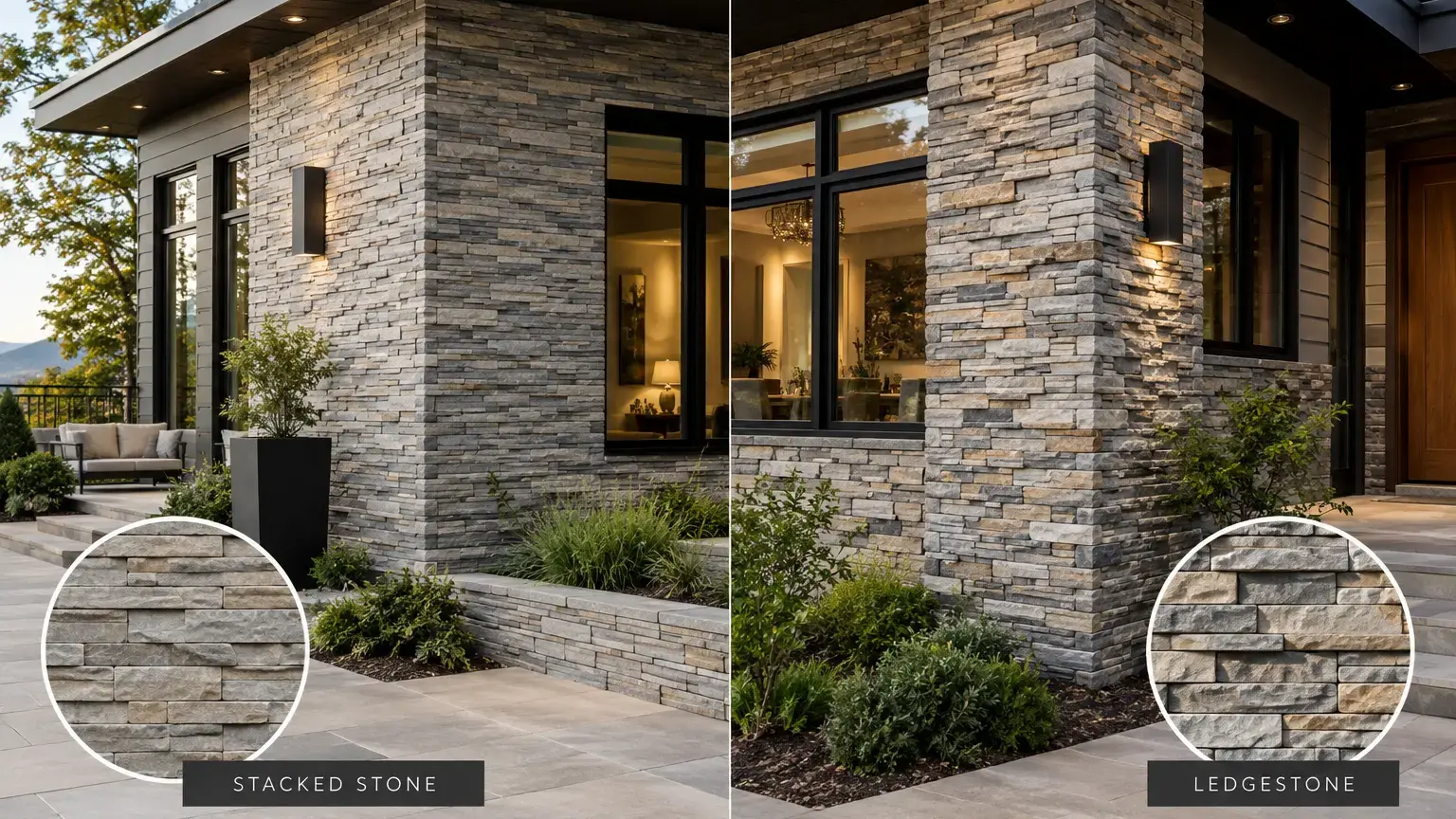
Stacked Stone vs. Ledgestone: Where the Terminology Splits
When a distinction is drawn, sources don't agree on which name goes with which look, and they actually split into two opposite camps. Some sources use stacked stone to describe the more uniform version, pieces cut to a similar size and thickness for a clean, linear look, and use ledgestone for the rougher version, with pieces of varied height and depth for a more textured, rustic look. Other sources use the exact same two descriptions but assign them in reverse, calling ledgestone the refined, uniform option and stacked stone the varied, rustic one. Because both mappings show up regularly across suppliers, neither one can be treated as the industry standard, and the label on a product alone doesn't reveal which look it actually has. Comparing a physical sample against these points is more useful than relying on the product name:
- Piece uniformity: consistent dimensions versus natural variation in height, length, and depth
- Joint visibility: a near-invisible joint versus a more visible, textured mortar line
- Surface texture: split, honed, or another finish, which affects how much shadow and depth the exterior wall shows
It also helps to know that stacked stone and ledgestone are just two names within a broader family of veneer shapes commonly sold for exterior use. Ashlar consists of longer, rectangular pieces with a split face that shows more of the stone's natural grain. Mosaic uses irregular, puzzle-like pieces for a more random pattern. Square and rectangular pieces give a geometrically clean but still varied look, and round pieces, sometimes called river rounds, create a more rustic, weathered facade. Nova Tile and Stone offers a range of options in different shapes, textures, and finishes, and our showroom provides an opportunity to see these materials in person. Seeing the samples side by side can make it easier to compare exterior options directly rather than getting stuck on which of the two names is the "correct" one.
Natural Stone Veneer vs. Manufactured Stone Veneer
Separately from the naming question, exterior stone veneer comes in two material categories, and this distinction matters more for how a facade performs over time.
Natural stone veneer is quarried and cut thin, typically from slate, quartzite, sandstone, or limestone. Because it's cut from real stone, no two pieces are identical, and the color and grain vary naturally across a wall.
Manufactured stone veneer is cement-based, cast in molds taken from real stone and pigmented to mimic natural coloring and texture. It tends to offer more consistency from piece to piece, which can simplify planning a large facade, but the cement composition is more porous than natural stone and generally needs sealing to protect against moisture and fading.
One advantage both material types share over full-thickness stone masonry is weight. Because the veneer is cut or cast thin rather than used as solid building stone, it doesn't carry the same structural load as a traditional stone wall, and many manufactured products are engineered specifically so they can be installed without additional footings or structural reinforcement. That's part of why exterior stone veneer can go over existing siding or an ordinary framed wall that was never built to support heavy masonry in the first place.
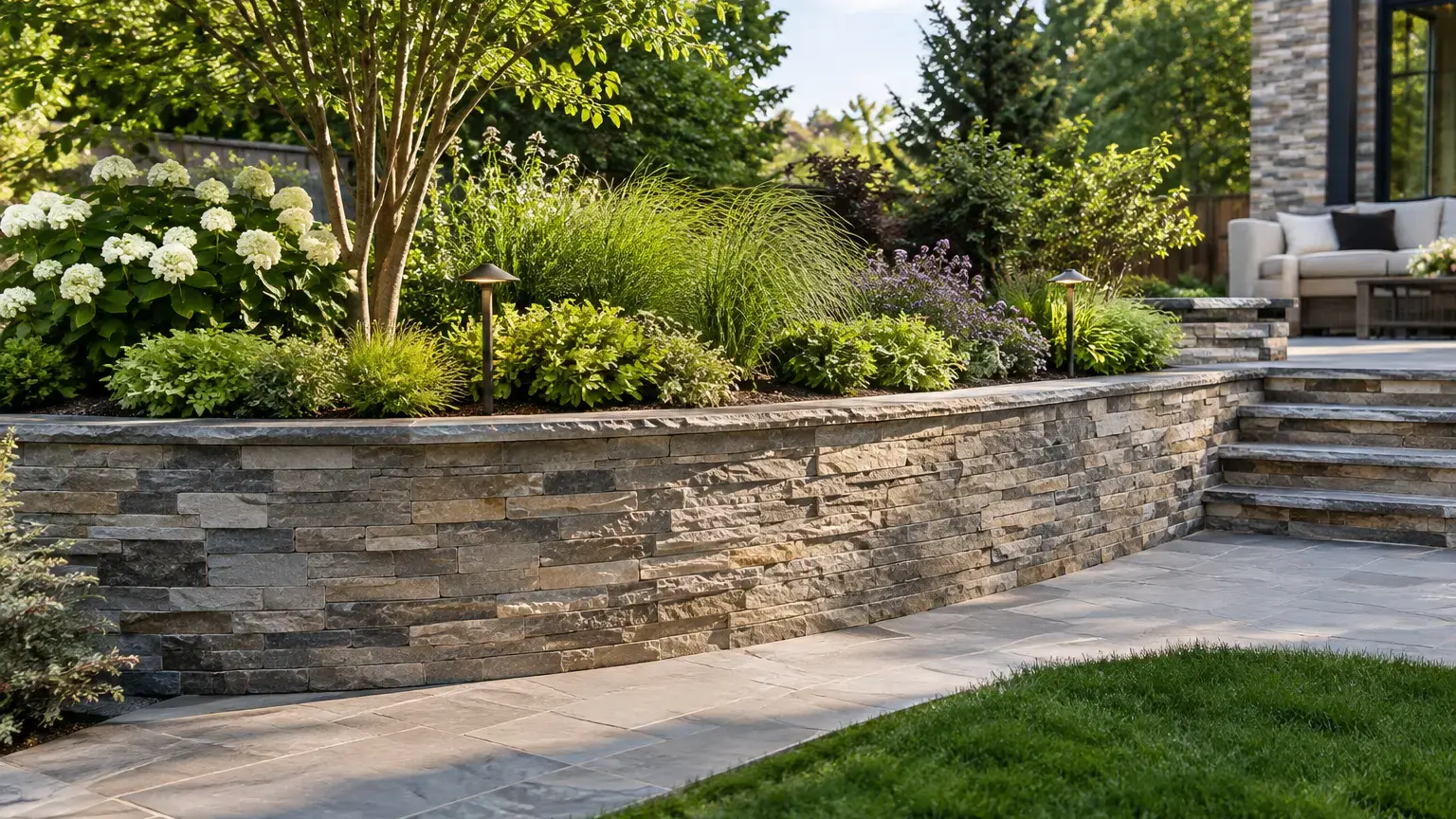
Where Exterior Stacked Stone and Ledgestone Get Used
This style of veneer, in either material, shows up most often in a handful of exterior applications:
- Full or partial home facades, often combined with siding or stucco on the upper portion of a wall
- Entryways, porch columns, and door surrounds
- Chimney exteriors and outdoor fireplace surrounds
- Retaining walls and garden or seating walls
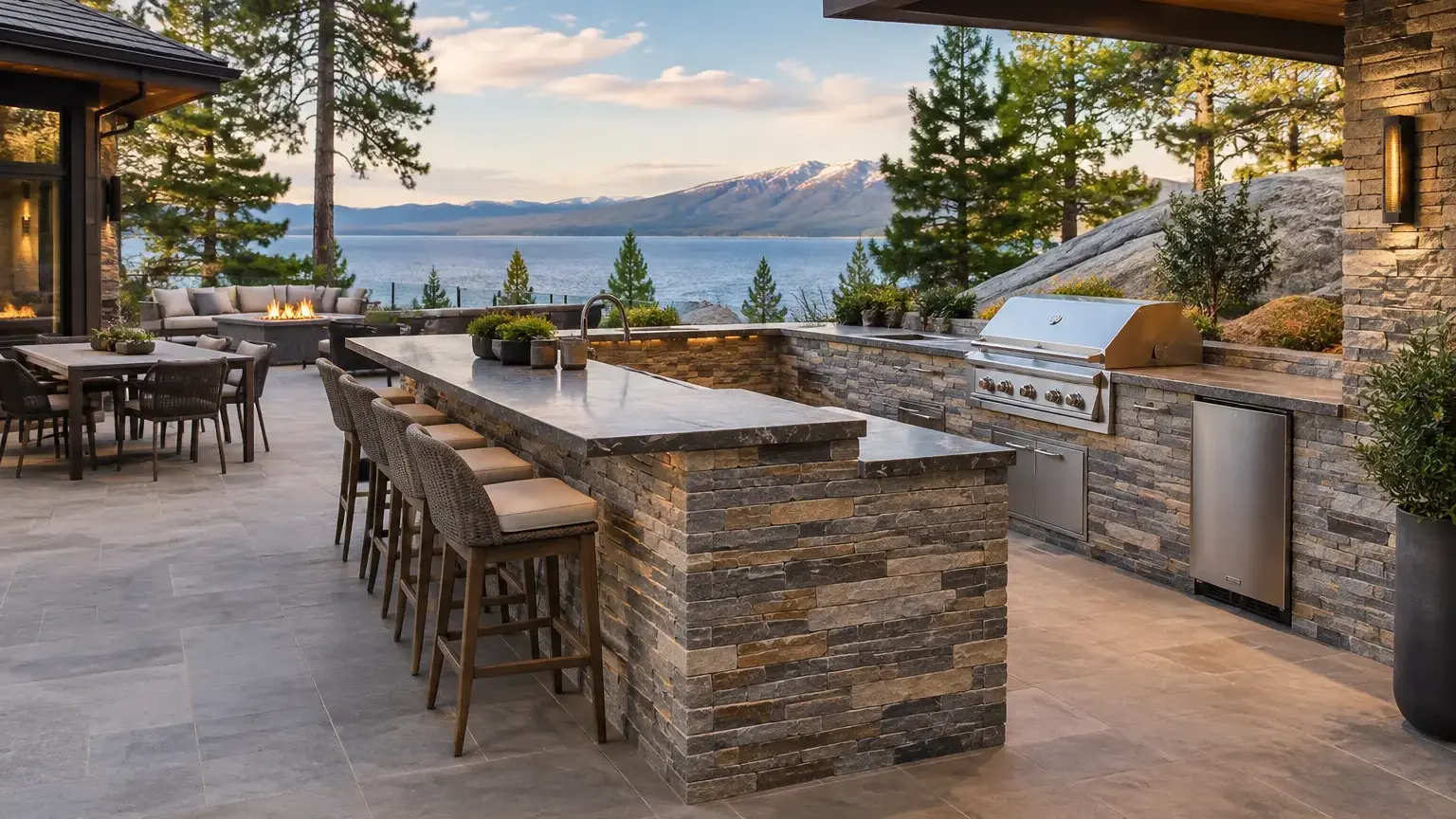
- Outdoor kitchen surrounds and bar fronts
Because it sits on the exterior of a building, drainage behind the veneer is one of the most important parts of the installation. Adhered stone veneer installations typically rely on a weep screed at the base of the wall along with a water-resistive barrier behind the veneer, so that any moisture that gets past the stone has a way to drain back out rather than becoming trapped against the sheathing. A continuous drainage path at the base of the wall, provided by a weep screed with weep holes and a water-resistive barrier lapped over its flange is what keeps moisture from accumulating behind the finished stone.
Exterior Stacked Stone and Ledgestone Design Trends
Alongside where this veneer gets used, current exterior design coverage points to facade upgrades that use stone as an accent rather than covering an entire wall, often paired with existing siding or trim rather than replacing it outright. Panelized stone veneer's lighter weight and lack of need for additional footings, which allow it to be added to an existing facade without a major structural project, is one reason this kind of quick facade upgrade has been gaining traction among builders and remodelers heading into 2026.
How to Care for Exterior Stacked Stone and Ledgestone Veneer
Maintenance requirements track more closely with the natural-versus-manufactured distinction than with the naming question, and exterior exposure raises the stakes on both.
Natural stone veneer is generally low-maintenance, needing periodic inspection for cracks or mortar issues and gentle cleaning, typically a soft brush or a low-pressure rinse. Sealing is recommended for stone types that are more porous, and it becomes more important on an exterior wall, a chimney, or any surface exposed to freeze-thaw cycles, since trapped moisture that repeatedly freezes and expands can crack or spall the stone face over time. A simple way to check whether a sealer needs renewing is to place a few drops of water on the stone; if the water beads on the surface, the seal is still holding, but if it soaks in and darkens the stone, resealing is due.
Manufactured stone veneer is more porous by nature and typically calls for sealing as a standard precaution outdoors, since unsealed cement-based veneer is more prone to staining, discoloration, and surface wear from repeated exposure to rain and sun. In both cases, harsh acidic cleaners should be avoided, since they can etch or discolor the surface. Removing common stains without damaging the surface generally comes down to acting quickly and using a cleaner made for natural stone rather than an all-purpose one.
Conclusion
The two terms describe the same core exterior veneer style far more often than they describe two distinct products, and where a distinction does exist, it isn't applied consistently across the industry. A more reliable way to choose between options is to compare panels directly against the criteria above, rather than relying on which name is printed on the sample. Material type, whether natural or manufactured, drainage behind the veneer, and the intended application matter more to how an exterior wall performs than the label itself.
Nova Tile and Stone carries a range of natural and manufactured stone veneer options across its showroom locations in Reno, Minden, Fernley, and Sacramento. A visit to any showroom is the most direct way to see samples in person and compare finishes side by side.
Frequently Asked Questions
In most cases there isn't one. Both names describe the same veneer style, thin, flat stone pieces set in tight horizontal courses with minimal visible mortar joints. Where a distinction is drawn, it's usually about piece uniformity, though which name gets which description varies.
Price depends more on the material (natural versus manufactured) and the specific stone type than on which of the two names is used. Natural stone in either style typically costs more than manufactured versions of the same look, since it's quarried and cut rather than cast.
Yes. Some designs pair a more uniform panel with a more textured one to add depth, for example using one style on a chimney and a different one on an adjacent entryway wall.
Generally, yes. Adhered stone veneer installations follow the same drainage principles required for exterior plaster and stucco walls, with a weep screed at the base of the wall and a water-resistive barrier behind the stone so any moisture that gets in has a way to drain back out.
No. Installation follows the same general process either way: preparing the substrate, installing the moisture barrier and weep screed, applying mortar or thin-set, and setting the veneer, regardless of whether the panel reads as uniform or irregular on the surface.
Note: Some images on this page may be conceptual renderings created to illustrate design possibilities and may not depict actual installations.