Exterior ledgestone is a stone veneer made of thin, rectangular strips of natural stone, typically quartzite, slate, limestone, or sandstone, stacked in horizontal courses to create a textured, three-dimensional finish on outdoor walls. It is commonly used for exterior cladding, retaining wall facing, outdoor fireplaces, outdoor kitchens, and water features.
For exterior use, dense, low-absorption stones such as quartzite and slate are generally well suited to harsh weather and freeze-thaw conditions, while the performance of limestone and sandstone varies more by density and deposit. According to the ASTM C629 standard for slate dimension stone and the ASTM C616 standard for quartz-based dimension stone, water absorption is a key property used to evaluate natural stone for building use. This guide covers ledgestone's characteristics, stone types, exterior applications, and benefits to help you choose the right option for your outdoor spaces.
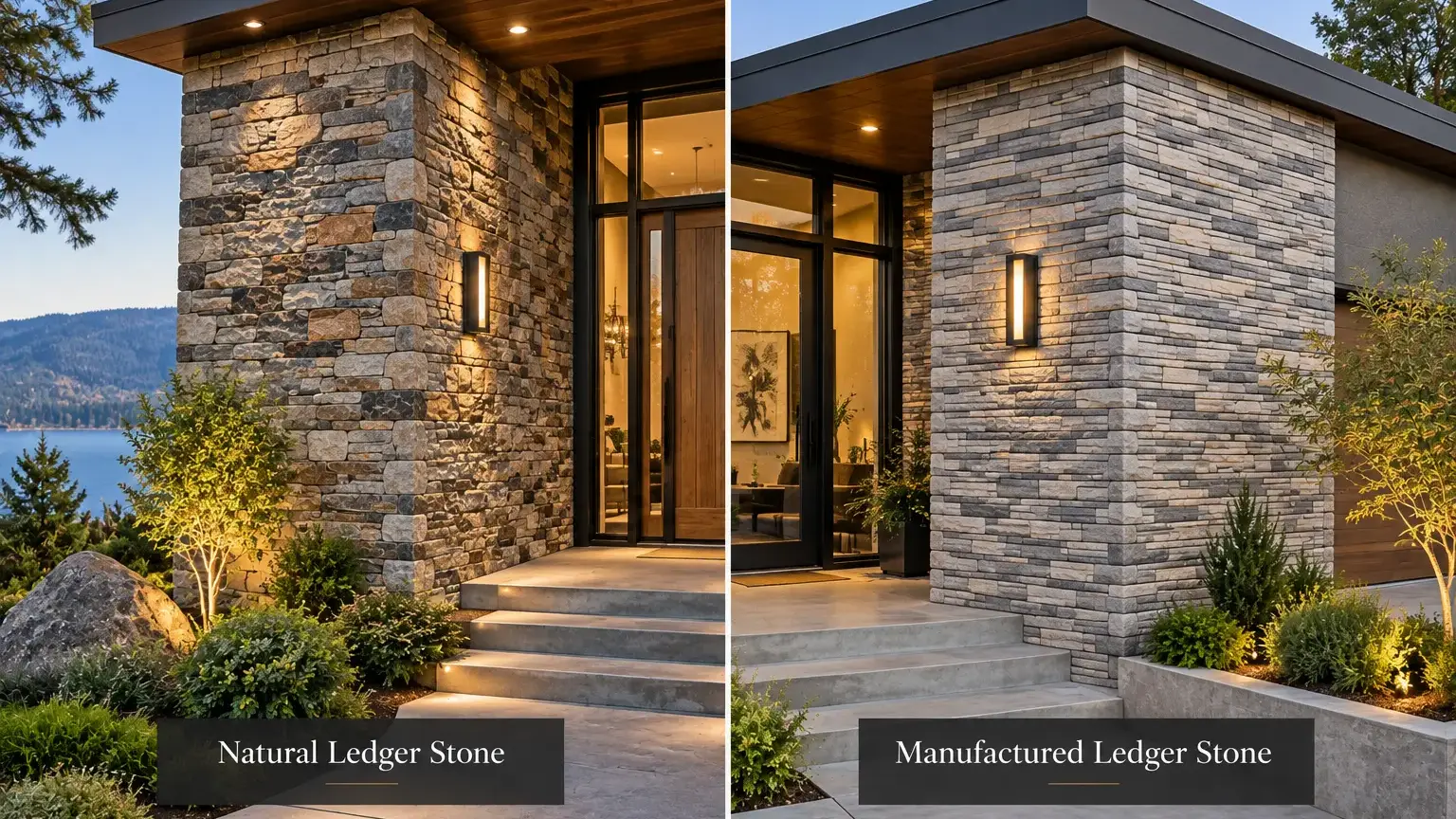
Natural vs. Manufactured Ledgestone
Before comparing stone types, it helps to know that ledgestone, also known as ledge stone, ledger stone, or stacked stone, comes in two forms. Natural ledgestone is cut from quarried stone, so each piece carries its own variations in color, texture, and thickness. Manufactured ledgestone is made from cement and aggregates and is cast to imitate the appearance of natural stone.
Both share the same horizontal profile and rough, layered edges that give walls a rustic, handcrafted character. Because the look can range from earthy and rugged to clean and linear depending on the stone and cut, ledgestone works on both contemporary and traditional home exteriors. The rest of this guide focuses on natural ledgestone.
Characteristics of Exterior Ledgestone
Whatever stone it is cut from, natural ledgestone shares a set of qualities that define how it looks and behaves on exterior surfaces:
- Texture: A defining trait of ledgestone is its rough, textured face. The uneven surface creates a three-dimensional effect that brings depth and visual interest to exterior walls and facades.
- Shape and Size: Ledgestone is usually cut into thin, flat strips that are longer than they are tall, with widths and thicknesses that can vary. This format creates a continuous horizontal flow across a wall, and varied piece thickness adds to its natural character.
- Variety of Colors: Ledgestone's color range depends on the stone it is made from, spanning light neutrals, warm earth tones, and deep, dark shades. This variety helps it suit many exterior styles and color palettes.
- Low Maintenance: Ledgestone is generally easy to care for outdoors, typically needing only periodic cleaning with a neutral stone cleaner and water.
Types of Exterior Ledgestone
While these characteristics apply broadly, the stone that ledgestone is cut from shapes both its appearance and how it performs outdoors. These are the most common types:
- Sandstone: Sandstone is composed mainly of sand-size grains, most commonly quartz and feldspar. It comes in tan, brown, yellow, red, gray, and white, and it is somewhat soft and generally uniform in texture. It is often used for wall cladding, but because its properties vary by deposit, it is worth reviewing a specific sandstone's performance before choosing it for an exterior project.
- Quartzite: When quartz-rich sandstone is altered by heat and pressure, it becomes quartzite, a metamorphic rock made almost entirely of quartz. This process creates interlocking quartz grains with high strength and a glassy appearance. Quartzite is usually white to gray, though mineral impurities can give it pink, red, yellow, green, or other tones. Since some man-made materials are also marketed under the name quartzite, it is worth confirming that a product is natural quartzite.
- Slate: Slate is a dense, strong metamorphic stone known for being acid resistant and low in absorption. It gives exterior walls a distinctive layered texture, and its colors, including black, gray, green, purple, and red, make it a popular pick for sleek, modern facades. Because the ASTM C629 standard classifies slate for either exterior or interior use, it is worth confirming that a slate product is suited for exterior applications.
- Limestone: Limestone has a uniform texture and can be cut and carved into a wide variety of shapes. Its light, neutral tones lend a quiet elegance to both modern and traditional exteriors, and it weathers naturally over time into a mellow patina. According to the ASTM C568 standard for limestone dimension stone, limestone is classified by density. Because density affects how much water the stone absorbs, it is worth considering when choosing limestone for exterior use.
If you want to explore these stone options, you can shop local or book an appointment to discuss which material may suit your exterior project.
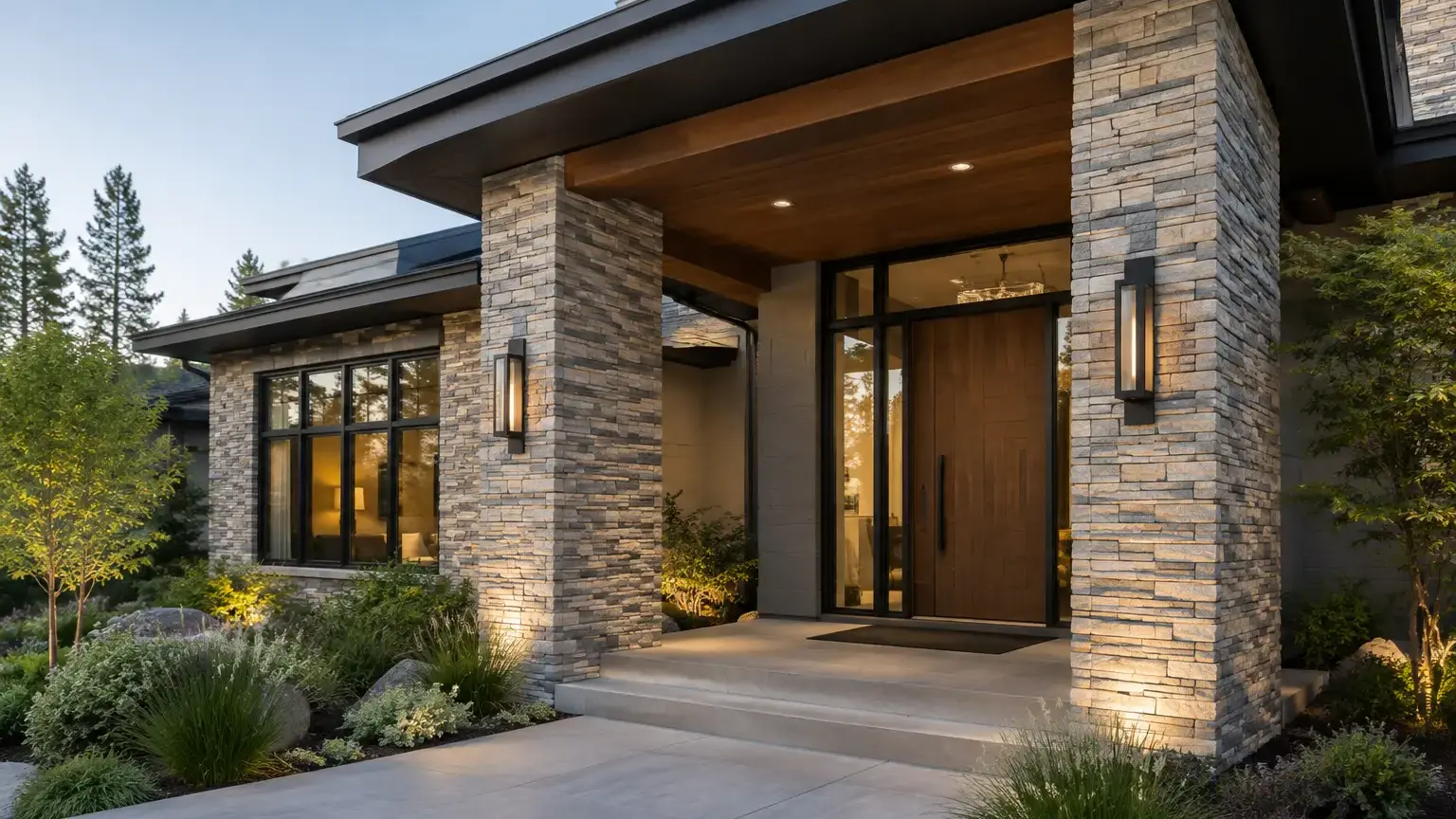
Exterior Applications of Ledgestone
Once you have narrowed down a stone type, the next step is deciding where it will go. Ledgestone's rugged appearance makes it useful across a wide range of outdoor projects, from residential upgrades to large commercial facades:
- Exterior Cladding: One of ledgestone's most popular roles is as cladding for exterior walls, where it adds texture and a natural feel to a building's facade.
- Exterior Feature Walls: Ledgestone is often used for feature walls in entryways, courtyards, and covered patios. It also works well on columns and around front doors.
- Outdoor Fireplaces: Ledgestone is a frequent choice for outdoor fireplaces and fire features. Its rough texture contrasts with the flicker of flames, giving a patio or backyard a warm focal point.
- Patio Walls and Outdoor Kitchens: Ledgestone is often used on patio walls, seat walls, grill islands, and outdoor kitchens, helping tie outdoor living areas to the rest of the landscape.
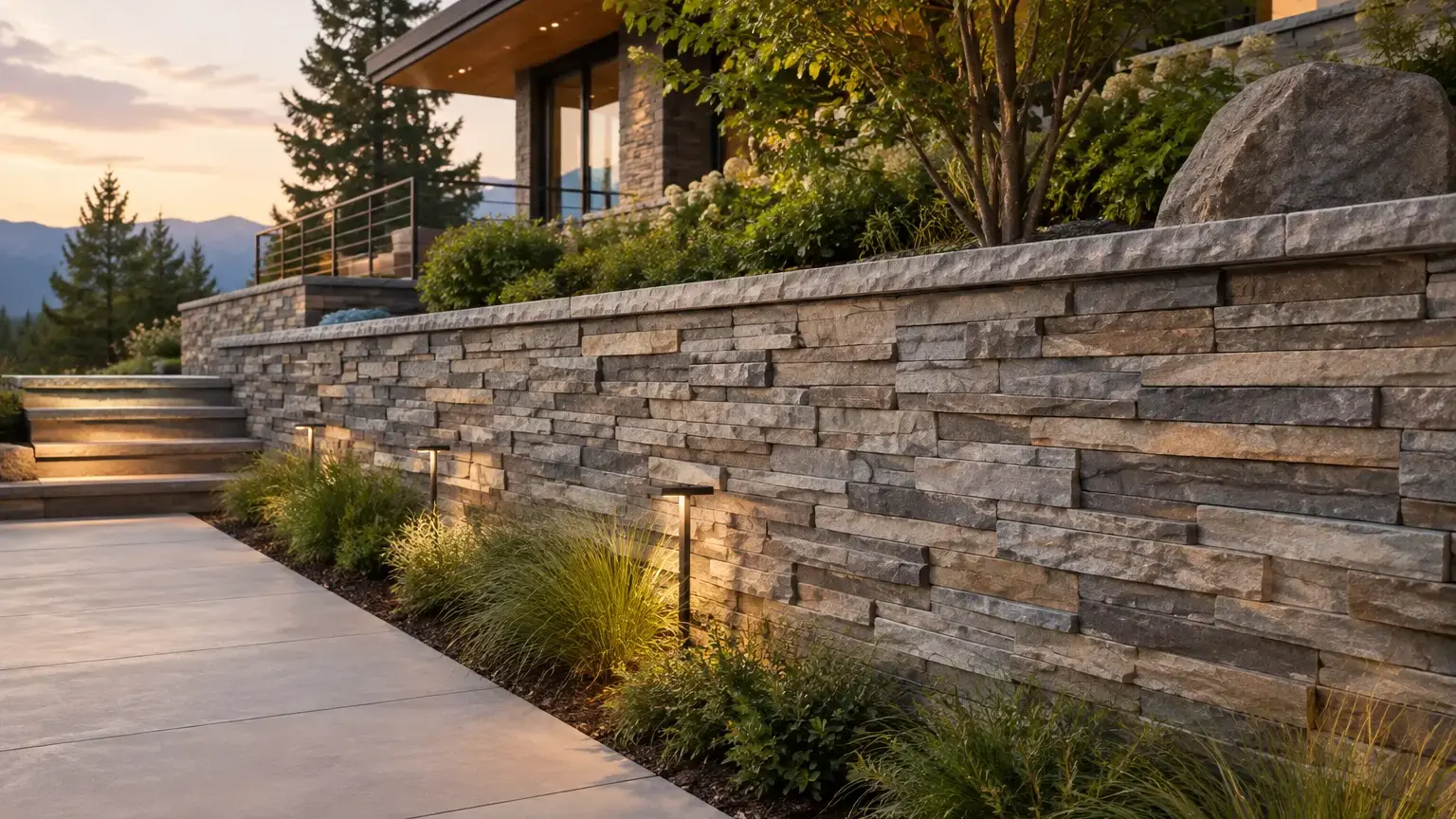
- Retaining Walls: In landscaping, ledgestone is commonly used as a facing for retaining walls, giving terraced areas a finished appearance that blends with the surrounding landscape.
- Water Features: Ledgestone is a popular option for fountains, waterfalls, and pool surrounds, where its texture creates striking visual effects alongside moving water.
Benefits of Using Exterior Ledgestone
Across these applications, ledgestone offers several advantages that make it worth considering for an outdoor project. The Nova Tile and Stone collections include a range of natural stone options that can complement different exterior styles and applications:
- Aesthetic Appeal: Ledgestone's natural texture and color variation give exterior designs a distinctive, organic character with a sense of timelessness.
- Versatility: Because it pairs well with both modern and rustic styles, ledgestone adapts to many exterior designs and project types.
- Durability: Natural ledgestone is known for its ability to handle weather, moisture, and everyday outdoor exposure, especially when the stone type is matched to the local climate. With appropriate care, it can keep its appearance for many years.
- Environmental Benefits: Natural stone has low embodied energy, since relatively little energy is needed to quarry, fabricate, and finish it. This makes it a practical choice for projects with sustainability goals.
Conclusion
Exterior ledgestone offers a practical way to add texture, depth, and natural character to a home's outdoor spaces. The key to a successful project is matching the stone to both your design goals and your climate, weighing color, texture, absorption, and how each option is likely to perform over time. Taking the time to compare these factors can help you select a stone that suits your home's style and holds its appearance for years to come.
If you are planning an exterior stone project, visiting a showroom lets you see color variation and surface texture in person before making a decision. Nova Tile and Stone offers free design consultations at its four showroom locations in Reno, Minden, Fernley, and Sacramento to help you compare natural stone options for your outdoor space.
Frequently Asked Questions
Yes. Ledgestone is a popular option for exterior walls because its stacked profile adds visual depth to a facade, it requires little upkeep, and natural versions hold up well to outdoor exposure when the stone is suited to the local climate.
Dense, low-absorption stones like quartzite and slate are generally well suited to freezing temperatures because they take in little water. Limestone and sandstone vary more by density and deposit, so it is worth checking that any product you are considering is rated for exterior use in cold climates.
Yes. Ledgestone is often used for fountains, waterfalls, and pool surrounds. For areas with constant moisture, low-absorption stones like quartzite and slate are commonly preferred because they are known for handling ongoing water exposure well.
Not always. Many natural stones do not require sealing, though applying an impregnating sealer is a common practice. Sealing does not make stone stain-proof, but it can make it more stain resistant. Whether a sealer makes sense depends on the stone type and its exposure to water and staining, so it is worth confirming with your stone supplier or a stone professional.
Clean it with a neutral stone cleaner, stone soap, or a mild dishwashing detergent mixed with warm water, then rinse thoroughly. Avoid acidic cleaners such as vinegar or lemon juice, which can etch calcitic stones like limestone.
Note: Some images on this page may be conceptual renderings created to illustrate design possibilities and may not depict actual installations.