Ledger stone is used on house exteriors for accent walls, entryway surrounds, porch columns, outdoor kitchens, fireplace surrounds, garden or retaining walls, and mailbox or address markers, applied as a thin stacked-stone veneer over an existing wall surface. It is available in two forms: natural stone cut and split from quarried material such as quartzite, slate, or sandstone, and manufactured stone cast from cement, lightweight aggregates, and iron-oxide pigments, both rated for outdoor use. Because ledger stone is a veneer rather than a structural material, it changes the surface appearance of a wall, column, or freestanding feature without requiring any change to the structure underneath.
Below, we walk through each of these exterior uses in more detail, along with a few things to think through before choosing ledger stone for a specific spot.
What Ledger Stone Is Made Of
Ledger stone comes in two general categories. Natural ledger stone is cut and split from quarried stone such as quartzite, slate, or sandstone, so each piece carries the color variation and texture of the source material. Manufactured ledger stone is cast from a blend of cement, lightweight aggregates, and iron-oxide pigments in molds taken from real stone, which gives it a similar surface texture at a different weight and price point.
Both versions are rated for exterior use, but they behave differently outdoors. Natural stone tends to hold its color and texture over years of sun and moisture exposure with very little change, since the color runs through the entire piece. Manufactured stone is lighter and easier to handle, which can matter for tall walls or overhead applications like porch ceilings, but its surface coloring is more exposed to fading over time than a solid natural material. Knowing which category fits a particular project helps narrow down options before comparing specific colors and textures, and browsing a live natural stone slab inventory is a useful way to see how a given stone's natural variation looks in person before settling on a ledger stone finish that pairs with it.
Ledger stone also comes in a range of finishes and joint styles that change how a finished exterior wall reads from the street. A tight, dry-stack joint gives a clean, almost seamless line between pieces, while a wider grouted joint highlights each individual piece and leans closer to a traditional masonry look. Some manufactured lines are produced with a split-face texture that emphasizes rough, uneven surfaces, while others use a smoother, more linear profile. None of these choices is right or wrong on its own. They depend on the architectural style of the house, the other exterior materials nearby, and how much texture a homeowner wants a given wall to carry.
Exterior Accent Walls
The most familiar use for ledger stone is a stand-alone accent wall on the front of a house, along a garage, or on a portion of a larger facade. Because ledger stone is laid in flat, staggered courses, it reads as a clean horizontal band of texture rather than a busy, uneven pattern, which makes it easier to pair with siding, stucco, or brick without competing for attention. A single accent wall section, sized to wrap a garage face or frame a front door, is one of the more approachable ways to introduce stone texture to a home's exterior without covering the entire facade, a look we see often on the ranch and Mediterranean-style homes near our Sacramento showroom.
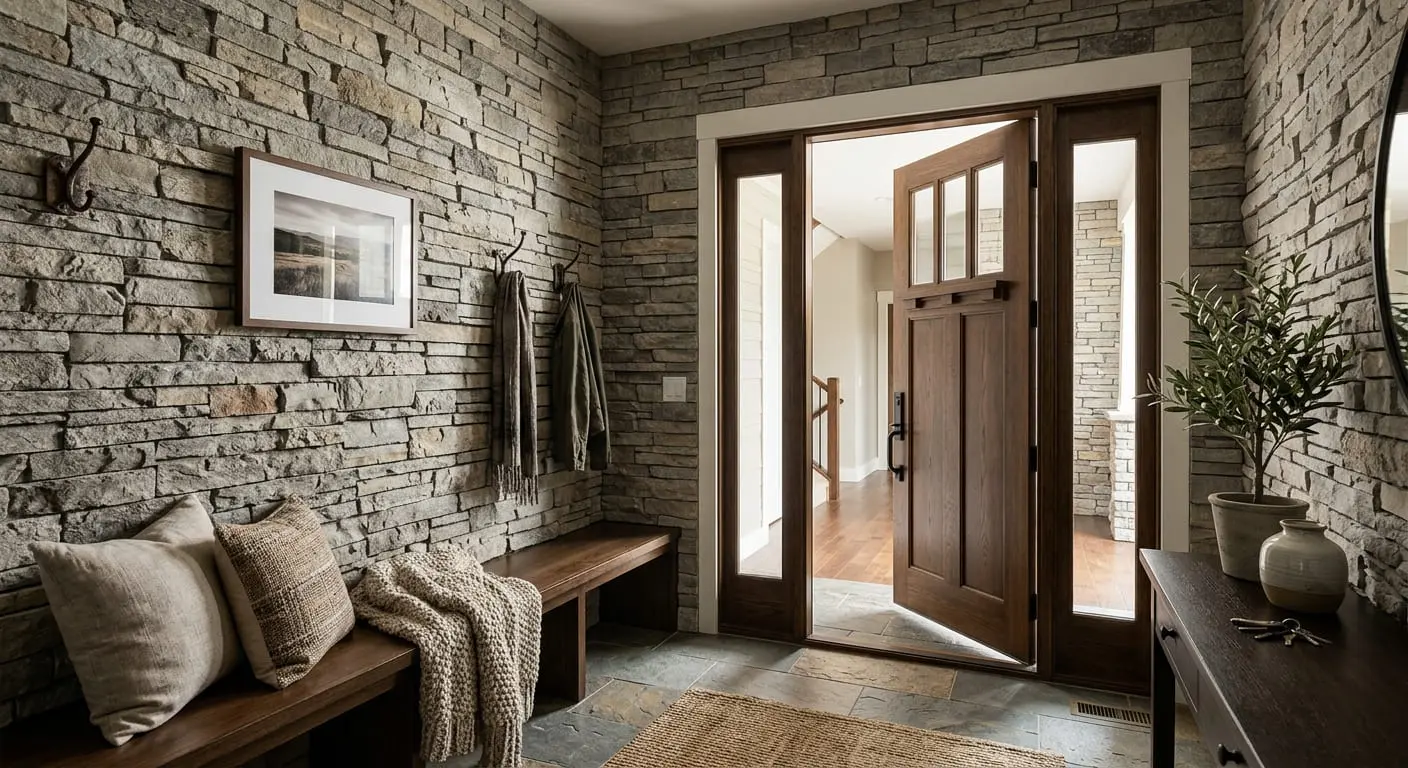
Entryways and Porches
Entry areas are a natural fit for ledger stone because they are close to eye level and get regular daily use. Framing a front door with ledger stone panels, or covering a porch half-wall, draws attention to the entrance and gives visitors a sense of the materials used throughout the rest of the home. On covered porches, ledger stone can also run along a knee wall or porch base, which holds up well in a spot that sees foot traffic, weather exposure, and occasional contact from furniture or planters.
Columns and Porch Posts
Wrapping porch columns or posts in ledger stone is a common way to add visual weight to a covered entry or porte-cochere. Because ledger stone panels are manufactured in relatively thin, lightweight courses, they can be applied around square or round columns to change a plain wood or vinyl post into a stone-clad feature. This use case tends to work well alongside an accent wall or entryway application, since matching the column material to the surrounding wall keeps the whole entry area visually connected.
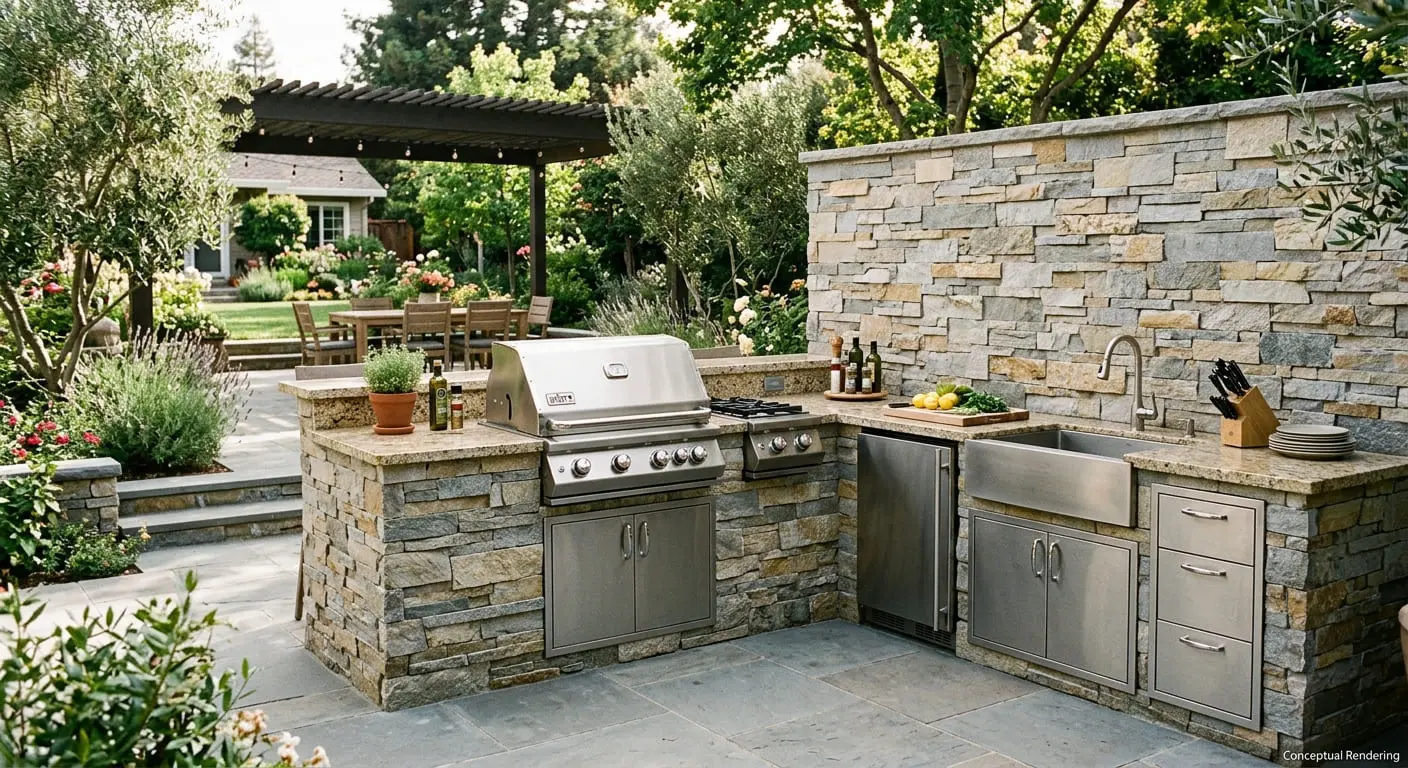
Outdoor Kitchens and Fireplace Surrounds
Outdoor kitchens, grill islands, and fireplace surrounds are another frequent home for ledger stone. These features are usually built as freestanding structures, so the exterior finish carries most of the visual weight, and ledger stone gives the surface a textured, layered look that reads well from a distance across a patio or backyard. Because these areas see direct exposure to heat, moisture, and grease, it is worth checking with the stone supplier or installer about which specific product line is rated for proximity to a fire feature or grill before finalizing a design. Many outdoor kitchen projects also pair a ledger stone surround with a natural stone countertop for the cooking surface, and requesting a quote on a specific slab is a straightforward way to price that piece alongside the stone veneer.
Garden Walls and Retaining Walls
Low garden walls, raised planter beds, and short retaining walls are well suited to ledger stone because the horizontal coursing mirrors the way stacked stone has traditionally been used in landscaping. A ledger stone veneer over a block or poured wall gives a garden feature the same texture as the house itself, which helps tie the landscaping into the overall exterior design rather than treating it as a separate element, a request we hear often from property owners with larger lots near our Fernley showroom.
Mailbox and Address Markers
Smaller features like a mailbox post or a freestanding address marker are a low-commitment way to introduce ledger stone to a property. These features use a small amount of material, so they are a reasonable starting point for homeowners who want to see how a particular stone color and texture look in direct sunlight before committing to a larger wall or entryway project.
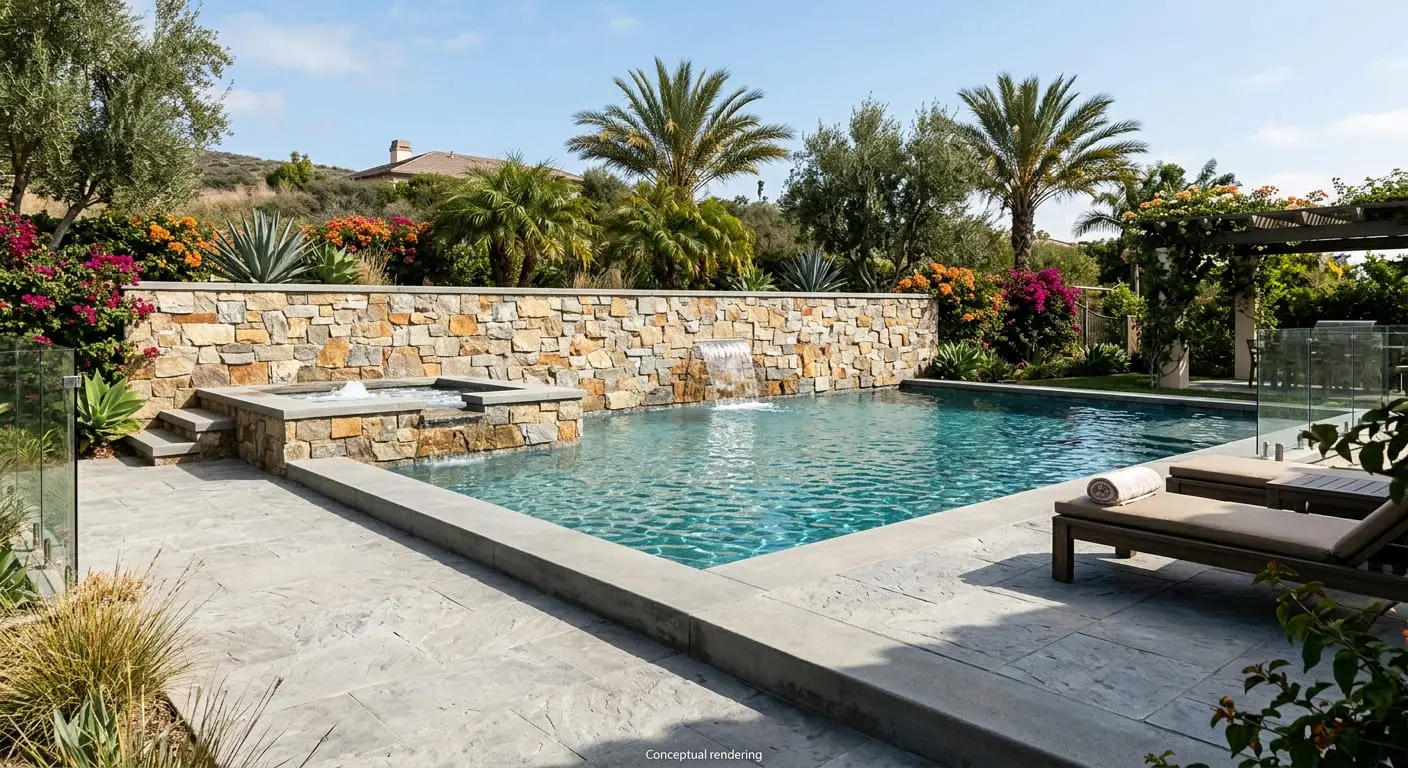
Pool and Patio Surrounds
Around a pool or patio, ledger stone is often used on knee walls, raised planters, or the base of a covered pergola. Because these areas are exposed to splashing water, pool chemicals, and constant sun, the choice between natural and manufactured stone matters more here than in a covered entryway. Natural stone generally holds up to repeated moisture contact without much visible change, while manufactured products vary by manufacturer, so it is worth reviewing the specific product's rating for pool-adjacent use.
What to Think Through Before Choosing Exterior Ledger Stone
A few practical questions come up often when homeowners are deciding whether ledger stone fits a particular exterior project:
Sun and weather exposure. A wall that faces direct afternoon sun for most of the year experiences more temperature swings than a shaded, covered porch wall, which can affect how a manufactured product's color holds up over time. This comes up often for homeowners in the high-desert sun around our Reno showroom, where exposure is more intense than in a milder, coastal-influenced climate.
Moisture and drainage. Any exterior stone veneer application depends on proper drainage and moisture management behind the stone, since trapped water is one of the more common causes of exterior veneer problems. This is a detail worth discussing directly with a licensed installer familiar with local building codes, since requirements vary by climate and wall assembly. Many local contractors already source materials through a trade account, so it is worth asking your installer whether they already have one set up.
Color and texture matching. Natural stone pieces vary from one another, so ordering enough material from the same lot helps avoid a noticeable color shift partway through a wall, especially on larger accent walls or full facades. This matters most on the larger custom homes we see around our Minden showroom, where a single facade can use several bundles of the same stone.
Scale of the project. A mailbox or small planter uses a fraction of the material a full accent wall or outdoor kitchen requires, which affects both budget and how much lead time to plan for sourcing.
Matching Ledger Stone to the Rest of the Exterior
Because ledger stone is almost always used as an accent rather than covering an entire house, how it pairs with existing siding, stucco, brick, or trim color matters as much as the stone itself. Warm-toned stone with browns and tans tends to sit comfortably next to wood siding or warm stucco colors, while cooler grays and blues read as a cleaner match against white or gray siding and darker trim. Homeowners working on a full exterior refresh often bring a paint chip or siding sample along when comparing stone colors, since lighting in a showroom can look different than direct sunlight on the actual house.
Scale is worth considering as well. A large stone with pronounced texture can look out of proportion on a small entryway wall, while a finer, tighter-format ledger stone can get lost on a two-story facade. Walking the actual wall or column with rough dimensions in hand, or photos of the space, makes it easier to picture how a specific stone will read once it is installed rather than guessing from a small sample chip. Browsing the full range of tile, stone, and flooring options side by side is also a helpful way to see how a ledger stone choice sits next to other materials already planned for the project.
Bringing It Together
Ledger stone gives an exterior a layered, natural texture that works on everything from a single accent wall to a full entryway, outdoor kitchen, or garden feature. Because it comes in both natural and manufactured versions, there is room to match a project's budget, weight requirements, and exposure conditions to the right product rather than treating ledger stone as a single, one-size-fits-all material.
If you are weighing ledger stone against other exterior stone options for an upcoming project, our team is glad to walk through natural and manufactured samples and talk through which one fits your home's exposure and design. We have showrooms in Sacramento, Reno, Minden, and Fernley. Stop by whichever location is closest, or book a design consultation ahead of time, to see exterior stone options in person.
Note: Some images on this page may be conceptual renderings created to illustrate design possibilities and may not depict actual installations.
Frequently Asked Questions
Yes. Ledger stone is manufactured in both natural and cement-based versions that are designed to hold up to outdoor sun, rain, and temperature changes, though the specific product line and installation method affect how it performs over time.
Natural ledger stone is cut from quarried stone, so its color runs through the entire piece and tends to hold its appearance with minimal change. Manufactured ledger stone is cast from cement, aggregates, and pigments, which makes it lighter and often more budget-friendly, though its surface coloring can be more exposed to gradual fading than natural stone.
Ledger stone is commonly used on outdoor fireplace and grill surrounds, but proximity to direct heat requires checking with the manufacturer or installer to confirm the specific product is rated for that use.
Many exterior stone installations benefit from periodic sealing to help manage moisture, though sealing needs vary by material type and climate. This is worth discussing with a stone care professional for guidance specific to the product chosen.
Accent walls, entryways, porch columns, outdoor kitchens, garden walls, and mailbox or address markers are among the most common exterior uses, since each takes advantage of ledger stone's horizontal, layered texture at a different scale.